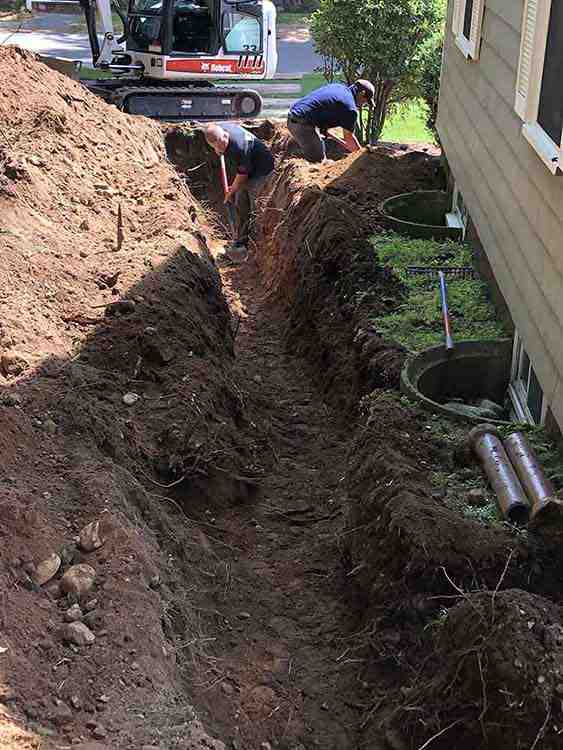
Why Poor Backyard Drainage Can Wreck Your Yard — and What to Do About It
Backyard landscaping drainage is the system that moves rainwater away from your home, lawn, and garden — and when it fails, the damage adds up fast.
Here are the most effective ways to fix backyard water issues:
- Regrade your yard to slope at least 1-2% away from your foundation
- Install a French drain to capture and redirect subsurface water
- Add a dry creek bed or swale to channel surface runoff
- Build a rain garden in low spots to absorb excess stormwater naturally
- Extend downspouts at least 3-4 feet from your home’s foundation
- Improve your soil by aerating and adding organic matter to break up compaction
- Install a catch basin or dry well for areas where water persistently pools
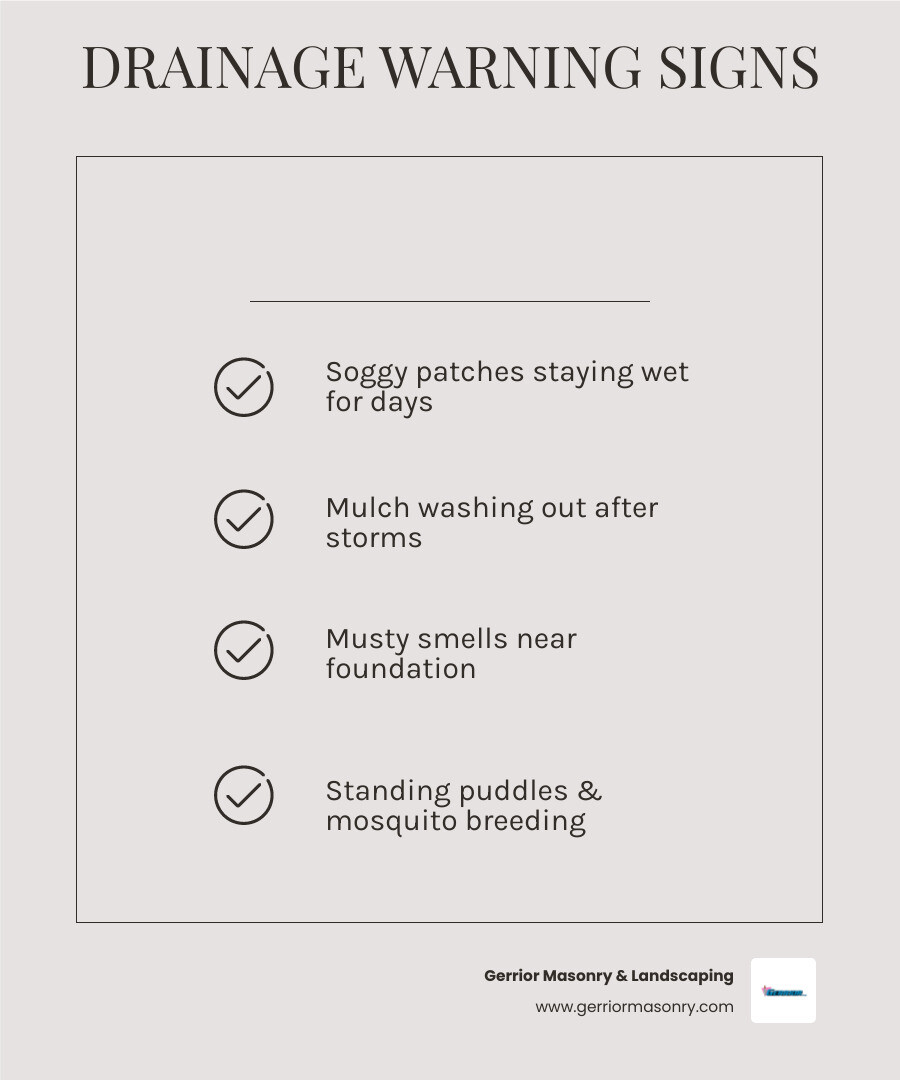
Poor drainage shows up in ways that are hard to ignore — soggy patches that stay wet for days, mulch washing out of beds after every storm, or that musty smell near your foundation. Left untreated, standing water can damage your lawn, rot plant roots, attract mosquitoes, and threaten your home’s foundation.
The good news? Most drainage problems have clear solutions, whether you tackle them yourself or bring in a professional.
I’m Joe Gerrior, owner of Gerrior Masonry & Landscape Construction Corp., with over 34 years of experience solving backyard landscaping drainage problems for homeowners across Massachusetts. Let’s walk through exactly what to look for — and how to fix it.
Backyard landscaping drainage helpful reading:
Essential Strategies for backyard landscaping drainage
Before you start digging up your lawn or buying pallets of stone, you need a diagnosis. We often see homeowners try to fix a symptom rather than the cause. To truly master backyard landscaping drainage, you have to “think like water.” Water is patient, persistent, and always follows the path of least resistance (gravity). In Middlesex and Essex County, we often encounter ‘hardpan’ layers—dense subsoil that prevents vertical drainage regardless of surface grading. Identifying these early prevents the frustration of a failed DIY project.
Site Diagnosis: Identifying the Culprit
The first step is a rainy-day walk. Put on your boots and observe where the water goes. Are your gutters overflowing? Is water cascading off a neighbor’s sloped driveway into your flower beds?
We recommend a simple percolation test to check your soil’s natural ability to handle water. Dig a hole about 12 inches deep and 6-12 inches wide. Fill it with water and time how long it takes to empty. If it drains in under 30 minutes, your drainage is excellent. If it takes more than three hours, you likely have high clay content or severe compaction that requires intervention. You can also perform a ‘ribbon test’ by squeezing moist soil; if it forms a long, stable ribbon, clay content is high.
Runoff Patterns and Elevation
Understanding the topography of your property is vital. Many local yards suffer from “bowl” effects where the center of the lawn is lower than the perimeter. We use elevation checks to determine the highest and lowest points. You want a consistent slope of at least 1-2% away from your foundation. In practical terms, that means the ground should drop about one inch for every four to ten feet of distance.
Assessing DIY Feasibility
Some fixes are perfect for a weekend warrior. Cleaning gutters or adding downspout extensions are easy wins. However, fixing pooling water in yard spaces often requires heavy machinery and precise grading. If you are dealing with water entering a basement or massive erosion, the project’s scope has moved beyond a shovel and a wheelbarrow.
Surface Solutions and backyard landscaping drainage
Surface drainage focuses on moving water that you can see. These solutions are often the most affordable and can be integrated beautifully into your existing landscape design.
Swale Construction
A swale is essentially a wide, shallow, grass-lined ditch. It doesn’t look like a ditch; it looks like a natural dip in the lawn. The goal is to catch runoff and direct it to a safe exit point, like a storm drain or a rain garden. We generally aim for a minimum slope of 1 foot of drop for every 50 feet of length to ensure water doesn’t stagnate. Swales are highly effective for managing large volumes of surface water without the need for pipes.
Decorative Dry Creek Beds
If you want to combine function with curb appeal, a dry creek bed is a fantastic option. By lining a shallow trench with landscape fabric and a mix of river rocks, boulders, and pea gravel, you create a dedicated path for stormwater. Using a variety of stone sizes—from small river jacks to large anchor boulders—not only looks more natural but also helps break the velocity of rushing water during heavy downpours, preventing further erosion of the underlying soil.
Rain Gardens: Nature’s Sponge
A rain garden is a depressed area planted with native, water-loving perennials and shrubs. It’s designed to hold water for a short period (usually less than 24 hours), allowing it to soak slowly into the ground. Species like Swamp Milkweed or Turtlehead have evolved to handle the ‘feast or famine’ water cycles of New England. Not only does this solve a drainage issue, but it also filters pollutants and provides a habitat for local pollinators.
Catch Basins and Channel Drains
For hard surfaces like patios and driveways, we often recommend channel drains for yards. These are long, narrow grates installed flush with the pavement to catch water before it reaches your garage or foundation. For low spots in the lawn, a catch basin (a buried box with a grate on top) can trap water and funnel it into an underground pipe.
For more details on managing water near walkways, see our sidewalk drainage solutions complete guide.
Subsurface Systems: French Drains and Dry Wells
When surface solutions aren’t enough, we have to look underground. Subsurface systems are the heavy hitters of backyard landscaping drainage.
The Anatomy of a French Drain
The French drain is perhaps the most misunderstood tool in landscaping. It isn’t just a pipe in the ground. A true French drain involves:
- A Trench: Typically 6-12 inches wide and 18-24 inches deep.
- Filter Fabric: To prevent soil from clogging the system. We use the ‘burrito wrap’ technique, lining the trench and folding the fabric over the top to create a protected envelope that allows water in while keeping fine silt out.
- Perforated Pipe: Laid with the holes facing down (counter-intuitive, but it allows water to rise into the pipe from below).
- Aggregate Layers: Clean, 3/4-inch crushed stone that allows water to flow freely.
This system is perfect for a drain on side of house application, where it intercepts groundwater before it can seep into your basement.
Dry Wells: Deep Percolation
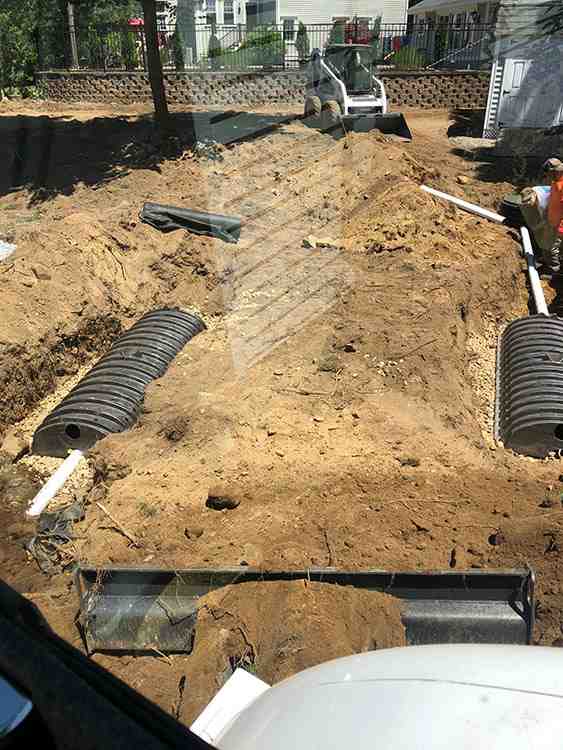
If you have nowhere to send the water (no storm drain or lower curb), you might need a dry well. We are expert dry well installers who understand how to size these systems correctly. A dry well is an underground plastic or concrete basin, or a large pit filled with stone, that collects runoff and allows it to dissipate into the deep soil layers. When calculating size, we account for the total square footage of the contributing roof area; a 1,000-square-foot roof section can produce nearly 600 gallons of runoff in a one-inch rain event.
Check out our guide on backyard drainage solutions dry well for a deeper dive into how these systems work.
Improving Soil Health for backyard landscaping drainage
Sometimes the problem isn’t the slope; it’s the soil itself. In many parts of Massachusetts, we deal with heavy, compacted clay that acts like a concrete slab.
Breaking Up Clay Compaction
Clay particles are tiny and flat, meaning they pack together tightly, leading to soil compaction that leaves no room for water to move. To fix this, you can:
- Aerate: Use a core aerator to pull plugs of soil out of the ground. This creates instant channels for air and water.
- Amend with Organic Matter: Adding compost or well-rotted manure improves soil structure over time.
- Gypsum Application: In some cases, gypsum can help loosen the chemical bonds in clay soil, though it’s a slow process.
For more specialized tips, read Beyond the Bog: Top Drainage Solutions for Your Clay Soil.
Choosing the Right Plants
If you have a spot that is perpetually damp, don’t fight nature—work with it. Planting moisture-loving species like Red Twig Dogwood, River Birch, or various ferns can help “drink” the excess water. These plants have root systems that thrive in anaerobic (low oxygen) conditions where typical turfgrass would die of root rot.
For a broader look at residential water management, see our page on domestic drainage systems.
Professional Solutions and Project Maintenance
Even the best-designed backyard landscaping drainage system requires maintenance. We’ve seen $10,000 systems fail because of a $10 clog.
Gutter and Downspout Management
Your roof is a massive water collector. During a one-inch rainstorm, a 2,000-square-foot roof sheds about 1,250 gallons of water. If your downspouts drop that water right at the base of your foundation, you’re asking for trouble.
We recommend extending downspouts at least 3-4 feet (ideally 10 feet) away from the house. You can even bury these lines and have them exit through a “pop-up emitter” in the lawn. For more on this, see Gutter Runoff Woes: Build a Dry Well for Downspouts.
Maintenance Tips
- Debris Removal: Clean your gutters twice a year (spring and fall).
- System Flushing: Every few years, use a garden hose to flush out French drains or catch basins to ensure silt hasn’t built up.
- Inspect After Storms: Walk your yard after a heavy “Nor’easter” to ensure your swales haven’t eroded and your grates aren’t covered in leaves.
Proper water management is also vital for your outdoor living spaces. Learn about the importance of proper drainage in hardscaping and masonry projects to protect your investment in patios and walls.
Estimating Costs for Drainage Projects
Understanding the budget is a key part of planning. The following table provides average internet costs for various drainage solutions. Please note that these are average internet-based estimates and not actual quotes for Gerrior Masonry services. Local factors like soil type, accessibility, and permit requirements will influence the final cost.
| Drainage Solution | Average Internet Cost Range (Material & Labor) |
|---|---|
| French Drain | $10 – $300 per linear foot |
| Dry Well | $500 – $15,000 per unit |
| Channel Drain | $30 – $450 per linear foot |
| Swale | $5 – $45 per square foot |
| Rain Garden | $5 – $20 per square foot |
| Dry Creek Bed | $3 – $12 per square foot |
| Yard Drain / Catch Basin | $100 – $300 per unit |
Note: The wide range reflects the difference between simple DIY material costs and complex, large-scale professional installations requiring excavation and engineering.
When to Hire a Professional Landscaper
While many homeowners enjoy a DIY project, backyard landscaping drainage is an area where mistakes can be incredibly costly. If you grade your yard incorrectly, you might accidentally send water into your neighbor’s basement—a legal and financial nightmare.
Why Experience Matters
At Gerrior Masonry & Landscaping, we bring over 30 years of experience to every job. Whether it’s patio design and installation or complex excavation services, we ensure the foundation of the project—the drainage—is handled first.
Owner oversight is a hallmark of our work. We don’t just send a crew; we ensure the grading is precise and the systems are built to last for decades, not just until the next storm.
Permitting and Regulations
Did you know that some towns in Massachusetts require permits for dry wells or specific drainage alterations? We can help you navigate these requirements. If you’re wondering, “Do I need a permit to install a dry well?“, we have the answers.
If your yard is currently a swamp or you’re worried about your foundation, don’t wait for the next big storm. Our team provides comprehensive residential drainage solutions tailored to the unique soil and climate of Eastern Massachusetts.
Gerrior Masonry & Landscape Construction is based in Woburn, MA, and services Middlesex and Essex County, Massachusetts. From Arlington and Bedford to Winchester and Wilmington, we are here to ensure your property stays dry and beautiful.