Why Low Maintenance Landscape Design Is Worth It in 2026
Low maintenance landscape design means creating an outdoor space that stays beautiful year-round — with far less mowing, watering, weeding, and pruning than a traditional yard.
Here’s what it typically involves:
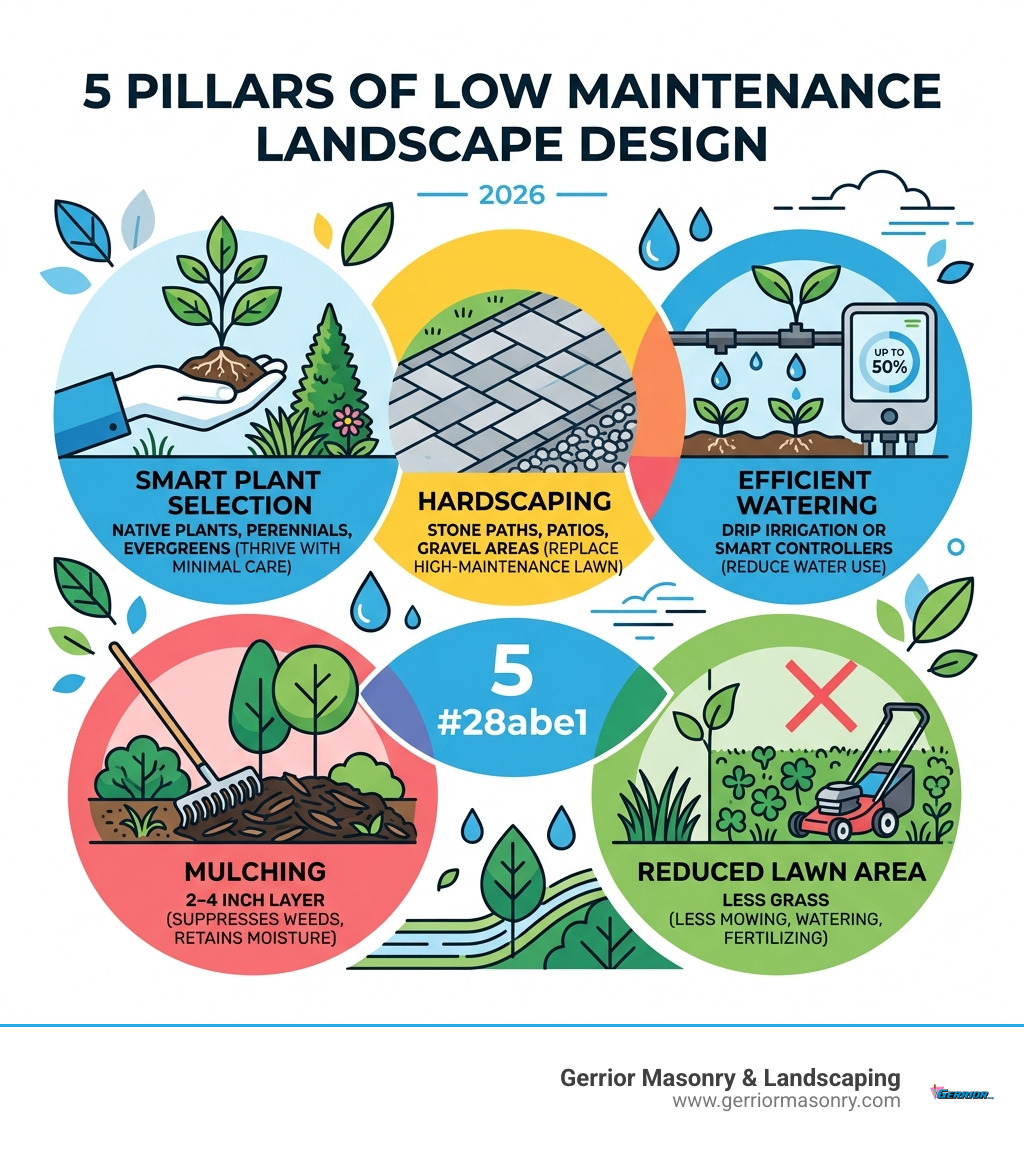
| Pillar | What It Means |
|---|---|
| Smart plant selection | Native plants, perennials, and evergreens that thrive with minimal care |
| Hardscaping | Stone paths, patios, and gravel areas that replace high-maintenance lawn |
| Efficient watering | Drip irrigation or smart controllers that reduce water use up to 50% |
| Mulching | A 2–4 inch layer that suppresses weeds and retains moisture |
| Reduced lawn area | Less grass means less mowing, fertilizing, and watering |
The benefits are real. Homeowners who switch to low-maintenance options can reduce their water bills by 30–50%, and reclaim hours of weekend time they’d otherwise spend on yard work.
Most Massachusetts homeowners aren’t short on ambition — they’re short on time. A well-designed yard shouldn’t feel like a second job. Whether your current landscape demands constant mowing, endless weeding, or a sprinkler system that never quite cooperates, there’s a smarter way to approach your outdoor space.
In April 2026, the shift toward sustainable, low-effort landscaping is accelerating. Homeowners and design professionals alike are moving away from resource-heavy lawns and high-maintenance plantings — and toward designs that work with nature rather than against it.
I’m Joe Gerrior, owner of Gerrior Masonry & Landscape Construction Corp., and over the past 34 years I’ve helped Massachusetts homeowners transform demanding yards into beautiful, easy-care outdoor spaces through thoughtful low maintenance landscape design. In this guide, I’ll walk you through everything you need to know — from plant selection and hardscaping to irrigation and budgeting — so you can build a yard that looks great without consuming your weekends.
Low maintenance landscape design word list:
Core Principles of Low Maintenance Landscape Design
Creating a yard that looks like a million bucks but only takes a few minutes of care starts with a change in philosophy. We often tell our clients in Woburn and Burlington that a low-maintenance yard isn’t about neglect; it’s about making smarter choices during the landscape planning phase.
One of the most effective strategies is xeriscaping. While people often associate this with desert climates, the core principles apply perfectly to Massachusetts. Xeriscaping focuses on water-efficient design and using plants that are naturally adapted to our local rainfall levels. By grouping plants with similar water needs — a technique known as “hydrozoning” — you ensure that you aren’t overwatering the drought-tolerant species just to keep a thirsty neighbor alive.
Scientific research on low-care ideas highlights that the most successful easy-care yards work with the existing site conditions. If you have a damp spot near your downspouts, don’t fight it with a plant that hates “wet feet.” Instead, use a native species that loves moisture. This “right plant, right place” mentality is the bedrock of our landscaping services.
Soil health is another critical,, factor. Before we start any landscape design installation, we recommend a soil test. Amending your soil with organic matter once can save you years of struggling with underperforming plants. Healthy soil leads to deeper root systems, which makes your plants more resilient to our New England weather swings.
Finally, simplicity is your best friend. A complex garden with fifty different types of flowers requires fifty different care schedules. A simple, repeated palette of 10–15 hardy plants creates a unified look that is much easier to manage.
Selecting Plants for a Low Maintenance Landscape Design
When we sit down for backyard garden design sessions, we look for “workhorse” plants. These are species that provide maximum visual impact with minimum intervention.
- Perennials: These are the gift that keeps on giving. Unlike annuals, which you have to replant every spring, perennials return year after year. In our region, plants like Catmint (Nepeta), Coneflowers (Echinacea), and Black-eyed Susans (Rudbeckia) are incredibly hardy. They are drought-tolerant once established and generally resist local pests.
- Evergreens: For year-round structure and color, evergreens are essential. They don’t drop leaves that need raking, and many varieties require very little pruning. We often suggest Boxwoods, Hollies, or Junipers to provide a consistent green backdrop for your modern landscape design.
- Ground Covers: If you’re tired of mowing, ground covers like Creeping Phlox, Creeping Thyme, or Mondo Grass are fantastic alternatives. They suppress weeds naturally by “shading out” the soil and provide a lush, textured look. Creeping Juniper is another excellent choice for steep slopes where mowing is dangerous or difficult.
- Self-Seeding Plants: If you want a “cottage garden” feel without the work, choose plants that self-seed, like Cosmos or California Poppies. They’ll fill in the gaps on their own, making your garden look full and vibrant without you lifting a finger.
Hardscaping as a Foundation for Low Maintenance Landscape Design
If you really want to slash your yard work time, the secret is to trade grass for stone. Hardscaping is the “bones” of your yard, providing structure that never needs to be watered, fertilized, or mowed.
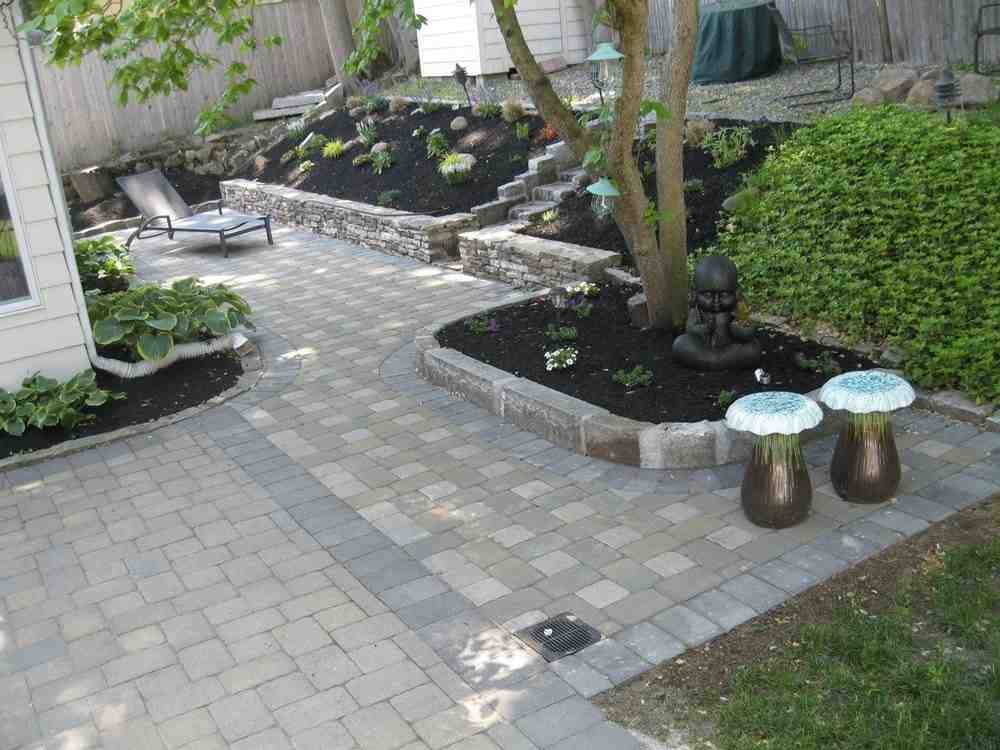
A well-placed patio backyard design can instantly eliminate hundreds of square feet of high-maintenance lawn. Whether you prefer the classic look of a landscape pavers or the natural feel of flagstone, a patio creates a functional outdoor room.
Landscape walkway ideas are another great way to add beauty while reducing maintenance. A path made of pavers or gravel provides a clear route through your yard, preventing “cow paths” from forming in the grass. Gravel, in particular, is a low-cost, high-impact material. It provides excellent drainage and a modern aesthetic when paired with metal edging.
For those dealing with the hilly terrain often found in areas like Winchester or Lexington, a landscape retaining wall is a game-changer. These walls prevent erosion and create level planting beds that are much easier to access. Plus, there is something timeless about a landscaping brick wall that adds value to any Massachusetts property.
If you are wondering what is hardscaping, it essentially includes any non-living element in your yard. From hardscape and landscape integration to specific hardscaping services, these elements are the ultimate “set it and forget it” solution.
Smart Irrigation and Mulching Strategies
Even the most drought-tolerant plants need a little help to get established. However, you don’t need to spend your summer evenings standing in the yard with a hose.
Low-Maintenance Landscaping from MU Extension emphasizes that automated systems are key to efficiency. Smart irrigation controllers, like those from Rachio or Rain Bird, can reduce water use by up to 50% by adjusting schedules based on real-time local weather data. If it rained in Medford yesterday, your system won’t turn on today.
Drip irrigation is another favorite of ours. By delivering water directly to the base of the plants, you minimize evaporation and keep the foliage dry, which helps prevent fungal diseases. It’s a much more efficient way to water than traditional overhead sprinklers.
Then, there is the magic of mulch. A 2-to-4-inch layer of organic mulch (like shredded bark or compost) does three vital jobs:
- Weed Suppression: It can block up to 90% of weed growth by preventing sunlight from reaching weed seeds.
- Moisture Retention: It keeps the soil cool and damp, meaning you have to water less often.
- Soil Health: As organic mulch breaks down, it adds nutrients back into the soil.
For high-traffic areas or rock gardens, inorganic mulches like gravel or river stones offer a truly permanent solution that never needs to be replenished. Just make sure to use a high-quality landscape fabric underneath to keep the weeds at bay. If you’re worried about drainage, we can help design drainage systems and dry wells to keep your yard functional even during our heavy New England rainstorms.
Implementing and Sustaining Your Easy-Care Yard
Once you have your low maintenance landscape design on paper, it’s time to bring it to life. For many of our clients in places like Andover or North Reading, the first step is often “lawn reduction.”
You don’t have to get rid of all your grass, but consider replacing the parts that don’t grow well — like those shady patches under the oaks or the steep slope in the back. Artificial turf has come a long way since the 1970s; today’s options look incredibly realistic and are perfect for dog runs or small play areas where real grass just gets trampled into mud.
Sustainability is a huge part of the 2026 landscape. By choosing native plants and reducing chemical inputs, you aren’t just saving yourself work; you’re creating a habitat for local pollinators. It’s a win-win for you and the Massachusetts environment.
Front Yard and Backyard Design Ideas
Your front yard is your home’s “handshake” with the neighborhood. A low-maintenance entryway can actually improve your curb appeal more than a high-maintenance one, simply because it always looks tidy.
Consider replacing a large, thirsty front lawn with a combination of front stairs and steps and wide, sweeping planting beds filled with evergreens and ornamental grasses. These “mass plantings” read well from the street and require almost no upkeep once the plants fill in.
In the backyard, focus on creating “outdoor rooms.” A backyard landscape that features a central patio design surrounded by a rock garden or a meadow of native wildflowers is much more inviting (and easier to care for) than a giant square of grass.
If you have a pool, you know that grass clippings and pool filters are a match made in hell. Using pool decks and patios made of pavers or natural stone eliminates this problem entirely. Surround the area with salt-tolerant, non-messy plants like ornamental grasses to create a private oasis that doesn’t require a daily skim.
Budgeting and Professional Installation in Massachusetts
One of the most common questions we get is: “How much does this cost?” While every yard is unique, we can provide some general ranges based on internet data for the Massachusetts area.
It is important to remember that while a low-maintenance yard might have a higher upfront cost (especially for hardscaping), the long-term ROI is significant. You’ll save thousands on water bills, fertilizers, and professional lawn care services over the life of your home.
| Project Type | Average MA Cost Range* | High-End / Complex* |
|---|---|---|
| Basic Lawn Replacement (Mulch/Plants) | $5,000 – $10,000 | $30,000+ |
| Standard Paver Patio & Walkway | $12,000 – $25,000 | $75,000+ |
| Full Low-Maintenance Overhaul | $20,000 – $45,000 | $135,000+ |
*Average costs for Massachusetts based on internet data and not actual costs for Gerrior Masonry services. High-end estimates reflect premium materials and complex site conditions.
When looking for a landscape contractor, you have two main paths: DIY or professional.
- DIY: Great for small projects like adding a mulch bed or planting a few perennials. We have plenty of tips for diy landscape design to help you get started.
- Professional: For hardscape design services, large-scale landscaping and hardscaping, or complex drainage issues, a pro is worth the investment.
At Gerrior Masonry & Landscaping, we bring over 30 years of experience to every project. Whether you need a hardscape company to install a new landscape walkway or a hardscape designer to reimagine your entire property, our owner oversight ensures that the job is done right the first time. We also handle the “un-glamorous” but essential work like foundation repair and bulkhead replacement, which are often discovered during landscape renovations.
Conclusion and Next Steps with Gerrior Masonry & Landscaping
Designing a low-maintenance yard is one of the best gifts you can give yourself as a homeowner. By shifting your focus toward native plants, durable hardscaping, and smart technology, you can create an outdoor space that enhances your life rather than adding to your “to-do” list.
From the historic streets of Salem to the growing neighborhoods of Woburn, we’ve seen how a well-executed low maintenance landscape design can transform a property. You don’t have to do it all at once — start by replacing a small patch of struggling grass with a stone walkway, or swap out your high-maintenance annuals for a few hardy evergreens.
If you’re ready to reclaim your weekends and boost your home’s value, we’re here to help. Our skilled team provides everything from landscape design near me to specialized masonry work like chimney repairs. And when the Massachusetts winter hits, we also offer reliable commercial snow removal to keep local businesses running safely.
Ready to get started? Whether you live in Billerica, Melrose, or any of our other service areas, reach out to us today. Let’s build something beautiful together that you can actually enjoy.
Gerrior Masonry & Landscape Construction is based in Woburn, MA, and services Middlesex and Essex County, Massachusetts. Note: Service prices listed are average costs for Massachusetts based on internet data and not actual costs for Gerrior Masonry services.