
What Is Hardscaping: 7 Powerful Benefits in 2025
What Is Hardscaping and Why Should Massachusetts Homeowners Care?
What is hardscaping? It’s the use of non-living materials like stone, concrete, wood, and brick to create permanent structures in your outdoor space. Think patios, walkways, retaining walls, fire pits, and outdoor kitchens—basically anything that isn’t a plant.
Quick Answer for “What Is Hardscaping”:
– Definition: Non-living landscape elements made from durable materials
– Common features: Patios, walkways, retaining walls, decks, driveways
– Materials used: Stone, concrete, brick, wood, pavers, gravel
– Purpose: Structure, function, and permanent beauty in outdoor spaces
– Difference from softscaping: Hardscape = non-living; softscape = plants and grass
If you’ve ever watched house-flipping shows, you know landscaping drives curb appeal. But here’s what many Massachusetts homeowners don’t realize: hardscaping provides the structural backbone that makes everything else work.
Without proper hardscape planning, you end up with drainage problems, soil erosion, and outdoor spaces that look unfinished. Too many straight concrete slabs feel cold and unwelcoming. But get the balance right between hard and soft elements, and you create outdoor living areas that boost your home’s value by up to 20%.
The challenge? Most homeowners feel overwhelmed by material choices, drainage requirements, and design decisions. You want a beautiful, functional outdoor space but don’t know where to start or what will work in New England’s tough climate.
This guide breaks down everything you need to know about hardscaping—from basic definitions to material costs to installation tips. No landscaping degree required.
I’m Joe Gerrior, owner of Gerrior Masonry & Landscape Construction Corp, and I’ve been helping Massachusetts homeowners understand what is hardscaping and transform their outdoor spaces for over 34 years. My team has installed everything from simple stone walkways to complex outdoor kitchens throughout Middlesex and Essex counties.
What Is Hardscaping? Your Non-Living Landscape Backbone
When people ask “what is hardscaping,” I like to give them a simple answer: it’s everything in your yard that isn’t alive. The Merriam-Webster dictionary entry gets more technical, defining hardscape as “hard landscape materials in the built environment structures that are incorporated into a landscape.” But let’s break that down into plain English.
What is hardscaping really comes down to the permanent backbone of your outdoor space. Think of it as the foundation and framework that everything else builds upon. Your patio where you drink morning coffee, the walkway that guides guests to your front door, the retaining wall that keeps your hillside garden from washing away—these are all hardscape features.
The beauty of hardscaping lies in its versatility. We’re talking about decks for outdoor entertaining, driveways that make a stunning first impression, fire pits for those chilly New England evenings, and water features that add tranquility to busy neighborhoods. Even pergolas and outdoor kitchens fall under this umbrella.
From an urban planning perspective, hardscaping extends beyond residential properties to include sidewalks, public fountains, and plaza spaces. But for Massachusetts homeowners, we focus on features that transform your property into a functional, beautiful outdoor living area.
Here’s what makes hardscaping special: permanence and durability. These features use weather-resistant materials designed to withstand our tough New England climate for decades with minimal fuss. No weekly watering, no seasonal replanting, no worrying about winter kill.
Think of hardscaping as the skeleton of your outdoor space. Just like you wouldn’t hang drywall without framing a house first, you shouldn’t plant gardens without considering the structural elements that will support and organize your landscape. Without this foundation, you’ll battle drainage problems, soil erosion, and spaces that never quite feel finished.
For a deeper understanding of hardscape meaning and how it applies to your specific property, our team has developed comprehensive resources custom to Massachusetts homeowners.
Hardscaping vs Softscaping: What Is Hardscaping’s Role?
The best way to understand what is hardscaping is to compare it with its living counterpart—softscaping. Think of them as dance partners: each has distinct strengths, but together they create something beautiful.
| Hardscaping | Softscaping |
|---|---|
| Non-living materials (stone, concrete, wood) | Living elements (plants, trees, grass) |
| Permanent structures | Seasonal changes and growth |
| Low maintenance after installation | Regular watering, pruning, fertilizing |
| Provides structure and framework | Adds color, texture, and natural beauty |
| Higher upfront cost | Lower initial cost, higher ongoing maintenance |
| Lasts decades | Requires replacement every few years |
| Examples: patios, walls, walkways | Examples: flower beds, lawns, shrubs |
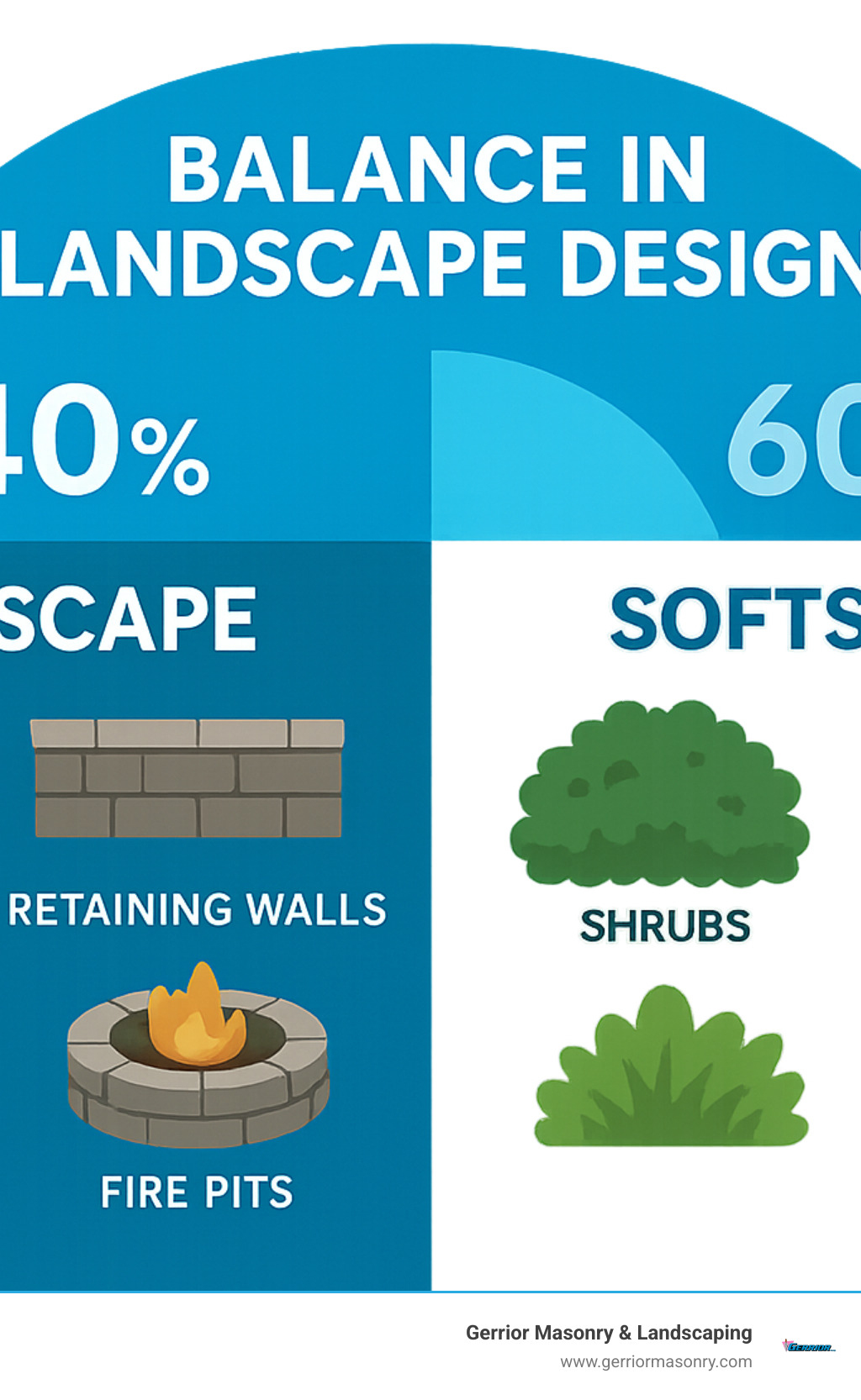
Here’s where the magic happens: balance. Too much hardscape and your yard feels like a shopping mall parking lot. Too much softscape and you’ll spend every weekend maintaining it—plus it lacks structure when plants go dormant.
In Massachusetts, where winter strips away most green growth, well-designed hardscape features keep your property looking intentional year-round. When your perennials die back and trees stand bare, that beautiful stone wall or neat walkway maintains your home’s curb appeal.
Our experience installing landscapes throughout Middlesex and Essex counties shows that the sweet spot typically falls between 30-60% hardscape elements. Urban properties often lean toward more hardscape for easy maintenance, while larger suburban lots might emphasize softscape for natural beauty.
The maintenance difference is huge. Once we install your patio or retaining wall properly, you’re looking at decades of enjoyment with just occasional cleaning and resealing. Compare that to replanting annuals every spring or dealing with irrigation system repairs.
For a comprehensive look at balancing these elements effectively, check out our detailed guide on hardscape vs landscape design principles.
Examples of Hardscape Features—What Is Hardscaping in Real Life?
Let’s get specific about what is hardscaping means by walking through real projects we’ve completed for Massachusetts homeowners.
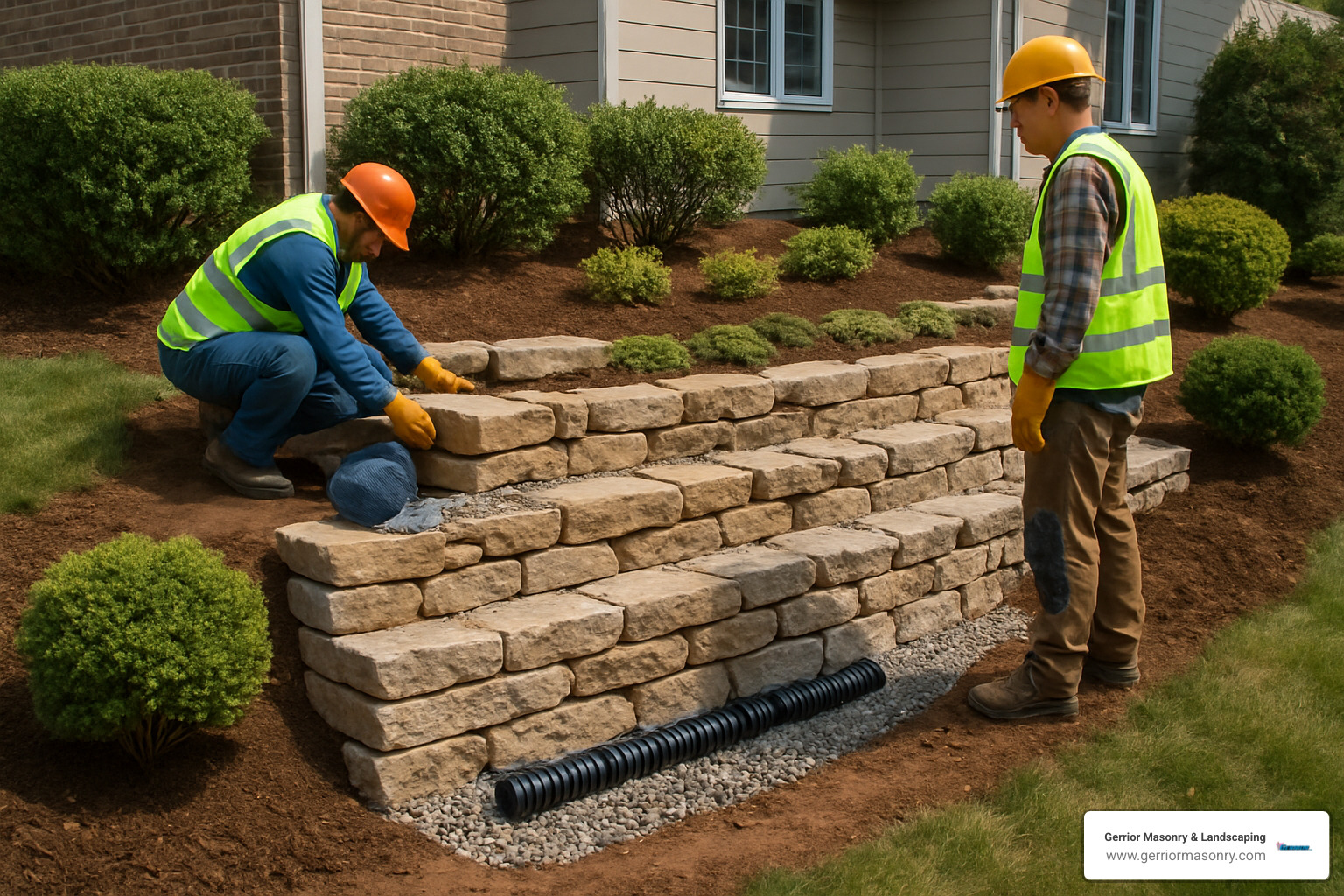
Retaining walls are absolute workhorses in our hilly terrain. We’ve built everything from simple fieldstone barriers to complex terraced systems that transform steep, unusable slopes into gorgeous garden levels. These aren’t just functional—they’re often the most striking feature of a landscape.
Driveways have evolved far beyond basic asphalt. Today’s homeowners choose decorative pavers, stamped concrete, or natural stone to create impressive entrances. Permeable options help manage runoff, which matters more than ever with Massachusetts environmental regulations getting stricter.
Outdoor kitchens became incredibly popular after 2020 when everyone refinded their backyards. We’re installing everything from simple grill stations with countertops to elaborate setups with pizza ovens, refrigerators, and full dining areas. They literally extend your living space outdoors.
Fire pits are perfect for New England’s cool evenings that can happen even in summer. Whether built into a stone patio or designed as a standalone feature, they create natural gathering spots that encourage outdoor entertaining year-round.
Water features add incredible tranquility and can help mask traffic noise—valuable in densely populated areas. We’ve installed everything from simple fountains to elaborate pond systems with waterfalls.
Pergolas and gazebos provide structure and partial shelter. In summer, they offer shade for outdoor dining. In winter, they add visual interest to snow-covered landscapes and give you something beautiful to look at from inside.
Boulders and decorative stone create natural-looking accents when placed strategically. The secret is burying them partially so they appear naturally occurring rather than looking like someone dropped rocks randomly around your yard.
Even specialized applications follow similar principles. Take hardscape for your aquascape—aquarium enthusiasts use rocks, wood, and decorative elements to create structure before adding plants. The same concepts scale from indoor aquariums to massive commercial developments.
The key is understanding that each hardscape feature should serve both function and beauty. Your retaining wall prevents erosion but also creates planting opportunities. Your walkway guides foot traffic but also leads the eye through your landscape design.
Choosing Materials & Designing Signature Features
After 34 years of installing hardscapes throughout Massachusetts, I’ve learned that material choice can make or break your project. The wrong material in our climate leads to cracking, shifting, and expensive repairs. The right choice gives you decades of beauty with minimal fuss.
Concrete remains our most versatile workhorse. Don’t picture boring gray slabs—modern concrete can be stamped to look like stone, stained in rich colors, or textured for slip resistance. It handles our brutal freeze-thaw cycles beautifully when installed with proper drainage. The key is using air-entrained concrete and ensuring water can’t pool on the surface.
Permeable pavers have become increasingly popular, and for good reason. They allow water to soak through instead of running off, which can reduce runoff by up to 100% compared to solid surfaces. Many Massachusetts towns now require permeable surfaces for new driveways and large patios. They’re also easier to repair—if one paver cracks, you replace just that piece instead of cutting up an entire concrete slab.
Natural stone offers best beauty and longevity. Flagstone works perfectly for patios where you want that organic, flowing look. Granite excels in high-traffic areas like front walkways because it’s incredibly durable. Slate gives you smooth, neat surfaces that work well around pools. Yes, natural stone costs more upfront, but it can last 50+ years with minimal care.
Wood elements like cedar decks and pergolas soften all those hard surfaces. Wood brings warmth that stone and concrete can’t match. The trick is choosing the right wood—cedar naturally resists insects and rot, while pressure-treated lumber offers affordability with decent longevity.
Brick feels right at home in New England. It complements our colonial architecture perfectly, and that classic red-brick-against-green-plants combination never goes out of style. We use it frequently for walkways and accent walls.
Don’t overlook gravel—it’s incredibly useful for drainage areas, informal pathways, and as base material under pavers. Different sizes serve different purposes, from fine pea gravel for walking surfaces to larger crushed stone for serious drainage work.
Metal elements are gaining popularity in contemporary designs. Corten steel planters develop that beautiful rust patina, while aluminum pergolas offer clean lines with zero maintenance.
For our hot Massachusetts summers (yes, they can be brutal), consider the Solar Reflectivity Index (SRI) of your paving materials. Light-colored stones and specialized cool pavers reflect heat instead of absorbing it, keeping surfaces comfortable for barefoot traffic.
Design-wise, create focal points that guide visitors through your space naturally. A beautiful fire pit, water feature, or striking retaining wall gives the eye somewhere to land. Asymmetrical arrangements often feel more natural than rigid symmetry—think about how stones would naturally fall in a stream rather than lining them up like soldiers.
Curves soften harsh lines and help hardscape elements blend seamlessly with plantings. Even a simple curved edge on a rectangular patio makes the whole space feel more welcoming.
For environmentally conscious homeowners looking to minimize their impact while maximizing beauty, our sustainable hardscaping options offer innovative solutions that work with nature instead of against it.
Material Cost Ranges & Expected Lifespans
Note: These are average costs based on internet data and not actual costs for Gerrior Masonry services. Actual project costs vary significantly based on site conditions, design complexity, and specific material choices.
Understanding material costs helps you make informed decisions about where to invest your hardscape budget.
Concrete offers the widest price range: $6-$60 per square foot. Basic poured concrete starts around $6-$12 per square foot, while decorative stamped or stained concrete runs $15-$25. High-end architectural concrete with intricate patterns or colors can reach $25-$60. Properly installed concrete lasts 20-30 years with occasional sealing and crack repair.
Natural stone typically costs $15-$75 per square foot. Basic flagstone runs $15-$25, while premium granite or bluestone costs $30-$50. Rare imported stones can hit $50-$75 per square foot. The investment pays off with 50+ year lifespans—some of our stone installations from the 1990s still look fantastic.
Wood decks range from $25-$80 per square foot. Pressure-treated lumber decks start around $25-$35, cedar and composite materials run $40-$60, and exotic hardwoods can reach $60-$80. Wood decks typically last 15-25 years, while composite materials push that to 25-30 years.
Permeable pavers cost $10-$40 per square foot. Basic concrete pavers start at $10-$15, natural stone pavers run $20-$30, and high-end designer pavers can reach $30-$40. Expect 20-25 years of service life with proper maintenance.
Brick runs $12-$35 per square foot. Standard clay brick costs $12-$18, while reclaimed or specialty brick can reach $20-$35. Well-installed brick easily lasts 25+ years.
The durability factor matters more than initial cost. Quality materials cost more upfront but save money long-term through reduced maintenance and replacement needs. Sealed pavers need resealing every 3-5 years, while natural stone requires little more than occasional power washing.
Climate-Smart & Specialized Ideas
Massachusetts weather doesn’t mess around, and neither should your hardscape design. Our freeze-thaw cycles, heavy snow loads, and occasional flooding demand thoughtful material and design choices.
For hot weather relief, light-colored paving materials with high SRI ratings stay significantly cooler underfoot. Covered patios and pergolas provide essential shade during July and August heat waves. Outdoor fountains create natural cooling through evaporation—a welcome relief during humid summer evenings.
Cold weather preparation requires installing all hardscape elements below the 48-inch frost line to prevent frost heave damage. We use materials specifically rated for freeze-thaw cycles and ensure proper drainage to prevent ice dams and surface cracking.
Erosion control becomes critical on the sloped properties common in Newton, Lexington, and surrounding hills. Retaining walls and terraced designs manage steep grades while creating usable flat areas. The key is proper drainage behind walls to prevent hydrostatic pressure buildup that causes expensive failures.
For urban solutions in dense neighborhoods like Somerville or Cambridge, creative hardscape maximizes limited space. Vertical walls, multi-level decks, and compact water features help small properties punch above their weight.
Even specialized applications follow similar principles. Aquarium hardscaping uses rocks, wood, and decorative elements to create structure before adding plants—the same concepts whether you’re designing a 10-gallon tank or a 10-acre estate. For detailed guidance on hardscape for your aquascape, the principles scale beautifully.
Drainage remains the foundation of every successful hardscape project. Poor drainage destroys even the most beautiful installations. For comprehensive guidance on this critical topic, HGTV’s drainage tips provide excellent foundational knowledge.
Why Invest in Hardscaping? Benefits, ROI & Eco Impact
When homeowners ask what is hardscaping worth to their property, the answer often surprises them. Smart hardscape investments deliver returns that go far beyond just looking pretty—we’re talking measurable increases in property value, dramatic reductions in maintenance headaches, and genuine environmental benefits that make a difference.
Your home’s value can increase by up to 20% with well-designed hardscaping. That’s not just marketing fluff—real estate professionals see this consistently throughout Massachusetts. When you install quality features like outdoor kitchens, professional patios, and thoughtfully designed walkways, you’re essentially adding square footage to your home without the massive expense of room additions.
Think about it this way: a beautiful patio becomes your outdoor dining room. A well-designed fire pit area turns into your family’s favorite gathering spot. These spaces get used almost as much as indoor rooms during our short but glorious New England summers.
The maintenance relief alone makes hardscaping worthwhile. Once we install quality hardscape features, they basically take care of themselves. No more weekend mornings spent mowing, watering, or replanting sections that didn’t survive the winter. Just occasional cleaning and minor repairs—that’s it.
For Massachusetts homeowners dealing with slopes and drainage issues, hardscaping provides crucial erosion control. Retaining walls and proper grading prevent soil loss and protect your foundation. We’ve seen too many properties suffer expensive damage because water wasn’t managed properly from the start.
Here’s something most people don’t realize: permeable pavers and smart drainage systems can reduce stormwater runoff by 100% compared to traditional driveways and patios. This isn’t just good for the environment—it helps prevent flooding and reduces strain on municipal systems that are already overwhelmed during heavy rains.
Even wildlife benefits from thoughtful hardscape design. Rock walls provide shelter for beneficial small animals, while water features attract birds and helpful insects to your property. It’s amazing how a simple stone fountain can transform your backyard into a mini-ecosystem.

During our long Massachusetts winters, hardscape features provide the visual structure that keeps your property looking intentional and attractive when everything else goes dormant. While your perennials are sleeping under snow, that beautiful stone walkway or neat retaining wall continues working hard to make your home look amazing.
For homeowners trying to understand how hard and soft landscape elements work together, our detailed guide on hardscaping and landscaping integration shows you exactly how to create that perfect balance.
Hardscaping’s Effect on Home Resale & Curb Appeal
Real estate agents throughout Middlesex and Essex counties tell us the same thing over and over: quality hardscaping makes homes sell faster and for more money. The numbers back this up in ways that might surprise you.
Outdoor kitchens deliver the biggest bang for your buck, often returning 70-200% of your investment. Even basic outdoor cooking setups create that “wow factor” buyers remember long after the showing ends. Patios and decks typically return 60-90% of their cost, while professional walkways give you back 50-80% of what you spent.
Even functional features like retaining walls return 40-70% when they solve real problems like drainage or create usable flat space on sloped lots. Water features, while more aesthetic, still deliver solid 30-60% returns because they create memorable focal points.
But here’s the real magic: buyer psychology. When potential buyers see professional hardscaping, their brains automatically register “well-maintained property” and “quality investment.” It signals that you’ve cared for your home and made thoughtful improvements rather than just slapping on quick fixes.
Properties with professional hardscaping typically sell 6-10% faster than comparable homes without these features. In competitive markets like ours, that speed advantage can mean the difference between multiple offers and sitting on the market for months.
The visual impact happens instantly. Quality stonework, professional walkways, and well-designed outdoor spaces create positive first impressions that carry through the entire showing. Buyers start imagining themselves entertaining friends around your fire pit or cooking dinner in your outdoor kitchen—and that emotional connection drives offers.
Sustainability & Water-Management Advantages
Modern hardscaping has evolved far beyond just looking good. Today’s designs address real environmental challenges while meeting increasingly strict local regulations.
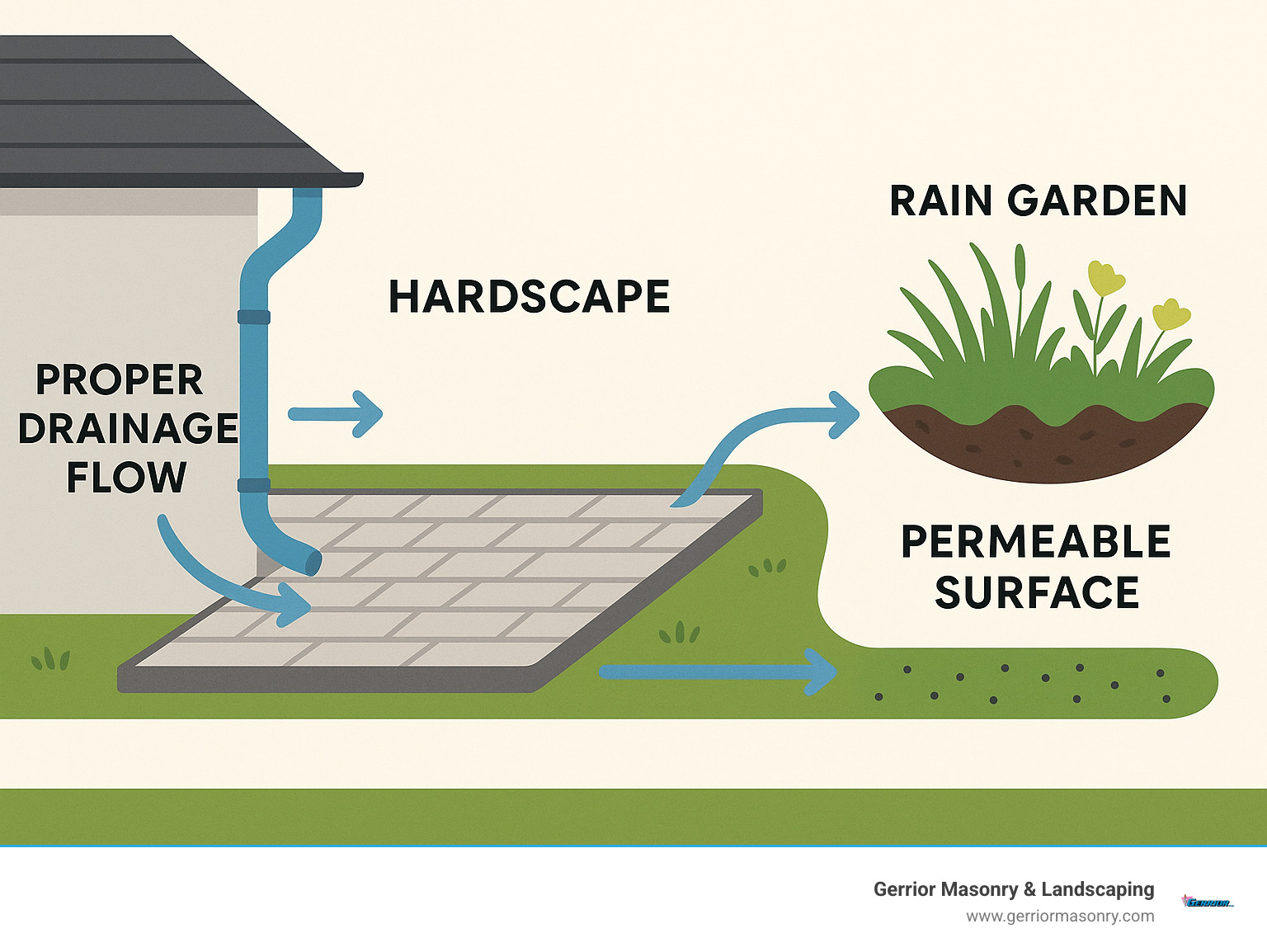
French drains, rain gardens, and permeable surfaces work together to capture rainwater and release it slowly rather than sending it rushing toward storm drains. This dramatically reduces flooding risk while naturally filtering pollutants before they reach groundwater.
Reducing lawn area through strategic hardscaping cuts water consumption significantly. This matters more each year as water conservation becomes essential throughout Massachusetts. Instead of spending summer evenings dragging sprinklers around, you’re enjoying your beautiful, drought-resilient outdoor spaces.
Well-designed hardscape systems capture rainwater for later use through integrated cisterns and rain barrels that blend seamlessly with patio and walkway designs. It’s practical sustainability that actually looks better than traditional approaches.
Many Massachusetts municipalities now require permeable pavers for new construction and major renovations. These systems allow water infiltration while providing durable surfaces that handle our freeze-thaw cycles. Getting ahead of these requirements saves headaches and money down the road.
Light-colored hardscape materials and strategic shade structures help reduce the urban heat island effect that makes dense neighborhoods uncomfortably hot during summer heat waves. Your outdoor spaces stay cooler and more comfortable for actual use.
The materials themselves support sustainability goals. Natural stone lasts generations with minimal maintenance, while recycled concrete pavers reduce landfill waste without sacrificing durability or appearance. Many of today’s hardscape materials are completely recyclable at the end of their long lifespans.
Planning, Installation & Long-Term Care
The difference between a hardscape project that lasts decades and one that fails within a few years comes down to three things: proper planning, correct installation, and ongoing maintenance. After installing thousands of hardscape features throughout Massachusetts, I’ve seen what works—and what definitely doesn’t.
Master planning is where most homeowners go wrong. They fall in love with a beautiful patio design but forget to consider how it connects to the rest of their yard. That gorgeous stone patio becomes a problem when you realize it blocks the natural path to your garden or interferes with future deck plans.
Think of your entire outdoor space as one connected system. Every hardscape element should serve a purpose and work harmoniously with other features. We always start with a comprehensive site analysis before placing the first stone.
Grading and drainage come first—always. Water is hardscaping’s biggest enemy. Poor drainage causes frost heave, undermines foundations, and creates ice hazards that can be dangerous and expensive to fix. In Massachusetts, where we get everything from nor’easters to summer deluges, water management isn’t optional.
We’ve torn out countless “beautiful” patios and walkways that failed because the installer skipped proper drainage. Don’t let this happen to your investment.
Installation sequencing matters more than most people realize. Install all hardscape features before planting flowers or laying sod. The heavy equipment needed for excavation and material delivery will destroy existing landscaping. We learned this lesson the hard way in our early years—there’s nothing worse than explaining to a homeowner why their prize-winning garden got crushed by a skid loader.
Massachusetts building codes require all structural elements to extend below the 48-inch frost line. This includes retaining wall footings, fence posts, and any structural supports. Ignore this requirement, and frost heave will destroy your project within a few winters.
Permits and regulations vary by municipality, but most structural hardscape work requires permits. Retaining walls over 4 feet high, structures near property lines, and projects affecting drainage typically need approval. The paperwork might seem annoying, but it protects you from costly mistakes and legal issues.
We see the same installation mistakes repeatedly: inadequate base preparation, poor drainage planning, insufficient edge restraints for pavers, and wrong material choices for our climate. These errors might not show up immediately, but they’ll cause expensive problems within a few years.
For professional guidance that prevents these costly mistakes, our hardscape design services ensure your project meets both aesthetic and functional goals.
The Hardscape Installation Checklist
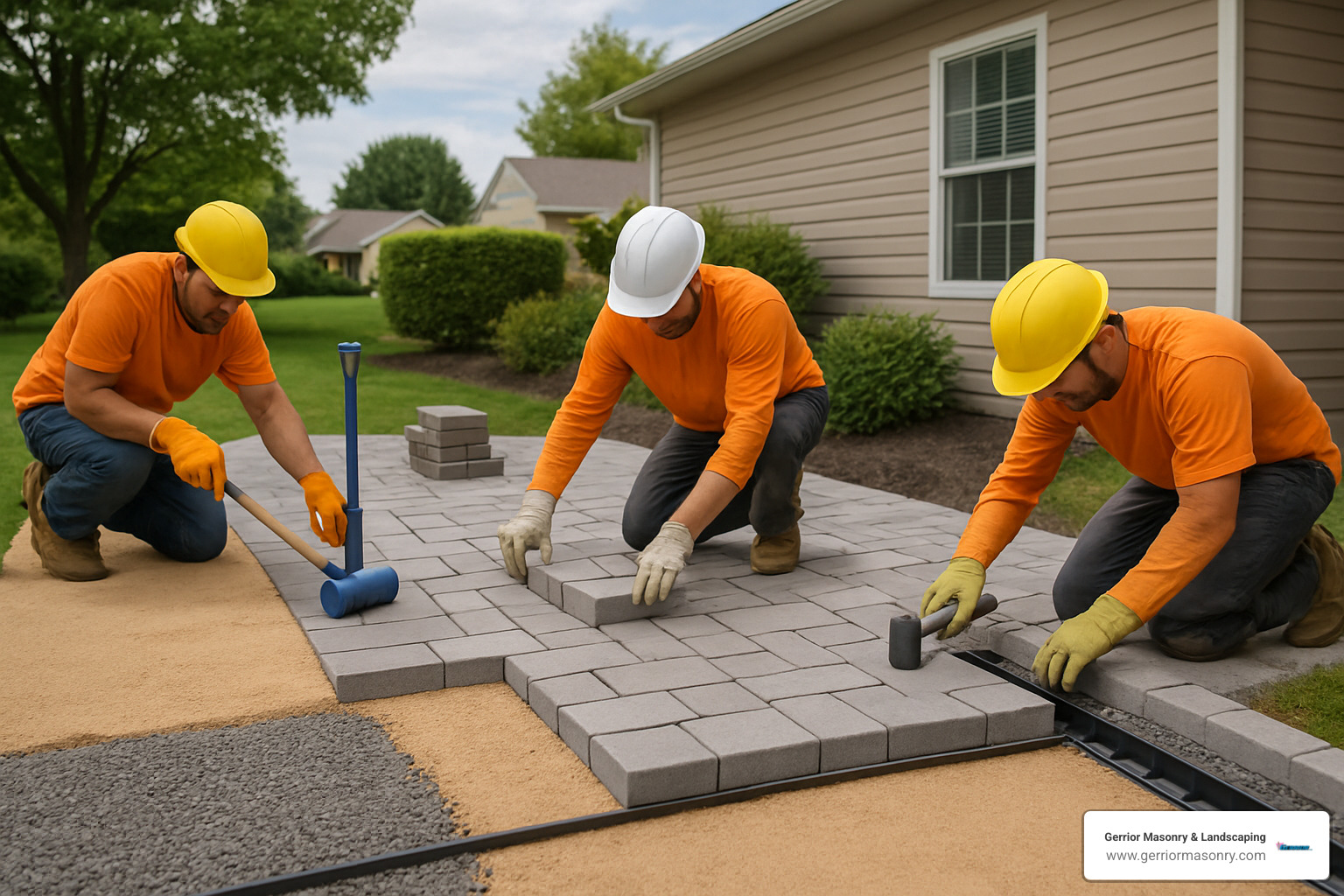
Proper hardscape installation follows a specific sequence that can’t be shortcuts. Each step builds on the previous one, and skipping steps leads to failure.
Excavation removes existing materials and creates space for your new hardscape. The depth varies by project, but typically includes 6-8 inches for base material plus the thickness of your surface material. Dig too shallow, and your project will settle and shift.
Base aggregate installation provides the foundation everything else relies on. We use crushed stone or gravel that drains well and compacts properly. The base should be 2-3 times thicker than your surface material—this isn’t the place to save money.
Mechanical compaction achieves 95% compaction density. Hand tamping with a small tool won’t cut it for load-bearing surfaces. We use plate compactors or rollers depending on the project size. Proper compaction prevents settling that causes uneven surfaces and drainage problems.
Edge restraints prevent paver movement over time. Many DIY projects skip this step, and it shows within a year or two when pavers start spreading apart. We install concrete or heavy-duty plastic restraints that lock everything in place permanently.
Laying patterns follow manufacturer specifications for spacing and alignment. Consistent gaps allow for drainage and thermal expansion—both critical in our climate. We use string lines and frequent measurements to maintain perfect alignment.
Joint sand application locks pavers together and prevents weed growth. We sweep polymeric sand into all joints, then activate it with water. This creates a semi-flexible bond that moves with the pavers but stays in place.
Sealing is optional for most modern materials, but it can improve color and provide stain protection. We recommend sealing for high-traffic areas or when homeowners want maximum protection.
Final inspection checks drainage, surface level, and edge security. We test drainage with a hose and walk the entire surface checking for loose spots or uneven areas.
Essential tools include mechanical compactors, laser levels for grading, concrete saws for cutting, rubber mallets for adjustments, and proper safety equipment. Professional tools make a significant difference in results and safety.
Maintenance Mistakes to Avoid
Good maintenance extends your hardscape’s lifespan and preserves your investment. Unfortunately, we see the same maintenance mistakes repeatedly—mistakes that turn minor issues into expensive repairs.
Blocked drainage tops our list of preventable problems. Leaves, debris, and sediment clog gutters, drains, and permeable surfaces. Clean these regularly, especially after storms. We’ve seen beautiful permeable patios turn into swamps because homeowners didn’t maintain the drainage system.
Missing joint sand causes paver movement and weed problems. Refill joints annually and after heavy rains. It’s a simple task that prevents major headaches later. When joint sand washes out, pavers lose stability and start shifting.
Harsh chemicals damage stone and concrete surfaces. Avoid deicing salts on natural stone—they cause spalling and surface damage. Use appropriate cleaning products for your specific materials. When in doubt, stick with mild soap and water.
Invasive tree roots can lift and crack hardscape features. Monitor nearby trees and address root issues before they cause damage. We’ve seen gorgeous patios destroyed by tree roots that could have been managed with simple root barriers.
Skipping annual inspections allows small problems to become expensive repairs. Walk your hardscape features each spring, looking for loose stones, drainage issues, or structural movement. Catching problems early saves thousands in repair costs.
Pressure washing errors can damage joint sand and surface textures. Use appropriate pressure settings and techniques. Too much pressure strips away protective joint sand and can etch delicate stone surfaces.
For comprehensive maintenance guidance that protects your investment, consult our detailed guide on how to maintain and care for your hardscaping and masonry features.
Frequently Asked Questions about Hardscaping
What is hardscaping and how is it different from landscaping?
What is hardscaping is the use of non-living materials like stone, concrete, wood, and metal to create permanent structures in outdoor spaces. It’s actually a subset of the broader term “landscaping.”
Here’s the simple breakdown: landscaping encompasses everything you do to improve your outdoor space—both the living and non-living elements. Hardscaping specifically refers to the permanent, structural elements that don’t grow, change color with seasons, or need watering.
Think of landscaping as the entire meal, while hardscaping is just one course. Your landscape includes your beautiful flower gardens, lush lawn, and mature trees (that’s softscaping), plus your stone patio, brick walkway, and retaining wall (that’s hardscaping).
The key difference is permanence and maintenance. Your hardscape features will look essentially the same in January as they do in July, while your softscape elements cycle through seasons of growth, bloom, dormancy, and renewal.
How much does hardscaping cost on average?
These are average costs based on internet data and not actual costs for Gerrior Masonry services.
Hardscaping costs vary dramatically based on materials, site conditions, and project complexity. The range is honestly pretty wide—you could spend a few thousand dollars or well into six figures.
Budget-friendly projects typically run $3,000-$10,000 and might include a basic concrete patio, simple gravel walkway, or small decorative retaining wall. These projects use standard materials and straightforward designs.
Mid-range investments fall between $10,000-$35,000 and often feature natural stone patios with integrated fire pits, comprehensive walkway systems connecting different areas of your property, or multi-level retaining walls that solve drainage issues while adding visual appeal.
High-end changes start around $35,000 and can exceed $150,000 for elaborate outdoor kitchens with dining areas, complex water features with multiple levels, or extensive terracing that completely reshapes your landscape.
Several factors dramatically affect your final investment. Material choices make the biggest difference—basic concrete costs a fraction of premium natural stone. Site conditions matter too—steep slopes, poor drainage, or difficult access can double labor costs. Local regulations might require permits or engineering, and seasonal timing affects both material availability and labor rates.
Do I need permits or licensed contractors for hardscape projects?
The permit question depends entirely on your project scope and local regulations. Many Massachusetts towns require permits for retaining walls over 4 feet high, structures near property lines, projects affecting drainage patterns, or any electrical work for lighting and water features.
Here’s what usually triggers permit requirements: structural retaining walls, permanent structures like pergolas or gazebos, electrical installations, and projects that change water flow patterns. Simple patios and basic walkways typically don’t require permits, but it’s always worth checking.
Licensed contractors become important for complex projects. While Massachusetts doesn’t have hardscape-specific licensing requirements like some other regions, many projects require general contractor licenses and building permits. For reference, places like Queensland require Queensland Building and Construction Commission licensing for structural landscaping, while NSW Fair Trading requires licenses for work over $5,000.
The smart approach? Check with your local building department before starting any significant hardscape project. They’ll tell you exactly what requires permits in your town. It’s much easier to get permits upfront than to deal with compliance issues later when you’re trying to sell your home.
For complex projects involving structural elements, drainage changes, or electrical work, working with licensed professionals protects both your investment and your safety. We’ve seen too many DIY projects that looked great initially but caused expensive problems years later due to improper installation or code violations.
Conclusion
After reading this comprehensive guide, you now understand that what is hardscaping goes far beyond simply adding stone and concrete to your yard. It’s about creating the permanent foundation that transforms your outdoor space into a functional, beautiful extension of your home.
Think of hardscaping as the skeleton of your landscape design. Without strong bones, everything else falls apart. Proper drainage planning isn’t just important—it’s absolutely critical for long-term success. Skip this step, and you’ll be dealing with frost heave, water damage, and expensive repairs within a few seasons.
The numbers don’t lie when it comes to value. Quality hardscape features can boost your property value by up to 20% while requiring minimal maintenance once properly installed. Compare that to replanting flower beds every year or reseeding lawn patches, and the long-term benefits become clear.
Balance is everything in successful landscape design. Too much hardscape feels cold and institutional. Too much softscape becomes overwhelming to maintain and lacks structure during New England’s harsh winters. The sweet spot typically falls between 30-60% hardscape elements, depending on your lifestyle and maintenance preferences.
Whether you’re dreaming of a simple stone walkway or planning an elaborate outdoor kitchen, hardscaping is an investment in decades of enjoyment. Yes, the upfront costs can seem significant, but quality materials and professional installation pay dividends in reduced maintenance, increased property value, and countless hours of outdoor living.
The difference between DIY attempts and professional installation becomes painfully obvious after the first freeze-thaw cycle. Massachusetts weather doesn’t forgive shortcuts in base preparation, drainage, or frost-line considerations.
Ready to transform your outdoor space with professional hardscaping? Our team brings over 30 years of experience to every project, ensuring your investment delivers lasting beauty and function. Learn more about our comprehensive hardscaping contractor services and find how we can bring your outdoor vision to life.
Gerrior Masonry & Landscape Construction is based in Woburn, MA, and proudly serves homeowners throughout Middlesex and Essex County, Massachusetts.
