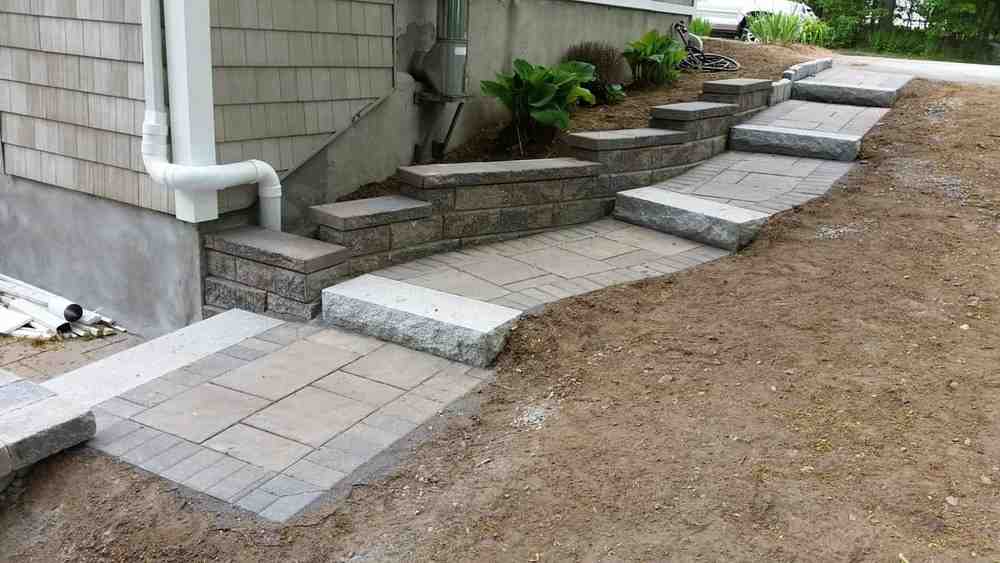
Why Outdoor Stone Pathways Transform Your Landscape
Outdoor stone pathway ideas offer a beautiful way to connect different areas of your property, adding timeless charm and value. A well-designed stone path can create a welcoming entrance, guide visitors through a garden, or reduce lawn wear, dramatically improving your outdoor space.
Quick Stone Pathway Options:
- Flagstone Paths – Irregular, natural shapes for a rustic look
- Bluestone Walkways – Smooth, neat surfaces in blue-gray tones
- Granite Stepping Stones – Durable, weather-resistant option
- Slate Pathways – Thin, layered stones with smooth surfaces
- Gravel & Stone Combinations – Cost-effective with excellent drainage
- Sandstone Routes – Warm colors and slip-resistant texture
Beyond aesthetics, natural stone walkways have a lifespan of 25+ years, making them a smart long-term investment. They are also incredibly versatile and perform exceptionally well in harsh New England winters when properly installed.
For over 34 years, our team at Gerrior Masonry & Landscape Construction has helped Massachusetts homeowners with expertly designed outdoor stone pathways. We treat each project as both an artistic and functional endeavor, ensuring your walkway is beautiful, safe, and durable for decades to come.
A Curated List of Outdoor Stone Pathway Ideas
Creating the perfect outdoor stone pathway is about choosing the right materials and design to complement your home and landscape. Let’s explore some of the best outdoor stone pathway ideas our team has brought to life for homeowners across Middlesex and Essex County, Massachusetts.
Choosing Your Material: The Best Stones for Walkways
The foundation of any great pathway is the right natural stone. Each type offers unique characteristics in durability, color, and texture.
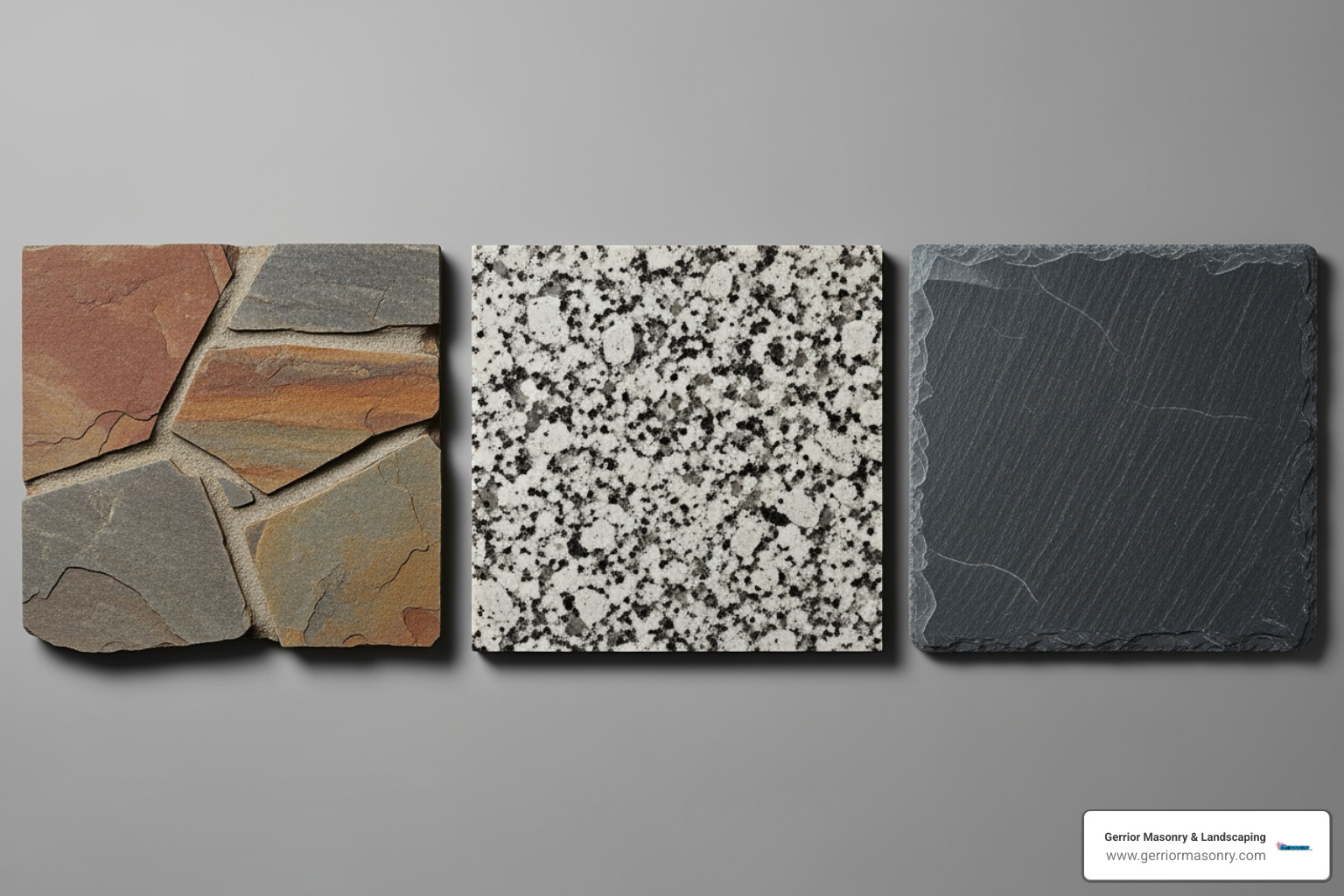
- Flagstone: A perennial favorite, flagstone is known for its large, flat, and distinctly irregular shapes, which create a natural, rustic look that integrates beautifully into any landscape. It is available in a rich spectrum of earth-toned colors, including reds, blues, and browns, allowing for significant design flexibility. Its naturally textured, slip-resistant surface makes it an exceptionally safe and durable choice for walkways, especially in climates with frequent rain or frost.
- Bluestone: A specific type of flagstone, bluestone is highly prized for its classic and elegant blue-gray hues that can develop a beautiful, weathered patina over time. Its exceptional strength and dense composition make it incredibly durable and long-lasting. While its surface can be smooth for a refined look, we often recommend a thermal or natural cleft finish to enhance slip resistance, making it a versatile option for both formal entryways and relaxed garden paths.
- Granite: For ultimate ruggedness and longevity, granite is an unparalleled choice. As one of the hardest natural stones available, this dense igneous rock is exceptionally resistant to scratching, staining, and general wear, making it perfect for high-traffic areas. Its remarkable ability to withstand extreme weather, including the demanding freeze-thaw cycles of Massachusetts winters, ensures your pathway remains structurally sound and beautiful for decades with very little upkeep.
- Slate: Slate provides a uniquely sophisticated and modern look with its thin, layered structure and characteristically smooth surface. It comes in a dramatic palette of dark colors, including deep grays, greens, and purples, which can make a bold design statement. For walkway applications where safety is paramount, it is essential to choose a natural cleft or honed finish to provide better traction and slip resistance, combining elegance with practicality.
- Sandstone: This sedimentary rock offers a warm and inviting color palette of beige, yellow, red, and brown tones, making it ideal for creating a welcoming and comfortable atmosphere. Sandstone is remarkably long-lasting and features a naturally coarse, low-slip surface, which makes it an excellent choice for family-friendly pathways or pool surrounds where safety is a primary concern. Its texture provides reliable grip even when wet.
- Limestone: A versatile and popular sedimentary stone, limestone is available in a wide range of colors, from light creamy whites and beiges to darker, earthy tones. While it is softer than granite, it is still very durable and perfectly suitable for most residential pathway applications. It can be cut into uniform shapes for a formal look or used in more irregular forms, offering a smooth, neat finish that complements many architectural styles.
Our team can help you choose the ideal material that balances aesthetics with practical needs. For more definition, explore our ideas for stone walkway edging.
Popular Design Styles for Natural Stone Paths
Once you’ve chosen your stone, envision the style of your pathway.
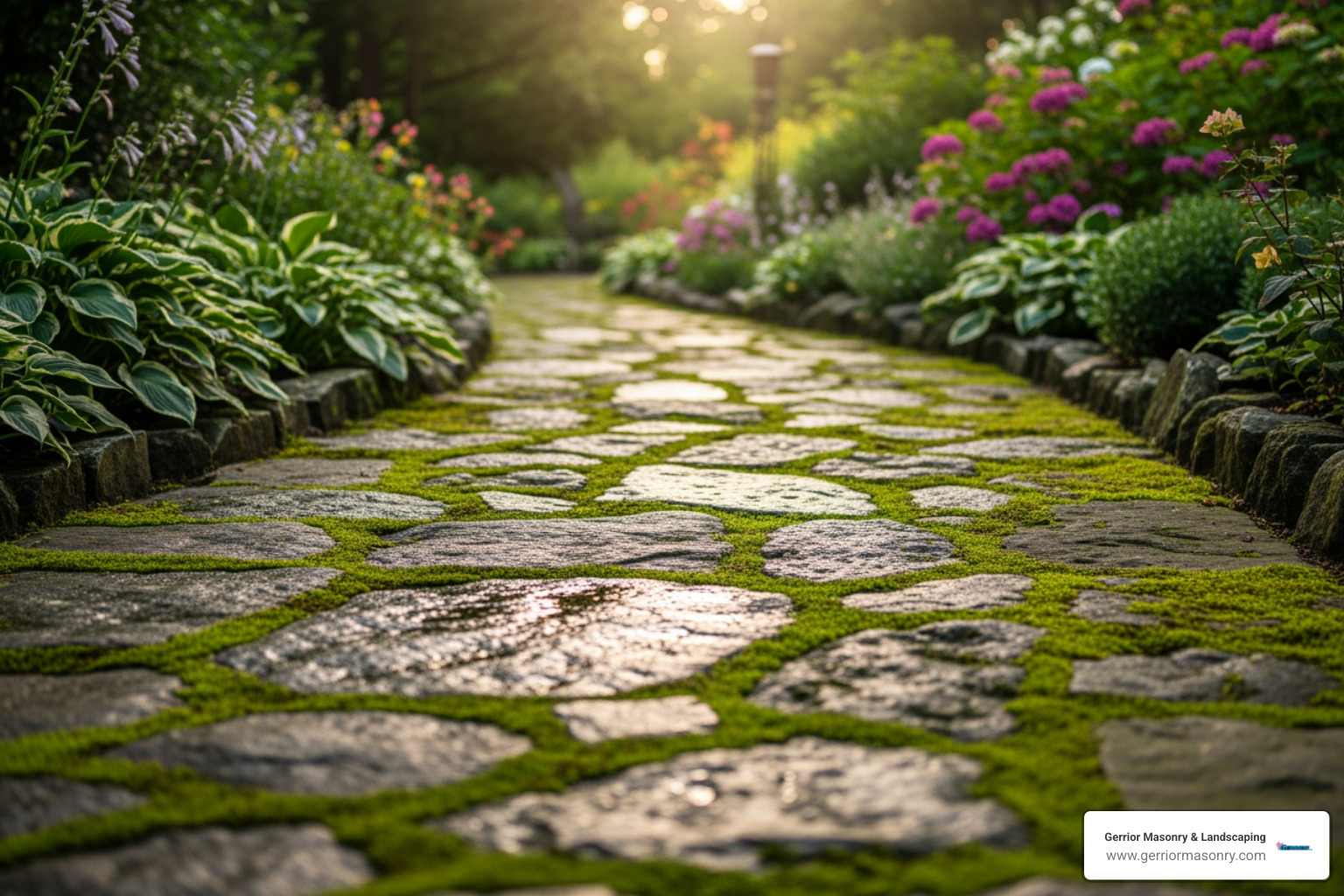
- Rustic & Informal: This style uses irregular flagstones with grass or ground cover in the gaps for a soft, organic look. Meandering, curved paths are characteristic of this style, inviting a leisurely stroll.
- Formal & Modern: For a structured landscape, this style uses cut stone in geometric patterns or straight lines. The precision creates a polished, neat look that can frame flower beds with sophistication.
- Unique & Creative: Don’t be afraid to think outside the box. Consider mosaic patterns with smaller pebbles, mixing materials like stone and brick, or using reclaimed granite cobblestones for historical charm.
We take pride in crafting pathways that match your vision. To see some of our completed projects, we invite you to view our walkway projects.
Creative Layouts: Stepping Stones, Gravel, and Path Shapes
How you lay out your pathway materials can dramatically impact its feel and function.
- Stepping Stone Paths: These are charming and naturalistic. Individual stones are placed to accommodate a natural stride, allowing grass or ground cover to grow between them. They can be sunken into the lawn for a subtle look or arranged in a grid to define a small sitting area.
- Gravel and Stone Combinations: Combining gravel with larger stones is practical, attractive, and budget-friendly. Gravel provides excellent drainage and, with a landscape fabric underlayment, helps prevent weeds.
- Curved vs. Straight Paths: The shape of your path dictates the journey. A gently winding path adds mystery and can make a small garden feel larger. A straight path offers a sense of order and leads the eye to a focal point, like a front door. Sometimes, a path needs to integrate with brick stairs to handle changes in elevation.
Finishing Touches: Lighting and Hardscape Integration
Thoughtful additions like lighting and integration with other hardscaping can lift your entire outdoor space.
- Pathway Lighting: Lighting is crucial for safety and ambiance. Options include easy-to-install solar lights, customizable low-voltage fixtures, or sleek recessed LEDs integrated into the stone or edging. Proper lighting prevents trips and creates a warm, inviting atmosphere.
- Cohesive Design: Your stone pathway should connect to other features. Using the same stone for your patio and pathway creates a seamless transition. Pathways can also interact beautifully with retaining walls on sloped properties. Our landscape design and installation services ensure all elements work together harmoniously.
- Low-Growing Plants for Pathway Joints: To soften the edges, consider planting low-growing ground covers in the joints between stones.
- Creeping Thyme is a fragrant and durable option.
- Irish Moss creates a lush, green carpet-like effect.
- Alyssum offers delicate white or purple flowers.
- Dwarf Mondo Grass adds a fine, tough texture.
Installation, Care, and Budgeting for Your Outdoor Stone Pathway
Bringing your outdoor stone pathway ideas to life requires careful planning, proper installation, and a commitment to maintenance. At Gerrior Masonry & Landscape Construction, we ensure every project is built to last.
Essential Installation Tips for a Durable Outdoor Stone Pathway
The longevity of your stone pathway depends heavily on a proper base. While a simple stepping stone path can be a DIY project, professional installation is recommended for more complex or sloped designs to ensure durability.
- Professional Installation Process: Our team follows a meticulous process for superior results.
- Planning and Layout: We first outline the path’s route to ensure it meets your functional and aesthetic goals.
- Base Preparation: This is the most critical step. We excavate the area (typically 9-10 inches deep), compact the soil, and lay a gravel base over filter fabric. This provides a stable foundation and crucial drainage to prevent frost heave.
- Setting Bed and Stone Laying: A layer of sand is spread and leveled, creating a bed to set the stones. Each stone is carefully placed and tapped to ensure a level surface.
- Joint Filling: The gaps between stones are filled with sand or polymeric sand. This locks the stones in place, improves stability, and helps prevent weed growth.
- Edging: For some designs, edging is installed to maintain the path’s shape.
For more details on paver installation, see our guide on how to install paver stones walkway.
Maintenance, Durability, and Cost of Outdoor Stone Pathway Ideas
Investing in a natural stone pathway pays dividends in beauty and functionality for years.
- Why Choose Natural Stone?
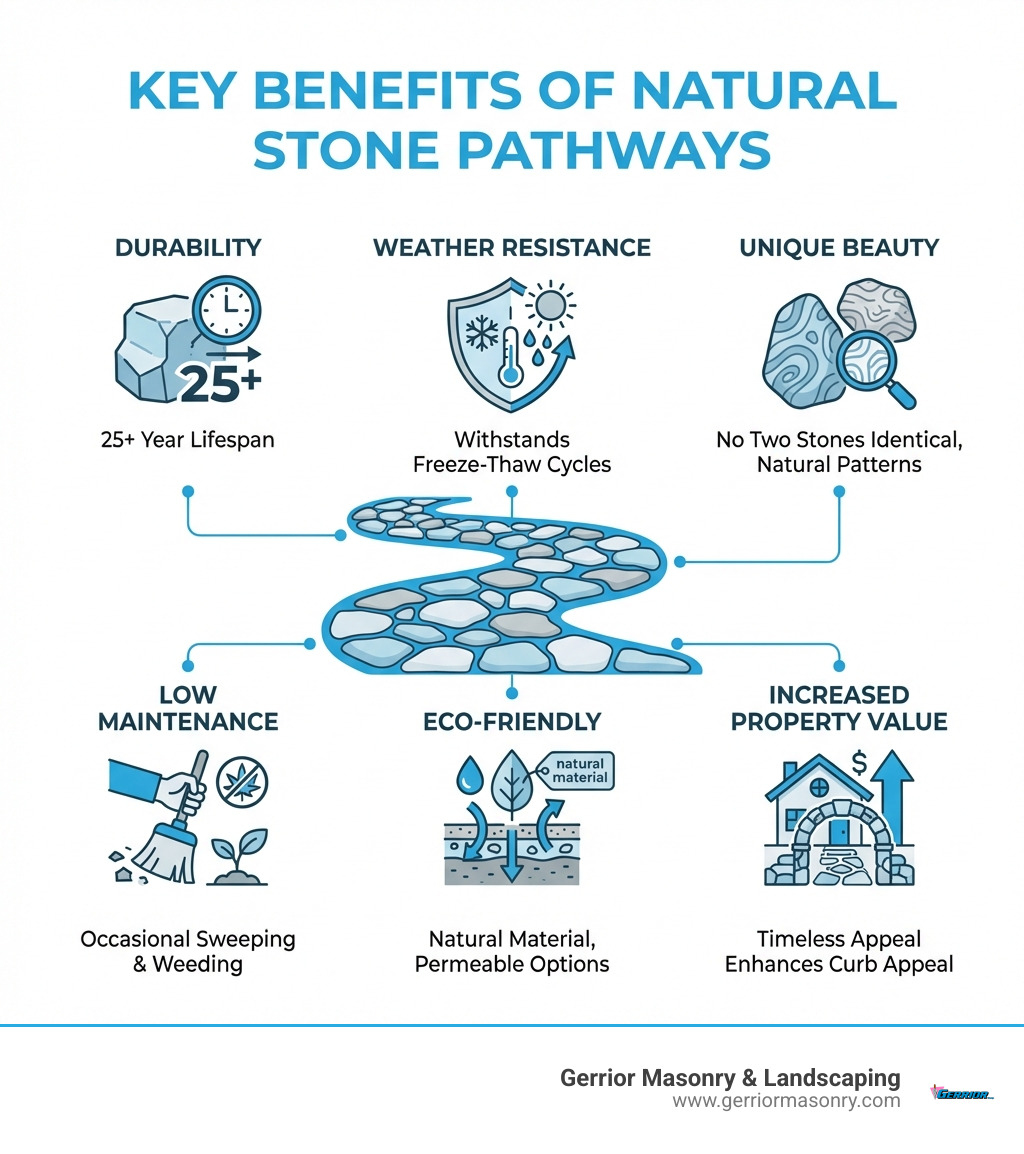
- Longevity: Natural stone walkways can last 25+ years, far outliving materials like concrete or asphalt.
- Timeless Beauty: Unlike manufactured pavers, each natural stone is unique, adding unparalleled character to your landscape.
- Durability: Stones like granite and sandstone are extremely weather-resistant and ideal for Massachusetts’ freeze-thaw cycles.
- Low Maintenance: With proper installation, stone paths require only occasional sweeping and weeding.
- Eco-Friendly: Stone is a natural material, and permeable designs (using gravel or spaced stones) reduce water runoff.
- Long-Term Maintenance: To keep your path looking its best, sweep it regularly to remove debris. Promptly remove any weeds that appear. Over time, if a stone settles, it can be easily re-leveled by adding more sand underneath.
- Cost Factors: The cost of an outdoor stone pathway varies based on several factors, including the type of stone, the path’s size and complexity, and labor costs. Dry-laid paths are generally less expensive than mortared ones.
Based on average internet data, costs can range from $15 to over $60 per square foot. Please note that these are average costs and not actual quotes for Gerrior Masonry & Landscape Construction services. We provide personalized quotes based on your specific project.
If you’re ready to transform your outdoor space with a stunning stone pathway, our team at Gerrior Masonry & Landscape Construction is here to help. We proudly serve homeowners across Middlesex and Essex County, Massachusetts. Contact us for a custom walkway consultation today, and let’s pave the way to your dream landscape!
Gerrior Masonry & Landscape Construction is based in Woburn, MA, and proudly serves Middlesex and Essex County, Massachusetts.