
Basement Door Replacement Near Me: 7 Best Expert Picks 2025
Finding Reliable Basement Door Replacement Services Near You
If you’re searching for basement door replacement near me, here’s a quick guide to finding local contractors:
- Check online directories like HomeAdvisor, Angi, or Google Maps
- Read customer reviews focusing on basement-specific projects
- Request multiple quotes from at least 3 licensed contractors
- Verify credentials including insurance and local licensing
- Ask about warranties on both labor and materials
When your basement door starts showing signs of wear and tear, finding a qualified local contractor becomes a priority. Basement doors—whether traditional swing doors or bulkhead cellar doors—are critical components of your home’s security, energy efficiency, and protection against water damage. A failing basement door can lead to increased utility bills, potential water intrusion, and even compromise your home’s safety.
The average basement door replacement costs between $1,000 and $6,000, depending on the door type, materials, and any additional work needed. Steel doors like the popular Bilco models typically start around $1,500 installed, while custom solutions or those requiring significant foundation work can exceed $5,000.
Most replacement projects take 1-2 days to complete, though specialty orders may require 3-4 weeks lead time for materials. Proper installation is crucial, as improperly secured frames can lead to ongoing issues with water infiltration and drafts.
I’m Joe Gerrior, owner of Gerrior Masonry & Landscape Construction Corp., and I’ve personally overseen hundreds of basement door replacement near me projects throughout Massachusetts over our 34+ years in business, specializing in bulkhead replacements that stand the test of time and New England weather.
Do I Really Need a New Basement Door? Key Warning Signs
After three decades of inspecting basement entries throughout Massachusetts, I’ve seen how easy it is to overlook your basement door until serious problems develop. This isn’t just another entry point—it’s a critical barrier protecting your home’s foundation, energy efficiency, and security.
So how do you know when it’s time to replace rather than repair? Let’s look at the warning signs that experienced contractors like our team at Gerrior Masonry recognize immediately.
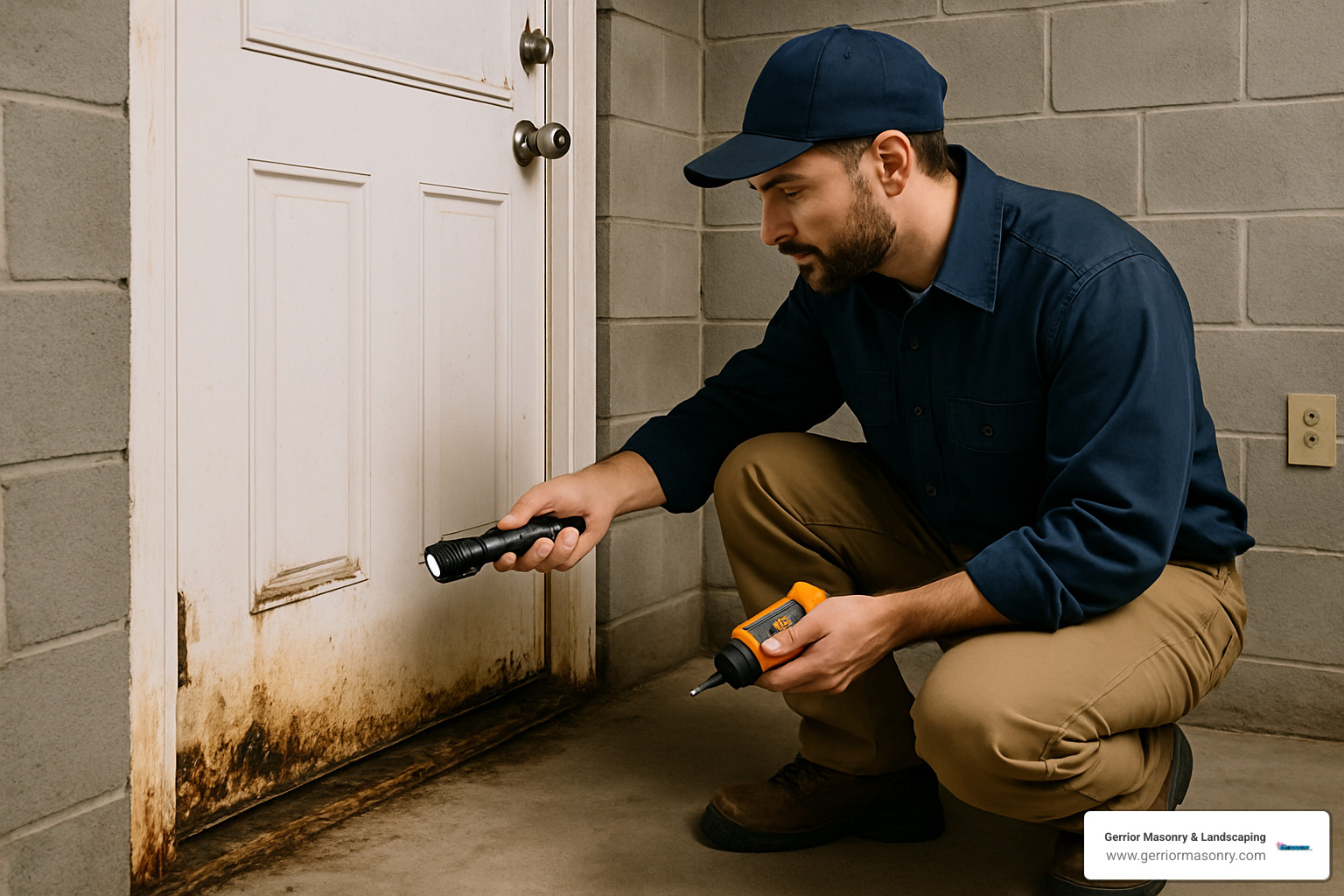
Most homeowners call us only after noticing visible rot or decay in wooden components or experiencing persistent drafts even when the door is fully closed. By then, the damage has often progressed beyond simple fixes. Other common red flags include water leaks during rain, rusted hardware that’s difficult to operate, swollen frames preventing proper closure, and insect damage to wooden components.
Safety concerns like non-compliance with updated building codes or inadequate emergency egress dimensions shouldn’t be ignored either. These aren’t just regulatory issues—they directly impact your family’s safety during emergencies.
If you’re experiencing two or more of these issues, it’s likely time to search for basement door replacement near me rather than continuing with temporary patches.
Structural & Moisture Red Flags
Beyond the obvious visual cues, there are several structural and moisture-related warning signs that demand immediate attention:
Lintel cracks above the door opening suggest structural stress that could worsen over time. When we see frame separation from the surrounding foundation wall, we know water has likely been infiltrating for months or even years.
“One basement I inspected in Middlesex County had pooling water at the base after every rainstorm,” recalls our senior installer. “The homeowner thought it was normal until we showed them the extensive damage happening behind the scenes.”
That musty or moldy smell near your basement door? It’s not just unpleasant—it’s your home telling you something’s wrong. When we inspect basements throughout Essex County, we often find that water damage has been slowly deteriorating the door assembly long before becoming visibly obvious.
Performance & Security Red Flags
Your basement door should operate smoothly and provide adequate security. When it doesn’t, that’s nature’s way of telling you it’s time for an upgrade.
A door sticking or difficult to open/close isn’t just annoying—it could become dangerous during an emergency evacuation. Broken or malfunctioning locks compromise your home’s security, especially since basement entries are often less visible from the street.
Energy efficiency matters too. If you’re noticing significant thermal loss (those cold spots near the door in winter) or visible gaps that let in drafts, pests, or moisture, you’re literally watching your heating dollars escape.
“I never realized how much heat we were losing through our old bulkhead until we replaced it,” one Woburn client told us recently. “The difference in our heating bill was noticeable the very first month.”
Signs of previous break-in attempts should never be ignored. Modern replacement doors offer significantly improved security features compared to older models, providing peace of mind along with better performance.
For more information about maintaining your existing door while you consider replacement options, visit our guide on bulkhead door replacement parts.
When multiple warning signs appear, temporary fixes often end up costing more in the long run than a proper replacement. A quality basement door installation protects your home’s structure, improves energy efficiency, and improves security—three investments that always pay dividends.
Choosing the Right Door: Materials, Styles & Brands Simplified
When it comes to selecting a new basement door, the options can feel overwhelming. As someone who’s guided hundreds of Massachusetts homeowners through this decision, I’ve seen how the right choice can transform both the function and appearance of your home.
Let’s break down your options into simple, practical terms that will help you make the best decision for your home and budget.
Material Showdown
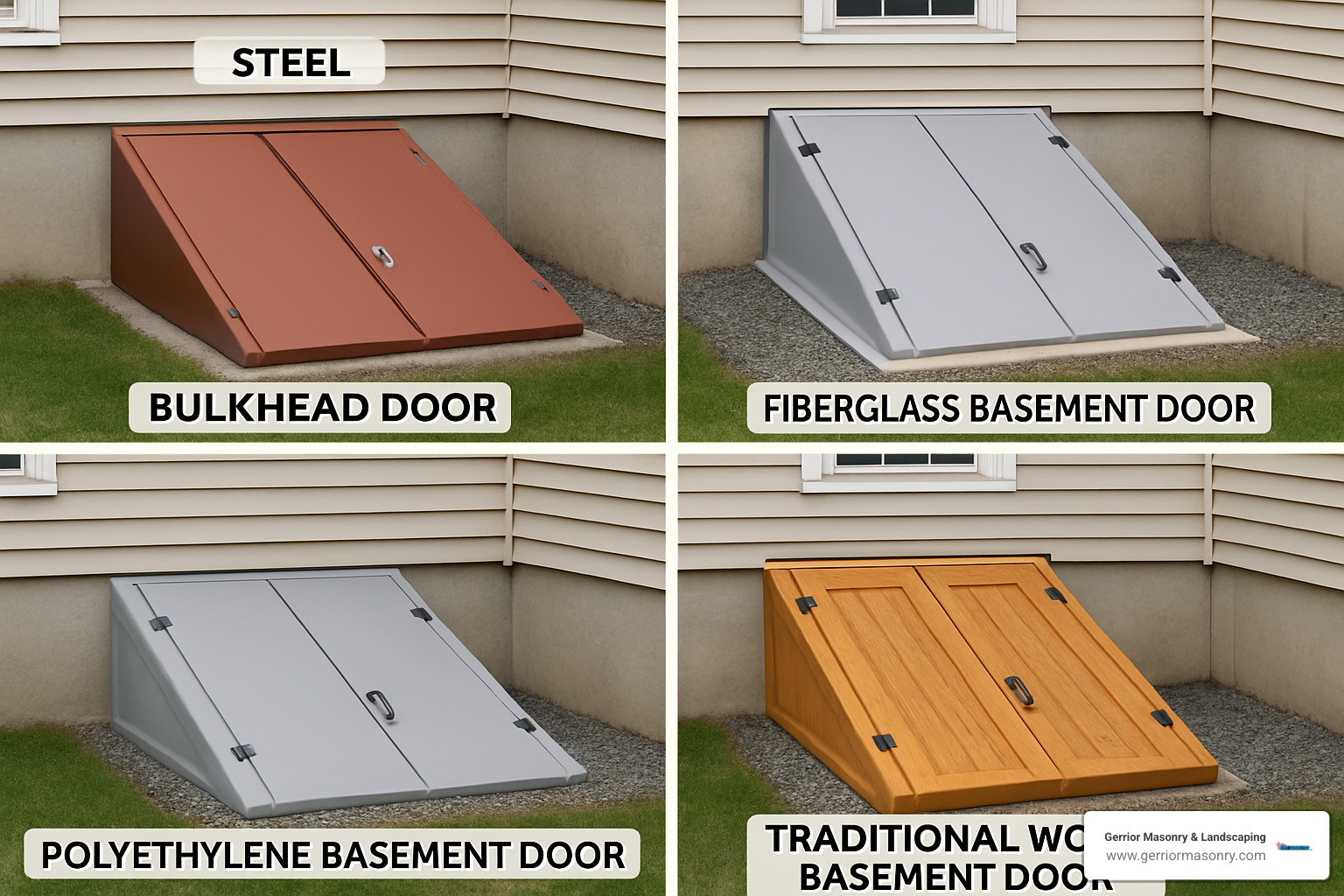
The material you choose for your basement door is perhaps the most critical decision you’ll make in this process. Each option brings its own set of advantages and considerations:
| Material | Durability | Maintenance | Cost Range* | Best For |
|---|---|---|---|---|
| Steel | 20-30+ years | Low-Medium | $1,200-$3,600 | Security, durability |
| Fiberglass | 25-40+ years | Very Low | $1,500-$4,500 | Moisture resistance, insulation |
| Polyethylene | 30-50+ years | Minimal | $1,600-$4,800 | Extreme weather, zero maintenance |
| Wood | 10-20 years | High | $800-$2,400 | Aesthetics, historic homes |
*Cost ranges reflect average internet pricing data for materials and installation combined, not actual pricing for Gerrior Masonry services.
Steel doors remain the most popular choice among our Middlesex County clients, and for good reason. Products like the Bilco Classic Series offer exceptional security and stand up beautifully to our harsh New England winters. With proper care (mainly keeping them painted to prevent rust), they’ll serve you reliably for decades. The Bilco Classic Series has earned an impressive 4.4/5 rating from over 540 reviewers, which speaks volumes about its quality.
Fiberglass options have gained popularity in recent years, particularly for homeowners concerned about energy efficiency. These doors provide superior insulation and won’t corrode or rot, even with our challenging freeze-thaw cycles. While they come at a higher initial price point, many of our clients find the long-term energy savings and virtually maintenance-free ownership well worth the investment.
For those willing to invest in the ultimate “set it and forget it” solution, polyethylene doors like the Bilco Ultra Series represent the gold standard. Made from high-density plastic, these doors will never need painting and can withstand decades of harsh weather without deteriorating. The Driftwood model has maintained a solid 4.1/5 customer rating, with owners particularly appreciating never having to worry about maintenance.
Wood doors, while less common for exterior basement entrances, still have their place—particularly for historic homes in places like Lexington or Concord where maintaining architectural authenticity is important. Just be prepared for regular maintenance to prevent rot and insect damage.
Matching Door to Foundation & Egress Codes
Your foundation’s configuration and local building codes aren’t just considerations—they’re requirements that will guide your door selection:
When we visit homes with sloped foundations, we often recommend specialized doors designed for this exact situation. The Bilco Classic Series for Sloped Foundations (maintaining an impressive 4.4/5 rating from 114 reviews) provides a custom solution that ensures proper fit and function.
Massachusetts has specific basement egress requirements that can’t be overlooked. Your basement door must provide a clear opening of at least 5.7 square feet, with minimum dimensions of 20 inches wide and 24 inches high. Additionally, the door must be operable from the inside without requiring keys or tools—a critical safety feature in emergency situations.
“We always begin by checking the local building codes,” explains our project manager. “What’s acceptable in Woburn might not meet the requirements in Burlington or Winchester. These details matter, especially if you’re finishing your basement for additional living space.”
For homeowners concerned about fire safety, we often recommend doors with higher fire ratings and easy-operation mechanisms. Many modern doors include hydraulic lifters that make even heavy steel doors easy to open in emergency situations.
The angle of your foundation entry also plays a crucial role in determining the right door style. Flat entries work well with traditional swing doors, while angled entries typically require bulkhead-style doors with appropriate pitch to shed water effectively.
When you’re searching for basement access doors, proper sizing is essential. We always take precise measurements of your existing opening before recommending specific products, ensuring a perfect fit that will provide years of trouble-free service and protection for your home.
Gerrior Masonry & Landscape Construction—based in Woburn, MA—proudly serves Middlesex and Essex County homeowners seeking expert basement door and bulkhead replacements.
Cost & Financing: What You’ll Pay (and Why)
When it comes to basement door replacement, understanding the real costs helps you budget properly and evaluate contractor quotes with confidence. After all, this isn’t just about buying a door—it’s an investment in your home’s security, energy efficiency, and protection.
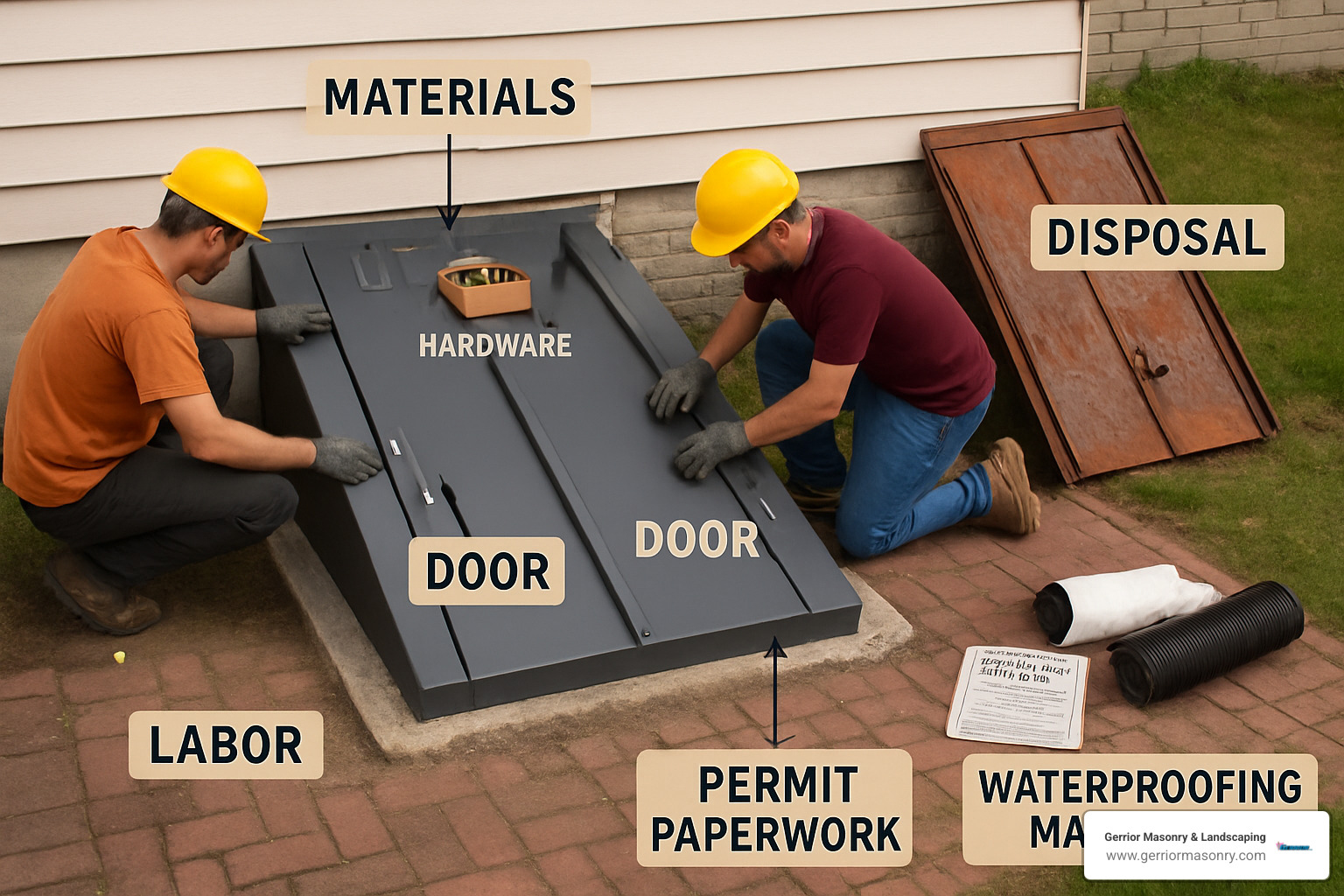
The total cost for a basement door replacement near me project typically ranges from $1,000 to $6,000+, based on internet pricing data. This wide range exists because every project has unique variables:
- Labor costs: Most installations require 4-8 hours of skilled work
- Door material and quality: From basic steel to premium materials
- Disposal fees: Getting rid of that old, heavy door isn’t free
- Permit costs: Typically $50-$200, depending on your town
- Hardware upgrades: Quality locks, hinges, and hydraulic lifters
- Waterproofing measures: Essential for a truly long-lasting installation
- Regional labor rates: Massachusetts tends to run higher than national averages
- Contingency expenses: Those surprise issues that often hide behind old doors
Factors That Drive Price Up or Down
Your final bill will be influenced by several key factors that can either increase or decrease your costs significantly.
What makes prices climb? Foundation issues are the big one—if we find damage or need to modify your foundation, costs will increase. Custom sizing requirements also add to the bottom line, as do premium finishes that improve aesthetics and durability. Need it done yesterday? Emergency installations almost always cost more, as do projects scheduled during the peak spring/summer season when demand is highest.
On the flip side, there are ways to keep costs reasonable. Standard door sizes are always more affordable than custom work. Choosing basic materials rather than premium options saves money upfront (though may cost more long-term). Many homeowners don’t realize that off-season installation (fall/winter) often comes with better pricing, as contractors look to keep crews busy during slower months.
“One of the smartest things a homeowner can do is clear the area around their bulkhead before we arrive,” explains our project manager. “That simple step can save us time and save you money.”
Sample Cost Range & Saving Tips
Based on internet pricing data (not actual Gerrior Masonry pricing), here’s what Massachusetts homeowners might expect for different scenarios:
A basic steel bulkhead door replacement in a standard size typically runs $1,200-$3,600 all-in. If you’re looking at a premium fiberglass or polyethylene door with upgraded hardware, expect to pay $1,800-$5,400. For projects requiring custom doors with foundation modifications, costs can reach $2,500-$7,500+.
Want to save on your project? Timing is everything. Schedule during fall or winter when contractor schedules open up and prices often drop. Roll up your sleeves and handle prep work yourself—clearing debris, removing stored items, and providing clear access can reduce labor hours.
Don’t forget to check for potential rebates from utility companies. Many Massachusetts utilities offer incentives for energy-efficient home improvements, which can include well-insulated basement doors.
Finally, explore these financing options if needed: home equity lines of credit often offer the best rates, contractor financing programs provide convenience, dedicated home improvement loans are designed specifically for these projects, and some credit cards offer 0% introductory rates that can be smart if you’ll pay off the balance quickly.
“We always recommend homeowners check with MassSave before starting any project,” notes our office manager. “They often have programs that can help offset costs for improvements that increase your home’s energy efficiency.”
For more inspiration and to find qualified professionals in your area, check out the Best 15 Door Replacement Installers Near Me on Houzz.
Basement Door Replacement Cost
Basement Door Replacement Near Me: Finding & Vetting Local Pros
When you type “basement door replacement near me” into your search bar, you’ll likely get flooded with options. But how do you separate the true professionals from those who might leave you with a leaky, poorly installed door? Let’s walk through finding the right contractor for your basement door project.
How to Search “basement door replacement near me” Effectively
Finding qualified local pros doesn’t have to feel overwhelming. Start by getting specific with your search terms. Instead of the generic “basement door replacement near me”, try something like “bulkhead door installation Woburn MA” or “basement door replacement Middlesex County” to narrow down results to truly local businesses.
Google Maps can be your best friend in this search. Look for contractors who have a physical storefront or office (always a good sign of an established business), multiple positive reviews, and—this is key—actual photos of completed basement door projects. I always tell homeowners that a contractor who responds thoughtfully to customer reviews, even negative ones, typically demonstrates better customer service.
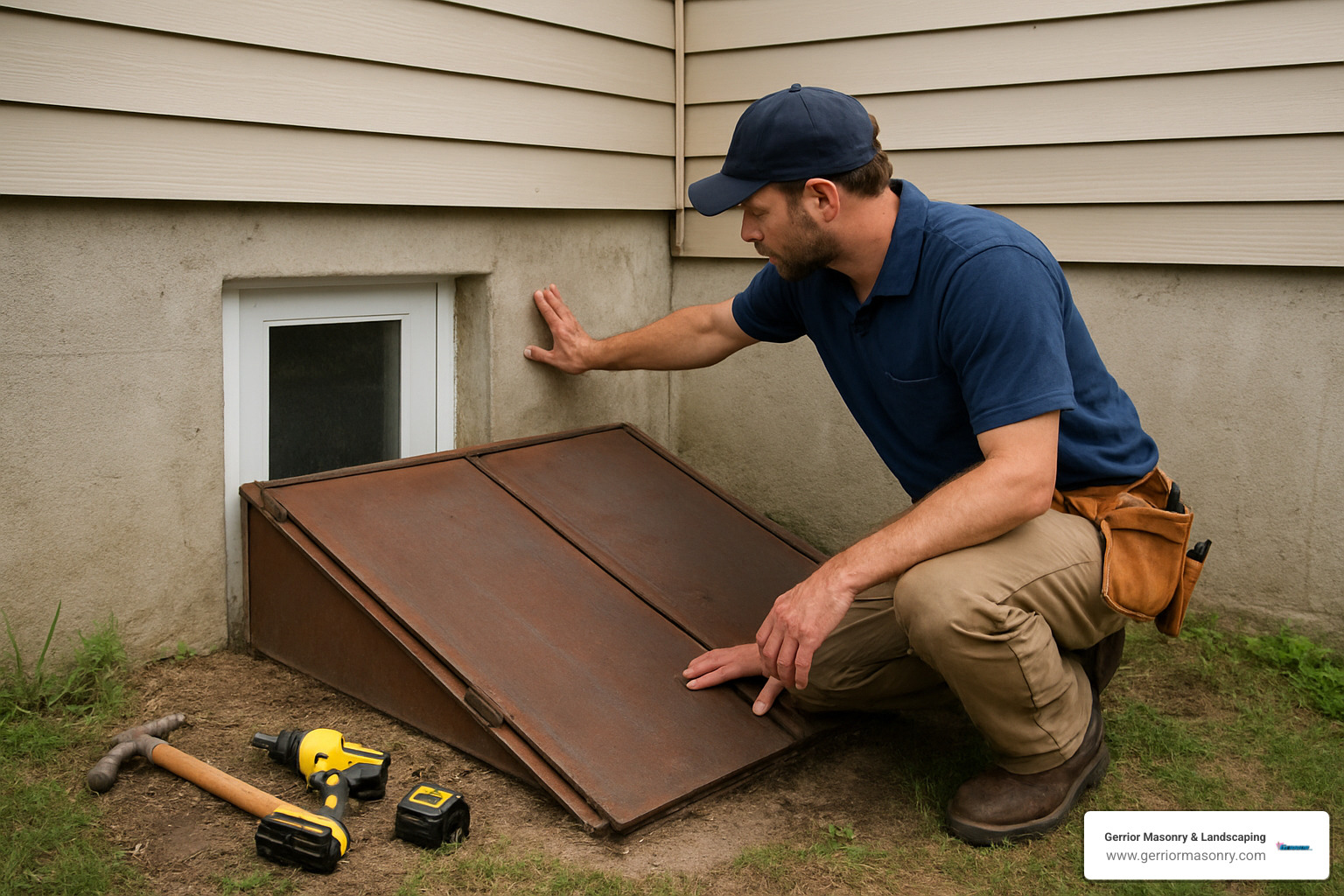
Don’t stop at Google, though. Specialized directories like Angi, HomeAdvisor, and Houzz verify contractor credentials and showcase reviews from actual customers. The Better Business Bureau can also reveal how a company handles disputes—a critical insight into their business practices.
When you’ve narrowed down to a few promising options, reach out for quotes from at least three contractors. This gives you a chance to compare not just prices, but also the quality of materials they recommend, warranty coverage, timeline commitments, and who will handle permits. A good contractor will explain these details without prompting.
Before making your final decision, verify their credentials thoroughly. This means checking their local business license, confirming they carry liability insurance (at least $1 million in coverage), and ensuring they have workers’ compensation for their team. For branded doors like Bilco, ask if they’re a certified installer—this often means they’ve received specialized training.
Red Flags When Googling “basement door replacement near me”
After three decades of installing basement doors throughout Massachusetts, we’ve heard plenty of horror stories from homeowners who chose the wrong contractor. Watch for these warning signs:
No physical address or just a P.O. Box might indicate a fly-by-night operation. Legitimate contractors have real workshops or offices you can visit.
Limited knowledge of local permit requirements is a major red flag. Every town in Massachusetts has specific building codes, and a contractor unfamiliar with permits in your area likely lacks experience.
Pressure sales tactics or estimates that seem too good to be true usually are. Quality basement door installation requires proper materials and time—corners cut on quotes often mean corners cut on your installation.
Vague warranty terms or reluctance to put guarantees in writing should send you running. A confident contractor stands behind their work with clear, written warranties.
“I always tell homeowners to ask directly about permits,” says Joe Gerrior, our founder. “Some contractors try to skip this step to save money, but it can create serious problems for you if there’s ever a home inspection or insurance claim.”
Other warning signs include requesting full payment upfront (a reasonable deposit is normal, but never the full amount), having no portfolio of previous basement door installations to show you, sparse online reviews, or lacking manufacturer certifications for the products they install.
At Gerrior Masonry & Landscape Construction, we believe transparency builds trust. That’s why we walk our clients through the entire process—from consultation to final inspection—ensuring there are no surprises along the way.
Gerrior Masonry & Landscape Construction—based in Woburn, MA—proudly serves Middlesex and Essex County homeowners seeking expert basement door and bulkhead replacements.
DIY vs. Professional Installation & The Step-by-Step Process
Thinking about tackling that basement door replacement yourself? Before you grab your toolbox, let’s weigh the pros and cons of DIY versus hiring professionals like us at Gerrior Masonry. As someone who’s overseen hundreds of these installations, I can tell you there’s more to it than meets the eye!
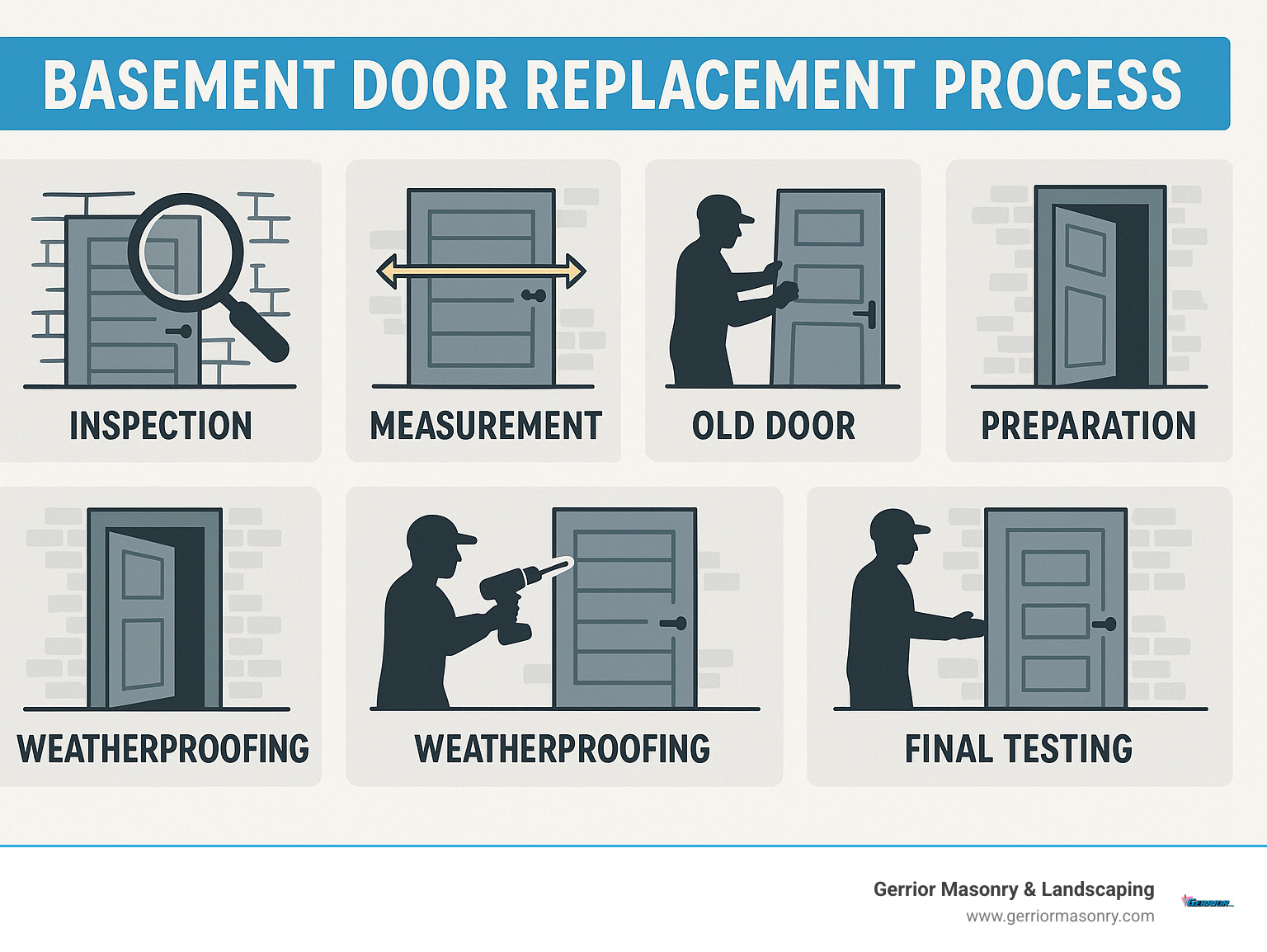
Professional Workflow in 7 Steps
When we handle a basement door replacement near me project, we follow a time-tested process that ensures your new door will perform flawlessly for years to come:
- Site Assessment and Measurement
- Evaluate existing door and foundation condition
- Take precise measurements of the opening
- Identify potential challenges (drainage, structural issues)
- Discuss material and style options
- Old Door Removal
- Disconnect any electrical components
- Remove hardware and trim
- Carefully extract door and frame
- Properly dispose of old materials
- Frame Preparation
- Clean opening of old caulk and debris
- Address any rot, water damage, or structural issues
- Apply waterproofing materials where needed
- Install flashing if required
- New Door Setting and Anchoring
- Center door in opening with proper clearances
- Use plastic shims at critical points
- Secure with appropriate masonry anchors (Tapcon screws)
- Ensure door is level, plumb, and square
- Weatherproofing and Insulation
- Apply high-quality exterior caulk
- Install spray foam insulation in gaps
- Add weather stripping as needed
- Test for water tightness
- Hardware Installation and Adjustment
- Mount hinges, locks, and handles
- Install hydraulic lifters if applicable
- Adjust for smooth operation
- Secure all fasteners
- Final Walkthrough and Testing
- Demonstrate proper operation
- Review maintenance requirements
- Provide warranty documentation
- Complete final inspection
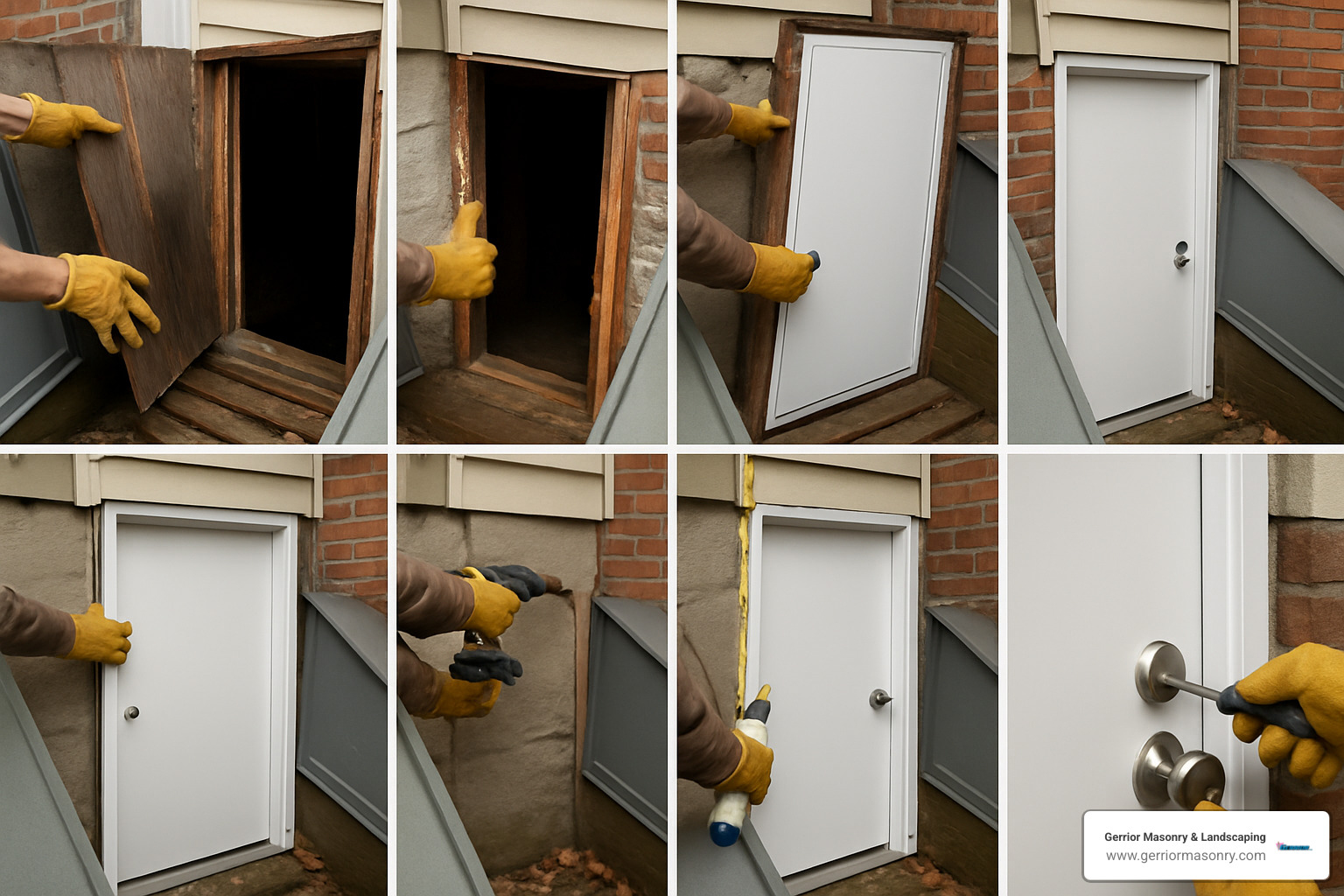
Most professional installations take between 4-8 hours for a standard door. More complex projects—like those requiring foundation work or custom sizing—might stretch into a second day. We’ve got installation down to a science after three decades in the business!
Can a Confident DIYer Handle It?
I’m always impressed when homeowners tackle challenging projects themselves. That said, basement door installation comes with some unique challenges that give even experienced DIYers pause.
The trickiest part? Proper anchoring to masonry. Those Tapcon screws need to be installed just right—too tight and you risk cracking the concrete; too loose and your door won’t seal properly. Our crews have specialized tools and years of experience getting this critical step perfect.
If you’re still considering the DIY route, here’s what you’ll need in your toolbox:
* Masonry drill and bits (with hammer function)
* Tapcon screws and installation kit
* Level, square, and measuring tape
* Caulking gun and exterior-grade caulk
* Reciprocating saw
* Pry bar and hammer
* Safety equipment (gloves, goggles, dust mask)
One of our lead installers, Mike, loves to tell customers: “The difference between a door that lasts 5 years and one that lasts 25 years often comes down to how well it’s anchored and sealed.” He’s not wrong—we regularly replace doors that were DIY installations gone wrong.
Warranty considerations are another factor. Most manufacturers will void warranties if their doors aren’t professionally installed. That $200-300 you might save on installation could cost you thousands if something goes wrong and the warranty doesn’t cover it.
Water sealing is another critical skill that’s hard to master without experience. New England weather is notoriously tough on basement doors, and even small sealing mistakes can lead to major water issues down the road.
For most homeowners in Middlesex and Essex Counties, professional installation provides peace of mind, warranty protection, and often saves time and frustration. But if you’re experienced with masonry work and structural projects, a DIY approach might be viable for standard installations.
Remember though—if you start the project and hit unexpected complications (which happens more often than not), we’re always happy to step in and help. There’s no shame in calling the pros when a project gets complicated!
Gerrior Masonry & Landscape Construction—based in Woburn, MA—proudly serves Middlesex and Essex County homeowners seeking expert basement door and bulkhead replacements.
Permits, Codes, Energy & Security Upgrades
When it comes to basement door replacement, there’s more to consider than just the door itself. Understanding permits, building codes, and potential upgrades can save you headaches and improve your home’s value.
In Massachusetts, permit requirements vary depending on your specific town or city. Generally speaking, you’ll need a building permit when:
- Your project changes the size of the door opening
- You’re making structural modifications to the foundation
- The replacement involves electrical components
- The door serves as a required emergency egress route
Most Massachusetts municipalities charge between $50 and $200 for these permits, depending on your location and project scope. The good news? When you work with professional contractors like us at Gerrior Masonry, we handle all the permitting paperwork for you, ensuring your installation meets current building codes.
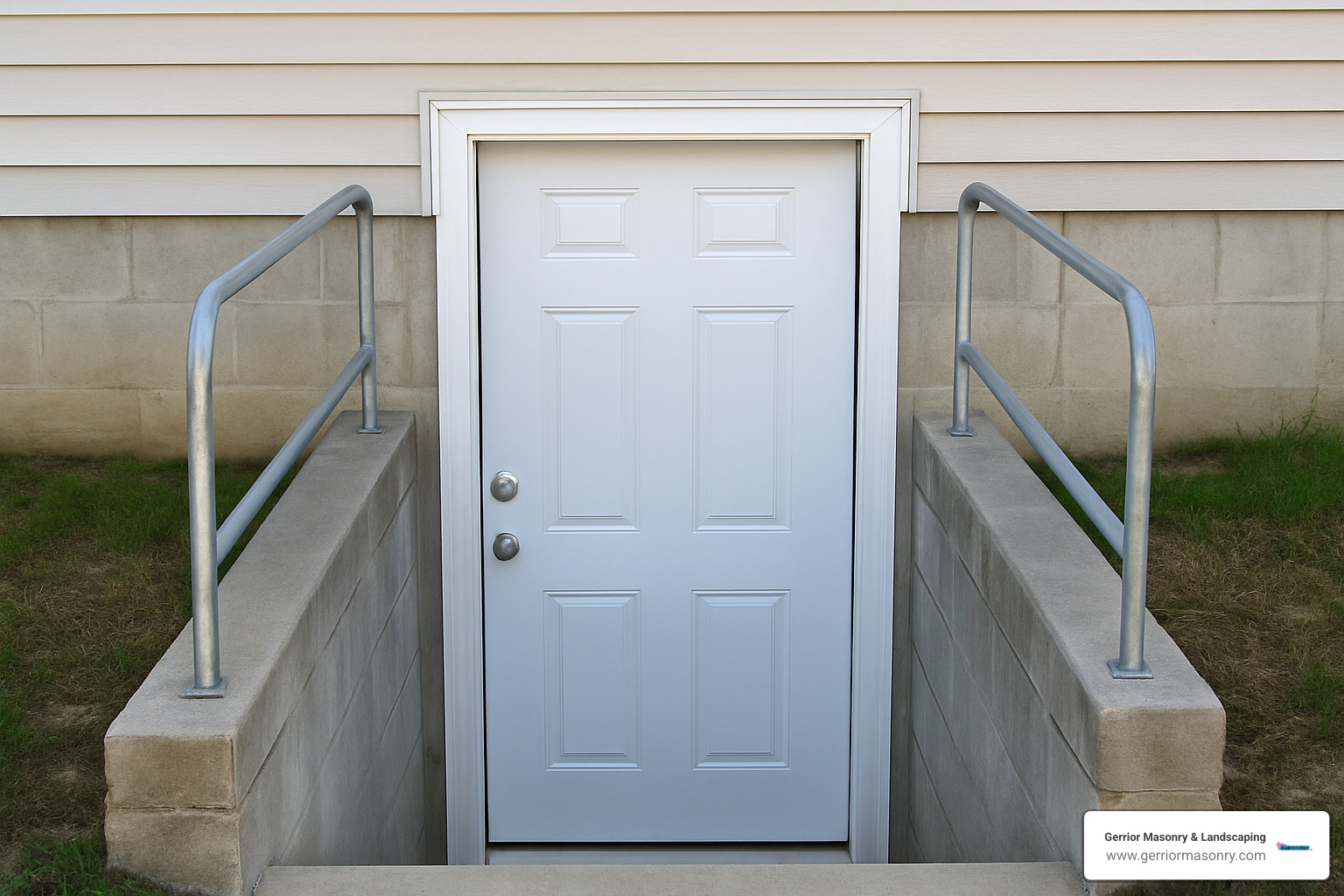
Beyond simply replacing what you had before, a basement door replacement near me project offers the perfect opportunity to upgrade your home’s energy efficiency, security, and safety features.
For energy efficiency, consider doors with higher R-value insulation (typically R-5 to R-12) that can dramatically reduce heat transfer. Quality weather-stripping and gasket upgrades seal out drafts, while thermal breaks prevent cold from conducting through the door frame. Some homeowners even opt for reflective coatings that help reduce summer heat gain.
“I’m always surprised by how many homeowners don’t realize the energy impact of their basement doors,” shares our energy specialist. “A well-insulated basement door with proper sealing can make a noticeable difference on your heating bill by eliminating what’s often a major source of air leakage.”
Security is another important consideration. Most quality bulkhead doors, including popular Bilco models, offer keyed exterior locks for added protection. For swing-type doors, deadbolt installations provide extra security. Some homeowners also add interior security bars or motion-activated lighting above the entrance for additional peace of mind.
Safety features shouldn’t be overlooked either. Hydraulic lifters make opening and closing heavy bulkhead doors much easier while preventing accidental slamming. Non-slip treads on steps reduce fall risks, especially during New England’s wet seasons. For families with young children, child safety locks or alarms can prevent unauthorized access to potentially dangerous basement stairs.
Maintenance & Warranty Essentials
Your new basement door is an investment that deserves proper care. With some simple maintenance, it will perform beautifully for decades.
Every few months, take time to lubricate hinges and hardware with a silicone-based lubricant. Check and clean any drainage channels or weep holes that help water flow away from the door. Remove leaves, dirt, and debris from the door threshold that might prevent proper closure.
Once a year, inspect weather stripping and gaskets for wear or damage. Look for any signs of water infiltration around the frame. Test all locks and security features to ensure they’re working properly. If your door has hydraulic lifters, verify they’re operating smoothly and holding the door securely when open.
Every couple of years, touch up any scratches in painted steel doors to prevent rust. If your door has any exposed wood components, reseal them to prevent moisture damage. Also check all anchoring points to make sure they remain tight and secure.
Most quality basement doors include manufacturer warranties ranging from 10 to 25 years for materials. Installation warranties vary by contractor—at Gerrior Masonry, we stand behind our workmanship with comprehensive labor warranties that give you complete peace of mind.
“There’s an important distinction between manufacturer and installer warranties,” explains our customer service team. “The manufacturer covers material defects in the door itself, while our installer warranty addresses the quality of our workmanship. Both parts are essential for your complete protection.”
Proper maintenance not only extends your door’s lifespan but often preserves these valuable warranties. A little attention a few times a year can prevent costly repairs down the road and keep your Waterproof Bulkhead Doors functioning perfectly year after year.
Gerrior Masonry & Landscape Construction—based in Woburn, MA—proudly serves Middlesex and Essex County homeowners seeking expert basement door and bulkhead replacements.
Frequently Asked Questions about Basement Door Replacement
How long does a typical replacement take?
When homeowners ask me about timelines, I tell them that a standard basement door replacement near me project usually takes 4-8 hours from start to finish. That’s assuming we don’t find any hidden surprises like structural damage or rot once we remove the old door.
For more complex installations—like those requiring foundation modifications or custom fitting—we typically schedule a full 1-2 days to ensure everything is done properly. And if you’re ordering a custom door, keep in mind that manufacturers often need 3-4 weeks lead time before we can begin the actual installation.
“The biggest timeline variable is what we find when we remove the old door,” explains our lead installer. “Sometimes what looks like a simple replacement reveals underlying issues that need addressing for the new door to function properly and last for decades.”
Do I need a permit for a bulkhead door in Massachusetts?
Yes, most Massachusetts cities and towns require a building permit for basement door replacement near me projects, especially for bulkhead doors that serve as emergency exits. This requirement isn’t just bureaucratic red tape—it ensures your new door meets current building codes for safety and structural integrity.
At Gerrior Masonry, we handle all permit applications as part of our service. We’ve worked with building departments throughout Middlesex and Essex Counties for over three decades and understand the specific requirements in each municipality. This saves our clients the headache of navigating the permitting process themselves.
What maintenance keeps my new door watertight?
Water infiltration is the number one enemy of any basement door. To keep your investment watertight year after year, I recommend following these key maintenance steps:
Regularly clean out the drainage channels and weep holes to prevent blockages. In New England, these can quickly fill with leaves, pine needles, or debris. Check and replace weatherstripping at the first sign of wear—this is your door’s first line of defense against water. Inspect the caulking around the frame annually and renew it as needed.
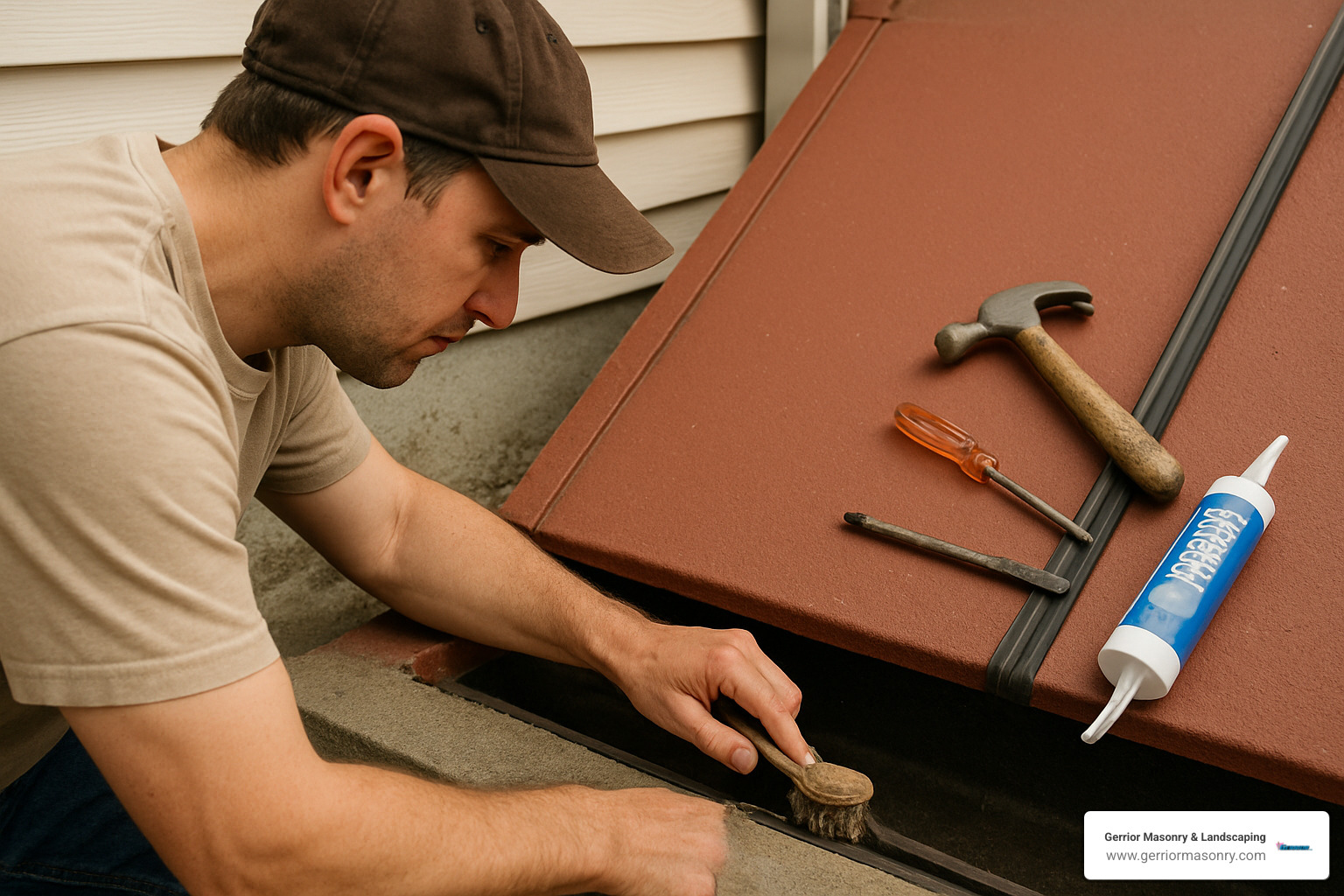
Keep the area around your door clear of plants, mulch, and debris that could trap moisture. Ensure your yard is properly graded to direct water away from the door rather than toward it. For steel doors, apply a rust inhibitor every 2-3 years to prevent corrosion. And finally, test your door’s operation regularly to ensure it closes completely and creates a proper seal.
“Many water issues we see could have been prevented with simple maintenance,” notes our service manager. “Just five minutes of attention a few times a year can add years to your door’s lifespan.”
How do I know if my basement door meets current code requirements?
Building codes evolve over time, and many older basement doors no longer meet current standards. Today’s codes typically require:
A minimum clear opening width of 32 inches and height of 78 inches for proper egress. No more than one lock or latch requiring a key, tool, or special knowledge to operate from inside (this is a critical safety feature for emergency exits). Self-closing and self-latching mechanisms on certain doors, particularly those between the basement and attached garage. Specific fire rating requirements depending on the door’s location in your home.
If you’re unsure about your door’s compliance, I’d recommend scheduling a professional inspection. This is particularly important if your basement door serves as an emergency escape route for a finished basement with bedrooms.
What’s the difference between a bulkhead door and a standard basement door?
I’m often asked to explain the difference between these two common basement entry types. A bulkhead door (sometimes called a cellar door) is that angled or curved assembly that covers exterior stairs leading down to your basement. It typically consists of two doors that open upward and outward—think of the “doors to nowhere” that Dorothy encounters in The Wizard of Oz!
A standard basement door, on the other hand, is just like any other exterior door in your home—a conventional hinged door installed in a vertical wall. While both provide access to your basement, they have different installation requirements, maintenance needs, and price points.
Can I replace just the door without replacing the entire frame?
While technically possible in some cases, I generally don’t recommend replacing just the door without addressing the frame. Here’s why: your door and frame function as a system, working together to create a secure, weathertight seal. Issues with the frame—such as rot, water damage, or misalignment—will quickly compromise even the highest quality new door.
Additionally, most manufacturers’ warranties become void if you install their door in an existing frame. This means you could lose valuable protection against defects or premature failure.
“In thirty-plus years of installing doors, I’ve rarely seen a case where the frame was in perfect condition while the door needed replacement,” shares our senior technician. “They typically age and deteriorate together.”
A professional assessment can determine if your frame is still in good condition, but in my experience, complete replacement usually provides better long-term value and performance.
Gerrior Masonry & Landscape Construction—based in Woburn, MA—proudly serves Middlesex and Essex County homeowners seeking expert basement door and bulkhead replacements.
Conclusion
Replacing your basement door is more than just a home improvement project—it’s an investment in your home’s safety, energy efficiency, and protection against the elements. Whether you’re dealing with a deteriorating bulkhead, a drafty walkout door, or outdated hardware, professional replacement offers significant benefits:
- Improved security for your home
- Improved energy efficiency and lower utility bills
- Better protection against water damage
- Increased home value and curb appeal
- Peace of mind during severe weather
When searching for “basement door replacement near me”, the quality of installation is just as important as the quality of the door itself. Professional installation ensures proper fit, sealing, and operation—critical factors for long-term performance.
At Gerrior Masonry & Landscape Construction, we bring over 30 years of experience to every basement door replacement project. Our team understands the unique challenges of New England weather and how to create basement entries that stand the test of time.
We invite you to contact us for a free consultation and estimate for your basement door replacement needs. Our experts will guide you through the selection process, handle all permitting requirements, and ensure a flawless installation that improves your home’s safety and efficiency.
Gerrior Masonry & Landscape Construction—based in Woburn, MA—proudly serves Middlesex and Essex County homeowners seeking expert basement door and bulkhead replacements.
