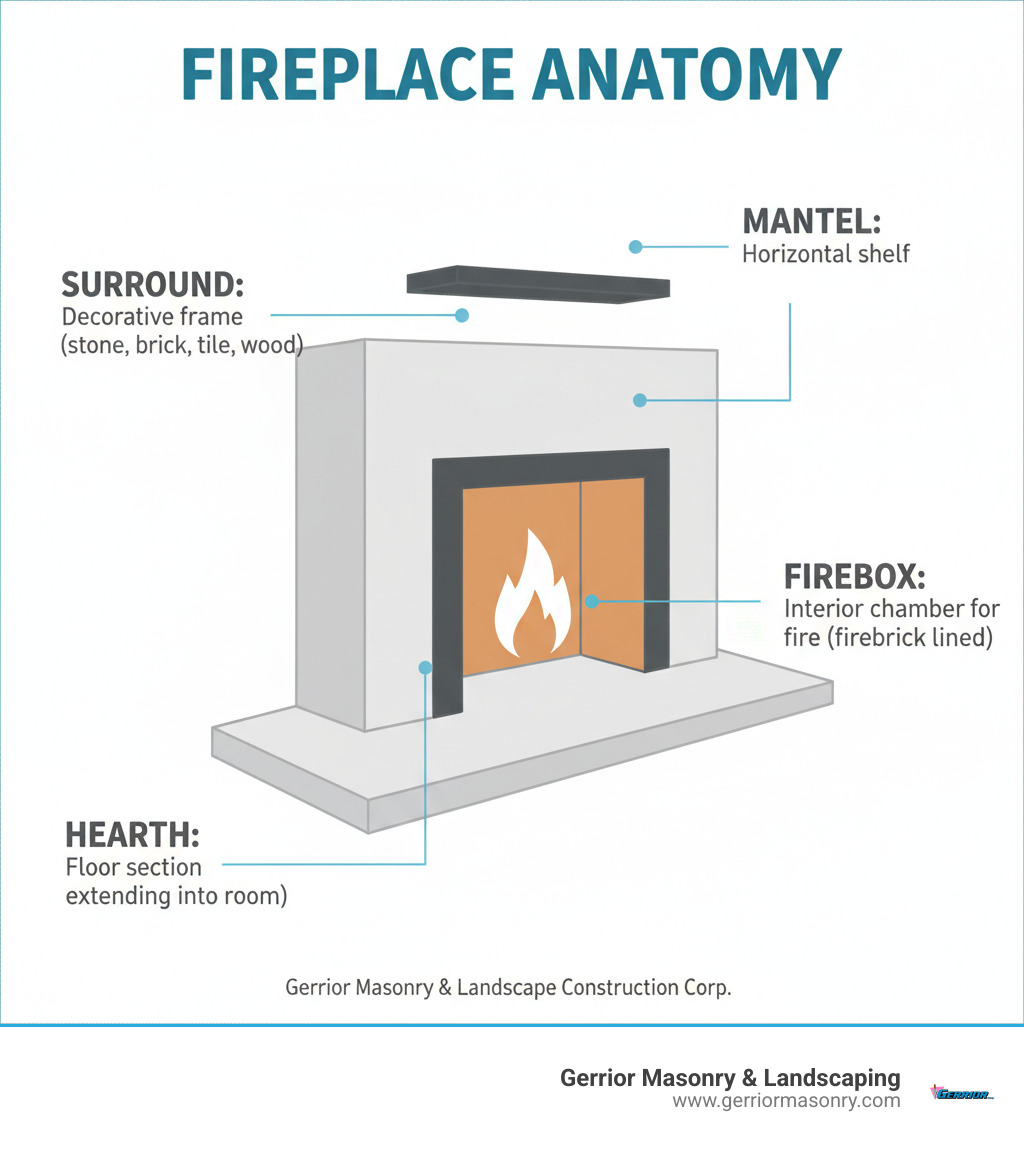
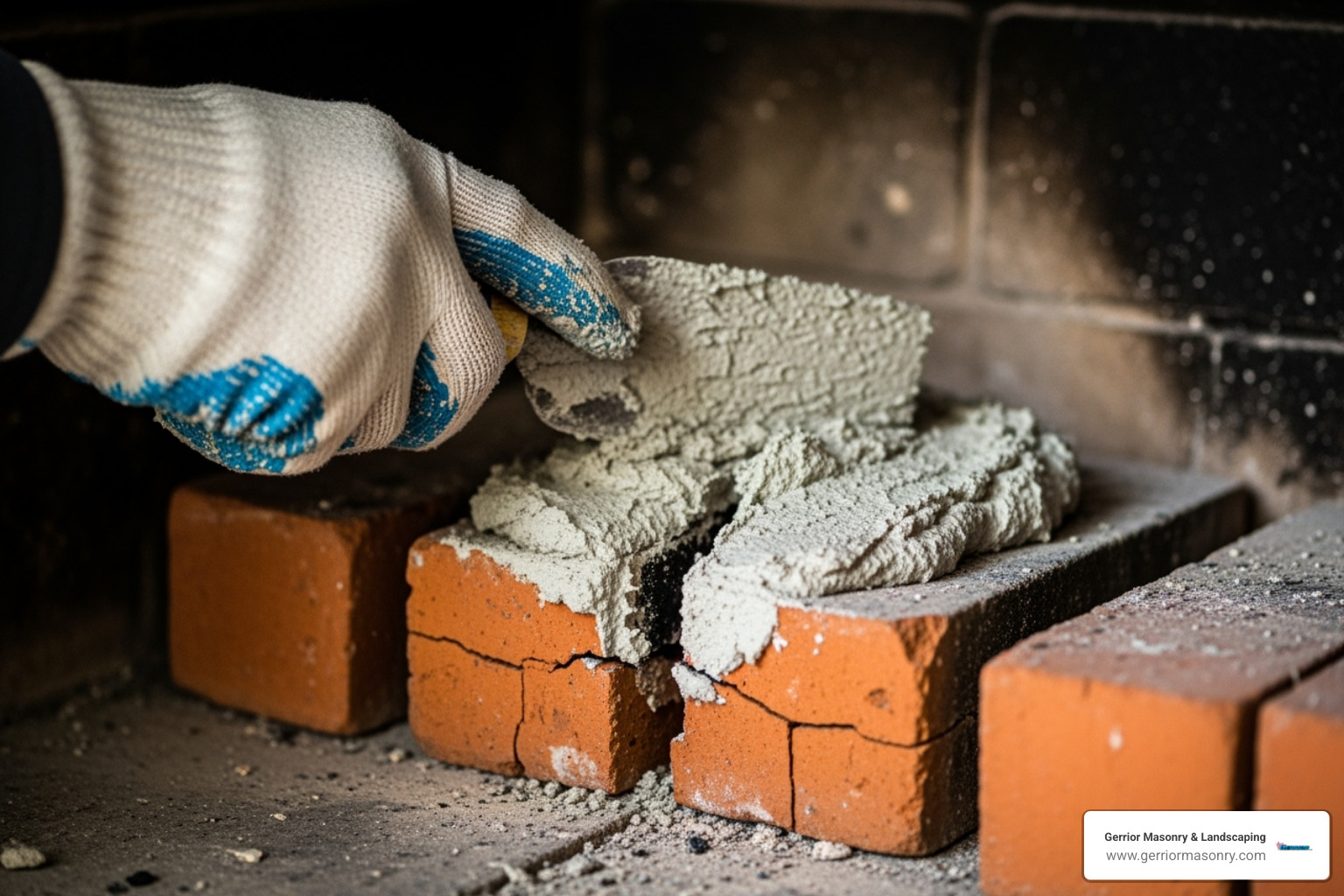
Fireplace surround repair is essential for maintaining the safety, functionality, and beauty of your home’s focal point. A fireplace is often the centerpiece of a living room, a gathering spot for family and friends that provides warmth and ambiance. It’s more than just a heat source; it’s a key architectural feature that adds significant value and appeal to your property. A well-maintained fireplace can increase your home’s resale value, while a damaged one can be a safety hazard and a major deterrent to potential buyers.
Over time, the constant cycle of heating and cooling, accidental impacts from firewood or tools, and the insidious effects of moisture can lead to visible damage. You might notice cracks spidering across the stone, chips missing from the mantel, or mortar crumbling between the bricks. While many of these minor issues are perfect for a determined DIYer, knowing how to perform the repair correctly is crucial to ensure a lasting and safe result.
Quick Answer: Repairing Your Fireplace Surround
Assess the damage: Inspect for cracks, chips, loose pieces, or crumbling mortar. Note the location and severity.
Gather materials: Get safety gear, cleaning supplies, and the correct repair compound for your surround’s material (epoxy, caulk, or mortar).
Clean the area: Thoroughly remove all dust and debris from the damaged section for proper adhesion.
Apply repair compound: Use the appropriate filler according to product directions, pressing it firmly into the damage.
Smooth and cure: Level the repair and let it dry completely as specified, usually 24-48 hours.
Know when to call a pro: For large structural cracks or extensive damage, professional help is required for safety.
I’m Joe Gerrior, owner of Gerrior Masonry & Landscape Construction Corp. With over 34 years of experience in Fireplace surround repair across Massachusetts, I’m here to share which fixes you can tackle and when to call in an expert.
Your Step-by-Step Guide to Fireplace Surround Repair
Most minor fireplace surround issues are fixable with a few hours of work. Understanding the problem and the right approach is the key to a successful DIY project.
Signs Your Fireplace Surround Needs Repair
Catching damage early saves money and prevents small issues from becoming structural nightmares. Here’s what to look for:
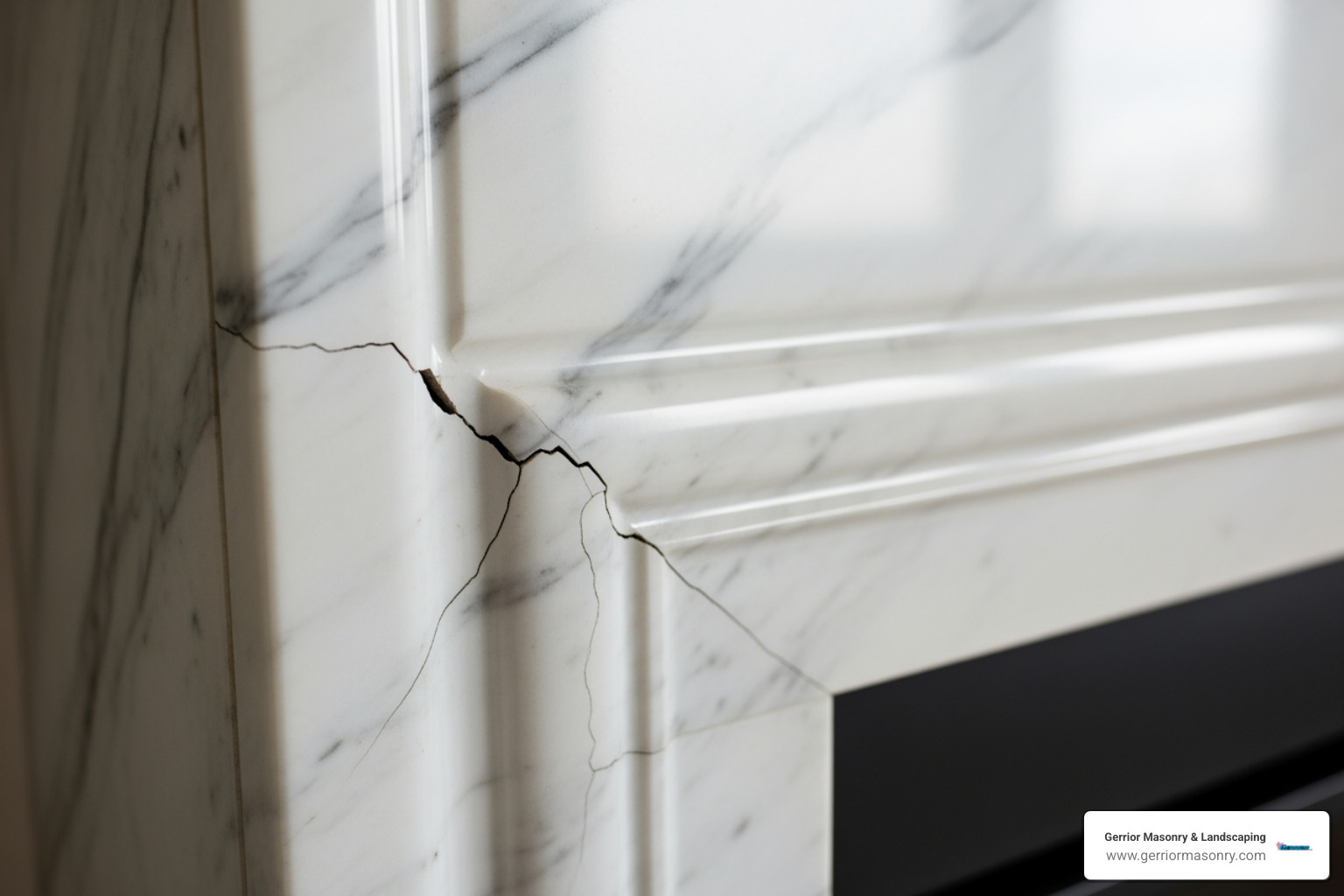
Visible Cracks: Hairline fractures from heat stress can widen over time, trapping soot and leading to bigger breaks. They should be sealed promptly to prevent further damage.
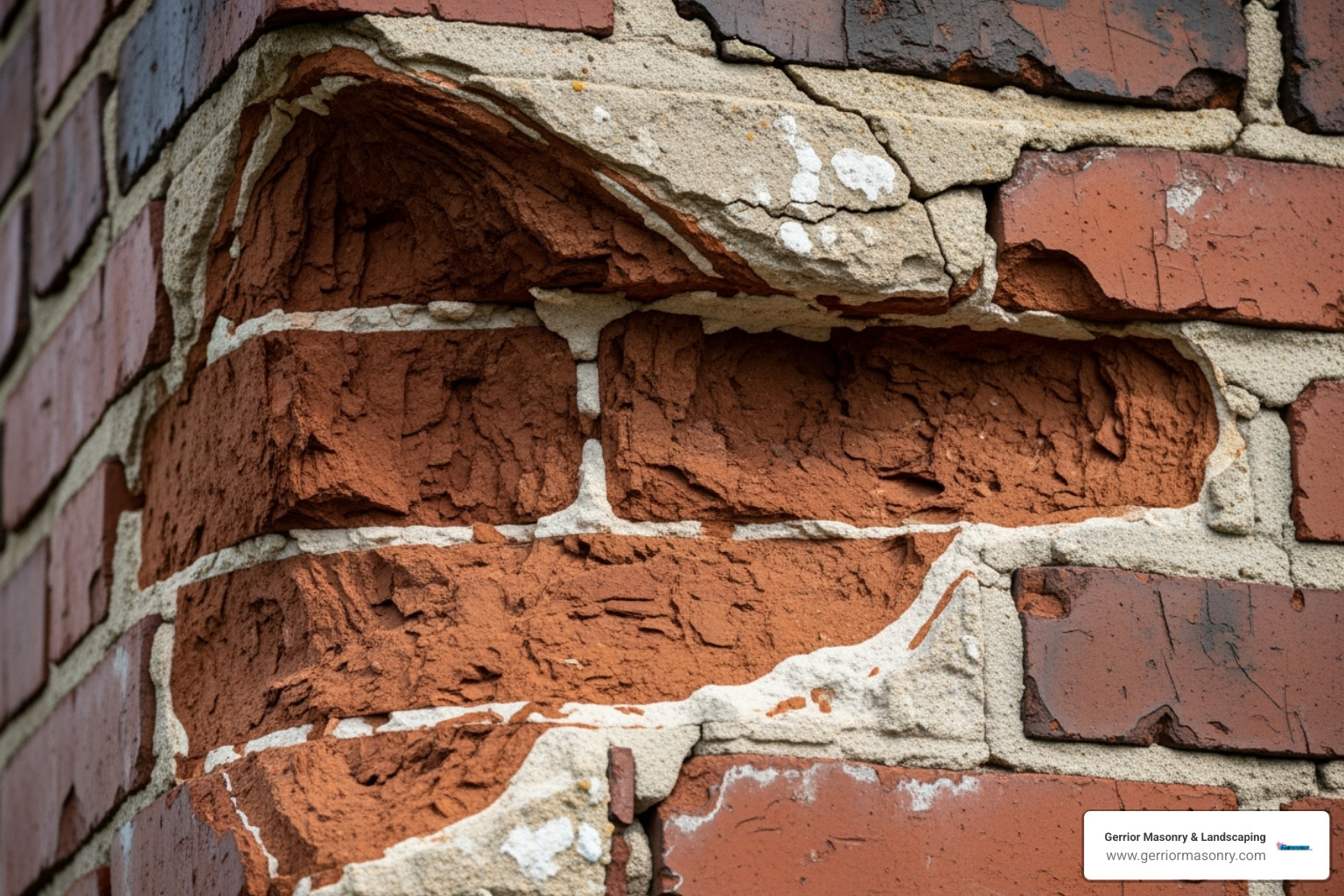
Chips and Spalling: Chips from impacts are cosmetic, but spalling (flaking surfaces) indicates moisture damage. Water freezes and expands inside the masonry, forcing the face to pop off and weakening the material.
Discoloration or Stains: Persistent stains are clues. Black soot suggests drafting issues. White powder (efflorescence) means water is moving through the masonry. Brown stains can point to rust from failing metal components.
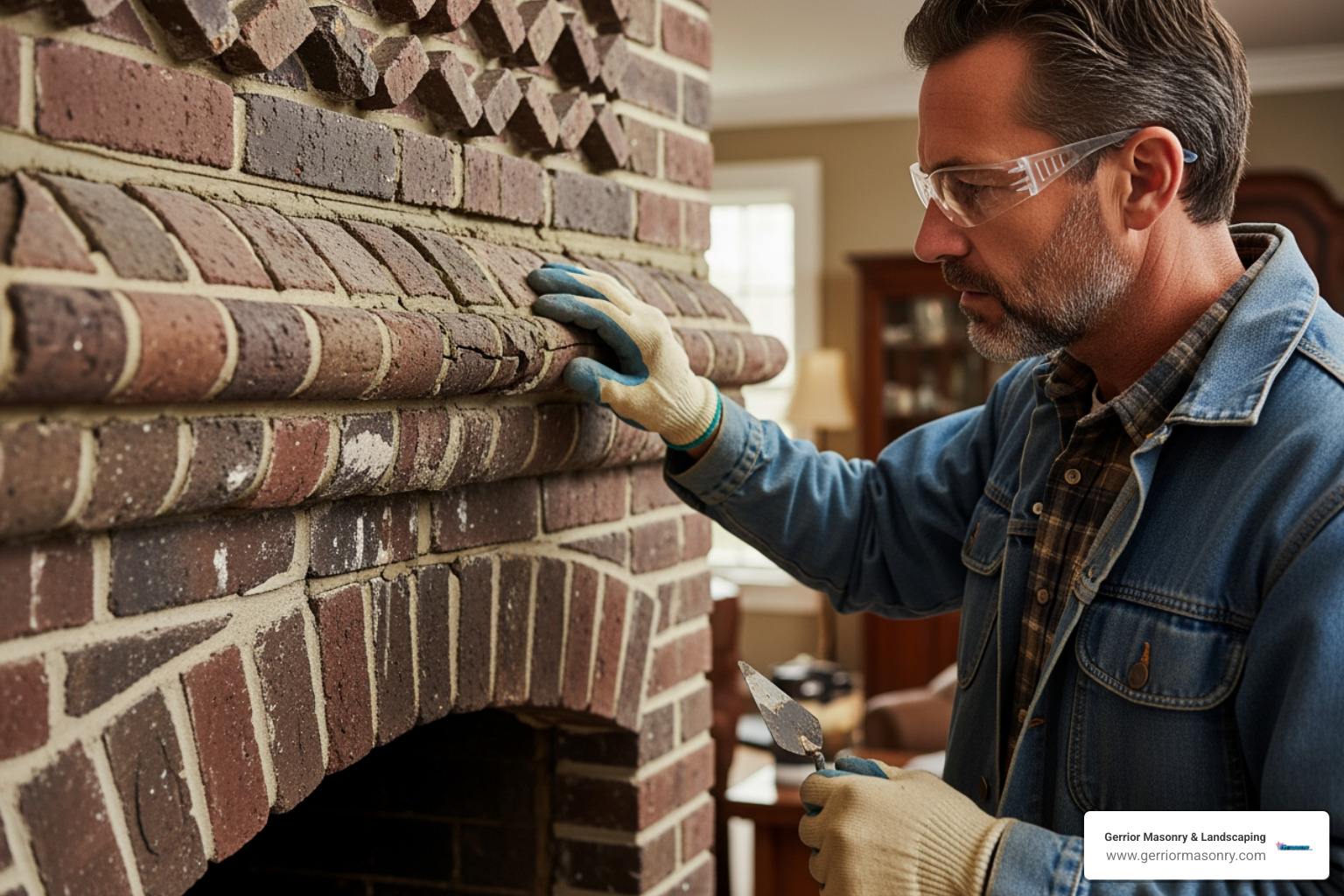
Crumbling Mortar Joints: Deteriorating mortar is a serious issue. It weakens the entire structure, loosening bricks or stones and compromising the integrity of the surround.
Loose Pieces: Any wobbly brick, tile, or stone is an immediate safety hazard. It could fall and cause injury or damage and indicates a failure in the bonding material that must be addressed.
For more information on maintaining your entire fireplace system, check out our resources on fireplace repairs.
Common Surround Materials and Damage Types
The material of your surround dictates the type of damage and the repair method.
Stone (Marble, Granite, Limestone): Prone to hairline cracks from heat, as well as chips and scratches from impacts.
Brick: Commonly suffers from crumbling mortar joints, spalling (flaking), and chipped bricks due to moisture and heat cycles.
Tile (Ceramic, Porcelain): Can experience cracked or loose tiles, chips, and deteriorating grout lines.
Wood (Mantels and Trim): While beautiful, wood is combustible and vulnerable to cracks, dents, scratches, and discoloration from radiant heat. It is critical that all wood components adhere to strict clearance requirements from the firebox opening, as specified by the National Fire Protection Association (NFPA) 211 standards. Insufficient clearance can lead to pyrolysis, a process where wood slowly degrades from heat until it can auto-ignite at a much lower temperature, creating a serious fire hazard.
All materials are susceptible to heat damage from expansion/contraction and impact damage from accidents. For more details on stone, visit our page on stonework repairs.
Tools and Materials for the Job
Having the right tools and materials is key to a successful fireplace surround repair.
Essential Supplies:
Safety Gear: Always wear safety glasses, gloves, and a dust mask.
Cleaning Supplies: A stiff brush, shop vacuum, and clean cloths are necessary for preparing the surface.
Application Tools: Putty knife, trowel, and a caulking gun.
Repair Compounds: The right compound is critical.
Epoxy Repair Kit: For stone and marble, choose a two-part epoxy with a coloring kit to match your stone.
Mortar: The type of mortar is critical. For general brick surround repair (outside the firebox), Type N mortar is typically used, as it has a good balance of strength and flexibility suitable for most exterior and interior masonry. For any repairs inside the firebox where materials are exposed to direct flame and extreme temperatures, you must use refractory mortar. This is a high-temperature cement specifically designed to withstand thermal shock and temperatures exceeding 2000°F, unlike standard mortar which would crack and fail.
Refractory Caulk: This high-temperature sealant is for filling small cracks and gaps in high-heat areas like the firebox or around an insert. It is not for large gaps or structural repairs. For more details, see this discussion on fireplace mortar repair.
DIY Fireplace Surround Repair: Cracks and Chips
With patience and the right materials, you can fix minor cracks and chips in a stone or marble surround.
Clean the Area: A pristine surface is non-negotiable for a lasting repair. For smooth stone like marble or granite, use a pH-neutral stone cleaner and a soft cloth. For brick or rougher stone, a stiff-bristled brush (not wire, which can scratch) can help dislodge debris. Use a shop vacuum with a crevice tool to meticulously remove every speck of dust from inside the crack or chip. Any remaining debris will compromise the bond of the filler.
Prepare the Filler: Mix a two-part stone epoxy according to the product’s instructions. Use the included tinting pigments to carefully match your stone’s color, testing on an inconspicuous spot first.
Apply the Epoxy: Using a putty knife or razor blade, press the mixed epoxy into the crack or chip. Slightly overfill the damaged area to account for sanding.
Cure and Smooth: Allow the epoxy to cure completely (a few hours to overnight). Once hardened, carefully scrape the excess material off with a razor blade held at a low angle.
Finish and Polish: Wet-sand the repair with fine-grit sandpaper (400-grit and up) until it is flush and smooth with the surrounding stone. For a high-gloss finish, you may need to use a grinder with polishing pads.
Repairing Stone vs. Brick Surrounds
Repairing stone and brick surrounds requires different approaches.
Stone Repair:
Focus: Aesthetics and precision. The goal is an invisible repair.
Process: Filling cracks and chips with color-matched epoxy, followed by careful sanding and polishing to blend with the natural stone.
Brick Repair:
Focus: Structural integrity. The priority is sound bricks and mortar joints.
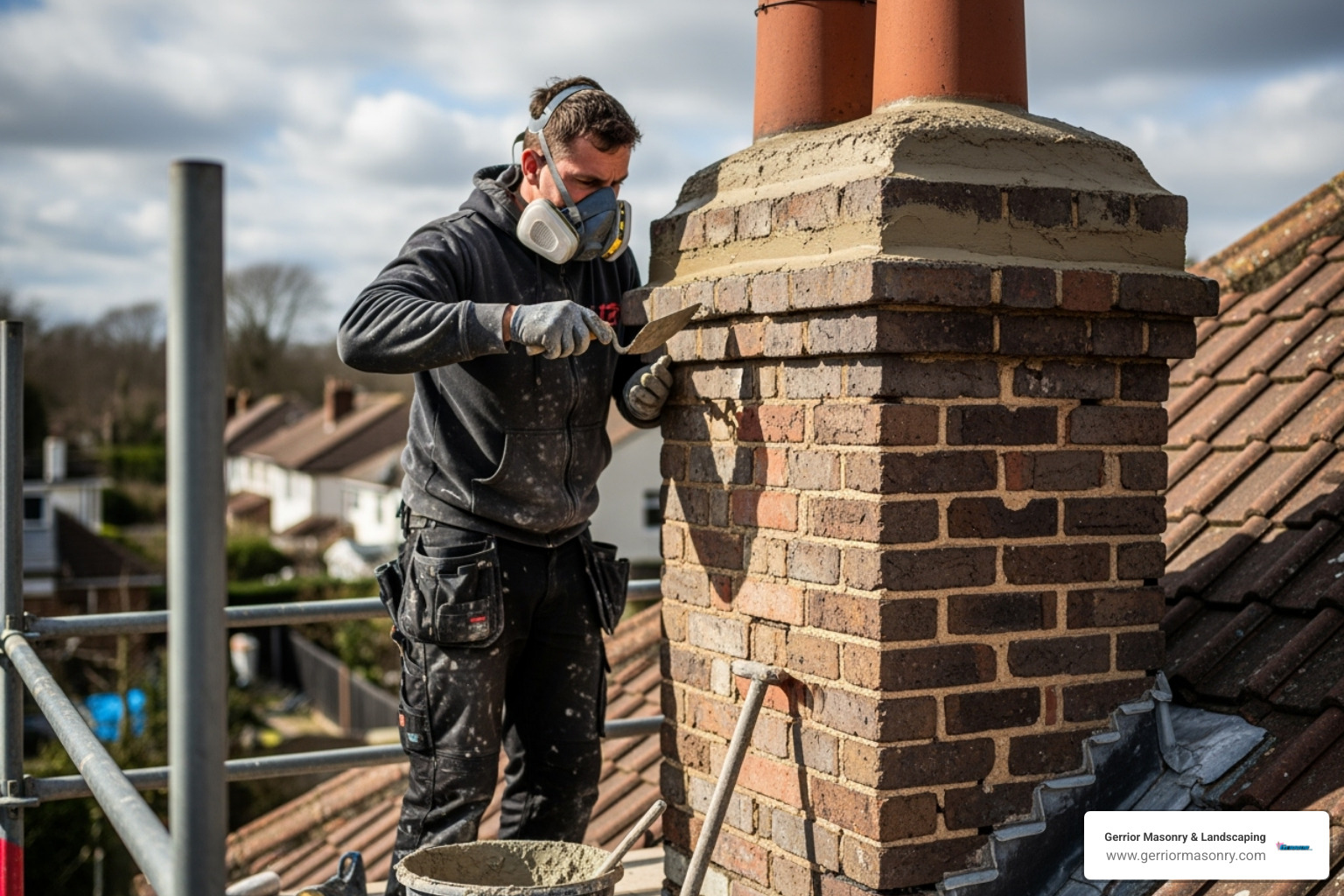
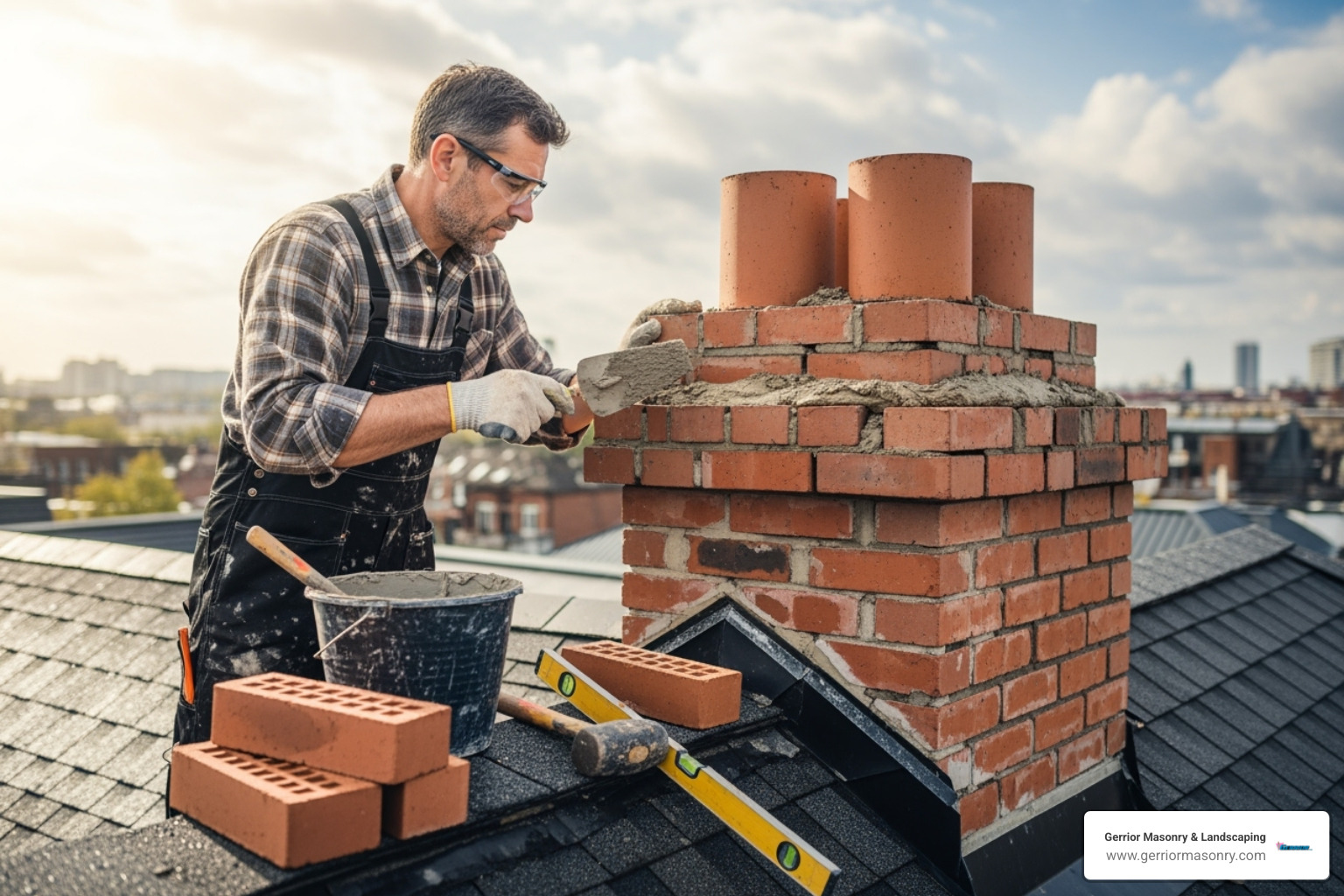
Process: The core of brick repair is repointing. This involves removing old mortar to a depth of about 3/4 inch, cleaning the joint, and then packing fresh Type N mortar firmly into the space. The new mortar is applied in layers and then “tooled” to create a smooth, concave surface that matches the other joints. This process restores the structural bond and seals out moisture. Severely damaged bricks may need to be chiseled out and replaced entirely.
While stone repair is about seamless cosmetic fixes, brick repair often addresses the structural bonding of the masonry. If you’re dealing with brick fireplace problems, our detailed guide on brick fireplace repair can provide more specific guidance.
Prevention and When to Call a Professional
A few simple habits can prevent damage and save you from costly repairs down the road.
Preventing Future Damage
Clean Regularly: Use gentle cleaners appropriate for your surround’s material to remove soot and dust. Avoid harsh chemicals.
Use a Fireplace Screen: A screen protects your surround from sparks and accidental impacts from rolling logs or fireplace tools.
Control Moisture: Address any signs of dampness or water stains immediately, as moisture is a primary cause of masonry deterioration.
Inspect Periodically: Check for new cracks, chips, or loose pieces at the beginning of each season. Early detection makes repairs easier.
Schedule Annual Inspections: Have a certified chimney sweep inspect your entire fireplace and chimney system annually. They can spot hidden issues within the flue or chimney structure that you can’t see, preventing major problems before they start.
Knowing When to Hire an Expert
While DIY is great for minor fixes, some issues require a professional to ensure safety and prevent further damage.
Call a professional if you see:
Large Structural Cracks: A crack wider than a quarter-inch, or one that zig-zags through multiple bricks and mortar joints, is a red flag for a potential foundational or structural issue with the chimney mass or even your home’s foundation. This is far beyond a cosmetic fix and requires an expert structural assessment.
Firebox Damage: The firebox is your primary line of defense. Severely cracked firebricks or crumbling refractory mortar joints create direct pathways for intense heat and embers to reach the combustible framework of your home. This is one of the most significant fire hazards in a fireplace system and must be repaired by a professional using the correct high-temperature materials.
Loose Mantel or Hearth: A wobbly mantel or rocking hearth slab is a safety risk that needs to be properly secured by a professional.
Widespread Mortar Deterioration: If large sections of mortar are crumbling, it may point to a systemic moisture or structural issue.
Smoke in the Room: If smoke is entering your room instead of going up the chimney, stop using the fireplace immediately. This indicates a serious drafting problem, which could be caused by a flue blockage (like animal nests or creosote buildup), or a damaged flue liner. This not only poses a fire risk but also exposes your family to dangerous carbon monoxide.
Based on industry data, the cost for professional fireplace surround repair varies widely. Minor cosmetic fixes like filling small cracks might cost $250 to $750. More significant repairs, like replacing bricks or resetting a hearthstone, could range from $800 to $2,000. Major structural work often exceeds $3,000. If you’re uncertain about a repair, it’s always safest to consult an expert for an accurate quote.
At Gerrior Masonry & Landscaping, we bring over 30 years of expertise to every project. Our skilled team and direct owner oversight ensure that your fireplace surround repair is done with lasting craftsmanship. If you’re looking for a complete change, learn more in our Explore our Fireplace Veneer Installation Complete Guide.
Gerrior Masonry & Landscape Construction Corp. is based in Woburn, MA, and proudly services Middlesex and Essex County, Massachusetts. When your fireplace needs more than a DIY fix, we’re here to restore the heart of your home.
Fireplace repair services: Ignite Confidence in 2025
Why Professional Fireplace Repair Services Are Essential for Your Home
Fireplace repair services are crucial for maintaining both the safety and functionality of your home’s heating system. Whether you have a gas, wood-burning, or electric fireplace, regular maintenance and timely repairs ensure optimal performance and prevent dangerous situations like carbon monoxide leaks or house fires.
Key fireplace repair services include:
Annual safety inspections – Recommended by manufacturers and the National Fire Protection Association
Gas component servicing – Repairing pilot lights, gas valves, and ignition systems
Chimney maintenance – Cleaning, flue liner replacement, and damper repairs
Emergency repairs – Addressing safety hazards like gas leaks or structural damage
Gas fireplaces require yearly maintenance to fulfill warranty requirements and ensure safe operation. The Gas Safety Authority of BC and industry manufacturers recommend annual servicing by licensed professionals. Signs you need immediate attention include difficulty lighting, unusual odors, soot buildup, or inconsistent flames.
Wood-burning fireplaces need regular chimney cleaning every 50-75 fires to prevent dangerous creosote buildup that can cause fires. Professional inspections catch issues early, saving you from costly repairs and protecting your family’s safety.
I’m Joe Gerrior, owner of Gerrior Masonry & Landscape Construction Corp., and I’ve been providing fireplace repair services and masonry work throughout Massachusetts for over 34 years. My team specializes in comprehensive chimney and fireplace restoration, from minor mortar repairs to complete firebox rebuilds.
Relevant articles related to Fireplace repair services:
Understanding Common Issues and Professional Fireplace Repair Services
Your fireplace brings warmth and comfort, but like any appliance, it can develop issues over time. The intense heat, regular use, and exposure to elements can lead to problems ranging from minor inconveniences to serious safety hazards.
Whether you have a gas fireplace, wood-burning fireplace, or electric unit, understanding what can go wrong helps you catch problems early. This is about protecting your family from safety hazards like carbon monoxide leaks or house fires.
At Gerrior Masonry & Landscaping, we’ve seen it all in our 30+ years of experience. From masonry damage threatening structural integrity to mechanical failures, we understand the unique challenges of different fireplace types. Our team specializes in everything from minor gas valve adjustments to complete chimney rebuilds. For comprehensive information about structural issues, check out our detailed guide on chimney repair.
Signs Your Fireplace Needs Professional Attention
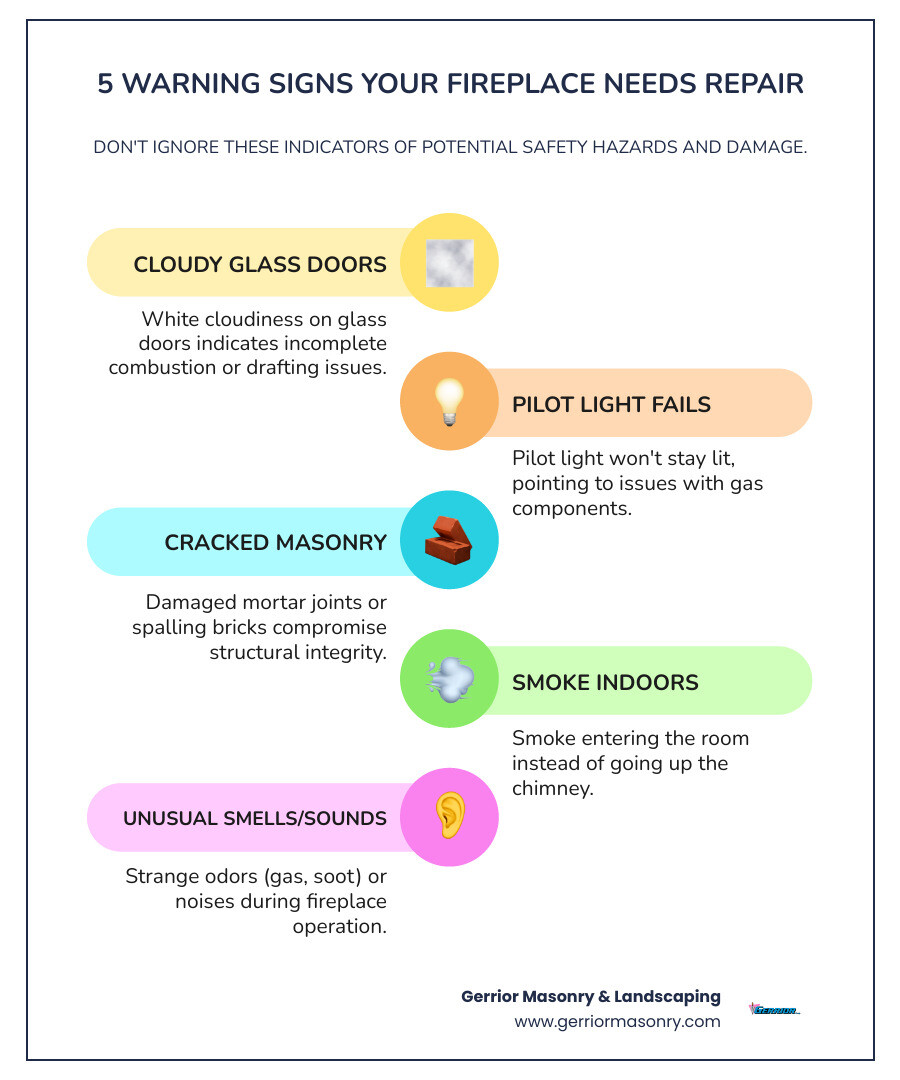
Recognizing warning signs early can save you from costly repairs and dangerous situations.
A cracked firebox is a serious issue. Cracks allow heat to escape into your home’s wooden framework, creating a dangerous fire hazard. Similarly, damaged mortar joints can let heat and flames reach combustible materials. If you notice cracks or crumbling mortar, don’t wait. Our specialized fireplace cement crack repair services can restore your fireplace’s safety.
Spalling bricks occur when water freezes inside bricks, causing the faces to pop off or flake. This weakens the chimney structure and allows more water intrusion, creating a cycle of damage.
Strange smells are a major red flag. For gas fireplaces, a rotten egg odor indicates a potential gas leak requiring immediate evacuation and a professional call. For wood-burning units, a strong, acrid smell often points to dangerous creosote buildup.
Pilot light issues, like a light that won’t ignite or stay lit, point to problems with the gas valve, thermocouple, or pilot assembly. These are not DIY fixes and require professional expertise for safe repair.
A smoky fireplace, where smoke enters your room instead of venting up the chimney, indicates a draft problem, blocked flue, or damaged damper. This can lead to dangerous carbon monoxide buildup in your home.
Damper problems affect both efficiency and safety. A stuck-open damper wastes energy, while a stuck-closed one prevents smoke from venting properly. Both situations need immediate professional attention.
For expert guidance on maintaining your fireplace’s structural integrity, visit our comprehensive resource on chimney mortar repair.
A Guide to Common Fireplace Repairs
Professional fireplace repair services cover everything from basic maintenance to complete overhauls with a commitment to safety.
Masonry restoration is a core repair. We carefully replace cracked or crumbling bricks with matching components. This skilled work prevents future issues.
Tuckpointing and repointing are techniques that restore mortar joints. Over time, mortar deteriorates, creating gaps for water. We remove old mortar and replace it with fresh material that matches your chimney. Our detailed chimney tuckpointing page explains this process.
Firebox rebuilding becomes necessary when damage is extensive. We reconstruct fireboxes using high-quality refractory bricks and specialized fire brick mortar to withstand extreme temperatures.
Flue liner replacement addresses a critical safety component. Cracked or corroded flue liners can leak dangerous gases into your home. Our comprehensive chimney flue replacement service restores this protective barrier.
For gas fireplaces, gas valve and thermopile service keeps your system running safely. These components control gas flow and ignition; we diagnose and repair issues with gas valves, thermocouples, thermopiles, and ignition systems.
The Critical Role of Annual Inspections
Annual fireplace inspections are like a checkup for your hearth, catching small problems before they become expensive or dangerous. The National Fire Protection Association (NFPA) recommends them because serious safety issues can develop between uses.
Safety is the top reason for inspections. Poorly maintained gas fireplaces can leak deadly, odorless carbon monoxide. Wood-burning fireplaces require regular cleaning to prevent creosote buildup, a common cause of chimney fires.
Annual inspections also maintain your fireplace’s efficiency. Clean components, clear airways, and properly functioning parts lead to better heat output and lower energy costs.
Many gas fireplace warranty requirements include annual professional servicing. Skipping inspections might void your warranty coverage when you need it most.
The longevity benefits of regular maintenance are clear. Gas fireplaces can last 20-30 years with proper care, while neglected units fail much sooner.
Carbon monoxide prevention deserves special attention. This silent killer forms from incomplete combustion or improper venting. Annual inspections check these critical systems to prevent CO problems.
Gerrior Masonry & Landscape Construction is based in Woburn, MA, and proudly services Middlesex and Essex County, Massachusetts.
Choosing the Right Expert for Your Fireplace Needs
When your fireplace acts up, you’re not just hiring a repair person—you’re trusting them with your family’s safety. With a little know-how, you can confidently choose an expert who will get the job done right.
At Gerrior Masonry & Landscaping, we’ve seen homeowners get burned by choosing on price alone. Look for professionals who offer fireplace repair services as part of comprehensive expertise. Our masonry services approach means we see the bigger picture, ensuring repairs that last.
Estimating the Cost of Fireplace Repair Services
Understanding fireplace repair services costs helps you budget wisely and spot quotes that are too good to be true.
Important note: These figures represent average costs based on internet data and are not actual costs for Gerrior Masonry & Landscaping services. Your actual investment will depend on your specific situation, materials needed, and repair complexity.
Service Type
Average Cost Range (Internet Data)
Fireplace Inspection
$100 – $500
Masonry Tuckpointing (per sq ft)
$5 – $25
Flue Liner Repair/Replacement
$500 – $5000+
Gas Valve Replacement
$200 – $800+
Thermocouple/Thermopile Replacement
$150 – $500
Firebox Rebuilding
$500 – $3000+
Chimney Crown Repair
$200 – $1000+
Chimney Repointing (minor)
$300 – $1500+
Several factors drive costs. Complexity is key; a seemingly simple fix can become involved with older or custom fireplaces. What looks like minor mortar repair might also reveal deeper structural issues. Geographic location and accessibility also play a huge role, as labor rates vary and repairs requiring scaffolding take more time. The type of fireplace you own affects everything, from needing licensed gas fitters to specialized refractory materials.
For detailed local pricing information, check out our chimney repair cost near me page. We believe in transparent pricing with no surprises.
Beyond Repair: Upgrading and Customizing Your Hearth
Sometimes, an upgrade is a better solution than a repair.
Converting to gas is a popular choice. Enjoy a fire with the flip of a switch—no wood, no cleanup, and no sparks. Modern gas fireplaces are clean and efficient.
Fireplace refacing transforms your space without a full rebuild. We can turn dated brick into a stunning stone masterpiece or upgrade a builder-grade mantel to a custom focal point.
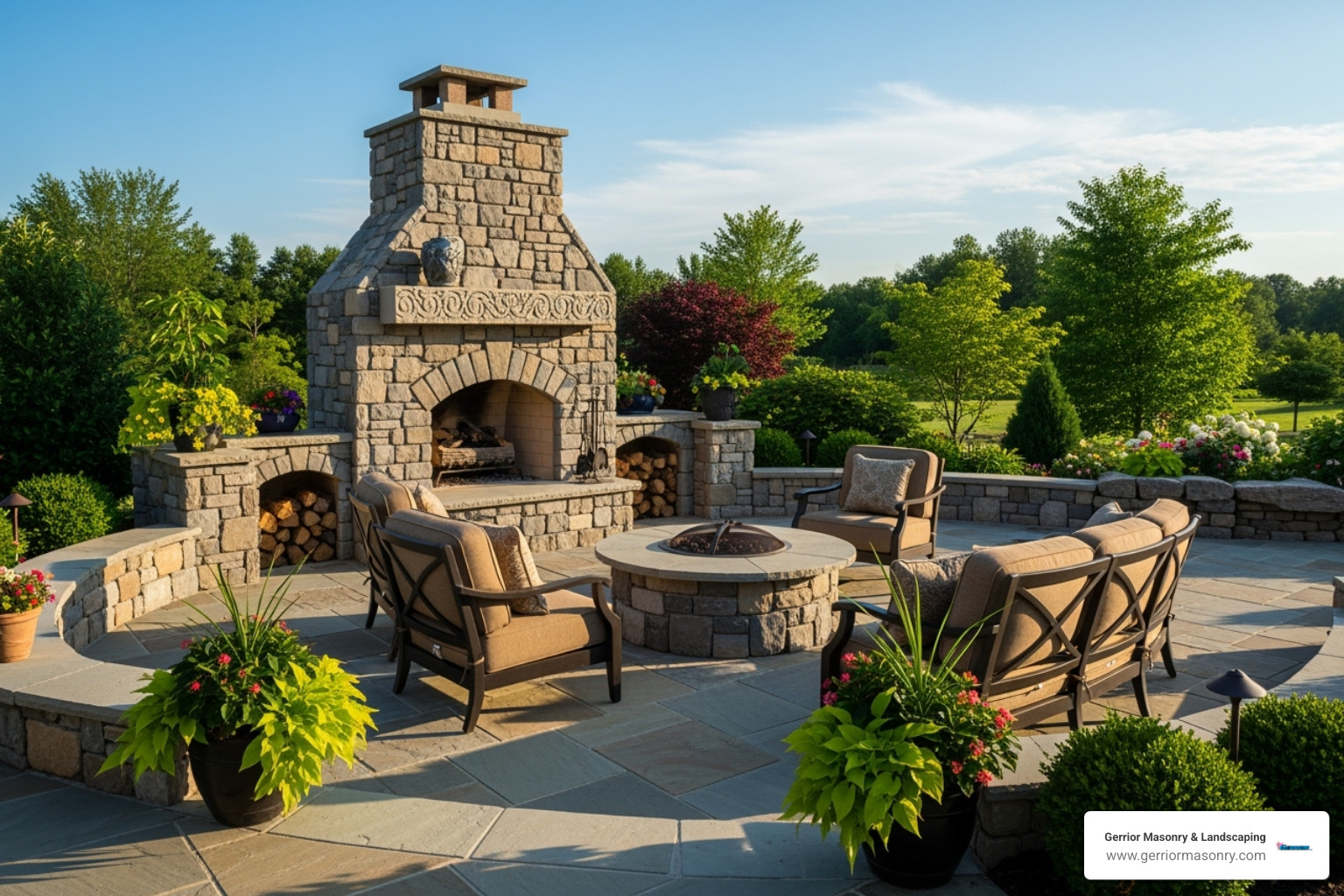
For those dreaming bigger, our team excels as custom fireplace builders. We design indoor showstoppers and outdoor gathering spots that match your vision.
Outdoor fireplaces and fire pits have become incredibly popular for backyard gatherings. Our outdoor fire pits range from simple gathering spots to elaborate outdoor rooms.
Gas log sets offer a middle ground, adding the convenience of gas to your existing fireplace with remarkably realistic logs.
How to Select the Best Local Fireplace Repair Services
Choosing the best value over the cheapest quote is crucial for fireplace repair services.
Licensing and insurance are essential, not optional. Gas fireplace technicians must be licensed gas fitters for your safety. Unlicensed work can void your home insurance and create dangerous liabilities.
Experience tells the story. With over 30 years in business, we’ve seen every possible fireplace problem and know how to fix them right the first time.
Customer reviews offer insight into a company’s quality and service. Read detailed comments to understand their timeliness, effectiveness, and problem-solving skills.
Written estimates protect you and your contractor by detailing the scope of work, materials, and costs.
Project portfolios show you what a company can accomplish and help you envision possibilities for your own fireplace.
At Gerrior Masonry & Landscaping, owner oversight sets us apart. Joe Gerrior personally oversees every project, ensuring our high standards are met. You’re not just another job number to us.
We proudly serve homeowners throughout Middlesex and Essex County, Massachusetts, from our base near Woburn. Whether you’re in Acton, Beverly, Concord, Lexington, or any of the surrounding communities, we bring the same commitment to quality and customer satisfaction to every project.
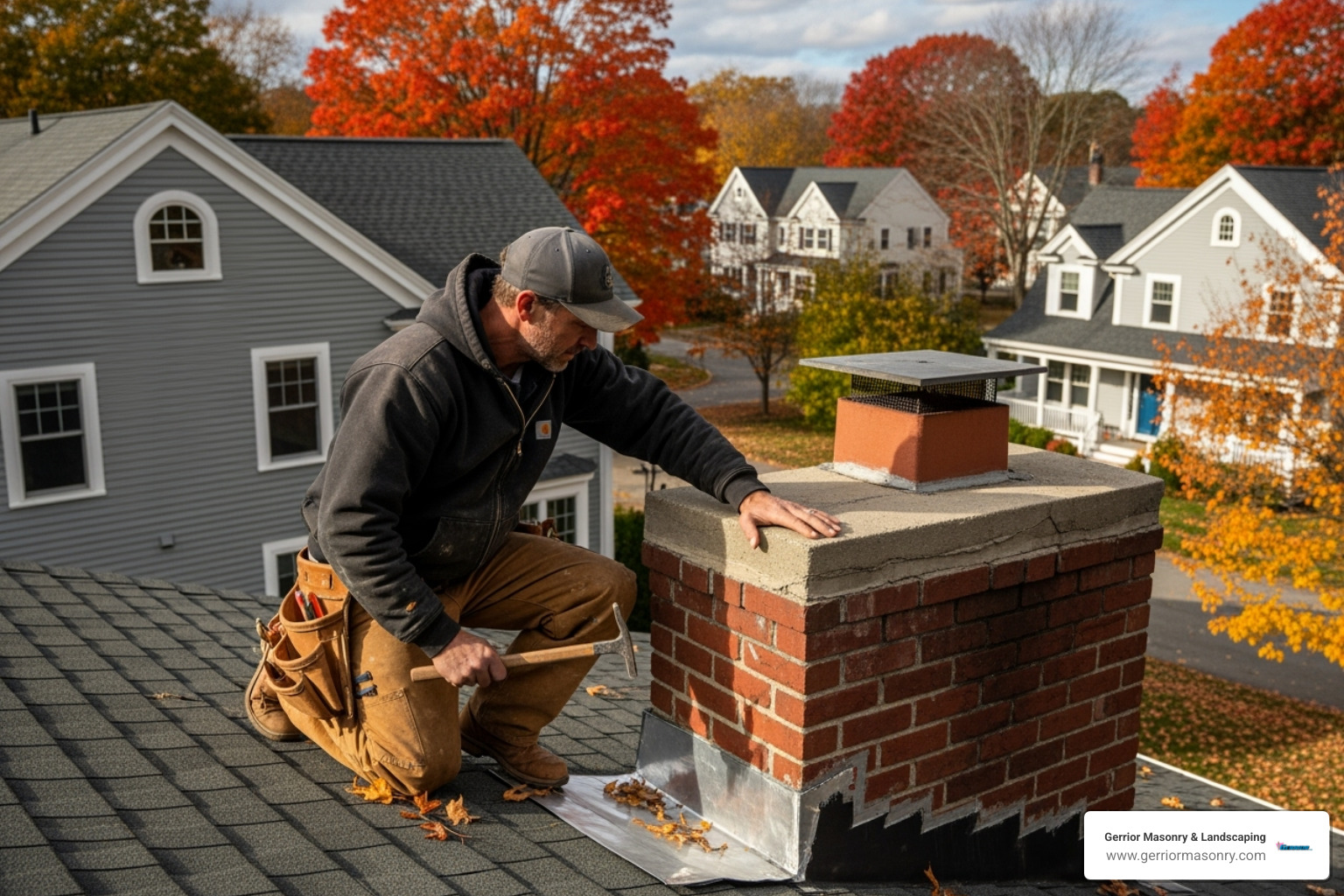
Chimney flashing repair is critical for preventing water damage, as chimneys are a primary cause of roof leaks. Flashing acts like weatherstripping, sealing the gap where your chimney meets the roof. When it fails, water can seep into your roof structure, causing expensive damage to wood, insulation, and interior walls.
Quick Chimney Flashing Repair Overview:
Cost: DIY repairs: $65-$185 | Professional repairs: $300-$800+
Common signs: Water stains on ceilings, rust on flashing, cracked sealant
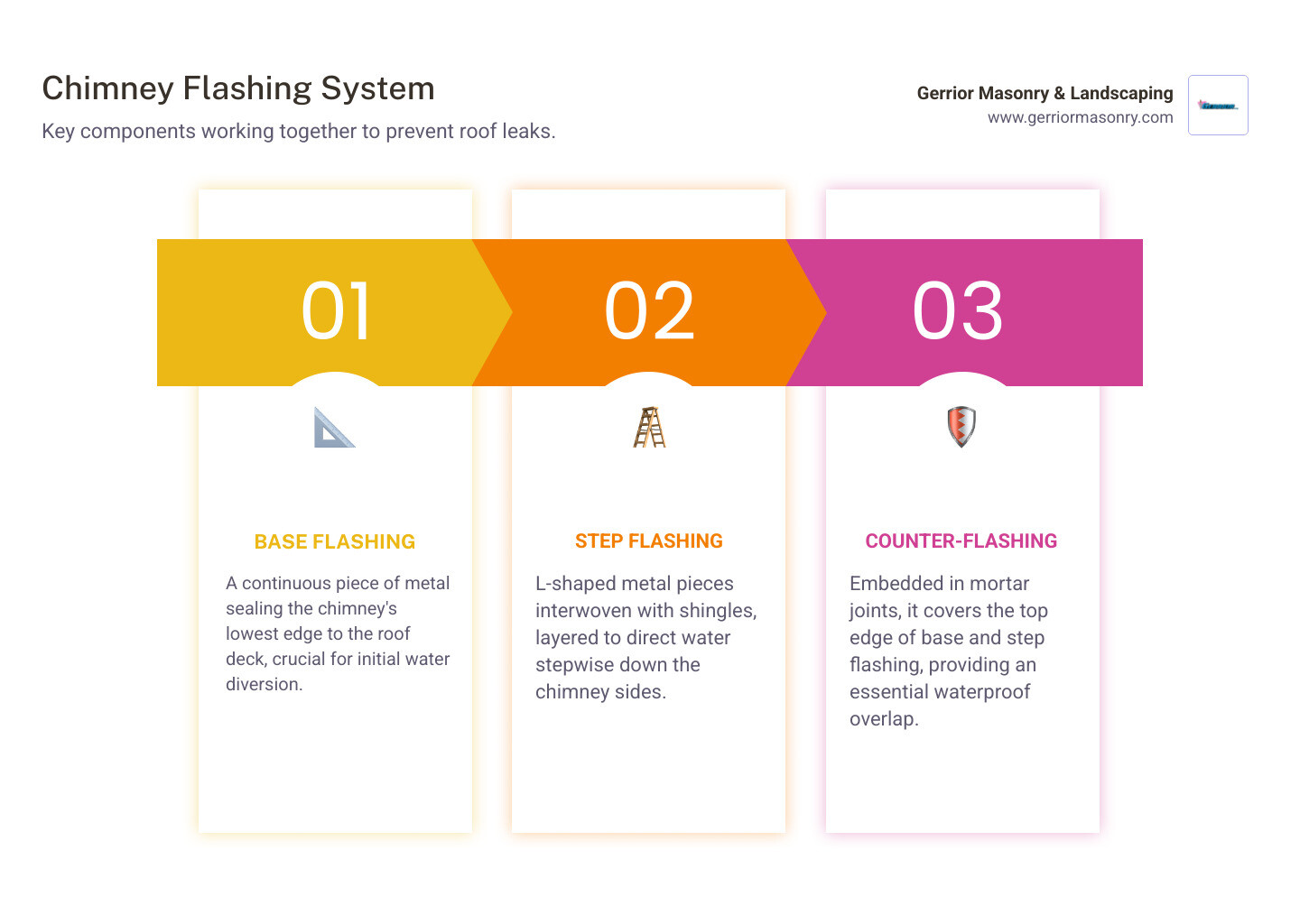
Main components: Base flashing, step flashing, counter flashing
When to call pros: Extensive damage, steep roofs, structural concerns
Prevention: Annual inspections, prompt repairs
Most homeowners only notice flashing issues when water stains appear on the ceiling. By then, damage may have already spread to the roof decking or home’s structure. The good news is that many minor flashing issues can be spotted early and repaired before they become major headaches. While some simple fixes are DIY-friendly, complex problems require professional expertise.
I’m Joe Gerrior, owner of Gerrior Masonry & Landscape Construction Corp. With over 34 years of experience in chimney flashing repair and masonry in Massachusetts, my team has seen it all. I’ll share our knowledge to help you save thousands in water damage repairs.
Identifying and Understanding Chimney Flashing Issues
Chimney flashing is a weatherproofing system of metal pieces that creates a watertight seal where the chimney and roof meet. The choice of material—typically galvanized steel, aluminum, or copper—plays a significant role in durability and cost. Galvanized steel is a common, budget-friendly choice, but its protective zinc coating can wear down, leading to rust. Aluminum offers superior rust resistance and is lightweight, but it’s softer and can be more susceptible to damage from harsh weather or impact.
Copper is the premium option, prized for its exceptional longevity (often lasting 80+ years) and aesthetic appeal, though it comes with a higher initial investment. Regardless of the material, the system is a coordinated effort of base flashing (around the bottom), step flashing (interwoven with shingles up the sides), and counter flashing (the final piece embedded into the chimney’s mortar joints). Together, these components form a multi-layered barrier that directs water safely off your roof. Without this crucial protection, your home is vulnerable to rain, snow, and wind.
Common Signs That Chimney Flashing Repair is Needed
The earlier you catch flashing problems, the less expensive the repairs will be. Here are the key signs to look for:
Water stains on ceilings or walls: Discoloration or damp spots near your chimney are the most common red flags. Failing flashing is a leading cause of roof leaks.
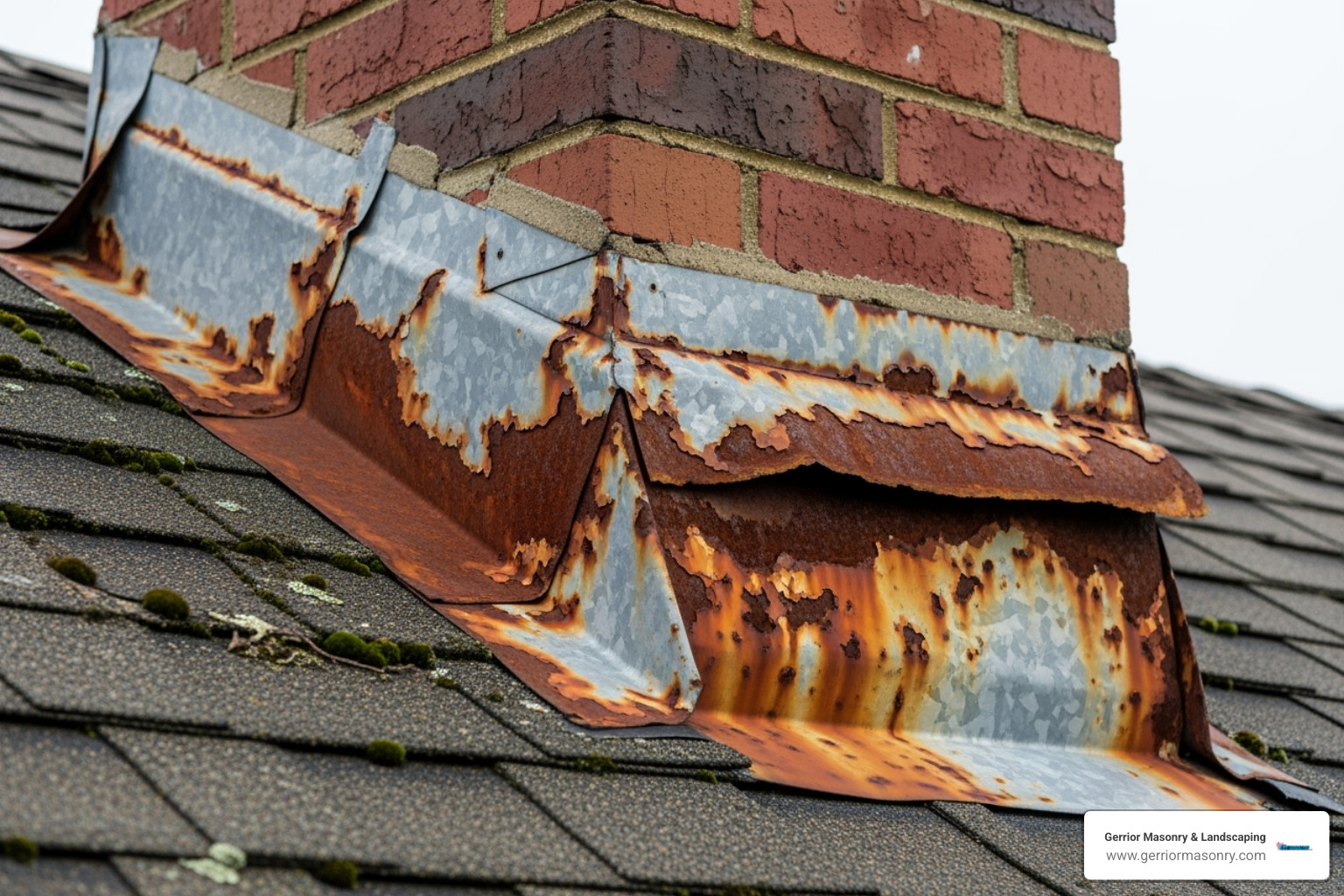
Visible rust or corrosion: Reddish-brown stains on the metal flashing indicate its integrity is breaking down, creating potential entry points for water.
Cracked or missing sealant: Roofing cement and caulk degrade over time. When they fail, they leave gaps for water to seep in.
Loose or missing flashing: High winds or ice dams can pull flashing sections away from the chimney or roof.
Crumbling bricks or mortar: This can signal long-term water damage from failed flashing that has compromised the masonry. Our team at Chimney Masonry Repair Near Me can address these structural issues.
Mold or algae growth: Growth around the chimney indicates persistent moisture, often due to faulty flashing.
We recommend checking your chimney flashing twice a year and after severe weather.
The Risks of Damaged Flashing and Benefits of Maintenance
Ignoring damaged flashing can lead to severe consequences. The primary risks include:
Water Damage: Spreads from ceiling stains to peeling paint and ruined drywall.
Wood Rot: Compromises the structural stability of your roof’s rafters and sheathing.
Mold and Mildew: Creates health hazards like allergies and respiratory issues.
Structural Damage: Weakens the entire roof system, damages insulation, and can create electrical hazards.
The benefits of timely chimney flashing repair and regular maintenance are clear. Proactive repairs save money by preventing catastrophic water damage that can cost thousands to fix. A well-maintained flashing system improves home durability by protecting the roof deck and structural timbers from rot, and it can even enhance energy efficiency by preventing moisture from degrading insulation. Furthermore, it protects your property value, as a leaky roof is a major red flag for potential buyers. Most importantly, it provides peace of mind knowing your home is secure during the next heavy storm.
DIY vs. Professional Chimney Flashing Repair Costs
The decision to DIY or hire a professional depends on the extent of the damage, your skill level, and your comfort with working on a roof.
Here’s a general cost comparison:
Type of Repair
Estimated Cost Range
DIY Repair
$65 to $250+
Professional Repair
$300 to $1,500+
Important note: These are average costs based on internet data and not actual costs for Gerrior Masonry services. Actual pricing may vary based on your specific project details.
DIY repairs are suitable for minor tasks like re-sealing small areas. Material costs are low, but consider the value of your time and the safety risks involved.
Professional repairs cover skilled labor, quality materials, safety equipment, and warranties. Costs can increase due to factors like extensive damage (requiring full replacement or wood rot repair), difficult roof access (steep pitches), premium materials (like copper), and specific local building code requirements.
For more pricing details, visit our Chimney Repair Cost page. Investing in proper chimney flashing repair now is always more cost-effective than addressing extensive water damage later.
Gerrior Masonry & Landscape Construction is based in Woburn, MA, and proudly serves Middlesex and Essex County, Massachusetts.
How to Tackle Chimney Flashing Repair and Maintenance
Understanding the chimney flashing repair process helps you make smart decisions, whether you plan a DIY fix or hire a professional. Here’s a look at the tools, steps for minor repairs, and when to call for reinforcements.
Tools and Materials for the Job
Proper preparation is key to a safe and effective repair. After 34 years in the business, I can’t stress safety enough.
Essential Tools & Materials:
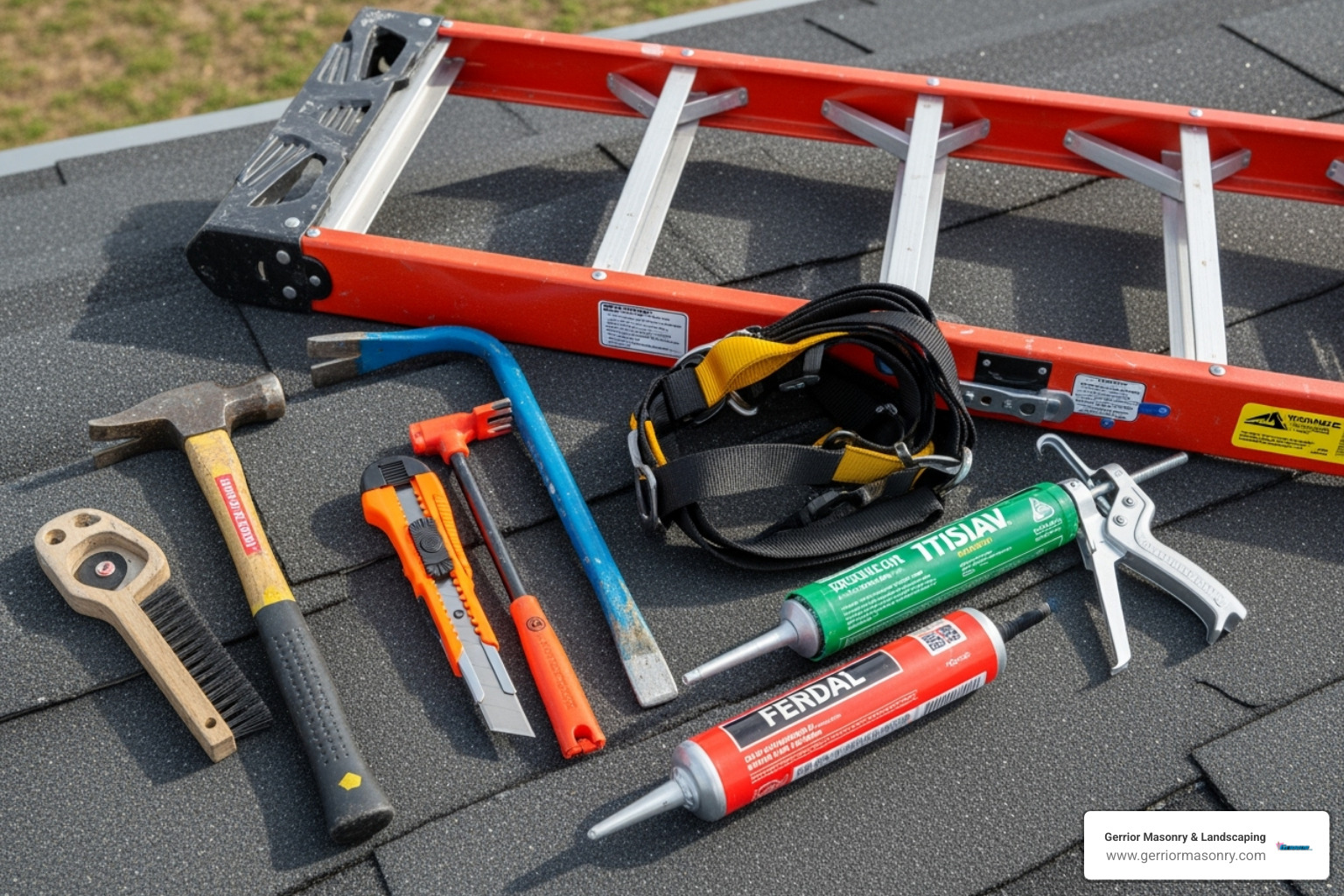
Safety Gear: A sturdy ladder, safety harness (for pitched roofs), non-slip shoes, work gloves, and safety goggles are non-negotiable.
Removal & Prep Tools: Pry bar, utility knife, wire brush, chisel, hammer, and tape measure.
Repair Materials: New metal flashing (aluminum, galvanized steel, or copper), roofing cement, a caulk gun with polyurethane roof caulk, and masonry nails or screws.
Optional: An ice and water shield provides an extra waterproofing layer, which is beneficial in Massachusetts winters.
A Step-by-Step Guide for Minor Chimney Flashing Repair
This guide is for minor repairs only, like re-sealing a loose edge or fixing small sealant cracks. For extensive damage, call a professional.
Prioritize Safety: Work only on a dry roof in good weather. Use a secured ladder and proper safety gear. If you’re uncomfortable with heights or have a steep roof, hire a pro.
Inspect Carefully: Check the entire flashing system for loose sections, cracks, rust, or gaps.
Clean the Area: This step is critical for proper adhesion. Remove all leaves, pine needles, and other debris from the roof area around the chimney. Use a pry bar or stiff putty knife to remove the bulk of the old, failed sealant. Then, use a wire brush to aggressively scrape away any remaining caulk, roofing cement, and rust from both the flashing and the chimney masonry until the surfaces are completely clean and bare. A clean, dry surface is non-negotiable for a lasting bond.
Repair or Replace: Gently bend loose flashing back into place. If replacing a small section, cut new metal to size, ensuring it overlaps with existing flashing.
Apply Roofing Cement: Using a caulk gun or putty knife, apply a generous, continuous bead of roofing cement behind the flashing where it meets the chimney and under any lifted edges of the step or base flashing. Press the flashing firmly into the cement to create a tight seal and squeeze out any trapped air. If you had to remove a section, secure the new piece with masonry nails at the top edges only—never drive a nail through the face of the flashing, as this creates a new hole for water to enter.
Seal All Edges: Apply a final bead of roofing cement along the top edge where flashing meets brick. Cover all nail heads with cement. Smooth the sealant with a putty knife for a clean finish.
When to Call a Professional and How to Prevent Future Issues
Knowing when to call a professional is crucial for avoiding costly mistakes and ensuring a lasting repair.
Call a professional if you encounter:
Extensive Damage: Severely rusted flashing, large holes, or multiple missing sections.
Steep Roofs or Safety Concerns: Don’t risk injury. Professionals have the right safety equipment.
Structural Issues: Suspected damage to roof decking or chimney masonry requires an expert eye.
Lack of Experience: Proper flashing installation is a technical skill. Mistakes like improper overlapping or nailing through the flashing face can make leaks worse.
Persistent Leaks: If a DIY fix fails, it’s time for a professional diagnosis.
Professionals also ensure work complies with local building codes and often provide warranties.
How to Prevent Future Issues
Prevention is the best strategy for chimney flashing repair.
Schedule Annual Inspections: The best defense is a good offense. Have a certified roofer or mason inspect your chimney and flashing every fall before the wet season begins. They can spot and fix minor issues before they escalate.
Keep it Clean: Debris like leaves, pine needles, and branches can pile up around the base of your chimney. This traps moisture against the flashing and masonry, accelerating corrosion and decay. Clean this area at least twice a year.
Maintain Masonry Health: The chimney structure itself is part of the system. Address any cracked bricks or deteriorating mortar joints promptly through a process called tuckpointing. This prevents water from seeping behind the counter flashing and compromising the entire seal.
Consider a Cricket for Wide Chimneys: If your chimney is more than 30 inches wide, building codes often require a “cricket” or “saddle.” This is a small, peaked structure built on the high side of the chimney that diverts water and snow around it, preventing pooling and reducing stress on the flashing.
Invest in Quality Installation: The number one cause of flashing failure is improper installation. Ensure you hire a reputable professional who understands the complex layering of step and counter flashing. A quality job using durable materials will protect your home for decades.
The effectiveness of flashing depends entirely on proper installation. By staying on top of maintenance and knowing when to call for help, you can protect your home from serious water damage. When the job calls for expertise, our team is here to help. For a comprehensive inspection and professional masonry services, trust the experts.
Gerrior Masonry & Landscape Construction is based in Woburn, MA, and proudly serves Middlesex and Essex County, Massachusetts.
Why Fireplace Mortar is Essential for Safe Heating
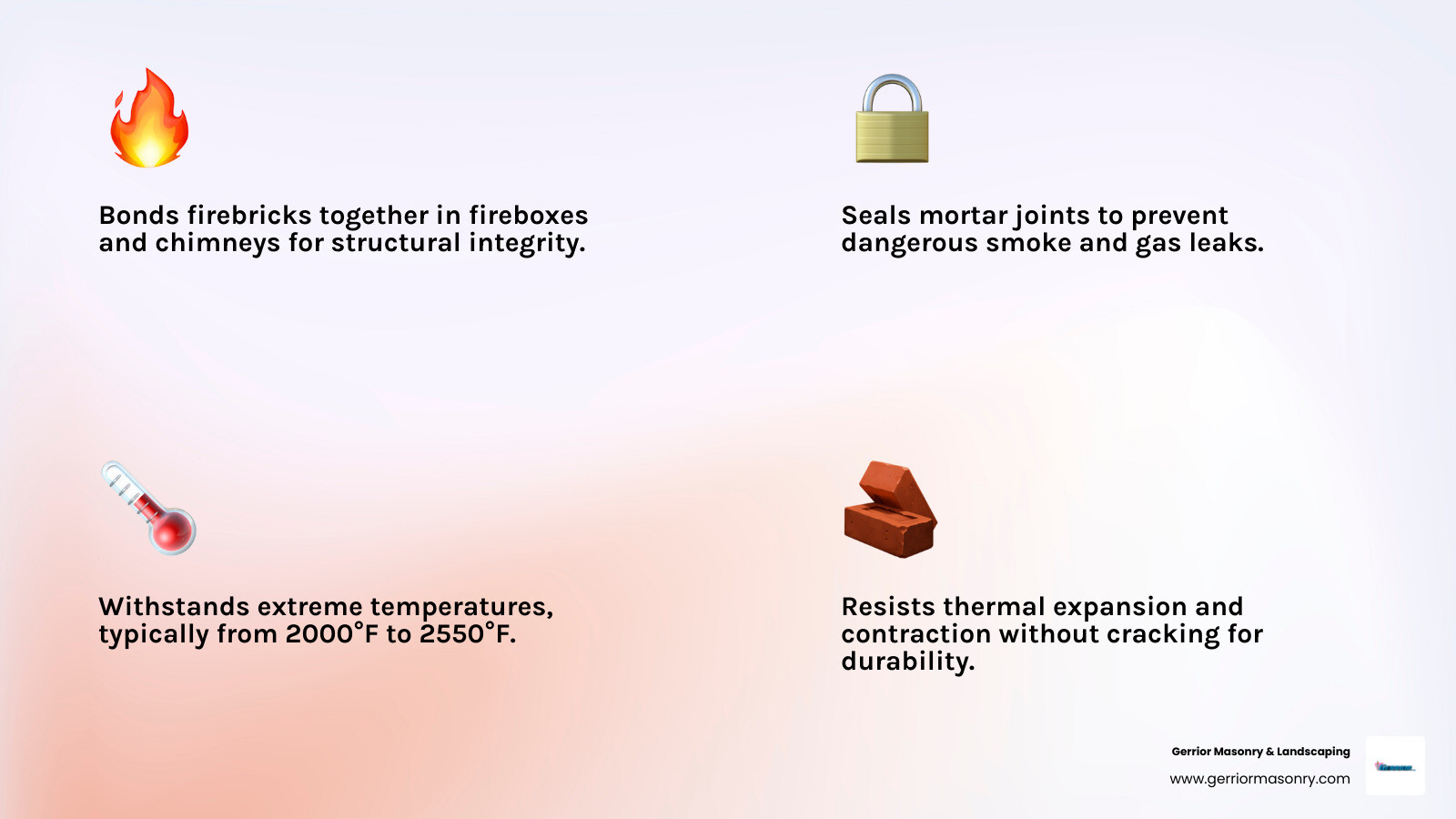
Fireplace mortar is a specialized high-temperature cement essential for the safe operation of your fireplace. Its primary job is to bond firebricks and seal joints, preventing dangerous smoke and gas leaks. Unlike regular cement, it’s engineered to withstand temperatures from 2000°F to over 2550°F and resist thermal expansion without cracking.
You can find it in several forms:
Pre-mixed cartridges: For small repairs.
Dry-mix tubs: For larger projects like laying firebrick.
Castable refractory cement: For custom-molded applications.
Popular brands include Rutland, Sakrete High-Heat, and MEECO’S RED DEVIL. Choosing the right product and ensuring it cures properly—either by air-drying or with controlled heat—is crucial for preventing structural damage.
With over 34 years of masonry experience in Massachusetts, I’m Joe Gerrior, owner of Gerrior Masonry & Landscape Construction Corp. I’ve learned that correct fireplace mortar selection and application are non-negotiable for safety and long-term durability.
Your Complete Guide to Choosing and Using Fireplace Mortar
Understanding fireplace mortar is key to a safe, functional fireplace. It’s not everyday cement; it’s engineered for extreme heat that would destroy regular mortar. After 34 years in masonry, I’ve seen the dangerous results of using the wrong product. This guide will help you make the right choice.
Refractory Mortar vs. Regular Mortar: What’s the Difference?
Regular mortar and fireplace mortar may look similar, but they perform very differently under heat.
Why Regular Mortar Fails in Fireplaces
Regular mortar, made with Portland cement, starts to break down and crumble above 500°F. It also expands and contracts at a different rate than firebrick, causing stress cracks that can leak dangerous gases into your home.
What Makes Refractory Mortar Special
Fireplace mortar uses binders like calcium aluminate cement and fireclay that strengthen with heat. Products like Sakrete High-Heat Mortar can handle temperatures up to 2550°F. It’s formulated for thermal compatibility, meaning it expands and contracts with your firebricks, preventing cracks and ensuring a long-lasting, safe repair.
Expands/contracts with firebrick; resists cracking
Incompatible thermal expansion; prone to cracking
Water Solubility
Some air-setting types can be water-soluble; hydraulic-setting types are not
Generally water-resistant (after curing)
Using anything other than refractory mortar in your firebox is a significant safety hazard.
Types of High-Heat Mortar and Their Applications
Fireplace mortar comes in several forms for different projects.
Pre-mixed Cartridges: The Quick Fix Solution
Convenient for small repairs like hairline cracks or minor gaps, these tubes (e.g., Rutland, MEECO’S RED DEVIL) fit a standard caulking gun. They are ready to use but are not cost-effective for large jobs.
Dry-Mix Powders: The Workhorse Option
For larger projects like laying new firebricks or extensive repointing, dry-mix powders (e.g., Rutland Dry Mix 211) offer the best value. You mix them with water to achieve the desired consistency for the job, from parge coating a smoke chamber to repairing flue tiles. For more extensive chimney work, see our guide on chimney repairs.
Castable Refractory Cement: For Custom Projects
Castable cement acts like a liquid firebrick, ideal for pouring custom shapes like firebox floors, pizza ovens, forges, and kilns. It provides a strong, seamless finish but requires more skill to use properly.
How to Select the Right Fireplace Mortar
Match the product to your needs by considering these factors:
Temperature Rating: Ensure the mortar’s rating (at least 2000°F, preferably 2550°F) exceeds your fireplace’s heat output.
Application Type: Use cartridges for small cracks, dry mix for laying bricks, and castable cement for custom forms.
Curing Method: Check if the mortar is air-setting or requires a specific heat-curing process (building small, incremental fires) to achieve full strength.
Other Factors: Consider the required consistency (fixed vs. adjustable) and how well it will bond to existing materials.
Application, Curing, and Durability
Proper application and curing are essential for a lasting repair.
Preparation
First, thoroughly clean the area. Use a wire brush and vacuum to remove all loose debris, soot, and old mortar. Lightly dampen the surface with water to prevent the dry bricks from absorbing moisture from the new mortar too quickly.
Application
For pre-mixed cartridges, apply a steady bead and smooth the joint with a trowel or gloved finger. For dry-mix powders, follow the manufacturer’s water ratio precisely to get a thick, peanut-butter-like consistency. Press the mortar firmly into joints with a trowel to eliminate air pockets.
The Critical Curing Process
The curing process is critical and cannot be rushed. All fireplace mortar needs an initial 24-48 hour air-drying period to allow moisture to evaporate slowly. This initial phase prevents the formation of steam pockets that can cause cracks or blowouts when heat is first applied. For heat-curing mortars, you must then build a series of small, progressively hotter fires over several days. This gradual heating completes the chemical reaction (vitrification) that gives the mortar its full strength and heat resistance. Rushing this process by building a large fire too soon will trap moisture, compromise the mortar’s structural integrity, and drastically shorten its lifespan. For technical details, this technical guide on cements and mortars is a useful resource.
Expected Lifespan and Maintenance
A properly applied and cured repair can last for many years. The lifespan depends on material quality, application, curing, and fireplace usage. Once fully cured, most fireplace mortar is paintable for a seamless finish.
Safety Precautions and Typical Costs
Essential Safety Equipment and Precautions
Always wear safety gear: heat-resistant gloves, goggles, and a respirator. The dust from fireplace mortar contains Crystalline Silica, a respiratory hazard, so work in a well-ventilated area. Some products carry warnings under California’s Proposition 65; check labels and Safety Data Sheets at www.P65Warnings.ca.gov. To minimize dust, add water slowly when mixing dry powders.
Cost Expectations for Materials
Fireplace mortar costs vary by type and brand. These are average costs based on internet data and not actual costs for Gerrior Masonry services; we provide detailed estimates for our projects.
Pre-mixed cartridges (10.3 fl. oz.): $5 to $30 per cartridge.
Dry-mix mortars: $15 to $45 for small tubs (2.5 lbs) and $30 to $100 for larger containers (10-25 lbs).
Castable refractory cement: $65 to $200 for 25-27 lb. containers.
Expect to spend $15 to over $150 on materials, depending on your project’s scope.
Gerrior Masonry & Landscape Construction is based in Woburn, MA, and proudly services Middlesex and Essex County, Massachusetts.
When to Trust a Professional with Your Fireplace
While some minor fireplace mortar repairs are suitable for DIY, certain issues are red flags that require an expert. Your fireplace is a critical safety system, and significant failures can have serious consequences. After more than 30 years in the masonry business in Massachusetts, I know when a simple patch isn’t enough.
Signs You Need an Expert for Fireplace Mortar Repair
It’s time to call a professional if you see any of these warning signs:
Crumbling Mortar: Mortar that turns to sand when touched or has deteriorated deep into the joints indicates a compromised structure that can’t be fixed with a simple patch.
Loose or Fallen Firebricks: If firebricks are loose, wobbly, or have fallen out, the mortar has failed. This is a major hazard, as heat can transfer directly to your home’s wooden framing.
Large or Deep Cracks: Cracks wider than an eighth of an inch, or those that run through multiple bricks, point to significant structural stress. They are potential pathways for smoke, carbon monoxide, and flames to escape.
Smoke Leaking into the Room: Smoke should only exit through the chimney. If it’s seeping through cracks in the firebox or around the fireplace front, you have a serious and immediate safety problem.
Water Damage: Stains, mold, or white powdery deposits (efflorescence) on the firebox walls mean water is getting in. Water is a primary cause of mortar deterioration and often points to larger issues with the chimney crown or flashing.
Visible Gaps or Holes: Any opening in the firebox or smoke chamber is a direct path for heat, smoke, and embers to reach combustible materials in your walls or attic.
Soot on Exterior Masonry: Soot stains on the face of your fireplace indicate that smoke is bypassing the flue, signaling a serious breach in the system.
For extensive damage or structural concerns, a professional assessment is crucial. At Gerrior Masonry & Landscaping, we can accurately diagnose the root cause of mortar problems, recommend the correct high-temperature solutions, and perform repairs that ensure your family’s safety. We understand the demands of New England’s climate and know how to spot issues an untrained eye might miss.
Why Your Stoneham Chimney Demands Professional Attention
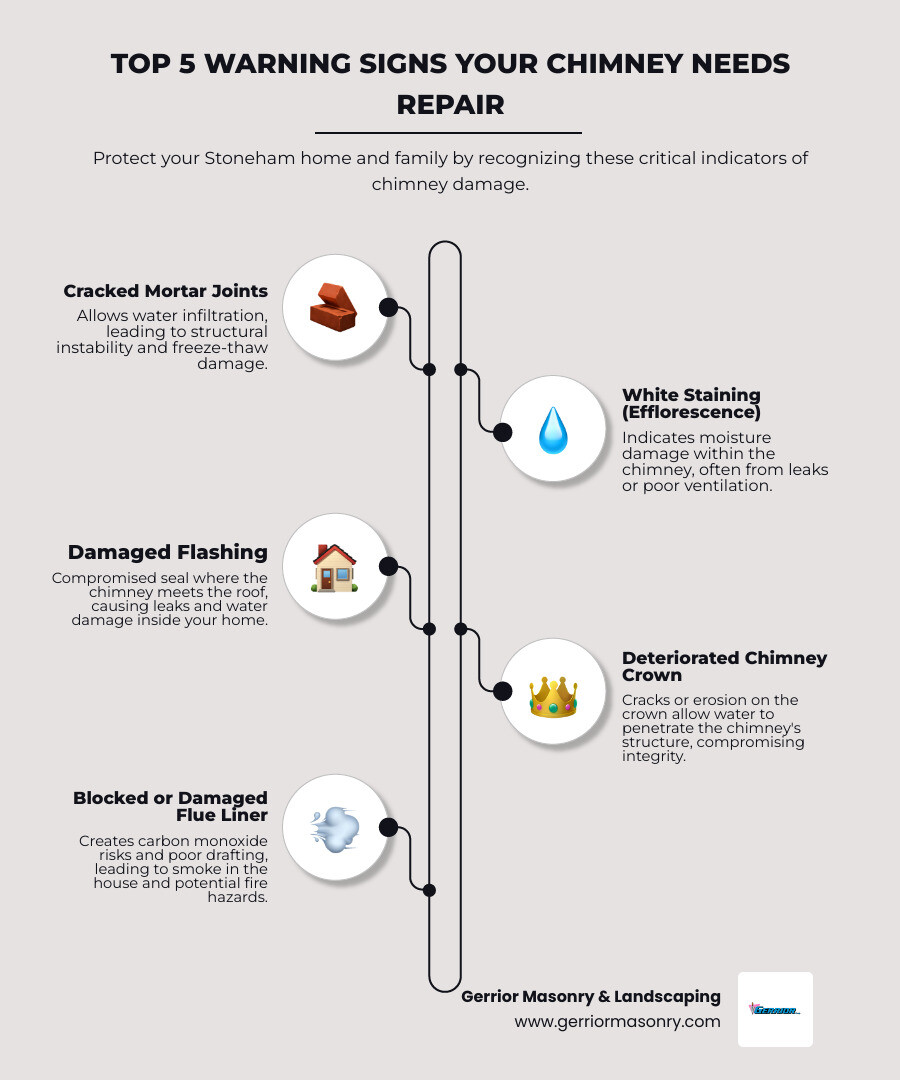
Chimney repair Stoneham services are vital for home safety and protecting your investment from New England’s weather. With repair costs ranging from $160 to $15,000 depending on the damage, addressing issues early can save thousands.
Top Signs You Need Chimney Repair in Stoneham:
Flashing repair: $150-$500+
Repointing mortar joints: $400-$2,500+
Crown/top replacement: $800-$3,000+
Flue liner repair: $200-$7,000+
White staining (efflorescence) on exterior bricks
Water damage in attic or around fireplace
Cracked or crumbling mortar between bricks
Note: These are average costs based on internet research and not actual pricing for Gerrior Masonry services.
Stoneham’s climate presents unique challenges. Freeze-thaw cycles crack mortar, and moisture can cause structural damage or dangerous carbon monoxide leaks. Research shows 80% of inspected chimneys need attention—don’t wait for minor issues to become major hazards.
Historic brick chimneys in the Northeast prove that proper masonry ensures longevity. Still, even durable materials need maintenance against our region’s weather extremes.
I’m Joe Gerrior, owner of Gerrior Masonry & Landscape Construction Corp. For over 34 years, my family-owned business has provided expert chimney repair Stoneham and surrounding communities, combining traditional craftsmanship with modern safety standards to protect your home.
Understanding the Essentials of Chimney Repair in Stoneham
Stoneham’s unpredictable weather, from summer heat to freezing winters, takes a toll on your chimney. Over time, even the sturdiest masonry shows wear.
Your chimney is more than decorative; it’s a crucial safety feature, protecting your family from dangerous gases by venting smoke and heat. A damaged chimney is a serious hazard.
Common Chimney Problems and the Cost of Chimney Repair in Stoneham
With over 30 years of chimney repair Stoneham experience, I’ve seen it all. The freeze-thaw cycle is especially brutal, as water seeps into cracks, freezes, and expands, cracking solid brick.
Spalling bricks are a dramatic issue. Water enters the brick, freezes, and pops the face off, leaving the chimney vulnerable to more water damage.
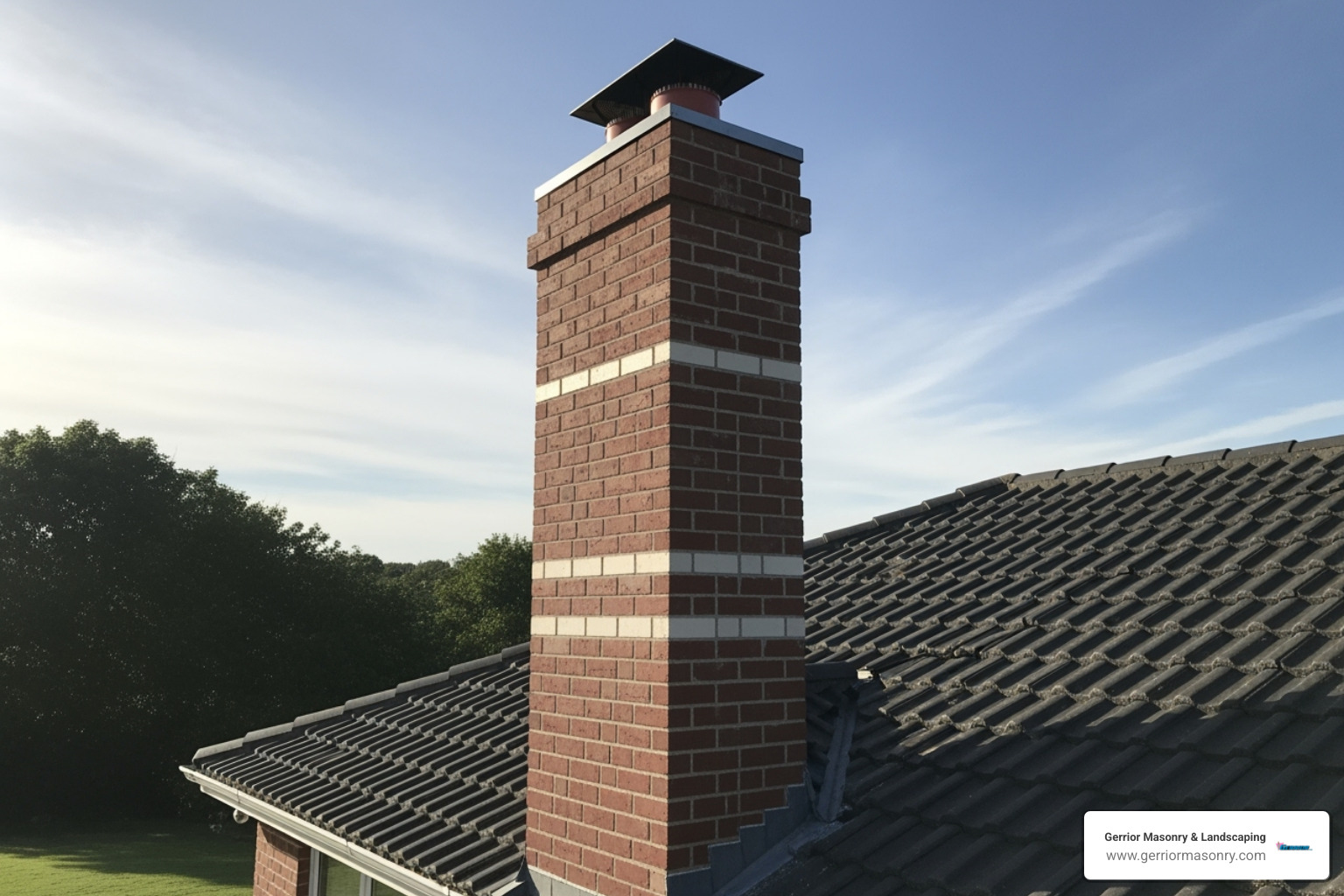
A cracked chimney crown is also common. This concrete slab at the top should protect your chimney, but cracks allow water to pour into the masonry, like an unseen roof leak.
Damaged flue liners are a serious problem. These internal barriers can crack from temperature changes or age. A failed liner can leak carbon monoxide into your home or allow a chimney fire to spread to your house’s structure.
Leaky flashing seems minor but causes significant water damage. This metal seal at the roofline fails from temperature changes, letting water into your attic and walls.
Mortar deterioration is inevitable in our climate. The mortar crumbles over time, leaving gaps for water and weakening the chimney’s structure. Look for sandy, crumbly, or missing mortar joints.
Now, let’s talk numbers. Chimney repair Stoneham costs vary dramatically. Here are some average ranges based on industry data:
Flashing repairs typically run $150 to $500+. Repointing mortar joints ranges from $400 to $2,500+. Crown repairs range from $800 to $3,000+, while flue liner work spans an enormous range from $200 to $7,000+, depending on whether you need a simple repair or complete relining.
These are average costs based on internet research and not actual pricing for Gerrior Masonry services.
The Dangers of a Damaged Chimney and Key Signs to Watch For
A damaged chimney is more than an eyesore; it’s a threat to your family’s safety.
Carbon monoxide poisoning is my top concern. This invisible, odorless gas can seep into your home from a damaged chimney and can be lethal.
Chimney fires are another nightmare. Creosote buildup and a damaged flue liner can lead to a fire spreading to your home’s structure. These hot fires can crack liners and mortar, giving flames a path to wooden framing.
Structural collapse is a real danger. Deteriorated mortar and spalling bricks make the entire structure unstable.
Water damage from chimney leaks can ruin your roof, attic, ceilings, and walls.
How do you spot trouble? Watch for red flags like water leaks in your attic or around the fireplace, damaged wallpaper, white staining (efflorescence) on exterior bricks, or debris in your firebox. Poor drafting or smoke backing up into your house is also a dangerous sign of blockages or damage, which can create carbon monoxide risks.
If you’re experiencing any of these warning signs, don’t wait. Our team specializes in comprehensive masonry services and can quickly assess what’s happening with your chimney.
An Overview of Chimney Repair Services
Every chimney problem has a solution. Here are the most common services we provide for Stoneham homeowners.
Tuckpointing and repointing: Repointing involves removing and replacing old mortar to restore strength. Tuckpointing is a decorative finish using colored mortar and contrasting lines for a clean look. Most people simply refer to both as repointing.
Chimney relining means installing a new protective liner (stainless steel, cast-in-place, or clay tile) inside your chimney. It’s essential for cracked liners or when upgrading appliances to ensure safety.
Crown repair and sealing protects the top of your chimney. We fix cracks and apply waterproof, breathable sealants to prevent water damage.
Flashing installation and repair creates a watertight seal between the chimney and roof. Proper installation is critical to prevent years of problems.
Waterproofing applies a breathable, waterproof sealant to the chimney exterior, preventing moisture absorption that causes freeze-thaw damage and white stains.
Chimney rebuilding is our solution for severely damaged chimneys. We dismantle and rebuild damaged sections with new materials for a long-lasting result.
Every repair, from a simple fix to a complete rebuild, receives the careful attention to quality and safety that has made us Stoneham’s trusted masonry experts for over three decades.
Finding the Right Professional for Your Stoneham Home
When your chimney needs repair, choosing the right contractor is crucial. It’s important to know what to look for in a chimney repair Stoneham professional.
Stoneham has many qualified contractors. The challenge is finding one with technical expertise, honest pricing, and reliable service. With 30 years in masonry, I know what separates the pros from the rest.
How to Hire a Reputable Chimney Contractor
Finding a contractor isn’t overwhelming if you know what to look for. Start with CSIA certification from the Chimney Safety Institute of America. This shows a commitment to current safety standards and best practices.
Next, verify that your contractor is fully licensed and insured. This protects you from liability. A reputable contractor will readily provide proof of insurance.
Read online reviews, but look past star ratings for comments on communication, cleanup, and durability. Better yet, ask for local references. A call to a recent customer provides invaluable insight.
When requesting estimates, look for details. A good contractor provides a written estimate explaining the problem, the fix, and the materials. Be wary of vague quotes or prices that are too good to be true.
Ask about warranties on materials and labor. A contractor who stands by their work offers guarantees. Trust your instincts on communication; they should listen and explain things clearly, without jargon.
You can learn more about our company and our commitment to transparent, quality service.
The Process: What to Expect from a Stoneham Chimney Repair Service
Knowing the chimney repair process helps set expectations and ensures you receive thorough service.
The process starts with a comprehensive inspection. This could be a Level 1 visual check, a Level 2 inspection using video camera technology, or a more extensive Level 3 inspection that may require partial dismantling for full access.
After inspection, you’ll get a detailed proposal explaining the problem and our plan to fix it. It’s more than a quote; it’s an education on your chimney’s condition and our recommended repairs.
Before work starts, we prepare the site to protect your property. We use tarps and organize the work area to site preparation.
During the repair process, our skilled technicians work methodically. Whether repointing, replacing flashing, or relining the flue, we use proven techniques and high-quality materials designed for New England’s weather.
The job ends with a final inspection and thorough cleanup. We leave your property looking better than we found it, with repairs that will last.
Quality masonry takes time, but we work efficiently. We provide realistic timelines and keep you informed. As local contractors, we understand Stoneham’s building requirements and ensure all work is compliant. For code details, you can reference local building codes resources.
Why Choose a Local Expert for Your Chimney Needs
Working with a local expert who understands your neighborhood makes a difference. We know Stoneham’s unique challenges, from local building codes to how our New England climate affects masonry.
A local company means faster response times. In an emergency, we can be there in hours, not days, preventing minor issues from becoming major ones.
Choosing local supports your community. Hiring Gerrior Masonry & Landscaping means investing in a business that employs local workers and contributes to the local economy. We’re your neighbors.
As a family-owned business with over 30 years of experience, we offer personalized service and accountability. You get direct owner oversight on your project, ensuring every detail meets our high standards.
A repaired chimney functions better and improves your home’s curb appeal and property value. A well-maintained chimney shows pride of ownership, and the investment pays dividends in safety and resale value.
Regular maintenance keeps your heating system efficient, lowering energy costs and extending its life. It’s an investment with ongoing returns.
For expert masonry and chimney services, contact us for an estimate. We’re committed to providing Stoneham homeowners with reliable, high-quality chimney repair solutions that stand the test of time.
Gerrior Masonry & Landscape Construction is based in Woburn, MA, and proudly serves communities throughout Middlesex and Essex County, Massachusetts.
Fireplace cement is a high-temperature putty used to seal cracks and repair firebricks in fireplaces and wood stoves. Choosing the right product is essential for a safe, lasting repair.
Key Features to Consider:
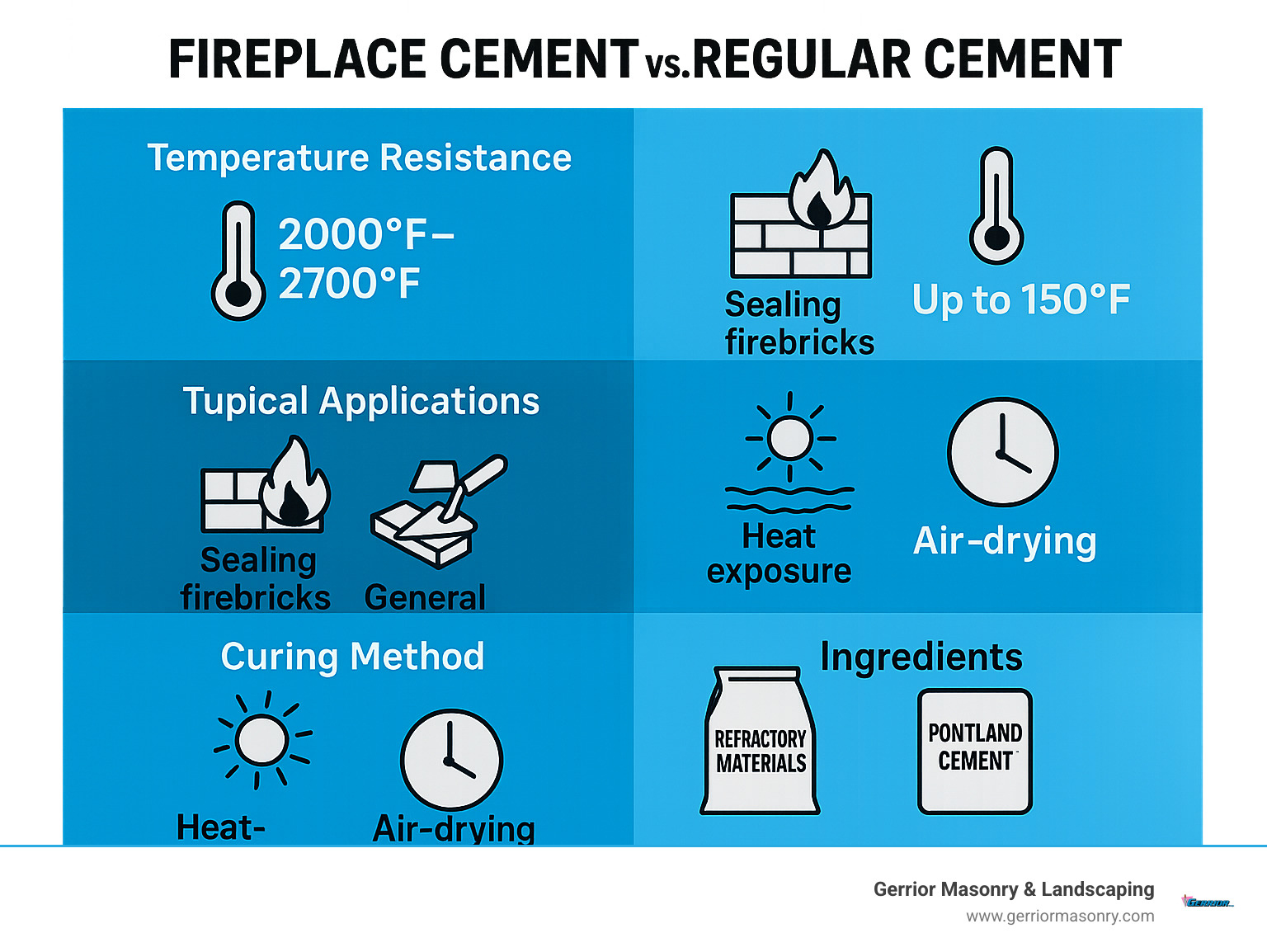
Temperature Rating: Look for products rated between 2000°F and 2700°F.
Application Type: Available as a pre-mixed putty in cartridges or tubs.
Curing Method: Formulations are either air-dry or require heat to cure fully.
Common Uses:
Repairing cracked firebricks.
Sealing mortar joints and flue pipes.
Patching small holes in fireboxes.
Price Range:
Expect to pay between $5 to $65 per container, depending on the product’s size and quality.
I’m Joe Gerrior, owner of Gerrior Masonry & Landscape Construction Corp. With over 34 years of experience, I know that using the correct fireplace cement is crucial for preventing more significant, costly repairs. My team has extensive experience with all types of high-temperature cements on the market.
In my 34 years in the masonry business, I’ve learned that homeowners who understand their materials get longer-lasting results. Fireplace cement may seem simple, but knowing how to choose and use it properly is key for a successful, safe repair.
What Is Fireplace Cement and Why Is It Essential?
Fireplace cement is a specialized refractory sealant engineered to withstand the intense heat of a fireplace, where regular cement would fail. It remains durable at temperatures from 2000°F to 2700°F.
This high-temperature adhesive is essential for maintaining firebox integrity. Its main functions are sealing joints between firebricks, filling masonry cracks, and creating airtight connections for flue pipes and stove components.
A properly sealed firebox is crucial for both safety and efficiency. It prevents dangerous gases like carbon monoxide from leaking into your home and stops air leaks that disrupt proper draft and combustion.
Using the right fireplace cement for minor repairs can prevent major structural problems later. Addressing small cracks early with the correct material is a small investment that avoids expensive future rebuilds.
Key Properties and Types of Fireplace Cement
The heat resistance of fireplace cement comes from its unique ingredients, typically sodium silicate and specialized aggregates that handle extreme thermal cycling. Modern formulations are non-asbestos and safe to use.
While standard mortar fails at low temperatures, fireplace cement is rated for up to 2000°F, with premium versions withstanding 2700°F or more, making it ideal for hot-burning wood stoves and fireplaces.
Most fireplace cement is a pre-mixed putty, eliminating guesswork. It’s available in two main formats: cartridges for use with a caulk gun for precise sealing of small cracks and joints, and tubs for larger repairs applied with a trowel.
The curing process is typically two stages: an initial air-dry period of 12-24 hours, followed by a gradual heat-cure. This final heating, achieved by slowly bringing the fireplace up to temperature, transforms the cement into a durable, firebrick-like material.
Feature
Cartridge Format
Tub Format
Best for
Precise sealing, joints under 1/8 inch
Larger cracks, patching, general repairs
Application tool
Caulk gun
Trowel or putty knife
Consistency
Smooth, caulk-like
Thicker, spreadable putty
Typical uses
Stove pipe connections, small gaps
Firebrick repair, mortar joint filling
Common Applications and Uses
The versatility of fireplace cement makes it invaluable for maintaining heating appliances. Its most common applications include:
Repairing firebricks: Constant heating and cooling can cause cracks or chips in firebricks. Fireplace cement patches these damages, restoring the protective barrier of the firebox.
Filling mortar joints: When original mortar between firebricks deteriorates from heat, fireplace cement serves as a strong, heat-resistant replacement that withstands thermal stress.
Sealing flue pipes: It creates an airtight, reliable seal when connecting stove pipes or sealing around flue liners, bonding effectively to metal, ceramic, and masonry to prevent gas leaks.
Assembling wood stoves: The cement provides high-temperature bonding needed for installing cast iron stove components, range cookers, and furnace connections.
Patching masonry: It can be used to patch masonry around the fireplace, especially where metal meets brick, to prevent air leaks that reduce efficiency and safety.
For issues beyond what fireplace cement can fix, consider professional chimney repairs services.
Step-by-Step Application Guide
Proper application is key to a lasting repair. Follow these steps for the best results.
Surface Preparation: Ensure the surface is completely cool. Use a wire brush to remove all soot, dirt, and loose material. Vacuum away dust, then lightly dampen the area with water to improve adhesion.
Cement Preparation: For tubs, stir the cement well, adding a teaspoon of water at a time if it’s too thick. For cartridges, simply snip the tip and load it into a caulk gun.
Application: Push the fireplace cement firmly into cracks for a complete fill. For clean lines, use masking tape. For deep repairs, apply the cement in thin layers to prevent cracking as it cures.
Drying and Curing: Let the repair air-dry for 12-24 hours. Do not expose it to heat during this time. Afterward, begin the heat-cure process by starting a small, low fire for two hours. Gradually increase the heat to medium-high for another four to six hours. This slow, controlled heating is crucial for preventing cracks and ensuring a durable bond.
Rushing any of these steps can lead to a failed repair, so take your time.
Safety, Maintenance, and Signs of Failure
Follow basic safety precautions when working with fireplace cement.
Safety Gear: Ensure proper ventilation and wear safety goggles and heat-resistant gloves. The cement can irritate skin and eyes, so rinse with water upon contact. Keep it away from children and pets.
Product Information: Review the product’s Safety Data Sheet (SDS) for specific warnings. Modern cements are asbestos-free and often low-VOC. You can review the Safety Data Sheet for high-temp cement to understand specific warnings.
To maintain your repair, conduct an annual inspection before the heating season. Look for these signs of failure:
Crumbling or flaking cement.
New cracks appearing in repaired areas.
Smoke or gas leaks from sealed joints, which is a critical safety issue requiring immediate attention.
Proper maintenance includes gradual heating at the start of the season to reduce thermal shock. Consistent use can also extend the life of the repair by minimizing extreme temperature cycles.
Understanding Costs and Alternatives
The material cost for fireplace cement is a reasonable investment, with most DIY repairs costing between $10 to $50. Small cartridges run $5 to $20, while larger tubs are $15 to $40. Specialized castable refractory cements can cost $65 or more. These prices are for materials only and can be found at hardware stores, home centers, and online.
It is crucial to use the correct material, as alternatives can be dangerous. Regular silicones, standard mortars, epoxies, and grouts are not designed for high temperatures and will fail quickly in a firebox. They cannot withstand the heat and pose a safety risk.
True alternatives include refractory mortar, a dry-mix version of fireplace cement, and furnace cement, a similar product often used for metal heating appliances. Only use products specifically rated for high-temperature applications in your fireplace or stove to ensure a safe, durable repair.
When to Call a Professional for Fireplace Repair
While fireplace cement is excellent for many DIY repairs, some situations require a professional’s expertise. Recognizing your limits is key to ensuring your home’s safety.
Call a professional if you notice:
Large or deep cracks: Cracks spanning multiple firebricks, deeper than a quarter-inch, or visibly growing often signal underlying structural issues. A simple patch won’t solve the root cause, such as a shifting firebox or water damage.
Structural damage: Any signs of shifting bricks, bulging walls, or a leaning chimney are serious safety hazards. These require immediate attention from a qualified mason, as they cannot be fixed with fireplace cement.
Water damage signs: White, chalky deposits (efflorescence), water stains, or soft, crumbly masonry indicate a moisture problem. The source of the water must be fixed before any repairs will last.
Performance issues: Persistent smoke spillage or poor draft can point to complex problems like flue blockages or improper sizing that need professional diagnosis.
Code compliance concerns: Major repairs affecting structural elements or flue systems must meet local building codes. A professional ensures your fireplace is repaired safely and legally.
If you’re facing any of these issues or are unsure about the extent of the damage, it’s best to seek a professional assessment. At Gerrior Masonry & Landscaping, we handle repairs ranging from simple mortar fixes to complete chimney rebuilds, ensuring every project meets the highest standards. Don’t hesitate to Contact us for professional fireplace mortar repair for peace of mind.
Gerrior Masonry & Landscape Construction is based in Woburn, MA, and services Middlesex and Essex County, Massachusetts.