What to Know Before Searching for Block Wall Installers Near Me
Block wall installers near me are masonry professionals who design and build concrete, cinder block, or stone walls for retaining soil, defining landscapes, and improving curb appeal.
Here’s a quick guide to finding the right one:
Search local directories and filter by ratings and reviews
Check for licensing and insurance before contacting anyone
Ask for free on-site estimates from at least 3 contractors
Look for experience with your specific wall type (retaining, decorative, gravity)
Verify permits are included in the project scope — many block wall projects require them
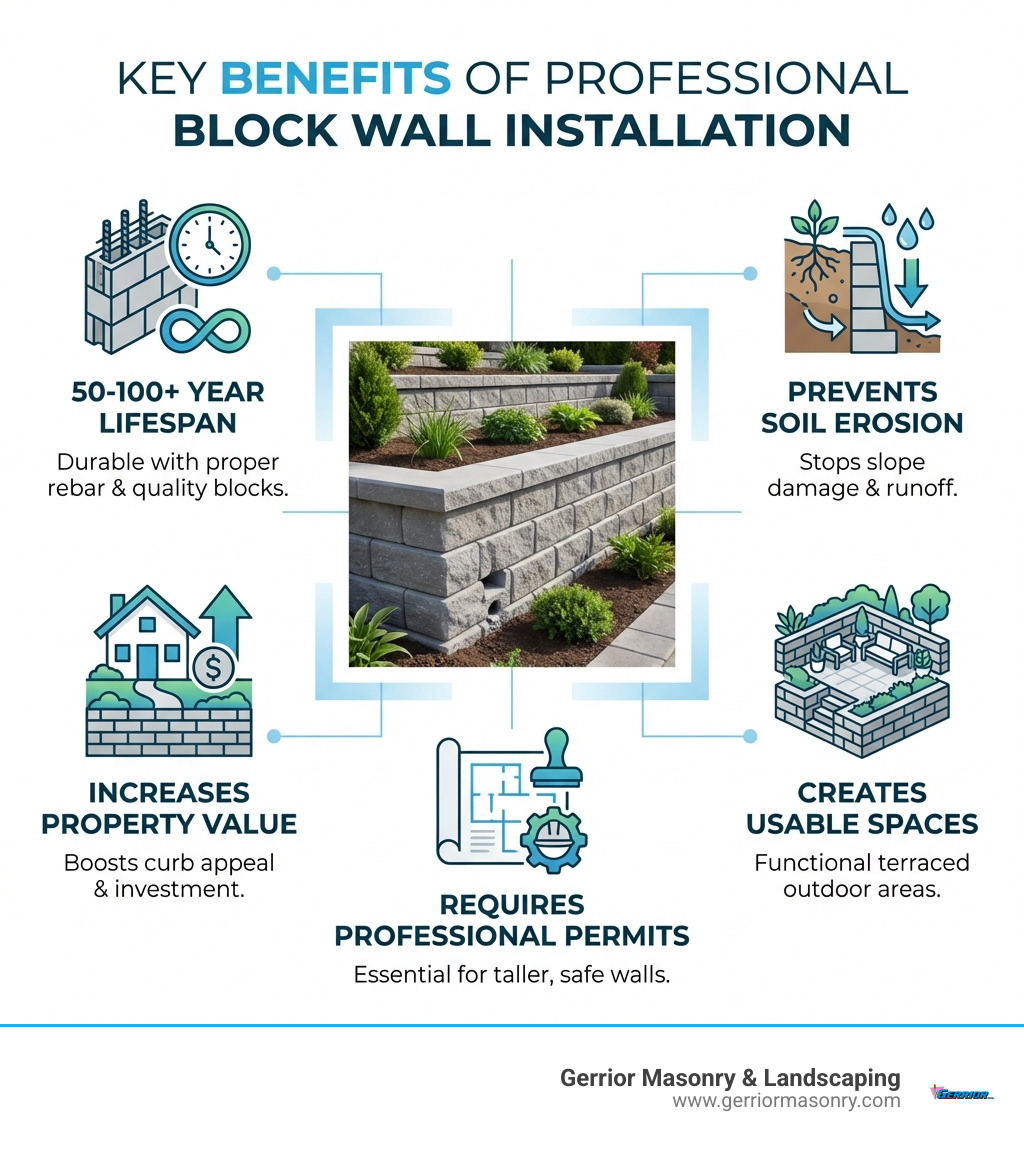
A block wall is one of the most durable investments you can make in your property. When built correctly — with quality blocks, proper rebar, and a solid base — a concrete block wall can last 50 to 100 years or more. But the key phrase is “built correctly.” The difference between a wall that holds for decades and one that shifts, cracks, or leans within a few years almost always comes down to the installer.
That’s why finding the right local contractor matters so much.
I’m Joe Gerrior, owner of Gerrior Masonry & Landscape Construction Corp., and with over 30 years of hands-on masonry experience in Massachusetts, I’ve seen what separates a lasting block wall from a costly mistake — making me a trusted resource for homeowners searching for block wall installers near me. In this guide, I’ll walk you through everything you need to know to choose wisely and get real value from your project.
When you start looking for block wall installers near me, the options can feel overwhelming. In areas like Woburn, Winchester, and Lexington, you need a team that understands the specific challenges of the Massachusetts climate—namely, the freeze-thaw cycles that can wreak havoc on poorly built masonry. In our region, the frost line typically reaches about 40 inches deep. If your contractor doesn’t excavate deep enough or account for this movement, the ground will heave during the winter, causing the wall to tilt, buckle, or eventually collapse. This is why local expertise isn’t just a preference; it’s a structural necessity.
The first step in choosing a contractor is verifying their credentials. A reputable installer should be licensed and fully insured. This isn’t just a formality; it protects you if an accident occurs on your property. Furthermore, local expertise is vital for navigating the permitting process. In many Massachusetts towns, a retaining wall over four feet tall requires a building permit and often a structural engineer’s stamp of approval. Professional block wall installers near me will know these local codes inside and out, ensuring your project is legal and safe.
When browsing reviews, look for more than just a star rating. Read the comments to see how the contractor handled unexpected issues, such as hitting a large boulder or dealing with underground springs. Did they keep the job site clean? Was the owner involved in the oversight? At Gerrior Masonry, we believe owner oversight is the “secret sauce” that ensures every block is level and every joint is secure. We also pay close attention to soil composition. Clay-heavy soils in the North Shore area retain more water, which increases the weight behind the wall, whereas sandy soils require different compaction techniques to prevent settling.
If you are specifically looking for high-end modular systems, you might want to find a contractor certified in advanced interlocking systems like Techo-Bloc or Unilock. These professionals have undergone specific training to install systems that don’t always require mortar but offer incredible structural strength through mechanical connections. To broaden your search beyond word-of-mouth, you can also check a neutral industry reference like the Masonry overview on Wikipedia to understand common methods, materials, and terminology before you compare bids.
Types of Block Walls for Your Landscape
Not all block walls are created equal. Depending on your property’s needs, block wall installers near me might suggest several different styles:
Retaining Walls: These are the workhorses of the landscape. Their primary job is to hold back soil and prevent erosion. They are essential for turning a sloped backyard in Andover or Lynnfield into a usable, flat space.
Gravity Walls: These rely purely on their own massive weight to hold the earth behind them. They are often thicker at the base and are perfect for shorter heights where complex engineering might not be necessary.
Decorative Garden Walls: These are usually shorter and used to define spaces, like a raised flower bed or a patio border. They add massive curb appeal and can be built with a variety of textures, from tumbled stone looks to sleek, modern beveled edges.
Segmental Retaining Walls (SRW): These are modular blocks that interlock without mortar. They are flexible enough to handle slight ground movements and are excellent for curved designs.
For those looking for something unique, custom retaining walls allow you to mix colors and textures to match your home’s architecture. Integrating these into your overall hardscape retaining walls plan can transform a boring yard into an outdoor oasis.
The Professional Installation Process for Block Wall Installers Near Me
If you’ve ever wondered why a pro quote is higher than a “guy with a truck” quote, it’s because of the process. A professional installation follows a strict sequence to ensure the wall doesn’t move:
Excavation: We don’t just set blocks on the grass. We dig a trench that is deep enough to account for a proper base and the first “buried” course of blocks, which provides the necessary lateral resistance.
The Base: This is the most critical part. A solid base for retaining wall usually consists of 6 to 12 inches of compacted crushed stone. If the base isn’t level and stable, the wall will eventually lean.
Drainage: Water is the enemy of masonry. We install retaining wall drain pipes and backfill with 3/4″ clean stone behind the wall to prevent hydrostatic pressure from pushing the blocks forward.
Block Stacking and Reinforcement: Each layer is carefully leveled. For taller walls, we use rebar and grout or geogrid (a high-strength synthetic fabric) to tie the wall into the soil behind it, creating a reinforced soil mass.
Building on a Slope: This requires “stepping” the base to maintain a level foundation while following the grade. Building a retaining wall on a slope is a complex task that truly requires the expertise of experienced block wall installers near me.
Longevity and Maintenance of Professional Block Walls
A wall built by professional block wall installers near me is designed to last a lifetime—literally. With quality concrete blocks and proper rebar reinforcement, you can expect a lifespan of 50 to 100 years. However, even the strongest walls need a little love. Maintenance is generally low, but we recommend keeping the face of the blocks free of moss or heavy dirt build-up and applying a breathable silane-based sealer to protect against salt damage during our harsh Massachusetts winters. If you have an older wall that is starting to show its age, don’t wait for it to collapse. Professional masonry repair and restoration can often save a wall if caught early. For more serious issues, such as foundation trouble, you might need cinder block foundation repair to ensure the structural integrity of your home remains intact.
Understanding Costs and Value in Block Wall Projects
When planning your budget, it’s helpful to compare materials. While concrete blocks are often the most cost-effective and durable choice, other materials have different lifespans and price points. Beyond the material itself, you must consider the long-term Return on Investment (ROI). High-quality masonry is a permanent improvement that appraisers recognize as adding structural value to your land, often increasing property value by 15% to 20%.
Material Type
Estimated Lifespan
Durability Factor
Concrete Block
50 – 100 Years
Very High
Natural Stone
50 – 100+ Years
High
Poured Concrete
30 – 50 Years
High
Pressure-Treated Wood
10 – 20 Years
Low
Gabion (Wire/Rock)
25 – 50 Years
Medium
Several factors influence the final price. The size of the wall is the most obvious, but site accessibility also plays a huge role. If we have to move materials by hand because a bobcat can’t fit into your backyard in Melrose or Stoneham, the labor hours will increase. Additionally, professional quotes should include “site restoration.” Heavy machinery can be tough on a lawn, so a comprehensive bid will account for re-seeding or sodding the areas disturbed during construction. You can get a better sense of material costs by checking our guide on cinder block wall prices.
Average Investment for Block Wall Installers Near Me
Based on internet data and general industry averages, the cost for a professional block wall installation typically ranges from $5,000 to $150,000+.
Small garden walls: $5,000 – $15,000
Medium retaining walls (up to 4ft): $16,000 – $45,000
Large-scale structural or terraced projects: $50,000 – $150,000+
Note: These are average costs based on internet data and not actual costs for Gerrior Masonry services. Every property in the Middlesex and Essex County area is unique, and we provide custom quotes based on your specific site conditions, including soil type, slope, and drainage requirements.
While the initial investment might seem significant, a properly installed wall adds immediate value to your home. It prevents soil loss and creates usable square footage that wasn’t there before. When you hire retaining wall builders near me, you are paying for the peace of mind that the wall won’t need to be rebuilt in five years due to poor drainage or a weak foundation.
Enhancing Your Property with Integrated Hardscaping
A block wall rarely stands alone. Most of our clients in towns like Burlington and Wilmington choose to integrate their walls with other features to maximize their outdoor living space. For instance, a retaining wall is the perfect backdrop for a new paver patio design. The wall can provide built-in seating (sitting walls) or even house outdoor fire pits for those cool New England evenings.
By creating terraces on a steep slope, you can turn a “dead” zone of your yard into multiple levels of gardens and living spaces. We also recommend integrating low-voltage LED lighting directly into the block wall for safety and ambiance. Using landscape retaining walls to define these areas not only looks professional but also manages drainage effectively, directing water away from your home’s foundation and toward appropriate runoff zones, protecting your basement from potential flooding.
Conclusion: Partnering with Local Masonry Experts
Finding the right block wall installers near me is about more than just finding the lowest price. It’s about finding a partner who understands the local soil, the local weather, and the long-term value of your property.
At Gerrior Masonry & Landscaping, we bring over 30 years of experience to every project. Whether we are building a small decorative wall in Reading or a massive structural retaining system in Newton, our commitment to quality remains the same. With owner oversight on every job and a team of highly skilled craftsmen, we ensure that your investment is built to stand the test of time.
If you’re ready to transform your landscape with a wall that is as beautiful as it is strong, we invite you to explore our landscape retaining wall services.
Gerrior Masonry & Landscape Construction is based in Woburn, MA, and services Middlesex and Essex County, Massachusetts. We specialize in everything from retaining wall installation to commercial snow removal, ensuring your property looks its best in every season.
Introduction to the Building Blocks of Construction
Concrete blocks, also known as concrete masonry units (CMUs) or cinder blocks, are a cornerstone of modern construction. Made from a mixture of cement, water, and aggregates like sand and gravel, these versatile blocks have been used for over a century in everything from foundations to decorative walls.
Concrete block construction really took off in the early 1900s, when companies like Besser began developing standardized block-making machines. That shift from handmade blocks to machine-made units gave builders consistent sizes and shapes, which dramatically sped up construction and improved quality. Today, when masons talk about a “Besser block,” they are generally referring to the familiar rectangular CMU used in countless homes, commercial buildings, and landscape walls.
Because concrete blocks are modular and uniform, they fit together like building bricks for full-sized structures. This makes them ideal for New England projects where speed, strength, and durability are all critical, especially in freeze-thaw conditions and along sloped properties that need retaining walls.
Quick Facts About Concrete Blocks
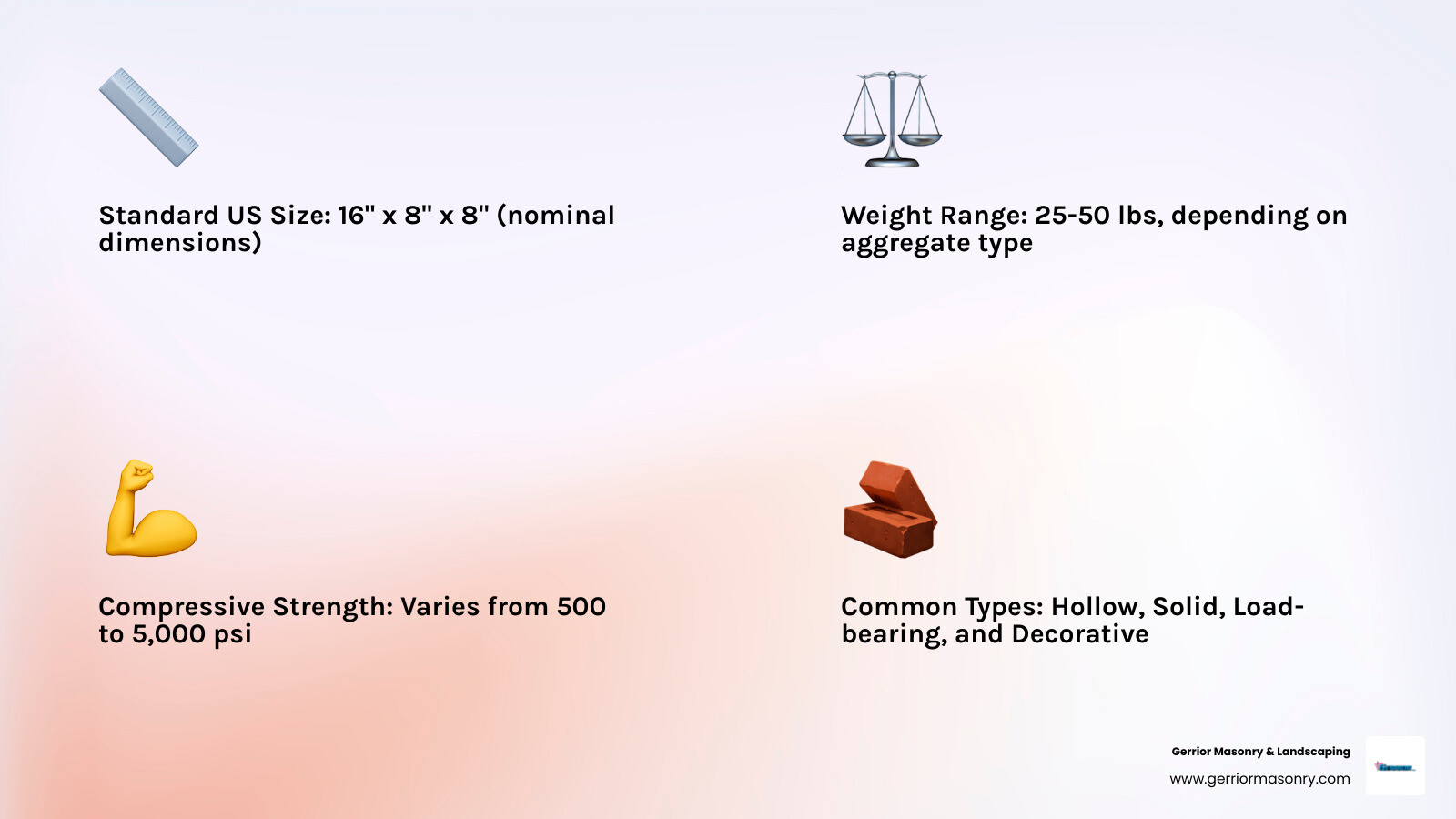
Standard US Size: 16″ x 8″ x 8″ (nominal dimensions)
Actual Size: Typically 15 5/8″ x 7 5/8″ x 7 5/8″ to allow for mortar joints
Weight Range: 25-50 lbs, depending on materials and whether they are hollow or solid
Strength: Compressive strength typically ranges from 500 to 5,000 psi
Common Uses: Foundations, retaining walls, building walls, steps, planters, and landscaping features
Concrete blocks are valued for their durability, fire resistance, and sound insulation. Their uniform size simplifies construction, and hollow cores can be used for reinforcement, making them a practical and economical choice for many projects.
In masonry work around Woburn and the surrounding Middlesex and Essex County communities, concrete blocks are especially popular for basement wall repairs, bulkhead replacements, and structural retaining walls that must handle heavy snow, water, and soil pressure.
I’m Joe Gerrior, owner of Gerrior Masonry & Landscape Construction Corp. With over 34 years of experience, my team and I have used concrete blocks in countless foundation repairs, retaining walls, and hardscaping projects throughout Massachusetts. Understanding the basics of these materials is the first step to a successful project.
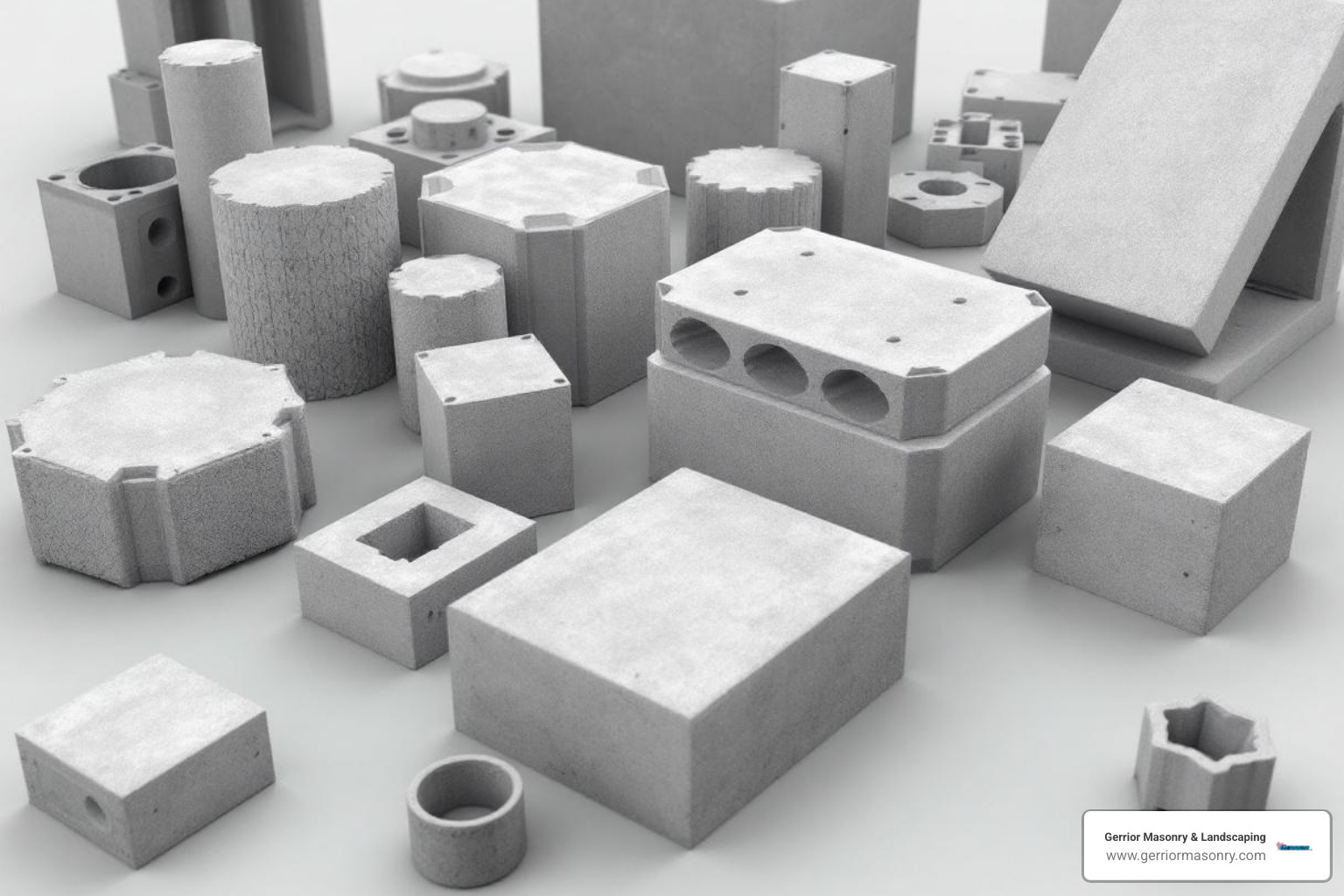
The infographic above highlights the basic anatomy of a standard hollow block: the outer shells that form the faces, the internal webs that add strength, and the cores (or cells) that can be left open for insulation or filled with concrete and rebar for added structural performance. Knowing these parts helps you understand how a simple block can become a strong, reinforced wall when installed correctly.
The Ultimate Guide to Concrete Blocks
Concrete blocks are more than just gray rectangles; they are engineered marvels. Understanding their composition, types, and uses is key to a successful project.
In residential and commercial work across towns like Lexington, Andover, and Medford, choosing the right block often means the difference between a wall that lasts decades and one that cracks or leans after a few winters. The sections below break down how these blocks are made and how to select the right type for your job.
How Concrete Blocks Are Made
The creation of a concrete block is a precise process that turns simple raw materials into a durable building component.
Ingredients: The basic recipe includes Portland cement (the binder), water (to activate the cement), and aggregates like sand and gravel (for bulk and strength). The type of aggregate determines the block’s weight and properties. Heavyweight aggregates create dense, strong blocks, while lightweight aggregates produce blocks with better insulation.
Lightweight vs. Heavyweight Aggregates: Lightweight blocks often use aggregates such as expanded shale, clay, or slate. These units are easier to handle and can improve thermal performance, which is useful in finished basements, garages, or additions. Heavyweight aggregates like crushed stone or dense gravel produce blocks that are ideal for high-load foundations and retaining walls.
Manufacturing Process: The ingredients are mixed to a stiff consistency, poured into molds, and compacted with vibration to remove air pockets. The “green” blocks are then moved to a kiln for steam curing, which hardens them and gives them their final strength.
Quality Control: Modern block plants carefully control moisture, mix proportions, and curing time to ensure each block meets strength and dimensional standards. This consistency helps masons build straighter, stronger walls with fewer adjustments in the field.
Innovations in Production: Many manufacturers now incorporate admixtures that improve workability, water resistance, or color, allowing blocks to blend more naturally with brick, stone, or existing structures.
Understanding the Types, Sizes, and Strengths of Concrete Blocks
Concrete blocks come in a variety of forms to suit different needs.
Hollow vs. Solid: Most blocks are hollow, which makes them lighter and allows for steel reinforcement (rebar) and concrete fill, greatly increasing wall strength. Solid blocks are heavier and denser, offering maximum compressive strength for applications requiring high load-bearing capacity.
Load-Bearing vs. Non-Load-Bearing:Load-bearing blocks are engineered to support the weight of a structure, such as in foundations and main walls. Non-load-bearing blocks are used for partition walls or decorative features.
Common Shapes: Besides the standard stretcher block, there are specialized shapes like corner blocks for clean corners and lintel blocks (U-blocks) for creating beams over doors and windows.
Decorative Blocks: Options like split-face blocks mimic natural stone, while breeze blocks have open patterns for ventilation and style.
Dimensions and Strength: The standard nominal size in the U.S. is 8x8x16 inches. Compressive strength can range from 500 to 5,000 psi, depending on the block’s design and materials. Higher strength is critical for structural work, such as the foundation repairs we perform. If you’re concerned about your foundation, learn more about cinder block foundation repair.
Below is a simple comparison of common block categories. These are general characteristics only; actual performance depends on the exact product and design:
Block Type
Typical Weight Range
Typical Strength Range (psi)
Common Uses
Hollow Concrete
25-40 lbs
500-2,500
Basement walls, garages, partitions
Solid Concrete
35-50+ lbs
1,500-5,000
Foundations, load-bearing walls
Lightweight CMU
20-35 lbs
500-2,000
Above-grade walls, veneers, infill
In practice, a retaining wall in a place like Wakefield or Chelmsford might use hollow blocks with steel reinforcement and grout, while a heavily loaded foundation in Newton may call for denser, higher-strength units. A qualified mason will select the right combination for your soil conditions, drainage, and building design.
DIY Projects and Safety with Concrete Blocks
While concrete blocks are great for DIY projects like garden beds, fire pits, and outdoor benches, safety is crucial.
Popular homeowner projects include:
Raised garden beds: Stacked blocks can form durable, straight-sided planting areas that resist rot and shifting.
Outdoor benches: Blocks paired with wood or stone slabs create sturdy seating that stands up to weather.
Simple fire rings: Non-combustible blocks can outline a small, code-compliant fire feature when allowed by local regulations.
These lighter-duty uses are generally appropriate for handy homeowners, provided local codes are followed. Anything that holds back soil, supports a structure, or affects your foundation should be left to a professional.
When to Call a Pro: For any load-bearing structure—including foundations, retaining walls, or home additions—professional installation is essential. A licensed mason ensures the work meets building codes, incorporates proper drainage, and is structurally sound. At Gerrior Masonry & Landscaping, we have over 30 years of experience in all types of masonry work, guaranteeing a safe and durable result.
Safety First:
Wear PPE: Always use heavy-duty gloves, safety glasses, and steel-toed boots. A dust mask is critical when cutting to avoid inhaling silica dust.
Lift Correctly: Bend your knees and lift with your legs, not your back. These blocks are heavy.
Plan Your Layout: Dry-lay the first course to check alignment and fit before setting blocks in mortar.
Mind the Weather: Mortar and concrete behave differently in extreme heat or cold. In New England, work should be planned to avoid freezing temperatures during curing.
Work Smart: Keep your work area clear and use the right tools for the job.
Expert Masonry Solutions for Your Next Project
As we’ve seen, concrete blocks are a versatile and durable material for everything from strong foundations to beautiful landscape features. Their strength, fire resistance, and insulation properties make them an excellent choice for many projects.
Concrete blocks perform especially well in New England, where repeated freeze-thaw cycles, heavy rains, and seasonal snow loads can quickly reveal weaknesses in poorly built walls. Properly reinforced and drained block walls can protect basements, stabilize slopes, and create attractive outdoor spaces that add long-term value to your property.
However, the quality of the final structure depends on both the materials and the skill of the installer. While DIY projects can be rewarding, load-bearing walls, foundations, and retaining walls require professional expertise to ensure safety, longevity, and compliance with building codes.
At Gerrior Masonry & Landscaping, we bring over 30 years of experience to every project. Our skilled team, under the direct oversight of owner Joe Gerrior, specializes in using concrete blocks for foundation repair, retaining walls, and custom hardscaping. We understand the demands of the New England climate and build structures that last.
Whether you need to repair a failing cinder block foundation, replace a deteriorating bulkhead entry, or design a new block retaining wall to tame a steep backyard, professional planning and installation will protect your investment and help avoid costly repairs down the road.
For professional hardscaping and masonry projects that demand precision and durability, we invite you to explore our hardscaping services. Gerrior Masonry & Landscape Construction is based in Woburn, MA, and proudly services Middlesex and Essex County, Massachusetts.
Why Understanding Cinder Block Wall Price Matters for Your Property Investment
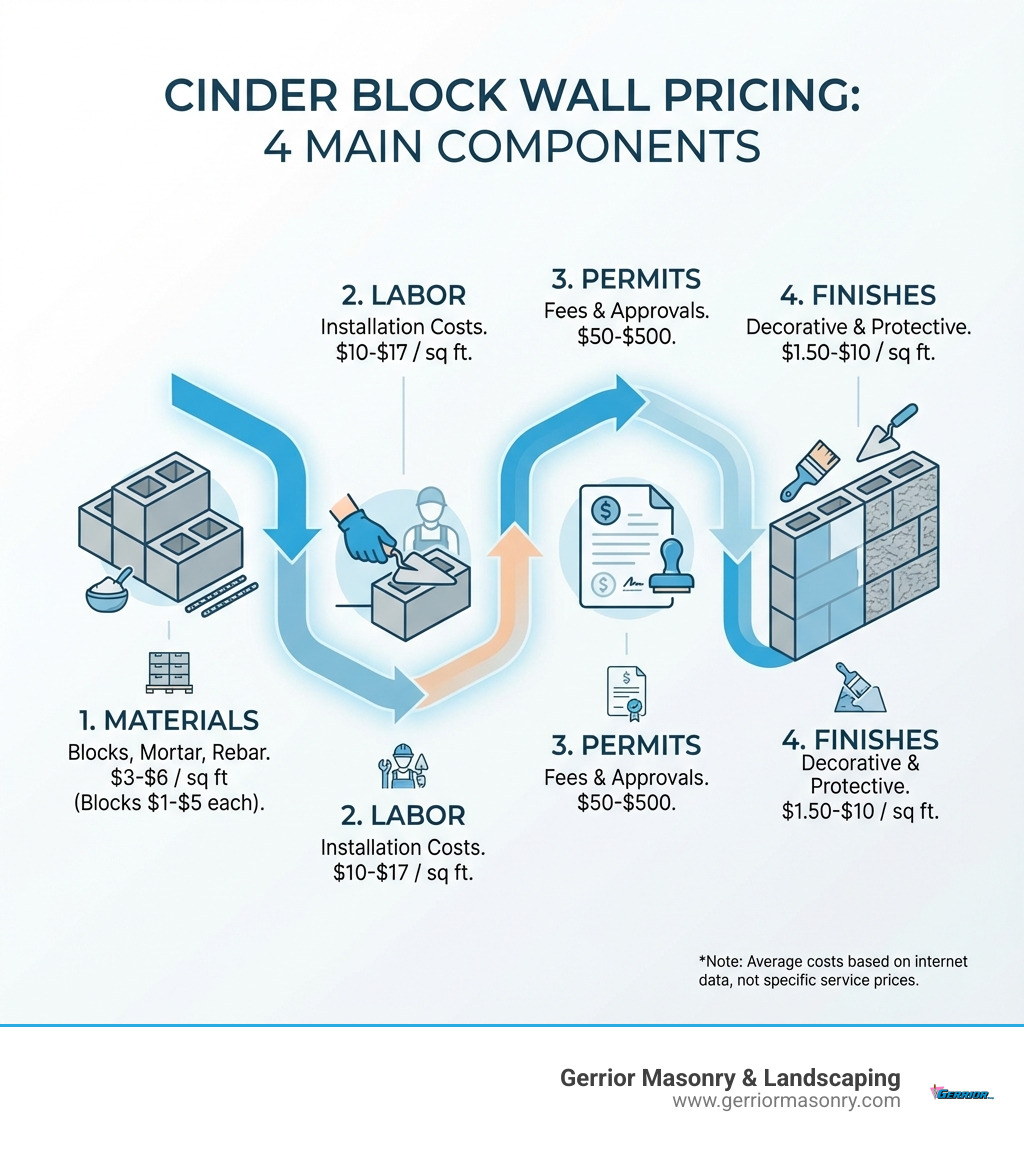
Cinder block wall price typically ranges from $15 to $40 per square foot installed, with most homeowners spending between $1,600 and $20,000. A quick budget breakdown includes:
Materials Only: $3-$6 per square foot (blocks, mortar, rebar)
Labor Costs: $10-$17 per square foot
Standard Blocks: $1-$3 each
Decorative Blocks: $2-$5 each
Permits: $50-$500
Finishing: $1.50-$10 per square foot
Note: These are average costs based on internet data and not actual costs for Gerrior Masonry services.
Cinder block walls are a go-to choice for Massachusetts homeowners seeking durable, versatile, and affordable structures. Whether for a retaining wall, privacy fence, or foundation, understanding the costs helps you plan effectively. The average project cost is around $3,200, but can range from $600 for a simple garden wall to over $20,000 for complex retaining walls. This variation depends on wall size, block type, site conditions, and finishes.
Cinder block walls offer exceptional value. Properly installed, they can last 50 to 100 years with minimal maintenance. They are also fire-resistant, pest-proof, and provide excellent sound and thermal insulation.
I’m Joe Gerrior, owner of Gerrior Masonry & Landscape Construction Corp. With over 34 years of experience, my team and I help Massachusetts homeowners steer cinder block wall price considerations to build lasting structures. We bring expertise in site assessment, material selection, and quality installation.
Breaking Down the Cinder Block Wall Price: A Comprehensive Guide
The cinder block wall price isn’t a single number; it’s influenced by factors like block type, installation complexity, and local labor rates in Massachusetts. Let’s break down the cost components.
Average Cost of a Cinder Block Wall: Per Block, Foot, and Project
Average costs are a good starting point for budgeting, but remember these are general figures derived from industry data. Your project in Middlesex or Essex County will need a custom estimate. The average cost is around $3,200, but projects can range from $600 to over $20,000.
Cost per Square Foot (Installed): Expect to pay $15 to $40 per square foot. A basic wall is on the lower end, while a decorative, reinforced wall is on the higher end.
Cost per Linear Foot (Installed): For fences or longer walls, costs range from $60 to $240 per linear foot.
Cost per Block (Installed): The installed price per block, including mortar and labor, is typically $6 to $15. This variation depends on the block type, pattern complexity, and mason’s rate.
These figures are based on broad internet data and should be used for informational purposes only. For an accurate cinder block wall price custom to your needs, we recommend getting a detailed quote.
Material Costs: Beyond Just the Blocks
Blocks are just one part of the material cost. Mortar, rebar, concrete footings, and gravel also contribute significantly to the cinder block wall price.
Standard CMU Blocks: Standard 8″x8″x16″ Concrete Masonry Units (CMUs) are strong, durable, and economical, costing $1-$3 each. They are the workhorse for most structural walls.
Decorative Blocks: For aesthetic appeal, decorative blocks like split-faced, ground-face, or breeze blocks offer various textures and patterns, costing $2-$5 per block.
Specialty Blocks: Specialty blocks like header, stretcher, or L-corner blocks serve specific structural functions and cost $1-$3 each.
Mortar: The right mortar is critical for wall strength. Material costs, including blocks and mortar, are about $3 to $6 per square foot. Mortar comes in different types (e.g., Type N for general use, Type S for enhanced strength in retaining walls). Choosing the correct type is vital for longevity and is part of a professional’s expertise.
Rebar and Grout: For extra strength in load-bearing or retaining walls, steel rebar and grout are crucial, adding $1 to $5.25 per square foot. Rebar is placed vertically in the block cores and horizontally in the mortar joints to resist tension forces.
Concrete Footing & Gravel: A solid concrete footing is essential for stability and preventing settlement. Retaining walls also require a gravel backfill for proper drainage, which is a key material cost to prevent hydrostatic pressure buildup.
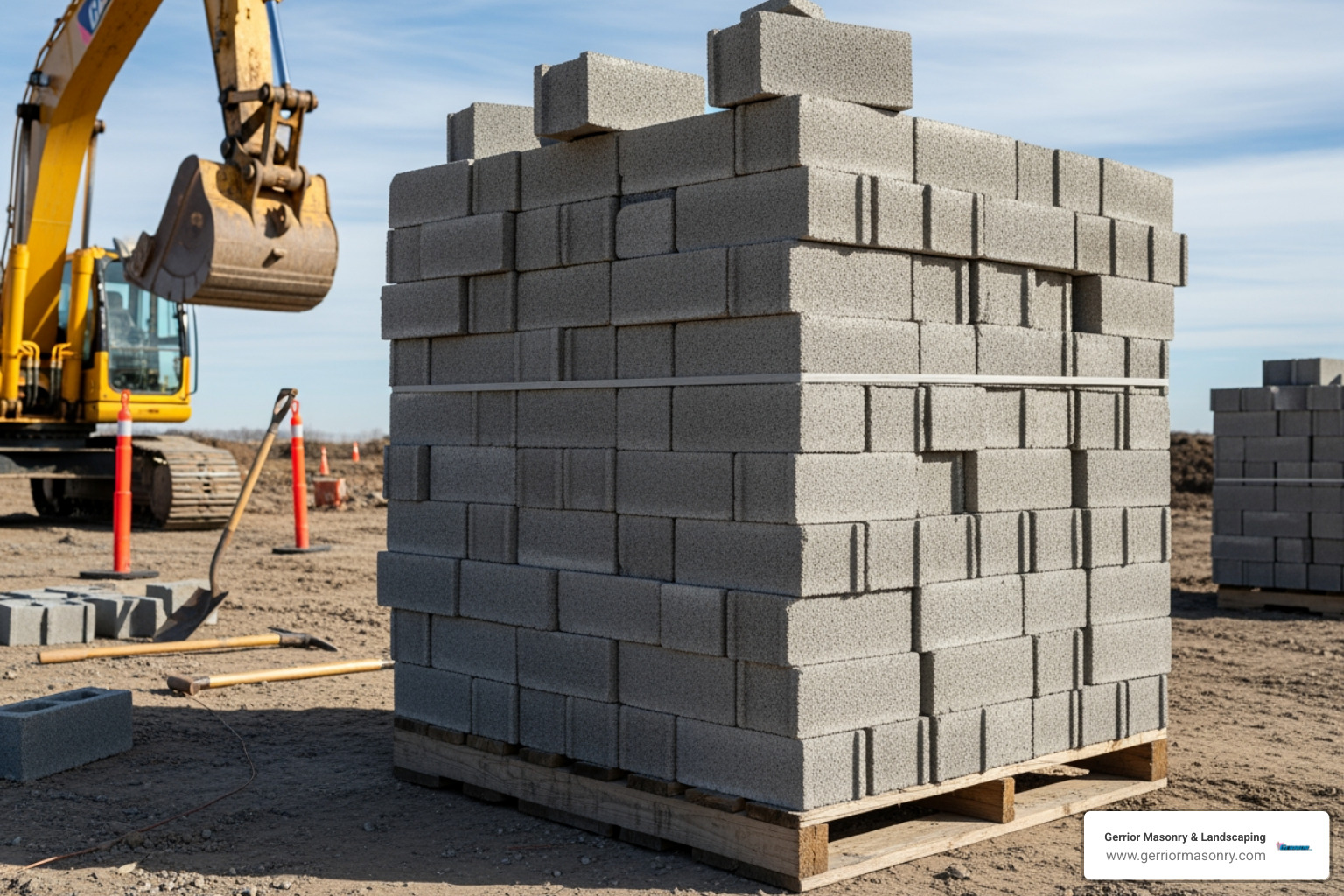
Pallet and Delivery Costs: A pallet of blocks (typically 70-90 blocks) costs $115-$225, with delivery adding another $50-$200 depending on distance. Bulk discounts may reduce the per-unit cinder block wall price on large projects.
The wall’s purpose and dimensions are major cost determinants. A simple garden border costs far less than a tall, engineered structural retaining wall.
Wall Dimensions: Longer, taller walls require exponentially more materials and labor, increasing costs. A 50-foot, 6-foot-high privacy fence (300 sq ft) can cost between $4,500 and $9,000, while a 100-foot wall of the same height could be double that.
Site Preparation: This is a highly variable cost. It can include simple clearing, extensive excavation ($1-$5/sq ft) for footings, grading to ensure a level base, and demolition of old structures ($5-$20/linear ft). A sloped site will require more prep work than a flat one.
Permit Costs: Most structural wall projects in Massachusetts require building permits ($50-$500) to ensure they meet local safety and zoning codes. Always check with your local municipality in Middlesex or Essex County before starting work.
Cinder Block Fence Cost: A fence built for privacy or security typically costs $15 to $30 per square foot installed. The final price depends on height, reinforcement, and finish.
Retaining Wall Cost: These are the most complex and expensive walls, requiring deep footings, significant reinforcement, and robust drainage systems to manage soil and water pressure. The cinder block wall price for a retaining wall is typically $20 to $35 per square foot. This includes the necessary gravel backfill and potentially a perforated drain pipe (French drain) at the base to prevent hydrostatic pressure, a common cause of wall failure. We specialize in building functional and durable hardscape retaining walls.
Foundation Wall Cost: As part of a home’s structure, foundation walls have stringent structural requirements and must be waterproofed. They typically cost $10 to $20 per square foot installed.
The mason’s skill significantly impacts the final cinder block wall price and the structure’s longevity. This is not a job for amateurs, as precision, code adherence, and an understanding of structural loads are paramount, especially for retaining and foundation walls.
Professional Mason Rates: In Massachusetts, professional masons typically charge $10 to $17 per square foot or an hourly rate of $34 to $100. This rate reflects their expertise, insurance, and specialized equipment.
Skill and Experience Value: What are you paying for with a skilled mason? You’re paying for perfectly level courses, plumb (perfectly vertical) walls, properly mixed mortar, correct rebar placement, and expertly tooled joints that shed water effectively. At Gerrior Masonry, our skilled team and owner oversight ensure high-quality results backed by over 30 years of experience. This expertise guarantees a sound wall and project efficiency, avoiding costly mistakes that can lead to premature failure.
Finding Qualified Contractors: Look for certified contractors from organizations like the Mason Contractors Association of America (MCAA) or the National Concrete Masonry Association (NCMA). You can find information on masonry certifications on their websites. The U.S. Bureau of Labor Statistics offers labor wages and costs statistics for a broader perspective on industry rates.
The cheapest quote isn’t always the best value. An inexperienced contractor might cut corners on the footing, reinforcement, or mortar mix, leading to a wall that cracks or fails. Experienced masons ensure a durable, correctly built wall that adds value to your property for decades.
DIY vs. Professional: A Cost-Benefit Analysis
To lower the cinder block wall price, some homeowners consider a DIY approach. While you can save on the $10-$17 per square foot labor cost, it’s crucial to weigh the risks and hidden expenses. Material costs are $3 to $6 per square foot, but you must also account for tool purchases or rentals.
DIY Tool & Equipment Costs: A successful project requires more than just a trowel. You’ll likely need to buy or rent a level, masonry hammer, jointer, wheelbarrow, concrete mixer, and potentially a wet saw for cutting blocks. These costs can add up quickly.
Risks of DIY: Laying blocks is physically demanding and requires precision. Common DIY errors include building on an inadequate footing, using the wrong mortar mix, creating uneven courses, or installing insufficient reinforcement. These mistakes can lead to a weak, unstable wall that cracks, bulges, or collapses, resulting in costly repairs or a complete rebuild.
Professional Benefits: Hiring a professional ensures structural integrity, code compliance, and time savings. A pro brings years of experience, the right tools, and an efficient team to get the job done correctly and safely. While DIY may be feasible for a small, non-structural garden border, any wall over a few feet high, or any retaining or foundation wall, demands professional installation. The long-term value, safety, and peace of mind far outweigh the initial savings on labor. Learn about our professional masonry services.
Finishing Touches and Long-Term Value
Finishing touches add to the cinder block wall price but improve appearance and longevity. Options range from $1.50 to $10 per square foot.
Finishing Options: Popular choices include stucco ($3-$11/sq ft), paint ($0.65-$0.80/sq ft), or a high-end decorative stone walls veneer ($13-$30/sq ft).
Waterproofing: This is crucial for porous cinder blocks to prevent moisture damage, costing $2 to $10 per square foot.
Long-Term Value: Despite the initial cost, cinder block walls offer great long-term value. Properly installed, they can last 50-100+ years with minimal upkeep.
Cost Comparison: Cinder blocks are often more affordable than poured concrete ($15-$35/sq ft) or brick walls, which have higher material and labor costs.
The choice of finish and waterproofing impacts long-term performance and pays off in durability.
Get a Precise Estimate for Your Cinder Block Wall Project
Navigating the factors influencing cinder block wall price—materials, labor, site prep, and finishes—can be overwhelming. Internet averages are only a starting point, as your Massachusetts project deserves a precise, custom estimate. A detailed quote considers your property’s unique traits, local material and labor rates in Middlesex and Essex County, and your design needs. Averages vary widely because no two projects are identical.
At Gerrior Masonry & Landscaping, our 30+ years of experience and owner oversight guarantee a competitive and accurate cinder block wall price and the highest quality results. We provide transparent estimates, so you understand where your investment is going.
Don’t leave your project budget to guesswork. For a reliable, professional assessment and a precise estimate for your cinder block wall project in Woburn, MA, or the surrounding Middlesex and Essex County areas, please request a professional estimate for your project today. We’re ready to help you build a wall that will stand strong for generations.
Why Choosing the Right Mortar Matters for Your Rock Wall
Building a rock wall that lasts requires more than just stacking stones. The best mortar mix for rock wall construction is the key to durability, bonding stones, sealing out water, and allowing for subtle movement without cracking. The right choice ensures your wall withstands New England’s freeze-thaw cycles for decades.
The two most common options are:
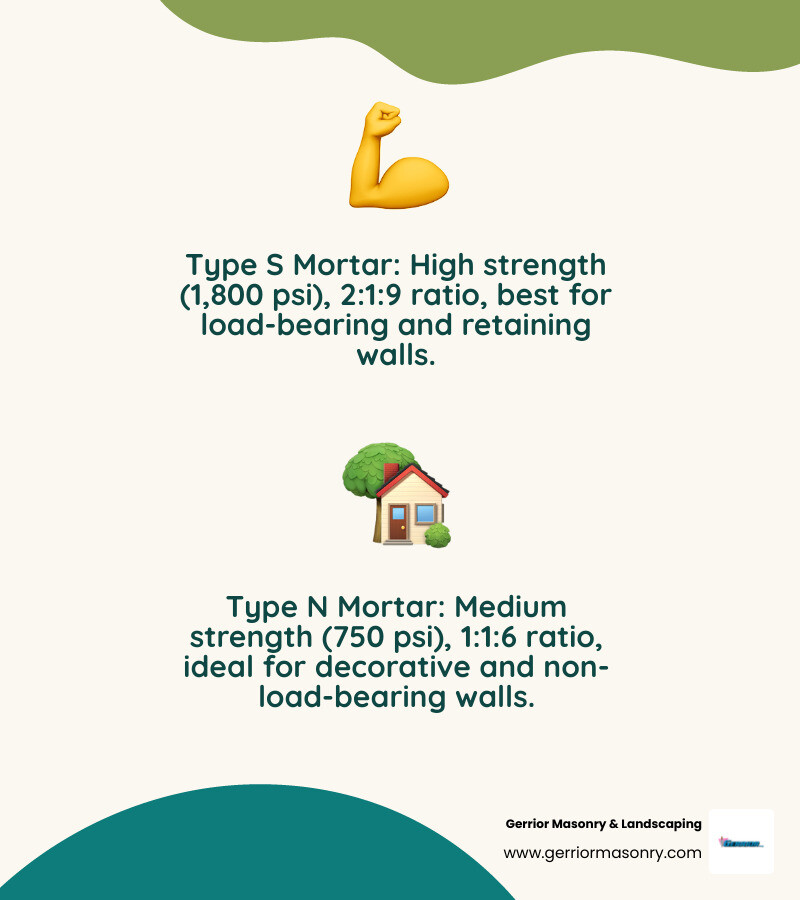
Type S Mortar: A high-strength mix (1,800 psi) for load-bearing retaining walls and below-grade use.
Type N Mortar: A medium-strength mix (750 psi) for decorative, non-load-bearing walls above grade.
The ratio of cement, lime, and sand dictates the mortar’s strength and workability. Using a mix that’s too strong can damage softer stones, while one that’s too weak will fail.
I’m Joe Gerrior, owner of Gerrior Masonry & Landscape Construction Corp. With over 34 years of experience building walls in Massachusetts, I know that matching the mortar to the stone, project needs, and local climate is crucial. In this guide, I’ll share what you need to know.
Choosing the Best Mortar Mix for Your Rock Wall
When building a durable rock wall, the mortar is the unsung hero holding it all together. But with several options, how do you choose the best mortar mix for rock wall construction? Let’s compare the most common types.
Understanding Mortar Types: Type S vs. Type N
Mortar types are classified by ASTM standards based on their compressive strength. For rock walls, we primarily use Type N and Type S.
Type N Mortar: A general-purpose, medium-strength mortar with a compressive strength of around 750 psi. Composed of 1 part Portland cement, 1 part lime, and 6 parts sand, it’s the go-to choice for most non-load-bearing, above-grade walls like decorative garden features or veneers. Its higher lime content gives it excellent flexibility, allowing it to accommodate subtle movements from thermal expansion and contraction. This makes it particularly suitable for softer, more porous stones, as it won’t overpower and crack them. You can find pre-mixed bags of medium-strength Type N mortar at most hardware stores.
Type S Mortar: A high-strength mix with a minimum compressive strength of 1,800 psi, designed for serious durability. Made from 2 parts Portland cement, 1 part hydrated lime, and 9 parts sand, it offers superior bond strength compared to Type N. This robust adhesion is critical for load-bearing structures like retaining walls, which must resist immense lateral pressure from soil and water. We recommend Type S for foundations, any wall built below grade, and structures exposed to heavy loads, high winds, or the intense freeze-thaw cycles common in New England. Look for high-strength Type S mortar for these demanding projects.
Other mortar types exist for specific uses: Type M (2,500 psi) is the strongest available, but its high cement content makes it extremely rigid and less workable. While used for heavy-duty foundations, it’s often too hard for most rock wall applications and can cause softer stones to fail under stress. At the other end of the spectrum, Type O (350 psi) and Type K (75 psi) are very soft, high-lime mortars. They are primarily used for repointing and restoring historic masonry made with soft, handmade bricks or delicate stone, where a sacrificial, highly breathable mortar is needed to protect the original material.
Here’s a quick comparison of Type S and Type N:
Feature
Type S Mortar
Type N Mortar
Strength (PSI)
Over 1,800 psi
Around 750 psi
Mix Ratio
2 parts Portland cement, 1 part lime, 9 parts sand
1 part Portland cement, 1 part lime, 6 parts sand
Best Use Cases
Load-bearing walls, retaining walls, foundations, areas with high winds
Non-load-bearing walls, decorative garden walls, exterior walls in mild exposure
Grade Level
Above- and below-grade applications
Above-grade applications only
Key Ingredients and Their Ratios
Understanding mortar’s components—Portland cement, hydrated lime, sand, and water—is key to a successful mix. The ratio of these ingredients determines the mortar’s final properties.
Portland Cement: This is the primary binder that provides compressive strength. The more cement in the mix, the stronger and faster-setting the mortar will be, but it will also be more rigid and less permeable.
Hydrated Lime: Lime is the magic ingredient for workability and durability. It makes the mortar smooth, sticky, and easy to spread. Crucially, it adds flexibility, helps the mortar self-heal minor cracks over time (a process called autogenous healing), and increases vapor permeability, allowing trapped moisture to escape. This “breathability” is vital for the long-term health of the stone. You can learn more about the benefits of lime in mortar.
Sand: Sand acts as the aggregate, providing bulk and preventing excessive shrinkage as the mortar cures. It’s critical to use clean, sharp, well-graded masonry sand (meeting ASTM C144 standards). “Well-graded” means it contains a variety of particle sizes, which fit together tightly to create a dense, strong mortar. Never use play sand or beach sand, as their rounded particles and potential salt content will create a weak, unreliable mix.
Water: Water is necessary to activate the chemical reaction (hydration) that gives cement and lime their binding properties. Use clean, potable water. The amount is critical; too much water creates a soupy mix that drastically reduces strength, while too little makes it unworkable. The goal is a smooth, buttery consistency that holds its shape on a trowel.
A common, versatile ratio for many rock walls is 1 part cement, 1 part lime, and 6 parts sand. This is the recipe for Type N mortar.
Special Considerations for Your Rock Wall Project
The right mortar depends on your wall’s purpose and environment.
Freestanding vs. Retaining Walls: Decorative freestanding walls generally only need the flexibility of Type N mortar. Retaining walls, however, are engineered structures. They must withstand immense lateral soil pressure and hydrostatic pressure from groundwater, which is magnified by freeze-thaw cycles. This requires the superior bond strength of Type S mortar, along with a proper concrete footing, robust drainage systems (like gravel backfill and perforated pipes), and weep holes to relieve pressure.
Load-Bearing Needs: Any wall supporting a structure, such as a porch roof or an upper floor, is load-bearing and requires a high-strength mortar like Type S to ensure safety and stability.
Below-Grade Applications: Any portion of a wall below ground level will be in constant contact with moisture and soil. It must be built with Type S or M mortar to resist water penetration and the pressure of the surrounding earth.
Stone Type: A fundamental rule of masonry is that the mortar should never be harder than the masonry unit. Porous stones like sandstone and limestone need a flexible, breathable, lime-rich mortar (like Type N) to prevent moisture from getting trapped, which can lead to spalling (flaking or peeling of the stone face) during a freeze. Dense, hard stones like granite or basalt can easily handle stronger, cement-heavy mortars like Type S.
Mortar Color and Joint Appearance: The final look is heavily influenced by the mortar. Color can be customized with pigments or by choosing different colored sands. The joint profile is equally important for both aesthetics and performance. A concave or V-joint is excellent for shedding water, while a raked joint creates deep shadows but can collect water. A flush joint provides a rustic look but offers less water resistance. For more ideas, see our stone wall services page.
How to Find the Best Mortar Mix for a Rock Wall
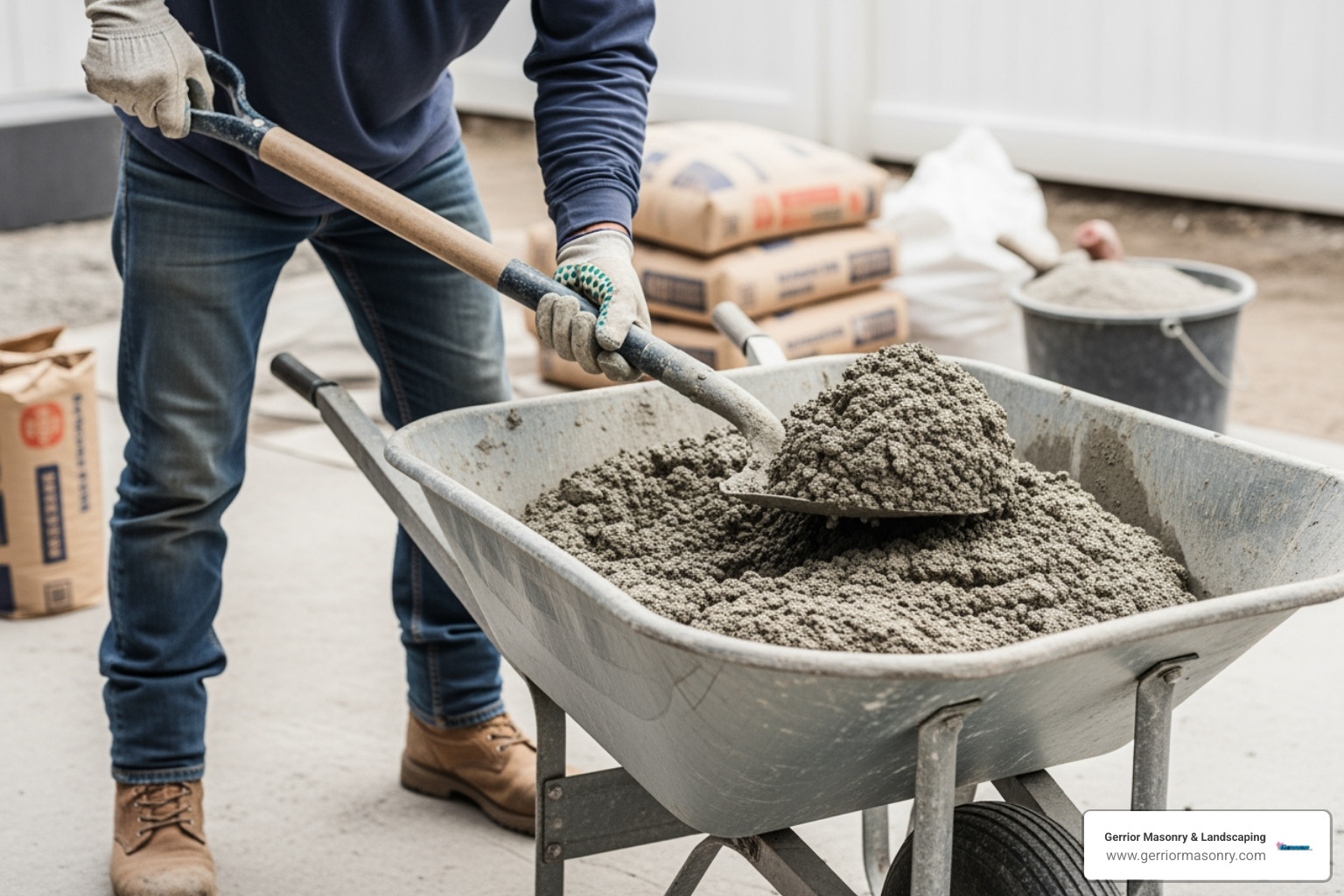
You can use pre-mixed bags or mix your own for greater control and cost savings on large projects.
Pre-mixed Mortar: Convenient and consistent. Just add water to a bag of Quikrete Type N or S.
Mixing Your Own: More economical for large jobs and allows for customization. A good starting point is 6 parts sand, 1 part cement, and 1 part lime.
Prepare: Use a clean wheelbarrow or mixing tub. Lightly dampen the stones with a hose or spray bottle. This prevents the dry stones from wicking essential moisture out of the mortar too quickly, which would result in a weak bond.
Mix: Combine all dry ingredients thoroughly before adding any water. Add about two-thirds of the estimated water, mix, and then add the remaining water gradually. Mix for a minimum of five minutes to ensure all components are fully integrated and you reach a smooth, thick, peanut butter-like consistency.
Apply: Use a pointing trowel to apply a full 1-inch-thick bed of mortar onto the previous course of stones.
Set Stones: Press each stone firmly into the mortar bed with a slight twisting motion to ensure full contact and a strong bond. “Back buttering” the stone (applying mortar to its bottom surface) can also help. Fill all vertical joints completely to ensure the wall is solid.
Tool Joints: Wait until the mortar is “thumbprint hard”—firm enough to hold a thumbprint without smearing. Then, use a jointing tool to compact the mortar, creating a dense, weather-resistant surface and a clean, professional appearance.
Cure: Proper curing is critical for strength. Protect fresh mortar from direct sun, wind, frost, and rain for at least 72 hours. In hot, dry weather, gently mist the wall with water periodically to slow evaporation and allow the cement to hydrate fully. Only mix as much mortar as you can use within about 90 minutes.
Common Mistakes to Avoid When Choosing the Best Mortar Mix for a Rock Wall
Avoiding these pitfalls is key to a long-lasting wall.
Using Mortar That’s Too Strong: This is the most common error. A mortar that is harder than the stone will not allow for natural movement, transferring stress directly to the stones and causing them to crack or spall. The mortar joint should be the sacrificial element, not the stone.
Incorrect Ratios or Improper Mixing: Guessing at measurements or adding too much water is a recipe for disaster. An overly wet mix will be significantly weaker, more prone to shrinkage cracks, and less durable. Use buckets for consistent volume measurements.
Ignoring Weather Conditions: Applying mortar in freezing temperatures will cause the water to freeze and expand, destroying the mix before it can cure. Extreme heat and wind can dry it out too quickly, halting the hydration process and preventing it from reaching full strength.
Forgetting About Drainage: Especially for retaining walls, failing to install a proper drainage system behind the wall is a critical failure. Hydrostatic pressure will build up and can push over even the strongest wall. Mortar alone cannot fight back against immense water pressure.
Not Considering Stone Porosity: Using a dense, low-permeability mortar (like Type M or S) with a porous stone (like sandstone) traps moisture inside the stone. When that moisture freezes, it expands and blows the face off the stone.
Using the Wrong Product for the Job: Never use concrete mix, thin-set tile mortar, or other adhesives in place of proper masonry mortar. These products have different properties and are not designed for building a structural, weather-exposed rock wall. Always match the mortar type to the project’s specific demands.
Build a Rock Wall That Lasts a Lifetime
Choosing the best mortar mix for rock wall construction is critical for a long-lasting, beautiful result. By matching the mortar type—strong Type S for retaining walls or flexible Type N for decorative ones—to your specific stone and project needs, you ensure structural integrity. Understanding the roles of cement, sand, and especially lime, which adds flexibility and breathability, is key.
Proper mixing, application, and avoiding common mistakes like using a mix that’s too strong or ignoring weather conditions will prevent future failures. While DIY is an option, professional craftsmanship guarantees a rock wall that not only looks stunning but also endures for generations. With over 30 years of experience, the skilled team at Gerrior Masonry & Landscaping creates durable, beautiful masonry structures built to withstand the New England climate.
For more information on our comprehensive masonry services and how we can bring your vision to life, visit our masonry services page.
Gerrior Masonry & Landscape Construction is based in Woburn, MA, and proudly serves the surrounding communities throughout Middlesex and Essex County, Massachusetts.
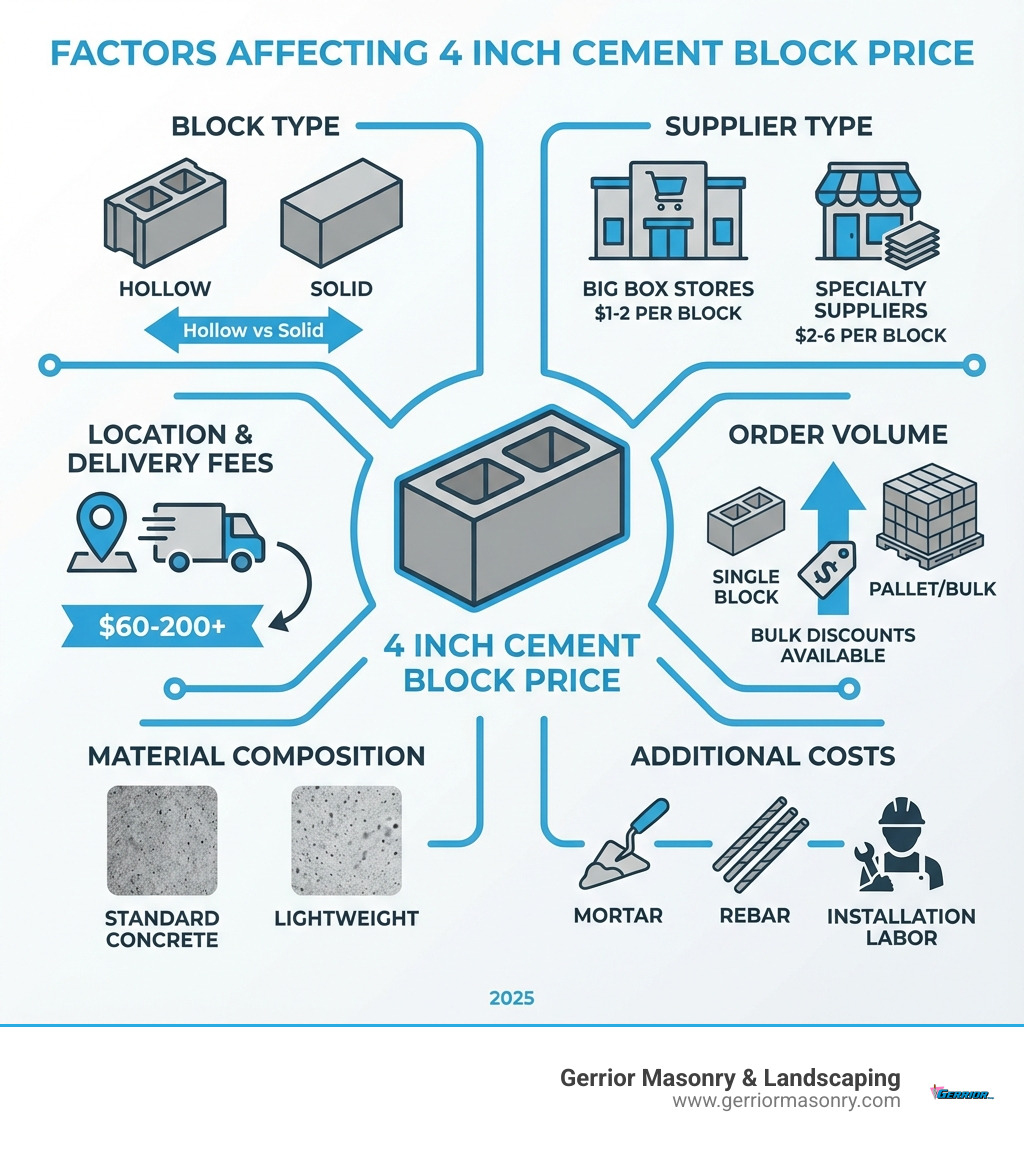
The 4 inch cement block price typically ranges from $1.00 to $6.00 per block based on average internet pricing data, not actual costs for Gerrior Masonry & Landscape Construction services. Actual prices will vary by supplier, region, and project specifications.
Standard Hollow CMU Blocks: $1.00 – $3.50 per block (average estimated range from online sources)
Thin Solid Blocks: $1.65 – $5.50 per block (average estimated range from online sources)
Premium Solid Blocks: $4.00 – $12.00 per block (average estimated range from online sources)
Pallet Pricing: $115 – $350 per pallet (70-90 blocks), based on typical internet averages
Planning a project with 4-inch cement blocks requires a clear understanding of the costs involved. This guide breaks down everything from per-block pricing and material types to delivery fees and labor. The final cost depends on block type, supplier, location, and other materials like mortar and rebar.
I’m Joe Gerrior, owner of Gerrior Masonry & Landscape Construction Corp. With over 34 years of experience in Massachusetts, my team and I have managed countless masonry projects, and we’re here to share our insights to help you budget effectively.
Understanding the 4 Inch Cement Block Price and Specifications
The price of a 4-inch concrete block is just one part of your project’s total cost. The block’s specific characteristics, your supplier, location, and order quantity all play a role. You must also budget for materials like mortar and rebar, plus tools and professional labor. For homeowners in Middlesex and Essex County, Massachusetts, understanding these details is key to a successful project.
What is the Average Price of a 4-Inch Concrete Block?
The average 4 inch cement block price is between $1.00 and $6.00 per block. These are broad average cost ranges based on publicly available internet pricing data and are not quotes or actual pricing for Gerrior Masonry & Landscape Construction services; actual prices vary by supplier and location.
Several key factors contribute to this wide price range. Location is a primary driver, as regional differences in raw material costs (cement, sand, aggregate), labor, and transportation directly impact the final price. Supplier type also matters; big-box stores may offer lower per-block prices on standard items, while specialized masonry suppliers provide a wider range of high-quality and specialty blocks at a premium, but often with bulk discounts. Finally, the block’s composition, such as lightweight aggregate (like Haydite) versus standard concrete, will affect its cost.
Standard Hollow CMU Blocks: $1.00 – $3.50 per block (average internet range)
Thin Solid Blocks: $1.65 – $5.50 per block (average internet range)
Premium Solid Blocks: $4.00 – $12.00 per block for specialized finishes or higher strength (average internet range)
Purchasing by the pallet can offer significant savings. A pallet of 70 to 90 blocks typically costs between $115 and $350, lowering the per-block price. These pallet prices are also based on online averages and not Gerrior Masonry pricing. Always ask suppliers about bulk or contractor discounts for large orders. For more on building with these materials, see our guide to cinder block walls.
Block Types, Dimensions, and Weight
Choosing the right block is crucial for your project’s success. The table below compares common 4-inch block types. All price ranges shown are approximate and drawn from internet sources; they are not Gerrior Masonry & Landscape Construction quotes.
Block Type
Nominal Dimensions (W x H x L)
Actual Dimensions (W x H x L)
Approximate Weight
Units per Cube (Pallet)
Typical Use
Price Range (per block, internet averages)
Standard Hollow CMU
4″ x 8″ x 16″
3.625″ x 7.625″ x 15.625″
20-26 lbs
150 (Line Block)
Non-load-bearing walls, partitions
$1.00 – $3.50
Thin Solid Block
4″ x 8″ x 16″
3.625″ x 7.625″ x 15.625″
25-32 lbs
120 (Solid Block)
Veneer, garden edging, small walls
$1.65 – $5.50
Solid “Slug” Block
4″ x 4″ x 16″
3.625″ x 3.625″ x 15.625″
17.5 lbs
216
Small decorative walls, edging
$1.00 – $3.50
Bullnose Block
4″ x 8″ x 16″
3.625″ x 7.625″ x 15.625″
~30-35 lbs
Varies
Rounded corners, decorative features
$3.00 – $10.00
Interlocking/Return Corner Block
4″ x 8″ x 16″
3.625″ x 7.625″ x 15.625″
34.6 lbs
120
Wall corners, complex layouts
$2.20 – $7.00
Haydite Line Block
4″ x 8″ x 16″
3.625″ x 7.625″ x 15.625″
19 lbs
150
Lightweight, non-load-bearing
$1.50 – $5.00
Haydite Solid Block
4″ x 8″ x 16″
3.625″ x 7.625″ x 15.625″
25 lbs
100
Lightweight, non-load-bearing
$2.00 – $6.50
Note: Prices are average estimates from internet sources and can vary by region and supplier. They are not actual Gerrior Masonry & Landscape Construction pricing.
The choice of block type is dictated by the project’s requirements. Standard Hollow CMUs are versatile for interior partition walls or non-structural exterior walls where their hollow cores can be used for insulation or running utilities. Thin Solid Blocks are excellent for creating a durable and attractive masonry veneer over an existing structure, providing the look of a solid wall without the weight.
Solid ‘Slug’ Blocks are shorter and often used for garden bed edging or low decorative walls where a full-height block isn’t needed. For projects requiring finished edges, such as the top of a wall or a window sill, Bullnose Blocks with their rounded corners provide a clean, professional look. Interlocking Blocks are designed for creating strong, stable corners and complex layouts without extensive cutting.
How Does the Price of a 4-Inch Block Compare to Other Sizes?
While the 4 inch cement block price is often lower per unit, it’s important to compare it to other sizes to ensure you’re choosing the right material for the job.
4-Inch Blocks: Most cost-effective for non-load-bearing uses like garden walls or decorative veneers, based on average internet price ranges.
6-Inch and 8-Inch Blocks: These are thicker, heavier, and generally more expensive per block but are required for structural applications. An 8″x8″x16″ block typically costs around $1.25 to $4.50 based on broad internet price data, with actual prices varying widely by supplier.
Key Differences:
Structural Use: 4-inch blocks are for non-load-bearing walls. 6-inch and 8-inch blocks are used for foundations, retaining walls, and load-bearing structures.
Weight: An 8-inch block weighs 28-36 pounds, while a 4-inch block can range from 17-32 pounds. Heavier blocks add strength but can increase labor costs.
Choosing the right size is critical for safety and building code compliance. Our hardscaping services use a range of block sizes to meet specific project needs.
Where to Buy Blocks and Find Certified Masons
Sourcing your blocks and finding a qualified installer are critical steps for your project.
Where to Buy 4-Inch Concrete Blocks:
Big-Box Retail Stores: Retailers like The Home Depot and Lowe’s are convenient for small projects, with prices often ranging from about $1.10 to $6.00 per block depending on the type. These are broad ranges pulled from online listings and are not affiliated with Gerrior Masonry pricing. Always check local store stock and current pricing.
Local Masonry Supply Yards: For larger projects, specialized blocks, or bulk pricing, we recommend local masonry suppliers in Massachusetts. They offer a wider inventory and expert advice.
Finding Qualified Installers:
While some small projects are DIY-friendly, most masonry work requires a professional to ensure durability and safety. When hiring a mason in Middlesex or Essex County, take these crucial steps:
Verify Insurance: A reputable contractor must carry both general liability insurance and worker’s compensation. Ask for a certificate of insurance to protect yourself from liability for accidents on your property.
Get Multiple Itemized Estimates: Don’t just compare the bottom-line price. A detailed, itemized estimate should break down costs for materials, labor, equipment, and cleanup. This helps you compare scopes accurately and spot bids that might be cutting corners.
Review Their Portfolio and References: A portfolio shows their quality of work. Speaking to past clients gives you insight into their professionalism, communication, and reliability. Ask about their experience with projects similar to yours.
Insist on a Written Contract: Never proceed without a comprehensive contract. It should outline the full scope of work, specific materials to be used, a clear payment schedule tied to project milestones, a projected timeline, and warranty details.
Discuss Payment Terms: A common practice is a deposit upfront (typically 10-30%), followed by progress payments. Never pay the full amount before the project is complete and you are satisfied with the work.
Plan Your Masonry Project with Confidence
Understanding the 4 inch cement block price is the first step to a successful masonry project. By planning for all the key factors—block type, supplier, quantity, delivery, and additional materials—you can budget with confidence.
The importance of professional installation cannot be overstated. While 4-inch blocks are often used for decorative elements, proper laying techniques are essential for a durable, polished finish. A poorly built wall can lead to costly repairs. Certified masons bring expertise and adhere to building codes, ensuring your investment is sound.
At Gerrior Masonry & Landscape Construction, we bring over 30 years of experience to every project, from patios and walkways to foundation repairs. Our owner oversight on every job guarantees high-quality results.
For a professional consultation on your next project, explore our comprehensive masonry services.
Gerrior Masonry & Landscape Construction is based in Woburn, MA, and proudly serves the surrounding communities in Middlesex and Essex County, Massachusetts.
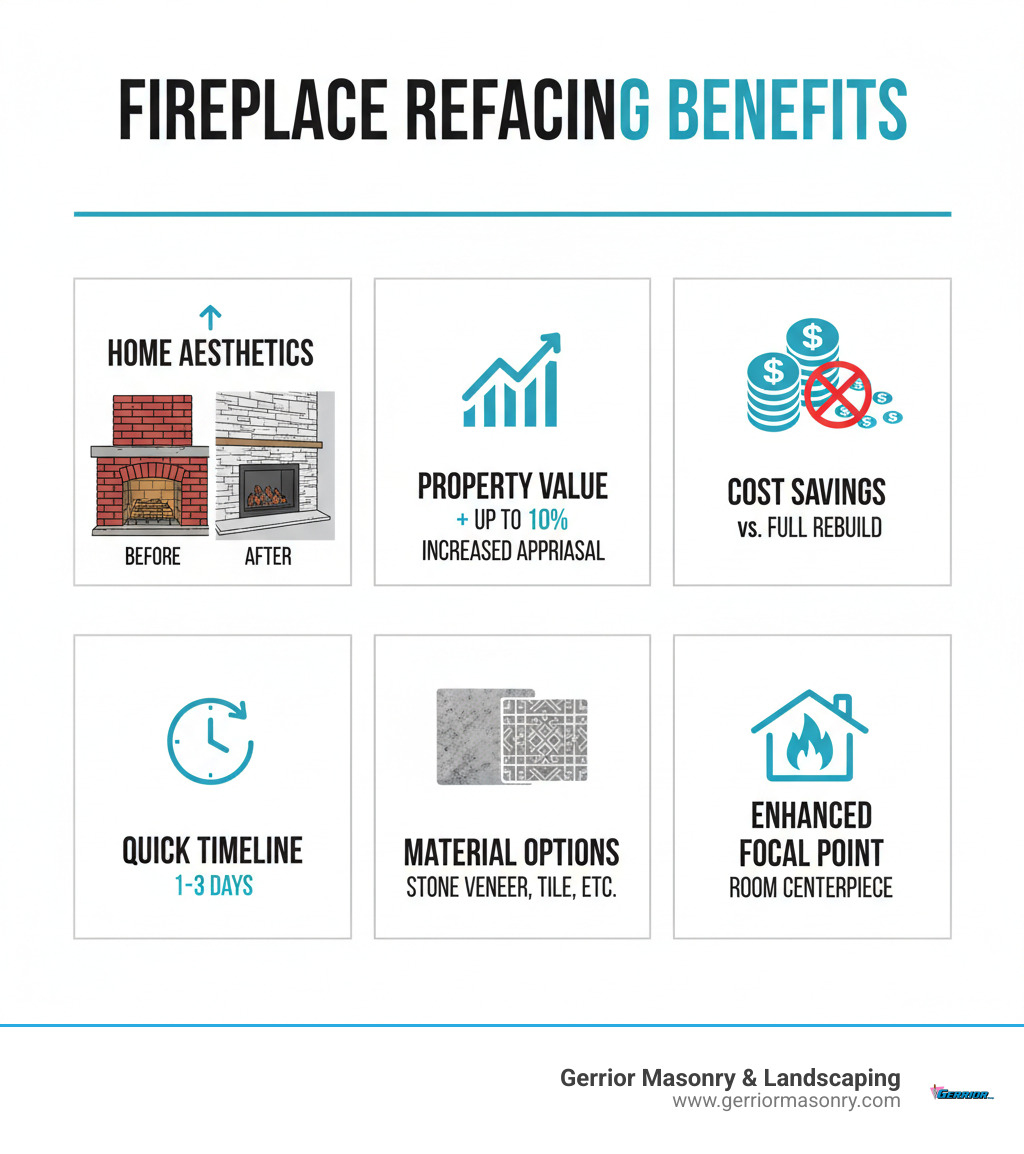
Brick fireplace refacing is the process of covering your existing brick with new materials like stone veneer or tile to update its look without the cost and mess of a full demolition.
Quick Overview:
What it is: Applying new materials over existing brick.
Cost: $500-$10,000+ depending on materials and scope (based on internet averages, not actual Gerrior Masonry pricing).
Time: 1-3 days for most projects.
Best for: Updating dated brick, matching new decor, increasing home value.
Materials: Stone veneer, tile, paint, or German schmear.
A fireplace is the focal point of any room, but a dated red brick fireplace can be an eyesore. Chipped bricks and stained hearths can make a beautiful gathering space feel tired.
The good news is you don’t need to tear it out. Refacing your brick fireplace offers a bold, modern change at a fraction of the cost of rebuilding. Whether you want sleek stone veneer or classic painted brick, refacing is an accessible way to transform your space.
The process involves preparing the brick surface and installing your chosen finish. Done correctly, a refaced fireplace can last for decades and add significant value to your home.
I’m Joe Gerrior, owner of Gerrior Masonry & Landscape Construction. With over 34 years in the business, I’ve helped countless Massachusetts homeowners transform their fireplaces through brick fireplace refacing. This guide will walk you through the project from planning to the final touches.
The Complete How-To Guide for Brick Fireplace Refacing
Step 1: Planning Your Brick Fireplace Refacing Project
Proper planning is key to a successful brick fireplace refacing project. Taking time to choose materials and gather tools will prevent costly mistakes.
Your most important decision is the stone veneer. Natural stone veneer is real stone cut thin. It offers unique character and is highly durable but is heavier and more expensive. Manufactured stone veneer is a lighter, more affordable concrete-based alternative that mimics natural stone and comes in consistent colors and shapes.
When selecting your stone, consider your room’s style. A modern space may suit sleek, linear cladding, while a traditional interior might shine with a textured, stacked stone look. For instance, large format tiles or smooth slate panels create a minimalist, contemporary feel. For a rustic or farmhouse aesthetic, consider irregular, fieldstone-style veneers with deep grout lines.
The color palette is also crucial; cool grays and whites lend themselves to modern designs, while warm earth tones like beige, brown, and gold create a cozier, more traditional atmosphere. Don’t forget to consider the existing elements in your room, such as flooring, wall color, and furniture, to ensure a cohesive design.
Next, gather your tools and materials. You’ll need:
Tools: A tile wet saw, notched trowel, measuring tape, level, mixing buckets, and a grout bag.
Materials: Cement board, polymer-modified thin-set mortar, stone veneer, sanded grout, dowel rods for spacers, and brick sealer.
Safety is non-negotiable. Always wear eye and ear protection when using power tools, and use a dust mask to avoid inhaling masonry dust. Protect your floors with heavy-duty paper and hardboard. If you need professional design guidance, check out more info about our Custom Fireplace Builders services.
Step 2: Prepare the Brick Surface for a Lasting Bond
Surface preparation is the most critical step for your brick fireplace refacing project. A poor bond will cause your new veneer to fail.
First, check the structural soundness of your fireplace. Look for significant cracks and tap bricks to check for looseness. If you find major structural damage or heavy creosote buildup in the chimney, stop and call professionals for brick and masonry repair before proceeding.
Protect your space by covering floors and furniture with rosin paper and hardboard. If you’re replacing the mantel or hearth, remove them now. Removing an old hearth is labor-intensive and may require a demolition hammer.
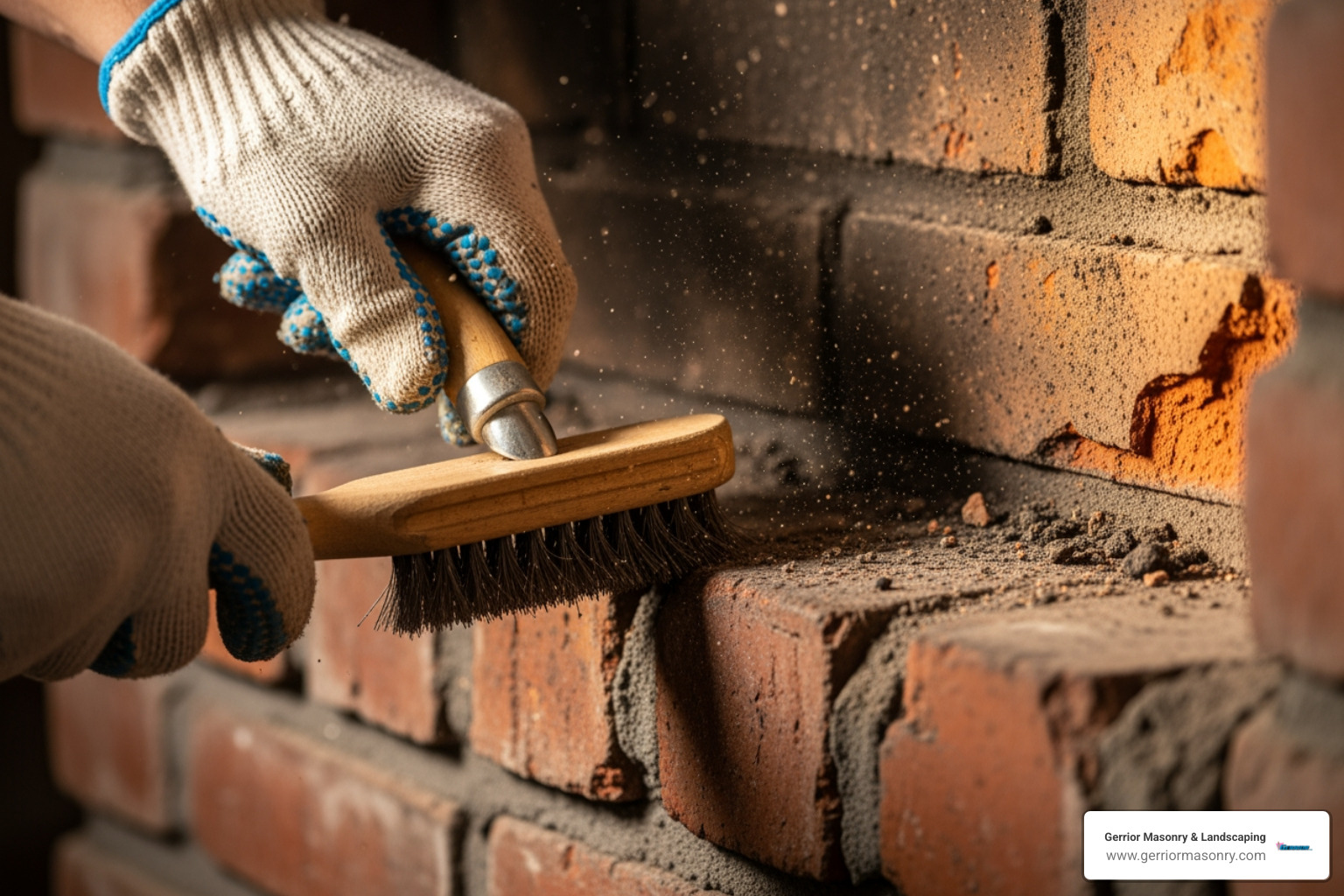
Next, deep clean the brick to ensure optimal adhesion for the new veneer. Your goal is a clean, stable surface free of any contaminants. Start by using a stiff wire brush to scrub away all loose debris, dirt, and soot. For more stubborn grime, a TSP (trisodium phosphate) solution can be effective. When using TSP, mix it according to the manufacturer’s directions and wear appropriate safety gear, as it is a powerful cleaner.
Apply it with a scrub brush, working in small, manageable sections from top to bottom. After scrubbing, rinse the brick multiple times with clean water and a sponge to remove all chemical residue, as any leftover TSP can interfere with mortar adhesion. Allow the brick to dry completely for at least 24-48 hours. Finally, patch any remaining cracks with masonry repair compound before proceeding. For more details on surface prep, see this Step-by-Step Guide to Fireplace Refacing.
Step 3: Cutting and Setting Your Stone Veneer
This is where your vision comes to life, but it requires precision. Rushing here will show in the final result.
Measure your fireplace, calculate the total square footage, and add 10-15% extra material for cuts and waste. Before mixing any mortar, lay out your stone pieces on the floor in a dry fit. This helps you visualize the pattern, plan cuts, and create a balanced appearance. This step is crucial for avoiding awkward-looking small pieces at the edges or corners.
Try to arrange the stones so that you can use full pieces as much as possible, planning your cuts to fall in less conspicuous areas. Mix stones from different boxes to ensure a natural blend of color and texture, as manufactured stone can have slight variations from batch to batch. Take a photo of your final layout for reference once you begin installation.
For cutting, a tile wet saw provides the cleanest, most precise cuts with minimal dust. Always wear safety glasses and gloves. Mix your polymer-modified thin-set mortar to a thick, peanut-butter-like consistency. Only mix as much as you can use within its 30-60 minute pot life.
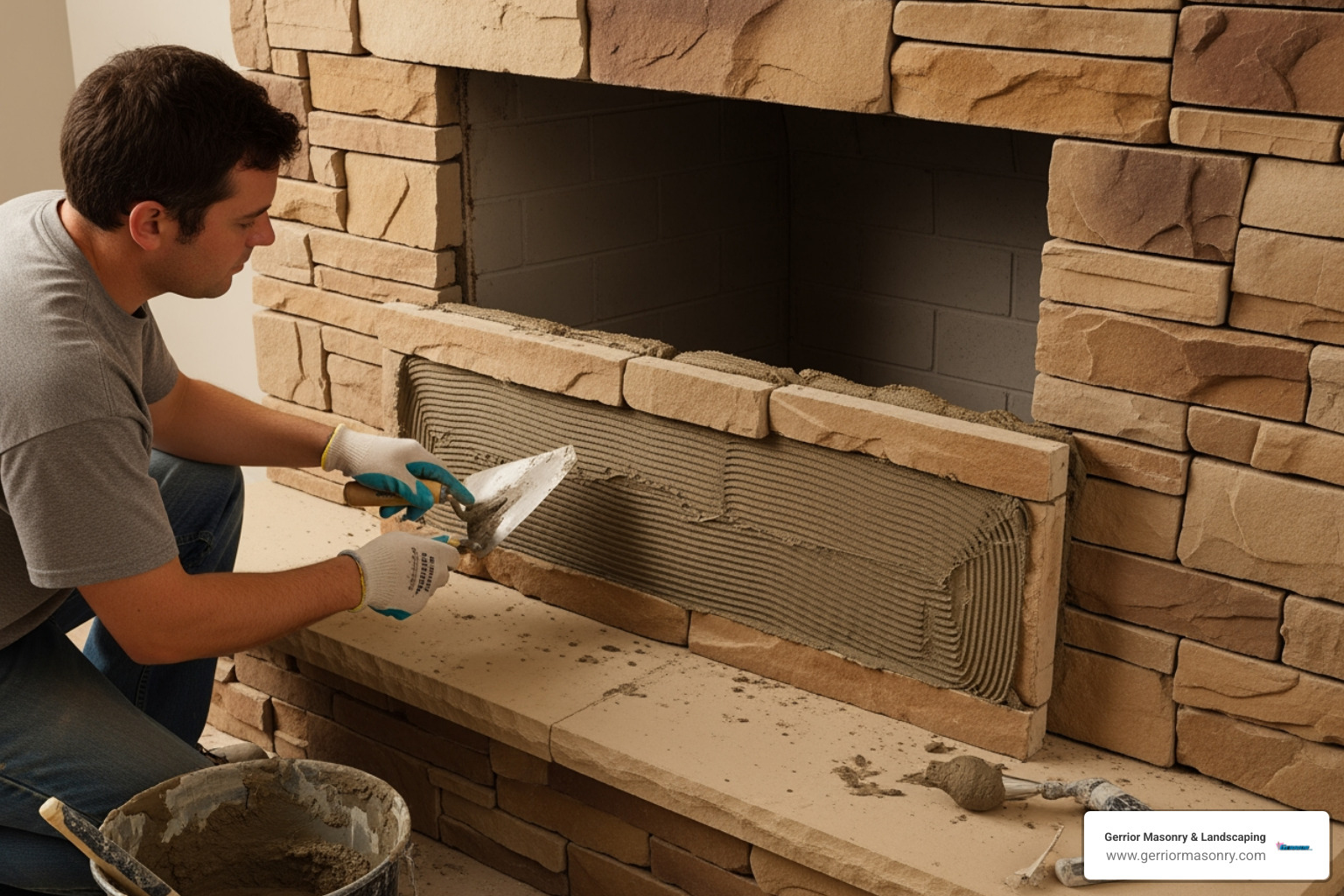
Start setting stone from the bottom up. Apply mortar to the back of each piece (known as “back-buttering”) and press it firmly onto the brick with a slight twisting motion. Use dowel rods or tile spacers to maintain consistent grout lines. Regularly check your work with a level, both horizontally and vertically, and adjust stones before the mortar sets. Allow the mortar to cure overnight before moving on to grouting.
Step 4: Grouting, Cleaning, and Sealing for a Professional Look
These final steps will protect your new fireplace and give it a polished, professional finish.
Mix your sanded grout and load it into a vinyl grout bag. Squeeze the grout into all the joints, ensuring every gap is filled. Once the grout begins to firm up, use a brick jointer to smooth and compact the grout lines for a clean, uniform look.
Before the grout fully hardens, use a damp sponge to carefully wipe away any excess from the stone faces. For any remaining haze after drying, a 50/50 mix of vinegar and water can work, but test it on an inconspicuous area first.
I highly recommend sealing your stone veneer. A quality brick sealer, applied with a cheap paint brush, improves the stone’s color and protects it from soot and stains. Follow the manufacturer’s instructions for application and drying times.
For safety, always use non-combustible materials for your refacing project and maintain required clearances to combustibles (like wood framing) as specified by local building codes. If you have any concerns about your fireplace’s integrity, consult with experts in stonework repairs.
Finishing Touches and Important Considerations
Common Mistakes in Brick Fireplace Refacing
Being aware of common pitfalls during your brick fireplace refacing project will save you headaches later. Here are the key mistakes to avoid:
Improper Surface Prep: Failing to clean the brick or repair loose mortar will cause your new veneer to fail.
Using the Wrong Mortar: You need a polymer-modified, fiber-reinforced thin-set. Standard mortar can sag or fail to bond properly near a heat source.
Inconsistent Spacing: Eyeballing the gaps between stones looks amateur. Use spacers for a professional result.
Skipping the Dry Layout: Laying out stones on the floor first prevents awkward cuts and ensures a balanced design.
Poor Cuts: Rushed measurements and improper tools lead to jagged, misaligned edges. Measure twice, cut once.
Forgetting Safety Gear: Stone dust and flying debris are serious hazards. Always wear goggles, a dust mask, and gloves.
Ignoring Structural Problems: Covering up significant cracks or loose bricks is a dangerous mistake that will only get worse. For major concerns, seek professional help for Chimney Masonry Repair Near Me.
Ignoring Clearances: Flammable materials like a wood mantel must be a safe distance from the firebox opening to prevent fires. Always follow building codes.
Costs, Alternatives, and Maintenance
The investment for brick fireplace refacing can vary widely.
The Investment You’re Making:
Based on internet averages, a fireplace refacing project can range from $500 to $10,000+.
Budget-friendly ($500-$2,000): Projects like painting with heat-rated paint or adding a simple tile surround.
Mid-range ($2,000-$7,000+): Typically involves installing manufactured or natural stone veneer.
High-end ($7,000-$10,000+): May include custom mantels, large natural stone slabs, or floor-to-ceiling installations.
Painting: The quickest, most budget-friendly option. Use heat-rated paint for a modern farmhouse or contemporary look.
German Schmear: Applying a thin layer of mortar and wiping some away creates a rustic, old-world aesthetic.
Skim Coat: Using limewash or concrete creates a smooth, minimalist finish for modern designs.
Tile: Offers endless design possibilities, from classic subway tiles to decorative mosaics.
Feature
Stone Veneer
Paint
Cost
Mid-to-High ($2,000-$7,000+)
Low ($50-$500)
Durability
High (long-lasting, heat-resistant)
Medium (may chip, require touch-ups)
DIY-Friendliness
Intermediate to Advanced
Easy
Aesthetic
Natural, textured, rustic to modern
Clean, modern, versatile
Keeping Your New Fireplace Looking Great:
Maintenance is straightforward. For regular cleaning, use a soft brush and mild cleaner. Avoid harsh chemicals. Reapply sealant every few years as recommended by the manufacturer. Promptly repair any cracked grout lines to prevent moisture damage. Finally, don’t forget regular chimney inspections and cleaning for safety. Learn more about what’s involved with Chimney Repair Cost.
Wrapping Up: DIY or Call in the Pros?
While brick fireplace refacing can be a rewarding DIY project, it’s wise to call a professional for structural concerns, complex designs, or if you’re unsure about safety and code compliance. Hiring an expert ensures the job is done right, safely, and efficiently.
For a flawless, professional finish, trust the experts at Gerrior Masonry & Landscaping. Our skilled team has over 30 years of experience changing fireplaces throughout Massachusetts. Request an estimate for your fireplace project today, and let’s bring your vision to life.
Gerrior Masonry & Landscape Construction is based in Woburn, MA, and proudly services Middlesex and Essex County, Massachusetts.