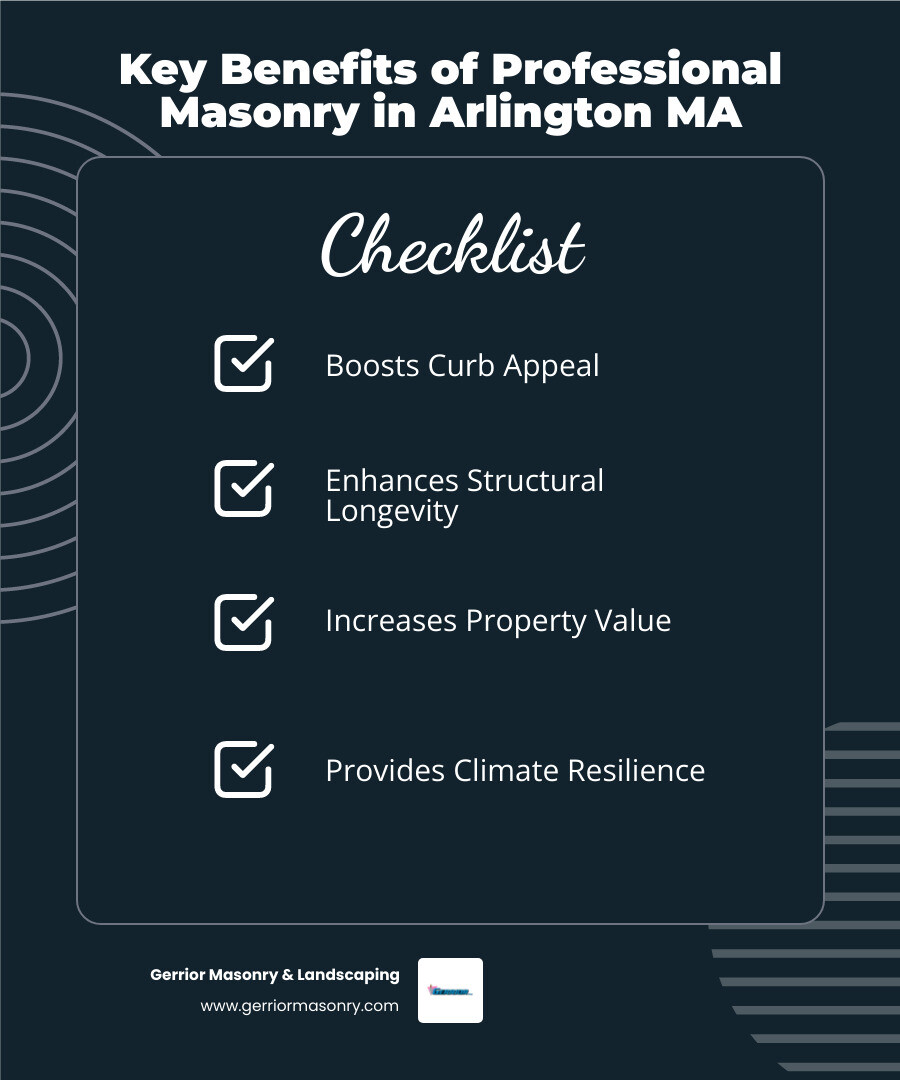
A masonry contractor Arlington MA can help you build patios, walkways, retaining walls, steps, chimneys, and foundations that stand up to the demanding Massachusetts climate — and look great doing it. Arlington is a town known for its rich history and beautiful residential architecture, ranging from classic colonials to modern custom builds. Maintaining these properties requires a deep understanding of how local weather patterns, particularly the moisture and temperature fluctuations, affect stone and brickwork over decades.
Here are the top masonry services available to Arlington, MA homeowners:
Patios and hardscaping — bluestone, granite, pavers, and natural stone outdoor living spaces designed for longevity.
Walkways and steps — durable stone and brick paths that boost curb appeal and provide safe passage during icy winters.
Retaining and landscape walls — essential for erosion control and slope management in the hilly terrains of Middlesex County.
Chimney repair and repointing — protecting your home from water damage and ensuring fireplace safety.
Foundation repair and waterproofing — structural integrity for older homes throughout the Commonwealth.
Historic masonry restoration — matching existing brick and stone on period properties to maintain historical accuracy.
Arlington, MA has no shortage of options — the BBB lists thousands of mason contractors serving the area, and platforms like Angi report an average homeowner rating of 4.4 out of 5 from verified local reviews. That means quality contractors do exist here, but knowing what to look for makes all the difference. A local expert understands the specific soil compositions found in this part of the state, which is crucial for preventing shifting and cracking in your masonry projects.
Whether your project is a simple walkway repair or a full backyard transformation, choosing the right mason matters. The right contractor brings licensed oversight, quality materials, and experience with the freeze-thaw cycles that make masonry in Massachusetts uniquely challenging. These cycles can cause inferior mortar to crumble and poorly set stones to heave, which is why professional installation is a necessity rather than a luxury.
I’m Joe Gerrior, owner of Gerrior Masonry & Landscape Construction Corp., a family-owned business with over 34 years of experience serving residential and commercial clients — making us a trusted masonry contractor Arlington MA homeowners rely on for everything from hardscaping to foundation repairs. If you want work done right the first time, keep reading — this guide covers exactly what to look for to ensure your investment lasts for generations.
Services Offered by a Professional Masonry Contractor Arlington MA
When you start looking for a Masonry Contractor Arlington MA, you’ll quickly find that the best in the business offer much more than just “laying bricks.” Professional masonry is a blend of structural engineering and fine art. In a town like Arlington, where historic homes sit alongside modern developments, we provide a wide range of Masonry Contractors Near Arlington MA services to keep every type of property looking its best. Our team is trained to handle the specific architectural styles found throughout the town, ensuring that any new addition feels like a natural extension of the original structure.
Masonry services generally fall into two categories: residential and commercial. For homeowners, the focus is often on Hardscaping Arlington MA—creating those beautiful outdoor living spaces where you can relax during the short but sweet summers in the Bay State. For business owners, the focus shifts toward structural stability, parking lot safety, and maintaining a professional facade that can withstand the salt and grime of local winters.
A reputable Masonry Contractor Arlington MA will offer:
New Construction: Building everything from stone entryways to full outdoor kitchens that serve as the centerpiece of your property.
Restoration and Repair: Fixing what time and the weather have worn down, such as crumbling steps or cracked chimneys that have been battered by coastal winds.
Waterproofing: Ensuring that your basement stays dry, even during those heavy April 2026 rainstorms that are common in this region.
Stone Veneer Installation: Adding a high-end look to foundations or interior fireplaces with thin-cut natural stone.
Custom Patios and Hardscape Design
If you’ve spent any time browsing real estate listings in Arlington lately, you know that outdoor living space is a massive driver of property value. As a leading Patio Contractor Arlington MA, we’ve seen a huge shift toward “backyard living rooms.” These spaces often include fire pits, integrated lighting, and even outdoor sound systems, all built into the masonry work.
When we talk about Patio Design Installation, we aren’t just talking about a flat spot for a grill. We’re talking about multi-level entertaining areas using premium materials that are sourced for their durability and aesthetic appeal. Our Patio Installers Arlington MA frequently work with:
Bluestone: A local favorite that offers a timeless, elegant look with its natural blue-gray hues.
Natural Stone: For a rustic, organic feel that blends perfectly with the lush landscaping found in Middlesex County.
Concrete Pavers: Available in endless colors and patterns, these are highly durable and easy to maintain, making them a popular choice for busy families.
Granite: Known for its incredible strength and resistance to the elements, granite is ideal for steps and high-traffic areas.
The key to a patio that lasts 30 years instead of three is the site preparation. A professional Masonry Contractor Arlington MA knows that the soil in this part of the state can be tricky, often containing high clay content or hidden ledge. We ensure a stable, level base with multiple layers of compacted aggregate and proper drainage so your pavers don’t shift when the ground freezes and thaws during the volatile spring months.
Durable Walkways and Stone Walls
Walkways and stairs are the first things guests notice when they visit your home. They are the “handshake” of your property’s exterior. As a Masonry Contractor Arlington MA, we specialize in Walkways and Stairs that combine safety with high-end aesthetics. Whether it’s Paver Walkways Arlington MA or traditional brickwork, the goal is a slip-resistant, durable surface that stands up to heavy foot traffic and the harsh salt used during Massachusetts winters.
Then there are the walls. In Arlington’s hilly terrain, Landscape Walls are often a necessity rather than a choice. We build:
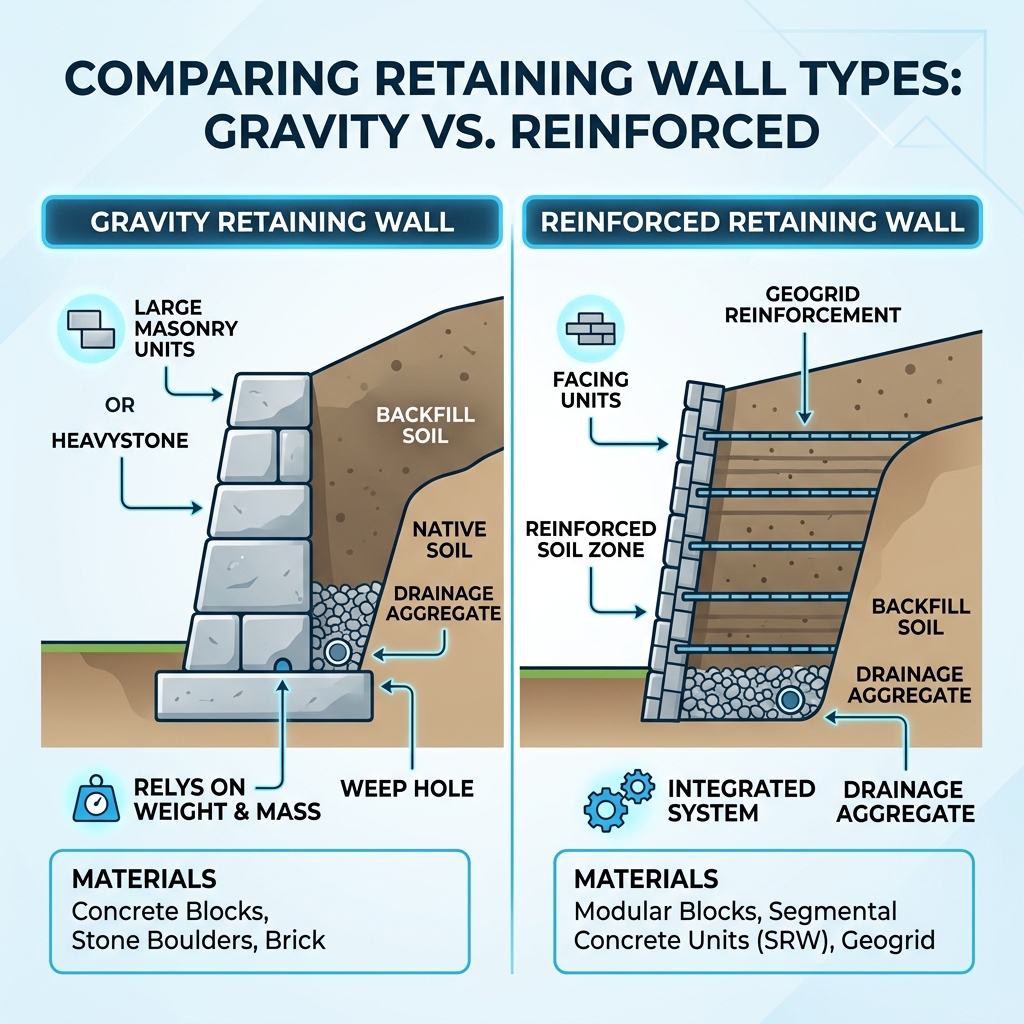
Retaining Walls: To manage slopes, prevent soil erosion, and create more usable flat land in your yard. These are engineered to handle the lateral pressure of saturated soil.
Decorative Garden Walls: To define spaces and add vertical interest to your landscaping, often using fieldstone for a traditional look.
Seat Walls: Built-in stone seating around a fire pit or patio, providing extra room for guests without the need for extra furniture.
Structural integrity is paramount here. A poorly built retaining wall is a liability that can collapse under the weight of wet soil; a wall built by a professional Masonry Contractor Arlington MA is an investment in your home’s safety and drainage. We use geogrid reinforcement and proper backfill techniques to ensure these structures remain upright for decades.
Specialized Chimney and Foundation Repair
Not all masonry work is about looks—some of it is about keeping your home standing and safe. Many homes in Arlington are older, meaning their masonry needs a little extra TLC to combat the effects of time and the elements.
Chimney Care: The chimney is the most exposed part of your home. Over time, the mortar between the bricks can wash away—a process called “spalling.” We offer Chimney Repair Arlington MA and Chimney Repointing Arlington MA to seal those joints and prevent water from leaking into your attic or fireplace. This is a critical maintenance task that prevents expensive interior water damage.
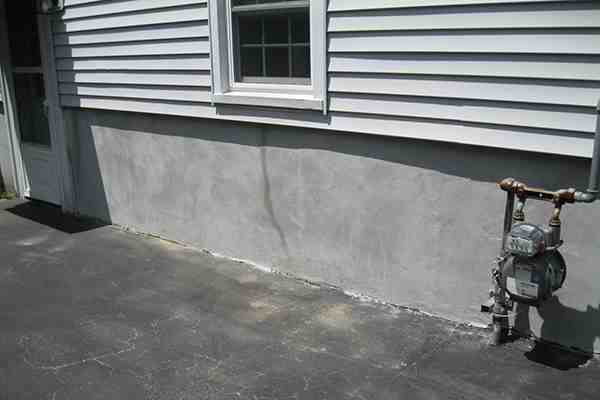
Foundation and Basements: A cracked foundation is enough to give any homeowner a headache. Whether you have a traditional stone foundation common in older Massachusetts homes or a modern poured concrete one, we provide expert Foundation Repair and Cinder Block Foundation Repair to address structural issues and water infiltration. We also handle bulkhead replacements to ensure your basement entry is secure and weather-tight against the heavy rains we experience.
Commercial Snow Management Solutions
In Massachusetts, we don’t just work in the dirt and stone—we also work in the snow. For our commercial clients, we offer comprehensive Snow Management Arlington MA.
When winter hits, businesses can’t afford to be closed. Our Commercial Snow Removal services include:
Commercial Snow Plowing: Keeping parking lots clear for employees and customers using high-efficiency equipment.
De-icing and Salting: Reducing liability by ensuring walkways are safe and free of black ice.
Emergency Response: We are on call to ensure your business remains accessible even during the most intense Massachusetts blizzards.
Note: We strictly provide commercial snow services; we do not offer residential snow removal.
Investing in Quality Masonry Work in Arlington
Investing in professional masonry is one of the smartest moves an Arlington property owner can make. Unlike a coat of paint or a new carpet, stone and brickwork are permanent additions that provide lasting value. They don’t just improve the look of your home; they improve the “bones” of your property, providing structural support and enhancing the overall landscape architecture of your neighborhood.
Understanding Project Costs for a Masonry Contractor Arlington MA
One of the most common questions we get is, “How much will this cost?” It’s a fair question, but masonry pricing varies based on the materials you choose, the complexity of the site, and the specific labor requirements of the project. In Massachusetts, labor costs reflect the high level of skill required to build structures that can survive the local climate.
Below is a table showing estimated costs for common projects in the Massachusetts area. Please note: These are average costs for Massachusetts based on internet data and are not actual costs for Gerrior Masonry services.
Project Type
Average MA Cost Range (Estimated)
Small Walkway/Step Repair
$1,500 – $5,000+
Standard Paver Patio
$5,000 – $18,000+
Retaining Wall Installation
$4,500 – $25,000+
Luxury Outdoor Kitchen/Patio
$15,000 – $55,000+
Chimney Repointing
$1,200 – $4,500+
As you can see, there is a wide range. A simple project might start around $3,500, while a full-scale backyard transformation can easily exceed $55,000.
Factors that influence your final price include:
Material Selection: Natural bluestone and granite will always cost more than basic concrete pavers due to the cost of quarrying and the skill required for cutting.
Site Accessibility: Can we get our equipment into your backyard easily, or do we have to move materials by hand? Arlington’s narrow lots can sometimes present challenges.
Site Preparation: Does your yard require significant excavation, stump removal, or drainage work before we can start building?
Labor Rates: Skilled masonry is a trade that requires years of apprenticeship. You aren’t just paying for the stone; you’re paying for the hands that know how to set it so it doesn’t move for decades.
Selecting a Reputable Masonry Contractor Arlington MA
With over 3,443 results for “Mason Contractors near Arlington, MA” on various directories, how do you pick the right one? You don’t want to hire based on the lowest bid alone—in masonry, a low price often indicates a lack of proper insurance or a shortcut in the foundation work that will lead to failure in a few years.
Here is a checklist for vetting your Masonry Contractor Arlington MA:
Experience: Look for companies with decades of experience. At Gerrior Masonry, we bring over 30 years of local expertise to every job, having seen every possible site condition in the area.
Verified Reviews: Don’t just look at the star rating; read the comments. Are people happy with the communication? Did the crew clean up after themselves? Local references from neighbors in Arlington are invaluable.
Licensing and Insurance: This is non-negotiable. Ensure your contractor is a licensed construction supervisor (CSL) in the Commonwealth of Massachusetts and carries full liability and workers’ compensation insurance to protect you from any accidents on site.
Owner Oversight: This is our unique selling point. When you hire us, you get a skilled team backed by direct owner oversight. This ensures that the quality stays high from the first stone to the last, and that every detail meets our rigorous standards.
Whether you need a new patio to host friends this summer or a foundation repair to protect your home’s future, choosing a qualified Masonry Contractor Arlington MA is the first step toward a successful project.
Ready to transform your property? Contact us for a quote and let’s discuss your next project. Gerrior Masonry & Landscape Construction is based in Woburn, MA, and proudly services Middlesex and Essex County, Massachusetts.
5 Signs You Need a Professional Masonry Contractor Woburn MA
If you’re looking for a reliable Masonry Contractor Woburn MA, you need experts who understand local challenges and deliver lasting quality. A skilled masonry contractor provides essential services that protect and enhance your property.
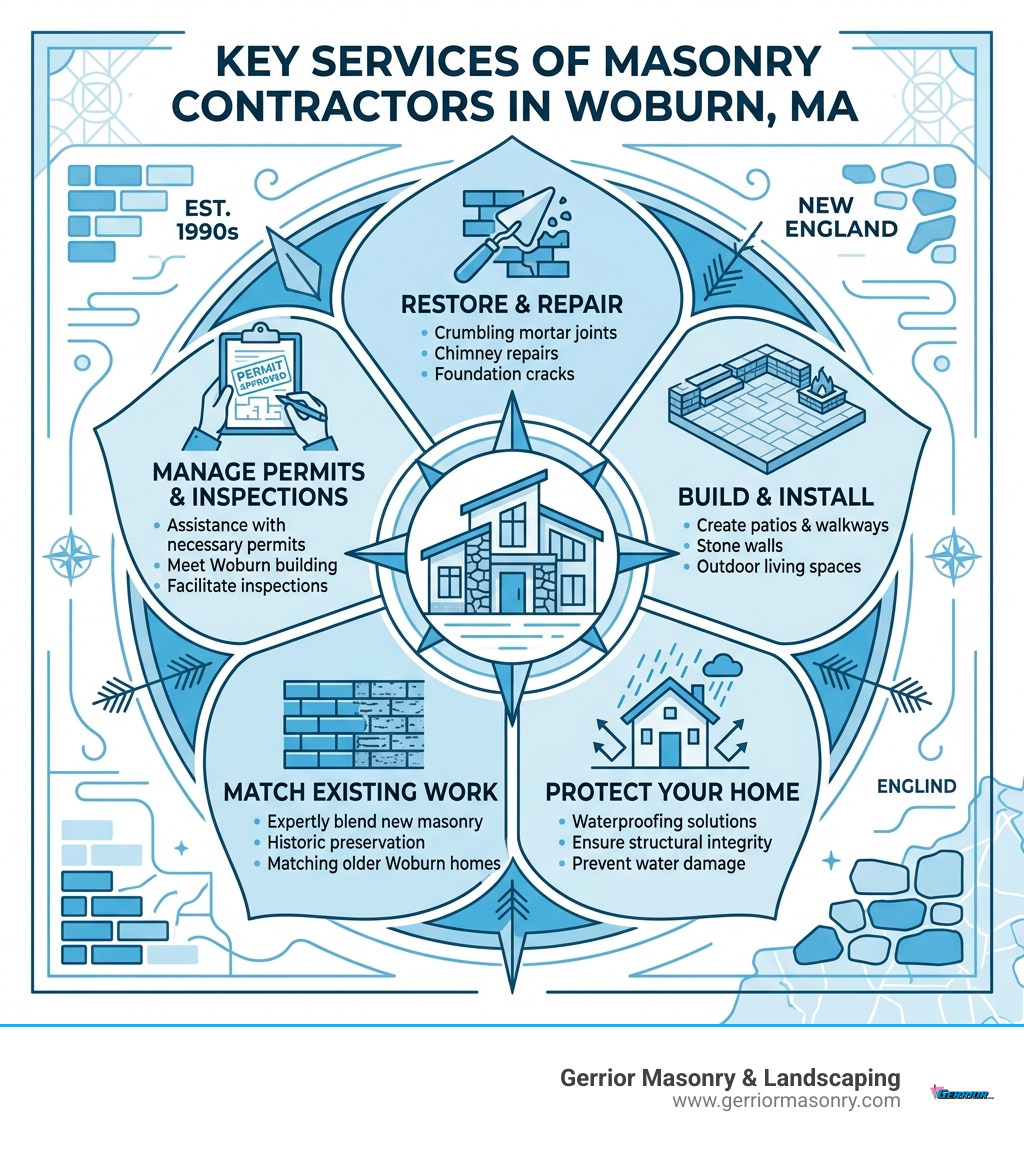
Here’s what a top-rated masonry contractor in Woburn, MA can do for you:
Restore and Repair: Fix crumbling mortar, repair chimneys, and address foundation cracks.
Build and Install: Create beautiful patios, walkways, stone walls, and outdoor living spaces.
Protect Your Home: Offer waterproofing solutions and ensure structural integrity.
Match Existing Work: Expertly blend new masonry with older or historic Woburn homes.
Handle Permits: Assist with necessary permits and inspections for major projects.
Masonry work is more than just stacking bricks or stones. It requires specialized skills, the right materials, and attention to detail. According to Wikipedia, masonry is the building of structures from individual units, which are often laid in and bound together by mortar. In Woburn, with its mix of historic and newer homes, choosing the right contractor is crucial. You want someone who knows the local building codes and can handle harsh New England weather.
Ignoring small masonry issues can lead to bigger, more expensive problems down the road. Early detection and professional repairs ensure your property remains safe, functional, and beautiful.
As the owner of Gerrior Masonry & Landscape Construction Corp., Joe Gerrior brings over 34 years of dedication as a Masonry Contractor Woburn MA, ensuring exceptional results for residential and commercial clients. Our team combines this deep experience with artistic design and meticulous work to create durable, beautiful outdoor spaces.
It’s April 2026, and as the ground thaws in Massachusetts, many homeowners are stepping outside to inspect the exterior of their homes. Masonry is the backbone of Woburn’s architecture, from the classic red brick of historic districts to the modern stone veneers in newer developments. However, even the sturdiest stone and brick aren’t invincible. The freeze-thaw cycles we experience every winter can take a heavy toll on mortar and stone.
Maintaining the structural integrity of your home means knowing when to call in the experts. Whether it’s a retaining wall that’s beginning to lean or a chimney that looks a bit “weathered,” these aren’t just cosmetic issues. They are often early warnings of water damage or structural failure. When you hire a professional Masonry Contractor Woburn MA, you aren’t just paying for a repair; you’re investing in the longevity of your home.
We often see homeowners try to DIY masonry repairs, only to find that matching mortar color or ensuring proper drainage is much harder than it looks on YouTube. Professional masonry services provide the specialized tools and knowledge of material science required to ensure that a repair lasts for decades rather than just a single season.
1. Crumbling Mortar and Chimney Deterioration
The first and perhaps most common sign that you need professional help is crumbling mortar. Mortar is the “glue” that holds your bricks or stones together. While quality brick can last over a century, mortar typically has a lifespan of 20 to 30 years. When it begins to crack, flake, or fall out, it creates gaps that allow water to seep into the wall.
This is particularly dangerous for chimneys. Because your chimney is exposed to the elements on all four sides and sits high above the roofline, it bears the brunt of New England storms. If you notice “sand” on your roof or see pieces of mortar missing from the joints, you likely need tuckpointing. Tuckpointing (or repointing) is the process of removing the old, damaged mortar and replacing it with fresh material.
Water infiltration in a chimney doesn’t just damage the exterior; it can lead to interior leaks, mold, and even structural collapse of the chimney stack. A professional Masonry Contractor Woburn MA will inspect the crown, the flashing, and the masonry itself to ensure the entire system is watertight. For more information on how we handle these delicate repairs, check out our guide on chimney repointing.
2. Foundation Cracks and Structural Water Damage
Your foundation is the most critical part of your home’s masonry. In Woburn, many older homes feature fieldstone or cinder block foundations that require specific care. If you notice horizontal cracks, stair-step cracks in brickwork, or water seeping through the basement walls, it is time to act.
Foundation issues are often caused by poor drainage or the natural settling of the soil. Over time, the mortar joints in your foundation can weaken, leading to structural instability. We specialize in foundation re-pointing, a process that strengthens the walls and prevents further water entry.
Beyond the walls themselves, we often find that old, rusted bulkheads are a major source of basement leaks. A professional Masonry Contractor Woburn MA can perform a bulkhead replacement, ensuring a tight seal where the stairs meet the foundation. Combine this with modern basement waterproofing techniques, and you can transform a damp, musty basement into a dry, usable space. A small crack today can become a major flood tomorrow.
3. Shifting Patios and Uneven Walkway Hazards
As we move into the spring of 2026, many of us are looking forward to outdoor gatherings. However, if your patio looks more like a topographical map of the White Mountains than a flat surface, you have a safety hazard on your hands. Shifting pavers and uneven walkways are common in areas like Lexington, MA, and Winchester, MA, where the soil can be quite active.
Uneven surfaces are a major tripping hazard for guests and family members. This shifting is usually caused by an improper base installation or issues with water drainage. When the base layers aren’t compacted correctly, or if they wash away due to heavy rain, the pavers will sink or tilt.
Professional paver walkways and patios require a deep, well-drained base of crushed stone and sand. If your current hardscaping is failing, a Masonry Contractor Woburn MA can often lift the existing pavers, fix the underlying base issues, and relay the stones to create a surface that is both beautiful and safe. Don’t wait until someone trips to address those “wobbly” bricks.
4. Spalling Bricks and Historic Stone Matching
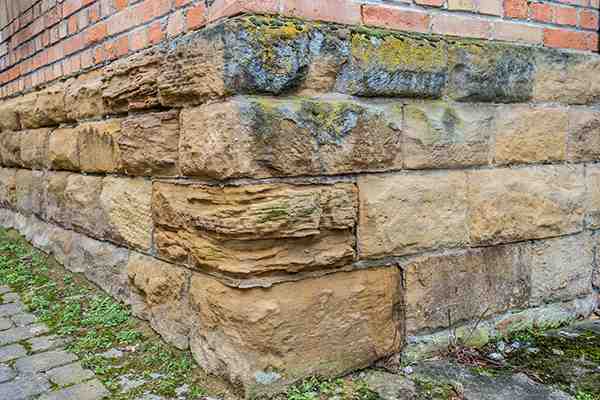
Have you ever noticed the face of a brick simply popping off? This is called “spalling.” It happens when water gets trapped inside the porous material of the brick or stone and then freezes. As the ice expands, it pushes the outer layer of the masonry away. Once the hard outer shell of a brick is gone, the soft interior is exposed, and the deterioration accelerates rapidly.
For owners of historic homes in Woburn, this is a significant concern. You can’t just slap any modern brick into a wall built in the 1800s. The colors won’t match, and more importantly, the physical properties of the materials might be incompatible. Using a hard, modern Portland-based mortar on soft, historic bricks can actually cause the bricks to crack.
A specialist Masonry Contractor Woburn MA has the expertise to match existing stonework and bricks. We source reclaimed materials or modern alternatives that blend seamlessly with your home’s original aesthetic. This is vital for maintaining the curb appeal and historical value of your property. Whether you are repairing brick stairs or restoring a natural stone wall, the goal is to make the repair invisible to the naked eye.
5. Average Costs for a Masonry Contractor Woburn MA
Understanding the financial aspect of masonry work is essential for planning your home improvements. While every project is unique, we can look at average costs for the Massachusetts area to give you a ballpark idea of what to expect.
Please note: The following figures are average costs for Massachusetts based on internet data and not actual costs for Gerrior Masonry services. Prices vary significantly based on the type of stone, accessibility of the site, and the complexity of the design.
Service Type
Estimated Cost Range (Per Sq. Ft. or Project)
Brick Wall Construction
$10 – $150 per sq. ft.
Natural Stone Wall
$40 – $350 per sq. ft.
Manufactured Stone Veneer
$20 – $120 per sq. ft.
Brick Siding / Exterior
$3 – $45 per sq. ft.
Tuckpointing / Repointing
$5 – $75 per sq. ft.
Chimney Repair
$160 – $2,500 per project
Brick Step Replacement
$20 – $90 per sq. ft.
Labor typically accounts for 50% or more of the final masonry project cost because of the high level of skill and physical effort involved. Simple repairs in Woburn might start between $500 and $1,500, while major structural projects like a large retaining wall or a complete foundation restoration can range from $3,000 to $45,000 or more. Always ensure you get a detailed written estimate that breaks down material and labor costs before work begins.
6. Timelines and Choosing a Masonry Contractor Woburn MA
When you decide to move forward with a project, the next questions are usually: “How long will it take?” and “How do I choose the right person?”
Typical Project Timelines
Masonry is a craft that cannot be rushed. Proper curing time is essential for the strength of the mortar and concrete.
Small Repairs: Repointing a small section of a wall or fixing a few loose stones usually takes 1–2 days.
Medium Projects: A standard walkway or a small patio typically takes 3–7 days, depending on the prep work.
Large Projects: Major retaining walls or foundation repairs can take several weeks.
Weather Impact: Rain, extreme heat, or freezing temperatures can pause work, as mortar needs specific conditions to set correctly.
Mason vs. General Contractor
Why hire a specialized Masonry Contractor Woburn MA instead of a general contractor (GC)? While a GC is great for managing a whole-home remodel, masonry is a highly specialized trade. A dedicated mason understands the specific properties of different stones, the nuances of mixing mortar for different climates, and the structural requirements of load-bearing walls. Many GCs actually subcontract their masonry work out to specialists like us anyway. By hiring a mason directly, you ensure that the people doing the work are the ones with the deep expertise.
Permits and Warranties
Does your project need a permit? In Woburn, structural work, major repairs, or anything near a property line usually requires a permit from the city. A professional contractor will handle the permit application process and coordinate with local inspectors. This protects you by ensuring the work meets all safety codes.
Furthermore, look for a contractor who stands behind their work. While natural settling or damage from tree roots is outside a contractor’s control, a quality professional should offer a warranty on their workmanship. For example, some local experts offer up to 15-year warranties on their services. For more on the types of projects that benefit from this level of care, explore our hardscaping services.
Conclusion
Investing in quality masonry is one of the best ways to protect your home’s value and ensure its safety. Whether you’re dealing with a crumbling chimney or planning a dream patio, the right Masonry Contractor Woburn MA makes all the difference.
At Gerrior Masonry & Landscaping, we bring over 30 years of experience to every job. Our unique approach involves a highly skilled team and direct owner oversight on every project, ensuring that the final result meets our high standards of craftsmanship. We are proud to serve our neighbors in Woburn and the surrounding communities with integrity and dedication.
Beyond masonry and hardscaping, we also provide expert commercial snow management to keep local businesses safe and accessible during our tough winters. If you’re a business owner, you can learn more about our commercial snow plowing services to prepare for next season.
If you’ve noticed any of the five signs mentioned in this article, don’t wait for the problem to get worse. Contact us today to schedule a consultation and let us help you keep your home’s masonry in peak condition. Gerrior Masonry & Landscape Construction is based in Woburn, MA, and services Middlesex and Essex County, Massachusetts.
Why Finding the Right Masonry Contractor in Reading, MA Matters for Your Home
If you need a masonry contractor Reading MA, here are the key local options and what to look for to ensure your property remains safe, functional, and aesthetically pleasing for decades to come:
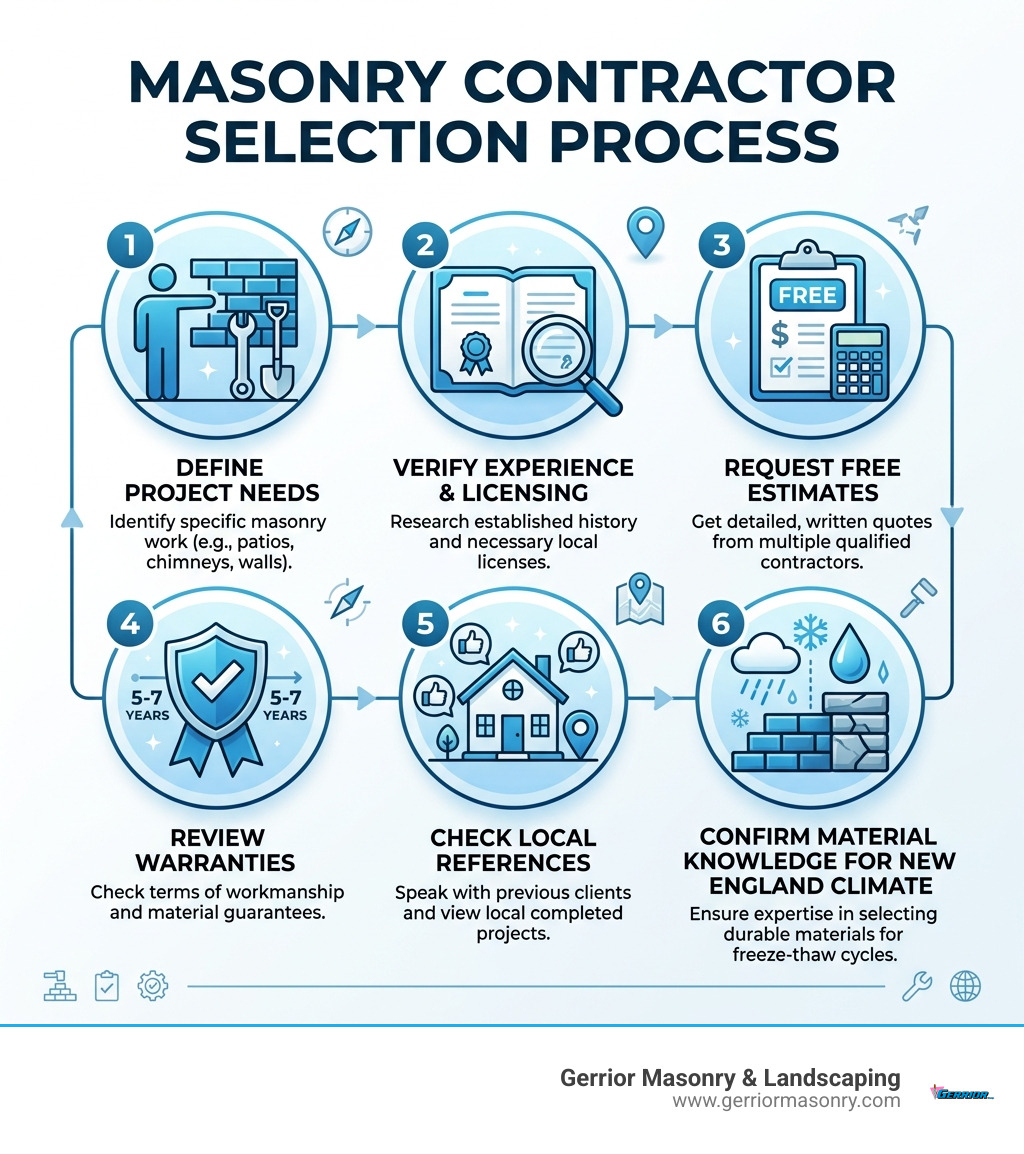
Experience – Look for contractors with 20+ years serving Reading and surrounding towns to ensure they understand local soil and weather conditions.
Warranties – Reputable contractors offer 5- to 7-year warranties on new work, providing peace of mind for your significant investment.
Free estimates – Most established local masons provide free, no-obligation quotes that include a detailed breakdown of labor and material costs.
Specializations – Services range from patios, walkways, and retaining walls to chimney repair, foundation restoration, and historic stonework preservation.
Local knowledge – Reading’s New England climate demands contractors who understand freeze-thaw cycles and material durability in extreme temperature swings.
Reading, MA is a town with a rich architectural history, featuring a mix of older historic homes and newer properties. Both types of structures require skilled masonry work to maintain their structural integrity and curb appeal. Whether your foundation is showing signs of crumbling, your chimney needs professional repointing, or you want to enhance your outdoor living space with a new patio or walkway, choosing the right contractor makes all the difference in the longevity of the project.
The challenge for many homeowners is the sheer number of contractors serving the area. It can be difficult to know who to trust with your property and who has the technical expertise to handle complex structural repairs versus simple cosmetic upgrades. This guide breaks down what to look for, what services are available, and what quality masonry work in Reading actually looks like.
I’m Joe Gerrior, owner of Gerrior Masonry & Landscape Construction Corp., a family-owned business based in Woburn, MA, with over 34 years of experience as a masonry contractor Reading MA and throughout Middlesex and Essex County. I’ve seen firsthand what separates lasting, high-quality masonry from work that fails after the first hard New England winter.
Masonry contractor Reading MA terms you need to know:
Essential Services Offered by a Masonry Contractor Reading MA
When you start looking for a masonry contractor Reading MA, you’ll quickly realize that “masonry” is a broad term. In our neck of the woods, it covers everything from the structural bones of your home to the beautiful outdoor spaces where you host summer barbecues. A professional mason must be part engineer, part artist, and part historian.
The most common requests we see in Reading and North Reading involve high-traffic areas like front stairs and steps and walkways. These aren’t just about looks; they are about safety and accessibility. A loose brick or a cracked stone step is an invitation for a twisted ankle, especially when the New England ice hits and hides these hazards. Proper installation ensures that steps remain level and secure even as the ground shifts during seasonal changes.
The Durability Factor: Materials Matter
Choosing the right material is the first step in ensuring your investment lasts longer than a single season. Different materials react differently to the heavy snow and salt common in Massachusetts. Here is a quick comparison of what we often use for patio design and installation:
Material
Durability
Weather Resistance
Maintenance
Natural Stone
Exceptional
High (handles freeze-thaw well)
Low
Brick
High
Moderate (can chip over decades)
Moderate
Concrete Pavers
High
High (designed for drainage)
Low
Granite
Maximum
Exceptional (salt resistant)
Minimal
Beyond the ground level, a skilled masonry contractor Reading MA will specialize in retaining walls. These are essential for many Reading properties that sit on slopes or uneven terrain. A well-constructed wall prevents soil erosion and manages water runoff, protecting your landscape design from being washed away during a heavy spring downpour. Engineering these walls requires a deep understanding of hydrostatic pressure and proper drainage backfill.
Common Residential and Commercial Projects in Reading
In a community like Reading, masonry needs often split between purely aesthetic upgrades and functional necessities. For homeowners, outdoor fire pits have become a staple of modern backyard design. There is nothing quite like sitting around a custom-built stone fire pit on a crisp October night, and these features can significantly increase your property value.
For our local business owners, the focus shifts toward safety, professional appearance, and long-term durability. This includes robust business entryways that can withstand heavy foot traffic and the corrosive salt used during winter. Speaking of winter, masonry and commercial snow removal often go hand-in-hand. While we do not offer residential snow services, we provide comprehensive snow management for commercial plazas and office parks in Reading to ensure their masonry entryways remain clear and safe for employees and customers alike.
We also find that many properties require advanced drainage systems and dry wells to prevent water from pooling against foundations. This often requires professional excavation services to ensure the pitch of the land directs water away from the structure, preventing basement flooding and structural rot.
Specialized Foundation and Chimney Repair from a Masonry Contractor Reading MA
If the patio is the “fun” part of masonry, foundation and chimney work is the “serious” part. In Reading, many homes feature older brick or stone foundations that have begun to show their age through bowing, cracking, or water seepage.
Chimney Care
Your chimney is the most exposed part of your home. It takes the full force of wind, rain, and snow from every direction. Common issues include crumbling mortar joints (which require repointing) or cracked chimney crowns that allow water to seep into the interior of the stack. If you’re curious about what goes into these fixes, you can read more about Reading MA chimney repair services costs and what to expect or explore our general chimney repair services.
Foundation Integrity
A dry basement starts with a solid foundation. We often see cinder block foundations in newer Reading homes that develop cracks due to settling or hydrostatic pressure. Foundation repair is critical to prevent structural failure. This often involves:
Durable Materials for New England Weather Resistance
Any masonry contractor Reading MA worth their salt knows that New England weather is the primary enemy of stone and brick. The freeze-thaw cycle is our biggest challenge. Water gets into small cracks, freezes, expands, and pushes the masonry apart, leading to rapid deterioration if not addressed.
To combat this, we prioritize materials like:
Granite: Nearly indestructible and highly resistant to the salt used on Massachusetts roads and walkways. It is the gold standard for steps and curbing.
Fieldstone: A classic New England choice that offers a timeless look while standing up to the elements naturally.
Bluestone: Popular for pool decks and patios, it provides a non-slip surface that stays cool in the summer and holds up beautifully in the winter.
The strength of the mortar is just as important as the stone itself. We use specific mixes designed to breathe and flex slightly, which prevents the masonry from cracking when the temperature swings 40 degrees in a single day. You can learn more about our full range of masonry services and how we select materials for longevity.
Historic Restoration and Stone Masonry Contractor Reading MA
Reading and North Reading are home to some beautiful historic structures, some dating back to the 1800s or earlier. These buildings require a different touch than a modern suburban home. Using modern techniques on historic structures can often do more harm than good.
The secret to historic work is lime mortar. Modern Portland cement is often too hard for historic bricks and stones; if you use it on an old wall, the modern mortar will actually cause the old bricks to crack as they expand and contract. Foundation repointing on a historic home requires a mason who understands the chemistry of old materials.
Restoring a stone foundation involves carefully removing loose material and repointing the foundation using traditional techniques that preserve the home’s character while making it structurally sound for another century. This preservation work is vital for maintaining the historical value of Reading’s neighborhoods.
What to Expect: Estimates, Warranties, and Timelines
When you reach out to a masonry contractor Reading MA, you should expect a professional and transparent process. Most reputable local companies offer free estimates where they visit your property, assess the damage or the site for new construction, and provide a detailed quote that explains the scope of work.
Warranties
Don’t settle for a “tailgate warranty” (a warranty that ends when the contractor’s truck leaves). Established professionals in our area typically offer:
5-year warranties on new masonry projects like patios and walkways.
7-year warranties on comprehensive paving and structural work.
Timelines
Most residential masonry projects, like a new walkway or a small patio, take between 3 to 10 days to complete. Small repairs might only take a day or two. However, always remember that masonry is weather-dependent. We cannot lay brick in a torrential downpour or pour concrete in a deep freeze without special precautions and heating equipment.
Average Costs in Reading, MA
While every project is unique, here are some average costs based on internet data for the Reading area (please note these are industry averages and not actual Gerrior Masonry pricing):
Chimney Repair: $500 – $15,000+ (depending on the height and extent of repointing).
Patio Installation: $2,500 – $60,000+ (depending on material choice like pavers vs. natural stone).
Foundation Repair: $1,500 – $45,000+ (depending on whether it’s a simple crack or a major structural fix).
Professional Hardscaping and Masonry Contractor Reading MA
The difference between a “guy with a trowel” and a professional hardscaping Reading MA expert is in the engineering. Whether we are installing landscape walls or high-end driveways, the preparation of the base is what determines if the work will still be level in ten years. Proper compaction and gravel base depth are the invisible parts of the job that matter most.
We’ve spent decades as patio contractors in Stoneham and Lynnfield, and we bring that same regional expertise to every project in Reading. We understand the soil types, the water tables, and exactly how deep a foundation needs to go to get below the frost line to prevent heaving.
Choosing the Right Expert for Your Reading Property
Choosing a masonry contractor Reading MA is an investment in your home’s future and your family’s safety. You want a team that combines old-world craftsmanship with modern reliability and professional project management. A successful project starts with clear communication and ends with a site that is cleaner than when the contractor arrived.
At Gerrior Masonry & Landscaping, we take pride in our 34 years of experience serving the local community. What truly sets us apart is our commitment to quality through owner oversight. When you hire us, you aren’t just getting a crew; you’re getting a team that is managed with a sharp eye for detail to ensure every stone is set perfectly, every joint is clean, and every structural requirement is met or exceeded.
We’ve built our reputation on being the masonry contractor Reading MA residents can rely on for everything from a simple step repair to a massive backyard transformation. We understand that your home is your most valuable asset, and we treat every project with the respect it deserves. If you’re ready to start your next project, we’d love to help you bring your vision to life with durable, beautiful masonry.
To learn more about our history, our values, and our commitment to the craft, visit our About Gerrior Masonry page.
Gerrior Masonry & Landscape Construction is based in Woburn, MA, and services Middlesex and Essex County, Massachusetts, including Reading, North Reading, and the surrounding communities. We look forward to working with you on your next home improvement project.
What Are Masonry Retaining Walls — and Which Material Is Right for You?
Masonry retaining walls are structures built from materials like concrete blocks, natural stone, or brick to hold back soil, prevent erosion, and create usable outdoor space on sloped or uneven ground.
Here’s a quick comparison of the three most common masonry retaining wall materials:
Material
Strength
Aesthetics
DIY-Friendly
Best For
Concrete blocks
Very high (up to 5,000 PSI)
Modern, uniform
Yes
Terracing, large walls
Natural stone
High
Timeless, natural
No
Garden walls, focal points
Brick
High
Classic, traditional
Moderate
Decorative walls, raised beds
A well-built retaining wall does more than hold dirt in place. It protects your property from erosion, creates flat usable areas on a slope, and can significantly boost your home’s value. According to the National Association of Realtors, homeowners recoup around 83% of the value of landscaping upgrades when selling.
But not all materials perform the same way — and choosing the wrong one for your soil, slope, or climate can lead to costly failure down the road.
I’m Joe Gerrior, owner of Gerrior Masonry & Landscape Construction Corp., with over 34 years of hands-on experience designing and building masonry retaining walls for homeowners across Massachusetts. In this guide, I’ll walk you through exactly how each material stacks up so you can make a confident, informed decision.
When we sit down with a homeowner in Andover or Lexington to plan a project, the first question is almost always: “Which material should we use?” To answer that, we have to look at the difference between a freestanding wall and a true retaining wall.
While a freestanding wall is often used as a visual divider on flat ground—think of a low wall around a patio for extra seating—masonry retaining walls are structural workhorses. They are designed to resist the literal tons of pressure exerted by shifting soil and water.
The choice of material dictates the wall’s structural integrity and how it handles our volatile Massachusetts weather. For instance, natural stone offers a “lovely aspect of permanence” and can last twice as long as wood or timber walls, which often rot within a decade in our damp climate. On the other hand, modern concrete block systems are engineered for maximum sheer capacity, using mechanical interlocks to stay put without the need for mortar.
Choosing the right material means balancing your budget with the specific needs of your landscape. Whether you are looking for hardscape retaining walls to create a grand entrance or a simple stone border, the material is the foundation of your success.
The Strength of Concrete Masonry Retaining Walls
Modern engineering has turned concrete blocks into the gold standard for many masonry retaining walls. We aren’t talking about the gray cinder blocks you might find in a basement; these are high-performance Segmental Retaining Wall (SRW) units.
Brands like Unilock, Belgard, and Allan Block manufacture units with a minimum compressive strength of 5,000 PSI. To put that in perspective, that is significantly stronger than the standard concrete used in many home foundations. These systems are often “dry-stacked,” meaning they don’t require mortar. Instead, they rely on mass and mechanical interlocks—like integral lips, pins, or clips—to stay aligned.
One of the primary advantages of SRW systems is their ability to accommodate curves and corners with ease. Unlike poured concrete, which requires complex formwork, these blocks are designed to be laid in radii, allowing for more organic, flowing designs that follow the natural contours of your property. This flexibility is particularly useful in the hilly terrain of towns like Reading or Lynnfield.
One of the coolest innovations we use is the “Ecology block.” These consist of high-strength concrete and are often used for massive soil retention projects. For residential garden block construction, the modular nature of these blocks allows us to build walls that are flexible. Because they are not a rigid monolithic slab, they can move slightly with the freeze-thaw cycles of a New England winter without cracking.
For those interested in the technical side, the Guide to Segmental Retaining Walls – CMHA explains how these gravity walls use their own weight to resist the “equivalent fluid pressure” of the soil behind them.
Timeless Appeal of Natural Stone and Brick
If you want your home to look like it has been part of the Massachusetts landscape for a century, natural stone is the way to go. There is an artistic quality to natural stone retaining that manufactured products struggle to replicate.
Over time, natural stone develops a unique patina that manufactured products simply cannot replicate. Moss may grow in the crevices of a dry-laid fieldstone wall, and the colors of the granite will deepen with exposure to the elements. This “aging” process actually enhances the beauty of the wall, making it look more integrated into the landscape as the years pass.
We work with a variety of stones, including:
Granite: Extremely durable and iconic to New England.
Sandstone and Limestone: Offer warmer tones and can be cut into more uniform shapes.
Natural stone walls can be built as “dry-laid” (no mortar) or “wet-laid” (with mortar joints). Dry-laid walls are excellent for drainage, as water can naturally seep through the gaps between stones. Wet-laid walls provide a cleaner, more formal look but require meticulously planned drainage systems to prevent water from cracking the mortar during a freeze.
Brick is another classic choice, often used to match the existing architecture of homes in historic areas like Concord or Salem. While brick is beautiful for raised beds and custom retaining walls, it usually requires a concrete footing below the frost line to ensure it doesn’t shift and crack.
Planning, Costs, and Professional Installation
Building a wall that will “outlast your mortgage” requires more than just stacking heavy objects. It starts with a plan. We have to calculate the surcharge loads—that is the weight of anything sitting on top of the soil being retained, like a driveway, a shed, or even a heavy lawn tractor.
Engineering and Height Limits for Masonry Retaining Walls
For many DIY systems, the safe height limit is between 24 and 36 inches. Once you go above three or four feet, the physics of soil retention change dramatically. Most local building codes in Massachusetts require a permit and a design certified by a licensed engineer for any wall over four feet tall.
When we build a retaining wall on a slope, we have to “step” the foundation. You can’t just build a wall on a slant; the base must always be level. This requires excavating a series of level trenches that follow the grade of the land.
For walls exceeding a certain height or those supporting significant weight, we often incorporate “geogrid.” This is a high-strength synthetic mesh that is laid between the layers of blocks and extended back into the soil. It acts like a “tie-back” system, anchoring the wall into the earth and creating a reinforced soil mass that is far stronger than the wall units alone. This is a critical step for structural integrity in large-scale residential projects.
Common mistakes we see when homeowners try to tackle this themselves include:
Ignoring Utilities: Always call 811 before you dig.
Poor Compaction: If the soil under the wall isn’t packed down with a heavy plate compactor, the wall will settle unevenly.
Lack of Curves: Straight walls are actually harder to build on uneven terrain than slightly curved ones, which provide more natural structural strength.
If you are planning a complex project, our excavation services ensure the site is prepped correctly from day one.
Foundation and Drainage Essentials
Water is the #1 enemy of masonry retaining walls. It’s not usually the weight of the dirt that knocks a wall down; it’s the “hydrostatic pressure” of water trapped behind it. When soil gets saturated, it becomes exponentially heavier and expands. In the winter, that water turns to ice and pushes against the wall with incredible force.
To prevent this, every wall we build includes:
A Solid Base: A footing should be 4 to 6 inches deep and at least 12 inches wide (or twice the width of the block). We use a proper base for retaining walls made of compacted crushed stone.
Drainage Stone: We place at least 12 inches of free-draining gravel directly behind the wall units.
Filter Fabric: This prevents fine soil particles from clogging the drainage stone.
Perforated Pipe: Often called a French drain, this pipe sits at the base of the drainage stone and vents water away from the wall.
Weep Holes: For mortared walls, these small openings allow water to escape from behind the masonry.
The backfilling process is just as important as the wall itself. We don’t just dump gravel behind the wall; we install it in “lifts” of 6 to 8 inches, compacting each layer with professional-grade machinery. This ensures there are no air pockets or loose soil that could settle later, which is the leading cause of wall tilting or “bowing” over time. Proper compaction is what separates a professional installation from a DIY project that fails after the first heavy rain.
Let’s talk numbers. Based on general internet data, the average cost for a retaining wall typically falls between $3,000 and $8,500. However, for large-scale structural projects or high-end natural stone work, the range can easily extend from $3,000 to $30,000 or more. It is important to note that these are average internet estimates and not a direct quote for services from us.
Factors that influence the price include:
Material Choice: Concrete blocks are generally more budget-friendly than imported natural stone.
Height and Length: Pricing is often calculated by the square foot, ranging from $20 to $60 per square foot.
Site Accessibility: Can we get a bobcat into your backyard, or does everything need to be moved by hand?
Excavation and Drainage: The “hidden” work under the ground often costs as much as the blocks themselves.
While the upfront cost can be significant, the Return on Investment (ROI) is one of the highest in the home improvement world. Beyond the 83% value recoupment, a wall can turn a “dead” sloped backyard into a functional space for a patio installation or an outdoor kitchen. If you have an existing wall that is leaning or crumbling, you might look into retaining wall repair before starting from scratch.
Conclusion: Professional Installation in Massachusetts
Building masonry retaining walls is a blend of heavy labor and high-stakes engineering. At Gerrior Masonry & Landscaping, we’ve spent over 30 years perfecting this craft across Middlesex and Essex Counties. Whether we are building a simple landscape wall to frame a flower bed or a massive structural system to save a driveway from erosion, our team brings a level of skill and owner oversight that ensures the job is done right the first time.
We understand the unique challenges of Massachusetts soil—from the rocky earth of Winchester to the sandy patches near the coast. We don’t just stack blocks; we build permanent solutions that enhance your property’s beauty and safety.
If you’re ready to transform your landscape with a wall that will truly stand the test of time, we’re here to help.
Gerrior Masonry & Landscape Construction is based in Woburn, MA, and services Middlesex and Essex County, Massachusetts, including Andover, Bedford, Burlington, Concord, Lexington, Lynnfield, Reading, and the surrounding towns.
Why Your Home Needs Masonry Repairs Before Damage Gets Worse
Masonry repairs are the process of restoring damaged brick, stone, or concrete structures to stop further deterioration and protect your home’s structural integrity.
Here’s a quick overview of what you need to know:
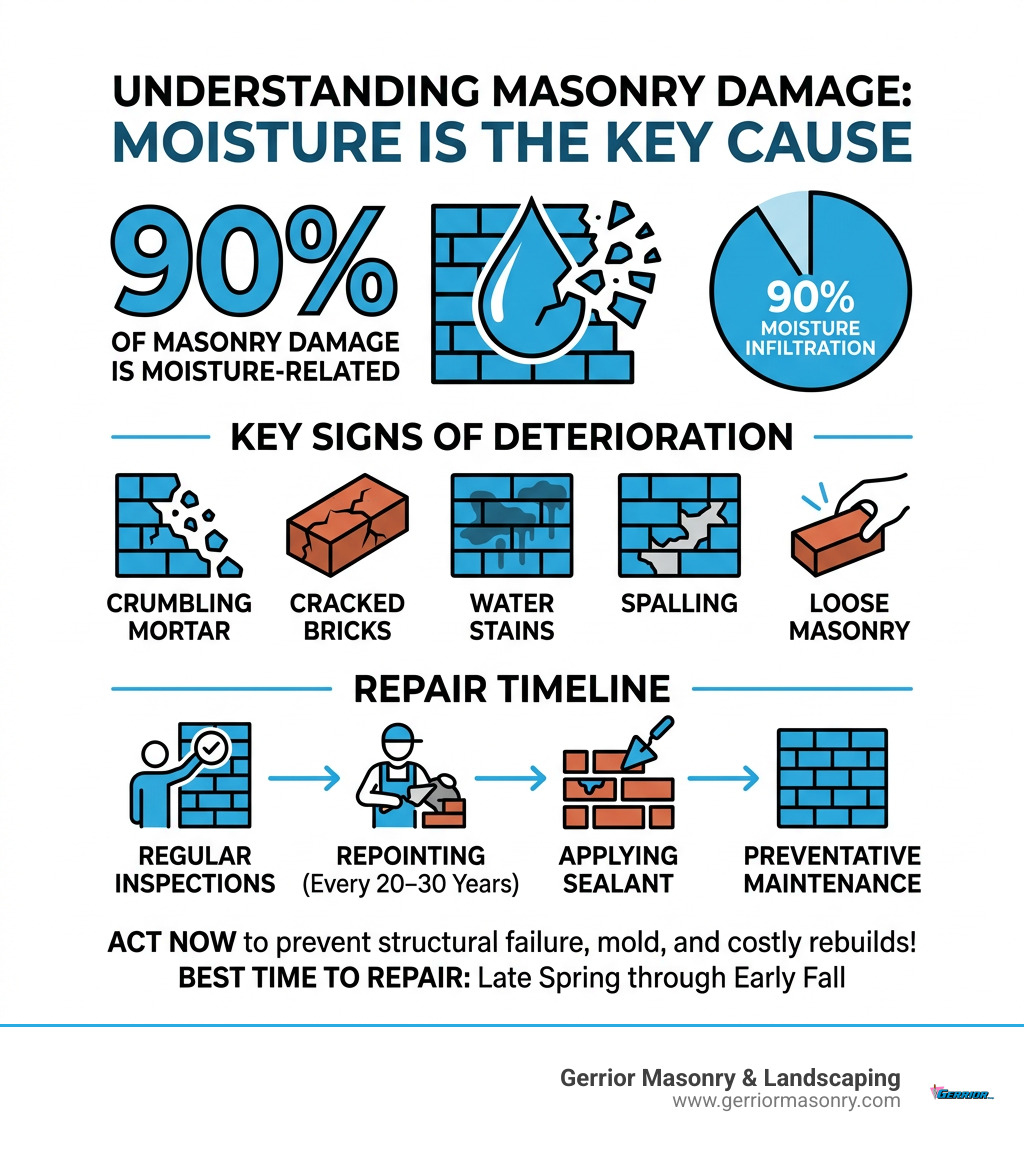
Most common signs you need repairs: crumbling mortar, cracked bricks, water stains, spalling, or loose masonry
Primary cause of damage: moisture infiltration — responsible for roughly 90% of all masonry deterioration
How often to act: repointing should be done every 20–30 years; older homes without recent work are at higher risk
Why it matters now: ignoring small cracks or eroding mortar can lead to structural failure, mold, and costly rebuilds
Best time to repair: late spring through early fall, when temperatures allow mortar to cure properly
Even minor masonry issues can escalate quickly — especially in New England, where harsh winters and freeze-thaw cycles put constant stress on brick and stone. What looks like a hairline crack today can become a serious structural problem within a single winter season.
Approximately 85% of buildings over 30 years old need some form of masonry maintenance. If your home is in that category, the time to act is now — not after the damage spreads.
I’m Joe Gerrior, owner of Gerrior Masonry & Landscape Construction Corp., with over 30 years of experience helping Massachusetts homeowners tackle everything from routine masonry repairs to full foundation and chimney restorations. In this guide, I’ll walk you through everything you need to know to protect your home.
Essential Guide to Identifying and Executing Masonry Repairs
When we talk about Masonry Repairs, we aren’t just talking about making things look “pretty.” We are talking about the science of keeping your home standing. Brick, stone, and concrete are incredibly durable, but they aren’t invincible. Over time, environmental stressors like acid rain, extreme temperature fluctuations, and seismic shifts take their toll on even the most robust structures. Understanding the mechanics of how masonry fails is the first step in ensuring a repair that lasts for decades rather than just a few seasons.
One of the most common issues we see is “spalling.” This is when the face of a brick begins to flake, peel, or pop off entirely. It happens because moisture gets trapped inside the porous material of the brick. When that water freezes, it expands by approximately 9%, creating internal pressure that the brick cannot withstand. This cycle, repeated hundreds of times over a New England winter, eventually pushes the face of the brick right off. If you see this happening, it’s a clear sign that you need brick masonry repair before the structural core of the wall is compromised. Once the hard outer shell of a brick is gone, the soft interior erodes at an accelerated rate.
Another common sight is “efflorescence”—that white, powdery substance you often see on brick walls. While it looks like mold, it’s actually salt deposits left behind when water evaporates. It’s a warning sign that water is moving through your masonry. Scientific research on patching cracks in brick masonry suggests that even small holes should be widened to about 1/8” and filled with compatible cementitious patching material to stop this cycle. If left unaddressed, these salts can lead to “subflorescence,” where the crystals grow inside the pores of the brick, causing internal structural failure that is much harder to fix than a simple surface stain.
Whether it’s your front steps or a retaining wall, we also specialize in stonework repairs. Stone masonry often suffers from structural settling. As the ground shifts in Middlesex County due to moisture levels in the soil, stones can loosen or shift, creating gaps that invite even more water in. This is particularly dangerous for retaining walls, where the weight of the earth behind the wall can cause a total collapse if the mortar joints are not maintained.
Common Signs You Need Professional Masonry Repairs
Identifying the need for Masonry Repairs early can save you thousands of dollars in reconstruction costs. We always tell our clients to keep an eye out for these specific red flags during their annual home inspection:
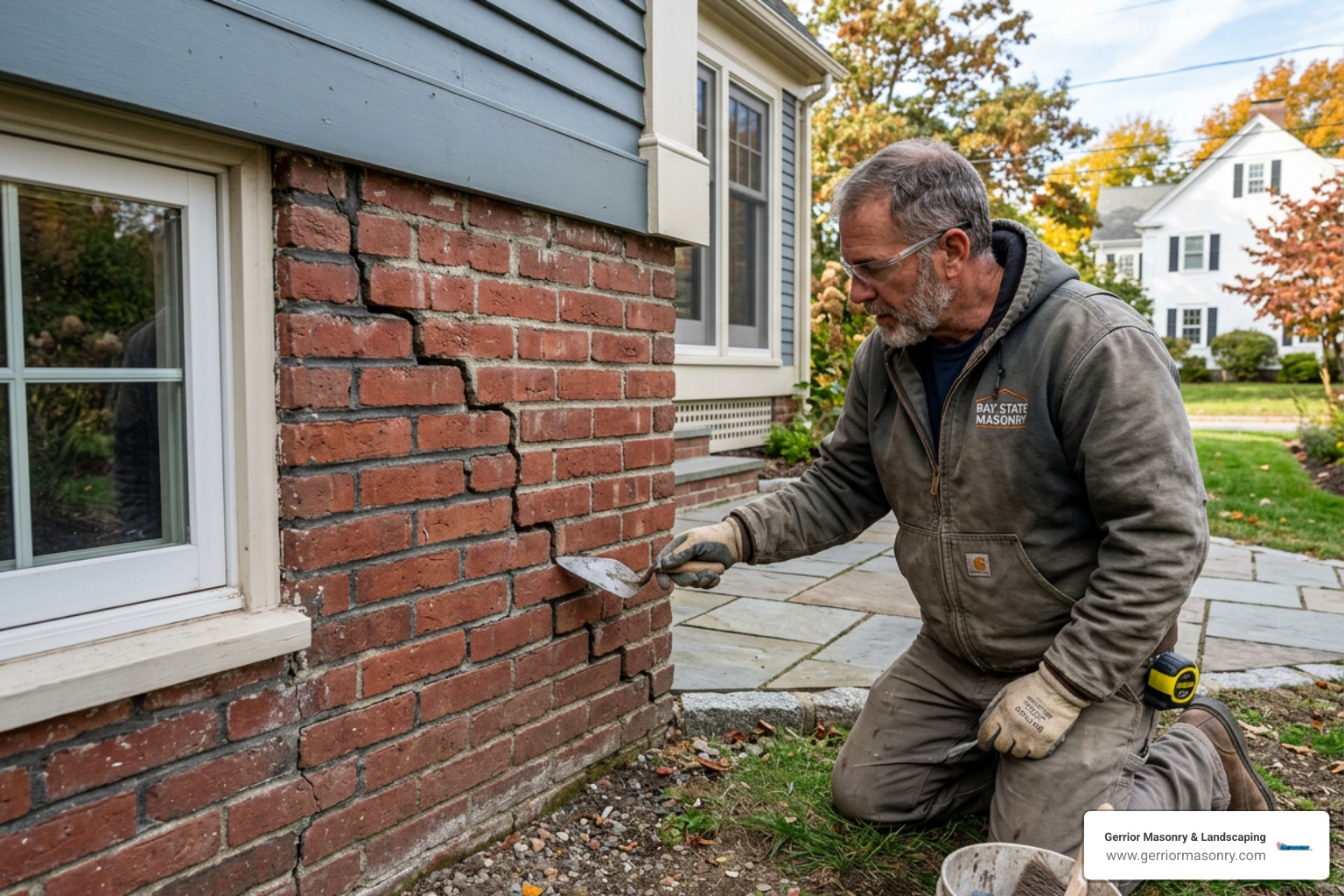
Step Cracks: These are cracks that follow the mortar joints in a “stair-step” pattern. They often indicate foundation settling or structural stress. While vertical cracks might just be minor settling, horizontal cracks are often a sign of hydrostatic pressure from the soil and require immediate professional attention.
Mortar Erosion: If the mortar between your bricks is receding or crumbling away when you touch it, you need brick mortar repairs. You can perform a “scratch test” with a screwdriver; if the mortar falls away like sand, it has lost its lime content and structural integrity. Mortar is designed to be the “sacrificial” part of the wall—it’s supposed to wear out before the bricks do, but it must be replaced to keep the wall stable.
Bulging Walls: If a section of your brick wall looks like it’s “bowing” or leaning outward, this is a serious structural emergency. It often means the internal metal ties holding the masonry to the house frame have rusted through or failed. This requires a complex repair to tie the facade back to the structure.
Deteriorating Sills: We often find that water enters a home through the windows. If your sills are cracked or pitched toward the house instead of away, we recommend repairing masonry window sills immediately to prevent interior rot, drywall damage, and mold growth.
Loose Bricks: If you can physically wiggle a brick or stone, the bond has failed completely. This is common in high-traffic areas like walkways or stairs where the vibration of foot traffic accelerates the breakdown of weakened mortar.
Understanding Tuckpointing and Repointing Techniques
You might hear masons use the terms “repointing” and “tuckpointing” interchangeably, but there is a significant technical difference. Repointing is the actual process of removing damaged mortar to a depth of about 1/2 to 1 inch and replacing it with new, high-quality material. Tuckpointing is a more aesthetic version where two different colors of mortar are used—one to match the brick and a thin “fillet” of a contrasting color—to create the illusion of perfectly thin, crisp joints. This is often seen on high-end historic restorations.
Scientific research on the importance of repointing emphasizes that this isn’t just about looks—it’s about structural survival. Mortar typically lasts 20 to 30 years, whereas bricks can last a century. If you live in a home that is over 50 years old and hasn’t had maintenance, you are likely overdue. When we perform repointing a foundation, we pay close attention to material compatibility. This is especially true for historic masonry repair. Many older Victorian or heritage homes in towns like Concord or Lexington use “soft” bricks fired at lower temperatures. If a modern, hard Portland cement is used to repair them, the mortar will actually crush the bricks as the house naturally expands and contracts. We use traditional lime-based mortars for these projects to ensure the repair lasts another 50 to 100 years without damaging the original materials.
Critical Chimney and Fireplace Masonry Repairs
Your chimney is the most exposed part of your home. It takes the full brunt of New England wind, rain, and snow from all four sides. Because it’s out of sight on the roof, many homeowners ignore it until it starts leaking into the living room or causing a draft issue. Common chimney issues include cracked crowns (the concrete “cap” on top of your chimney). If it cracks, water pours straight down into the brickwork, causing the chimney to rot from the inside out. We also look for flashing leaks, which occur at the metal transition between the chimney and the roof.
If you notice white staining or vegetation growing out of your chimney, it’s time to search for chimney repair near me. Inside the home, we also handle fireplace mortar repair. High heat can cause firebricks to loosen or the mortar to vitrify and crack, which creates a significant fire hazard by allowing heat to reach the wooden framing of your house. In severe cases where the structure is leaning or the internal tiles are shattered, we provide full chimney rebuild services to restore safety and functionality.
The Impact of Weather and Winter Salt Exposure
In Massachusetts, our masonry faces a unique enemy: the freeze-thaw cycle. Water expands by about 9% when it freezes. If that water is trapped inside a crack in your foundation, it acts like a slow-motion jackhammer, widening the gap every time the temperature drops below 32 degrees. This is why a small hairline crack in October can become a major leak by April. Winter salt exposure adds another layer of trouble. While salt keeps our walkways safe, it causes “scaling” on concrete and brick. The salt attracts more moisture, which increases the frequency of freeze-thaw cycles and chemically attacks the paste that holds concrete together. This is why we advocate for foundation crack repair before the snow flies.
To protect your masonry, we recommend breathable silane/siloxane sealants that keep liquid water out but let water vapor escape, ensuring your yard slopes at least 1/4 inch per foot away from the foundation, and addressing foundation leak repair issues immediately to prevent basement flooding. Note: While we understand the challenges of winter, Gerrior Masonry & Landscaping offers commercial snow removal only; we do not provide residential snow services for driveways.
Estimating the Cost of Masonry Restoration
We know that budget is a major factor for every homeowner. While every project is unique based on the materials used and the height of the structure (scaffolding adds cost!), we can provide some general averages. Please note: The following figures are average costs based on internet data and general industry standards. These are not actual quotes for Gerrior Masonry services. For a precise estimate, we must evaluate your specific property in person.
Repair Type
Average Cost Range (Internet Data)
Factors Influencing Price
Brick Replacement
$500 – $2,500
Number of bricks, height of wall, matching vintage bricks.
Parging (Foundation)
$1,000 – $4,500
Linear footage, depth of cracks, surface preparation.
Tuckpointing (per sq ft)
$10 – $30
Accessibility, hardness of old mortar, joint depth.
Chimney Rebuild
$2,000 – $12,000+
Height, number of flues, roof pitch, material choice.
Foundation Crack Repair
$600 – $3,500
Injection type, structural vs. non-structural cracks.
For more detailed breakdowns, you can explore our resources on chimney repair costs or the average cost of foundation repair. The “high end” of these ranges often reflects complex structural work on heritage buildings or large-scale commercial properties that require specialized equipment and historical society approvals.
Conclusion: Protecting Your Investment with Expert Care
Your home is likely your most significant investment, and its masonry is the first line of defense against the elements. Ignoring deteriorating brick or stone doesn’t just hurt your curb appeal—it actively devalues your property and risks your safety. In the competitive Massachusetts real estate market, well-maintained masonry can significantly increase a home’s resale value, while visible cracks or crumbling chimneys can be a major red flag for inspectors and buyers alike. Proper Masonry Repairs executed by a skilled team can extend the life of your structure by 50 to 100 years, providing peace of mind for generations.
At Gerrior Masonry & Landscaping, we take pride in our “old school” approach to quality. We believe that there are no shortcuts when it comes to structural integrity. With owner oversight on every project and a team that has been working together for decades, we ensure that every mortar joint we strike and every stone we set is built to last. We combine traditional craftsmanship with modern materials to provide solutions that are both beautiful and durable.
Whether you need a simple chimney cap repair or a full restoration of a historic facade, we are here to help. Explore our full range of masonry services or learn more about our team and our 30-year history in the trade. Don’t wait for the next New England storm to turn a small crack into a major leak. Contact us today to schedule a professional assessment of your home’s masonry. Gerrior Masonry & Landscape Construction is based in Woburn, MA, and services Middlesex and Essex County, Massachusetts.
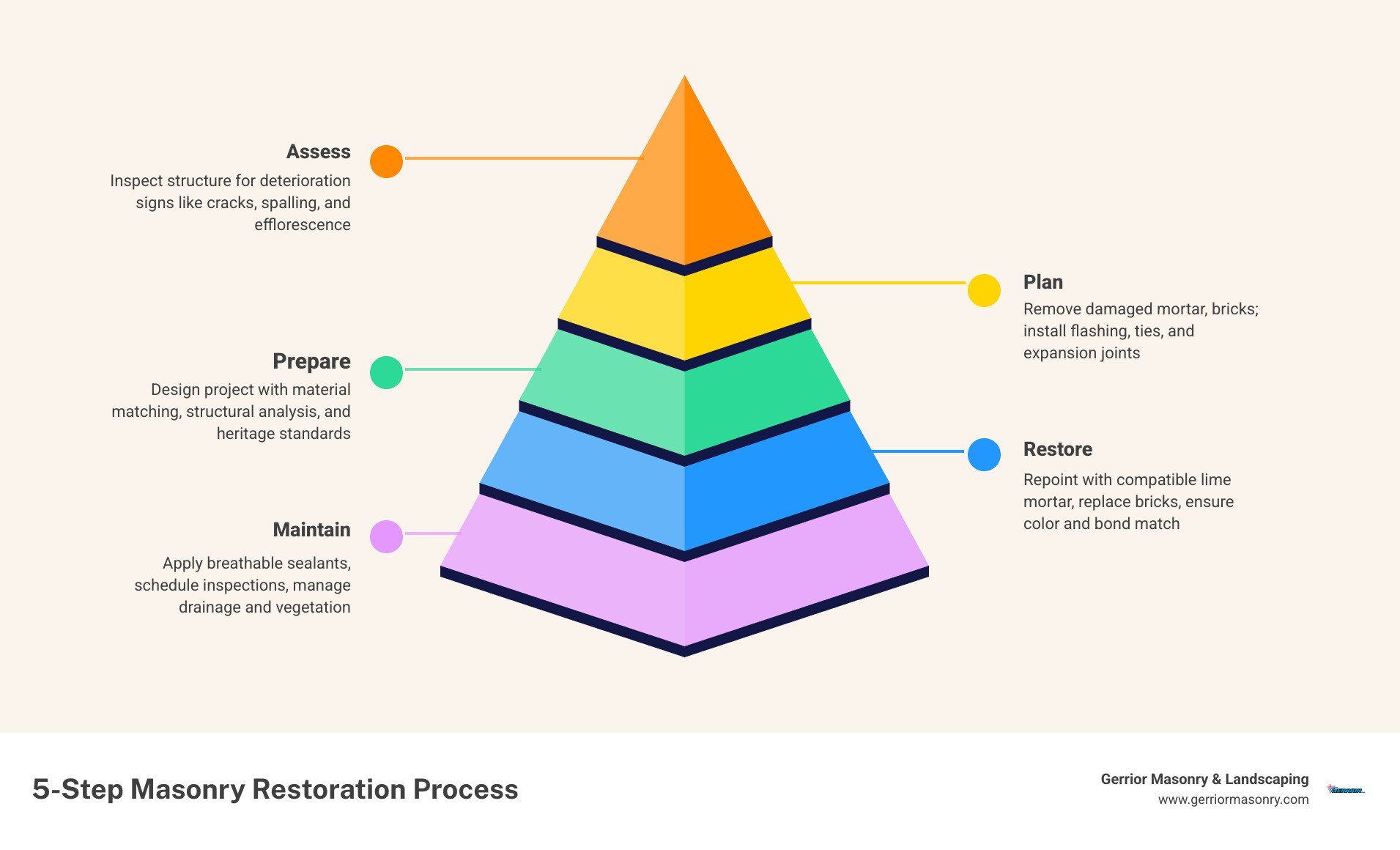
What Is Masonry Restoration — and Why Does It Matter?
Masonry restoration is the process of repairing, stabilizing, and preserving brick, stone, or mortar structures to bring them back to their original condition and function.
Here’s a quick summary of what it involves:
What it is: Repairing or replacing deteriorated brick, stone, mortar, and related structural elements
Why it matters: Protects structural integrity, prevents water damage, and preserves the historical and aesthetic value of a building
When you need it: When you see cracks, spalling, crumbling mortar, staining, or bowing walls
Who should do it: A qualified mason with experience in compatible materials and heritage techniques
How long it lasts: Professional restoration can last 50 years or more — far longer than basic patch repairs
Masonry is one of the most durable building materials on earth. Brick walls can last around 100 years. But the mortar holding them together? That typically needs attention every 20 to 30 years. When that mortar fails — or when moisture, freeze-thaw cycles, or ground movement take their toll — the entire structure becomes vulnerable.
The difference between a quick fix and proper restoration can mean decades of added life for your building. Getting it wrong, especially on an older or historic structure, can cause irreversible damage.
I’m Joe Gerrior, owner of Gerrior Masonry & Landscape Construction Corp., a family-owned business based in Woburn, Massachusetts, with over 34 years of experience in masonry restoration for residential and commercial clients. Throughout that time, I’ve seen how the right restoration approach — using compatible materials and proven techniques — can protect a property for generations to come.
The Essential Role of Professional Masonry Restoration
When we talk about masonry restoration, we are talking about more than just a bucket of cement and a trowel. Many property owners in Middlesex and Essex County confuse restoration with basic repair or “tuckpointing,” but the differences are vital for the longevity of your home or business. Restoration is a proactive, comprehensive approach to building health.
A “basic repair” is often a reactive measure—patching a visible hole or a single crack to stop a leak. Masonry restoration, however, is a holistic approach. It involves returning the entire facade or structure to its original design and functional state. This includes analyzing the original materials to ensure that any new mortar or replacement bricks match the physical properties of the old ones. Without this analysis, new repairs can actually cause more harm than good by creating stress points.
One of the most misunderstood terms in the industry is tuckpointing. While often used interchangeably with repointing, tuckpointing is actually an aesthetic technique where two different colors of mortar are used to create the illusion of very fine, perfectly straight joints. Repointing is the actual structural process of removing old, decayed mortar and replacing it. Following Best Practices is essential because using modern, high-strength materials on historic, softer bricks can actually accelerate the destruction of the wall.
Identifying Signs of Masonry Deterioration
How do you know when your building is crying out for help? Masonry is tough, but it isn’t invincible. In our region, the harsh New England winters are the primary catalyst for damage. Here are the most common signs that you need to look into brick restoration:
Spalling: This is when the face of the brick or stone begins to peel, flake, or pop off. It usually happens because moisture has been trapped inside the unit and then freezes. As water turns to ice, it expands by 9%, creating internal pressure that breaks the surface.
Efflorescence: Have you noticed a white, powdery substance on your walls? That’s salt. Moisture carries soluble salts to the surface, and as the water evaporates, the salt stays behind. While it can be cleaned, it’s a major red flag that water is moving through your masonry. If salts crystallize beneath the surface (sub-florescence), they can cause internal structural decay.
Cracked Mortar: If the mortar is crumbling or missing in sections, the structural “glue” of your building is gone. Mortar joints make up about 20% of the masonry facade, so their failure is a significant issue for the building’s stability.
Step Cracking: Cracks that follow the mortar joints in a “stair-step” pattern often indicate foundation settlement or structural shifting. These cracks suggest the building is under uneven stress.
Bowing or Bulging Walls: If your brickwork looks like it’s “pregnant” or leaning, the internal ties holding the masonry to the frame have likely failed. This is a safety emergency.
The Science of Mortar Selection in Masonry Restoration
This is where many DIY attempts and general contractors go wrong. You can’t just pick up a bag of pre-mixed mortar from a big-box store and use it on a house built in 1900. Historic masonry was typically built using lime mortar, which is softer and more “breathable” than modern mortars. Modern mortars contain high amounts of Portland cement, which makes them very hard and impermeable.
If we put a hard, modern mortar into a wall of soft, historic bricks, the bricks will be the weakest point. When the wall shifts or expands, the bricks will crack instead of the mortar. Mortar should always be the “sacrificial” element of the wall. According to Scientific research on patching brick cracks, the new mortar must match the original in color, texture, and—most importantly—compressive strength and permeability. We often send samples of original mortar to a lab to ensure a perfect match.
Key Techniques: Repointing and Brick Replacement
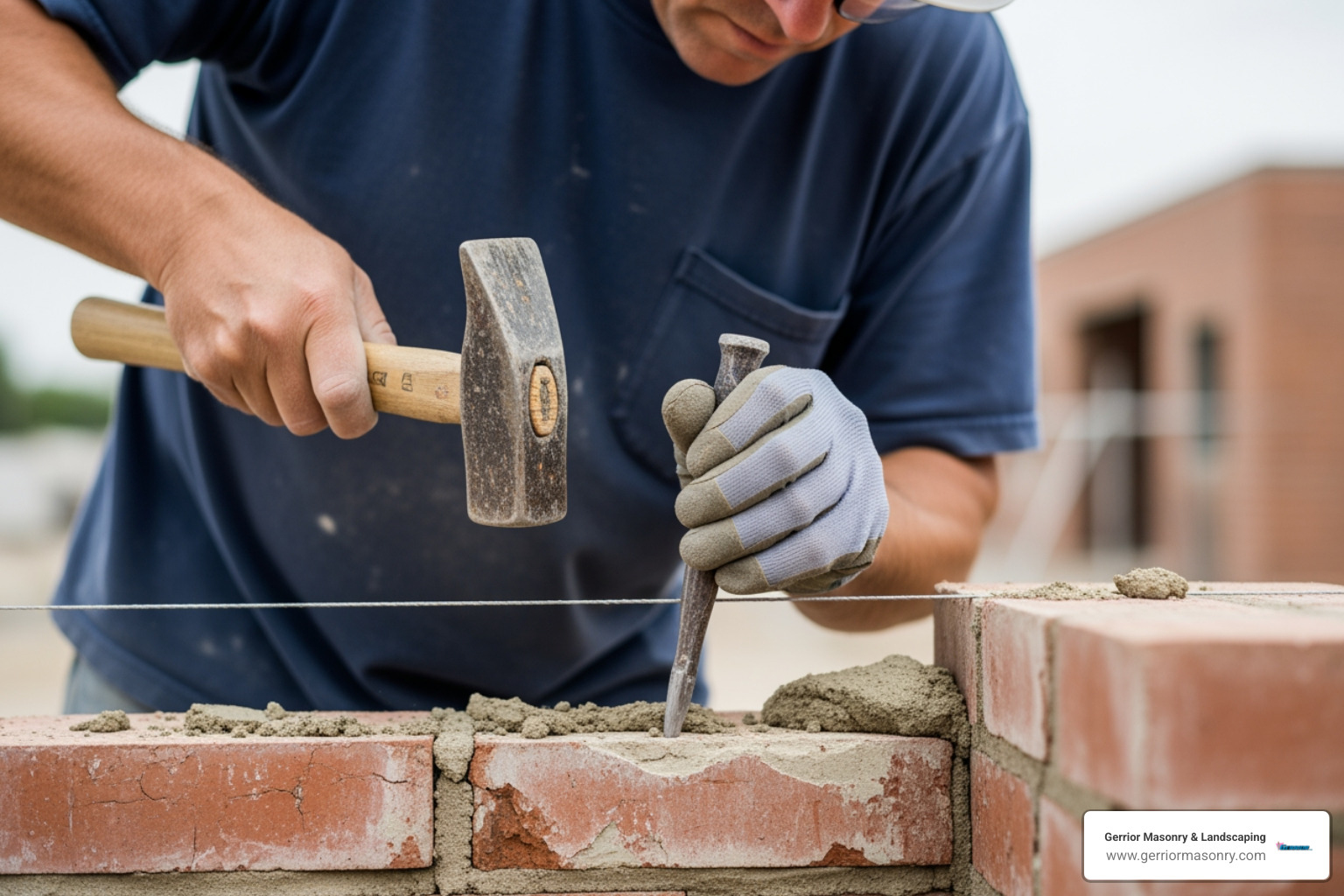
A successful masonry restoration project relies on precision. The process of repointing begins with joint preparation. We carefully remove the old mortar to a specific depth (usually twice the width of the joint) using specialized hand tools or small pneumatic chisels to avoid damaging the edges of the bricks. Once the joints are clean, we apply the new, custom-matched mortar in layers. This ensures there are no air pockets and that the bond is solid. For units that are beyond repair, we perform brick replacement, matching the size, density, and color of the original clay to ensure the repair is invisible and the building remains a cohesive unit. By using masonry repair services that respect traditional heritage techniques, we ensure the building’s longevity.
Planning and Executing a Restoration Project
Restoring a building is a journey that requires careful planning. It’s not just about what you see on the outside; it’s about the hidden structural elements that keep the building standing and protected from the elements.
Structural Elements: The Hidden Heroes
During a masonry restoration, we often have to address the “bones” of the facade:
Lintels: These are the horizontal beams (often steel or stone) that support the masonry over windows and doors. Steel lintels often rust, causing them to expand and lift the brickwork—a phenomenon known as “rust jacking.” This can exert thousands of pounds of pressure, causing diagonal cracks at the corners of openings.
Wall Ties: In cavity walls, metal ties hold the outer brick layer to the inner structure. Over decades, these can corrode and snap, leading to bulging walls. Replacing these ties is critical for structural safety.
Flashing and Weep Holes: Flashing is the internal waterproof membrane that directs water out of the wall through “weep holes.” If your flashing is cracked or your weep holes are blocked by paint or debris, water will sit inside your walls and rot the frame.
Expansion Joints: Buildings need to breathe and move. We install or repair expansion joints to allow the masonry to expand and contract without cracking during the extreme temperature swings we see in Massachusetts.
The Cost of Doing It Right
It is important to understand that masonry restoration is an investment. While a quick patch job might cost a few hundred dollars, it usually fails within 2 to 5 years. A professional restoration is designed to last 50 years or more. The labor-intensive nature of hand-tooling and custom material matching accounts for the higher initial cost.
Note: The following table represents average internet costs based on general data and does not reflect actual pricing for Gerrior Masonry & Landscaping services.
Service Type
Average Internet Cost (Low End)
Average Internet Cost (High End / Specialist)
Basic Spot Repointing
$500
$2,500+
Full Facade Repointing
$5,000
$25,000+
Lintel Replacement (per window)
$1,000
$4,500+
Historic Brick Restoration (per sq. ft.)
$15
$60+
Protecting Structural Integrity and Heritage Value
For many of our clients in towns like Lexington, Concord, and Salem, their buildings are part of local history. We adhere to the Secretary of the Interior’s Standards for the Treatment of Historic Properties. These guidelines emphasize “repairing rather than replacing” and ensuring that any new work is physically and visually compatible with the original. This preservation isn’t just about looks; it’s about community value. A well-restored building maintains higher property values and contributes to the character of the neighborhood. Furthermore, identifying Unreinforced Masonry Buildings (UMBs) is a critical safety step. These older structures lack steel reinforcement and are at much higher risk during seismic events. Restoration allows us to retrofit these buildings, making them safe for modern occupancy. You can find more info about historic masonry repair on our dedicated guide page.
Long-Term Maintenance for Masonry Restoration Projects
Once the restoration is complete, the goal is to make sure you don’t need us again for a long time! Maintenance is key to protecting your investment:
Gentle Cleaning: Avoid high-pressure power washing, which can strip the protective “crust” off old bricks and force water deep into the wall. We recommend low-pressure water or gentle chemical cleaners.
Breathable Sealants: If you choose to seal your masonry, it must be a silane-siloxane based breathable water repellent. Never use “waterproof” paints or coatings that trap moisture inside the brick, leading to rapid decay.
Annual Inspections: Check your gutters and downspouts. 90% of masonry damage starts with a leaky gutter dumping water down the side of the building. Ensure the ground slopes away from the foundation to prevent hydrostatic pressure issues.
Vegetation Removal: Ivy looks charming, but its roots dig into mortar joints and hold moisture against the wall. Keep the vines off the brick to prevent accelerated mortar failure.
For those with landscape features, our guide on stone wall restoration offers specific tips for keeping your outdoor masonry in top shape.
Choosing the Right Contractor for Your Property
Choosing a mason is a big decision. You are trusting someone with the structural integrity and the “face” of your most valuable asset. At Gerrior Masonry & Landscaping, we’ve spent over 30 years perfecting the art of restoration.
Why does that matter? Because experience tells us things a textbook can’t. We know how the soil in Woburn behaves differently than the coastal air in Beverly or Marblehead. We know which local quarries provide the best stone matches for 19th-century foundations.
Every project we take on features owner oversight. Joe Gerrior is on-site, ensuring that the mortar is mixed correctly, the joints are cut to the right depth, and the site is kept clean. We don’t just “do a job”; we preserve a piece of Massachusetts history.
Whether you need a simple chimney repair or a full-scale historic facade restoration, we have the tools, the team, and the passion to do it right the first time.
If you’ve noticed any of the warning signs mentioned in this guide—cracks, peeling bricks, or white salt stains—don’t wait. Masonry issues are like a toothache; they never get better (or cheaper) on their own.
Gerrior Masonry & Landscape Construction is based in Woburn, MA, and services Middlesex and Essex County, Massachusetts.