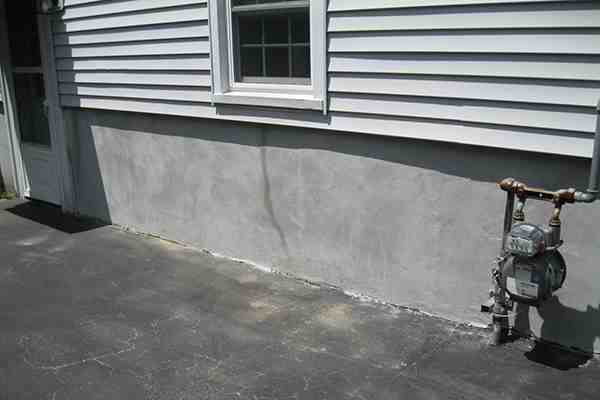
Why Your Home Needs Masonry Repairs Before Damage Gets Worse
Masonry repairs are the process of restoring damaged brick, stone, or concrete structures to stop further deterioration and protect your home’s structural integrity.
Here’s a quick overview of what you need to know:
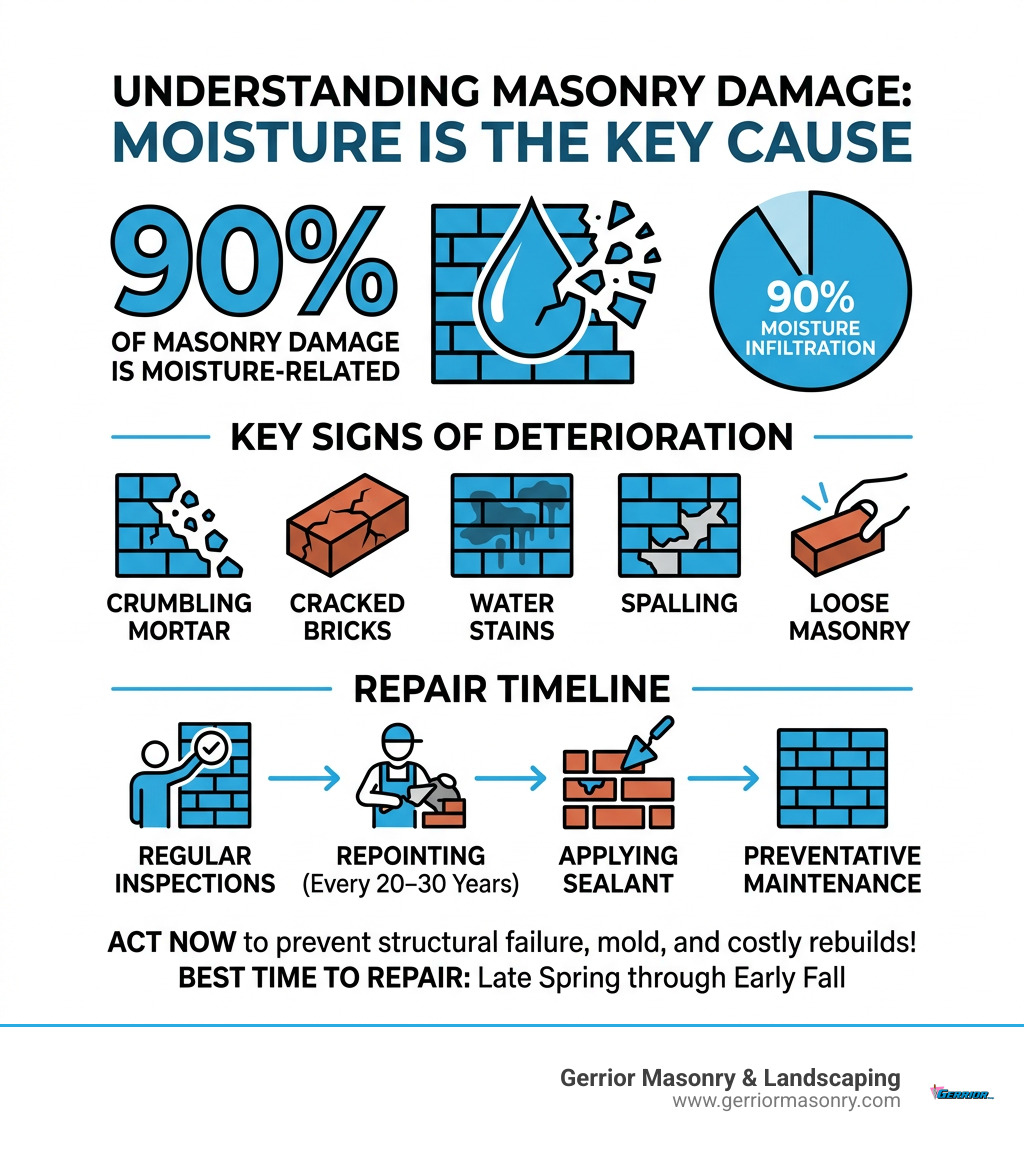
- Most common signs you need repairs: crumbling mortar, cracked bricks, water stains, spalling, or loose masonry
- Primary cause of damage: moisture infiltration — responsible for roughly 90% of all masonry deterioration
- How often to act: repointing should be done every 20–30 years; older homes without recent work are at higher risk
- Why it matters now: ignoring small cracks or eroding mortar can lead to structural failure, mold, and costly rebuilds
- Best time to repair: late spring through early fall, when temperatures allow mortar to cure properly
Even minor masonry issues can escalate quickly — especially in New England, where harsh winters and freeze-thaw cycles put constant stress on brick and stone. What looks like a hairline crack today can become a serious structural problem within a single winter season.
Approximately 85% of buildings over 30 years old need some form of masonry maintenance. If your home is in that category, the time to act is now — not after the damage spreads.
I’m Joe Gerrior, owner of Gerrior Masonry & Landscape Construction Corp., with over 30 years of experience helping Massachusetts homeowners tackle everything from routine masonry repairs to full foundation and chimney restorations. In this guide, I’ll walk you through everything you need to know to protect your home.
Easy Masonry Repairs word list:
Essential Guide to Identifying and Executing Masonry Repairs
When we talk about Masonry Repairs, we aren’t just talking about making things look “pretty.” We are talking about the science of keeping your home standing. Brick, stone, and concrete are incredibly durable, but they aren’t invincible. Over time, environmental stressors like acid rain, extreme temperature fluctuations, and seismic shifts take their toll on even the most robust structures. Understanding the mechanics of how masonry fails is the first step in ensuring a repair that lasts for decades rather than just a few seasons.
One of the most common issues we see is “spalling.” This is when the face of a brick begins to flake, peel, or pop off entirely. It happens because moisture gets trapped inside the porous material of the brick. When that water freezes, it expands by approximately 9%, creating internal pressure that the brick cannot withstand. This cycle, repeated hundreds of times over a New England winter, eventually pushes the face of the brick right off. If you see this happening, it’s a clear sign that you need brick masonry repair before the structural core of the wall is compromised. Once the hard outer shell of a brick is gone, the soft interior erodes at an accelerated rate.
Another common sight is “efflorescence”—that white, powdery substance you often see on brick walls. While it looks like mold, it’s actually salt deposits left behind when water evaporates. It’s a warning sign that water is moving through your masonry. Scientific research on patching cracks in brick masonry suggests that even small holes should be widened to about 1/8” and filled with compatible cementitious patching material to stop this cycle. If left unaddressed, these salts can lead to “subflorescence,” where the crystals grow inside the pores of the brick, causing internal structural failure that is much harder to fix than a simple surface stain.
Whether it’s your front steps or a retaining wall, we also specialize in stonework repairs. Stone masonry often suffers from structural settling. As the ground shifts in Middlesex County due to moisture levels in the soil, stones can loosen or shift, creating gaps that invite even more water in. This is particularly dangerous for retaining walls, where the weight of the earth behind the wall can cause a total collapse if the mortar joints are not maintained.
Common Signs You Need Professional Masonry Repairs
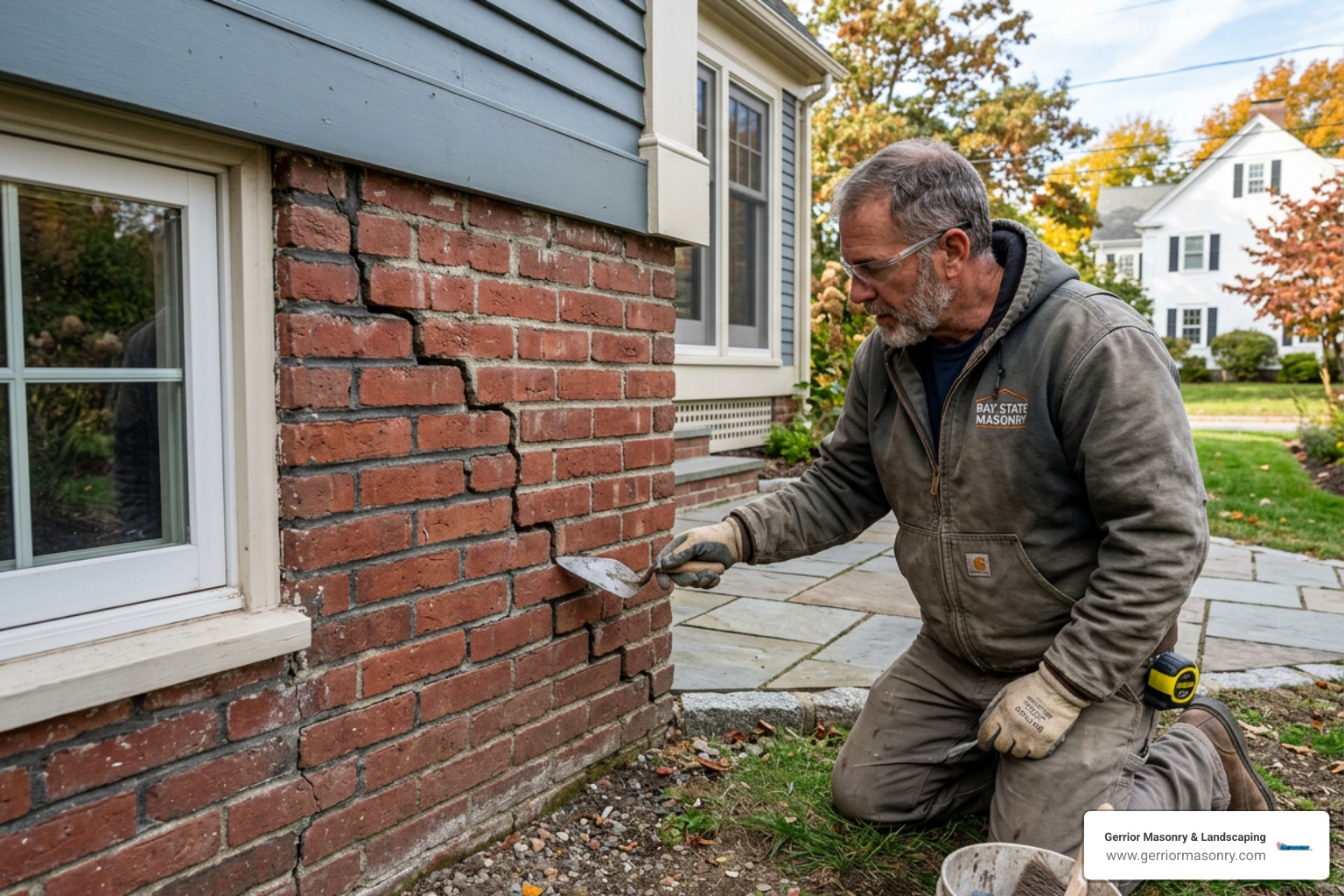
Identifying the need for Masonry Repairs early can save you thousands of dollars in reconstruction costs. We always tell our clients to keep an eye out for these specific red flags during their annual home inspection:
- Step Cracks: These are cracks that follow the mortar joints in a “stair-step” pattern. They often indicate foundation settling or structural stress. While vertical cracks might just be minor settling, horizontal cracks are often a sign of hydrostatic pressure from the soil and require immediate professional attention.
- Mortar Erosion: If the mortar between your bricks is receding or crumbling away when you touch it, you need brick mortar repairs. You can perform a “scratch test” with a screwdriver; if the mortar falls away like sand, it has lost its lime content and structural integrity. Mortar is designed to be the “sacrificial” part of the wall—it’s supposed to wear out before the bricks do, but it must be replaced to keep the wall stable.
- Bulging Walls: If a section of your brick wall looks like it’s “bowing” or leaning outward, this is a serious structural emergency. It often means the internal metal ties holding the masonry to the house frame have rusted through or failed. This requires a complex repair to tie the facade back to the structure.
- Deteriorating Sills: We often find that water enters a home through the windows. If your sills are cracked or pitched toward the house instead of away, we recommend repairing masonry window sills immediately to prevent interior rot, drywall damage, and mold growth.
- Loose Bricks: If you can physically wiggle a brick or stone, the bond has failed completely. This is common in high-traffic areas like walkways or stairs where the vibration of foot traffic accelerates the breakdown of weakened mortar.
Understanding Tuckpointing and Repointing Techniques
You might hear masons use the terms “repointing” and “tuckpointing” interchangeably, but there is a significant technical difference. Repointing is the actual process of removing damaged mortar to a depth of about 1/2 to 1 inch and replacing it with new, high-quality material. Tuckpointing is a more aesthetic version where two different colors of mortar are used—one to match the brick and a thin “fillet” of a contrasting color—to create the illusion of perfectly thin, crisp joints. This is often seen on high-end historic restorations.
Scientific research on the importance of repointing emphasizes that this isn’t just about looks—it’s about structural survival. Mortar typically lasts 20 to 30 years, whereas bricks can last a century. If you live in a home that is over 50 years old and hasn’t had maintenance, you are likely overdue. When we perform repointing a foundation, we pay close attention to material compatibility. This is especially true for historic masonry repair. Many older Victorian or heritage homes in towns like Concord or Lexington use “soft” bricks fired at lower temperatures. If a modern, hard Portland cement is used to repair them, the mortar will actually crush the bricks as the house naturally expands and contracts. We use traditional lime-based mortars for these projects to ensure the repair lasts another 50 to 100 years without damaging the original materials.
Critical Chimney and Fireplace Masonry Repairs
Your chimney is the most exposed part of your home. It takes the full brunt of New England wind, rain, and snow from all four sides. Because it’s out of sight on the roof, many homeowners ignore it until it starts leaking into the living room or causing a draft issue. Common chimney issues include cracked crowns (the concrete “cap” on top of your chimney). If it cracks, water pours straight down into the brickwork, causing the chimney to rot from the inside out. We also look for flashing leaks, which occur at the metal transition between the chimney and the roof.
If you notice white staining or vegetation growing out of your chimney, it’s time to search for chimney repair near me. Inside the home, we also handle fireplace mortar repair. High heat can cause firebricks to loosen or the mortar to vitrify and crack, which creates a significant fire hazard by allowing heat to reach the wooden framing of your house. In severe cases where the structure is leaning or the internal tiles are shattered, we provide full chimney rebuild services to restore safety and functionality.
The Impact of Weather and Winter Salt Exposure
In Massachusetts, our masonry faces a unique enemy: the freeze-thaw cycle. Water expands by about 9% when it freezes. If that water is trapped inside a crack in your foundation, it acts like a slow-motion jackhammer, widening the gap every time the temperature drops below 32 degrees. This is why a small hairline crack in October can become a major leak by April. Winter salt exposure adds another layer of trouble. While salt keeps our walkways safe, it causes “scaling” on concrete and brick. The salt attracts more moisture, which increases the frequency of freeze-thaw cycles and chemically attacks the paste that holds concrete together. This is why we advocate for foundation crack repair before the snow flies.
To protect your masonry, we recommend breathable silane/siloxane sealants that keep liquid water out but let water vapor escape, ensuring your yard slopes at least 1/4 inch per foot away from the foundation, and addressing foundation leak repair issues immediately to prevent basement flooding. Note: While we understand the challenges of winter, Gerrior Masonry & Landscaping offers commercial snow removal only; we do not provide residential snow services for driveways.
Estimating the Cost of Masonry Restoration
We know that budget is a major factor for every homeowner. While every project is unique based on the materials used and the height of the structure (scaffolding adds cost!), we can provide some general averages. Please note: The following figures are average costs based on internet data and general industry standards. These are not actual quotes for Gerrior Masonry services. For a precise estimate, we must evaluate your specific property in person.
| Repair Type | Average Cost Range (Internet Data) | Factors Influencing Price |
|---|---|---|
| Brick Replacement | $500 – $2,500 | Number of bricks, height of wall, matching vintage bricks. |
| Parging (Foundation) | $1,000 – $4,500 | Linear footage, depth of cracks, surface preparation. |
| Tuckpointing (per sq ft) | $10 – $30 | Accessibility, hardness of old mortar, joint depth. |
| Chimney Rebuild | $2,000 – $12,000+ | Height, number of flues, roof pitch, material choice. |
| Foundation Crack Repair | $600 – $3,500 | Injection type, structural vs. non-structural cracks. |
For more detailed breakdowns, you can explore our resources on chimney repair costs or the average cost of foundation repair. The “high end” of these ranges often reflects complex structural work on heritage buildings or large-scale commercial properties that require specialized equipment and historical society approvals.
Conclusion: Protecting Your Investment with Expert Care
Your home is likely your most significant investment, and its masonry is the first line of defense against the elements. Ignoring deteriorating brick or stone doesn’t just hurt your curb appeal—it actively devalues your property and risks your safety. In the competitive Massachusetts real estate market, well-maintained masonry can significantly increase a home’s resale value, while visible cracks or crumbling chimneys can be a major red flag for inspectors and buyers alike. Proper Masonry Repairs executed by a skilled team can extend the life of your structure by 50 to 100 years, providing peace of mind for generations.
At Gerrior Masonry & Landscaping, we take pride in our “old school” approach to quality. We believe that there are no shortcuts when it comes to structural integrity. With owner oversight on every project and a team that has been working together for decades, we ensure that every mortar joint we strike and every stone we set is built to last. We combine traditional craftsmanship with modern materials to provide solutions that are both beautiful and durable.
Whether you need a simple chimney cap repair or a full restoration of a historic facade, we are here to help. Explore our full range of masonry services or learn more about our team and our 30-year history in the trade. Don’t wait for the next New England storm to turn a small crack into a major leak. Contact us today to schedule a professional assessment of your home’s masonry. Gerrior Masonry & Landscape Construction is based in Woburn, MA, and services Middlesex and Essex County, Massachusetts.