On this page
Foundation leak repair starts with finding the exact spot where water gets through the wall and the reason it is there. In most Massachusetts basements the water comes in through a crack, the joint where the wall meets the floor, an old mortar joint in a stone or block wall, or the bulkhead sill. The reason is usually outside: roof water, soil that slopes toward the house, or a downspout emptying against the foundation.
A lasting fix deals with both. The opening in the wall gets repaired, and the water that was pushing on that spot gets sent somewhere else. Patch only the crack and the water finds the next weak joint. Fix only the drainage and an open joint can keep seeping.
This guide covers how to read a leak, what each type of crack means, and how foundation leaks are fixed from the masonry side. It comes from Gerrior Masonry & Landscape Construction Corp. in Woburn, MA, which repairs stone, block and poured foundations and installs the drainage that keeps them dry.

Where foundation leaks come from
Water follows the easiest path. The common entry points are:
- Cracks in poured concrete or block walls.
- The wall-to-floor joint. The floor slab is poured separately from the walls, and water under pressure in the soil can rise through that seam.
- Mortar joints in stone and block. Older fieldstone and rubble foundations around Woburn depend on mortar that washes out over decades. Block walls are hollow, so water can enter the cores and come out far from where it got in.
- Form-tie holes in poured walls, the small round marks left from the forms, which sometimes seep.
- Pipe and wire openings where a water line, oil fill or electrical conduit passes through the wall.
- The bulkhead, especially where the door frame meets the concrete sill and at the bottom of the stairwell. See why bulkheads leak.
Why the water is there
When soil against a foundation stays saturated, the water in it pushes on the wall. That push is called hydrostatic pressure, and it is why a wall can stay dry for years and then leak after a long rain or a spring thaw. In our area three things make it worse:
- Roof water dumped at the wall. A downspout that empties beside the foundation can soak the soil in one spot every storm.
- Grading that slopes toward the house, often because backfill around the foundation settled over the years.
- Freeze-thaw. Wet soil freezes, expands and pushes on the wall each winter, which opens cracks and loosens old mortar a little more every year.
Clay soil and ledge hold water near the house instead of letting it soak away, so homes built on them tend to see more of this.
Basement cracks and leaks: what each crack means
- Hairline vertical crack in poured concrete, dry. Often shrinkage from when the concrete cured. Watch it. It may only need sealing.
- Vertical crack that leaks. A water problem first. Seal the crack and deal with the water outside it.
- Wide crack, or one getting wider. Something is moving. Have it looked at before sealing it.
- Horizontal crack, or a wall bowing inward. Soil pressure is pushing the wall. This needs a professional look soon, and repair means straightening and reinforcing the wall, not just patching it.
- Stair-step crack along block mortar joints. Usually settlement or soil pressure. Have it assessed.
- Loose stones or sand at the base of a fieldstone wall. The mortar has failed. The fix is repointing, covered in our stone foundation repair post.
How to fix a foundation leak
Start outside
Before anyone touches the wall, walk the outside of the house during a rain if you can. Look at where each downspout empties, which way the ground slopes in the first several feet from the wall, and whether water collects at the bulkhead or a window well. The fix often starts here, because it removes the water that is causing the leak:
- Regrading so soil falls away from the foundation.
- Piping downspouts underground to a dry well or another safe outlet.
- A French drain to collect water before it reaches the wall.
Gutter repair, cleaning and installation are often handled by a gutter company, but where the downspouts go after they reach the ground is part of our drainage work. Our post on drainage around a house foundation goes deeper on that.
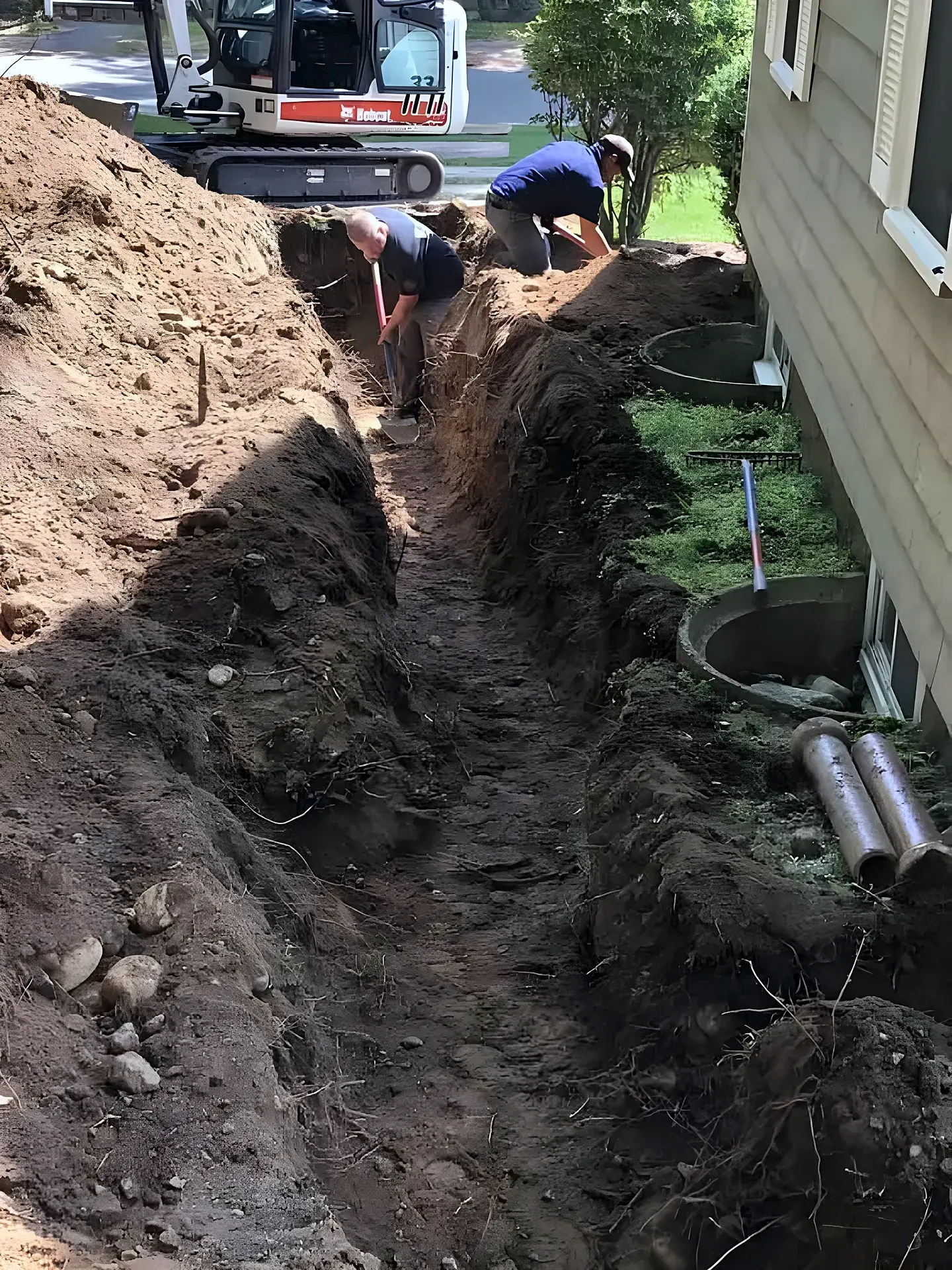
Then repair the wall
- Cracks in poured or block walls are cleaned out and sealed. A wall that has moved needs reinforcing, not just a patch.
- Stone and fieldstone walls are repointed: the failed mortar is raked out, new mortar suited to old stone is packed deep into the joints, and loose stones are reset.
- Bulkhead sills and frames are rebuilt or resealed so water stops getting in under the door.
Some repairs are done from inside the basement. Others need the outside face of the wall exposed, which means digging. Any digging starts with a Dig Safe notice. Massachusetts law requires it at least 72 hours ahead, not counting weekends and holidays, according to Dig Safe.
Best foundation waterproofing: outside or inside?
There are two broad approaches, and they do different jobs:
- Exterior waterproofing keeps water out of the wall. The soil is dug away, the wall is repaired, a waterproof membrane or coating goes on the outside face, and drainage is added at the base. It is the most thorough approach and the most digging.
- Interior systems manage water that has already come through. A drainage channel is cut in along the base of the wall (a basement perimeter drain channel) and carries water to a sump pump that lifts it out. Interior sealers and paints only help with dampness. They don't hold back water under pressure.
Which approach a house needs comes out of the inspection. Our foundation work starts with the masonry and the outside drainage. If the basement also needs an interior drainage channel and sump pump, we will explain why and how it fits with the outside work.
When to call a mason
Call for a professional look if water comes in during most rains, if a crack is horizontal or getting wider, if a wall leans, or if a stone wall is dropping sand and mortar. Our foundation and bulkhead repair page explains how we trace the water and repair the wall. For what decides the price, see the foundation repair cost guide.
Larry P. of Reading, MA, wrote after a drainage job: "Joe and his crew just finished up a drainage job for us. They were on time, great to work with (as usual) and the guys always friendly. They were very careful in the yard and Joe was excellent with the little excavator."
Common questions
Can a foundation leak be fixed from the inside?
Some can. A crack in a poured wall is often sealed from inside. But if water is pressing on the wall from outside, an inside repair alone may only move the leak. Fixing the drainage outside usually comes first.
Is a leaking foundation crack serious?
A thin vertical crack that leaks is mostly a water problem. A horizontal crack, a wide or growing crack, or a bowing wall is a structural warning and should be looked at soon.
Why does my basement only leak in spring?
Snowmelt and spring rain saturate the soil while the ground below may still be frozen, so water builds up against the wall. Grading and downspout fixes help most with this pattern.
Will sealing the inside walls stop a leak?
Sealers help with dampness, not with water under pressure. If water is coming through, find and fix where it enters.
Gerrior Masonry & Landscape Construction Corp. is a family-owned company in Woburn with over 30 years in masonry. Owner Joseph Gerrior oversees each project, we are fully insured, and our work is guaranteed. To find out where your water is getting in, call (781) 933-4157 or request a free estimate.

A family-owned masonry and hardscape company at 245 Salem St, Woburn, MA, in business for over 30 years. See our foundation repair work.