
Chimney Repair and Replacement: 10 Powerful Warning Signs 2025
When Your Chimney Needs Help: Fix It or Replace It?
Chimney repair and replacement decisions can be daunting for homeowners faced with a deteriorating chimney. Here’s what you need to know right away:
| Repair Your Chimney When: | Replace Your Chimney When: |
|---|---|
| • Minor cracks in mortar joints | • Severe structural damage or leaning |
| • Damaged chimney crown or cap | • Extensive water damage throughout |
| • Flashing issues causing small leaks | • Previous chimney fire damage |
| • Minor brick spalling or efflorescence | • Outdated construction no longer safe |
| • Damaged damper or firebox | • Repair costs exceed 50% of replacement |
A neglected chimney isn’t just an eyesore – it’s a serious safety hazard. When water infiltrates your chimney through cracks or damaged mortar, it can cause extensive structural damage, especially during freeze-thaw cycles. This deterioration creates the perfect conditions for chimney fires and carbon monoxide leaks.
The average chimney repair costs between $250-$1,500 for minor fixes, while full replacement can run from $8,000-$30,000 depending on size, materials, and complexity. Annual inspections by a certified professional can help catch small issues before they require major intervention.
I’m Joe Gerrior, owner of Gerrior Masonry & Landscape Construction, and I’ve been handling professional chimney repair and replacement projects for over 34 years throughout Massachusetts, helping homeowners maintain safe and functional fireplaces.
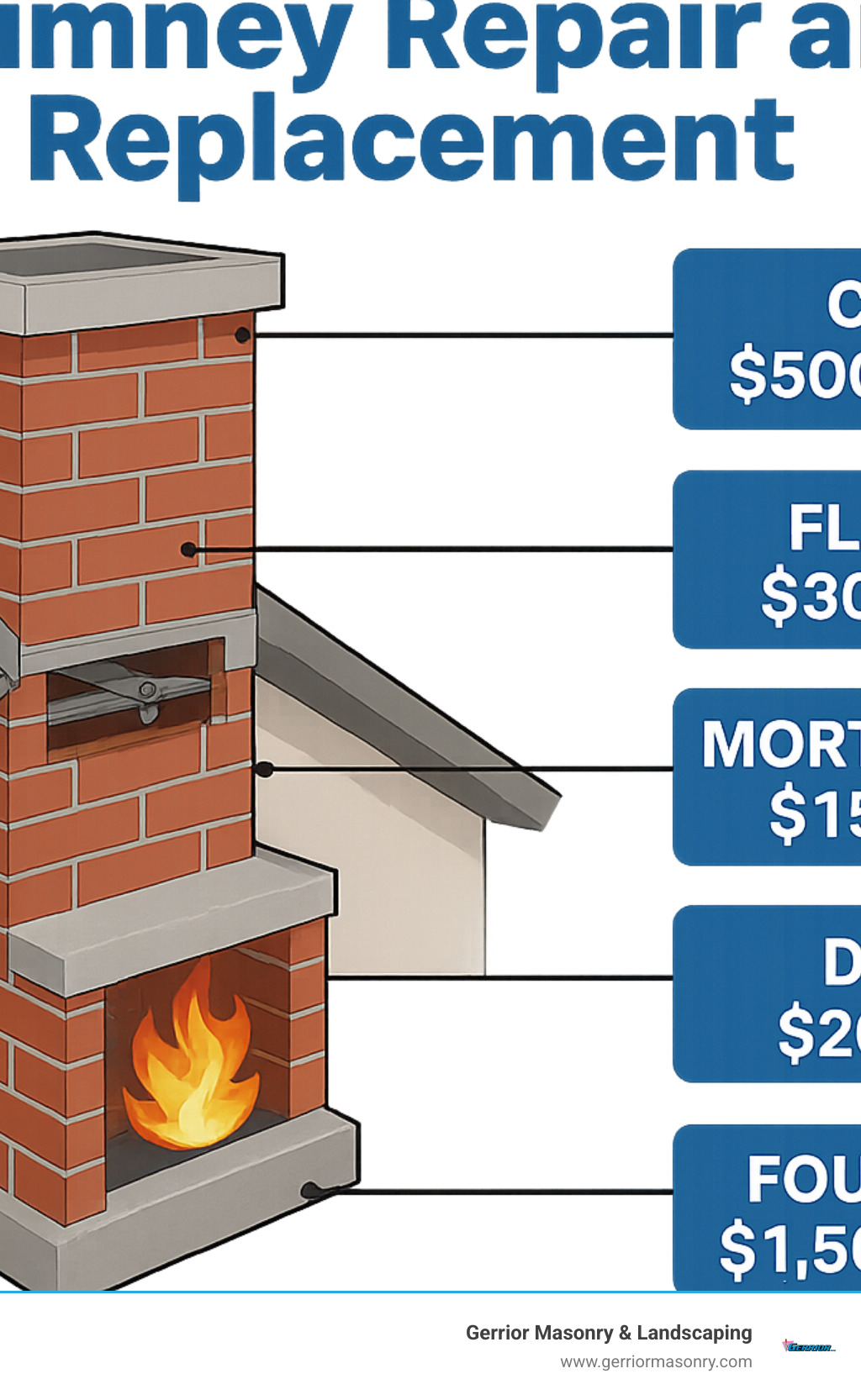
Chimney repair and replacement terms explained:
– chimney chase cover replacement cost
– chimney flashing replacement
– chimney flue replacement
What You’ll Learn
In this comprehensive guide, we’ll walk you through everything you need to know about chimney maintenance, from identifying early warning signs to making informed decisions about repair versus replacement. We’ll cover cost considerations, the repair and replacement process, and provide essential maintenance tips to extend your chimney’s lifespan.
Whether you’re a new homeowner wondering about that aging chimney on your roof or you’ve noticed some concerning signs like water stains or crumbling bricks, this guide will help you understand when to act and what options are available to you.
Spotting Trouble Early: 10 Red Flags
Catching chimney problems early can save you thousands in repair costs and prevent dangerous situations. As a homeowner, knowing what to look for can make all the difference between a simple repair and a complete replacement.
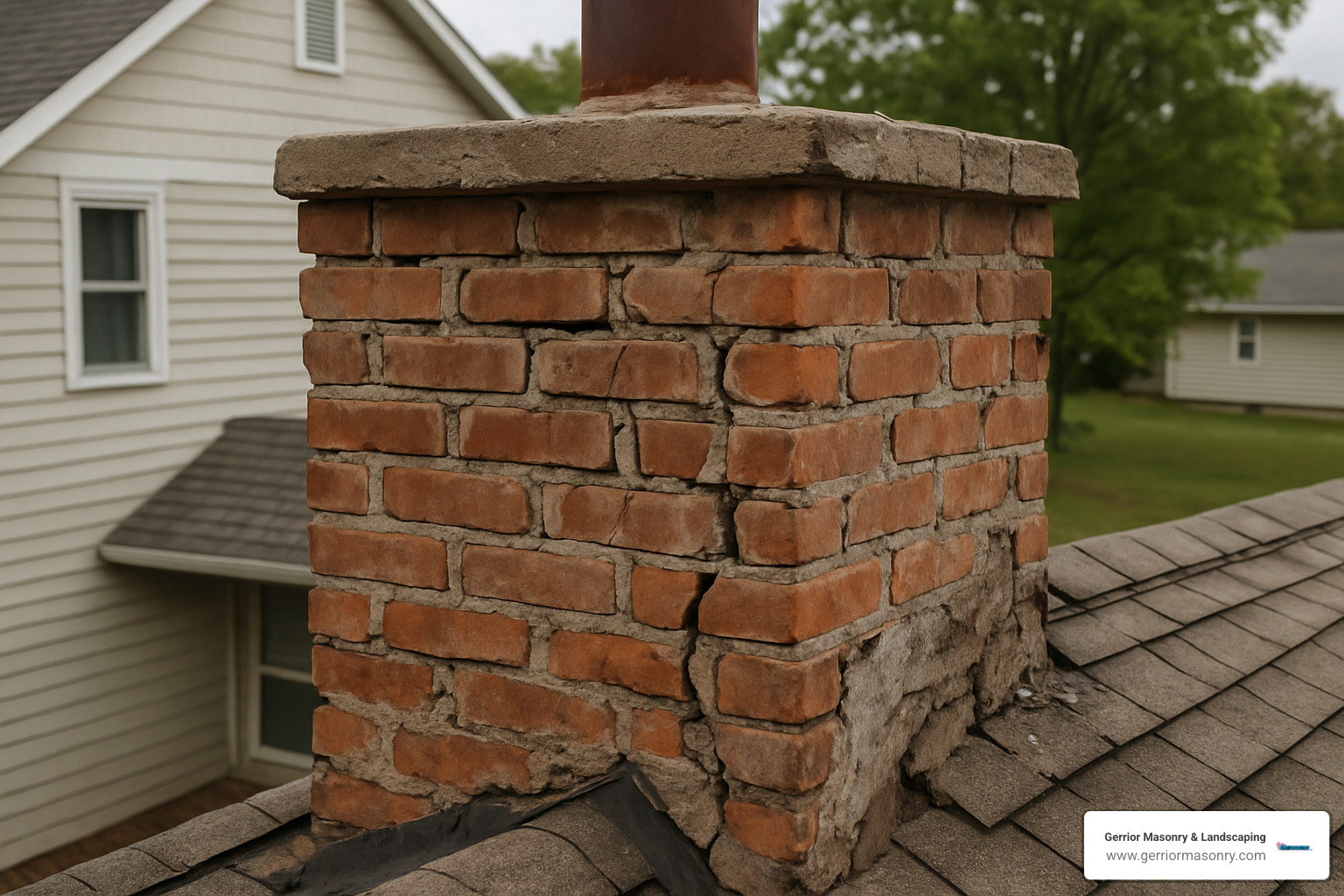
Your chimney speaks its own language when something’s wrong. Let me translate those signals for you:
White, chalky deposits on your chimney’s exterior (known as efflorescence) are essentially your chimney waving a white surrender flag to moisture intrusion. As chimney expert Jim Fuson puts it, “Efflorescence is like your chimney waving a white flag—it’s surrendering to moisture intrusion.”
Cracked mortar joints between bricks might seem minor, but they’re actually open invitations for water to enter and wreak havoc. Think of mortar as your chimney’s defensive wall—once breached, the whole structure becomes vulnerable.
When you notice bricks flaking, popping out, or pieces falling off (spalling), that’s a clear sign that freeze-thaw cycles have taken their toll. Water seeps in, freezes, expands, and gradually destroys your masonry from the inside out.
A leaning chimney is never just a quirky architectural feature—it’s a serious structural red flag that demands immediate professional attention. Chimneys should stand tall and proud, not tilt like the Tower of Pisa.
Rust on your damper or firebox tells you that unwelcome moisture has found its way into your system. Like a canary in a coal mine, rust appears well before the more serious structural damage follows.
When smoke enters your living space rather than going up and out, something’s blocking its natural path. This back-drafting isn’t just annoying—it could indicate dangerous blockages or structural failures.
Water stains on walls or ceilings near your chimney are telltale breadcrumbs leading to leaks that need addressing. These discolorations are your home’s way of pointing directly to the problem.
A strong, acrid smell or visible black, tar-like substance (creosote) inside your chimney significantly increases your fire risk. Creosote is highly flammable and builds up with each fire you enjoy.
Animal visitors making homes in your chimney might seem charming in a Disney movie, but in reality, they block proper ventilation and create serious fire hazards. Those scratching sounds or chirps mean it’s time for a professional inspection.
A missing or damaged chimney cap leaves your entire system vulnerable to the elements. Without this protective cover, water, animals, and debris have an open invitation to cause trouble.
DIY vs Pro Inspections
While professional inspections are essential, you can perform some preliminary checks yourself to monitor your chimney’s health between professional visits:
Simple DIY Checks:
– Grab a pair of binoculars and examine your chimney from the ground, looking for visible cracks, missing mortar, or damaged bricks
– Visit your attic with a flashlight to check for water stains near the chimney penetration
– Look inside your fireplace for unusual debris that might have fallen from above
– When safe to do so, check your chimney crown (the concrete top) for visible cracks
Professional inspections provide a level of thoroughness that DIY checks simply can’t match. According to the National Fire Protection Association (NFPA), every chimney should be inspected annually by a qualified professional. This isn’t just cautious advice—it’s a safety essential.
Professional chimney inspections typically include camera scope technologies that can detect damage invisible to the naked eye. These specialized tools allow technicians to see inside your flue and identify cracks, deterioration, or dangerous creosote buildup before they become catastrophic problems.
“Have your chimney checked every year, as recommended by the National Fire Protection Agency, to make sure the chimney can do its job to properly vent hot, toxic gases and carbon monoxide from the heating system to the outdoors,” advises the NFPA. This guidance becomes even more critical when you consider that temperatures inside your chimney can exceed 2000 degrees Fahrenheit during normal use.
When it comes to chimney repair and replacement, catching problems early doesn’t just save money—it potentially saves lives. The small investment in regular inspections pays dividends in safety and peace of mind.
Chimney Repair and Replacement 101
Making the choice between fixing or fully replacing your chimney isn’t always straightforward. Let’s break down what you need to know to make an informed decision that keeps your family safe and your home protected.
When “chimney repair and replacement” becomes urgent
Some chimney problems simply can’t wait. Here are the situations that demand immediate attention:
Flue Cracks or Damage: Think of your chimney flue as the protective shield between the intense heat of your fire and the wooden structure of your home. When this barrier cracks, you’re facing two serious risks: fire hazard from heat transfer to combustible materials and the silent danger of carbon monoxide seeping into your living spaces.
Crown Failure: That concrete cap on top of your chimney isn’t just decorative – it’s your first line of defense against water damage. When it starts crumbling or cracking, water can work its way down through your entire chimney structure, causing extensive (and expensive) damage over time.
Flashing Leaks: The metal flashing that creates a watertight seal between your chimney and roof is critical. When it fails, water doesn’t just damage your chimney – it can penetrate your roof structure and lead to interior ceiling damage too.
One of our Arlington homeowners learned this lesson the hard way: “I ignored what seemed like minor cracks in my chimney crown for two years. By the time I called Gerrior Masonry, water had penetrated so deeply that I needed a complete rebuild above the roofline. What could have been a $750 repair became a $7,500 project.”
Choosing repair or full “chimney repair and replacement”
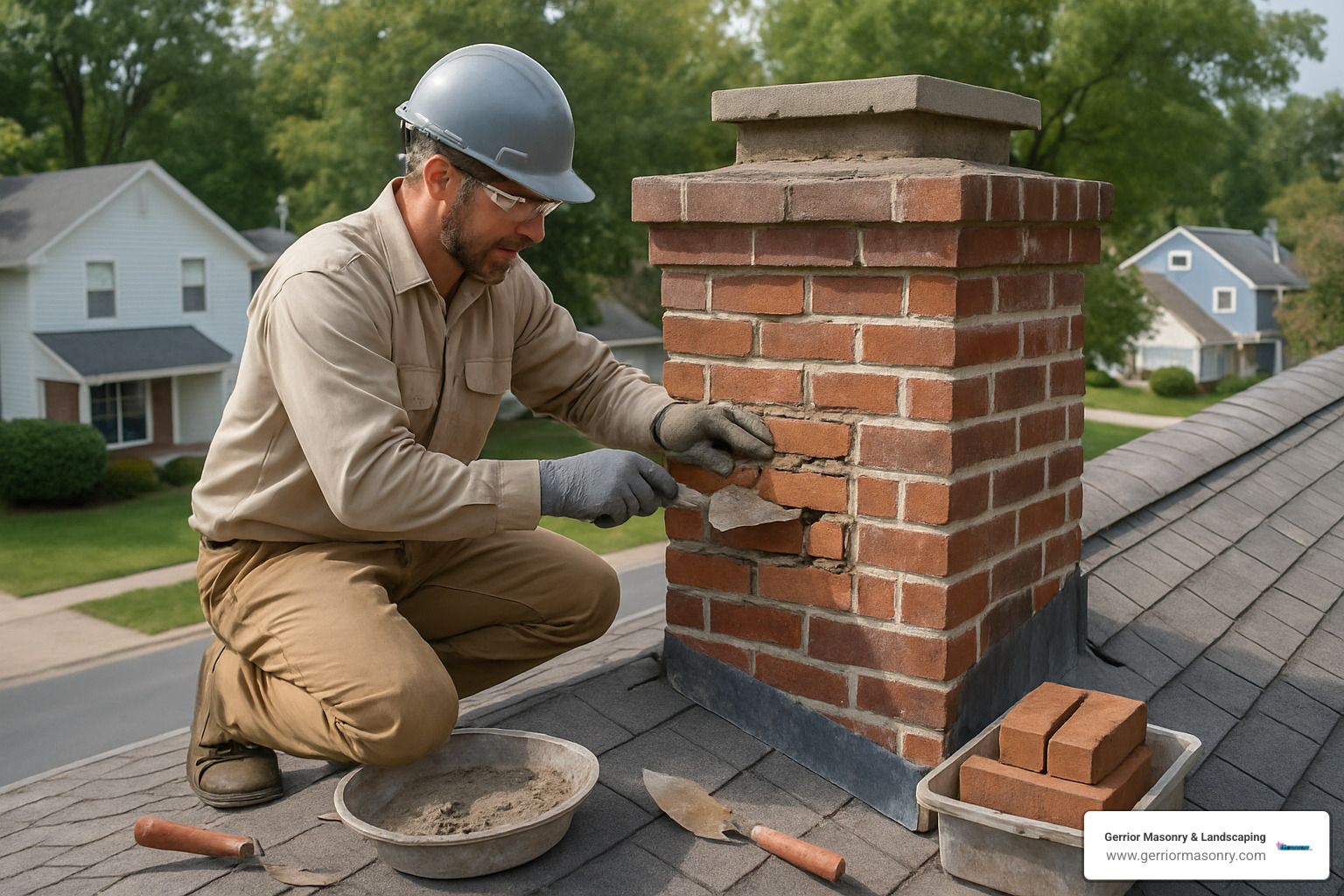
When Repair Makes Sense:
Sometimes a full replacement is overkill. Partial rebuilds often work well, especially when damage is limited to the portion above your roofline – the area most exposed to harsh weather. We can remove and rebuild just the top few courses of brick and install a fresh crown, saving you thousands.
Tuckpointing (also called repointing) is another cost-effective repair option. This process carefully removes deteriorated mortar and replaces it with fresh material, preserving your original bricks while restoring structural integrity. It’s like dental work for your chimney – fill the cavities before they require a full extraction!
Sometimes you only need to replace specific components like the chimney cap, crown, flashing, or damper. These targeted repairs can resolve specific issues without the need for extensive reconstruction.
When Full Replacement Is The Right Call:
Full replacement becomes necessary when your chimney shows signs of severe structural damage – like leaning, extensive brick deterioration, or foundation issues. Safety comes first, and sometimes starting fresh is the only way to ensure it.
If your chimney has experienced a chimney fire, hidden damage may lurk within the structure, compromising its integrity in ways that aren’t immediately visible. The peace of mind from a replacement is worth the investment.
Many older chimneys were built before modern safety standards. These outdated constructions may lack proper liners or use materials that don’t meet current building codes. Replacement provides an opportunity to bring everything up to modern safety standards.
From a practical standpoint, when repair costs climb above 50% of replacement costs, starting fresh often provides better long-term value and safety. As one Woburn client told us, “After getting quotes for extensive repairs on my 85-year-old chimney, I opted for a full replacement with modern materials. Not only did I get a safer chimney, but the energy efficiency of my heating system improved dramatically.”
Step-by-Step Process
Whether you choose repair or replacement, here’s what you can expect from a quality Chimney Repair Services project:
- Comprehensive Inspection: We start with a thorough assessment using specialized equipment like camera scopes to detect both visible and hidden damage.
- Detailed Estimate: You’ll receive a clear breakdown of costs, timeline, and scope of work – no surprises.
- Permitting: We handle all the necessary permits from local building authorities (one less headache for you).
- Preparation and Protection: Before work begins, we set up protective barriers to shield your home and landscaping from debris.
- Demolition (if needed): We carefully remove damaged portions or the entire chimney structure, minimizing disruption to your home.
- Masonry Work: The rebuilding phase uses appropriate materials to ensure proper structural integrity and water resistance.
- Curing Time: New masonry work needs time to properly set and cure – rushing this step leads to problems down the road.
- Installation of Components: We add or replace the crown, cap, flashing, and liner as needed to complete your system.
- Cleanup: Once the work is complete, we thoroughly remove all debris and materials from your property.
- Final Inspection: We verify that all work meets safety standards and specifications before considering the job complete.
For projects requiring complete reconstruction, our Chimney Replacement service ensures your new chimney will provide decades of safe, reliable service. We take pride in doing the job right the first time – because when it comes to fire safety, there’s no room for shortcuts.
What Will It Cost? Average Repair vs Replacement Prices
Planning your budget for chimney repair and replacement starts with understanding the potential costs. While every project is unique, having a general idea of price ranges helps you make informed decisions.
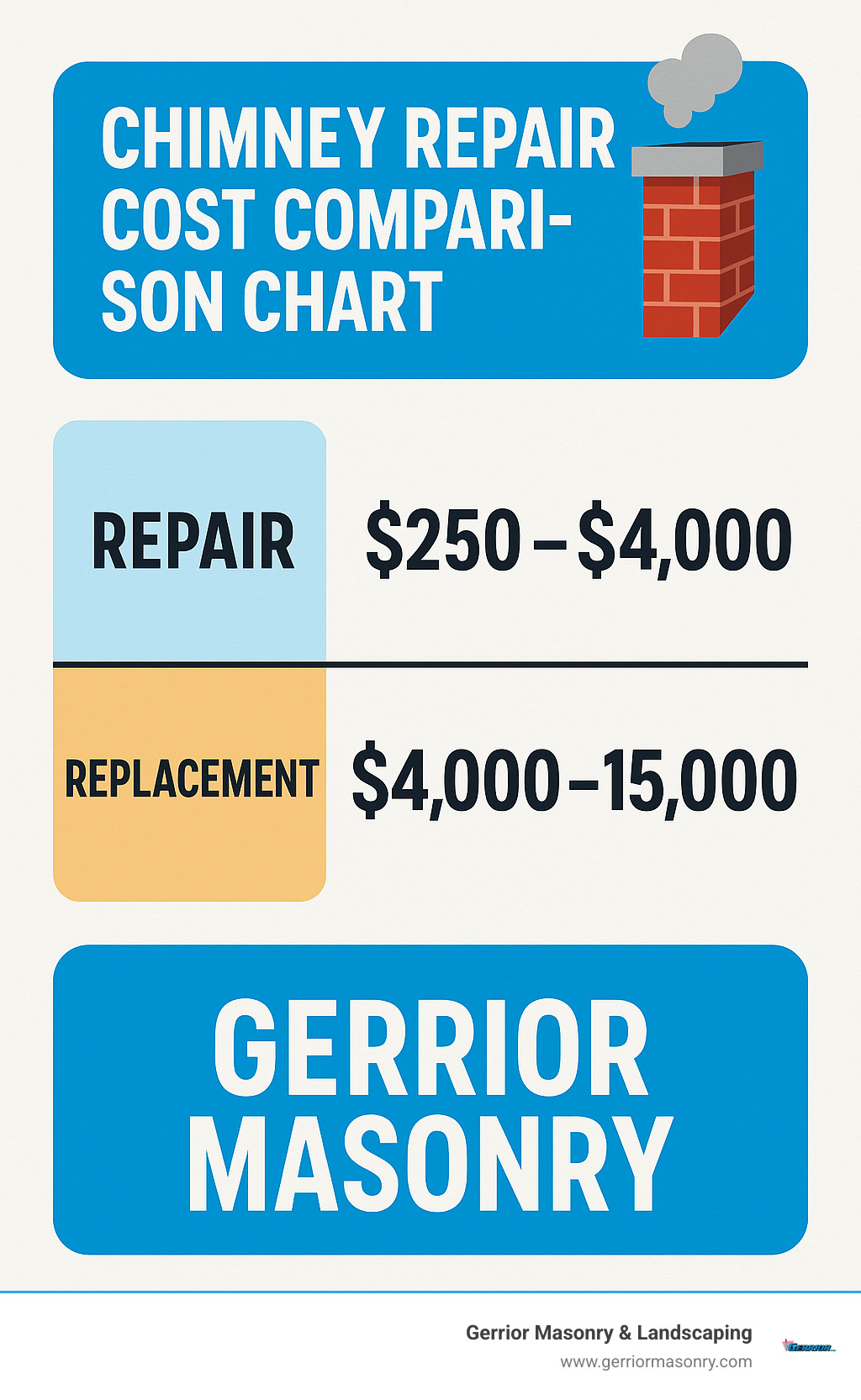
Average Repair Costs
Based on industry data (not Gerrior Masonry’s specific pricing), chimney repairs typically fall into three categories:
Minor Repairs: $250-$1,500
Those small but important fixes can add up. A new chimney cap might run $100-$500, while crown repairs typically cost $150-$1,000. Minor mortar joint repairs often fall in the $200-$800 range, and flashing repairs generally cost $150-$500. These relatively affordable fixes can prevent much costlier damage down the road.
Moderate Repairs: $1,500-$7,000
When problems have progressed beyond simple fixes, you’re looking at moderate repairs. A partial rebuild above the roofline might cost $1,000-$3,500, while flue liner repairs or replacements typically run $1,000-$5,000. Extensive tuckpointing work can range from $500-$2,500, and adding a chimney cricket (that small peaked structure that diverts water) generally costs $300-$1,000.
Major Repairs: $7,000-$13,300+
Serious structural issues demand significant investment. Structural repairs often start around $3,000 and can reach $8,000 or more. Smoke chamber repairs typically cost $1,000-$3,000, while foundation repairs can be particularly expensive, ranging from $3,000-$10,000.
Average Replacement Costs
When repair isn’t enough, full chimney repair and replacement becomes necessary. Most complete replacements fall between $8,000-$15,000, though complex projects can reach $30,000 or more.
The final price tag depends heavily on your chimney’s size and height. Taller chimneys with multiple flues naturally cost more to replace. The accessibility of your site matters too – chimneys that are difficult to reach require additional safety measures and equipment.
Material choices significantly impact costs as well. Traditional brick masonry, natural stone, or modern prefabricated options each come with different price points. Don’t forget to factor in disposal fees for old materials and possible equipment rental costs – especially if your project requires a crane for a tall chimney.
As one of our Bedford customers wisely noted: “The initial sticker shock of replacement was significant, but when I calculated the ongoing repairs I’d been making for years, plus the improved efficiency and safety, the investment made sense.”
Factors That Move the Needle
Several key elements can dramatically shift your project’s bottom line:
Height and Accessibility play a major role in determining costs. That charming three-story chimney might be beautiful, but reaching it safely requires additional equipment, labor, and time. Limited access points around your home can also complicate the work process and increase costs.
Liner Type decisions balance upfront costs against long-term durability. Stainless steel liners cost more initially (averaging $65-$100 per square foot) but offer exceptional longevity and often come with lifetime warranties. Clay liners cost less upfront but may need replacement sooner.
Weatherproofing Extras are worth considering for long-term protection. Water repellent treatments, quality chimney caps, and proper Chimney Flashing Replacement add to your initial investment but can significantly extend your chimney’s lifespan by preventing water damage.
Geographic Location affects labor rates significantly. Here in Massachusetts, particularly around the Boston metro area, skilled masonry labor typically costs more than the national average. This reflects both the higher cost of living and the specialized expertise required for proper work on New England homes, many of which have historic elements.
Insurance Coverage might offset some costs, particularly if your chimney was damaged by a specific event like lightning or a severe storm. However, most policies won’t cover damage resulting from normal wear and tear or neglect. It’s always worth checking with your insurance provider before beginning major work.
When weighing repair versus replacement costs, investing in quality work now often saves money in the long run. A properly rebuilt chimney should serve your home for decades to come, providing both safety and peace of mind through countless New England winters.
Pro Tips for a Healthy, Long-Lasting Chimney
With proper maintenance, a well-built chimney can last 50-100 years. Here are expert tips to extend your chimney’s lifespan:
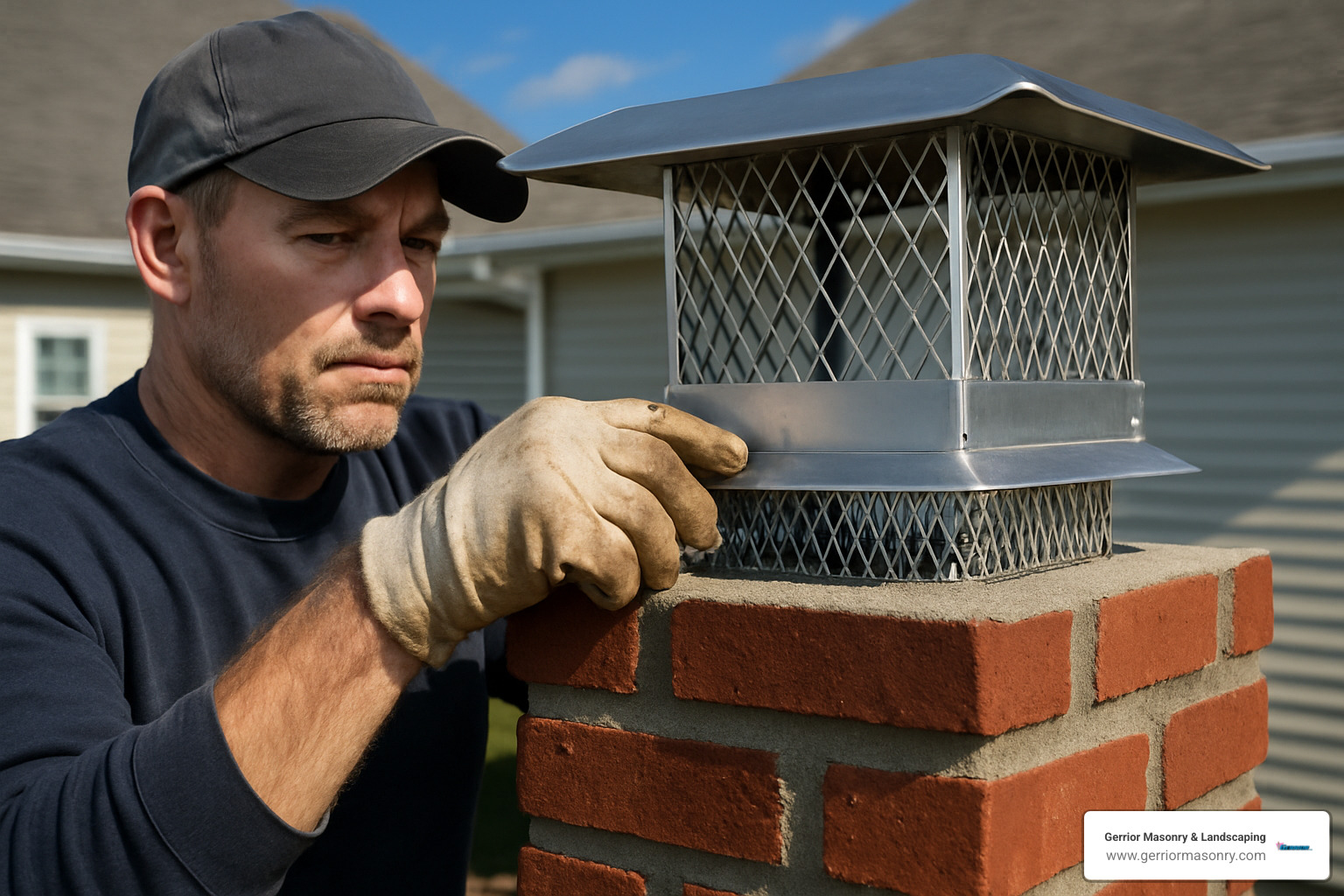
Your chimney works hard during cold Massachusetts winters. Treating it right means it’ll keep your family warm and safe for generations. As we often tell our Middlesex County clients, “An ounce of prevention saves a ton of bricks!”
Annual sweeping isn’t just a good idea—it’s essential safety maintenance. The Chimney Safety Institute of America (CSIA) makes it clear: chimneys should be swept whenever creosote buildup exceeds 1/8 inch. This flammable substance is the leading cause of chimney fires, but regular cleaning keeps your family protected.
After repairs, we strongly recommend applying a breathable waterproof sealer to your masonry chimney. Think of it as a GORE-TEX jacket for your bricks—it prevents water absorption while still allowing the masonry to “breathe” and release trapped moisture. This simple step dramatically extends the life of your repairs.
A quality stainless steel chimney cap is perhaps the most cost-effective protection you can buy. For just $100-$500, this simple addition prevents water entry, blocks curious animals, and reduces annoying downdrafts. I’ve seen countless chimneys suffer thousands in damage that a simple cap would have prevented.
When relining becomes necessary, consider investing in a stainless steel liner. While the upfront cost exceeds that of clay alternatives, many come with lifetime warranties and provide superior protection against the extreme heat cycles your chimney endures.
Don’t overlook your mortar joints! Regular chimney tuckpointing (removing and replacing deteriorated mortar) preserves your chimney’s structural integrity and creates a water-tight seal. We recommend using a quality brick cleaner before repointing to ensure proper adhesion.
Here’s an insider tip: schedule your chimney work during spring or summer. You’ll not only avoid the fall rush when everyone suddenly remembers their chimney needs attention, but you might also secure better rates and availability. Your chimney will be ready when that first autumn chill arrives.
Maintenance Checklist
Smart homeowners follow a seasonal maintenance rhythm. After the heating season ends, schedule your spring inspection to assess winter damage and make minor repairs before small problems grow. Look for cracked mortar, damaged caps, or signs of water intrusion.
After severe storms, perform a quick post-storm check from ground level using binoculars. High winds can damage caps and crowns, while lightning strikes can create dangerous structural problems that aren’t always visible from inside your home.
Don’t forget the connection between your gutters and chimney health. Clogged gutters overflow onto chimney bases, accelerating deterioration. Keep them clean and properly functioning, especially where they run near your chimney structure.
One Winchester client who’s followed our maintenance advice for over two decades told me: “In 22 years, I’ve only needed minor tuckpointing because we follow Gerrior’s maintenance schedule. The annual inspection costs are minimal compared to what my neighbors have spent on major repairs.”
Frequently Asked Questions about Chimney Repair and Replacement
What are the health and safety risks of a damaged chimney?
A damaged chimney isn’t just a structural concern—it’s a serious health and safety risk. Fire hazards top the list, as cracks in the flue or chimney structure can allow heat and sparks to reach combustible materials in your home. The National Fire Protection Association reports over 25,000 chimney fires annually in the United States.
Even more insidious is the risk of carbon monoxide poisoning. This colorless, odorless gas can seep into your home through a blocked or damaged chimney. Since you can’t see or smell it, the first signs might be headaches, dizziness, or worse.
Severely damaged chimneys can suffer structural collapse, causing property damage and potential injury. I’ve seen leaning chimneys that looked stable suddenly fail during storms, causing tens of thousands in damage.
For families with asthma or allergies, respiratory issues can worsen when leaking chimneys allow smoke and particulates to enter living spaces. Proper venting isn’t just about comfort—it’s about health.
Does homeowners insurance cover chimney damage?
The answer depends largely on what caused the damage. Most policies cover sudden, accidental damage from specific events like lightning strikes, fire damage (not originating in the chimney), fallen trees, or severe storm damage.
What’s typically not covered? The slow enemies of masonry: gradual deterioration, wear and tear, lack of maintenance, and pre-existing conditions. Insurance companies expect homeowners to maintain their chimneys properly.
To maximize potential coverage, document all chimney maintenance with receipts and photos. If damage occurs, take detailed photos immediately and have a professional assessment done promptly. File claims as soon as possible, as delays can complicate approval.
Always review your specific policy details, as coverage varies significantly between insurers. Some premium policies offer more comprehensive protection than standard homeowner packages.
How long should a well-maintained chimney last?
A quality masonry structure can be remarkably durable. A well-built brick chimney often lasts 50-100+ years with proper care. In fact, we regularly work on colonial-era chimneys throughout Massachusetts that are still performing beautifully after centuries of service.
Internal components have shorter lifespans. Clay tile liners typically need replacement every 15-20 years, while stainless steel liners can last 25+ years and often come with lifetime warranties. A properly constructed concrete crown should give you 10-15 years of protection before needing repairs.
Your chimney cap might need more frequent attention. Galvanized caps may need replacement every 5 years in our harsh New England climate, while stainless steel caps can last 15+ years.
As one of our senior masons likes to say, “A chimney is only as old as its maintenance schedule.” We’ve worked on 200-year-old chimneys in historic Massachusetts homes that are in better condition than 20-year-old neglected ones.
Gerrior Masonry & Landscape Construction is based in Woburn, MA, and proudly serves homeowners throughout Middlesex and Essex County, Massachusetts.
Conclusion
Your chimney isn’t just a charming architectural feature—it’s a vital component of your home’s safety system that deserves proper attention. Whether you’re facing minor mortar damage or considering a complete rebuild, addressing chimney issues promptly can save you thousands in future repairs while keeping your family safe and warm.
Here at Gerrior Masonry & Landscape Construction, we’ve weathered more than three decades of New England’s harshest conditions alongside the chimneys we build and repair. After 34 years of climbing onto rooftops throughout Middlesex and Essex Counties, we’ve seen how proper maintenance can extend a chimney’s life by decades, and how neglect can lead to dangerous conditions.
A well-maintained chimney is your best defense against fire hazards and carbon monoxide risks. While those DIY binocular inspections from your driveway can help spot obvious issues, nothing replaces the trained eye of a professional who knows exactly what to look for inside and outside your chimney structure.
Annual inspections aren’t just a suggestion—they’re recommended by fire safety experts for good reason. Those small cracks you might overlook today could become major structural problems after just one more freeze-thaw cycle.
For homeowners in our service area, we’re always available to answer questions about your specific chimney concerns. If you’d like more detailed information about what repairs might cost for your particular situation, our chimney repair cost page offers comprehensive guidance on budgeting for your project.
When it comes to chimney repair and replacement, working with experienced professionals ensures your investment will stand the test of time. Our team takes pride in delivering solutions that not only solve immediate problems but prevent future issues through proper technique and quality materials.
Don’t wait until you smell smoke in your living room or notice water stains on your ceiling—give your chimney the regular care it needs. A small investment in maintenance today can prevent major headaches tomorrow.
Gerrior Masonry & Landscape Construction is based in Woburn, MA, and proudly serves Middlesex and Essex County, Massachusetts, including Arlington, Bedford, Burlington, Lexington, Winchester, and surrounding communities.
