
Dry Stone Garden Wall: 7 Powerful Reasons to Love Yours
Why Dry Stone Garden Walls Are Perfect for New England Properties
A dry stone garden wall is a centuries-old building technique that uses carefully stacked stones without any mortar to create beautiful, durable structures. Here’s what makes them special:
Key Benefits:
- No mortar or concrete needed – just gravity and skilled placement
- Naturally drains water through gaps between stones
- Flexes with freeze-thaw cycles (perfect for Massachusetts winters)
- Can last 100+ years when built properly
- Costs $20-$75 per square foot for DIY projects
Common Uses:
- Garden borders and property boundaries
- Low retaining walls (under 3 feet)
- Decorative landscape features
- Wildlife habitat creation
These ancient walls date back over 6,000 years to places like Ireland’s Céide Fields. The technique became so culturally important that UNESCO recognized dry stone walling as an Intangible Cultural Heritage in 2018.
What makes dry stone walls perfect for New England is their ability to handle our harsh winters. Unlike mortared walls that crack from frost, dry stone walls actually get stronger over time as the stones settle into place.
What Is a Dry Stone Garden Wall?
A dry stone garden wall is a structure built entirely without mortar, cement, or any binding agent – just skilled craftsmanship and perfect stone placement. This ancient technique dates back 6,000 years to Ireland’s Céide Fields, where walls from 3800 BC still stand today.
UNESCO recognized dry stone walling as an Intangible Cultural Heritage of Humanity in 2018, acknowledging its cultural importance across countries like Ireland, France, Greece, Italy, and others. You can find more details about this UNESCO recognition here.
What makes these walls incredibly durable is their flexible structure. While mortared walls crack under pressure, dry stone walls move and adjust with ground settlement and frost action. No concrete footing needed – these walls work with nature instead of fighting it.
How a dry stone garden wall differs from mortared or gabion walls
Gravity holds everything together instead of chemical bonds. Each stone locks into position with its neighbors through weight and shape. Drainage happens naturally through stone gaps, eliminating water pressure buildup that destroys other wall types. Freeze-thaw movement becomes a non-issue since stones shift slightly and settle back, while mortared walls crack under the same pressure.
Cultural significance across the world & New England
Dry stone walls tell stories worldwide – from Ireland’s 22-mile Mourne Wall to ancient Greek Mycenae sites to sections of the Great Wall of China. Here in New England, colonial farmers built miles of walls while clearing glacial stones from fields, creating the iconic landscape we know today.
When we build a dry stone garden wall for Massachusetts homeowners, we’re connecting them to this incredible heritage while solving modern landscaping challenges.
Planning & Sourcing: Stone, Tools, Budget
Building a dry stone garden wall starts with smart planning and sourcing. Massachusetts offers excellent stone options thanks to glacial deposits that created our natural stone warehouse.
Local fieldstone is abundant and affordable. Bluestone works perfectly for beginners with its flat, stackable layers. Granite provides incredible durability, while reclaimed stone adds instant character.
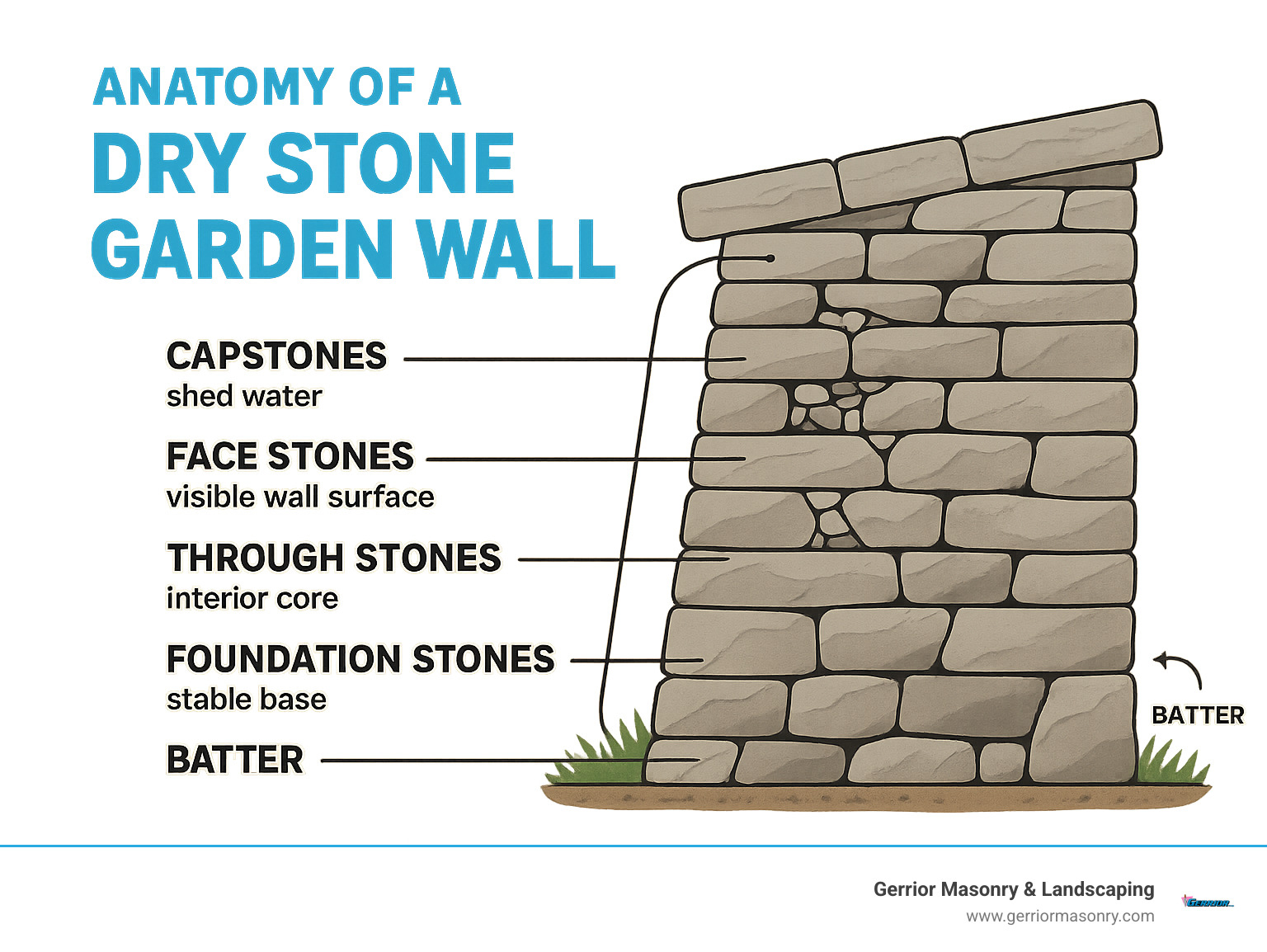
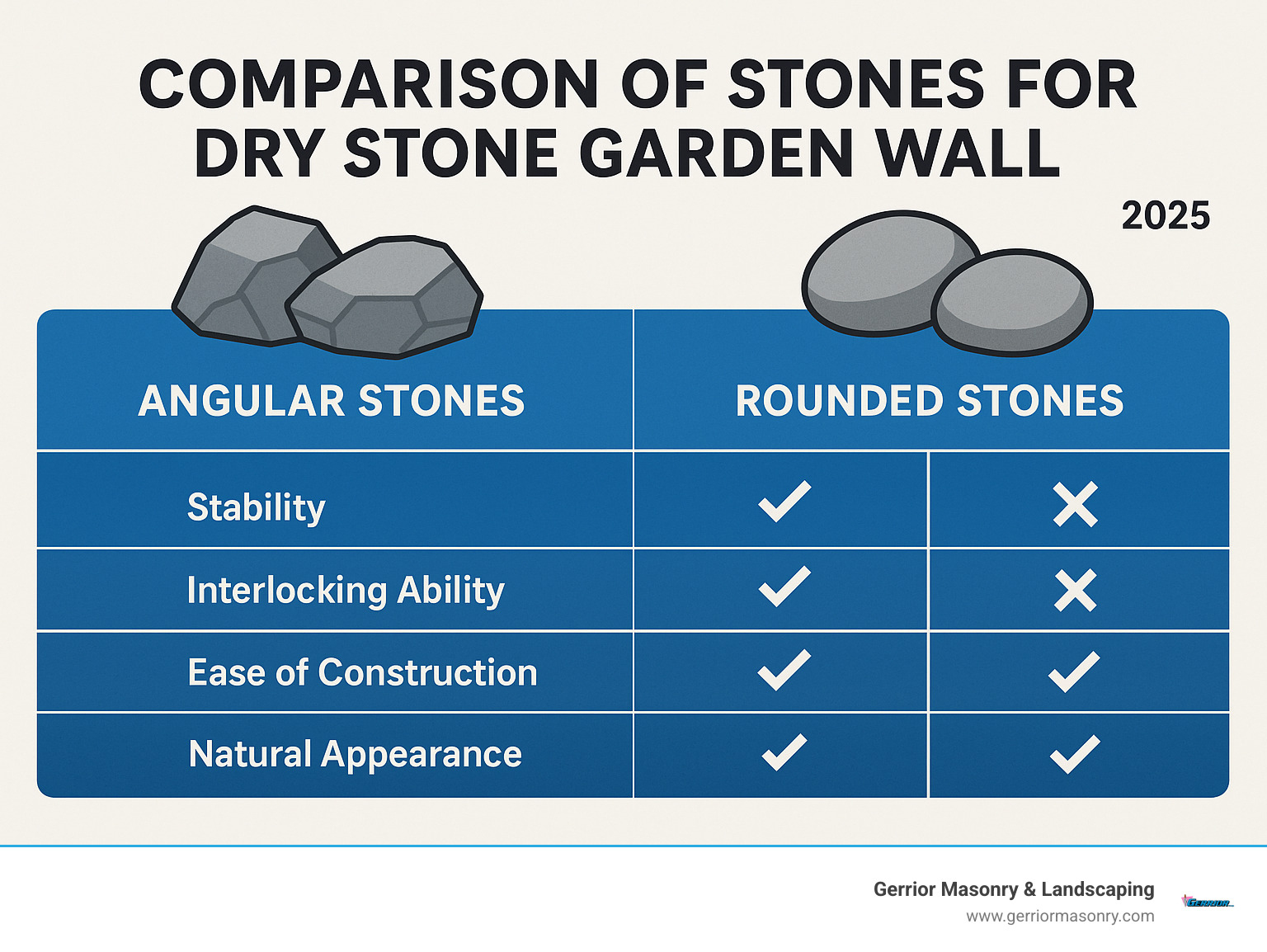
When selecting stones, look for pieces with flat faces – they stack much easier than rounded stones. Sort into three categories: heavy foundation stones, medium face stones for visible areas, and smaller hearting stones for gaps.
Essential tools include:
- Stone hammer (2-3 pounds)
- Chisels and feathers for splitting
- Line pins and string for straight courses
- Batter frames for proper wall lean
- Safety gear: gloves, glasses, steel-toed boots
- Wheelbarrow, shovel, 4-foot level
DIY dry stone garden wall costs typically run $20-$75 per square foot, while professional installation averages $65-$200 per square foot. These are average costs based on internet data and not actual costs for Gerrior Masonry services.
For professional guidance, check out our Stone Garden Edging services.
Site selection, permits & height limits
Choose well-draining locations away from low spots where water pools. Keep DIY walls under 3 feet high – beyond that, most towns require permits and engineering analysis. Always call Dig Safe at 811 before excavating.
Cost-saving tips
Quarry discard piles offer quality stones at reduced prices. Farm clean-ups provide free stones – farmers often welcome help removing field stones. Check online marketplaces and consider bartering your skills for materials.
Step-by-Step: Building Your Dry Stone Garden Wall
Building a dry stone garden wall requires patience and attention to detail. Start by laying out string lines between stakes to guide your wall’s path.
Foundation preparation is crucial. Dig 6-12 inches to reach undisturbed soil, making the trench twice as wide as your planned wall base. Add 2-4 inches of compacted gravel for drainage.
Base course uses your largest, flattest stones nestled firmly in the foundation. These should feel rock-solid with no wobbling.
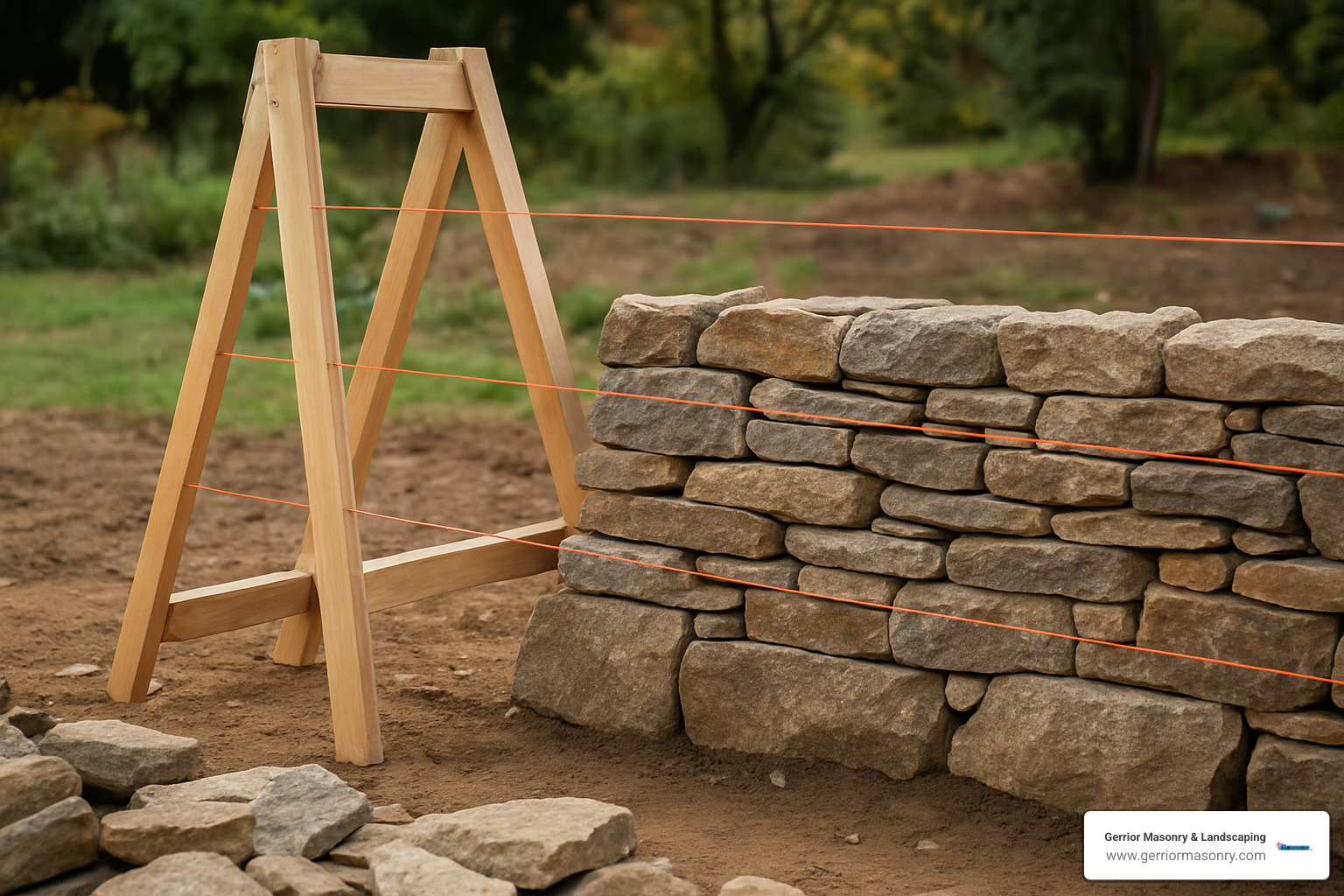
Build two parallel faces with a slight inward lean (1 inch per vertical foot). Place through-stones every 4-6 feet horizontally and every 2-3 courses vertically to tie the faces together. Pack the interior tightly with smaller hearting stones.
Follow the “one-over-two, two-over-one” principle – each stone should bridge the joint between two stones below it, like laying bricks. Never align vertical joints through multiple courses.
For professional retaining walls requiring engineering, visit our Hardscape Retaining Walls page.
Construction techniques for strength
Breaking joints prevents vertical cracks from weakening your wall. Tight hearting between wall faces provides internal structure. Proper batter (inward lean) helps resist overturning forces. Use batter frames to maintain consistent angles.
Smart stone selection puts attractive stones on visible faces, oddly shaped pieces for hearting, flattest stones for capstones, and longest stones for through-stone positions.
Finishing & capping
Select flat, attractive capstones that span most of the wall width. Set them with a slight slope to shed water away from the wall. For seating walls, aim for 18-22 inches high with smooth, flat capstones.
Make final adjustments by checking for loose stones and filling remaining gaps with stone chips.
Design & Landscaping Ideas Around Your Dry Stone Garden Wall
A dry stone garden wall offers countless design possibilities while naturally integrating with your landscape. The classic double-face style remains popular in New England, creating that traditional inward-leaning profile. Scottish cheek-end style features rounded ends that curve naturally into the landscape, while serpentine walls create visual interest and structural strength through gentle curves.
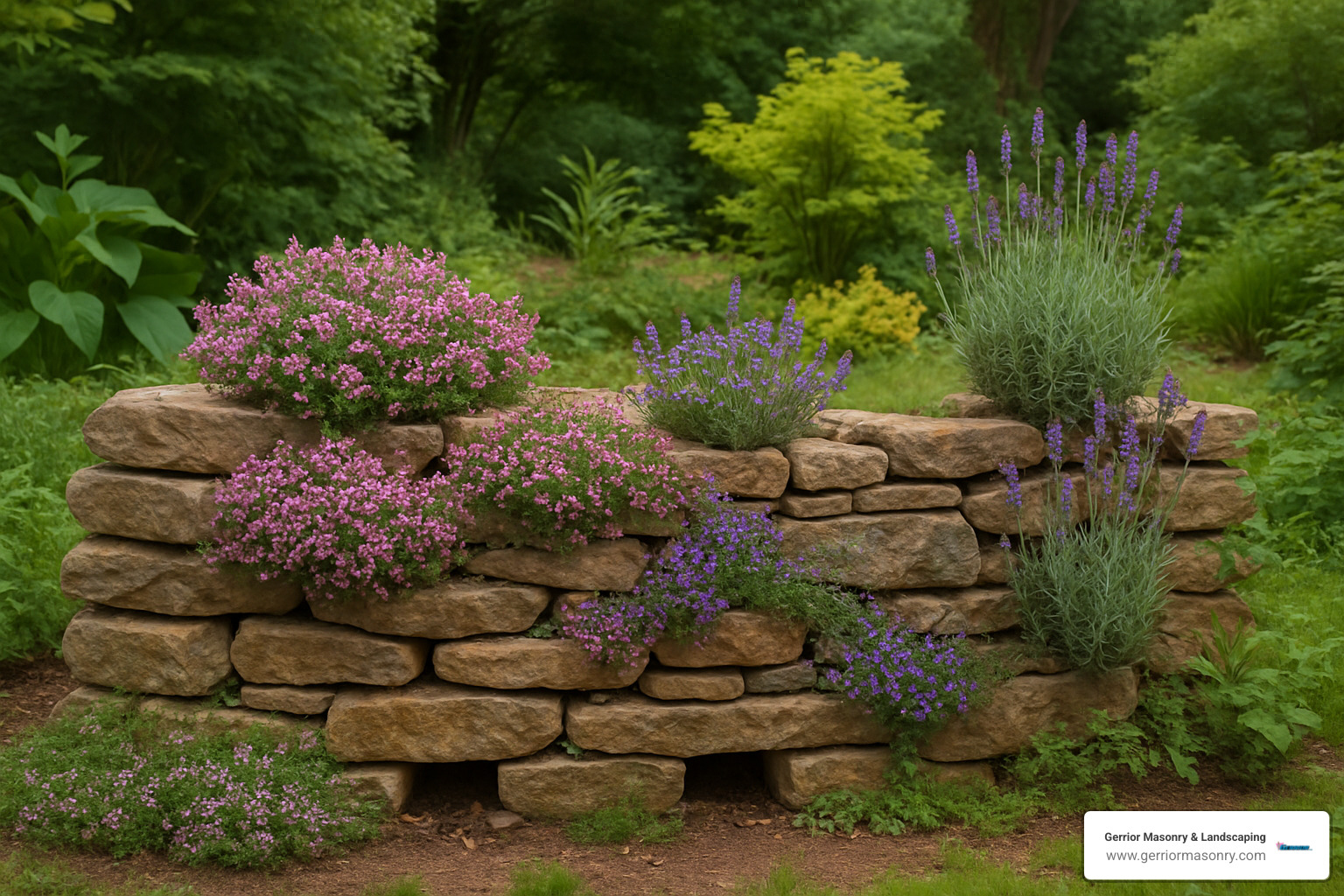
Your wall becomes a thriving ecosystem through deliberate wildlife integration. Leave spaces at the base for toads and small lizards that control garden pests. Wall crevices provide perfect nesting spots for mason bees and beneficial insects, improving garden pollination.
Create herb pocket gardens by filling larger gaps with well-draining soil and planting Mediterranean herbs like thyme, oregano, and lavender. These plants thrive in stone wall conditions while attracting pollinators.
For professional landscape walls, visit our Landscape Walls page.
Using walls for erosion control & terracing
The permeable nature of dry stone construction makes these walls exceptional for erosion control. Water passes through while soil stays put, eliminating destructive hydrostatic pressure.
For sloped properties, low terracing walls under 3 feet high can transform unusable hillsides into productive garden space. Integrate stone steps directly into retaining walls for seamless level transitions.
Planting and wildlife integration
Wall crevices create unique growing conditions many plants love. Sedums are virtually maintenance-free and spread naturally through stonework. Creeping thyme creates fragrant cascades while attracting beneficial insects. For shady walls, small ferns and corydalis thrive in moist north-facing crevices.
The stone’s thermal mass moderates temperature swings, protecting plants from winter cold and summer heat extremes while creating stable growing conditions.
Maintenance, Safety & Sustainability
A dry stone garden wall actually improves with age, becoming more stable as stones settle into perfect positions. Your annual spring inspection should check for stones shifted during winter freeze-thaw cycles and clear vegetation trying to push stones apart.
Most years require minimal attention. When you find loose stones, remove them completely to address the underlying cause before proper resetting. Frost heave occasionally affects walls – wait until ground fully thaws in spring before making repairs.
The environmental benefits are impressive: zero cement means no CO₂ emissions from production, and every stone can be reused indefinitely. Your wall prevents erosion while supporting groundwater recharge, and the crevices create micro-habitats for beneficial insects and small mammals.
For professional repairs, visit our Stonework Repairs page.
Research from the Dry Stone Walling Association documents remarkable biodiversity benefits, showing how these structures support rare plants and beneficial insects.
Troubleshooting common issues
Bulging walls usually indicate insufficient through-stones or loose hearting. Fix by carefully dismantling the problem section and rebuilding with better internal structure. Tree roots can gradually push walls apart – consider root barriers or selective pruning. Settlement is normal and often strengthens walls as stones find optimal positions.
Long-term advantages
Water passes through instead of building up pressure, eliminating the hydrostatic forces that destroy rigid walls. Flexibility allows movement without breaking – crucial in Massachusetts freeze-thaw cycles. Repairs are simple – just remove stones, address issues, and rebuild without concrete or specialized materials.
The lifespan comparison isn’t close: we regularly work on colonial-era stone walls (200+ years old) while concrete walls typically need major repairs within 50-75 years.
Frequently Asked Questions about Dry Stone Garden Walls
How tall can I safely build a dry stone garden wall without engineering help?
The 3-foot rule is your safety limit for DIY dry stone garden wall construction. Structural forces increase dramatically above this height – a 4-foot wall can face twice the lateral pressure of a 3-foot wall. Most Massachusetts building departments require permits and engineering for retaining walls over 3-4 feet anyway.
If you need more height, consider terracing with multiple shorter walls. This approach is actually stronger than one tall wall and creates beautiful planting areas between levels.
What stone size and shape work best for beginners?
Foundation stones should be 50-100 pounds with flat surfaces. Face stones work best at 20-50 pounds with at least one good flat face – these determine your wall’s appearance. Through stones (30-80 pounds) span the full width every 4-6 feet. Fill interior spaces with fist-sized hearting stones.
Angular stones with natural flat surfaces stack much easier than rounded river rocks. Plan for about 1 ton of stone per 25-30 square feet of wall face.
Do I need a footing or concrete base?
Dry stone garden walls don’t need concrete footings – they can actually hurt performance by creating rigid bases that can’t move with ground shifts. Instead, dig a proper foundation trench to undisturbed soil, add 2-4 inches of compacted gravel, then set large foundation stones directly into this prepared base.
The foundation should be twice as wide as your wall is tall. This traditional approach has worked for over 6,000 years, while concrete footings often cause more problems than they solve.
Conclusion & Next Steps
Building a dry stone garden wall connects you to a 6,000-year-old heritage craft while creating a sustainable, beautiful addition to your Massachusetts landscape. These walls work with our harsh weather instead of fighting it, actually strengthening over time as stones settle into perfect positions.
The sustainability benefits are remarkable – zero cement emissions and completely reusable materials, plus natural habitat creation for beneficial insects and small wildlife. Your wall becomes part of a living ecosystem while solving practical landscaping challenges.
Start with careful planning – measure your space, calculate stone needs (1 ton per 25-30 square feet), and check local regulations. Beginning with a smaller practice wall builds confidence before tackling larger projects.
Take your time with foundation preparation and stone selection. A well-built dry stone garden wall can last over a century, making those extra hours of careful work worthwhile.
Some projects require professional expertise, especially walls over 3 feet high, complex drainage situations, or integration with existing hardscape. Recognizing when a project exceeds your comfort zone ensures safe, lasting results.
For professional garden wall installation, visit our Garden Wall Installation page.
At Gerrior Masonry & Landscape Construction, we’ve been building dry stone garden walls throughout Massachusetts for over 30 years, combining traditional stone-setting skills with modern landscape design knowledge. Every project receives direct owner oversight because craftsmanship matters.
Gerrior Masonry & Landscape Construction is based in Woburn, MA, and proudly serves Middlesex and Essex County, Massachusetts. Contact us today to discuss how a professionally built dry stone wall can improve your property’s beauty and value for generations to come.
