
Your Solution to a Soggy Yard
When stormwater leaves your yard a soggy, unusable mess, it’s more than an inconvenience. Standing water can damage your foundation, kill plants, and create a breeding ground for mosquitoes. If your property struggles to drain after a storm, a dry well might be the answer.
Dry well yard drainage is an underground system that collects excess water from downspouts and low spots, stores it in a chamber, and allows it to slowly soak into the ground. This recharges groundwater and prevents runoff, erosion, and flooding. It’s an ideal, low-maintenance solution for properties with persistent standing water and suitable soil.
I’m Joe Gerrior, owner of Gerrior Masonry & Landscape Construction. For over 34 years, I’ve helped Massachusetts homeowners protect their properties with custom dry well yard drainage systems. If you’re tired of a wet yard and basement moisture, understanding how a dry well works is the first step toward a solution.
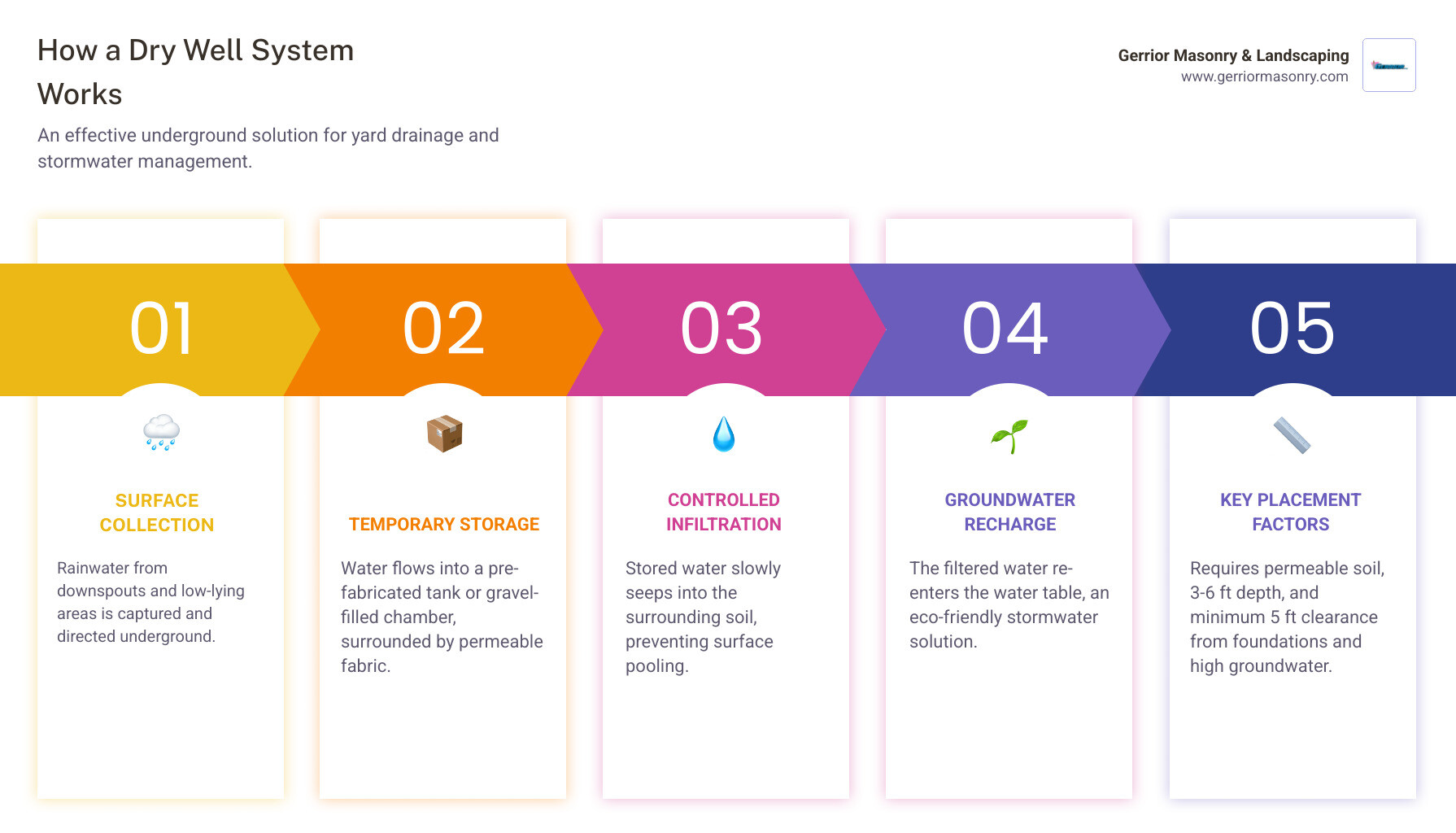
Quick dry well yard drainage definitions:
Signs You Need a Yard Drainage Solution
Poor drainage can be obvious, like a pond in your backyard, or subtle, like a musty basement smell. Here are the top indicators that your property in Middlesex or Essex County could benefit from a dry well yard drainage system:
- Persistent Water Pooling: Water stands in your yard for more than 24 hours after rain, drowning plants and attracting mosquitoes.
- Gutter Downspout Overflow: Downspouts dump water near your foundation, causing erosion and puddles.
- Marshy or Soggy Spots: Areas of your lawn feel consistently squishy, even when the rest of the yard is dry.
- Basement Moisture or Flooding: Water pooling around your foundation seeps into your basement, causing dampness and mold. Learn more about investigating your exterior drainage.
- Eroding Soil: Runoff washes away topsoil and mulch, creating trenches in your landscape.
- Damaged Landscaping: Plants in certain areas show signs of root rot or fail to thrive due to overwatering.
Ignoring these signs can lead to costly structural damage to your home.
The Main Benefits of a Dry Well System
A dry well yard drainage system protects your home, improves your property, and helps the environment. Key benefits include:
- Flood Prevention: By collecting and slowly dispersing excess water, dry wells prevent localized flooding, keeping basements and yards dry.
- Foundation Protection: A dry well directs water away from your foundation, reducing the risk of cracks, leaks, and the need for costly foundation repair.
- Usable Yard Space: Reclaim soggy patches of your lawn. A properly installed dry well is hidden underground, making your entire yard accessible and enjoyable after rain.
- Eco-Friendly: Dry wells recharge local groundwater and reduce polluted runoff into municipal sewers and natural waterways, protecting our local ecosystem.
- Low Maintenance: With proper installation and care, a dry well requires minimal upkeep and can last up to 30 years.
- Increased Property Value: A well-drained property is more appealing to homebuyers, as it eliminates concerns about expensive water-related repairs.
The Complete Guide to Dry Well Yard Drainage
A dry well is a carefully engineered system designed to manage stormwater effectively. Understanding its components is key to successful dry well yard drainage.
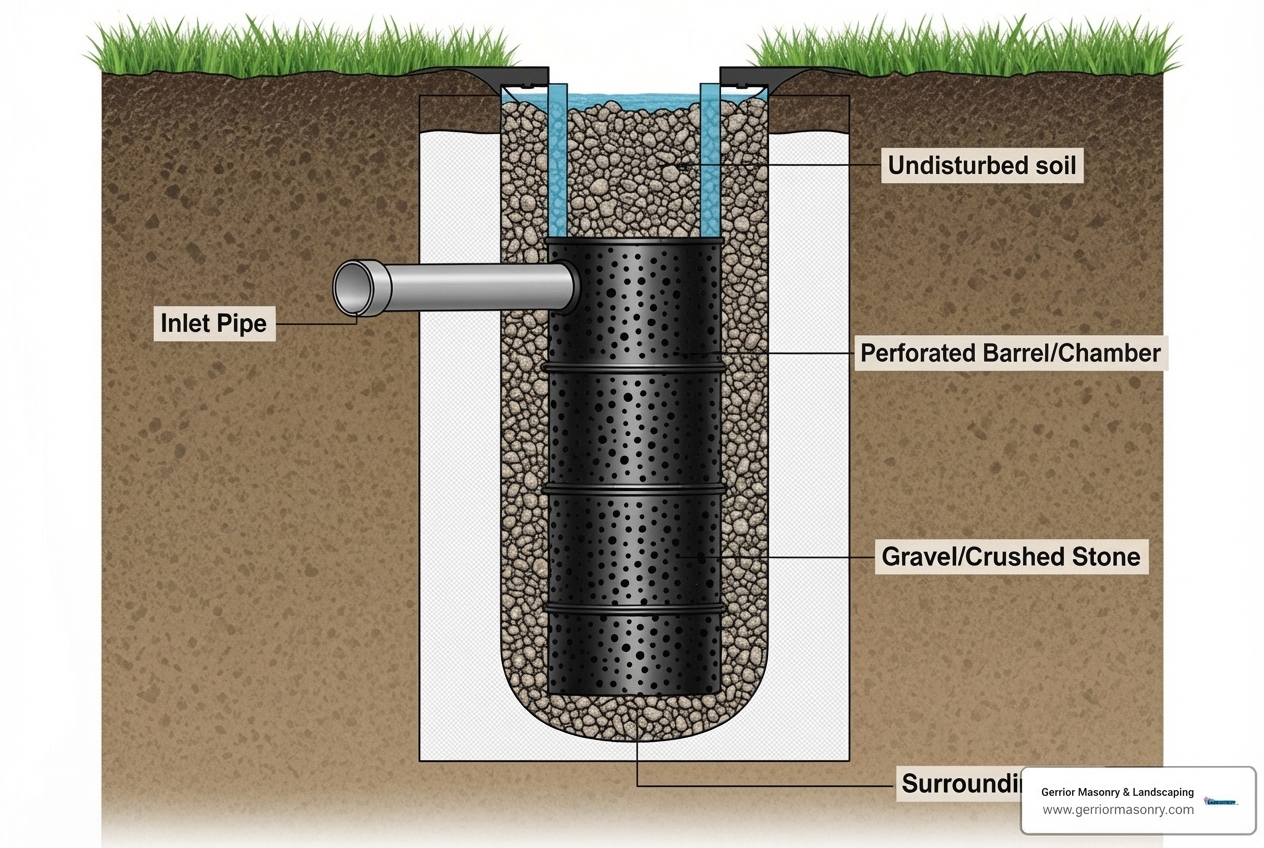
Dry wells offer high infiltration capacity with a small footprint, making them a low-cost solution with rapid construction.
Key Design Factors for Dry Well Yard Drainage
Careful planning is crucial for an effective dry well yard drainage system. We consider several factors to design the right solution for your property.
- Soil Percolation (Perc) Test: This critical test measures how quickly your soil absorbs water. We dig a test hole, typically 1-2 feet deep, and fill it with water. After the soil is saturated, we refill it and measure the rate at which the water level drops over a specific period. This rate, measured in inches per hour, determines the soil’s suitability. Fast-draining sandy soils are ideal, while slow-draining clay soils make dry wells less effective. A rate of at least 1 inch per hour is generally recommended for a dry well to be effective.
- Sizing the Dry Well: The well’s size depends on the runoff volume and the soil’s infiltration rate. The calculation involves determining the catchment area (e.g., the square footage of your roof that feeds a specific downspout) and multiplying it by the rainfall from a typical heavy storm in our region. This gives us the total volume of water the dry well must handle. We then use the soil’s perc rate to ensure the well is large enough to store this volume and allow it to infiltrate within a reasonable timeframe, usually 24-72 hours, preventing overflow.
- Depth Requirements: Dry wells are usually 3–6 feet deep, allowing water to bypass less permeable topsoil and reach more absorbent soil layers below. The exact depth is determined by the soil profile and the location of permeable layers.
- Placement Restrictions: Proper placement is vital for safety and function. Placing a dry well too close to a foundation can lead to oversaturation of the soil supporting your home, potentially causing settling or basement leaks—the very problems we aim to solve. Setbacks from property lines prevent drainage issues for your neighbors. Keeping the well bottom well above the seasonal high water table is critical; if the well is in the groundwater, it cannot drain.
- Foundations: Must be at least 10 feet (ideally 15-20 feet) away from foundations.
- Property Lines: Must be a safe distance from neighboring properties, often specified by local code (typically 5-10 feet).
- Groundwater & Impervious Layers: The bottom of the well must be at least 3-5 feet above the seasonal groundwater level and any impervious layers like rock or hardpan.
Step-by-Step Dry Well Installation
Professional installation is recommended to ensure your dry well yard drainage system is effective and long-lasting. Here’s a more detailed overview of the process:
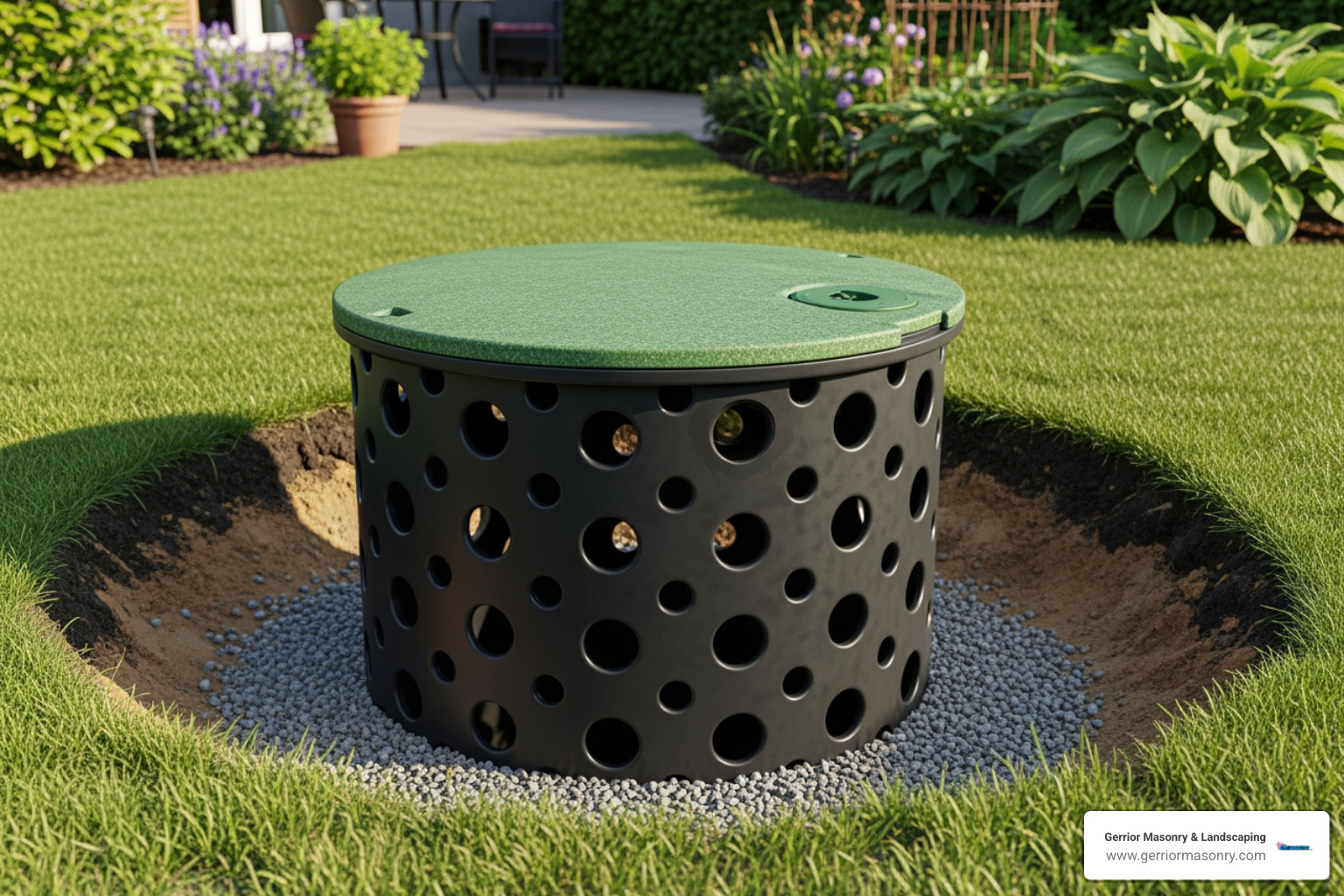
- Site Assessment and Planning: We conduct a thorough site assessment, including a professional perc test, to determine the best location, size, and design for your system. We also call DigSafe (811) to have all underground utilities located and marked before any digging begins.
- Gathering Materials: We source high-quality materials, including a pre-cast concrete or modern polyethylene tank, clean, washed gravel (to prevent sediment introduction), non-woven geotextile landscape fabric, durable PVC pipes, and often a pre-filter or silt trap to catch debris.
- Excavation: Our team excavates a pit to the specified dimensions, a task that often requires professional excavation services to ensure proper depth and safety. The excavated soil is carefully managed on-site or removed.
- Lining the Pit: The entire pit is carefully lined with the geotextile landscape fabric, with enough overlap to fully enclose the system. This is a critical step to prevent surrounding soil and fine silt from migrating into the gravel and clogging the system over time.
- Placing the Dry Well: The tank or chamber is carefully lowered and centered in the lined pit. It is checked to ensure it is level.
- Backfilling with Gravel: We backfill the space around and above the tank with clean, washed gravel. This gravel field not only provides structural support but also significantly increases the system’s total water storage capacity and provides a large surface area for infiltration.
- Connecting Inlet Pipes: A trench is dug from the collection point (like a downspout or catch basin) to the dry well. PVC pipes are laid with a slight downward slope (at least 1/8 inch per foot) to ensure positive flow and are connected securely to the dry well’s inlets. An overflow pipe leading to a safe discharge area may be added as a failsafe for extreme rain events.
- Final Cover: The top of the gravel is covered with the overlapping landscape fabric. The area is then topped with a layer of soil and finished with sod or seed to match the surrounding lawn. Once finished, the dry well is completely hidden from view, leaving your yard fully usable.
Comparing Dry Well Yard Drainage to Other Solutions
Dry wells are just one of several dry well yard drainage solutions. Understanding how they compare to other methods helps determine the best fit for your property.
| Feature | Dry Well System | French Drain System | Rain Garden (Bioretention Basin) |
|---|---|---|---|
| Primary Function | Collects and infiltrates concentrated runoff underground | Collects and redirects surface/subsurface water via pipe | Absorbs and filters surface runoff using plants & soil |
| How it Works | Underground chamber stores water for slow release into soil | Perforated pipe in a gravel trench diverts water elsewhere | Depressed garden with special plants and soil filters and absorbs water |
| Suitable Soil | Requires permeable soil (good perc rate) | Works in most soil types; redirects water | Benefits from good soil, but can be engineered |
| Typical Cost | $1,500 – $5,000+ (installation) | $1,000 – $3,000+ (installation) | $500 – $5,000+ (depending on size/plants) |
| Maintenance | Low (check inlets for sediment) | Low (clear outlets for clogs) | Medium (weeding, plant care) |
| Footprint | Small, underground, invisible | Linear trench, can be covered | Visible landscaped area |
| Aesthetic Impact | None, hidden underground | Minimal, can be covered by sod/mulch | High, improves landscape with native plants |
| Best For | Concentrated runoff (downspouts), low spots, flat yards | Diverting water along foundations or property lines | Filtering pollutants, aesthetic appeal, managing diffuse runoff |
| Drawbacks | Ineffective in heavy clay soil | Needs a downhill outlet, can clog | Requires specific plants, can attract mosquitoes if water stands |
A dry well is ideal for collecting concentrated water from a downspout or low spot, especially on flat properties with permeable soil. A French drain is better for intercepting and redirecting water across a linear area, like along a foundation. Often, the best solution is a custom combination of methods. Dry well yard drainage systems are for stormwater only; using them for gray water is not recommended and may be prohibited by local regulations.
Final Considerations Before You Dig
Before installing a dry well yard drainage system in Middlesex or Essex County, MA, it’s crucial to understand the long-term maintenance, costs, and regulations.
Maintenance, Lifespan, and Potential Drawbacks
While low-maintenance, dry wells require some care to ensure their impressive lifespan.
- Longevity: A professionally installed dry well can last up to 30 years.
- Clogging from Sediment: The main issue is clogging from sediment and debris. A silt trap or catch basin installed upstream is highly recommended to filter out debris before it enters the well.
- Inspection and Cleaning: Periodically check inlets to keep them clear. A silt trap should be cleaned every year or two to maintain flow and prevent clogs.
- Soil and Water Type: Dry wells are not effective in heavy clay soil and should only be used for stormwater, not gray water, to prevent clogging and groundwater contamination.
Understanding Costs and Local Regulations
The cost and regulatory requirements for a dry well yard drainage system are important considerations.
- Typical Costs: Installation costs can range from $1,500 to over $5,000. Please note these are average costs based on internet data and are not actual costs for Gerrior Masonry & Landscape Construction. The final price depends on system size, excavation complexity, materials, and local labor costs.
- Permit Requirements: Many Massachusetts towns require permits for drainage installations. It’s essential to check with your local building authority before starting a project.
- DIY vs. Professional Installation: While a small system may seem like a DIY project, professional installation is crucial for proper sizing, placement, and longevity. Incorrect installation can fail to solve the problem and may even cause property damage. Professional planning is especially important for projects that impact drainage or involve hardscaping services.
Get Expert Help for Your Yard Drainage Needs
Dealing with persistent yard flooding and drainage issues can be frustrating, but you don’t have to tackle it alone. Our team at Gerrior Masonry & Landscape Construction is here to help.
We offer professional assessments to determine the root cause of your drainage problems and recommend the most effective solutions, whether it’s a dry well, a French drain, grading, or a combination of methods. With over 30 years of experience, we pride ourselves on our skilled team and owner oversight on every project, ensuring high-quality results that protect your property for years to come.
Gerrior Masonry & Landscape Construction is based in Woburn, MA, and proudly services Middlesex and Essex County, Massachusetts. Don’t let a soggy yard ruin your outdoor enjoyment or threaten your home’s foundation. Contact us today for your dry well drainage project and let us help you achieve a dry, beautiful, and functional outdoor space.
