
Fieldstone Wall Construction: Build Solid 2025
Why Fieldstone Walls Remain a New England Treasure
Fieldstone wall construction is the art of building durable, beautiful barriers from local stones. For centuries, these timeless structures have defined the New England landscape as property boundaries, retaining walls, and garden focal points.
Quick Overview: What You Need to Know About Fieldstone Wall Construction
- Stone Selection – Select angular fieldstones with flat surfaces. Aged stone adds character; quarried stone offers consistency.
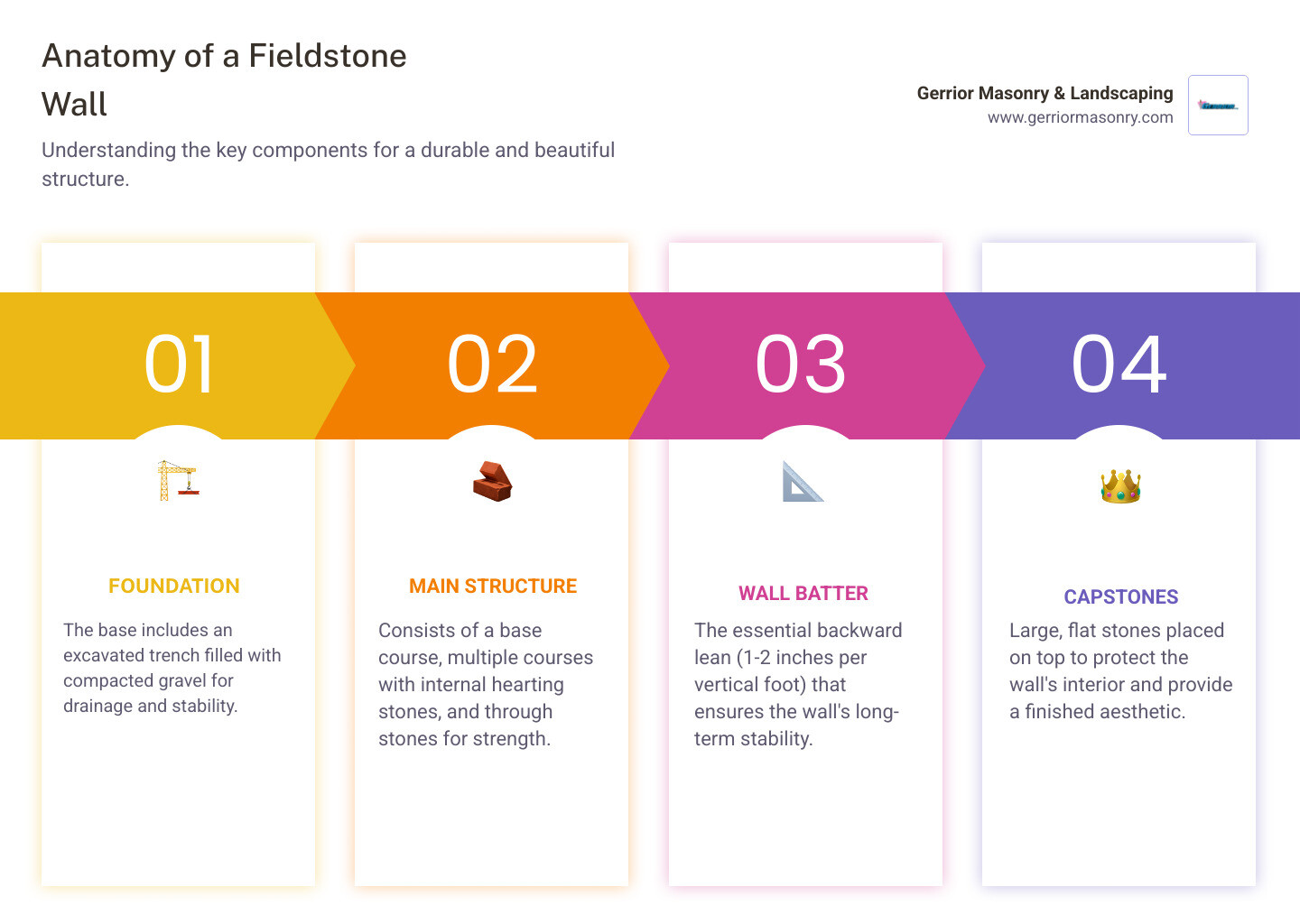
- Foundation – A compacted gravel foundation (6-8 inches deep) is essential for drainage and stability.
- Building Method – Dry-laid (mortarless) walls are flexible and drain well; mortared walls offer maximum strength.
- Key Technique – Follow the “one-over-two” rule: each stone must span the joint between two below it.
- Batter – Batter the wall (lean it back) 1-2 inches per vertical foot for stability.
- Materials Needed – Plan for 1 ton of stone per 7.5 face-feet for a 24″ wide freestanding wall.
Early settlers built these walls from stones cleared from their fields. Today, they symbolize New England’s heritage, resilience, and connection to the land.
I’m Joe Gerrior, owner of Gerrior Masonry & Landscape Construction Corp. My team has perfected fieldstone wall construction in Massachusetts for over 34 years, blending traditional craftsmanship with modern techniques to build generational walls. Understanding these fundamentals is the first step toward creating your own.
Gerrior Masonry & Landscape Construction is based in Woburn, MA, and services Middlesex and Essex County, Massachusetts.
Fieldstone wall construction terminology:
A Practical Guide to Fieldstone Wall Construction
Building with stone connects us to tradition. A fieldstone wall construction project demands patience, but the pride in creating a structure that could stand for centuries is immense. This guide offers a step-by-step approach to building your own fieldstone wall.
Planning Your Project: Materials and Foundation
Proper planning is key to a successful project.
Selecting the Right Stones: Aged vs. Quarried
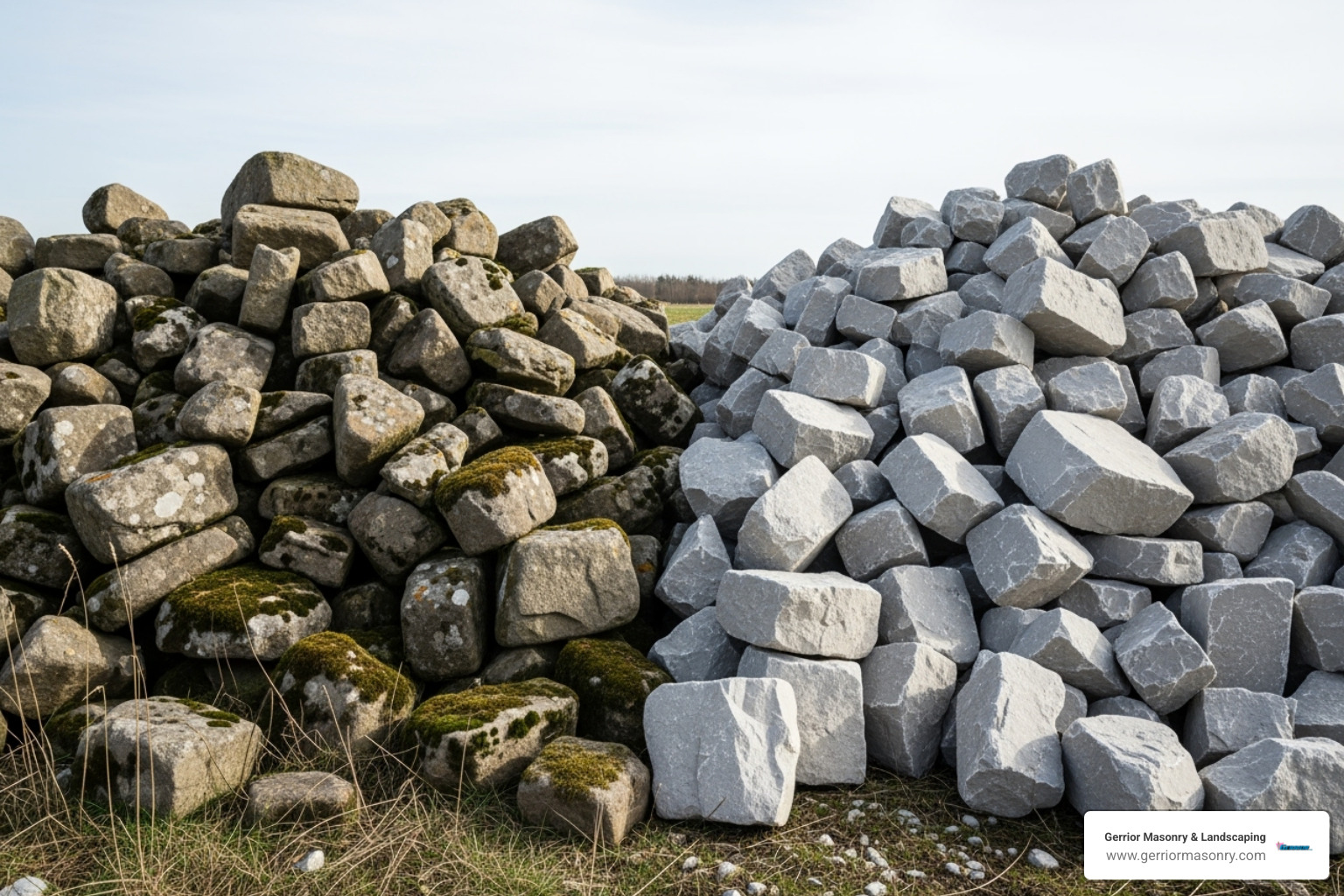
The uniqueness of each fieldstone gives these walls their character. Choose stones with angular faces for stability, as rounded stones are difficult to stack without mortar. At least one flat face is needed for a solid bedding surface.
Aged fieldstone, gathered from land-clearing, has a weathered look with moss and lichen. Quarried fieldstone is more uniform, ideal for a consistent appearance. Sourcing stone locally is cost-effective and helps the wall fit the landscape.
Estimating Quantities and Cost
Budgeting for stone is crucial. As a rule of thumb:
- For a freestanding wall (24″ wide), plan on one ton of stone for every 7.5 face-feet.
- For a retaining wall (18″ wide), you’ll need about one ton for every 10 face-feet.
- You’ll also need about one ton of crushed stone for every six tons of fieldstone for the foundation.
Delivered fieldstone prices range from $125 to over $900 per ton, depending on the stone type and market. These are internet-based averages, not quotes from Gerrior Masonry services. Always get a detailed quote for your project.
Tools and Materials Management
Essential tools include safety gear (heavy-duty gloves, steel-toed boots, eye protection), digging tools (shovels, mattock, wheelbarrow, pry bars), measuring tools (line level, stakes, string, 4- or 8-foot level), and shaping tools (stone hammer, hand sledge, carbide-tipped chisels). A plate compactor or hand tamper is necessary for the foundation.
Organize materials on-site by creating separate piles for foundation stones, face stones, hearting (filler), and capstones. Keep pathways clear to prevent trips.
Preparing the Site and Foundation
A solid foundation is critical. First, mark and clear the area of vegetation. Then, excavate a trench deep enough for your largest base stones plus 6-8 inches for gravel, and at least 2 feet wider than the planned wall base. This Old House provides detailed instructions on site preparation.
For more information about our excavation services, visit our dedicated page.
Lay landscaping fabric in the trench, fill it with 6-8 inches of crushed stone or gravel, and compact it thoroughly. This creates a stable, well-draining base that prevents frost heaves. Learn more about creating a solid base for retaining walls in our guide.
Fundamental Techniques for Fieldstone Wall Construction
This is where a pile of rocks becomes a lasting structure.
Laying the Base Course: The Foundation of Strength
The base course is most important. Use your largest, flattest, most stable stones on the compacted gravel. Arrange them tightly to minimize gaps and prevent wobbling. For stability, the base should be at least 20 inches wide for freestanding walls and 2 feet wide for retaining walls up to 4 feet high.
Building Up the Wall: Courses, Interlocking, and Hearting
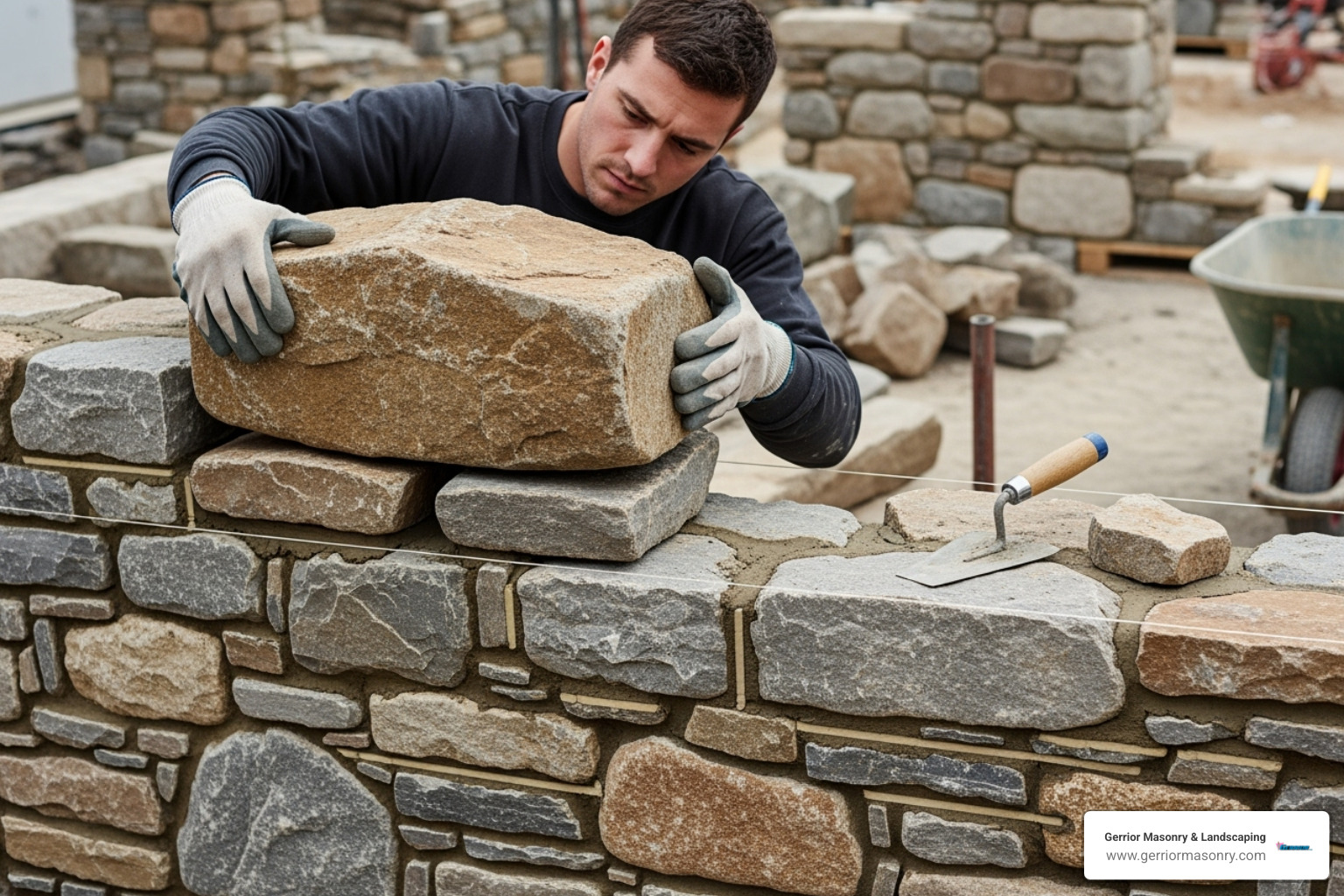
The golden rule is the “one-over-two” rule: each stone must bridge the joint between two stones below it. This prevents vertical cracks and creates a strong, interlocking structure. Avoid “running joints” (vertically aligned seams), which create weak points.
Fill internal voids with smaller, angular stones called “hearting material” to prevent shifting and add mass. For retaining walls, backfill with soil and tamp thoroughly as you build.
For more information about our hardscape construction services, including custom stone walls, contact us.
Managing Irregular Shapes and Batter
Working with irregular stones requires patience. Test a stone in multiple orientations before shaping it with a hammer and chisel, as a natural fit is stronger.
A stable wall has a slight inward slope called a “batter” to improve stability against gravity and soil pressure. Aim for a lean of 1-2 inches for every 12 inches of vertical height, using stakes and string lines as a guide.
Weaving Corners and Safety
Corners require special attention. “Weave” the stones by alternating the direction of long corner stones in each course to create a strong, interlocking bond that prevents separation.
Safety is paramount. Lift with your legs, get help for heavy stones, and wear protective gear. Keep your workspace tidy and take your time, as most injuries happen when tired or rushing.
Dry-Laid vs. Mortared: A Key Decision for Longevity
Choosing to use mortar is a major decision affecting your wall’s appearance, durability, and construction.
| Feature | Dry-Laid Fieldstone Walls | Mortared Fieldstone Walls |
|---|---|---|
| Longevity | Can last for centuries; allows for movement, mitigating freeze/thaw damage. | Can last a lifetime or longer; susceptible to mortar degradation and frost heave cracking if not properly installed. |
| Cost | Generally lower material cost (no mortar); higher labor skill for stability without mortar. | Higher material cost (mortar, crushed stone); labor can be faster with less precise stone fitting. |
| Skill Level | High; requires careful stone selection and precise fitting for structural integrity. | Intermediate; mortar provides forgiveness for less precise stone fitting. |
| Drainage | Excellent; natural gaps allow water to pass freely, ideal for retaining walls in wet climates. | Good, but requires weep holes or a drainage system behind retaining walls to prevent hydrostatic pressure. |
| Repair | Easier to repair; individual stones can be removed and replaced without affecting the entire structure. | More complex; mortar joints need to be chipped out and repointed, which can be labor-intensive. |
| Aesthetic | Rustic, natural, organic look; often features moss and plants growing in crevices. | More formal, finished look; uniform joints; can use pigmented mortar to mimic dry-laid. |
Dry-Laid Fieldstone Walls
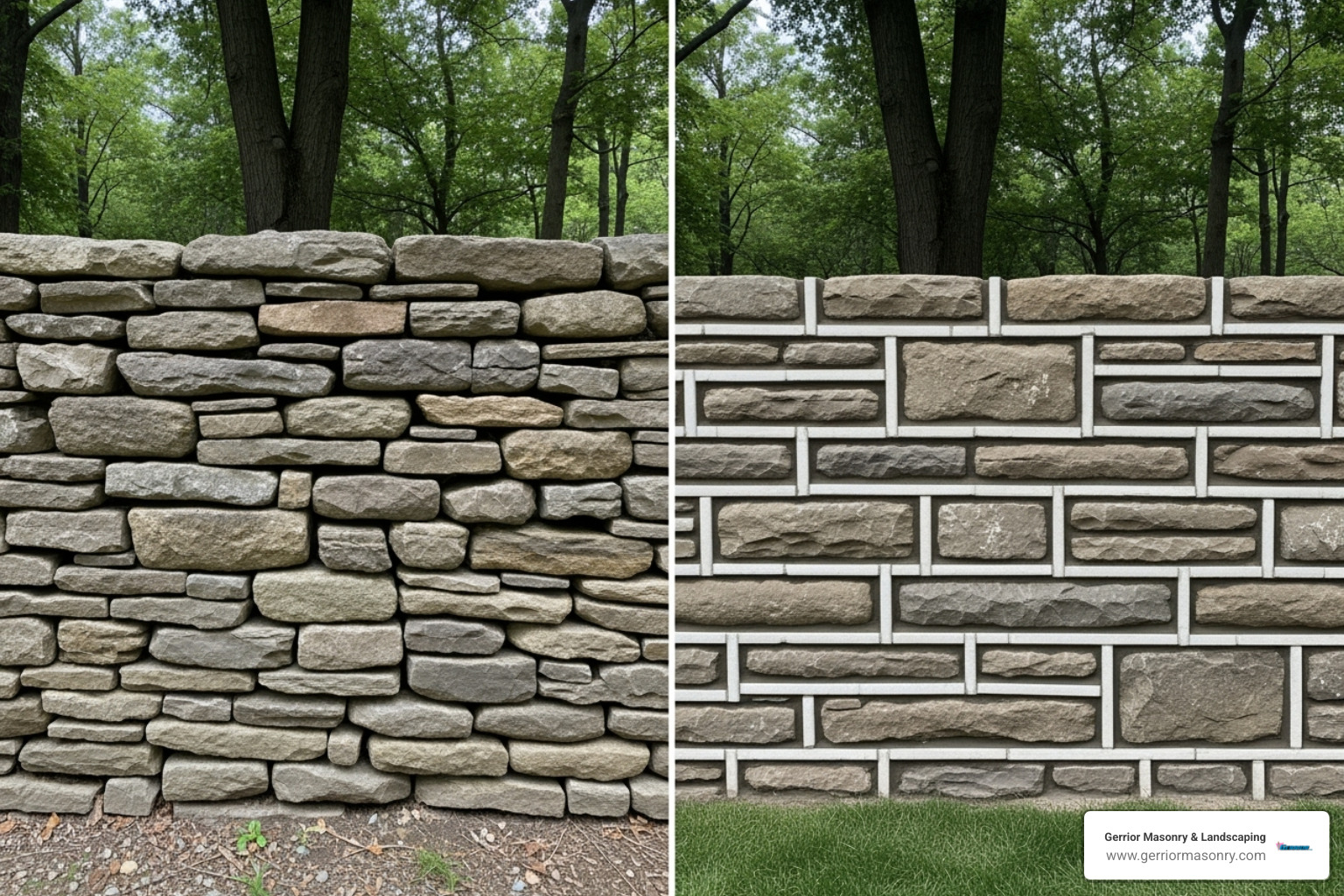
Dry-laid walls use no mortar, relying on gravity and friction. Their flexibility and excellent drainage allow them to move with New England’s freeze-thaw cycles. This method requires careful fitting for a timeless, organic look. Learn more on our dry stone garden walls page.
Mortared Fieldstone Walls
Mortared walls use a mortar mix for a rigid, strong structure, ideal for taller walls or a formal look. Use bondstones spanning the wall’s width to tie the faces together. These walls need proper drainage to prevent cracking from hydrostatic pressure. For a dry-laid look with added strength, use pigmented mortar to blend joints.
Conclusion: Building a Lasting Legacy with Stone
We’ve covered the essentials of fieldstone wall construction, from planning and foundations to key stone-laying techniques. This craft combines engineering with artistry, demanding patience and respect for the materials.
Capstones and Steps: The Finishing Touches
Capstones are the final, protective layer. These thick, flat stones shield the wall’s core from weather, preventing erosion and securing the stones below. For seating walls, choose smooth capstones. Integrating granite steps with your wall creates beautiful, seamless transitions, adding function and interest. Learn more at our steps and walkways page.
The Historical and Aesthetic Significance of New England Fieldstone Walls
New England fieldstone walls are historical landmarks. Built by early settlers clearing land, they represent a legacy of hard work and connection to the region. Their timeless aesthetic adds character and permanence that modern materials can’t replicate. A well-built wall connects you to this rich history.
When to Call a Professional
Building a fieldstone wall is rewarding but demanding. Consider hiring a professional for:
- Complex or Tall Projects: Retaining walls over 3-4 feet require engineering to safely handle soil and water pressure. Taller walls typically need professional construction.
- Time and Physical Demands: Even a short wall can take an experienced team days. If you have a busy schedule or physical limitations, hiring a pro is the safest, most efficient option.
- Structural Integrity: An experienced mason understands drainage, batter, and other factors crucial for longevity in New England’s climate.
- Wall Repairs: Repairing an existing wall requires a trained eye to match the original style and ensure stability. Our stone masonry repairs service specializes in this.
Building a fieldstone wall is an investment for generations, a chance to leave a lasting mark on your landscape for your family to admire.
For expert help with your fieldstone wall or other masonry projects, trust the experienced team at Gerrior Masonry & Landscaping. Based in Woburn, MA, we serve communities throughout Middlesex and Essex County, Massachusetts. Contact our masonry contractors in Reading, MA, for a consultation.

