
Garden block wall construction: 5 Pro Tips
Why Garden Block Wall Construction Transforms Your Landscape
Garden block wall construction is one of the most effective ways to add both beauty and function to your Massachusetts property. Whether you’re looking to create raised garden beds, define outdoor spaces, or manage a sloping yard, concrete block walls offer a durable solution that can last decades with proper installation.
Here’s what garden block wall construction involves:
- Planning and Design – Determining wall type (retaining vs. freestanding), height, and materials needed
- Site Preparation – Excavating a proper trench and creating a level, compacted base
- Foundation Work – Installing drainage systems and laying the critical first course of blocks
- Wall Assembly – Stacking blocks in a staggered pattern while maintaining level alignment
- Finishing – Adding capstones and final backfill for a professional appearance
The process typically costs $1,200 to $3,600+ for a DIY project, though professional installation ensures proper drainage and structural integrity. These are average costs based on internet data and not actual costs for Gerrior Masonry services.
Key benefits include:
- Creating usable space on sloped terrain
- Excellent drainage control to prevent erosion
- Low maintenance once properly installed
- Increases property value and curb appeal
I’m Joe Gerrior, owner of Gerrior Masonry & Landscape Construction Corp. With over 34 years of experience perfecting garden block wall construction in Massachusetts, my team has built countless walls. I’ll share the essential steps and insights to ensure your wall stands strong for generations.
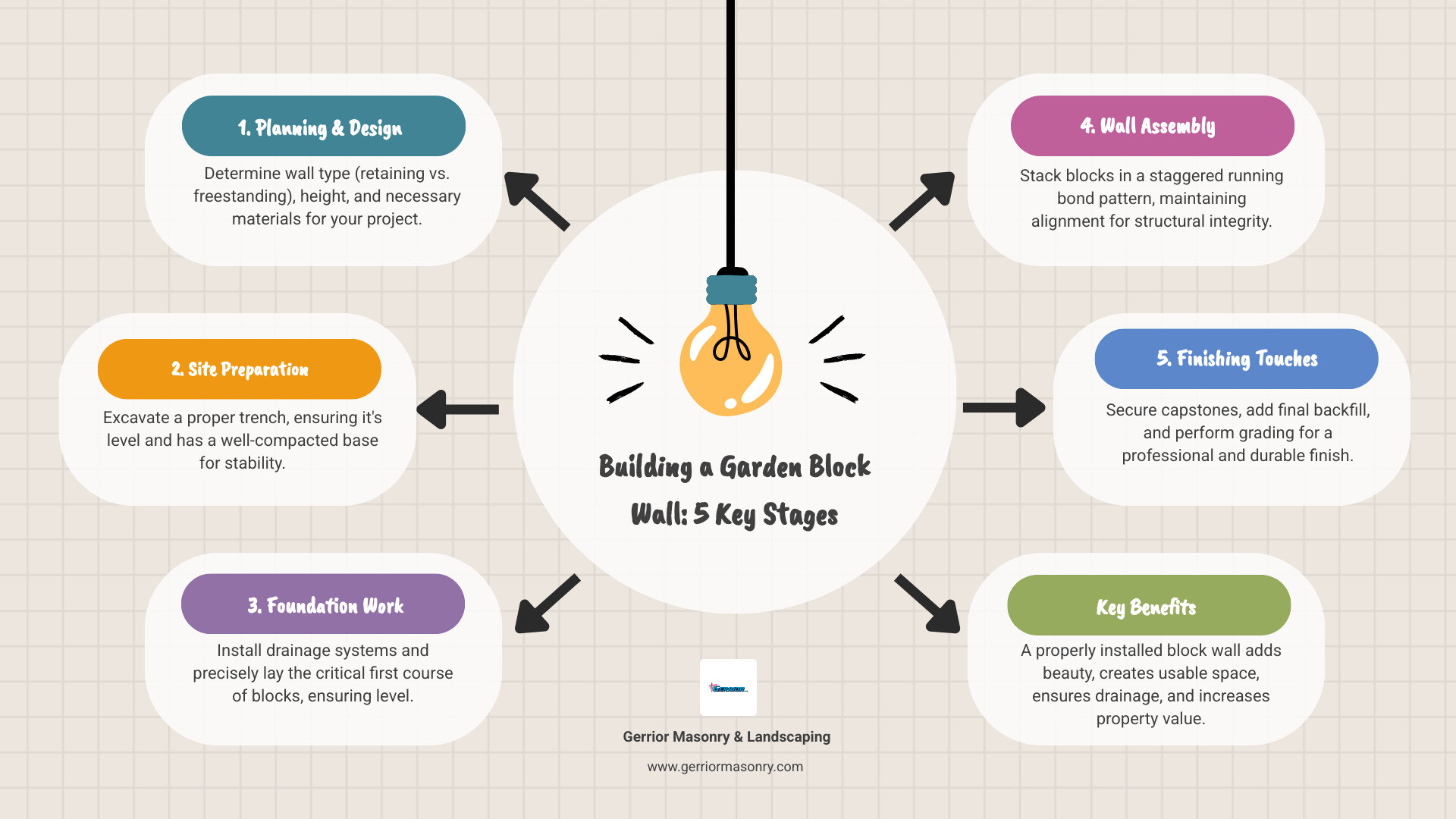
Quick look at garden block wall construction:
Step-by-Step Guide to Garden Block Wall Construction
Building a garden block wall is a satisfying DIY challenge that delivers immediate visual impact and long-term value. Let me walk you through the process, sharing insights from over three decades of wall building in Massachusetts.
Planning, Tools, and Materials
Before we grab our shovels, let’s talk strategy. The success of your garden block wall construction project depends entirely on smart planning and having the right tools at hand.
Understanding Your Wall Type
The first decision you’ll make determines everything else: are you building a retaining wall or a freestanding wall? This choice is critical, as it’s the difference between a decorative border and a structural workhorse.
Freestanding walls divide spaces, create garden borders, and add visual interest without dealing with heavy soil pressure. Think of them as landscape punctuation marks that help organize your outdoor rooms.
Retaining walls, on the other hand, are the heavy lifters. They hold back soil on slopes, prevent erosion, and create usable flat areas from challenging terrain. These walls face constant pressure from the earth behind them, which means they need robust foundations and proper drainage to succeed.
Height Matters More Than You Think
Wall height affects everything from permits to construction methods. For DIY garden block wall construction, I recommend staying under 36 inches. Most Massachusetts towns don’t require permits for garden walls under 42 inches, but always check with your local building department. A quick call is easier than tearing down a finished wall.
Choosing the Right Blocks
Modern concrete blocks have come a long way. Today’s interlocking systems feature lips, pins, and connection methods that make stacking more foolproof. Many blocks have a rear lip that helps align the next course – just remember you might need to chip this off the first course so those blocks sit flat against your foundation.
The beauty of concrete blocks lies in their durability, affordability, and DIY-friendly design. They handle our New England freeze-thaw cycles beautifully and provide a professional look without requiring years of masonry training.
Gathering Your Arsenal
Having the right tools transforms garden block wall construction from a struggle to satisfying progress. You’ll need concrete retaining wall blocks (buy 10% extra for cuts and repairs), crushed stone for your base and backfill, and a mason line with stakes for layout.
Your level collection should include a 4-foot carpenter’s level for overall alignment and a torpedo level for individual blocks. A rubber mallet is essential for adjustments, while shovels, rakes, and a hand tamper handle the heavy lifting.
Don’t forget landscape fabric to separate soil from drainage gravel, construction adhesive for capstones, and proper safety gear including eye protection, gloves, and sturdy boots. When cutting blocks, add hearing protection and a respirator – concrete dust is hazardous.
Budget-wise, expect to invest $1,200 to $3,600+ for a DIY project, depending on size and materials. These are average costs based on internet data and not actual costs for Gerrior Masonry services. For more comprehensive hardscaping information, check out our hardscaping services, and you can learn more about garden wall basics from manufacturers.
Preparing the Foundation and Trench
A perfect foundation makes everything else easier, while a sloppy one guarantees future headaches.
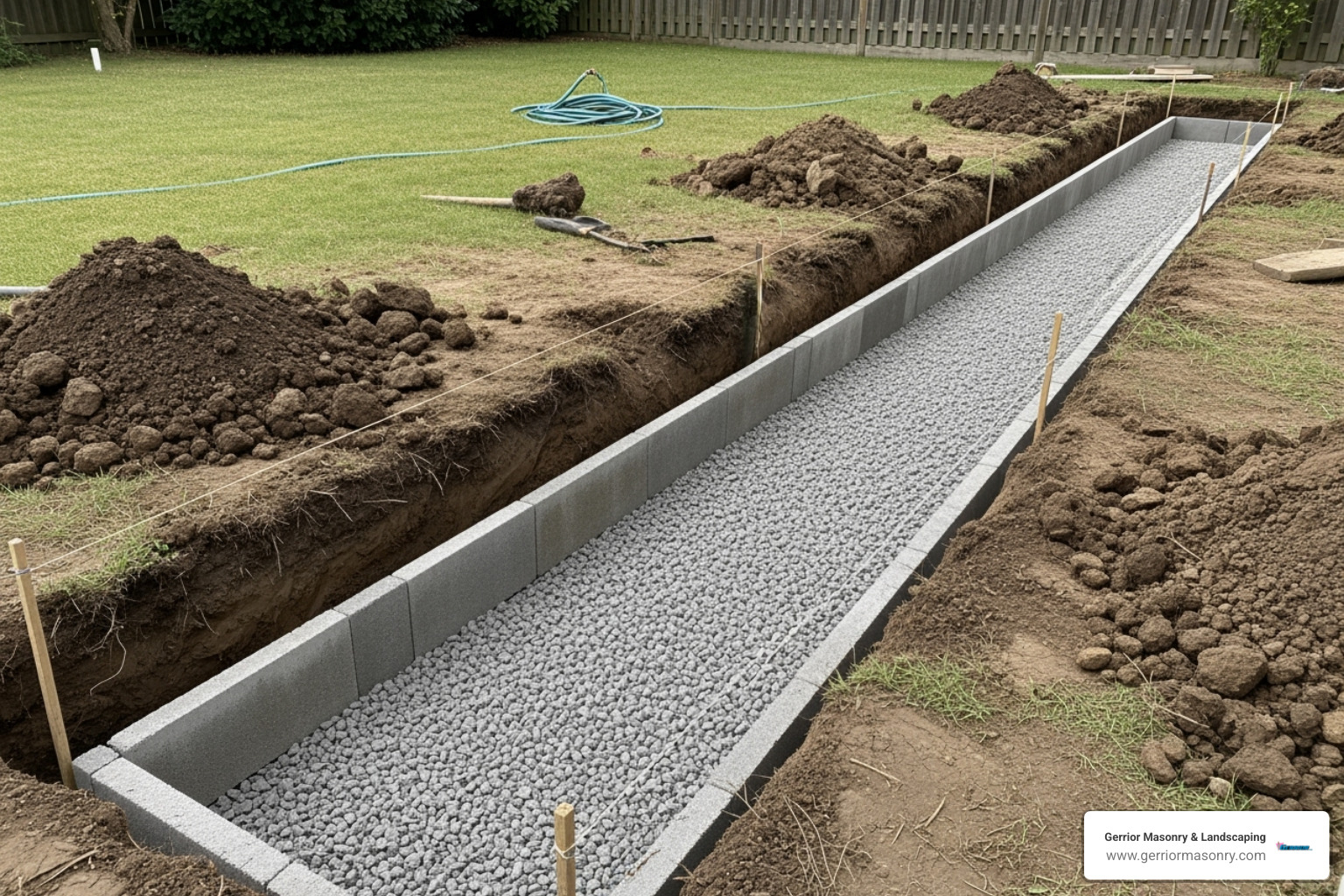
Marking Your Territory
Start by marking your wall’s exact path using stakes and mason line for straight runs. For curves, a garden hose works perfectly to visualize the shape before committing to digging. These lines become your blueprint for the entire project.
The Art of Excavation
Your trench should be roughly twice your block width. For 7-inch blocks, aim for a 14-inch wide trench. Depth depends on wall height, but plan for 4 to 6 inches of base material plus enough depth to bury half of your first block course. This buried portion provides crucial stability and prevents your wall from sliding.
Remove everything organic from the trench – grass, roots, topsoil, and any decomposable materials. These will settle over time, creating foundation problems.
Working with Slopes
If your wall follows a slope, you’ll need to “step” your foundation. Create level sections that follow the land’s contour while keeping each block course perfectly horizontal. Always start at the lowest point and work uphill – this prevents water from pooling in your foundation.
Creating the Perfect Base
Once your trench is excavated, compact the bottom thoroughly with a hand tamper or plate compactor. You want a firm, solid foundation that won’t shift under load.
Next comes your crushed stone base – typically 4 inches for walls under 4 feet. Spread this 3/4-inch clean gravel evenly and compact it in 2 to 3-inch lifts. Each lift needs thorough compaction before adding the next.
The final step is leveling. Your base must be perfectly level both lengthwise and front-to-back. Use your long level religiously, making adjustments by adding or removing small amounts of gravel. This attention to detail pays dividends when you start stacking blocks.
For professional excavation insights, visit our excavation services page.
Laying the Blocks and Ensuring Proper Drainage
Now you can watch your wall take shape block by block.
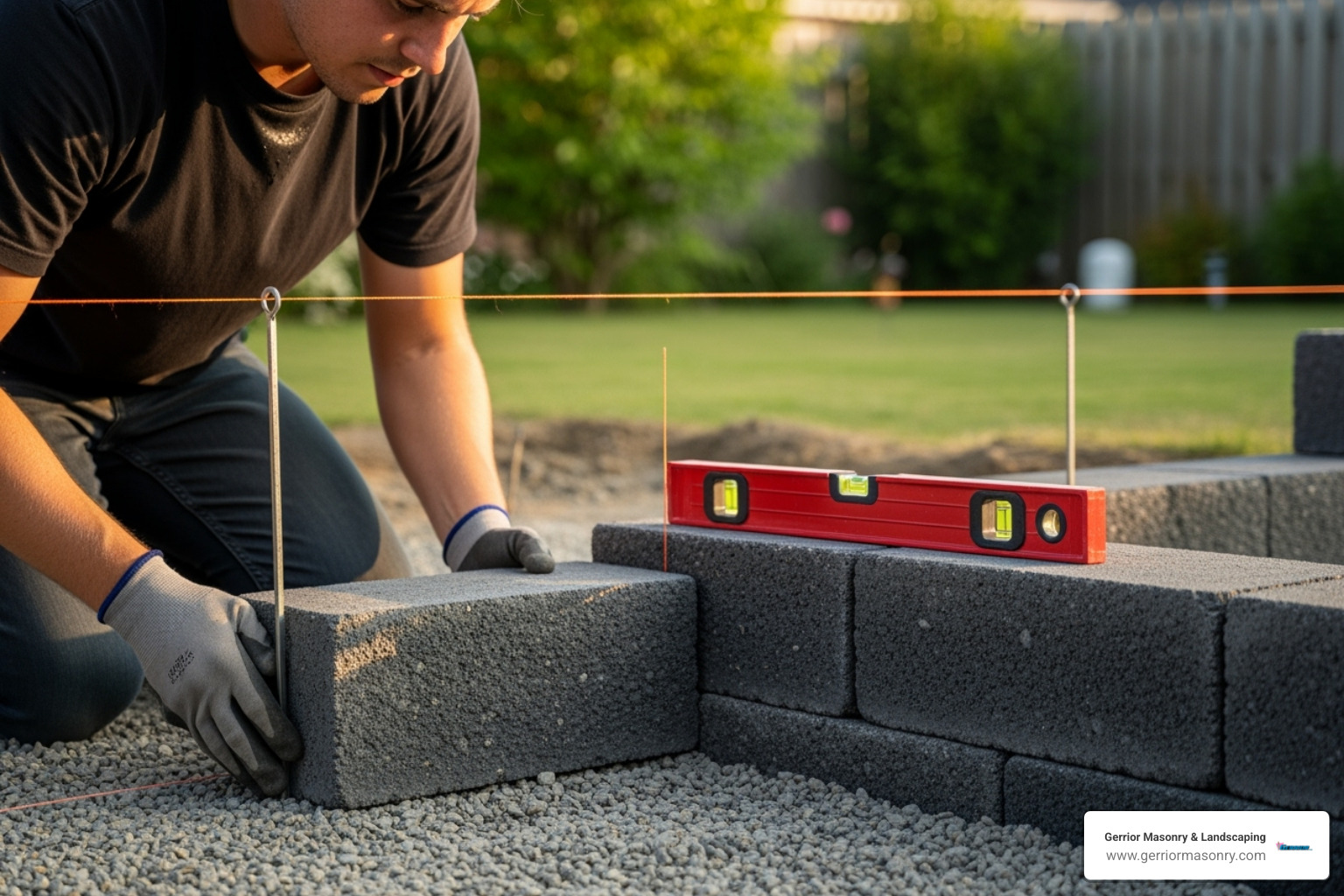
The Critical First Course
Your first course of blocks is critical. Start at the lowest elevation and place each block firmly on the compacted gravel base. If your blocks have interlocking lips, ensure they face up and forward (unless removed for the base course).
Check each block with a torpedo level—it must be perfect side-to-side and front-to-back. Adjust by tapping with a rubber mallet or adding small amounts of gravel. Use a long level to check alignment across multiple blocks. This course demands perfection, as any error gets magnified with each row.
The Running Bond Pattern
Strong walls depend on staggered joints, never stacking blocks directly on top of each other. This “running bond” pattern distributes weight evenly and prevents weak vertical seams.
Start your second course with a half block or offset the first block by at least a quarter of the block length from the one below. Continue this staggered pattern throughout your wall, checking level after each block placement.
Drainage: Your Wall’s Best Friend
For retaining walls, proper drainage prevents hydrostatic pressure, which can destroy even well-built walls. Install a perforated drain pipe directly behind your base course, sloping it about 1 inch per 10 feet toward an outlet that daylight every 50 feet.
Cover the drain pipe with clean 3/4-inch crushed gravel – this becomes your primary backfill material. This gravel allows water to flow freely to your drain pipe instead of building pressure behind your wall.
Smart Backfilling Techniques
As you build each course, backfill simultaneously with clean crushed gravel. Fill the hollow block cores with this same material for added mass and stability. Work in 6 to 8-inch lifts, compacting thoroughly after each one.
Place landscape fabric directly behind your blocks before adding gravel. This geotextile prevents soil migration into your drainage system, maintaining its effectiveness for decades. Avoid heavy compaction within 3 feet of your wall’s back to prevent shifting during construction.
For comprehensive drainage solutions, explore our drainage systems services.
Finishing Touches and Common Mistakes
These final steps transform your garden block wall construction from functional to beautiful and help you avoid common DIY pitfalls.
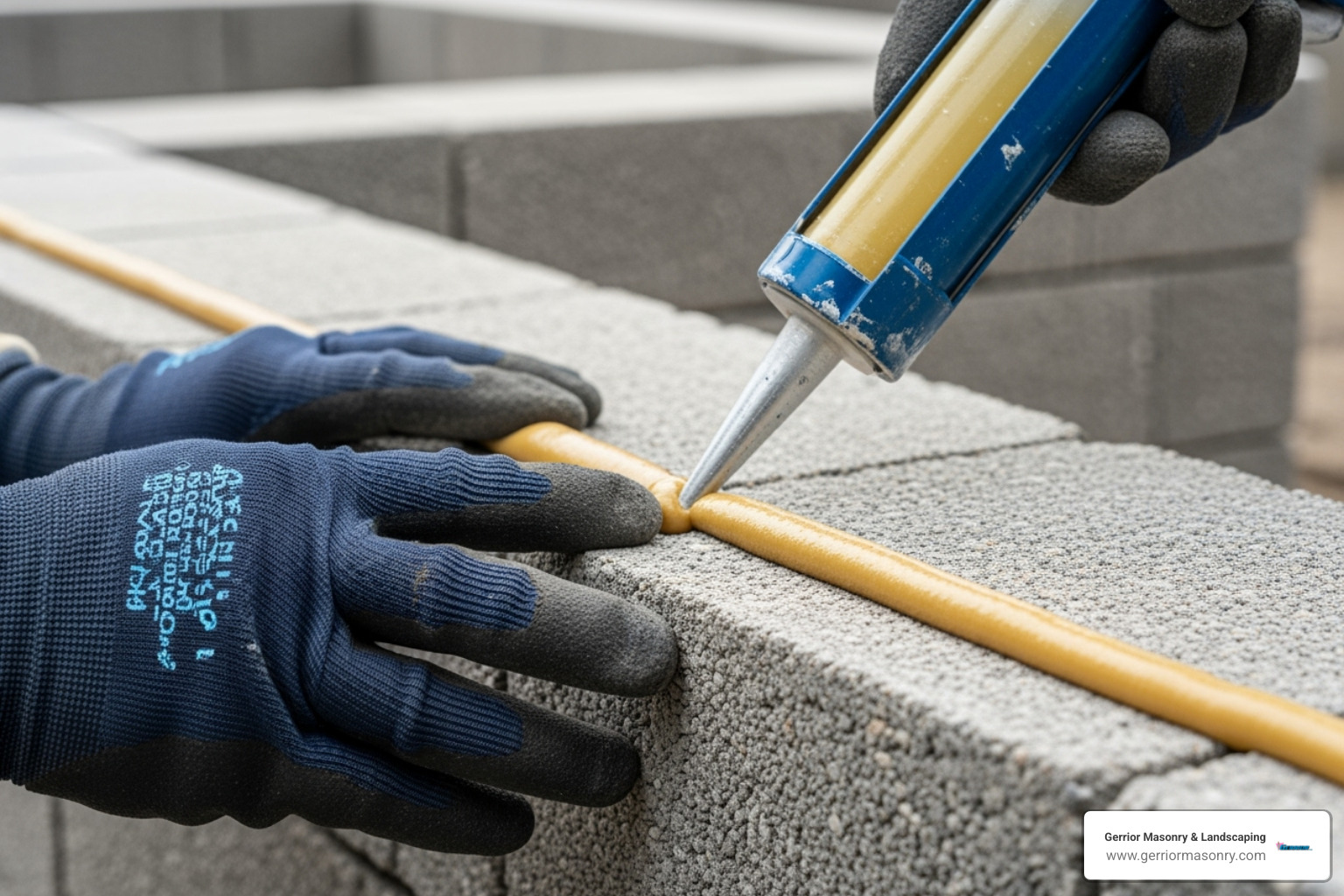
Crowning Your Achievement
Capstones provide that finished, professional appearance while protecting your wall from weather. Clean debris from your top course, then apply a generous bead of construction adhesive before setting each capstone. Most capstones overhang the wall face by 1 to 1.5 inches, creating an attractive shadow line and directing water away from the wall.
Cutting Blocks Like a Pro
You’ll inevitably need custom-sized blocks for ends and curves. A mason’s chisel and hammer works for small cuts, but an angle grinder with diamond blade delivers cleaner, more precise results. Always wear safety glasses, gloves, and a respirator when cutting – concrete dust is hazardous.
Learning from Others’ Mistakes
In my 30+ years, I’ve seen the same mistakes repeated. Poor foundations top the list—a base that isn’t level, compacted, or deep enough guarantees failure.
Ignoring drainage ranks second, especially for retaining walls. Water buildup creates immense pressure that even perfect construction can’t withstand. Always include proper drainage systems.
Skipping the level check on your base course multiplies small errors into major problems by the top of your wall. Improper backfilling with excavated soil instead of clean gravel compromises drainage and leads to eventual failure.
Stack bonding (aligning vertical joints) creates weak points, while forgetting to call 811 before digging risks hitting utility lines – dangerous and expensive. Finally, using decorative blocks for structural applications or ignoring permit requirements can create costly problems down the road.
With careful attention to these details, your garden block wall construction project will provide decades of satisfaction. Check out our finished landscape walls for inspiration and examples of professional craftsmanship.
When to Call a Professional for Your Garden Block Wall Construction
Let’s be honest – there’s something deeply satisfying about building a wall with your own hands. But sometimes, the smartest move is knowing when to put down the rubber mallet and pick up the phone.
After more than three decades in the masonry business, I’ve seen plenty of DIY projects that started with enthusiasm and ended with… well, let’s just say they ended with a call to professionals like us. The good news? Recognizing when a project is beyond your comfort zone isn’t admitting defeat – it’s showing wisdom.
When Project Complexity Goes Beyond DIY
The magic number for garden block wall construction is typically 4 feet. Once your wall climbs above this height, you’re entering territory that requires more than just determination and a weekend.
Taller walls face enormous pressure from the soil they’re holding back. We’re talking about tons of force pushing against your blocks. This means your wall needs engineered designs with specific calculations for reinforcement, proper geogrid placement between courses, and sometimes rebar and concrete fill within the block cores.
Here’s what many DIYers don’t realize: walls over 4 feet often require an engineer’s stamp in Massachusetts. That’s not bureaucratic red tape – it’s a safety requirement based on decades of construction experience and, unfortunately, wall failures.
When Your Site Fights Back
Even a modest 3-foot wall can become a professional job when Mother Nature doesn’t cooperate. Significant slopes turn a straightforward project into a complex engineering challenge. I’ve seen beautiful walls built on steep terrain that looked perfect on day one but started leaning within a year because the foundation wasn’t properly stepped and reinforced.
Poor soil conditions are another game-changer. Sandy soil that drains too quickly, heavy clay that holds water like a sponge, or unstable fill dirt all require specialized knowledge. We test soil conditions and adjust our approach accordingly – something that’s hard to do without experience and the right equipment.
If your wall needs to support additional weight – maybe a driveway above it or a patio – you’re definitely in professional territory. The engineering requirements multiply quickly when your wall becomes load-bearing.
The Real Value of Professional Expertise
Here’s what over 30 years of experience teaches you: every soil type behaves differently, every slope presents unique challenges, and every drainage situation requires a custom solution. We’ve built walls that are still standing strong after 25+ years because we understand these nuances.
Our owner oversight on every project means I’m personally involved in ensuring your wall meets not just local codes, but our own high standards. We’ve seen the aftermath of failed DIY walls – the expensive repairs, the frustrated homeowners, and sometimes the safety hazards. It’s heartbreaking, and it’s entirely preventable.
The truth is, a properly built retaining wall isn’t just about stacking blocks. It’s about understanding soil mechanics, water management, and structural engineering. When we build your wall, we’re not just thinking about how it looks today – we’re engineering it to handle decades of freeze-thaw cycles, heavy rains, and the natural settling that every landscape experiences.
For a durable and professionally built garden block wall construction project in Middlesex or Essex County, Massachusetts, contact the experts at Gerrior Masonry & Landscaping. We proudly serve communities like Woburn, Andover, Lexington, Newton, and many more.
Get a professional consultation for your garden wall installation.
Gerrior Masonry & Landscaping is based in Woburn, MA, and services Middlesex and Essex County, Massachusetts.
