
Garden Wall Installation: Top 5 Easy Success Tips 2025

Garden wall installation is an effective way to improve both the functionality and aesthetic appeal of your outdoor space. By constructing a garden wall, you can:
- Reduce soil erosion and effectively manage water drainage.
- Create distinct areas for planting or seating, enhancing the usability of your garden.
- Increase property value by adding a stunning landscape feature.
For homeowners who appreciate the beauty and utility of well-designed outdoor areas, a garden wall can make all the difference.
Having spent over 34 years serving the Massachusetts area, I, Joe Gerrior, have seen how Garden wall installation can transform any yard. At Gerrior Masonry & Landscaping, our team is dedicated to bringing your vision to life with exceptional care and skill.

Simple Garden wall installation glossary:
– Stone wall design ideas
– Stone wall restoration
– retaining wall repair near me
Planning Your Garden Wall Installation
Before you dive into garden wall installation, careful planning is crucial. It ensures that your wall not only looks great but also stands the test of time. Let’s break down the key aspects you need to consider:
Design Considerations
Start by envisioning the purpose and appearance of your garden wall. Do you want it to serve as a decorative feature, a functional barrier, or both? Consider these factors:
- Height and Length: Determine the dimensions based on your garden’s layout and your needs. Taller walls may require additional support and planning.
- Shape and Style: Decide whether you want a straight wall or a curved one. The style should complement your home’s architecture and existing landscape.
- Integration: Think about how the wall will integrate with other garden features like pathways, patios, or water features.
Material Selection
Choosing the right materials is vital for the wall’s durability and aesthetic appeal. Here are some popular options:
- Concrete Blocks: These are DIY-friendly, durable, and can be stacked easily. Interlocking blocks add extra security and are ideal for beginners.
- Natural Stone: Offers a timeless look but may require professional installation due to its weight and complexity.
- Bricks: Classic and versatile, but require precise laying to ensure stability.
The material you choose should match your design vision and budget. It’s often wise to purchase 10% more than estimated to account for errors or future repairs.
Local Building Codes
Before starting your project, check local regulations. Here’s what you should know:
- Permits: Depending on your wall’s height and location, a building permit may be necessary. Always check with your local building authority.
- Utility Lines: Call 811 before digging to avoid hitting underground utilities. This is a critical safety step.
- Height Restrictions: Some areas have height limits for garden walls, especially if they border public spaces or neighbors.
By taking the time to plan your garden wall installation, you ensure a smoother process and a more successful outcome. With these considerations in mind, you’re ready to move on to the next step: the actual installation process.
Step-by-Step Guide to Garden Wall Installation
Now that you’ve planned your garden wall, it’s time to bring your vision to life. Follow this step-by-step guide to ensure a successful garden wall installation.
Base Preparation
The foundation is crucial for stability. Here’s how to prepare:
- Mark the Area: Use stakes and string or a garden hose to outline your wall’s location. This helps visualize the final structure and ensures accuracy.
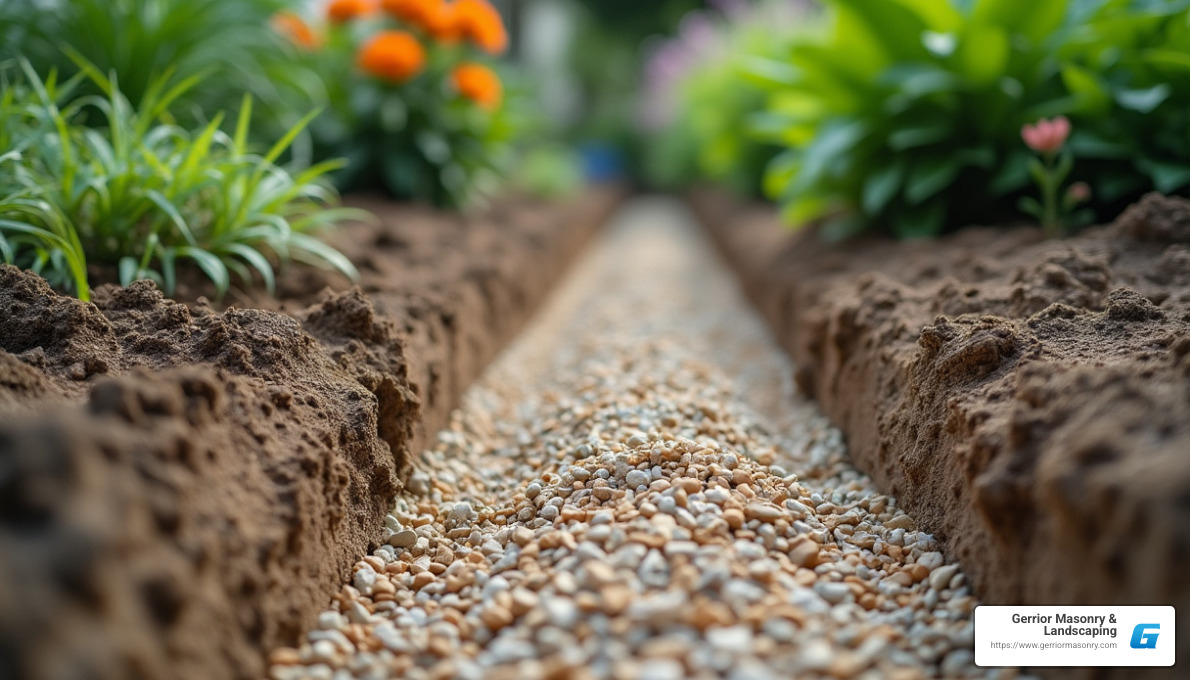
- Dig the Trench: Excavate a trench at least 8 inches deep and 16 inches wide, adjusting for your wall’s height. A deeper trench may be needed for taller walls to ensure stability.
- Add Gravel: Fill the trench with 6 inches of compacted gravel. This layer provides a strong base and helps with drainage. Tamp it down to create a solid foundation.
Block Laying
Once your base is ready, it’s time to start laying the blocks:
- First Row: Begin by placing the first row of blocks directly on the compacted gravel. Ensure each block is level from side to side and front to back. Bury half of the base block for added stability.
- Check Alignment: Use a carpenter’s level to make sure the blocks are perfectly aligned. Adjust as needed before proceeding.
- Stagger Additional Rows: For subsequent rows, stagger the blocks. This means the seams of one row should not line up directly with the seams of the row below. This pattern adds strength to the wall.
- Adhesive Application: Apply concrete adhesive to the top of the last row before placing capstones. This secures the capstones and gives your wall a finished look.
Finishing Touches
With the wall structure in place, it’s time to add the final details:
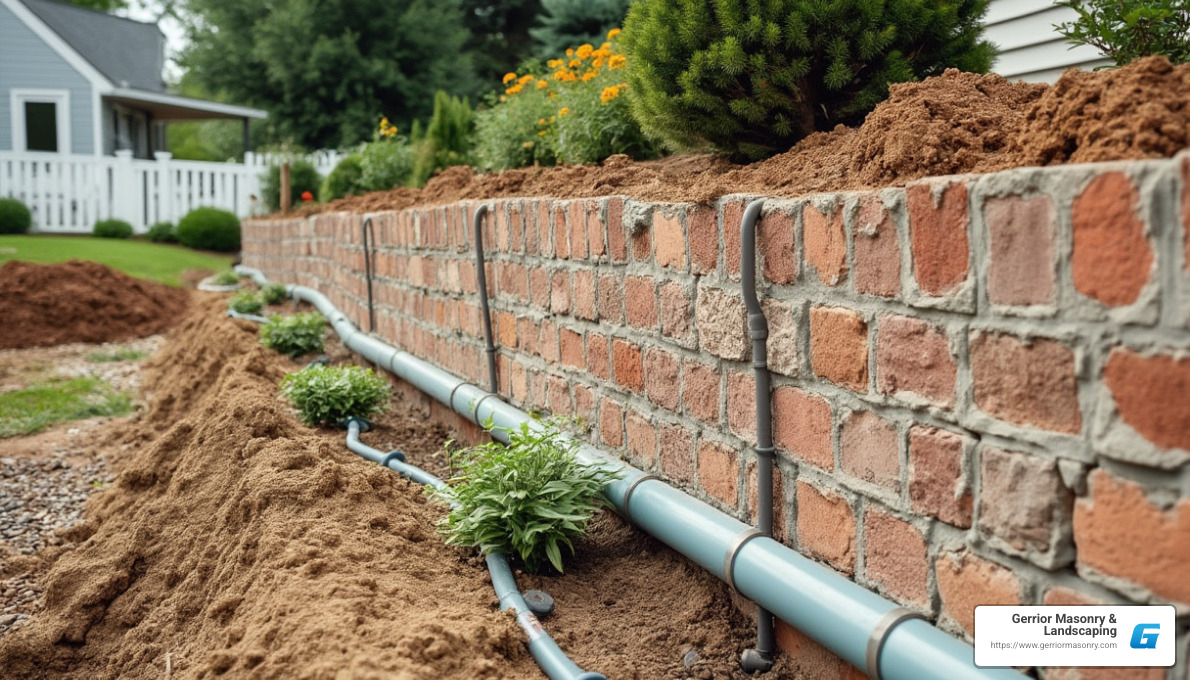
- Backfill: Fill the area behind the wall with soil or gravel to provide support and improve drainage. If your wall is over 3 feet tall, offset each new row slightly back from the row below to improve stability.
- Drainage Solutions: Ensure water can drain effectively by including a drainage pipe or leaving small gaps between blocks for water to escape.
By following these steps, you can achieve a sturdy and attractive garden wall. The key to success lies in careful preparation and precise execution. Now that your wall is standing strong, let’s explore the essential tools and materials needed for this project.
Essential Tools and Materials
To build a sturdy and attractive garden wall, you’ll need the right tools and materials. Here’s a breakdown of the essentials:
Tools You’ll Need
Chisel and Mallet
A chisel and mallet are vital for shaping and fitting blocks. The chisel helps you cut and shape blocks to fit the design, while the mallet gives you control to tap blocks into place without causing damage.
Safety Gear
Safety should always come first. Wear gloves to protect your hands from sharp edges and safety glasses to shield your eyes from dust and debris. These simple precautions can prevent accidents and injuries during your project.
Materials You’ll Need
Gravel
Gravel is a crucial component of the base layer. It provides a stable foundation and improves drainage. Use coarse gravel to fill the trench, ensuring it’s compacted to create a solid base for your wall.
Concrete Adhesive
For a secure fit, concrete adhesive is used to bond capstones and other blocks. This ensures your wall stays intact over time, even in harsh weather conditions.
Additional Handy Tools
- Carpenter’s Level: Essential for checking the alignment of your blocks, ensuring each row is perfectly level.
- Tape Measure: Accurate measurements are key to a successful installation. Use a tape measure to ensure everything is precise.
- Wheelbarrow: A wheelbarrow makes it easy to transport materials like gravel and blocks around the site, saving time and effort.
With these tools and materials at your disposal, you’re well-equipped to tackle your garden wall installation. Proper preparation and the right resources are the foundation of a successful project.
Garden Wall Installation Tips and Tricks
Building a garden wall can feel overwhelming, but with the right tips and tricks, you’ll find the process much smoother. Let’s explore some key aspects: leveling techniques, drainage solutions, and backfilling methods.
Leveling Techniques
Achieving a level wall is crucial for both aesthetics and stability. Here’s how you can ensure your wall is perfectly aligned:
- Use a Carpenter’s Level: As you lay each block, place a carpenter’s level on top to check for evenness. Adjust as needed by adding or removing gravel beneath the blocks.
- String Line Guidance: Set up a string line along the length of your wall. This acts as a visual guide to maintain a straight and level line throughout the installation process.
- Stagger Your Blocks: When stacking additional rows, stagger the blocks. This not only strengthens the wall but also helps in maintaining a level surface.
Drainage Solutions
Proper drainage is essential to prevent water buildup, which can damage your wall over time. Here’s how to ensure efficient drainage:
- Gravel Base: A well-compacted gravel base acts as the first line of defense against water accumulation. The gravel allows water to seep through, reducing pressure on the wall.
- Weep Holes: For taller walls, incorporate weep holes at the base. These small openings allow water to escape, preventing water pressure from building up behind the wall.
- Drainage Pipes: In areas prone to heavy rainfall, consider installing drainage pipes behind the wall. These pipes collect and redirect water away from the structure.
Backfilling Methods
Backfilling is the process of filling the space behind the wall. Done correctly, it adds stability and ensures longevity:
- Layered Backfill: Use a combination of gravel and soil for backfilling. Start with a layer of gravel for drainage, then add soil to support plant growth if desired.
- Compact as You Go: Compact the backfill material in layers using a tamper. This prevents settling and ensures the wall remains stable over time.
- Slope the Surface: When backfilling, create a gentle slope away from the wall. This helps direct water runoff away from the structure, reducing erosion risks.
By following these tips and tricks, your garden wall installation will not only be easier but also more effective and durable. Careful planning and attention to detail make all the difference in achieving wall-to-wall success.
Frequently Asked Questions about Garden Wall Installation
Do I need permission for a garden wall?
When planning a garden wall installation, it’s important to check if you need permission. Typically, if your wall is over a certain height, you might need to get planning permission. Local building codes vary, so it’s a good idea to contact your city government to understand the specific requirements in your area. That walls built on property lines or near roads may have additional restrictions.
What is the cheapest way to build a garden wall?
Building a garden wall on a budget is possible by choosing cost-effective materials and methods. Concrete blocks are generally the most affordable option, providing durability without breaking the bank. To further reduce costs, consider using reclaimed materials, which can add character and help the environment.
For a budget-friendly installation, plan your wall carefully to minimize waste and avoid unnecessary expenses. While saving money is important, compromising on quality can lead to higher maintenance costs in the long run.
What do you put under a garden wall?
The foundation of your garden wall is critical for its stability and longevity. Start with a well-prepared base to ensure your wall stands strong against the elements.
- Base Materials: A compacted gravel base is essential. Gravel allows for proper drainage and provides a stable foundation. Aim for a depth of about 6 inches of compacted gravel.
- Compaction Techniques: After spreading the gravel, use a tamper to compact it firmly. This process helps prevent settling and maintains the integrity of your wall over time.
By ensuring a solid base, you set the stage for a successful and long-lasting garden wall installation. Proper preparation and planning are key to avoiding problems down the line.
Conclusion
At Gerrior Masonry & Landscaping, we take pride in changing outdoor spaces with our expert craftsmanship and commitment to quality assurance. With over 30 years of experience, our skilled team is dedicated to delivering high-quality results for every garden wall installation.
Our approach is simple: we ensure owner oversight on all projects to maintain the highest standards. From the initial design to the final touches, we focus on every detail to create walls that are not only functional but also improve the beauty of your landscape.
Why choose us? Because we offer more than just service; we offer a partnership. Our team is here to guide you through the entire process, providing expert advice and solutions custom to your needs. Whether it’s selecting the right materials or ensuring proper drainage solutions, we are committed to excellence.
For those located near Woburn, MA, and surrounding areas, we are just a call away. Let us help you realize your vision with a garden wall that stands the test of time. Explore our landscape design and installation services to see how we can bring your outdoor dreams to life.
Choose Gerrior Masonry & Landscaping for your next project and experience the difference that expert craftsmanship and quality assurance can make.
