
Hardscape Retaining Walls: Top 5 Stunning Benefits

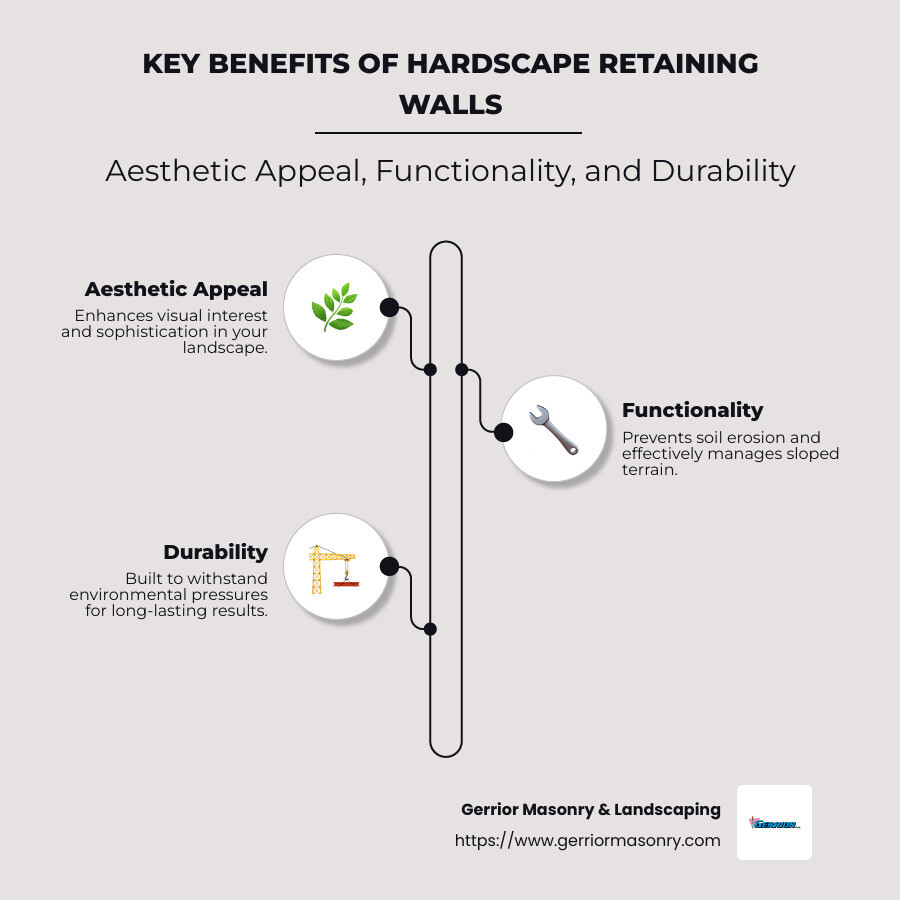
Hardscape retaining walls are a fundamental element in modern landscaping, providing both aesthetic appeal and functional benefits to outdoor spaces. If you’re looking to improve your yard’s structural integrity or create visually stunning garden sections, retaining walls are a must-have feature. Key benefits of Hardscape retaining walls:
- Aesthetic Appeal: Adds visual interest and sophistication.
- Functionality: Prevents soil erosion and manages sloped terrain.
- Durability: Built to withstand time and environmental pressures.
Whether constructed from large landscape boulders or neat patio stones, these walls are versatile enough to suit any style. Steer clear of less appealing materials like rubber or off-the-shelf steel edging, as they often detract from your landscape’s overall aesthetic, as pointed out by experts like Hovis.
Hello! I’m Joe Gerrior, bringing over three decades of expertise in creating hardscape retaining walls that blend beauty and strength. Our team at Gerrior Masonry & Landscaping is dedicated to turning your vision into reality with high-quality, functional, and enduring landscapes.
Ready to dig deeper into the types and benefits of retaining walls? Let’s explore the different styles that can transform your outdoor space.
Key terms for Hardscape retaining walls:
– Landscape retaining wall
– Stone wall design ideas
– Stone garden edging
Types of Hardscape Retaining Walls
When it comes to hardscape retaining walls, there are several types to consider, each with its unique features and benefits. Let’s break down the most common types:
Gravity Walls
Gravity walls rely on their own weight to hold back soil. They are typically made from heavy materials like concrete, stone, or brick. These walls are ideal for shorter heights, usually up to 4 feet, where the weight of the wall itself provides stability. They are simple to construct and can be an affordable option, with costs ranging widely from $10 to $100 per square foot depending on material and design complexity.
Cantilever Walls
Cantilever walls are designed using a reinforced concrete slab that extends into the soil. This type of wall uses the weight of the soil itself to provide stability, making it suitable for taller walls. They are often more expensive due to the need for precise engineering and reinforcement, with prices starting around $40 per square foot and reaching up to $120 per square foot. However, they offer great strength and can support significant loads.
Embedded Walls
Embedded walls are partially buried in the ground, which helps them resist the lateral pressure from the soil. These walls are often used in areas with limited space or where deep excavation is necessary. The construction of these walls can involve materials like steel or concrete piles driven into the ground. The cost can vary greatly, typically ranging from $50 to $150 per square foot, depending on the depth and material used.
Reinforced Soil Walls
Reinforced soil walls combine soil and reinforcement materials like geogrid or geotextiles to increase the wall’s stability. These walls are flexible and can adapt to changes in the landscape, making them ideal for areas with shifting soil or seismic activity. They are also cost-effective, with average prices ranging from $30 to $90 per square foot, depending on the complexity and materials involved.
Each type of retaining wall serves a specific purpose and can be custom to fit the unique needs of your landscape. Whether you’re looking to manage sloped terrain, prevent soil erosion, or simply add a touch of elegance to your garden, understanding these options will help you make an informed decision.
Ready to explore the benefits of integrating these walls into your landscape? Let’s explore how they improve durability, aesthetics, and functionality in the next section.
Benefits of Hardscape Retaining Walls
Hardscape retaining walls offer a multitude of benefits that go beyond just holding back soil. They bring durability, improve aesthetics, and add functionality to your outdoor space.
Durability
One of the primary advantages of hardscape retaining walls is their durability. Constructed from robust materials like concrete, stone, or brick, these walls are built to last. Natural stone walls, for instance, are not only timeless but also incredibly strong, with options like granite and limestone providing a traditional aesthetic that withstands the test of time. The durability of these materials means less frequent repairs and lower maintenance costs, making them a wise long-term investment.
Aesthetics
In addition to their practical benefits, retaining walls can dramatically improve the look of your landscape. They transform unworkable inclines into usable, uniform surfaces, creating visual interest and defining different areas of your garden. By incorporating elements like flower beds or steps, retaining walls can seamlessly blend with the natural environment, adding a touch of elegance and sophistication. A concrete retaining wall with built-in flower beds, for example, juxtaposes industrial design with lush greenery for a stunning visual effect.
Functionality
Functionally, hardscape retaining walls offer more than just soil retention. They can create levels in a sloped yard, making previously unusable spaces accessible and functional. By incorporating steps or pathways, these walls improve mobility and accessibility across different sections of your yard. Moreover, retaining walls can also help manage water drainage effectively, reducing the risk of erosion and flooding. This added functionality not only improves the usability of your outdoor space but can also increase the overall value of your property.
In summary, hardscape retaining walls are a versatile addition to any landscape, offering durability, aesthetic improvement, and functional benefits that can transform your outdoor living area into a beautiful and practical space.
Ready to learn about the materials that make these walls so effective? Let’s move on to the next section where we explore the best materials for constructing hardscape retaining walls.
Materials for Hardscape Retaining Walls
Choosing the right material for your hardscape retaining walls is essential for ensuring they are both durable and aesthetically pleasing. Let’s explore some popular materials: poured concrete, pressure-treated pine, and granite.
Poured Concrete
Poured concrete is a popular choice for retaining walls due to its strength and versatility. It allows for a seamless, modern look and can be molded into various shapes, making it ideal for custom designs. Concrete walls are known for their durability and can withstand harsh weather conditions and heavy use.
While the average cost for poured concrete walls can range from $20 to $60 per square foot, prices can vary widely based on design complexity and location. It’s essential to consider labor costs, which can significantly impact the overall expense.
Pressure-Treated Pine
For those seeking a more organic look, pressure-treated pine offers a cost-effective option. This type of wood is treated to resist decay and insect damage, extending its lifespan. However, it’s important to note that wood retaining walls generally have a shorter lifespan compared to stone or concrete.
The average cost for pressure-treated pine walls ranges from $15 to $45 per square foot. While they are less expensive initially, they may require more maintenance over time to prevent deterioration. Using a wood preservative can help extend their life.
Granite
Granite is a premium material known for its exceptional durability and timeless appeal. It’s a natural stone that offers a traditional aesthetic and can improve the elegance of any landscape. Granite retaining walls are incredibly strong and resistant to weathering, making them a long-lasting investment.
The cost for granite walls can vary significantly, typically falling between $40 and $120 per square foot. Despite the higher initial investment, their durability means less frequent repairs, which can save money in the long run.
In conclusion, selecting the right material for your hardscape retaining wall depends on your budget, aesthetic preferences, and the specific needs of your landscape. Whether you prefer the modern look of concrete, the natural feel of wood, or the timeless elegance of granite, each material offers unique benefits that can improve your outdoor space.
Ready to explore design and installation tips for your retaining wall project? Let’s move on to the next section where we discuss expert techniques and systems to ensure a successful build.
Design and Installation Tips
When it comes to designing and installing hardscape retaining walls, the right techniques and systems can make all the difference. Let’s explore some expert tips using VERSA-LOK and Keystone systems, along with essential installation techniques.
VERSA-LOK Systems
VERSA-LOK systems offer flexibility and ease of installation, making them a favorite among homeowners and contractors alike. These segmental retaining walls are constructed using high-strength concrete units that are dry-stacked and interlocked with pins. This design eliminates the need for mortar and frost footings, simplifying the installation process.
One of the standout features of VERSA-LOK is its unique hole-to-slot pinning system. This provides an automatic setback, enhancing wall stability. These walls can reach heights of 50 feet or more when reinforced with geogrid soil stabilization. The ability to modify units on-site allows for creative design options, from intricate landscaping features to towering commercial walls.
Keystone Systems
Keystone systems are known for their versatility and strength. They are designed to support both small garden walls and larger commercial applications. Keystone’s landscape wall systems can also be used to create freestanding elements like fire pits and outdoor kitchens.
The installation of Keystone systems involves the use of pins, tools, and accessories that simplify the building process. These systems are trusted by engineers and architects for their reliability in various applications, including transportation and municipal projects. Keystone’s range of styles, sizes, and textures ensures a fit for any landscape design.
Installation Techniques
Successful installation of retaining walls requires attention to detail and adherence to best practices. Here are some essential tips:
- Site Preparation: Start with a solid foundation. Excavate the area to the required depth and ensure a level base. Use a granular leveling pad to support the wall.
- Proper Alignment: Ensure each layer of blocks is aligned correctly. This is crucial for stability and visual appeal. Use a string line or level for precision.
- Backfilling and Drainage: Properly backfill behind the wall with gravel to improve drainage. This prevents water buildup, which can compromise the wall’s integrity. Install a drain pipe if necessary.
- Reinforcement: For taller walls, incorporate geogrid reinforcement. This adds stability and strength, allowing the wall to handle increased pressure from retained soil.
- Regular Maintenance: Regularly inspect the wall for any signs of movement or damage. Addressing minor issues early can prevent larger problems in the future.
By following these design and installation tips, you can ensure that your hardscape retaining wall not only looks great but also stands the test of time. Whether you’re using VERSA-LOK or Keystone systems, these techniques will help you achieve a successful and durable installation.
Next, we’ll tackle some frequently asked questions about retaining walls to further guide your project choices.
Frequently Asked Questions about Hardscape Retaining Walls
What is the cheapest option for a retaining wall?
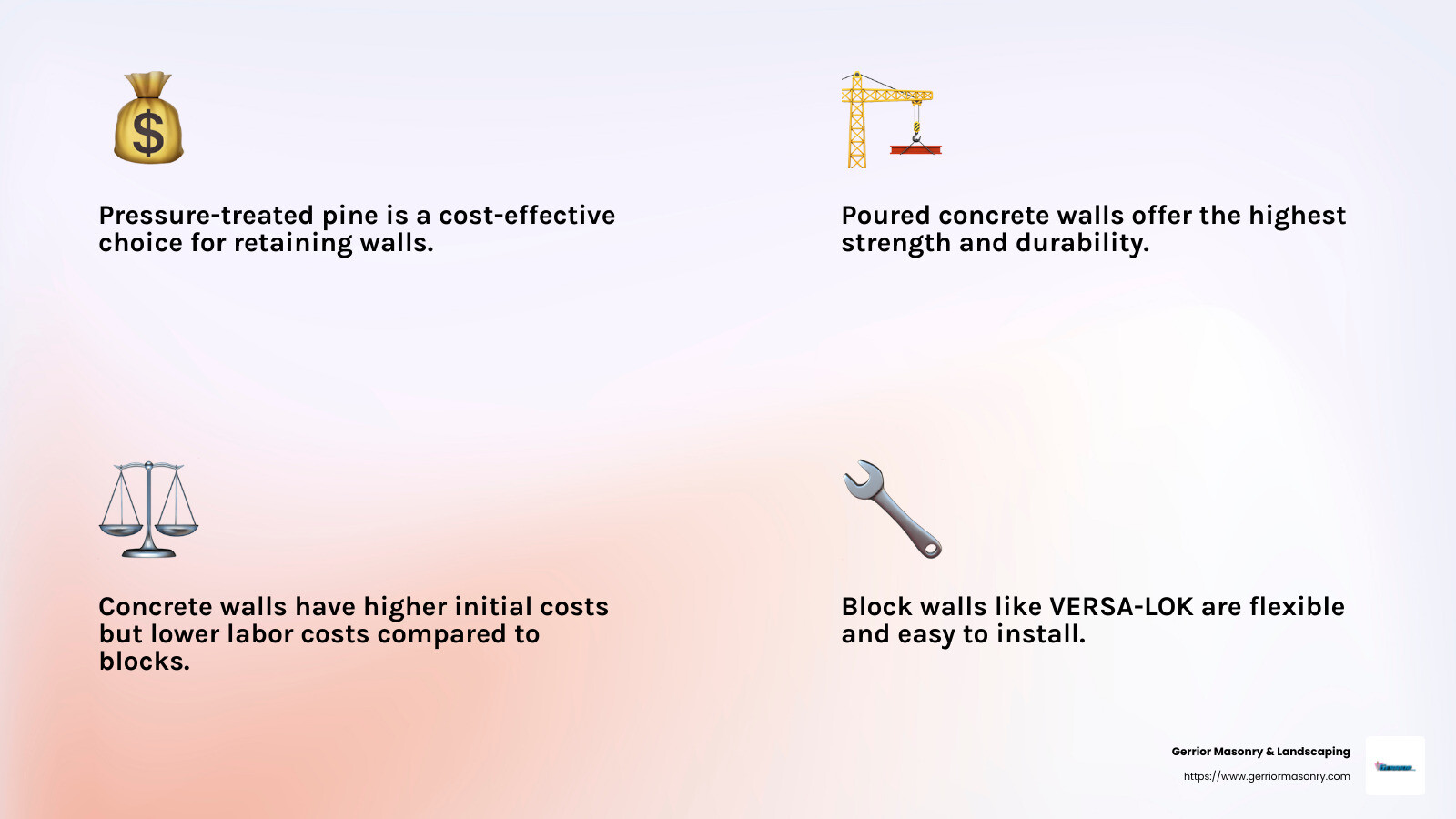
When considering budget-friendly options for hardscape retaining walls, pressure-treated pine often tops the list. It’s an inexpensive material that can be used effectively for retaining walls, especially in residential settings. However, note that while pressure-treated wood is cost-effective, it may not last as long as other materials like stone or concrete. To extend its lifespan, use a wood preservative and be cautious about planting too close, as the chemicals in treated wood can harm plants.
Poured concrete is another affordable choice. It offers a clean and modern look and can be more durable than wood. The cost of poured concrete can vary widely based on design complexity and labor, but it’s generally a good middle-ground option.
What is the strongest retaining wall design?
In terms of strength and durability, poured concrete walls are often considered the strongest. These walls are robust and can withstand significant pressure from retained soil. They are particularly effective in commercial applications where high durability is essential. The solid construction of poured concrete makes it less susceptible to shifting or settling over time compared to other materials.
For those looking for an even more rugged appearance, granite retaining walls provide both strength and a timeless aesthetic. While granite is more expensive, its natural beauty and durability make it a valuable investment for those seeking a long-lasting solution.
Is a concrete retaining wall cheaper than blocks?
The cost-effectiveness of a concrete retaining wall versus blocks can depend on several factors, including labor costs and the specific project requirements. Poured concrete walls tend to have higher initial material costs, but they often require less labor for installation compared to block walls, which need to be individually placed and secured.
Block walls, such as those made from VERSA-LOK systems, offer flexibility and ease of installation. They can be more cost-effective in projects where the labor cost of poured concrete is high. Additionally, block walls can be modified on-site, providing a versatile option for various designs.
When considering costs, it’s crucial to weigh the initial expense against long-term durability and maintenance. While poured concrete may have a higher upfront cost, its durability can lead to savings over time with fewer repairs and maintenance needs.
By understanding the different materials and their associated costs, you can make an informed decision that aligns with your budget and design preferences. This knowledge will help you choose the right hardscape retaining wall for your specific needs.
Next, we’ll explore the conclusion, highlighting the expertise of Gerrior Masonry & Landscaping in delivering quality results for your hardscaping projects.
Conclusion
At Gerrior Masonry & Landscaping, we pride ourselves on delivering exceptional hardscape retaining walls that not only meet but exceed our clients’ expectations. With over 30 years of experience, our skilled team ensures that every project is executed with precision and care. Our owner personally oversees each project, guaranteeing that our high standards for quality are consistently met.
Our expertise in masonry and hardscaping means we understand the nuances of different materials and designs. Whether you’re interested in the timeless beauty of granite or the modern appeal of poured concrete, we have the knowledge to guide you in making the best choice for your landscape. We know that choosing the right materials and designs can significantly impact the durability and aesthetics of your retaining wall. That’s why we offer personalized consultations to tailor our services to your specific needs and preferences.
Our commitment to quality doesn’t end with the installation. We offer comprehensive follow-up services to ensure your retaining wall continues to perform optimally and maintains its visual appeal. This includes seasonal maintenance and any necessary repairs, ensuring that your investment stands the test of time.
If you’re ready to transform your outdoor space with a stunning hardscape retaining wall, contact us today. Let us help you bring your vision to life with our unparalleled expertise and dedication to quality results.
Explore our landscape design and installation services to learn more about how we can improve your outdoor living space.
