
Inexpensive Stepping Stone Walkway Ideas: 8 Best Stunning 2025
Create Beautiful Pathways Without Breaking the Bank
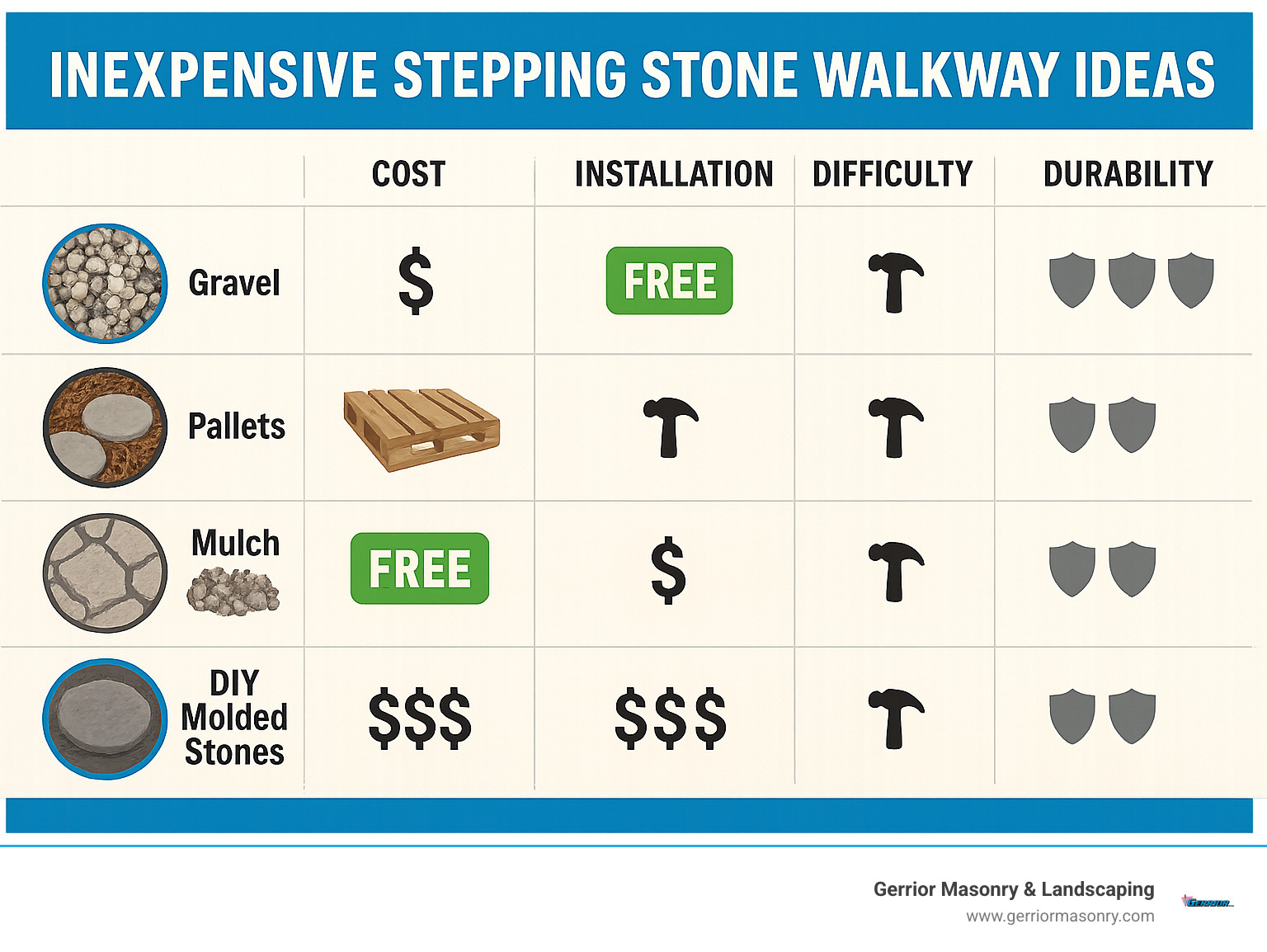
Looking for inexpensive stepping stone walkway ideas? Here are 6 budget-friendly options that won’t empty your wallet:
- Gravel & Concrete Pavers – $100-200 total for a typical path
- Recycled Pallets – Often free, just add sand base ($20-30)
- Mulch Path with Stones – $50-150 using free arborist chips
- Broken Concrete “Urbanite” – $0 for materials if sourced for free
- DIY Molded Concrete Stones – $25 for 20 customized stones
- Recycled Rubber Pavers – $2-5 per stone, lightweight alternative
A stepping stone walkway can transform your yard from muddy mess to charming pathway while being gentle on your budget. DIY stepping stone walkways typically cost between $100-300 for a standard path, but can be done for nearly nothing if you source free materials. The best part? Most of these projects can be completed in a single weekend, even if you’re a beginner.
Creating an inexpensive stepping stone walkway doesn’t mean sacrificing beauty or durability. With some creativity and basic tools, you can design a pathway that improves your landscape and provides practical access to different areas of your yard. Whether you’re looking to connect your driveway to your front door, create a garden path, or solve a muddy problem area, stepping stones offer an affordable solution.
I’m Joe Gerrior, owner of Gerrior Masonry & Landscape Construction Corp., and I’ve helped countless homeowners create beautiful inexpensive stepping stone walkway ideas throughout my 34+ years of experience in masonry and landscaping across Massachusetts.
Glossary for inexpensive stepping stone walkway ideas:
– how to install paver stones walkway
– installing flagstone stepping stones
8 Inexpensive Stepping Stone Walkway Ideas You Can Tackle This Weekend
After helping hundreds of Massachusetts homeowners create beautiful outdoor spaces, I’ve seen how a simple stepping stone walkway can transform a yard without emptying your wallet. The best part? Many of these projects are perfect weekend warriors – even if you’ve never tackled a landscaping project before.
Sustainable and budget-friendly pathways aren’t just good for your pocket – they’re often better for the environment too. Many of my favorite designs incorporate upcycled materials that might otherwise end up in landfills, while creating truly unique garden features with character and charm.
“My favorite projects are the ones where homeowners get creative with materials they already have or can source inexpensively,” I often tell clients. “Those paths often have the most personality and tell a story about your home.”
Choosing the right style for your yard
Before grabbing your shovel, take a moment to consider how your new pathway will function in your specific landscape:
Flow matters – Watch how people naturally move through your space and design your path accordingly. The most successful walkways follow existing traffic patterns rather than forcing new ones.
Step spacing needs to match your natural stride. I recommend placing stones about 24 inches apart (measuring from center to center) for comfortable walking. Always test by walking the path before permanent installation.
Width considerations depend on use – for single-file garden paths, 24-36 inches works beautifully. If you want people to walk side-by-side, aim for at least 48 inches of width.
Climate fit is crucial here in New England. Our freeze-thaw cycles can wreak havoc on improperly installed stones. For Massachusetts yards, proper base preparation is non-negotiable if you want your path to last.
One of my Middlesex County clients summed it up perfectly: “I spent an extra hour on proper ground prep, and three years later, my stones haven’t shifted a bit – even through those brutal winter freezes. Best time investment I made on the whole project.”
With these basics in mind, let’s explore eight inexpensive stepping stone walkway ideas that combine creative design with practical function – perfect for changing your yard this weekend without breaking the bank.
Gerrior Masonry & Landscaping serves homeowners throughout Woburn and surrounding communities in Middlesex and Essex County, Massachusetts.
Idea #1: Reclaimed Brick Herringbone Path
There’s something undeniably charming about a pathway made from reclaimed bricks. I’ve watched countless homeowners fall in love with the warm, weathered character these materials bring to their yards—all while keeping their wallets happy.
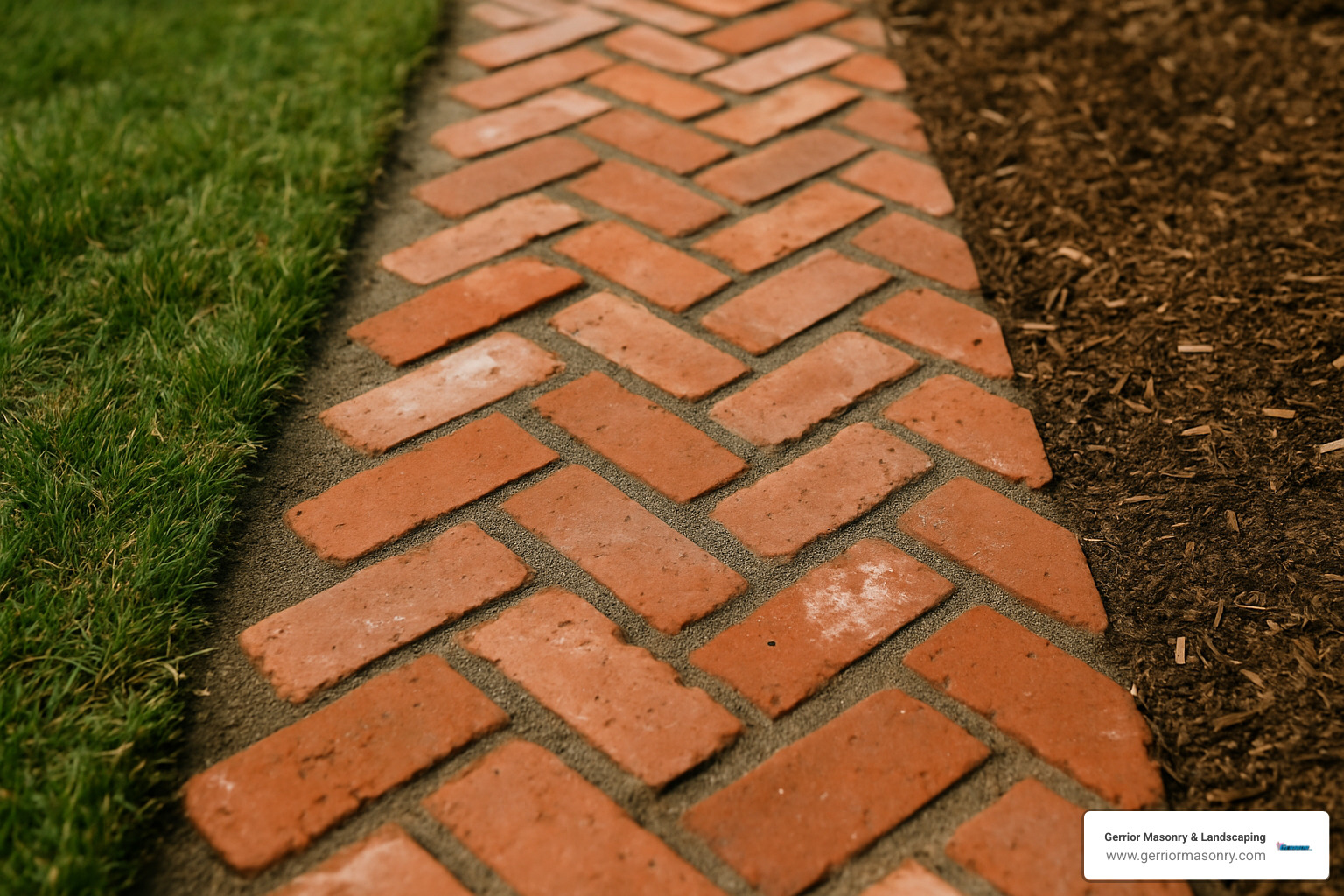
Reclaimed bricks aren’t just beautiful—they tell a story. Each one carries a bit of history, whether they once formed part of a century-old factory or a neighbor’s renovated chimney. The best part? They’re often available for free or at minimal cost if you know where to look.
Where to find reclaimed bricks:
– Local demolition sites (always ask permission first!)
– Architectural salvage yards (typically $0.50-$1 per brick)
– Facebook Marketplace or Craigslist (often free or heavily discounted)
– Family and friends’ renovation leftovers
One Woburn homeowner shared with me: “I collected bricks from my mom’s herb garden renovation and created a charming path to my garden shed. The only cost was the sand base and some good old-fashioned elbow grease!”
For a standard brick path, you’ll need about 4.5 bricks per square foot. The herringbone pattern—where bricks are laid at 45-degree angles to create a zigzag effect—isn’t just visually striking; it’s also remarkably stable for walkways because it distributes weight evenly and resists shifting.
Materials for your brick path:
– Reclaimed bricks
– 1-inch layer of sand for the base
– Landscape fabric (optional but highly recommended for weed prevention)
– Simple edging material (optional, but helps maintain the path’s shape)
Cost estimate: $0-150 depending on your brick source and the length of your pathway
For areas that tend to get soggy, consider combining your brick stepping stones with pea gravel, as shown in this Pea Gravel Walkway with Stepping Stones approach. The bricks provide stable footing while the gravel ensures excellent drainage—a perfect marriage of function and form.
Pro tip from our team: When laying your bricks, resist the urge to place them flush against each other. Instead, leave small gaps (about 1/8-1/4″) between them and fill with sand or stone dust. This simple technique allows for slight movement during our harsh New England freeze-thaw cycles without cracking your beautiful pathway.
The total weekend investment for a typical 20-foot brick pathway? About 4-6 hours of pleasant outdoor work and potentially less than $50 if you score free bricks. That’s a pretty sweet return for a feature that will improve your garden for decades to come.
Idea #2: Pallet Wood Boardwalk
There’s something charming about a wooden path winding through your garden, and it doesn’t have to cost a fortune. In fact, one of my favorite inexpensive stepping stone walkway ideas uses materials you might find for free behind your local grocery store.
Materials needed:
– 2-3 wooden pallets (often free from local businesses)
– Sand or gravel for base (optional)
– Weather-resistant sealer or stain
– Landscape fabric (optional)
Creating a rustic walkway from reclaimed pallet wood gives your yard that cozy cottage feel while solving muddy path problems. I’ve seen homeowners transform problem areas into inviting garden paths without spending a dime on materials.
“The best part about pallet walkways is how quickly they come together,” says Joe Gerrior. “Even complete beginners can create something beautiful in a single afternoon.”
One homeowner in Middlesex County told us she completed her entire garden path system using just pallets collected from a nearby furniture store. “They were happy to have me take them,” she explained. “I only spent $15 on sealer, and my walkway has lasted three years so far.”
When selecting pallets, look for the “HT” stamp, which indicates heat-treated rather than chemically treated wood—much safer for your garden. Before installation, be sure to sand any rough edges to prevent splinters and create a smoother walking surface.
For maximum longevity, apply a quality outdoor sealer before placing your pallets. This simple step can extend your walkway’s life by years, especially in our Massachusetts climate with its harsh winters and wet springs.
According to a popular Build an easy and FREE 2-pallet garden walkway! tutorial, proper leveling is crucial: “This ended up being the easiest garden walkway I’ve ever made.” The author recommends spending extra time on ground preparation to ensure your finished path doesn’t rock or shift.
Pro tip: While you can place pallets directly on soil, creating a simple base of sand or gravel first dramatically improves drainage and reduces rot, potentially doubling your walkway’s lifespan. Just 2-3 inches of material underneath makes all the difference.
For best results in our New England climate, slightly lift your pallet walkway to prevent direct ground contact, especially in areas that tend to collect water. This simple adjustment helps your wooden path withstand our freeze-thaw cycles much more effectively.
Idea #3: Pea Gravel & Square Paver Combo
This classic combination offers excellent drainage, a clean aesthetic, and can be one of the most budget-friendly options available. The contrast between smooth pavers and textured gravel creates visual interest while providing a stable walking surface.
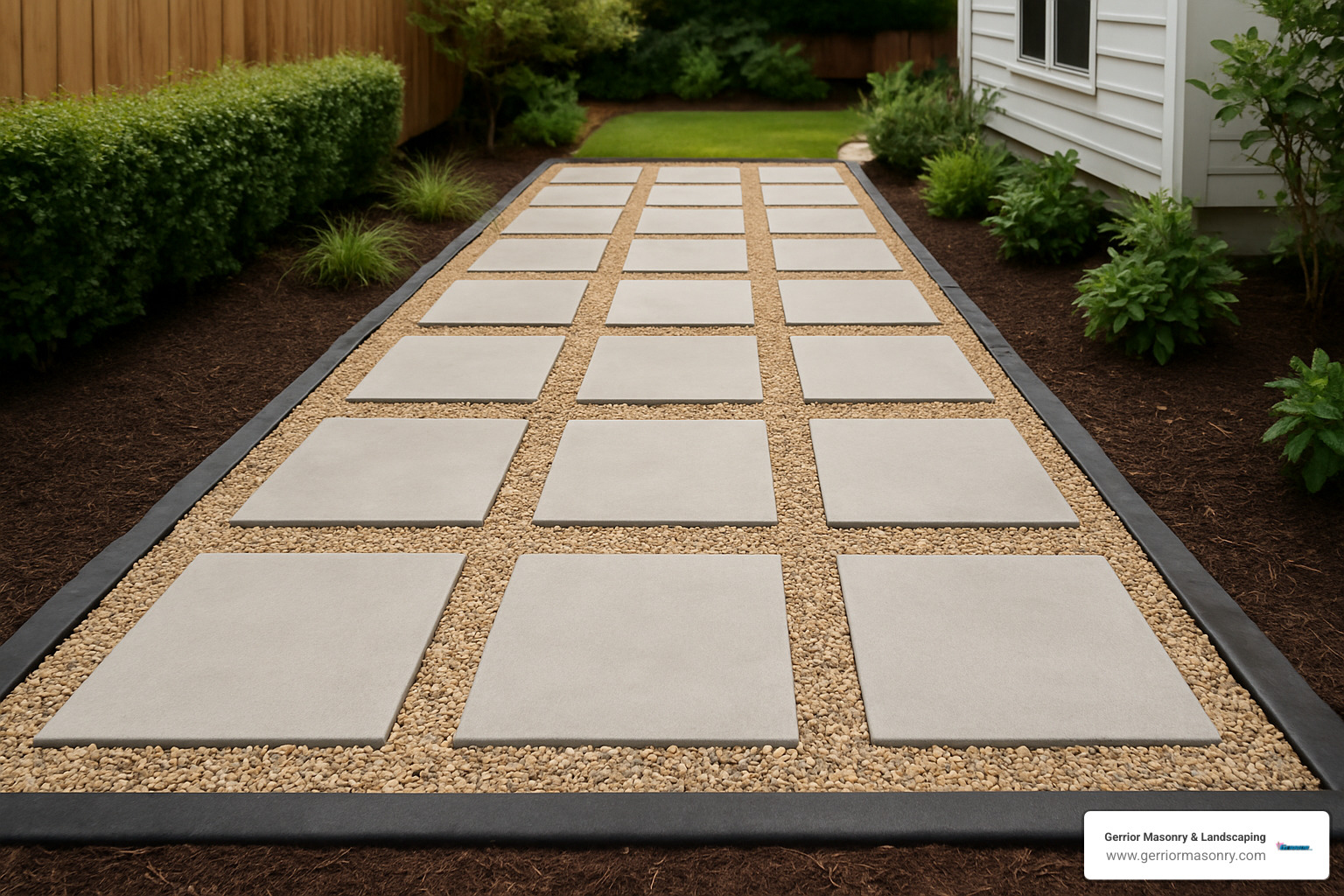
There’s something truly satisfying about the crunch of pea gravel beneath your feet as you step from stone to stone. This combo has become one of our clients’ favorites because it blends functionality with a touch of elegance without breaking the bank.
Materials needed for this project are straightforward: concrete pavers (16″x16″ squares are both economical and practical), enough pea gravel for about a 2-inch depth, landscape fabric to keep weeds at bay, sand for leveling, and some form of edging to keep everything in place. The beauty of this approach is its simplicity—you don’t need specialized tools or masonry skills to create something beautiful.
I recently spoke with a Lexington homeowner who tackled this project herself: “I wanted a new walkway for the front of my house that I could do 100% myself, so I researched cheap walkway ideas and landed on a stepping stone and gravel approach. It has so much more character than a concrete walkway.”
Her cost breakdown was impressively modest:
– Ten stepping stones: $38.90
– One bag of leveling sand: $4.38
– Two bags of pea gravel: $7.36
– Landscape weed fabric: $12.98
– Three landscape timbers: $20.94
– Total: $84.56
For a typical 20-foot path, you can expect to spend between $100-300 depending on your material choices and local prices. The beauty of this approach is its scalability—you can create a simple garden path or an elaborate front walkway using the same basic techniques.
Pro tip: Use paver leveling sand rather than play sand for better compaction and stability. This specialized sand compacts more firmly, creating a more stable base for your pavers. Before adding your gravel, check each stone for level, and aim for about a 1/4-inch slope per foot of stone to ensure proper drainage. This slight pitch will prevent water from pooling on or around your stones, especially important during our New England freeze-thaw cycles.
The weed fabric is non-negotiable in my opinion—it’s a small upfront cost that saves countless hours of maintenance down the road. Lay it generously, overlapping seams by at least 6 inches, and you’ll thank yourself for years to come.
For detailed instructions on creating your own paver and gravel walkway, check out our guide on DIY Paver Walkway. We’ve included step-by-step instructions that have helped dozens of homeowners successfully complete this project over a weekend.
The pea gravel and paver combo works particularly well in our Massachusetts climate because the loose gravel accommodates ground movement during freeze-thaw cycles without cracking or heaving like solid surfaces might. Plus, the drainage is superior—no more puddles or mud to contend with after heavy rains.
Idea #4: Broken Concrete “Urbanite” Steppers
Have you ever passed a demolition site and noticed perfectly good concrete being hauled away? That “trash” might be your walkway treasure! Broken concrete slabs, affectionately nicknamed “urbanite” by DIY landscapers, make for fantastic no-cost stepping stones that mimic the look of expensive flagstone.
Materials needed:
– Broken concrete pieces (sourced from demolition sites, Craigslist, Facebook Marketplace, or your own renovation projects)
– Sand or stone dust for base layer
– Basic tools: hammer and chisel for edge-shaping
Cost estimate: $0-50 (primarily for base materials if you can’t source them free)
I’ve seen homeowners throughout Middlesex County transform demolition leftovers into pathways that look like they cost thousands. The irregular shapes and weathered edges of urbanite create a naturally aged appearance that’s actually quite charming when thoughtfully arranged.
“I was skeptical at first,” admits a Wakefield homeowner who created an urbanite path last summer. “But once I power-washed the concrete pieces and arranged them with some intention, they took on a completely different character. My neighbors keep asking where I bought my ‘fancy stone’ walkway!”
The beauty of this inexpensive stepping stone walkway idea lies in its sustainability. You’re literally rescuing material from landfills while creating something beautiful and functional. The Stone Path From Tombstone Residues tutorial shows a similar approach using stone industry leftovers: “A cheap way for building a flagstone path? Why not use flat stones residues from a tombstones maker!”
When installing your urbanite path, follow these simple steps:
First, select the flattest pieces with at least 2″ thickness for stability. Lay them out on the ground in your desired pattern before digging anything. This “dry run” helps you visualize the finished path and make adjustments.
Next, dig shallow depressions where each piece will sit, allowing the stones to rest just above ground level (this prevents tripping hazards). Add a thin layer of stone dust or sand in each depression to help with leveling and drainage.
Place your concrete pieces, checking that each one sits firmly without wobbling. For a more cohesive look, fill the gaps between stones with soil, mulch, or even low-growing ground cover plants that can handle foot traffic.
Pro tip: Don’t be afraid to get creative with shaping. A masonry hammer and chisel can transform jagged edges into smoother contours, or break larger chunks into more manageable stepping stones. Just be sure to wear safety glasses when chipping concrete!
One of my favorite aspects of urbanite paths is their versatility. They work beautifully in both contemporary and rustic landscapes, and actually improve with age as moss and lichens soften their appearance over time.
Idea #5: Flagstone With Grass Joints
There’s something timeless about a flagstone path with lush green grass growing between the stones. While premium flagstone can carry a hefty price tag, there are ways to create this neat look without emptying your wallet.
Materials needed:
– Irregular flagstone pieces (scout stone yards for “seconds” or remnants)
– Class 2 permeable base rock (essential for areas with poor drainage)
– Sand for leveling
– Grass seed or low-growing ground cover plants
Cost estimate: $150-400 depending on your stone source and path length
“I found discontinued flagstone at half price and created a 30-foot path for under $200,” shares a Winchester homeowner. “The grass-filled joints make it look like it’s been part of our landscape for decades, not months.”
What makes this option so appealing is how the natural stone and living elements work together. The organic shapes of flagstone create a welcoming, established feel that complements both traditional and contemporary homes. Meanwhile, the grass softens the overall appearance while providing practical benefits like improved drainage and reduced material costs.
For smaller budgets, consider spacing your stones further apart (up to 24 inches) to reduce the amount of stone needed. This approach creates a more casual, meadow-like path while still providing stable footing for garden strolls.
“Arranging stepping stones in a grid pattern with space in between creates a faux-paver patio effect on your lawn,” notes a landscape designer we work with. “It’s a simple way to define a space without the cost of a full patio installation.”
When selecting your flagstone, look for pieces at least 1½ inches thick to prevent cracking when walked on. Thinner stones may work for decorative areas but won’t stand up to regular foot traffic in our New England freeze-thaw cycles.
For comprehensive guidance on working with flagstone, including detailed installation techniques specific to our Massachusetts climate, visit our guide on Installing Flagstone Stepping Stones.
Pro tip: For the most natural appearance, vary the shapes, sizes, and colors of your flagstones. Place them with varying distances (16-24″ apart) rather than in a rigid pattern. This mimics how stones would naturally occur and creates a more relaxed, established feel.
Idea #6: Recycled Rubber Stepping Stones
If you’re looking for a back-friendly option that won’t have you reaching for the heating pad after installation, recycled rubber stepping stones might be your perfect match. Made from repurposed tires that would otherwise end up in landfills, these eco-conscious alternatives offer a practical solution for DIYers of all ages and abilities.
Materials needed:
– Recycled rubber stepping stones
– Sand or gravel for base
– Landscape fabric (optional)
“I installed rubber pavers in my mother’s garden path after her hip surgery,” shares a Wilmington homeowner. “She loves that they have a slight give when walking, and I love that they were half the price of stone and I could install them myself in an afternoon.”
These lightweight alternatives typically cost between $100-300 for a complete pathway, depending on the quality and quantity you choose. At $2-5 per square foot, they offer significant savings compared to natural stone options that can run $5-15+ per square foot or even higher for premium varieties.
What makes rubber stepping stones particularly appealing is their forgiveness—both in installation and use. Unlike their stone counterparts that can weigh 20-50+ pounds each, rubber pavers typically weigh just 5-10 pounds, making them manageable for solo installation without specialized equipment or superhuman strength.
| Feature | Recycled Rubber | Natural Stone |
|---|---|---|
| Weight | 5-10 lbs per stone | 20-50+ lbs per stone |
| Cost | $2-5 per square foot | $5-15+ per square foot |
| Installation | Easy, no special tools | More difficult, may require cutting |
| Durability | 5-10 years | 20+ years |
| Eco-friendly | Made from recycled materials | Natural but requires quarrying |
While rubber stepping stones won’t last quite as long as natural stone (typically 5-10 years versus 20+ years for stone), they offer several compelling advantages. They won’t crack during Massachusetts’ notorious freeze-thaw cycles, provide better slip resistance for safety, and create a slightly cushioned surface that’s gentler on joints and safer for children.
“Many of our customers with elderly family members specifically request rubber stepping stones,” explains our supplier. “They’re particularly good for households with older residents or young children because they provide a softer surface with excellent grip, even when wet.”
Pro tip: If your pathway receives full sun, look specifically for UV-resistant rubber pavers. Standard rubber can fade over time when exposed to intense sunlight, while UV-resistant versions maintain their color and integrity much longer in sunny locations.
For homeowners seeking an inexpensive stepping stone walkway idea that combines practicality, sustainability, and ease of installation, recycled rubber stepping stones deserve serious consideration.
Idea #7: Mulch & Log Slice Woodland Path
There’s something magical about a woodland path that winds through your garden. By combining wood chips with natural log rounds, you can create a charming, forest-inspired walkway that feels like it belongs in a fairy tale—all while keeping your wallet happy.
Materials needed:
– Wood chips or mulch (often available free from tree services)
– Log slices (3-4″ thick minimum)
– Landscape fabric (optional)
This nature-inspired approach is one of my personal favorites at Gerrior Masonry. We’ve helped countless homeowners transform mundane side yards into enchanting woodland passages using materials that often cost absolutely nothing.
“I contacted local arborists through ChipDrop and got a huge pile of wood chips delivered for free,” shared one of our North Reading clients. “I laid down thick mulch paths and added log rounds from a tree we had removed last year. The whole project cost nothing but time.”
What makes this inexpensive stepping stone walkway idea particularly brilliant is its functionality in problem areas. The thick layer of wood chips absorbs moisture in wet spots while providing excellent drainage, and the sturdy log rounds create stable stepping points that keep your feet dry.
For the best results, start by laying down a generous 10-12″ layer of mulch (it will compress over time). Then, arrange your log slices in a comfortable walking pattern, pressing them firmly into the mulch base. If you’re working in a particularly damp area, consider placing landscape fabric underneath to minimize weed growth and extend the life of your path.
To get the most longevity from your log rounds, consider treating them with a natural preservative like linseed oil. This simple step can significantly extend their useful life before they begin to decompose.
One clever technique we’ve used on properties with slight inclines is creating a simple “log ladder” by securing parallel logs as edging and filling between them with mulch. This prevents erosion during heavy rains and creates a more stable walking surface on slopes.
The beauty of this inexpensive stepping stone walkway idea is that maintenance is straightforward—simply top up your mulch with a fresh 3-5″ layer annually to keep everything looking fresh and vibrant. The natural decomposition process actually benefits your garden by improving soil health around the pathway.
For free arborist chips, don’t be shy about flagging down tree service trucks in your neighborhood or checking community Facebook groups. Most tree companies are happy to dump a load of fresh chips rather than paying disposal fees.
This rustic pathway solution perfectly balances budget-consciousness with natural beauty—ideal for informal garden settings, woodland-inspired landscapes, and shaded areas where other materials might struggle.
Idea #8: DIY Molded Concrete Stepping Stones
There’s something magical about creating your own stepping stones. Not only is this one of the most inexpensive stepping stone walkway ideas around, but it also lets you add a deeply personal touch to your garden path.
“My grandkids visit every summer, and we’ve made it a tradition to create one new stepping stone for the garden path,” shares a Woburn homeowner. “Those stones mean more to me than anything I could buy in a store.”
With just a bag of quick-setting concrete mix and some household items as molds, you can create custom stepping stones that reflect your personality and style—all for about $25 for 20 stones.
Materials needed:
– Quick-crete or fast-setting concrete mix ($5-15 per bag)
– Molds (cake pans, plastic serving trays, or commercial molds)
– Decorative elements (glass stones, ceramic tiles, shells)
– Cooking spray or petroleum jelly as a release agent
– Optional: concrete colorant or outdoor paint
The beauty of DIY molded stones is their versatility. You can keep them simple with leaf imprints from garden plants, or go elaborate with intricate mosaic designs using broken dishes. Dollar store glass gems embedded in concrete catch sunlight beautifully, while glow-in-the-dark paint creates a magical nighttime path.
One particularly charming idea I’ve seen is creating family memory stones. Press handprints or footprints into wet concrete, add the date, and you’ve got a walkway that literally shows your family’s growth over the years.
According to the 25 Top Garden Stepping Stone Ideas guide, “Use materials you already have—like cake pans, plastic trays or thin concrete blocks—and customize them with spray paint, tiles or mosaics for under $25 per 20 stones.”
Pro tips for perfect DIY concrete stones:
For professional-looking results, eliminate air bubbles by gently tapping the sides of your mold after pouring. Some DIYers even place freshly poured molds on a running washing machine for a minute—the vibration brings air bubbles to the surface.
Allow your stones to cure slowly for maximum strength. After the initial set (usually 24-48 hours), remove from the mold and continue curing by misting with water and keeping covered with plastic for another 3-5 days before placing in your walkway.
For winter durability in our Massachusetts climate, add a concrete fortifier to your mix. This improves freeze-thaw resistance and helps prevent cracking during our harsh New England winters.
When installing your handmade stones, follow the same preparation guidelines as store-bought pavers—proper base preparation ensures your creative efforts will last for years to come.
One client told me, “I was nervous about making my own stones, but it was so much easier than I expected. Now I have a garden path that tells our family’s story, and it cost less than $30 for the whole project.”
Ground Prep & Installation Basics
No matter which inexpensive stepping stone walkway ideas you choose, proper ground preparation is the foundation of your project’s success. This often-overlooked step makes the difference between a wobbly, short-lived path and one that will serve you beautifully for years to come.
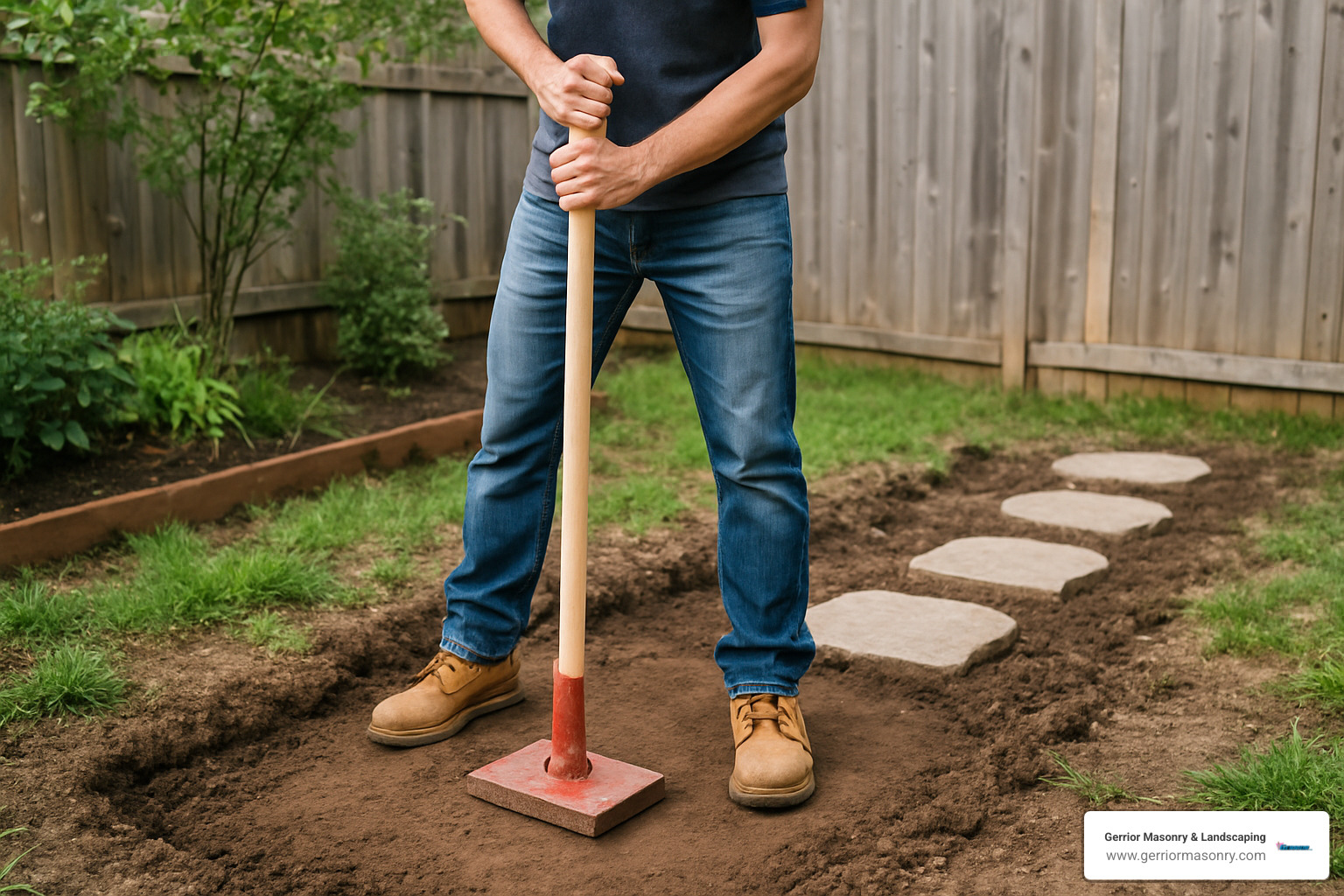
When we work with homeowners on DIY projects, I always emphasize that proper installation begins with thoughtful planning. Start by mapping your pathway with spray paint, a garden hose, or even rope to visualize the final result. Then tackle the real work: remove grass and vegetation (save it on a tarp if you plan to reuse it elsewhere), dig down 4-6 inches for the entire path, and compact that soil thoroughly with a hand tamper.
Next comes the crucial base layer—2-3 inches of your chosen material—followed by another round of compaction before you place your stepping stones. Always check each stone for level, making small adjustments as needed. Finally, fill the gaps with your selected material, whether that’s gravel, mulch, or soil for planting ground cover.
“I’ve seen too many DIY paths fail because folks rushed through the prep work,” says our foreman at Gerrior Masonry. “When a customer calls us to fix a wobbly walkway, it’s almost always because they skipped proper base preparation. The time you spend on this step pays off for years.”
Why ground prep matters for inexpensive stepping stone walkway ideas
Good preparation isn’t just about making your walkway look nice—it’s about making it last. Properly prepared ground ensures your stepping stones remain stable rather than rocking or shifting underfoot. It provides essential drainage to direct water away from your home’s foundation and prevents soil erosion around your stones.
Thorough ground prep also offers weed control, saving you countless hours of maintenance headaches down the road. Most importantly, it dramatically extends the longevity of your walkway, potentially adding years of useful life to your project.
Remember to call 811 before you dig—this free service marks underground utilities so you don’t accidentally cut into gas, electric, or water lines. It’s required by law and can save you from dangerous and expensive mistakes.
Best base materials for inexpensive stepping stone walkway ideas
Your choice of base material affects both your budget and how well your walkway performs over time. Here in New England, where freeze-thaw cycles can wreak havoc on poorly installed hardscaping, the right base is especially important.
Sand offers an inexpensive option ($15-40 per cubic yard) that’s easy to level, making it perfect for beginners. However, it can wash away in heavy rain, particularly on sloped areas. Pea gravel provides excellent drainage ($30-35 per cubic yard) and looks attractive, but may shift over time without proper edging.
For most Massachusetts installations, we recommend crushed stone or stone dust ($25-45 per cubic yard). This material compacts exceptionally well and stands up to our harsh winters. Budget-conscious homeowners might consider mulch as a very inexpensive or even free base material. While it offers a natural appearance and can work for casual paths, be aware that it breaks down over time and requires regular replenishment.
For the best results in our climate, we typically suggest a combination approach: a compacted layer of crushed stone topped with a thin layer of stone dust or sand for precise leveling. This provides stability through freeze-thaw cycles while allowing for accurate stone placement.
Another critical factor is ensuring proper slope—aim for a ¼-inch drop per foot of length to encourage water runoff. A perfectly level walkway might look appealing but will collect water and potentially create ice hazards in winter.
For more detailed installation guidance and professional tips, visit our comprehensive guide on How to Install Stepping Stone Walkway.
Maintenance & Longevity on a Shoestring
Creating your inexpensive stepping stone walkway ideas is just the beginning – keeping it beautiful for years to come is where the real value shines through. With some simple, budget-friendly maintenance habits, your weekend project can become a lasting landscape feature.
“The secret to a long-lasting walkway isn’t spending more money up front,” explains Joe Gerrior, “it’s the consistent small efforts throughout the year that make the difference.”
Each season brings its own maintenance needs for your stepping stone path:
In spring, take a walk along your path and look for any stones that have shifted during winter’s freeze-thaw cycles. A gentle rocking motion will identify unstable stones that need releveling. Simply lift the stone, add a bit more sand or base material, and reset it. This 15-minute task prevents bigger problems later.
During summer, your main challenge will be weed control. Rather than expensive chemical herbicides, try a homemade solution of white vinegar, salt, and a drop of dish soap sprayed directly on unwanted plants. “I keep a spray bottle of my vinegar mixture by the door,” shares a Woburn homeowner. “Whenever I see a weed popping up between my stones, I give it a quick spray while I’m out getting the mail. No more weeds, and it costs pennies.”
Fall brings beautiful foliage but also slippery conditions when leaves decompose on your walkway. A simple leaf blower or rake keeps your path clear and safe. For gravel paths, use a leaf blower on low setting to avoid displacing your stones.
In winter, be cautious with de-icing products. Traditional rock salt can damage concrete, erode mortar, and kill surrounding plants. Instead, use sand for traction or calcium magnesium acetate (CMA), which is less harmful to your hardscaping and greenery.
Annual top-ups of your chosen fill material (gravel, mulch, or sand) help maintain your walkway’s appearance and function. “I add a thin layer of fresh pea gravel each spring,” notes a Reading customer. “It costs about $20 for a few bags and keeps everything looking fresh and vibrant.”
For wooden elements like pallet walkways or log slices, apply a weather-resistant sealer annually to extend their lifespan. This simple step can double or triple how long your wooden walkway elements last in our harsh New England climate.
Check out our guide on Landscape Walkway Ideas for more inspiration and maintenance tips that keep your path looking professional for years to come.
Common mistakes to avoid with inexpensive stepping stone walkway ideas
Even experienced DIYers sometimes make mistakes that compromise their walkway’s longevity. Learning from others’ experiences can save you time and money.
Forgetting to create proper slope is perhaps the most common error we see. Your path should slope about 1/4 inch per foot away from any structures to prevent water pooling. Water that collects around stepping stones can undermine their stability and, worse, lead to foundation problems if directed toward your home.
Many homeowners skip using weed barrier fabric to save a few dollars, only to spend countless hours battling persistent weeds. “I tried to save $15 by skipping the landscape fabric,” admits a Burlington client. “The next summer, I spent every weekend pulling weeds. Not worth it!” A quality weed barrier underneath your base material is money well spent.
Under-digging the path area is another frequent mistake. Your excavation should be deep enough to accommodate both your base material and the thickness of your stepping stones, with the finished stones sitting just slightly above ground level. Stones placed directly on soil will inevitably sink and shift.
Placing stones with uncomfortable spacing can make your path awkward to use. Before final installation, do a “walking test” to ensure the stones match your natural stride. For most adults, 24-28 inches from center to center works well.
Finally, choosing materials unsuited to our Massachusetts climate can lead to premature failure. Our freeze-thaw cycles can be brutal on improperly installed hardscaping. When in doubt, opt for materials with proven track records in New England weather.
For expert guidance on your specific project needs, check out our detailed guide on How to Install Stepping Stone Walkway.
Gerrior Masonry & Landscape Construction is based in Woburn, MA, and services Middlesex and Essex County, Massachusetts. We’re always happy to offer advice on your DIY projects or provide professional installation when you’re ready to upgrade.
Frequently Asked Questions about Budget Stepping Stone Walkways
How much will a DIY stepping stone walkway cost me?
The beauty of inexpensive stepping stone walkway ideas is their flexibility to fit almost any budget. Most DIY projects range from $100-900 for a typical 25-30 foot path, depending on your material choices and how resourceful you are with sourcing.
“When clients ask me about budget options, I always start by asking what materials they might already have access to,” says Joe Gerrior. “You’d be surprised how many people have friends with leftover pavers or neighbors removing concrete that’s perfect for urbanite stepping stones.”
Here’s what you might expect to spend on different options:
Natural options like mulch with log rounds ($0-100) or broken concrete/urbanite ($0-150) can be virtually free if you source materials creatively. For the cost of a few bags of mulch and perhaps some landscape fabric, you can create a charming woodland path.
Mid-range options include pallet wood paths ($20-100), DIY concrete stepping stones ($25-150), and pea gravel with pavers ($100-300). These strike a nice balance between cost and appearance.
For a more established look, consider reclaimed brick ($50-250), flagstone with grass joints ($150-900), or recycled rubber pavers ($100-300).
These are average costs based on internet data and not actual costs for Gerrior Masonry services. Your project may cost more or less depending on specific materials, length, and site conditions.
How do I keep stones stable in wet or muddy conditions?
Massachusetts weather can certainly create challenges for pathway stability, especially in spring when the ground is soggy from melting snow and rain.
“Drainage is everything when it comes to pathway longevity,” explains our lead installer. “Without proper drainage, even the most beautiful stepping stone path will become a wobbly mess after a few rain showers.”
For those problematic wet areas in your yard, try these proven solutions:
Dig deeper than you think necessary—about 6-8 inches rather than the standard 4—and add a layer of coarse gravel before your base material. This creates a reservoir for water to collect below your pathway.
Always use landscape fabric between your soil and base materials. This simple step prevents mud from working its way up through your base while allowing water to drain through.
Choose larger, heavier stones for naturally wet areas, as they’re less likely to shift when the ground is soft. The extra weight provides stability where you need it most.
For persistently wet areas, consider installing a simple French drain alongside your path. Even a basic trench filled with gravel can dramatically improve drainage.
A customer in Wilmington with a naturally wet backyard shared her solution: “I laid arborist mulch thickly—about 10-12 inches—and edged the path carefully. Even after heavy downpours, it remains perfectly walkable without any sinking or mushiness.”
Can I install a walkway in a single weekend?
Absolutely! Most of these inexpensive stepping stone walkway ideas are perfect weekend projects, even for beginners. With good planning and all materials ready to go, you can transform your yard in just two days.
Here’s a realistic timeline that has worked well for many of our DIY-minded customers:
Your first day (typically 4-6 hours) will involve the prep work: planning and marking your path, gathering materials, removing grass and vegetation, digging out the path area, and adding and compacting your base materials. This is where the real work happens, but it’s worth the effort.
On your second day (usually 2-4 hours), you’ll place your stepping stones, level and adjust them, add filler materials between the stones, and then clean up. By Sunday afternoon, you’ll be enjoying your new pathway!
“This ended up being the easiest garden walkway I’ve ever made,” reported one homeowner about their pallet path project. The key is proper planning and gathering all materials before you begin.
For larger projects or particularly challenging sites (heavy clay soil, significant slopes, or drainage issues), you might want to allow an extra day for ground preparation. It’s better to take your time with this crucial step than to rush and create problems for yourself later.
One Winchester homeowner tackled her 35-foot garden path over a three-day weekend: “I spent Friday gathering materials and marking the path, Saturday doing all the digging and prep, and Sunday placing the stones and adding mulch between them. It was physically demanding but completely manageable, and I love the results!”
Conclusion
Creating an inexpensive stepping stone walkway is truly one of the most rewarding weekend projects you can tackle as a homeowner. I’ve seen countless clients transform muddy, problematic areas into charming pathways that not only solve practical problems but become favorite features of their landscape.
The beauty of these budget-friendly projects lies in their accessibility. Whether you’re working with reclaimed bricks that tell a story, creating a woodland retreat with free mulch and log rounds, or designing custom concrete pavers that showcase your family’s personality, these pathways offer tremendous value without breaking the bank.
The most successful DIY walkways share common elements: thoughtful planning, appropriate materials for our Massachusetts climate, and attention to proper installation techniques. That little extra time spent on ground preparation and drainage will pay dividends in longevity and stability through our challenging New England seasons.
As I tell my clients during consultations, it’s rarely about how much you spend, but rather how thoughtfully you execute your plan. Some of the most beautiful walkways I’ve seen in my 34+ years in this business were created with minimal financial investment but plenty of creativity and care.
Don’t be afraid to mix and match ideas from different approaches we’ve covered. Perhaps the pea gravel base from one concept combined with the recycled elements from another will create the perfect solution for your unique space. The most important thing is creating a pathway that functions well for your family while bringing you joy every time you use it.
For those who find they’d prefer professional assistance with their walkway project, we’re always here to help. Check out our guide on More info about installing paver walkway services for information about our professional installation options.
Gerrior Masonry & Landscaping is based in Woburn, MA, and services Middlesex and Essex County, Massachusetts. With over three decades of experience changing outdoor spaces, we’re always happy to provide advice on your DIY projects or handle the installation for you when you’re ready for professional results.
