
Installing Flagstone Stepping Stones: 5 Easy Steps for Stunning 2025
Transform Your Yard with Natural Stone Pathways
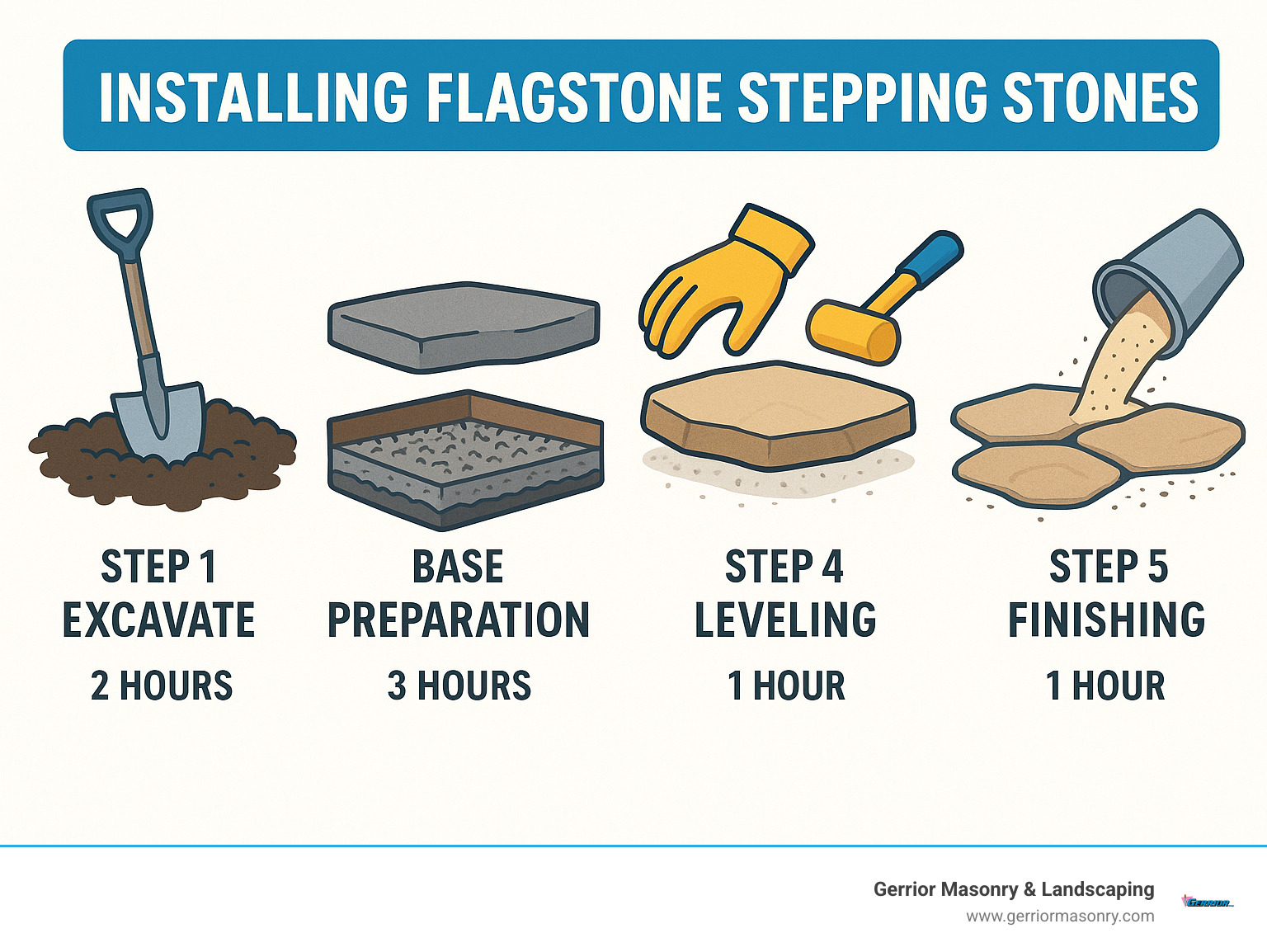
Installing flagstone stepping stones is a practical and beautiful addition to any landscape that can lift your outdoor space while providing functional pathways. If you’re looking to create a natural stone walkway, here’s a quick overview of the process:
- Plan and measure your pathway layout using stakes, string, or a garden hose
- Excavate to a depth of 5-6 inches (stone thickness + base materials)
- Add landscape fabric to prevent weed growth
- Install a 3-4 inch base of compacted gravel or crushed stone
- Add 1-2 inches of sand or decomposed granite for leveling
- Place flagstones with 1-3 inch gaps between them
- Level each stone using a rubber mallet and level
- Fill gaps with sand, gravel, or ground cover plants
A flagstone path adds natural beauty and charm while creating inviting connections between different areas of your yard. Unlike uniform pavers or concrete, these natural stone slabs bring organic character to your landscape with their varied shapes, colors, and textures.
I’m Joe Gerrior, owner of Gerrior Masonry & Landscape Construction Corp., and I’ve been installing flagstone stepping stones and other hardscape features for residential and commercial clients throughout Massachusetts for over 34 years. My team and I specialize in creating durable, beautiful stone pathways that improve outdoor living spaces while providing long-lasting functionality.
Must-know installing flagstone stepping stones terms:
– how to install paver stones walkway
– how to install stepping stone walkway
What Are Flagstone Stepping Stones?
Ever walked on a beautiful natural stone path and wondered what gives it that timeless charm? That’s flagstone – a sedimentary rock cut or split into flat slabs perfect for creating pathways through your garden or landscape. The term “flagstone” actually refers to how the stone is prepared rather than a specific rock type. These natural slabs typically measure between 1 to 3 inches thick, offering excellent durability and a naturally slip-resistant surface that stays safe even when wet.
When installing flagstone stepping stones, you’ll likely encounter several popular stone varieties:
- Sandstone delivers warm, earthy tones from buff to rich rust
- Bluestone (a type of sandstone) showcases distinctive blue-gray coloration
- Slate presents dramatic darks with hints of purple and green plus a subtle sheen
- Quartzite offers exceptional hardness with a sparkling crystalline appearance
- Limestone provides a softer option with neutral tones and smooth texture
What makes flagstone so special is its natural, somewhat irregular character that blends seamlessly with your plantings. Unlike manufactured pavers, flagstone creates an organic feel while still providing solid, stable footing for garden paths and walkways.
Common Stone Types & Looks
The color palette available in flagstone is truly remarkable – from subtle earth tones to vibrant reds and blues that can complement any landscape design. What’s available to you largely depends on your region, as shipping costs can significantly impact pricing for stone from distant quarries.
Here in Massachusetts, we frequently work with New England fieldstone (characterized by beautiful gray and tan hues), Pennsylvania bluestone (with its distinctive blue-gray coloration), and local quartzite (featuring sparkly white and light gray tones).
Flagstone comes in two primary forms that create very different looks in your landscape. Irregular or “crazy” flagstone maintains natural, uncut shapes with organic edges, while cut slabs are processed into more uniform squares or rectangles for a more formal appearance.
The texture varies widely too. Some stones naturally have a rough, non-slip surface (perfect for wet areas near pools), while others can be honed smooth for a more refined look.
“When selecting flagstone for stepping stones, I always recommend choosing pieces at least 1½ inches thick,” notes our lead installer Mark. “Thinner stones might seem like a bargain initially, but they’ll cost you more down the road when they crack under foot traffic and need replacement.”
Key Benefits for Your Landscape
Installing flagstone stepping stones transforms your yard in ways that go far beyond simply creating a path:
Your property’s curb appeal instantly improves with the natural beauty of stone enhancing your landscape design. Unlike solid concrete paths, the spaces between stones allow excellent drainage as water percolates into the soil rather than pooling or causing runoff problems.
Flagstone requires minimal maintenance compared to wood paths – it won’t rot, warp, or need regular staining. Many homeowners love how the gaps between stones can be planted with low-growing ground covers like thyme or moss, creating a lush, integrated look where hardscape meets landscape.
As an environmentally conscious choice, stone is a natural material often sourced locally. Plus, quality hardscaping like flagstone paths can boost your home’s resale value by 5-15% – a worthwhile investment that pays dividends in both enjoyment and property value.
One of our Lexington clients recently shared, “The flagstone path you installed has completely transformed our backyard. It not only looks beautiful but has solved our muddy walkway problems during rainy seasons.”
How to Install Stepping Stone Walkway
Planning & Design Essentials
Before you grab that shovel, let’s take a moment to map out your flagstone journey properly. A little planning now will save you countless headaches later!
Your path’s purpose makes all the difference in how you’ll build it. Will children race along it daily on the way to a playset? Or is this a peaceful garden path for occasional strolls? High-traffic areas need thicker stones and more substantial base preparation to stay stable over time.
When it comes to width, comfort is key. For a single-person walkway, aim for at least 3 feet wide – this gives you plenty of room without feeling cramped. If you’d like couples or friends to walk side-by-side in conversation, 4 feet or wider creates that inviting space.
“One mistake I see homeowners make is creating paths that are too narrow,” says Joe Gerrior. “You want your pathway to feel generous and welcoming, not like you’re tiptoeing through the garden.”
Don’t just guess at your stepping stone spacing! Take a few minutes to actually walk the area with your natural stride. Most adults are comfortable with stones spaced about 24 inches from center to center, but your perfect stride might be different.
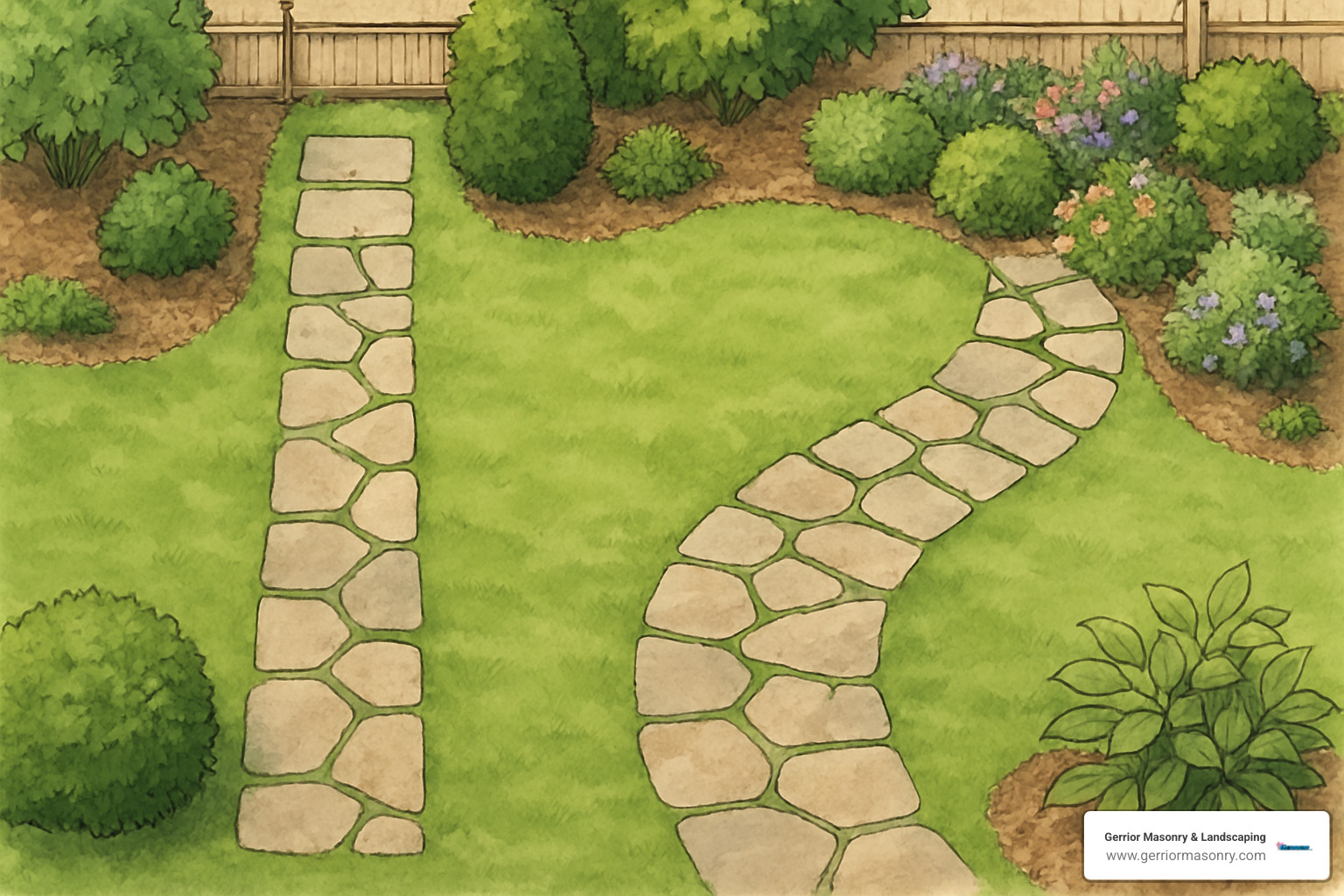
Straight or curved? That’s a style question that affects the entire feel of your landscape. Straight paths create formal, direct connections and are easier to construct. Curved pathways add that relaxed, wandering quality that works beautifully in naturalistic gardens and can neatly steer around existing trees or plantings.
If accessibility matters for your household or visitors, consider that irregular flagstone surfaces with gaps may present challenges for wheelchairs, walkers, or those with mobility issues. In these cases, smoother pavers with minimal, consistent joints might be a better choice.
Your soil type matters too. Clay soils hold moisture and may require additional drainage solutions beneath your path, while sandy soils naturally drain better. Here in Massachusetts, we also need to consider the frost line (averaging 4 feet deep). While you won’t dig nearly that deep for stepping stones, proper base preparation prevents the frustration of frost heave shifting your beautiful pathway over winter.
Choosing the Right Flagstone
There’s really no substitute for visiting a local stone yard when selecting your flagstone. Photos online simply can’t capture the true color variations, texture, and character of natural stone. Walking among the options, touching them, and seeing how they catch the light will help you find the perfect match for your vision.
Thickness is non-negotiable for stepping stones. I always recommend choosing pieces at least 1½ inches thick—preferably 2 inches or more for areas that will see regular foot traffic. Thinner stones might save you a few dollars upfront but will likely crack under pressure, costing you more in the long run.
Consider how your stone selection will work with your home’s exterior colors and existing landscape elements. Do you want stones that blend harmoniously with your house, or are you looking for a beautiful contrast? The right color choice can make your pathway feel like it’s always been part of your landscape.
Always purchase about 5% more stone than your calculations suggest you’ll need. This extra accounts for inevitable breakage, cutting waste, and those occasional pieces that just don’t quite fit your layout no matter how you position them.
When working with clients in Woburn and surrounding communities, we often recommend a stone yard visit together. This collaborative approach ensures you get exactly the look you want while giving us deeper insight into your aesthetic preferences.
For more comprehensive guidance on creating cohesive outdoor spaces, check out our hardscape design services.
Layout & Spacing for installing flagstone stepping stones
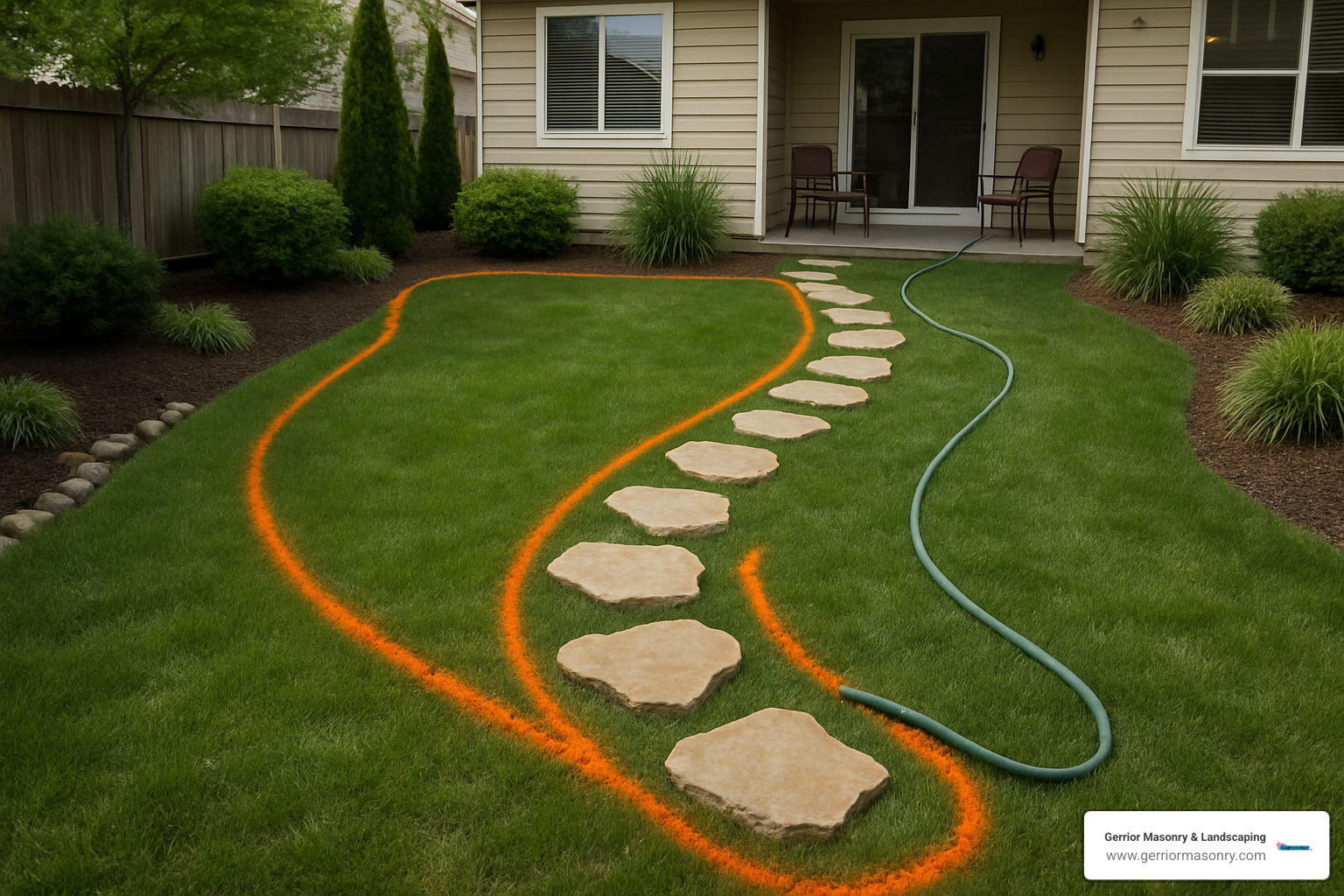
Getting your layout right is the foundation of a path that works as beautifully as it looks. Start with a garden hose to experiment with pathway shapes—it’s flexible, easy to adjust, and perfect for visualizing curved designs before making permanent changes. Once you’re happy with the layout, mark it clearly with spray paint or landscaping chalk.
For a natural-looking path with proper drainage, plan for 1-3 inch gaps between your flagstones. These spaces aren’t just practical—they’re also design opportunities! You can fill them with decorative pea gravel, sand, or even plant them with low-growing ground covers like creeping thyme or moss for a lush, integrated look.
Comfortable walking is crucial for a pathway you’ll actually use. Space your stepping stones about 24 inches from center to center for a natural stride. This works well for most adults, but everyone’s stride is different—take a few minutes to walk your planned path with natural steps to confirm it feels right for you and your family.
Don’t forget about water management! Incorporate a gentle slope of about ¼ inch per foot along your path to direct rainfall away from your home’s foundation or other structures. This subtle grade is barely noticeable to the eye but makes a huge difference in preventing water problems.
“I’ve seen too many DIY flagstone paths where the stones are spaced awkwardly,” notes our foreman Steve. “People either place them so far apart you feel like you’re playing hopscotch, or so close together they might as well have poured concrete. Take the time to actually walk your planned path before digging—your future self will thank you!”
Tools, Materials & Base Preparation
Getting ready for installing flagstone stepping stones means gathering the right tools and materials before you break ground. Think of this as your prep work for creating a path that will last for years to come.
You’ll need several basic tools that you might already have in your garage: a round-point shovel for digging, a flat spade for creating clean edges, and a sturdy wheelbarrow for moving materials. A rubber mallet will be your best friend for gently tapping stones into place without damaging them. Don’t forget a 2-foot level to ensure your stones sit properly, a tape measure, and a garden rake for smoothing your base materials.
One tool you’ll likely need to rent is a plate compactor – this heavy-duty machine is essential for properly packing down your base materials. Most rental centers charge about $75-100 per day, so plan your work efficiently to minimize rental time. And always remember safety gear: gloves to protect your hands, safety glasses for your eyes, and a dust mask when cutting or working with fine materials.
Before you lift a shovel, make that important call to 811 to have underground utilities marked. Here in Massachusetts, this free service requires at least 72 hours’ notice before digging – a small wait that can prevent dangerous and expensive accidents.
Shopping Checklist & Pro Tips
“The right materials make all the difference between a wobbly path and one that lasts decades,” says our foreman Mike, who’s been installing flagstone stepping stones since the early 2000s.
When it comes to the flagstone itself, always calculate your square footage and then add 5-10% extra. This accounts for inevitable breakage and allows you to be selective about which pieces look best in your path. For everything underneath, you’ll need landscape fabric to block weeds, 3-4 inches of crushed stone or gravel for your base, and 1-2 inches of coarse sand or decomposed granite for fine leveling. Consider adding edge restraints to keep your path defined, and either polymeric sand or pea gravel to fill those gaps between stones.
Save yourself time and back pain by having materials delivered in bulk. One of our Winchester clients shared how he and his neighbor coordinated their landscape projects, splitting delivery fees and bulk pricing to save over $300 each. Smart thinking!
When selecting your flagstones, run your hand along the bottom – the flatter they are, the more stable they’ll sit on your base. And remember that quality base materials are worth every penny. Using angular crushed stone rather than rounded pea gravel creates a base that locks together when compacted, providing much better long-term stability.
For more detailed guidance on pathway installation techniques, check out our guide on How to Install Stepping Stone Walkway.
Ground Prep 101
The secret to a flagstone path that stays beautiful for decades lies largely in what you can’t see after it’s finished – the preparation underneath.
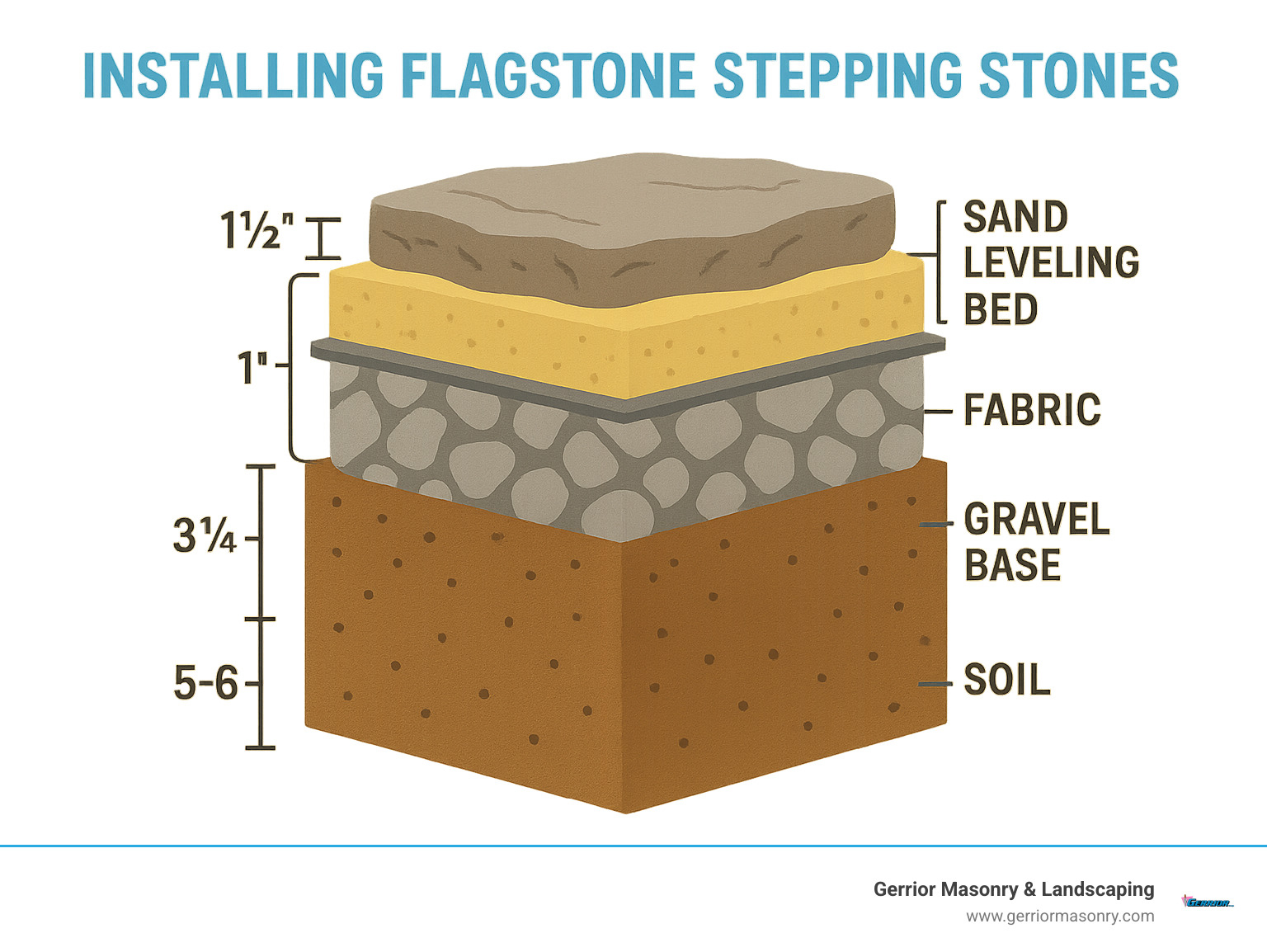
Start by excavating the pathway area to a depth of 5-6 inches for a typical walking path. This depth accounts for your base materials (3-5 inches) plus the thickness of your stone. Be thorough in removing all roots, rocks, and debris that could cause problems later.
Next, roll out landscape fabric over your excavated area, extending about 6 inches beyond your planned path edges. This simple step prevents weeds from growing up through your beautiful new path and keeps your base material from mixing with the soil below – a common cause of settling and unevenness.
Base installation is where patience pays off. Add your crushed stone in 2-inch layers (called “lifts”), compacting each layer thoroughly before adding the next. Slightly dampen the stone between compactor passes – this helps the material pack down more effectively. A properly compacted base is your best defense against frost heave, which is a real concern in our New England climate.
“I’ve repaired countless DIY paths where people rushed through the base prep,” says our team leader John. “That plate compactor might seem like overkill for a simple garden path, but trust me – skipping proper compaction might save you an hour now, but it’ll cost you days of repair work later.”
Installing Flagstone Stepping Stones: Step-by-Step
Now comes the exciting part—placing your beautiful flagstones to create that natural pathway you’ve been dreaming about. With your base properly prepared, it’s time to bring your design to life.
Start by considering whether you want defined edges for your pathway. If so, install plastic or metal edge restraints along the perimeter, securing them with stakes every 8-12 inches. This creates a crisp boundary between your path and surrounding landscape.
Next, spread a 1-2 inch layer of coarse sand or decomposed granite over your compacted base. “This leveling layer is your secret weapon for getting perfectly stable stones,” says our foreman Mike. “It allows you to make those small but crucial adjustments that prevent wobbling.”
Before permanently setting any stones, do a test layout. Place your flagstones in the desired pattern, starting from one end of the path. Step back, look at the overall flow, and adjust spacing until you achieve both visual appeal and a comfortable walking stride. This is much easier to fix now than later!
When you’re happy with the placement, it’s time to set each stone permanently:
- Remove one stone at a time
- Smooth the sand/granite beneath
- Place the stone back down
- Tap it gently into place with a rubber mallet
- Check with a level to ensure proper positioning
“Never ignore a wobbly stone,” cautions our installer Dave. “It might seem minor now, but that wobble will drive you crazy every time you walk on it, and it can become a tripping hazard.” If a stone rocks, simply lift it, adjust the bedding material, and test again until it’s rock-solid.
Work methodically along your path, setting one stone at a time. Check that each is level (or has a slight slope for drainage) and stable before moving to the next.
Dry-Lay Method for installing flagstone stepping stones
The dry-lay method is our most recommended approach for installing flagstone stepping stones in New England. This technique allows the stones to “float” on a bed of sand or decomposed granite without mortar, which is ideal for our freeze-thaw climate.
With dry-laying, your stones can slightly shift with ground movement during seasonal changes without cracking. The process follows the base preparation we’ve already discussed, with stones set directly onto the leveling material and joints filled with sand, fine gravel, or even low-growing plants for a lush, integrated look.
This method offers several advantages for homeowners: it’s more forgiving for DIYers, allows for easy stone replacement if needed, provides excellent drainage, and costs less than mortared installations. After setting your stones, always perform a walk test before filling the joints—this ensures your spacing feels natural and comfortable.
| Feature | Dry-Lay Method | Mortared Method |
|---|---|---|
| Difficulty | Beginner-friendly | More technical |
| Cost | Lower | Higher |
| Durability | Good | Excellent |
| Maintenance | Occasional resetting | Minimal |
| Climate Suitability | Better for freeze-thaw | Better for stable climates |
| Drainage | Excellent | Good (with proper slope) |
| Flexibility | Can be adjusted later | Permanent |
Mortared Method for installing flagstone stepping stones
For pathways where absolute stability is paramount, consider the mortared method. This approach creates a permanent installation that minimizes maintenance over time.
Start by preparing a concrete base or individual concrete pads for each stepping stone. Mix mortar according to package directions, then apply a 1-inch layer where each stone will sit. Press the stones firmly into the mortar, checking carefully for level positioning. The mortar needs 24-48 hours to set properly before you can walk on your new path.
“Mortared installations look more formal and can really lift the appearance of your landscape,” notes our lead mason John. “They’re ideal for high-traffic areas where you want zero movement and a smooth, consistent surface.”
While this method requires more skill and preparation, it delivers exceptional stability and reduces weed growth between stones. However, be aware that in our Massachusetts climate with significant freeze-thaw cycles, mortared installations require proper drainage design to prevent cracking over time.
Cutting & Shaping Stones Safely
Sometimes your perfect pathway requires custom-shaped stones. There are two main approaches to cutting flagstone:
For simple straight cuts, the score-and-snap method works well. Mark your cutting line with chalk, score along it with a masonry chisel and hammer, then position the stone with the score line at the edge of a solid surface and apply pressure to snap it cleanly.
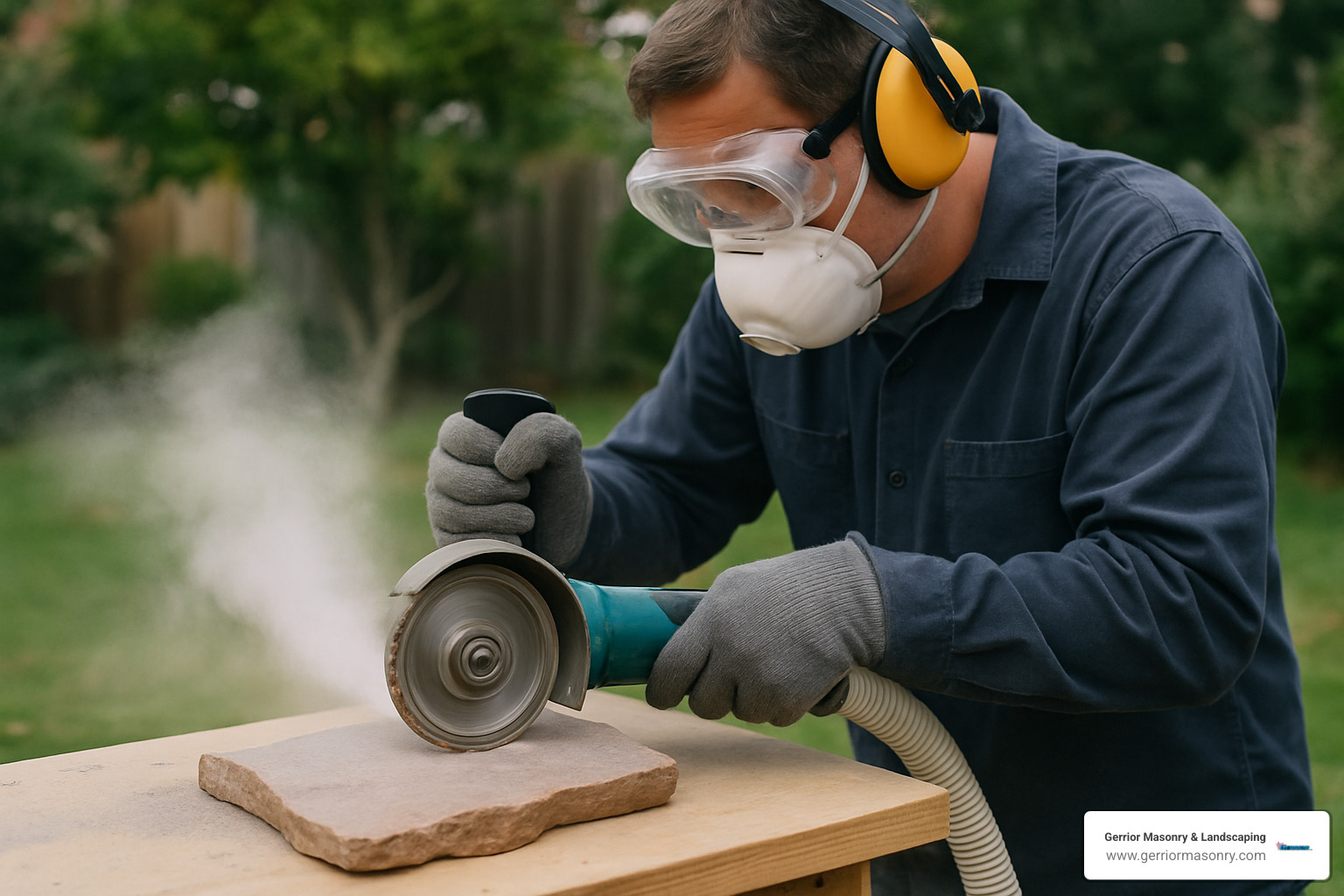
For more precise cuts, an angle grinder with a diamond blade is your best friend. Always wear safety glasses, hearing protection, and a dust mask—this is non-negotiable! Apply water to reduce dust as you cut, and make shallow passes rather than trying to cut through in one go.
“The biggest mistake I see DIYers make is underestimating the health hazards of stone dust,” warns our safety coordinator Mike. “That silica dust can cause serious lung issues if you breathe it in. Always work in a well-ventilated area and use proper protection.”
Finishing Touches, Costs & Maintenance
After setting your flagstones, it’s time to add those final details that transform a simple path into a landscape feature you’ll enjoy for years to come.
For the spaces between your stones, you have several attractive options. Pea gravel or decorative stone creates clean lines with excellent drainage, while polymeric sand offers more stability and helps keep weeds at bay. Budget-conscious homeowners might opt for regular sand, though be aware it may wash away over time and need replenishing. For a truly magical look, consider planting ground cover plants like thyme, moss, or creeping sedum between stones – they’ll soften the edges and create a lush, integrated appearance that changes with the seasons.
“My clients are often surprised by how much the joint material affects the overall look of their pathway,” says our landscape designer Sarah. “The right filler can completely transform the character of the path.”
While sealing flagstone is optional for outdoor applications, it can improve the stone’s natural colors and provide protection from staining – particularly valuable near outdoor kitchens or dining areas where spills might occur. A quality penetrating sealer won’t change the stone’s natural slip-resistant texture.
Consider framing your new path with formal steel edging, a complementary stone border, or integrating the edges directly into surrounding plant beds. For both safety and ambiance, low-voltage landscape lighting along your path creates dramatic nighttime appeal while ensuring no one takes an unexpected step off the path after dark.
Budgeting & Average Costs
The investment for installing flagstone stepping stones varies considerably based on your stone selection, project size, and whether you tackle it yourself or hire professionals.
For the DIY approach, expect material costs to run approximately:
– Flagstone: $5-15 per square foot
– Base materials: $1-3 per square foot
– Edging and joint materials: $1-2 per square foot
– Tool rental: $75-150
A typical 30-foot garden path that’s 3 feet wide (90 square feet) might cost between $500 and $1,500 in materials alone. The wide range reflects the significant price differences between stone types and quality levels.
If you’re considering professional installation, typical costs run from $15 to $27 per square foot, including both materials and labor. For perspective, a complete flagstone patio typically costs about three times more than a comparable concrete patio due to the labor-intensive nature of working with natural stone.
These are average costs based on internet data and not actual costs for Gerrior Masonry services. Our pricing is customized to each project’s specific requirements and can range widely depending on design complexity, site conditions, and material selections.
For more detailed information about flagstone project costs, check out How Much Do Flagstone Patios Cost?
Long-Term Care Tips
One of the beauties of a properly installed flagstone path is its minimal maintenance requirements. That said, a little seasonal attention will keep your pathway looking its best for decades:
Spring cleaning is the perfect time to sweep away winter debris and check for any stones that may have shifted during freeze-thaw cycles. This is also when you’ll want to pull any emerging weeds before they establish deep roots.
During summer months, an occasional rinse with a garden hose keeps your stones looking fresh and prevents moss in shady areas (unless moss is part of your design plan!).
Come fall, keep your path free of leaves which can not only stain the stone but become dangerously slippery when wet.
In winter, avoid using rock salt for ice removal as it can damage your beautiful stones. Instead, opt for calcium chloride, which is gentler on both the stone and surrounding plants.
For weed control, catching them early is your best strategy. When weeds do appear, pull them promptly before roots establish. A simple vinegar solution (equal parts vinegar and water) works wonderfully for spot treatments without the environmental concerns of chemical herbicides.
If you notice a stone becoming loose or uneven, simply lift it, adjust the base material beneath, and reset it – no special tools required. Similarly, joint material (sand or gravel) may need replenishing every 1-2 years depending on your weather conditions and foot traffic.
For more creative ways to integrate your flagstone path with other landscape elements, explore our article on Creative Ways to Use Pavers.
Common Mistakes & Pro Tips
After installing flagstone stepping stones for countless homeowners across Massachusetts over the past three decades, we’ve seen every possible mistake—and yes, occasionally made a few ourselves. Let me share the most common pitfalls so you can create a path that lasts for generations.
Skipping proper base preparation is without question the number one error we see in DIY projects. It’s tempting to rush through the foundation work since it’s not visible in the finished product, but a properly compacted base is what prevents your beautiful stones from settling unevenly or shifting. As my father used to say, “The part nobody sees determines how long the part everybody sees will last.”
Using stones that are too thin is another frequent mistake. While thinner flagstones might be gentler on your wallet initially, they’re prone to cracking under regular foot traffic unless you set them in mortar on a concrete base. For a dry-laid path that will stand the test of time, stick with stones at least 1½ inches thick—preferably 2 inches for high-traffic areas.
Poor drainage planning can doom even the most beautiful installation. Without proper slope (remember that ¼ inch per foot guideline), water can pool on or underneath your pathway. In our New England climate, this trapped moisture leads to erosion, shifting, and the dreaded frost heave damage that can turn your level path into a miniature mountain range over a single winter.
Irregular spacing between stones might seem like a minor aesthetic issue, but it actually creates functional problems. Inconsistent gaps or stones placed at awkward stepping distances make your path less comfortable to use and can even create tripping hazards, especially for elderly visitors or children.
One mistake I made early in my career was not testing stone placement with actual footsteps. What looks perfectly spaced on paper or when you’re kneeling and placing stones can feel completely wrong when you’re actually walking the path. Always do a walk test before finalizing your layout.
Overlooking edge restraints is particularly problematic on sloped terrain. Without proper edging, those outer stones will gradually migrate downhill, leaving your once-beautiful path looking neglected and potentially unsafe.
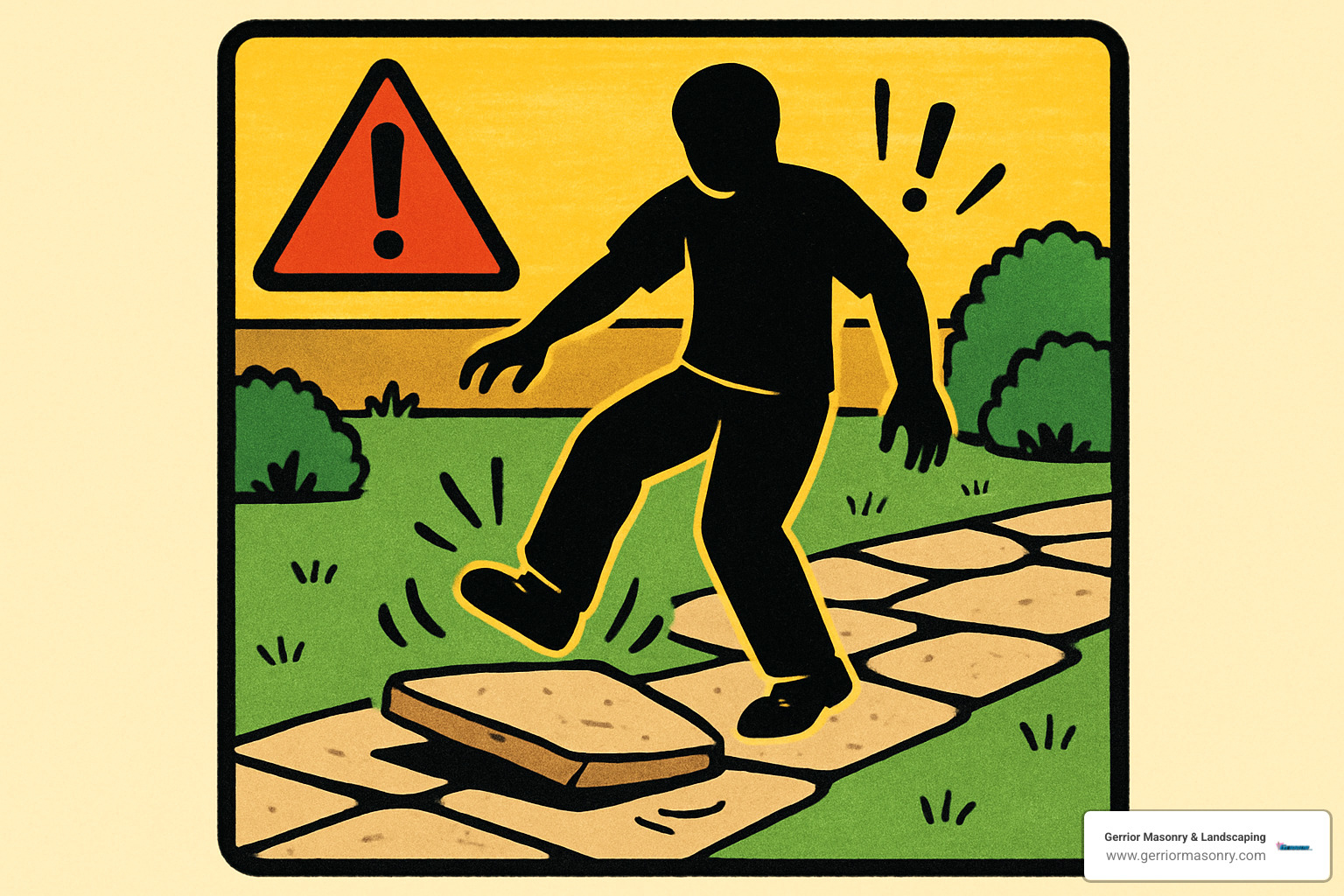
Pro Tip: “When in doubt about stone stability, go thicker and set it deeper,” advises our senior mason Bob. “I’d rather spend an extra hour getting the base perfect than come back next year to fix a wobbly path. There’s nothing worse than watching a guest at your outdoor barbecue do the ‘wobbly stone dance’ while holding a plate of food!”
Cutting corners during installation almost always leads to more work and expense down the road. A properly installed flagstone path should last decades with minimal maintenance—but only if you take the time to do it right from the start. For particularly challenging sites or if you’re not confident in your DIY abilities, consider consulting with a professional. We’ve rescued many projects that started as weekend DIY trips but quickly became overwhelming.
Frequently Asked Questions about Flagstone Stepping Stone Paths
How thick should each stone be for stability?
When installing flagstone stepping stones, thickness is crucial for long-term stability and durability. For stones that will bear regular foot traffic, always select pieces that are at least 1½ inches thick. If you’re creating a main walkway or using larger stones, aim for 2 inches or more to prevent cracking under pressure.
“The thickness rule is simple,” explains our operations manager Sarah. “The larger the stone’s surface area, the thicker it should be to prevent cracking. A small 12×12-inch stepping stone might be fine at 1½ inches thick, but a large 24×24-inch piece should be at least 2 inches thick.”
Thinner stones (around 1 inch) can work if you’re setting them in mortar on a concrete base, but for standard dry-laid installations, thicker is always better. Think of it as an investment in longevity—those extra dollars spent on thicker stone now will save you from replacing cracked pieces later.
What is the ideal gap between stones for comfort & safety?
The spacing between your flagstones affects both the look of your path and how comfortable it is to walk on. For a more formal, manicured appearance with sand or polymeric sand joints, keep gaps to 1-2 inches. If you prefer a natural, rustic look with pea gravel or decorative stone filling the spaces, 2-3 inches works well. When planning to plant ground covers like thyme or moss between stones, allow 3-4 inches for proper growth.
From a safety perspective, the ideal gap strikes a balance—narrow enough to prevent tripping hazards but wide enough for proper drainage. Most importantly, stones should be spaced to accommodate a natural walking stride. Nothing ruins a beautiful path faster than awkward spacing that forces people to either stretch uncomfortably or take tiny steps.
I recently installed a flagstone path for a family in Winchester where we carefully tested the spacing with each family member, including their elderly grandmother and young children. Taking those few extra minutes to test the stride pattern made all the difference in creating a path everyone could steer comfortably.
Are flagstone paths wheelchair accessible or should I choose pavers instead?
Traditional flagstone stepping stone paths with gaps between stones generally don’t provide the smooth, continuous surface needed for wheelchair accessibility. If creating an ADA-compliant pathway is important to you, consider these alternatives:
A mortared flagstone path with tight joints (less than ½ inch) and a carefully leveled surface can work well. Another option is cut flagstone set in a concrete base with minimal joints, which provides more stability and a smoother ride.
That said, manufactured pavers often provide a better solution than natural flagstone when accessibility is a priority. Their uniform thickness and shape create a more consistent surface with minimal lippage (height differences between adjacent pieces).
“We recently completed a project in Lexington where the client wanted both natural stone aesthetics and wheelchair accessibility,” shares our design consultant Lisa. “We used large cut bluestone pieces set in mortar with tight joints and a gentle slope. It provides the natural stone look they wanted while allowing their father to steer it safely in his wheelchair.”
The best approach is often a thoughtful compromise between natural aesthetics and practical functionality. At Gerrior Masonry & Landscape Construction, we’re experts at finding that balance, creating beautiful paths that work for everyone who uses them.
Conclusion
Installing flagstone stepping stones transforms your landscape with natural beauty while creating functional pathways that improve your outdoor living experience. Whether you’re a weekend warrior tackling this as a DIY project or working with professionals, understanding the process from start to finish helps ensure your path will stand the test of time.
After guiding countless homeowners through this process, I’ve seen how a well-executed flagstone path can become the highlight of a landscape design. The natural variations in color, texture, and shape bring character that manufactured materials simply can’t match.
Remember these key points as you plan your project:
Take your time with base preparation—it’s truly the foundation of success. Those extra hours spent on proper excavation and compaction will save you days of frustration later on.
Choose stones with appropriate thickness for your specific application. That bargain on thinner stones might not look like such a deal when they crack under foot traffic next spring.
Test your layout by actually walking the path before finalizing. What looks perfect on paper might feel awkward or unnatural when you’re using it daily.
Consider your local climate carefully when deciding between dry-lay and mortared methods. Here in New England, our freeze-thaw cycles make the flexibility of dry-laid installations particularly advantageous.
Perhaps most importantly, don’t rush. A pathway is something you’ll use and see every day for years to come—it deserves the time needed to get it right.
While many homeowners successfully install their own flagstone paths, more complex projects involving slopes, drainage challenges, or larger areas might warrant professional assistance. Sometimes having experienced hands guiding the process can make all the difference between a good result and a great one.
For those looking to explore other walkway options, our guide on installing a paver walkway provides valuable insights into alternative hardscaping approaches.
At Gerrior Masonry & Landscape Construction, we bring over three decades of hands-on experience to every project we undertake. Our commitment to craftsmanship and attention to detail has made us a trusted name throughout Massachusetts for beautiful, durable hardscaping solutions that stand the test of time.
Gerrior Masonry & Landscape Construction—based in Woburn, MA—proudly serves homeowners across Middlesex & Essex County with expert hardscaping solutions that improve outdoor living spaces while providing lasting beauty and functionality.
