
Masonry Mason: Top 10 Essential Facts in 2024!

Masonry mason is a term that brings to mind skilled craftsmanship, lasting building techniques, and the beautiful versatility of structures made from bricks, stones, and concrete. If you’re curious about what sets this enduring construction tradition apart, here it is in a nutshell:
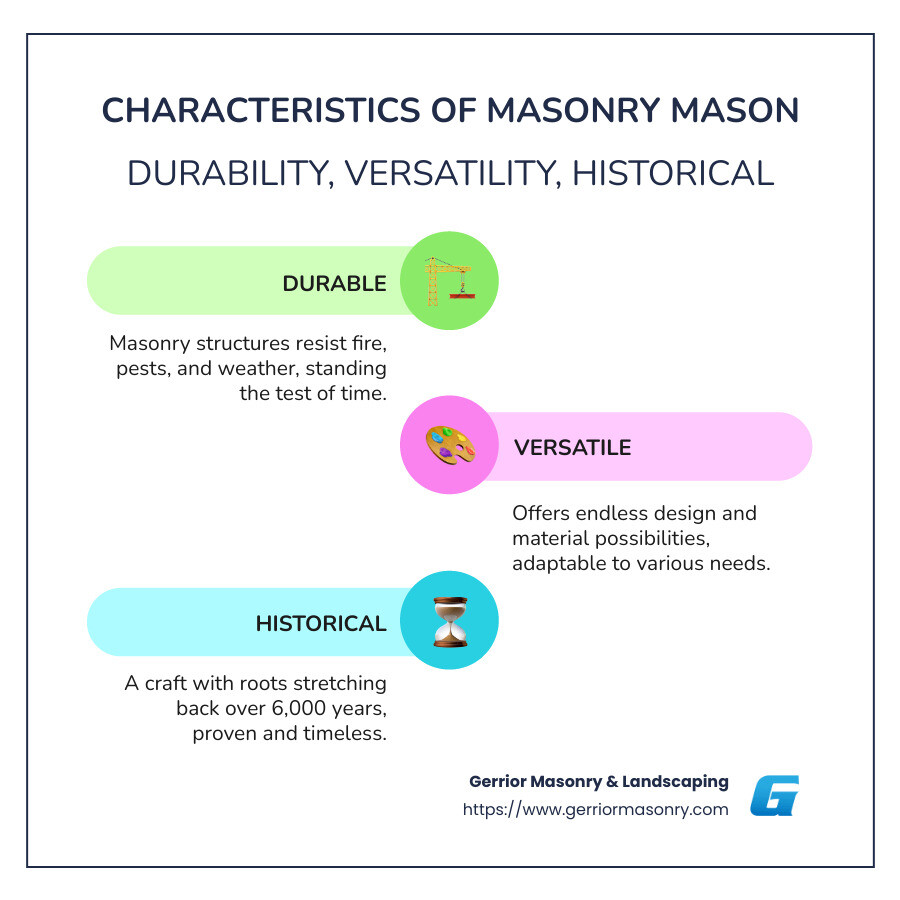
- Durable: Masonry stands the test of time, resisting fire, pests, and weather.
- Versatile: Its adaptability in design and material offers endless possibilities.
- Historical: With roots stretching back over 6,000 years, it’s a proven, timeless craft.
Masonry has been used in some of the world’s most iconic structures, showcasing its durability and strength. From ancient sun-baked clay bricks to modern engineered stones, the materials have evolved, but the craft’s essence remains unchanged. Embracing both the beauty and utility of natural and manufactured stone, this art meets modern needs while honoring its historical legacy.
I’m Joe Gerrior, owner of Gerrior Masonry & Landscaping, with over 34 years of expertise in masonry mason work. My team and I are committed to excellence in designing and building structures that improve both aesthetics and functionality. Let’s dig deeper into how this age-old craft continues to shape today’s world.
Similar topics to masonry mason:
– concrete masonry near me
– masonry repair near me
– masonry restoration services
Understanding Masonry Materials
Types of Masonry Materials
Masonry construction has long been admired for its durability and aesthetic appeal. Its strength lies not only in the skill of the masonry mason but also in the variety of materials used. Here’s a closer look at some of the most common materials:
Bricks: Bricks are a staple in masonry due to their classic look and versatility. They are made by firing clay or shale and are known for their compressive strength. Brick masonry is often used in walls, fireplaces, and pathways. The uniformity of bricks allows for precise and consistent construction.
Stones: Natural stones like marble, granite, and limestone offer a unique, organic aesthetic. Each stone type has its own set of characteristics. For example, granite is extremely durable and resistant to weathering, while limestone provides a softer, more workable stone option. Stone masonry is often seen in facades, retaining walls, and decorative elements.
Concrete Blocks: These are a modern alternative to traditional stone and brick. Concrete blocks, especially those with hollow cores, are valued for their strength and ease of use. They can be used in both structural and non-structural applications, offering flexibility in design.
Glass Blocks: Glass blocks add a decorative element while allowing light to pass through. They are often used in interior walls and partitions, combining functionality with visual interest.
Adobe: Made from natural materials like clay and straw, adobe bricks are an eco-friendly option. They have been used for thousands of years and are particularly popular in arid climates due to their thermal mass properties.
Cast Stone: This is a manufactured material designed to simulate natural stone. It offers the aesthetic appeal of stone with the added benefit of being customizable in shape and size.
Masonry in Modern Construction
In modern construction, masonry continues to play a vital role, both structurally and aesthetically.
Reinforced Masonry: This technique involves the use of steel reinforcements within masonry walls to provide additional strength and stability. Reinforced masonry is particularly useful in areas prone to earthquakes or high winds, as it improves the load-bearing capacity of structures.
Structural Roles: Masonry materials are often used in load-bearing walls, columns, and foundations, taking advantage of their compressive strength. The combination of masonry units and mortar creates a monolithic structure capable of supporting significant weight.
Aesthetic Roles: Beyond their structural benefits, masonry materials are prized for their aesthetic versatility. The variety of textures, colors, and patterns available allows for creative expression in both interior and exterior designs. Whether it’s the rustic charm of a stone facade or the sleek lines of a brick wall, masonry can significantly improve the visual appeal of a building.
Masonry remains a cornerstone of construction, marrying traditional craftsmanship with modern engineering to create structures that are both beautiful and enduring. As we continue to explore innovative applications and techniques, the role of the masonry mason is more important than ever in bringing these materials to life.
The Role of a Masonry Mason
A masonry mason is much more than just a builder. They are craftsmen who blend skill and artistry to create structures that stand the test of time. From constructing new buildings to repairing historical landmarks, their work is both practical and artistic.
Skills and Tools of a Mason
Masons require a diverse set of skills to perform their craft effectively. They must be adept at using both hand and power tools. Hand tools like trowels, levels, and jointers are essential for laying bricks and stones precisely. Power tools, such as saws and drills, help masons cut and shape materials efficiently.
Material handling is another critical skill. Masons work with heavy materials, including bricks, stones, and concrete blocks, requiring strength and precision. They must also read blueprints and understand building codes to ensure their work meets structural and safety standards.
The Art of Masonry
Beyond the technical skills, masonry is an art form. Masons use patterns, textures, and colors to improve the aesthetic appeal of their projects. Whether it’s a simple brick wall or an elaborate stone facade, the arrangement of materials can transform a space.
Patterns like herringbone or basket weave add visual interest to surfaces. Textures, achieved through different finishing techniques, can give a project a rustic or polished look. Colors, whether natural or through the use of colored mortar, allow for creative expression and customization.
Masonry is about creating structures that are not only functional but also beautiful. The artistry involved in choosing and arranging materials is what sets a skilled masonry mason apart, making their work a testament to both tradition and innovation.
Masonry Techniques and Applications
Masonry is a versatile craft with techniques that have evolved over centuries. These techniques cater to both structural and aesthetic needs, making masonry an essential part of construction.
Key Masonry Techniques
Load-Bearing Masonry
Load-bearing masonry is foundational in construction. It involves using bricks or stones to support the weight of a building. This technique is known for its durability and strength, often used in walls, columns, and arches. The weight of the masonry itself stabilizes the structure, making it a reliable choice for various buildings.
Veneer Masonry
Veneer masonry offers an aesthetic touch without the weight of traditional masonry. It involves attaching a thin layer of brick or stone to the exterior of a building. This technique provides the appearance of solid masonry while allowing for more modern construction methods underneath.
Dry Set Masonry
Dry set masonry skips the mortar, relying on the friction and interlocking of stones for stability. This technique is often used in landscaping, like garden walls or pathways. It offers a rustic, natural look and can be more environmentally friendly since it doesn’t require cement.
Stonework and Brickwork
Stonework involves shaping and arranging stones to create beautiful and durable structures. Brickwork focuses on laying bricks with precision to form walls, patios, and more. Both techniques require skill and attention to detail, ensuring the final product is both functional and visually appealing.
Innovative Masonry Applications
Slipform Stonemasonry
Slipform stonemasonry combines traditional stonework with modern techniques. It involves using a form to hold stones in place while concrete is poured around them. This method speeds up construction and provides the appearance of traditional stonemasonry with added stability.
Reinforced Masonry
Reinforced masonry incorporates steel reinforcements, like rebar, into the masonry structure. This technique improves the tensile strength and resistance to lateral forces, making it ideal for buildings in earthquake-prone areas. It’s a modern solution that combines the beauty of masonry with the strength of reinforced concrete.
Masonry techniques and applications continue to evolve, offering solutions for both traditional and modern construction needs. From load-bearing structures to innovative methods like slipform stonemasonry, the craft of masonry remains essential in building strong, lasting, and beautiful structures.
Masonry Mason FAQs
What are the three types of Masons?
Masons, known for their craftsmanship in working with materials like stone, brick, and concrete, can be categorized into three main types: Entered Apprentice, Fellow of the Craft, and Master Mason. These terms originate from Freemasonry, a fraternal organization with deep historical roots, and reflect levels of progress and expertise within the craft.
- Entered Apprentice: This is the initial stage, where a mason begins learning the basic skills and principles of masonry. It’s akin to an apprenticeship, focusing on foundational techniques and understanding the tools of the trade.
- Fellow of the Craft: At this level, a mason gains more experience and responsibility. They refine their skills and start to understand more complex aspects of masonry, including the ability to read blueprints and manage small projects.
- Master Mason: This is the highest level, representing a mason with extensive experience and expertise. Master Masons are capable of leading significant projects, offering guidance to less experienced masons, and executing intricate designs with precision.
What do Masons believe?
Masons, particularly in the context of Freemasonry, are often associated with certain philosophical beliefs rather than religious doctrines. These beliefs include:
- Belief in a Supreme Being: Masons traditionally hold a belief in a higher power, which is a fundamental requirement for joining Freemasonry. This belief is inclusive, allowing for diverse religious views among members.
- Immortality of the Soul: Many Masons believe in some form of life after death, reflecting a philosophical stance on the continuity of the soul.
- Morality and Ethical Living: Masons are encouraged to live by high moral standards, emphasizing integrity, honesty, and the betterment of society.
What is a Mason’s job description?
A masonry mason is a skilled construction professional who specializes in working with materials such as stone, concrete, and tile. Their job encompasses a variety of tasks, including:
- Construction: Building structures like walls, patios, and fireplaces using various masonry techniques. This involves precision in laying bricks or stones and ensuring the structural integrity of the build.
- Repair and Restoration: Masons also repair and restore existing masonry structures, addressing issues like cracks, spalling, and water damage to maintain the longevity and safety of the structures.
- Artistic Design: Beyond functional construction, masons often engage in artistic design, creating visually appealing patterns and textures that improve the aesthetic value of a project.
Masons play a vital role in both the structural and decorative aspects of construction, blending traditional craftsmanship with modern techniques to create enduring and beautiful works.
Conclusion
Masonry stands out for its longevity, with structures lasting hundreds, even thousands, of years. This durability is best by other building materials, making masonry a wise choice for those looking to invest in a lasting structure. From ancient monuments to modern homes, masonry’s enduring nature speaks volumes about its reliability and strength.
Moreover, masonry is celebrated for its environmental impact. It is the most environmentally-friendly building system available, primarily because masonry materials are made from natural ingredients like clay and stone. These materials do not emit volatile gases or toxins during a fire, ensuring a healthier living environment. Additionally, masonry construction requires less insulation, thanks to its natural insulating properties, and is slow to absorb or lose heat, contributing to energy efficiency.
At Gerrior Masonry & Landscaping, we are committed to using these benefits. Our skilled team, with over 30 years of experience, specializes in providing high-quality masonry services, ensuring each project is built to last. Whether it’s a new patio or a foundation repair, our focus is on delivering results that stand the test of time while enhancing the beauty and functionality of your space.
For more information about our services and how we can help you with your next masonry project, visit our Masonry Services page. Let us bring your vision to life with our expertise and dedication to excellence.
