
Natural stone garden edging: 5 Stunning Benefits in 2025
Elevating Your Garden Borders with Natural Stone
There’s something magical about the way natural stone garden edging transforms an ordinary landscape into something extraordinary. Like a perfectly custom frame around a beautiful painting, stone edging defines your garden spaces while adding a touch of timeless elegance that simply can’t be matched by synthetic materials.
As I’ve seen countless times in my years installing gardens across Massachusetts, the right stone border doesn’t just look beautiful—it solves practical problems too. When properly installed, these sturdy barriers keep mulch from spilling onto lawns (reducing maintenance by up to 30%), prevent soil erosion during heavy rains, and create clean visual transitions between different areas of your outdoor space.
What makes stone edging so special is its remarkable durability. While plastic edging cracks in the sun and wooden borders rot away, granite edging can last 50+ years with virtually no maintenance. Sandstone and limestone options typically provide 20-40 years of beautiful service, weathering gracefully with age and developing character that mass-produced alternatives simply can’t match.
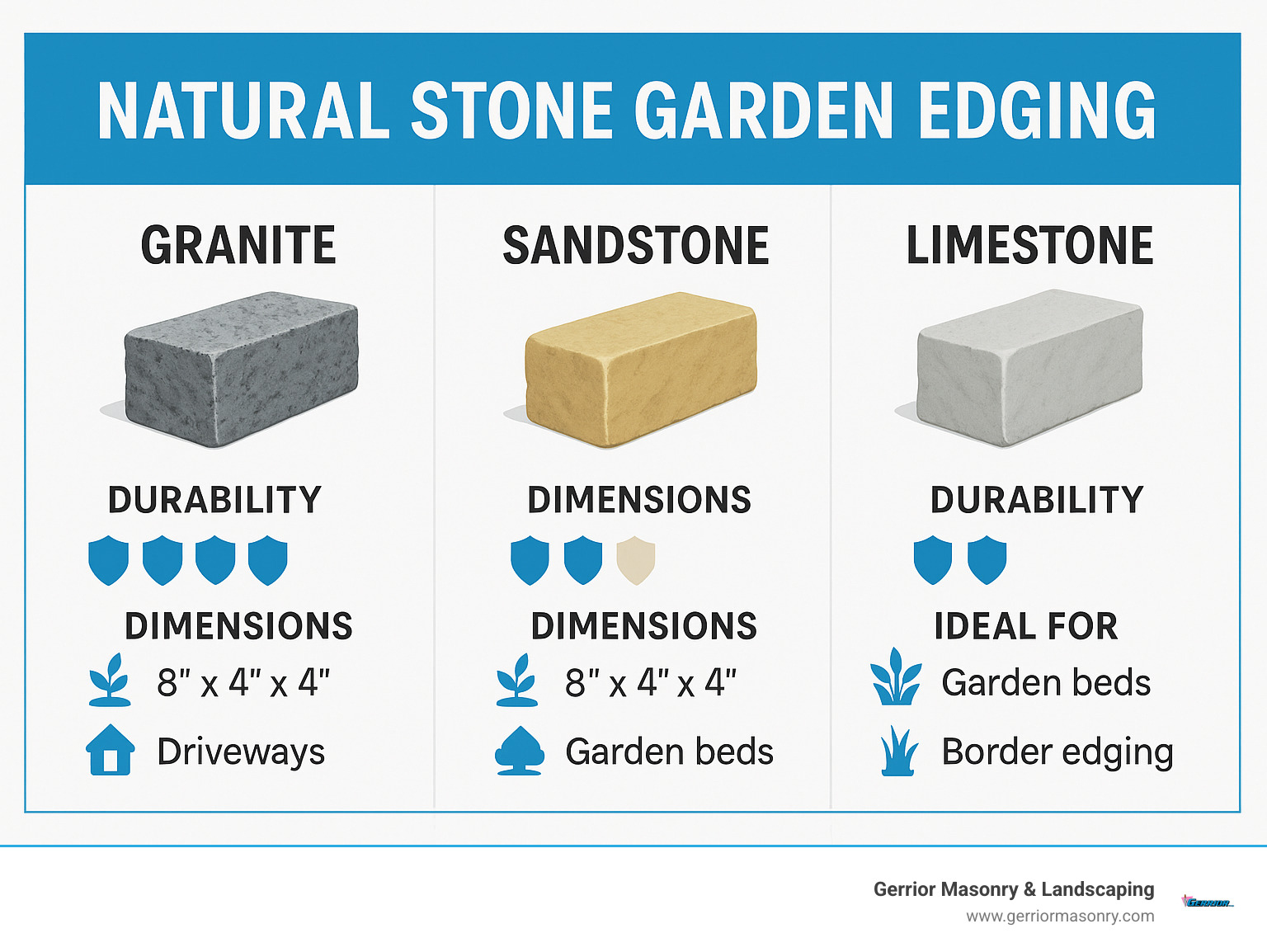
Most homeowners I work with are surprised by the variety of stone options available. Granite blocks (typically 8″ x 4″ x 4″) offer best durability for high-traffic areas, while sandstone edgers bring warm earth tones that complement colorful plantings. For those seeking distinctive character, limestone, bluestone and cobblestone combinations create old-world charm that improves both heritage and contemporary homes.
When planning your project, keep in mind that stone size affects coverage—a standard pallet typically covers between 33-83 linear feet depending on the dimensions of your chosen stone. Color options range from classic grays and blacks to warmer buff and rose tones, allowing you to coordinate perfectly with your home’s exterior.
I’m Joe Gerrior, owner of Gerrior Masonry & Landscape Construction Corp., and after 34 years of creating distinctive borders throughout Massachusetts, I’ve seen how the right stone edging can lift an entire property’s appearance while reducing ongoing maintenance headaches for homeowners.
Whether you’re looking to define a curved flower bed, create a dramatic transition between your lawn and walkway, or add structure to a naturalistic garden design, natural stone garden edging offers best beauty that only improves with time. In the sections that follow, we’ll explore specific stone options in greater detail, helping you choose the perfect material for your unique landscape.
Granite Edgers – The Indestructible Classic
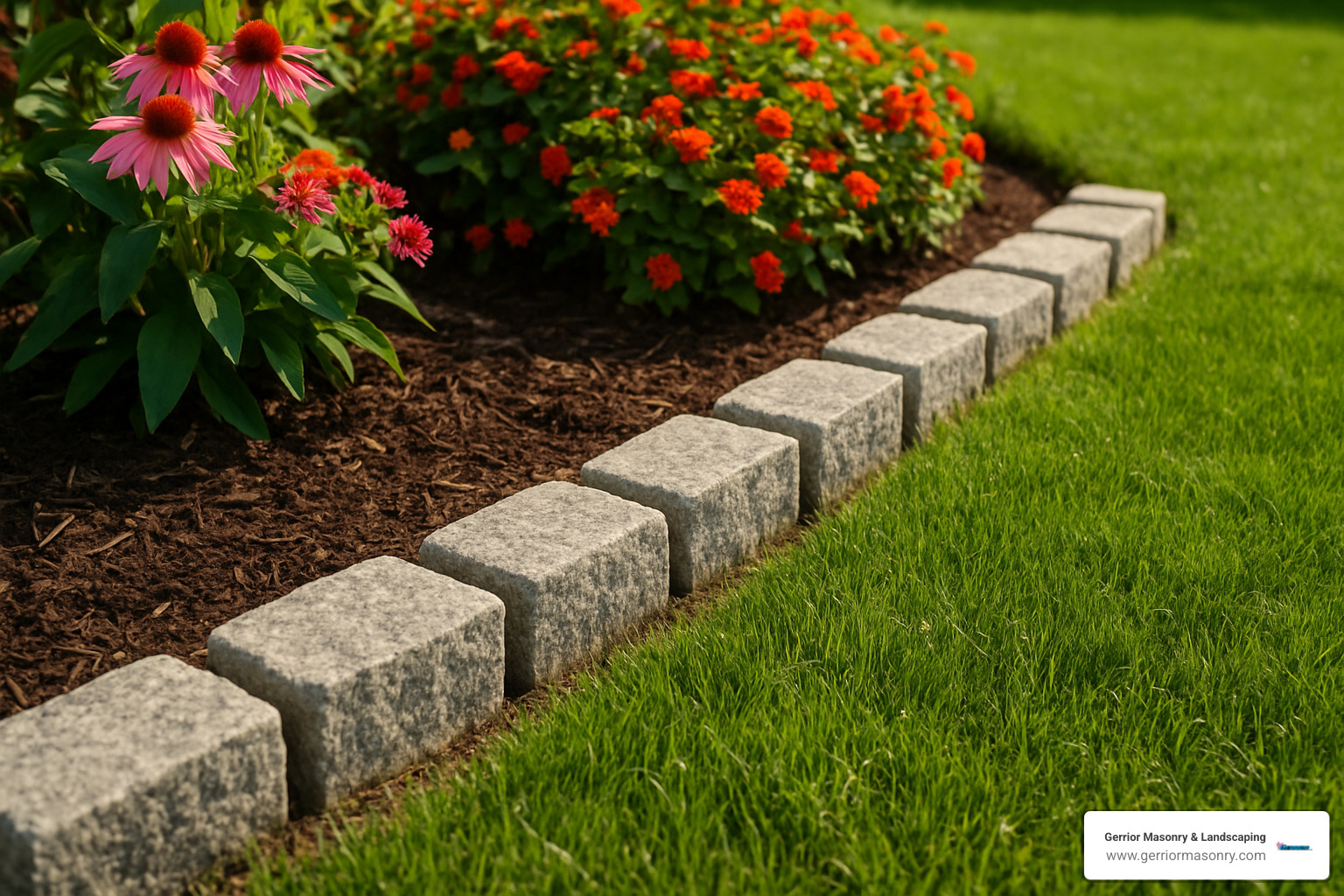
When it comes to creating borders that truly stand the test of time, granite edgers are the undisputed champions of natural stone garden edging. These magnificent stones aren’t just beautiful – they’re practically indestructible, with a lifespan easily exceeding 50 years. Think about that: install these once, and they’ll likely outlast your mortgage!
The secret to granite’s remarkable performance lies in its geological makeup. As an igneous rock formed under intense pressure, granite offers exceptional density that shrugs off whatever Mother Nature throws its way. From harsh Massachusetts freeze-thaw cycles to accidental lawnmower bumps, these edgers maintain both their structure and appearance decade after decade.
“I remember installing granite borders for a family in Lexington back in the 90s,” shares Joe Gerrior. “When we returned last year for a new patio project, those same granite edgers looked practically new – just with that subtle weathered character that actually improves their appeal.”
Granite edgers come in several popular formats to suit different landscape styles. The classic cobblestone edgers (typically 4″×4″×4″ cubes or 9″×5″×5″ rectangles) create that timeless European-inspired look that works beautifully with traditional homes. For more substantial presence, granite blocks measuring 8″×4″×4″ provide clean, bold lines that complement contemporary architecture. If you’re after rustic charm, snapped granite with its naturally broken face adds wonderful texture to garden borders.
Color options are surprisingly diverse, ranging from traditional grays and charcoals to striking blacks, warm buffs, and even subtle rose tones. This variety allows you to either harmonize with your home’s exterior or create intentional contrast with surrounding landscape elements.
When it comes to coverage, a single pallet of granite cobblestones goes surprisingly far. Those 4″×4″×4″ gray cobbles (about 250 pieces per pallet) typically cover about 83 linear feet, while larger 10″×7″×4″ pieces (around 50 per pallet) will border approximately 41 linear feet of garden.
Natural stone garden edging meets heavy-duty demands
Natural stone garden edging doesn’t just look impressive – it delivers substantial practical benefits that translate to less time maintaining your landscape and more time enjoying it. Homeowners who make the switch to granite edging typically report up to 30% reduction in routine garden maintenance.
This dramatic improvement comes from several key advantages. First, granite creates superior mulch containment, preventing that frustrating migration of mulch onto lawns during heavy rain. It also establishes clear lawn boundaries that eliminate tedious edge trimming sessions. The definitive break between lawn and garden bed acts as a natural weed barrier, significantly reducing the invasion of lawn grass into your precious flower beds. For properties with any slope, granite edgers provide excellent erosion control, stabilizing soil and preventing runoff during heavy storms.
For high-traffic areas like the transition between driveways and lawns or borders along walkways, nothing matches granite’s staying power. We’ve installed granite edging along pathways in Burlington and Bedford that have withstood decades of snow plows, foot traffic, and brutal New England winters without showing significant wear.
As one of our Winchester clients told us after making the switch from wooden edgers: “After replacing wood borders every few seasons for 15 years, we finally installed granite cobblestones. They’ve already outlasted three sets of those wooden edgers, look better than ever, and completely eliminated the soil erosion headaches we used to battle every spring.”
Gerrior Masonry & Landscape Construction, based in Woburn MA, proudly serves Middlesex and Essex County with expert stone edging and hardscaping solutions.
Sandstone Edgers – Warm, Earthy & Versatile
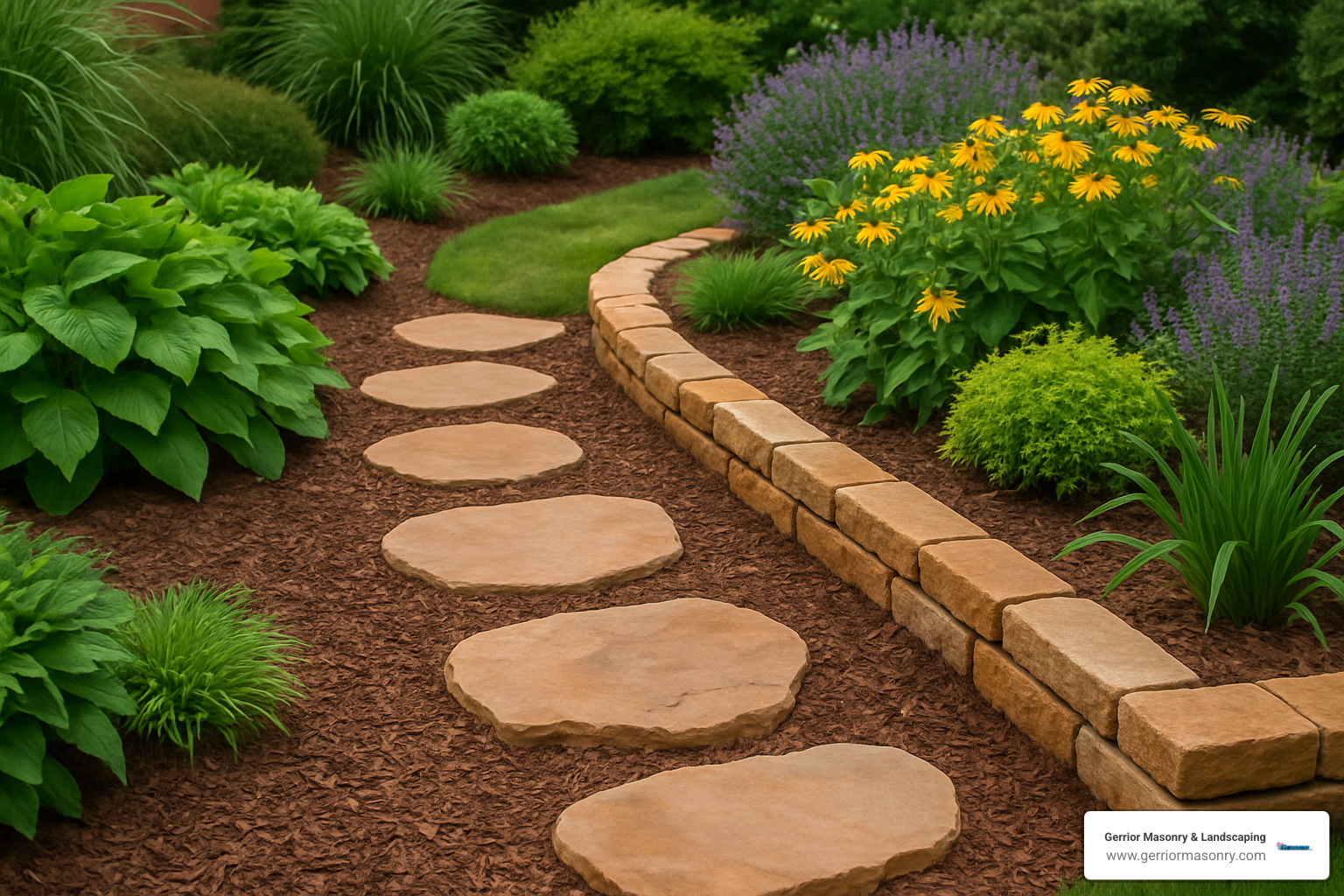
If granite is the strong, silent type of the stone edging world, then sandstone is its warm, approachable cousin. Sandstone edgers bring a soft, organic quality to your landscape that feels both inviting and timeless. The natural warmth of these stones seems to accept your garden rather than simply contain it.
What makes sandstone so special is its character. Each piece tells a story through its warm color palette of buff, beige, gold, rust, and rose tones. The natural veining creates subtle variations that catch the eye without overwhelming the senses. Many of our clients throughout Middlesex County are drawn to Helidon sandstone in particular, with its distinctive subtle color patterns that seem to change throughout the day as the light shifts.
“My garden feels like it’s giving me a warm hug now,” shared one of our Bedford clients after we installed sandstone edging around her perennial beds. “The colors pick up the tones in my flowering plants perfectly.”
Sandstone’s natural versatility comes from its range of available heights. We commonly work with heights from 100mm (4″) for subtle lawn borders to impressive 300mm (12″) pieces for substantial raised beds. The 150mm (6″) height tends to be our most popular choice, providing the perfect balance between presence and proportion for standard garden beds.
Unlike granite’s commanding presence, sandstone has a wonderful way of settling into the landscape, as if it’s always belonged there. It doesn’t compete with your plants for attention—instead, it improves them, providing a complementary frame that lifts your entire garden design.
One practical advantage of sandstone is its workability. It’s easier to cut and shape than granite, allowing for more customized applications when your design calls for specific dimensions or angles. This makes it particularly well-suited for projects where precision and adaptation to existing features are important.
While not quite as indestructible as granite, properly installed sandstone edging still offers impressive moderate durability, typically lasting 15-30 years with minimal maintenance. For most family homes, that’s a lifetime of enjoyment without replacement concerns.
Creative ways to showcase sandstone curves
Sandstone truly shines when used to create flowing, organic lines throughout your landscape. Its natural warmth and versatility make it perfect for curved applications that softer, more naturalistic garden designs demand.
Planter boxes bordered with sandstone create inviting focal points that draw the eye and provide structure to your garden. The warm tones complement flowering plants beautifully, creating a soft frame that improves rather than competes with your garden’s colors.
We recently completed a project in Winchester where we surrounded a cottage garden with gently curving sandstone edging that mimicked the natural contours of the property. The client was amazed at how the stone seemed to “flow” around the plantings, creating a sense of intentional design while still feeling completely natural.
Fire-pit rings are another perfect application for sandstone edging. The material’s warm tones naturally complement the aesthetic of outdoor fire features, creating a cohesive look that feels thoughtfully designed. One of our Lexington clients paired a sandstone-edged fire pit with matching garden borders, creating a unified outdoor living space that transitions seamlessly from functional areas to planted spaces.
Sandstone also excels when used to create blended textures in your landscape. It pairs beautifully with other materials like gravel, wood mulch, and native plantings. This versatility allows for creative mixed-material designs that add depth and interest to your outdoor spaces.
For more inspiration on how sandstone edging can improve your overall landscape design, explore our hardscape and landscape services page. We’ve found that sandstone is often the perfect middle ground for homeowners who want natural beauty without the formality that sometimes comes with harder stone options.
Limestone, Bluestone & Cobblestone Mix – Cool Contours & Old-World Charm
For homeowners seeking distinctive character and historical charm, the combination of limestone, bluestone, and reclaimed cobblestone offers unparalleled aesthetic appeal. These materials bring a sense of permanence and tradition to your landscape that perfectly complements historic homes throughout Massachusetts.
Limestone edgers feature a cool, neutral palette ranging from light gray to buff and cream tones. With a fine-grained texture and consistent appearance, limestone creates clean, defined borders that work well in formal garden designs. The tumbled finish option adds an aged, weathered look that’s particularly appropriate for traditional New England landscapes.
Standard limestone edgers typically come in modular formats measuring 10″ x 7″ x 4″, making them substantial enough to create presence while remaining proportional to most garden beds. The Indiana Limestone Tumbled Edger is one of our most requested options, offering an authentic aged appearance from day one.
Bluestone edgers bring a distinctive blue-gray color that creates striking contrast against green lawns and colorful plantings. Available in both natural-cleft (textured) and thermal (smooth) finishes, bluestone offers versatility for both traditional and contemporary designs. The Tamaha Blue Snapped Edger creates a particularly striking border with its natural broken face and rich color.
Reclaimed cobblestone represents the pinnacle of old-world charm and sustainability in garden edging. These historic pieces—often sourced from street pavings in older Massachusetts towns—bring authentic patina and character impossible to replicate with new materials. Traditional Belgian blocks (typically measuring 5″ x 5″ x 9″) create a distinctive edge that immediately evokes European garden traditions.
“There’s something special about incorporating materials with history into your landscape,” notes our masonry specialist. “When we install reclaimed cobblestone edgers, we’re not just creating a border—we’re connecting your property to the architectural heritage of New England.”
Natural stone garden edging for heritage or modern looks
The versatility of these materials allows them to improve both historic restorations and contemporary landscape designs. For heritage properties in towns like Concord, Lexington, or Salem, limestone and reclaimed cobblestone create period-appropriate borders that complement historic architecture.
In modern landscape applications, these same materials can be used in innovative ways:
Contrasting lawn edges: A crisp bluestone border creates dramatic definition between lawn areas and planting beds in contemporary designs.
Permeable driveway aprons: Cobblestone edging can frame permeable paver driveways, managing water runoff while adding distinctive character.
Eco-friendly reclaimed stone: For environmentally conscious homeowners, reclaimed cobblestone represents a sustainable choice that reduces demand for newly quarried materials.
One of our recent projects in Arlington perfectly illustrates this versatility. For a mid-century modern home, we installed a straight-line bluestone border to frame minimalist planting beds, creating a clean, architectural look that complemented the home’s design while providing the durability and permanence only natural stone can offer.
Natural Stone Garden Edging: Installation, Maintenance & Cost Guide
When planning your landscape change with natural stone garden edging, understanding what goes into installation, ongoing care, and budget considerations helps you make the best choice for your property. Natural stone isn’t just beautiful—it’s a practical investment that outlasts and outperforms other edging options.
The advantages of stone over alternative materials are substantial and worth considering before making your decision:
| Feature | Natural Stone | Plastic | Metal |
|---|---|---|---|
| Lifespan | 20-50+ years | 5-10 years | 10-15 years |
| Appearance | Authentic, improves with age | Artificial, fades/cracks | Industrial, may rust |
| Stability | Excellent weight/stability | Poor, shifts easily | Moderate |
| Climate resilience | Excellent in all conditions | Poor in freeze/thaw cycles | Good but may corrode |
| Maintenance | Minimal, occasional resetting | Frequent replacement | Occasional rust treatment |
| Sustainability | High (one-time resource use) | Low (petroleum-based) | Moderate (recyclable) |
| Initial cost | Higher | Lower | Moderate |
| Long-term value | Excellent | Poor | Moderate |
Here in Massachusetts, our unique climate makes natural stone particularly valuable. Those dramatic seasonal shifts from humid summers to freezing winters would quickly destroy plastic edging, rot wooden borders, and potentially corrode metal—but stone simply weathers gracefully, developing character rather than deteriorating.
“I’ve had clients call me about replacing plastic edging that lasted barely two winters,” says Joe Gerrior. “Meanwhile, the granite edging we installed for their neighbors ten years ago still looks perfect. Sometimes the more economical choice upfront becomes the most expensive over time.”
Ready to install? You’ll need a few basic tools: a shovel and spade for trenching, a tamper to compact your base material, a level to ensure proper placement, string or a garden hose for marking your lines, crushed stone or sand for the base, and optionally, landscape fabric for weed suppression underneath.
Based on internet data, professional installation of natural stone garden edging typically ranges from $12 to $45 per linear foot, with high-end custom installations potentially reaching $135 per linear foot. These costs vary widely depending on your choice of stone, the complexity of your design, site conditions, local labor rates, and how accessible your installation area is.
For more inspiration and detailed information about styles and options, visit our dedicated pages on Decorative Stone Garden Edging and Stone Garden Edging. You can also learn more about general landscaping principles from the University of Massachusetts Extension’s Landscape, Nursery & Urban Forestry Program.
Basic DIY install steps
While we’re always happy to handle your installation professionally, some homeowners enjoy tackling simpler edging projects themselves. If you’re considering the DIY route, here’s how to achieve professional-quality results:
First, mark your borders using a garden hose or string to outline where your edging will go, considering both aesthetics and practical concerns like mower access. Next, dig a trench about 2-3 inches deeper than your stone height and 2 inches wider than the stones themselves—for 4-inch tall edgers, you’d want a 6-7 inch deep trench.
Creating a stable base is absolutely crucial. Add 2-3 inches of crushed stone or coarse sand to the trench bottom and compact it firmly with a tamper. This foundation prevents future shifting and keeps your edging looking great for decades.
When you set the stones, ensure they’re level both horizontally and with adjacent pieces. Use a string as a guide for straight sections; for curves, trust your eye to create a natural flow. Once positioned, backfill and compact both sides with soil to lock everything in place.
Finally, finish the edges with soil, mulch, or gravel depending on your design (sloping slightly away for drainage), and clean up by sweeping or rinsing the tops of your stones to showcase their natural beauty.
“The most common mistake we see in DIY stone edging is rushing through the base preparation,” notes our installation team leader. “Those extra 30 minutes spent getting your foundation right will save you hours of maintenance headaches down the road.”
For more detailed DIY landscaping tips, check out the Old Farmer’s Almanac gardening guides.
Care & upkeep essentials
One of the joys of natural stone garden edging is how little maintenance it requires compared to other materials. That said, a few simple care practices will keep your borders looking their best for decades:
Annual inspection is worth your time each spring. Look for any stones that might have shifted during winter’s freeze-thaw cycles, and reset them promptly to prevent further movement. This quick check takes just minutes but preserves your edging’s appearance and function.
For aesthetic purposes, you might consider power-washing your stone edging annually to remove soil splatter and organic buildup. Just use a medium-pressure setting to protect both the stone and any mortar joints.
Weed management becomes simple with stone edging. Apply a pre-emergent herbicide along the edge in spring, or simply pull any opportunistic weeds before they establish themselves between stones.
Every 5-10 years, you might need to reset a few stones if ground movement has occurred. This straightforward task involves lifting affected stones, releveling the base material, and repositioning them—a small effort for edging that lasts decades.
While not required, sealing your stone every 3-5 years with a penetrating stone sealer can improve colors and provide additional protection against staining, particularly for more porous stones like sandstone.
Eco & sourcing considerations
For environmentally conscious homeowners (and we’re seeing more of you every year!), natural stone represents one of the most sustainable edging choices available:
Low embodied energy is a significant advantage of stone. Compared to manufactured materials like concrete or plastic, natural stone requires minimal processing, resulting in substantially lower carbon emissions during production. It’s essentially using what the earth already created.
The one-time resource use aspect of stone is compelling too. With a lifespan measured in decades rather than years, stone edging eliminates the waste stream created by repeatedly replacing short-lived alternatives—a true “buy it once” solution.
Local sourcing potential is another environmental benefit, especially here in New England with our rich history of stone quarrying. Locally-sourced options reduce transportation impacts while supporting regional economies and traditional crafts.
Should you ever decide to change your landscape design, stone offers complete end-of-life recyclability. The materials can be repurposed for other landscape features, sold, or donated—creating zero landfill impact.
When selecting your stone, consider asking suppliers about quarry location (closer is generally better for carbon footprint), extraction methods (some quarries employ more sustainable practices), and certification programs (such as ANSI/NSC 373 Sustainable Production of Natural Dimension Stone).
“We’re seeing increasing interest in locally-quarried stone,” our materials specialist points out. “Massachusetts and New Hampshire granite not only reduces transportation impacts but connects landscapes to the geological heritage of New England. There’s something special about knowing your garden edge came from the same bedrock that’s shaped our region for millennia.”
For more information about sustainable landscaping practices, visit the Sustainable Sites Initiative.
FAQs – Quick Answers on Natural Stone Garden Edging
What sizes are most common for natural stone garden edging?
The most popular sizes include granite cobblestones (4″ x 4″ x 4″ cubes or 9″ x 5″ x 5″ rectangles), granite blocks (8″ x 4″ x 4″ or 10″ x 7″ x 4″), limestone/sandstone edgers (4″ to 12″ heights with various lengths), and Belgian blocks or cobblestone (typically 5″ x 5″ x 9″).
How do natural stone edgers perform in freeze-thaw conditions?
Natural stone garden edging, particularly granite, handles New England’s freeze-thaw cycles exceptionally well. The secret is proper installation with a well-drained base of crushed stone that allows water to drain away rather than pooling beneath the stones where it could cause heaving during freezing temperatures.
Do I need a concrete footing for stone garden edging?
For most residential applications, you don’t need a concrete footing. A properly prepared base of 2-3 inches of compacted crushed stone provides adequate support while allowing proper drainage. However, when your edging needs to retain more than 12 inches of soil height, a concrete footing may be recommended for structural stability.
How many linear feet does a pallet of stone edging cover?
Coverage varies by stone size: 4″ x 4″ x 4″ granite edgers cover approximately 83 linear feet per pallet (250 pieces), 9″ x 5″ x 5″ granite edgers cover about 56 linear feet per pallet (75 pieces), and 10″ x 7″ x 4″ granite edgers cover around 41 linear feet per pallet (50 pieces).
Can I install natural stone edging myself?
Simple, straight-line stone edging can be a satisfying DIY project if you’re physically capable and have basic landscaping experience. However, curved designs, sloped sites, or applications requiring precise cutting are best handled by professionals with the proper tools and expertise to ensure lasting results.
Will stone edging prevent grass from invading my garden beds?
While stone edging creates a physical barrier that significantly reduces grass invasion, it doesn’t eliminate it entirely. For maximum effectiveness, install edging stones so they extend 1-2 inches above soil level, and consider placing landscape fabric beneath mulch in adjacent beds.
How deep should stone edgers be installed?
For stability, approximately 1/3 to 1/2 of the stone’s height should be below ground. For example, a 6-inch tall edger should have 2-3 inches buried, with 3-4 inches visible above ground.
Gerrior Masonry & Landscape Construction, based in Woburn MA, proudly serves Middlesex and Essex County with expert stone edging and hardscaping solutions.
Conclusion
Natural stone garden edging transforms ordinary landscapes into stunning outdoor spaces that stand the test of time. After exploring the various options available to Massachusetts homeowners, it’s clear why stone edging has remained a favorite choice for generations of property owners who value both beauty and practicality.
The decision to invest in stone edging isn’t just about aesthetics – though the visual impact is undeniable. It’s about making a long-term investment in your property that continues to deliver value decade after decade. Unlike plastic, metal, or wooden alternatives that deteriorate and require replacement, natural stone borders mature gracefully, developing character and patina that only improves their appeal over time.
Whether you’ve fallen in love with the indestructible presence of granite, the warm earthiness of sandstone, or the old-world charm of limestone and cobblestone, your choice brings multiple benefits that improve daily life in your garden:
Reduced maintenance needs mean less time trimming edges and replacing mulch that has migrated from your beds. Many homeowners report spending 30% less time on routine garden upkeep after installing proper stone edging.
Increased property value comes naturally with quality hardscaping elements that potential buyers recognize as premium landscape features. Real estate professionals consistently cite well-executed stone work as a high-return improvement.
Environmental sustainability is another significant advantage, as stone edging’s decades-long lifespan eliminates the waste stream created by repeatedly replacing short-lived alternatives. One installation can last a lifetime – perhaps the ultimate form of sustainability.
Weather resilience particularly matters in New England’s challenging climate. While other materials crack, warp, or heave during freeze-thaw cycles, properly installed stone edging maintains its integrity through decades of seasonal transitions.
As one of our Winchester clients recently shared, “It’s the rare home improvement that actually looks better ten years later than it did on day one.” This sentiment captures exactly why we’re so passionate about natural stone – it’s an investment that truly appreciates with time.
For homeowners looking to extend their stone landscape features beyond edging, our garden wall installation services provide beautiful complementary options that work seamlessly with your new stone borders.
Ready to lift your landscape with the timeless appeal of natural stone garden edging? Gerrior Masonry & Landscape Construction, based in Woburn, MA, proudly serves Middlesex and Essex County with expert stone edging and hardscaping solutions. With over 30 years of experience and owner oversight on every project, we deliver exceptional results that will improve your property for decades to come. Contact us today to discuss how we can transform your garden borders with the beauty and durability of natural stone.
