
Stone garden border ideas: 6 Stunning Ways for 2025 Success
Transform Your Garden with Beautiful Stone Borders
Stone garden border ideas are practical and attractive solutions for defining your outdoor spaces while adding visual interest to your landscape. Here are 5 popular stone border styles to inspire your next garden project:
- Stacked Flagstone – Natural, rustic look that works well with cottage gardens
- Concrete Block Edging – Clean lines for modern landscapes, often with pebble infills
- Boulder Borders – Large stones for natural-looking edges that double as seating
- Gabion Basket Walls – Wire cages filled with stones for contemporary industrial style
- Dry-Stacked Stone – Classic look that requires no mortar and allows for planting in crevices
Stone borders offer numerous benefits beyond their aesthetic appeal. They define garden spaces clearly, prevent soil erosion, contain mulch, reduce lawn maintenance, and can last for decades with minimal upkeep. According to landscape industry statistics, stone edging is preferred by over 30% of homeowners for its durability and timeless appearance.
“Stone edging is one of the best investments you can make in your landscape—it’s both functional and beautiful, adding structure to your garden while requiring almost no maintenance,” notes a landscape design expert.
I’m Joe Gerrior, owner of Gerrior Masonry & Landscape Construction, and I’ve been creating custom stone garden border ideas for Massachusetts homeowners for over 34 years, changing ordinary yards into extraordinary outdoor spaces with carefully selected stone elements that complement each property’s unique style.
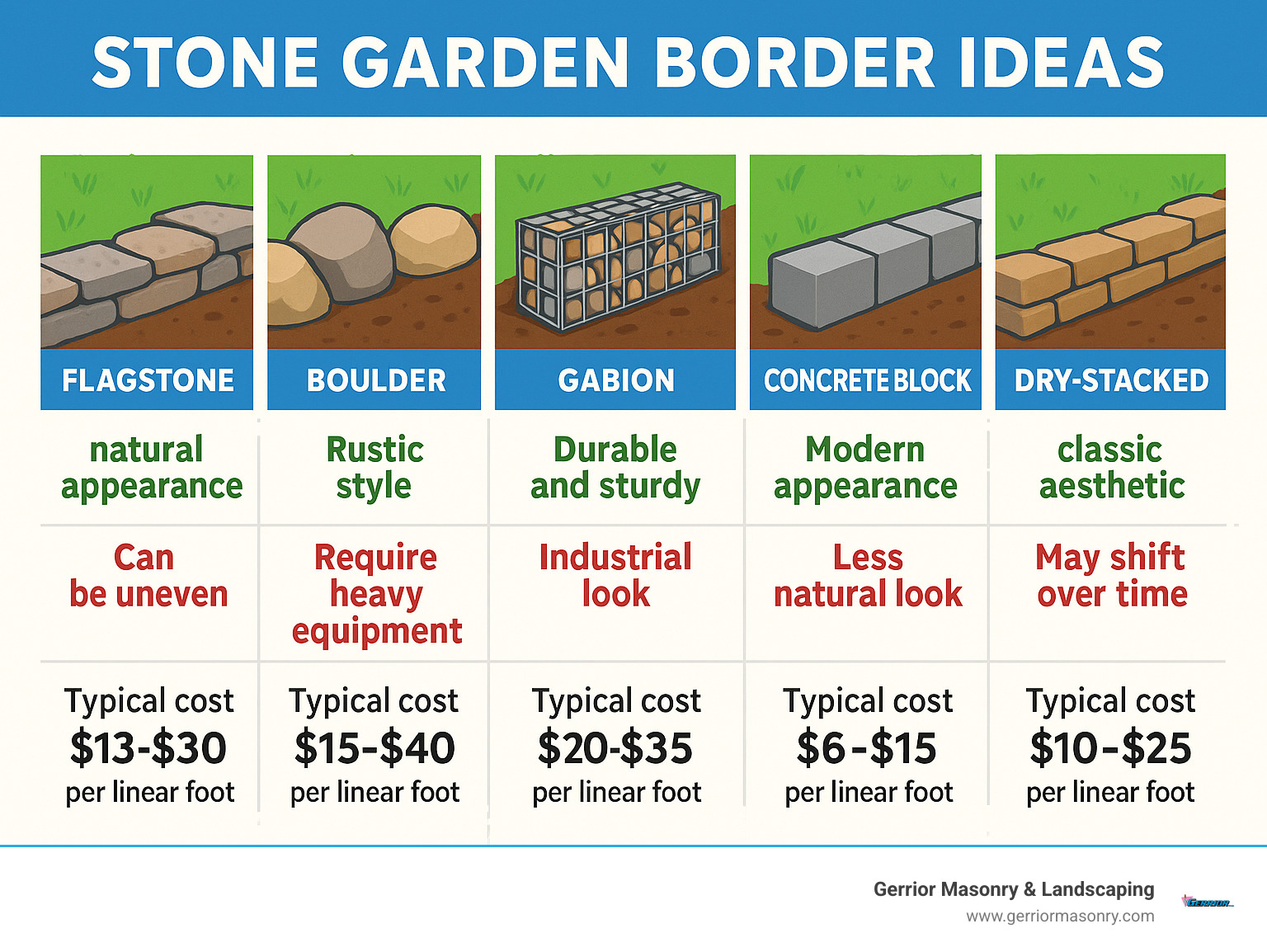
Quick look at Stone garden border ideas:
– Decorative stone garden edging
– Natural stone garden edging
– Stone edging for flower beds
Why Choose Stone Borders? Benefits, Styles & Cost Facts
There’s something timeless about a well-crafted stone border that plastic or wood simply can’t match. As I’ve walked countless Massachusetts properties with homeowners over my 34 years in masonry, I’ve seen faces light up when they realize how stone can transform their ordinary garden beds into something extraordinary.
Stone garden border ideas aren’t just beautiful—they’re practical investments in your home. Unlike wood that warps and rots after a few seasons or plastic that cracks in our harsh New England winters, stone borders stand the test of time. Many of the borders we installed decades ago look just as stunning today as when we first placed them.
The durability alone makes stone worth considering. While you might replace wood edging every 5-10 years, stone borders can literally last generations. This “install once, enjoy forever” quality makes stone surprisingly economical in the long run, despite the higher upfront cost.
For homes with slopes or drainage issues, stone borders offer impressive erosion control benefits. I’ve seen properly installed stone edging reduce soil erosion by up to 50% on challenging properties. Instead of watching your precious garden soil wash away with each rainstorm, stone keeps everything right where you planted it.
Raised stone borders create wonderful opportunities for planting, too. By building up rather than out, you can increase your planting space by about 20% compared to flat beds. Plus, the elevation improves drainage—something many Essex County clients appreciate in our clay-heavy soils.
Let’s talk property value, because that matters too. Real estate professionals consistently tell me that well-executed stone landscape features can boost perceived home value by 5-10%. That’s significant return when you consider most homes in our service area.
| Edging Material | Durability | Maintenance | Cost Range* | Aesthetic Appeal | Installation Difficulty |
|---|---|---|---|---|---|
| Stone | 50+ years | Very Low | $8-$45/ft | High | Moderate-High |
| Metal | 10-15 years | Low | $5-$25/ft | Medium | Low |
| Wood | 5-10 years | High | $6-$20/ft | Medium-High | Moderate |
| Plastic | 3-5 years | Medium | $2-$10/ft | Low | Very Low |
*Cost ranges based on internet data, not actual Gerrior Masonry pricing. High-end costs may be 3x or more for premium materials and complex installations.
Stone garden border ideas – search intent & trends
I’ve noticed a significant shift in what homeowners are looking for in their landscapes. Recent surveys show over 30% of homeowners now prefer stone or concrete edging—a trend that’s especially strong in our New England communities where traditional materials complement historic architecture.
In Lexington and Concord, we’re still installing plenty of traditional stone garden border ideas that honor the historic character of these communities. Meanwhile, in newer developments across Middlesex County, contemporary interpretations using clean lines and mixed materials are taking center stage.
Environmental consciousness is driving many choices too. More clients are asking about permeable stone borders that allow water to infiltrate naturally rather than contributing to runoff. These eco-friendly options aren’t just beautiful—they’re responsible solutions for managing stormwater, especially important in Massachusetts communities with strict environmental regulations.
For those interested in the science behind permeable hardscapes and their environmental benefits, Techo-Bloc offers excellent research on how these systems can reduce stormwater runoff and filter pollutants.
Common stone types & edging formats
When I sit down with clients to discuss stone garden border ideas, I often explain the main types of stone we work with, each creating a distinct look and serving different needs:
Flagstone creates a naturally layered look with its flat, irregular pieces. It’s perfect for properties with a rustic or cottage aesthetic and works beautifully in traditional New England landscapes. We source varieties like bluestone, sandstone, and slate depending on the desired color palette.
Cobblestone brings historic charm to any garden. These rounded stones recall colonial streets and European gardens. They’re particularly popular in historic districts throughout Massachusetts where homeowners want to maintain period authenticity.
Boulders make dramatic statements as borders. Large, naturally rounded stones create informal edges that double as landscape features and casual seating. They’re ideal for naturalistic gardens or properties with existing rock outcroppings.
Concrete Block offers incredible versatility in modern installations. These manufactured units come in countless colors and textures, many mimicking natural stone at a lower price point. They’re excellent for clean, contemporary designs or where precise measurements matter.
Gabion borders use wire baskets filled with loose stone to create permeable, modern-industrial edges. They’re fantastic for erosion control on slopes and bring a contemporary aesthetic that works well with modern architecture.
Permeable Pavers address environmental concerns while creating distinct borders. Their specially designed gaps allow water infiltration, reducing runoff and supporting groundwater recharge—something increasingly important in our developing communities.
For more inspiration, you might want to explore our detailed guide to natural stone garden edging where we showcase several Massachusetts installations.
At Gerrior Masonry & Landscape Construction, based in Woburn, MA, we help homeowners across Middlesex and Essex County select the perfect stone type for their specific garden style and practical requirements. The right stone border doesn’t just define your garden—it defines your home’s character.
1. Classic Stacked Flagstone Edge
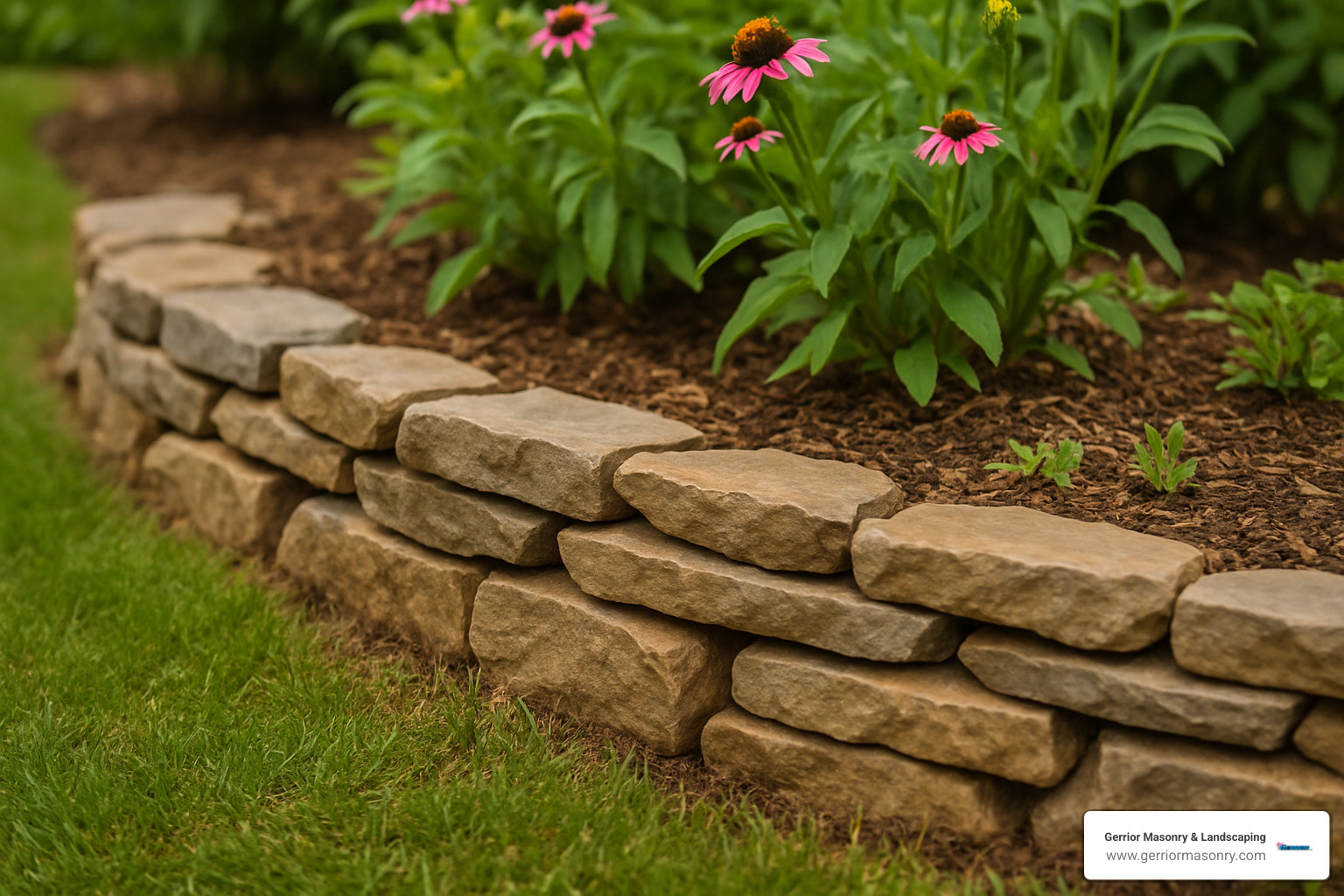
There’s something truly special about a classic stacked flagstone edge. I’ve installed hundreds of these borders over my years at Gerrior Masonry, and they never fail to transform a garden from ordinary to extraordinary. These stone garden border ideas use naturally flat pieces of stone (typically 1-2 inches thick) arranged in overlapping layers to create borders that look like they’ve been part of the landscape forever.
What I love most about flagstone edges is how they gracefully follow the natural curves of your garden beds. Unlike rigid manufactured products that force geometric shapes onto your landscape, these stones can be arranged to create flowing, organic lines that complement your garden’s natural contours. This makes them perfect for cottage gardens or woodland settings where you want to maintain that natural feel.
Just last month, we completed a project for a family in Arlington who wanted to define their perennial garden without it looking “too new.” The homeowner later told me, “The stone edge not only keeps my mulch from washing away during heavy rains but also provides a beautiful frame for my flower collection. It looks like it’s always been there.” That’s exactly the effect we aim for!
Installation is relatively straightforward but requires attention to detail. We start by digging a shallow trench about 2-3 inches deep, then fill it with compacted sand for a stable, level base. The stones are carefully stacked with joints staggered (much like building a miniature dry-stack wall) to ensure stability. For borders under 12 inches tall, no mortar is needed—the weight of the stones and proper placement provide all the necessary support.
For the best results in our Massachusetts climate, I often recommend locally sourced weathered granite or bluestone. These materials not only hold up beautifully to our freeze-thaw cycles but also develop a gorgeous patina over time that only improves their natural beauty.
Stone garden border ideas for traditional homes
When working with clients who own traditional New England homes—whether colonial, federal, or Victorian—I always emphasize that stone garden border ideas should honor and complement the historical character of the property.
For these classic homes, thoughtful patterning makes all the difference. Rather than a completely random arrangement, selecting flagstones of similar thickness and arranging them in a consistent pattern creates a more formal look that respects the symmetry often found in traditional architecture.
Color matching is another crucial consideration. I always take time to choose stone colors that coordinate with existing masonry on the home. For the many brick homes we work with in Middlesex County, warm-toned flagstones with hints of rust or tan create a harmonious connection between house and landscape.
Proper joint staggering isn’t just about aesthetics—it’s essential for durability. Each stone should bridge the joint between two stones below it, creating a stable structure that resists shifting and settlement over our harsh New England winters.
One of my favorite projects was for a family in Concord with an 1850s farmhouse. During excavation, we finded small pieces of antique brick, which we carefully incorporated into their new flagstone border. This thoughtful detail connected the new landscape element with the home’s history, creating a sense of authenticity that made the homeowners absolutely delighted.
For more inspiration and information about natural stone options for your garden, visit our natural stone garden edging page.
2. Modern Linear Concrete Block with Pebble Infills
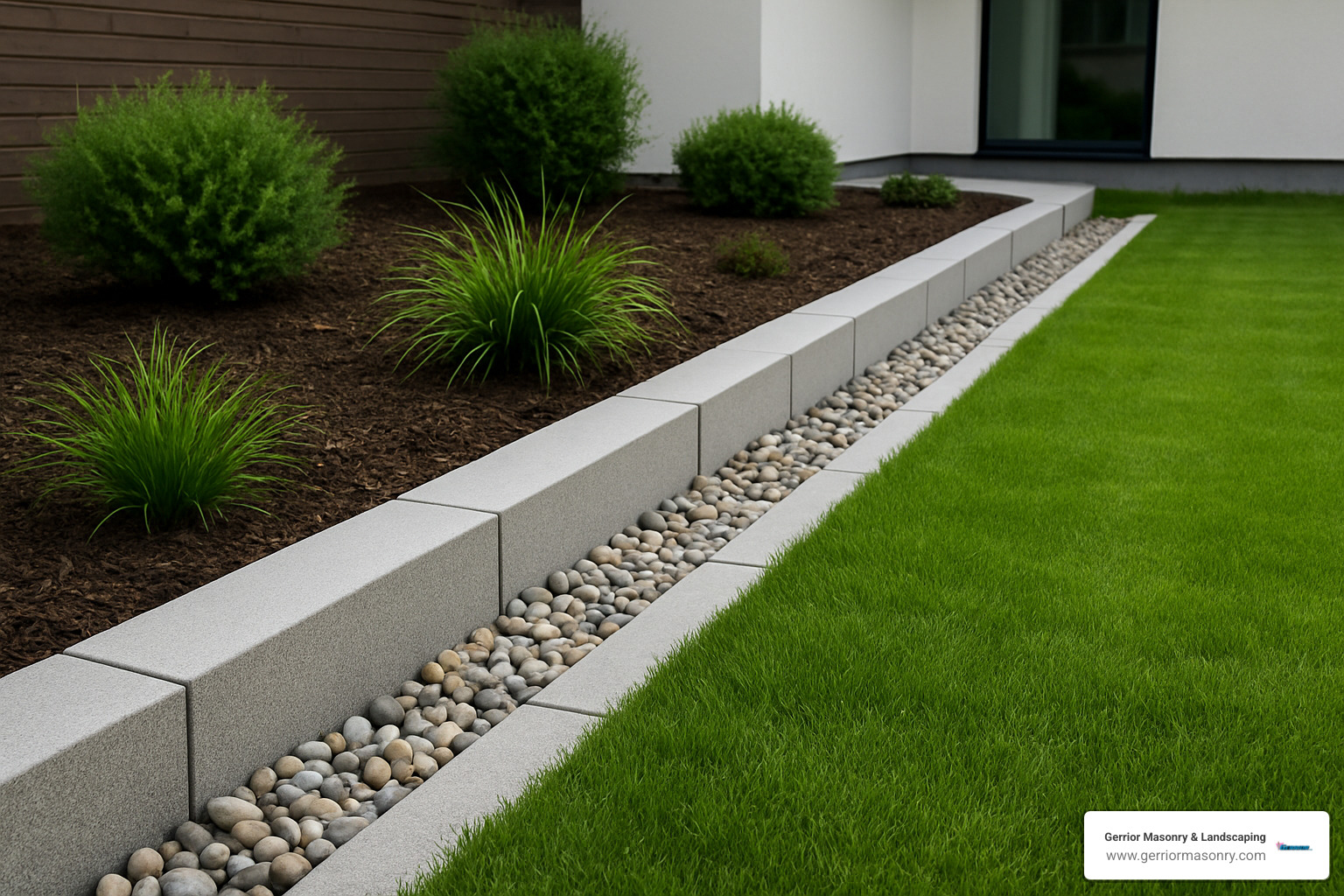
For those with contemporary homes, stone garden border ideas take on a different character entirely. Linear concrete block edging offers the clean, crisp lines that modern landscapes crave. These edges aren’t just practical—they’re architectural statements that frame your outdoor spaces with precision and purpose.
I’ve installed these borders for many clients with mid-century and contemporary homes throughout Middlesex County. What makes them special is how they create that perfect visual break between different landscape zones. The straight edges and consistent heights bring order to your garden, allowing the plants within to take center stage against a structured backdrop.
The magic happens when you add a strip of decorative pebbles alongside these concrete units. This gravel accent creates a maintenance-free buffer that eliminates awkward trimming spots while adding wonderful textural contrast. One Winchester homeowner told me, “It’s the perfect solution—clean enough for our modern home but still has that natural element we didn’t want to lose.”
These borders work beautifully to divide lawn areas from patios or to create level transitions in contemporary gardens. The consistent height makes them ideal for properties where precision matters. And unlike some natural stone options, these concrete units come in predictable sizes and colors that make planning your project much more straightforward.
For evening entertaining, consider adding LED strip lighting along these borders. I’ve helped several clients incorporate subtle lighting that transforms their gardens after dark—the straight lines of the concrete blocks create perfect channels for hiding lighting components while showcasing the architectural elements of your landscape.
Installation requires careful attention to creating a level base, typically using compacted sand or stone dust. While the materials themselves aren’t complicated, achieving those perfectly straight lines demands precision—something we pride ourselves on at Gerrior Masonry.
These borders particularly complement homes with horizontal architectural elements or properties where you want to create clean divisions between outdoor rooms. For more inspiration and examples of decorative edging options, check out our portfolio of decorative stone garden edging projects.
3. Rustic Boulder Border — Stone Garden Border Ideas for a Natural Look
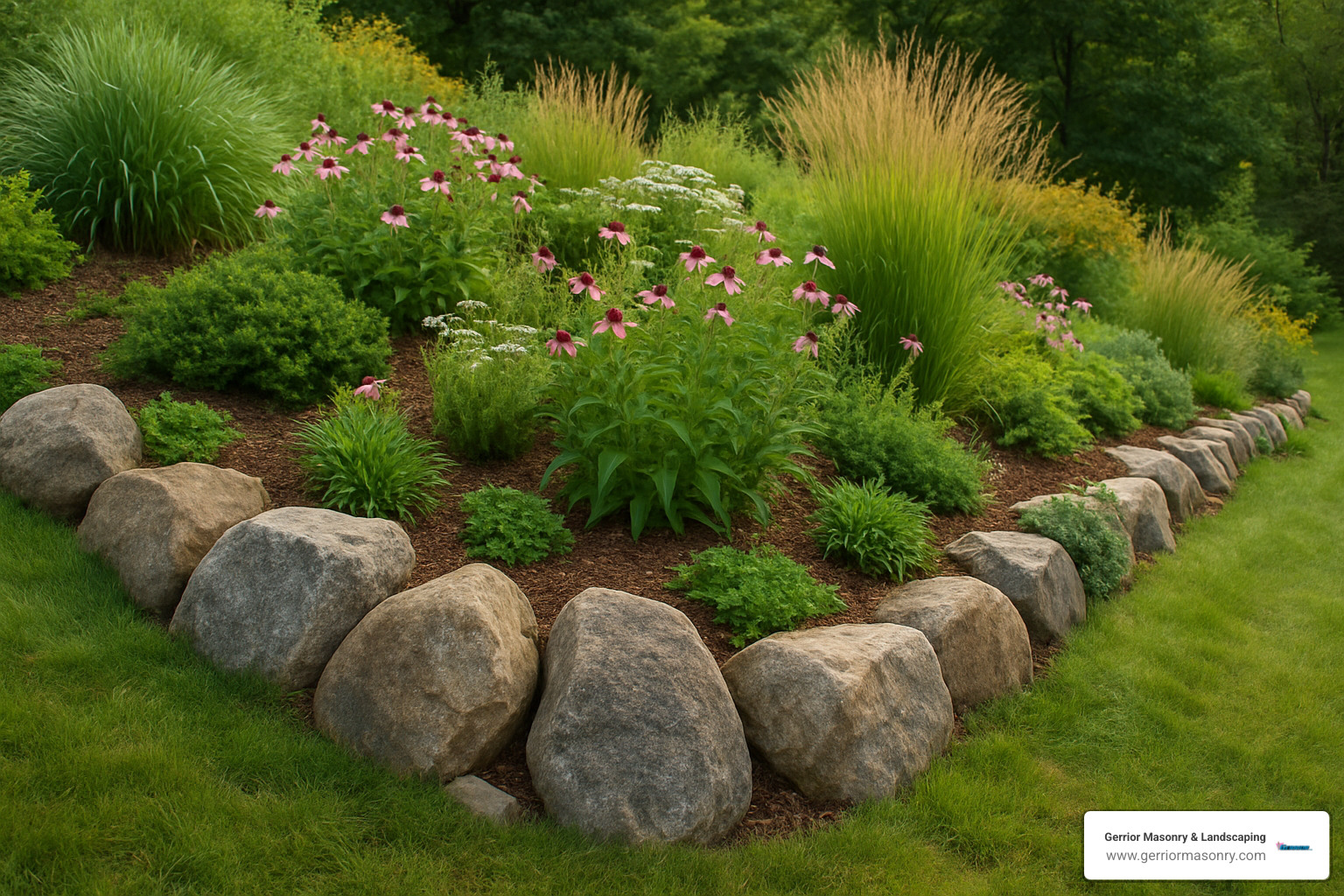
There’s something wonderfully primal about using boulders to define your garden spaces. If you’re drawn to landscapes that feel like they’ve emerged naturally from the earth, stone garden border ideas that incorporate boulders might be your perfect match.
Boulder borders use substantial stones—typically ranging from 10 to 24 inches across—to create boundaries that look like they’ve been there since the glaciers retreated from New England. Unlike more formal edging options, boulder borders celebrate the irregular, the unexpected, and the beautifully imperfect.
“The magic of boulder borders is how quickly they settle into the landscape,” explains Joe Gerrior. “Within a single growing season, as plants begin to weave between the stones, you’d swear those boulders had been part of your yard for centuries.”
These substantial stone borders excel in several challenging landscape situations. They’re particularly effective for creating raised planting beds where the size of the boulders naturally holds back soil, giving you improved drainage and more planting space. For homes with sloped yards, properly placed boulders can dramatically reduce erosion by stabilizing hillsides and directing water flow during heavy New England downpours.
Many of our clients in wooded areas of Middlesex County choose boulder borders to complement wildlife or woodland gardens. The natural appearance works beautifully with native plantings, and the nooks between stones create perfect microhabitats for beneficial insects, small wildlife, and woodland flowers.
Based on internet data (not Gerrior Masonry pricing), boulder borders typically cost between $30-$120 per square foot. This wide range reflects variations in stone type, size, and installation complexity, with the higher end representing premium stone varieties and challenging installation conditions like steep slopes or limited access. While this might seem higher than some alternatives, their dramatic impact and multi-generational durability make them a sound investment.
A recent project we completed in Andover transformed a troublesome sloping front yard into a series of terraced native plant gardens. The homeowner later told us, “What was once an eroding, hard-to-mow hillside is now the highlight of our property. The boulders look completely natural, as if they’ve been there forever.”
When installing boulder borders, we carefully position each stone so roughly one-third remains buried. This “iceberg principle” ensures stability while creating the impression that the stones have naturally emerged from the ground. The spaces between boulders allow for essential drainage while creating perfect pockets for tucking in cascading plants or rock garden specimens.
Stone garden border ideas that double as retaining walls
One of the most practical aspects of boulder borders is their ability to serve dual purposes—they’re not just pretty faces. When designed thoughtfully, these arrangements can function as both decorative edges and effective retaining walls for changes in grade.
For height stacking, boulders can be artfully arranged to create walls up to 3 feet high without requiring additional engineering (though taller walls may require professional design and permits in many Massachusetts communities). We often see this application in hillside gardens throughout Winchester and Lexington, where homes frequently deal with sloped lots.
Behind every good boulder retaining wall is proper drainage. We always backfill with gravel behind the boulders, creating a layer of crushed stone that prevents water pressure from building up behind the wall—a common cause of failure in amateur installations. This unseen detail makes the difference between a wall that lasts decades and one that fails after the first freeze-thaw cycle.
The natural gaps between boulders create perfect opportunities for what we call native plant pockets—spaces to tuck in small perennials, ferns, or cascading plants that will soften the appearance of the stones while their roots help stabilize the soil. This planting strategy transforms what could be just a functional wall into a living garden feature.
One of our Winchester clients had a particularly challenging slope that required both visual definition and significant soil retention. We created a boulder border that stepped gracefully down the hillside, incorporating small terraces for native ferns and woodland plants. “It solved our erosion problem while creating a beautiful, low-maintenance garden feature,” they reported after the first year.
For properties with significant grade changes, boulder borders offer a natural alternative to conventional retaining walls, creating a seamless transition between different levels of the landscape that feels like it was shaped by nature rather than machinery.
Gerrior Masonry & Landscape Construction is based in Woburn, MA, and services homeowners across Middlesex and Essex County with expert stone edging and hardscape solutions.
5. Permeable Paver Ribbon Edge (Eco-Friendly)
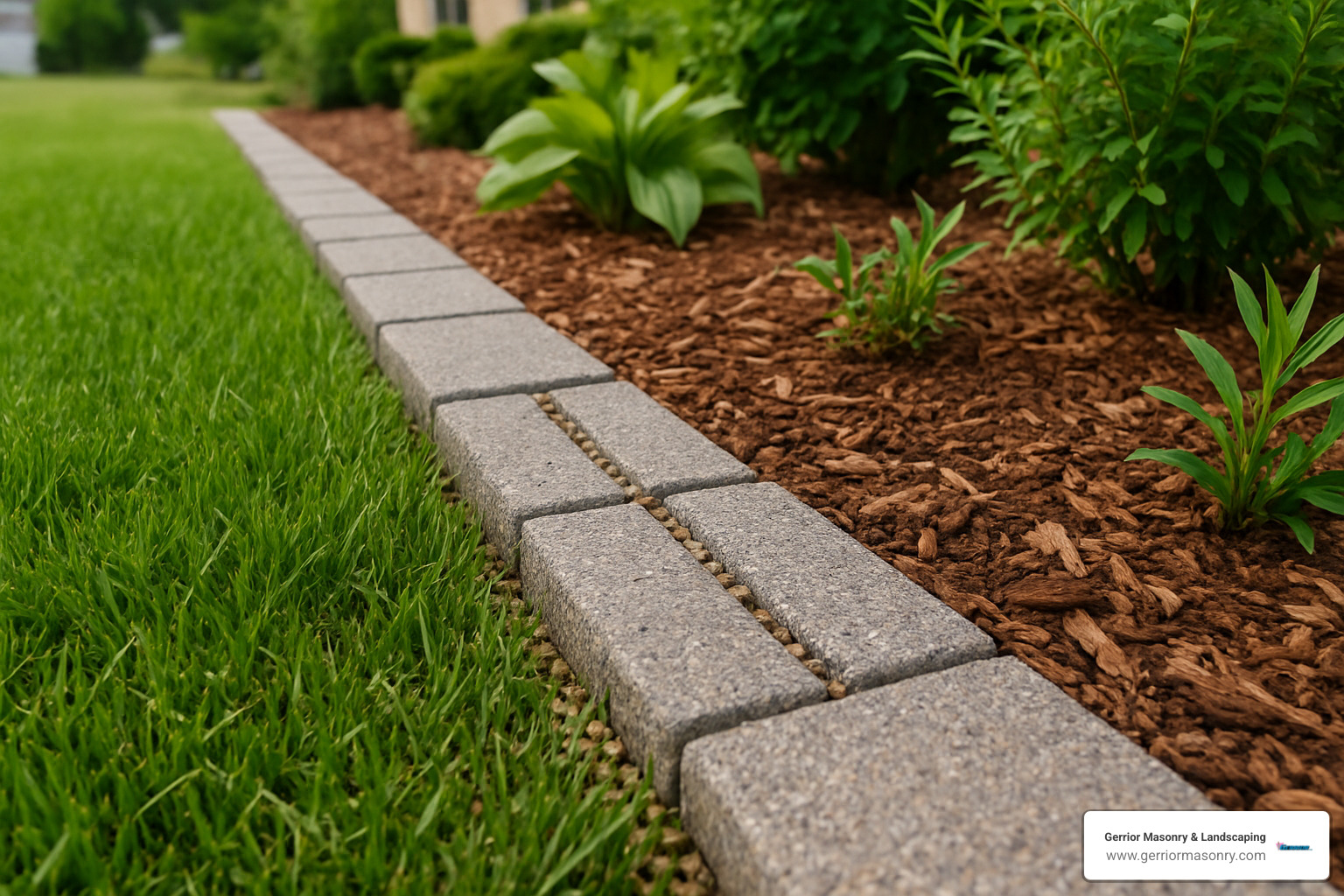
If you’re environmentally conscious and looking for stone garden border ideas that do more than just look pretty, permeable paver ribbon edges might be your perfect match. These innovative borders are gaining popularity among Massachusetts homeowners who want their landscapes to work in harmony with nature.
Unlike traditional solid edging, permeable pavers feature intentionally designed gaps or larger joints that allow rainwater to filter through rather than run off. It’s like giving your garden a way to drink naturally! When we install these systems at Gerrior Masonry, we create a deep reservoir of graduated crushed stone beneath the pavers that temporarily holds water before it slowly infiltrates back into the ground.
“My permeable border was the smartest addition to my landscape,” shared one of our Winchester clients. “During heavy downpours, I can actually watch the water disappear through the pavers instead of flooding my neighbor’s yard. Plus, it creates this clean, crisp line between my lawn and garden beds.”
The beauty of these systems goes beyond their environmental benefits. Products like Techo-Bloc’s Aquastorm pavers offer the sophisticated look of natural stone with the added functionality of stormwater management. They’re particularly effective as transition zones between hardscaped areas like driveways and adjacent planting beds, creating a harmonious flow throughout your landscape.
For homeowners concerned about maintenance, the flat surface of permeable paver borders eliminates those tedious string-trimming sessions along garden edges. Your mower can roll right along the edge for a clean cut every time—a small convenience that adds up to significant time savings over the seasons.
The environmental credentials of permeable borders are impressive enough that they can contribute to LEED credits for sustainable building projects. If you’re renovating or building a new home with green certification in mind, these borders can be part of your overall sustainability strategy.
We recently completed a project in Burlington where we installed a permeable border that neatly separated a driveway from adjacent rain gardens. The homeowner was thrilled: “We wanted our landscape to be part of the solution to local flooding issues. The permeable border not only looks beautiful but also helps manage water on our property instead of sending it down the storm drain.”
While permeable paver borders typically cost more upfront than conventional edging (based on internet data, not Gerrior Masonry pricing), many Massachusetts communities with strict runoff regulations offer incentives for permeable hardscaping. More importantly, the long-term benefits to your property’s drainage and the wider environment make them an investment worth considering.
For those interested in the technical aspects of sustainable paving solutions, Techo-Bloc offers detailed research on their Aquastorm pavers that explains how these systems work to manage stormwater while maintaining aesthetic appeal.
With proper installation—something we pride ourselves on at Gerrior Masonry—these borders can maintain their permeability and appearance for decades, making them a lasting contribution to both your landscape and environmental health.
5. Permeable Paver Ribbon Edge (Eco-Friendly)
If you’re environmentally conscious and looking for stone garden border ideas that do more than just look pretty, permeable paver ribbon edges might be your perfect match. These innovative borders are gaining popularity among Massachusetts homeowners who want their landscapes to work in harmony with nature.
Unlike traditional solid edging, permeable pavers feature intentionally designed gaps or larger joints that allow rainwater to filter through rather than run off. It’s like giving your garden a way to drink naturally! When we install these systems at Gerrior Masonry, we create a deep reservoir of graduated crushed stone beneath the pavers that temporarily holds water before it slowly infiltrates back into the ground.
“My permeable border was the smartest addition to my landscape,” shared one of our Winchester clients. “During heavy downpours, I can actually watch the water disappear through the pavers instead of flooding my neighbor’s yard. Plus, it creates this clean, crisp line between my lawn and garden beds.”
The beauty of these systems goes beyond their environmental benefits. Products like Techo-Bloc’s Aquastorm pavers offer the sophisticated look of natural stone with the added functionality of stormwater management. They’re particularly effective as transition zones between hardscaped areas like driveways and adjacent planting beds, creating a harmonious flow throughout your landscape.
For homeowners concerned about maintenance, the flat surface of permeable paver borders eliminates those tedious string-trimming sessions along garden edges. Your mower can roll right along the edge for a clean cut every time—a small convenience that adds up to significant time savings over the seasons.
The environmental credentials of permeable borders are impressive enough that they can contribute to LEED credits for sustainable building projects. If you’re renovating or building a new home with green certification in mind, these borders can be part of your overall sustainability strategy.
We recently completed a project in Burlington where we installed a permeable border that neatly separated a driveway from adjacent rain gardens. The homeowner was thrilled: “We wanted our landscape to be part of the solution to local flooding issues. The permeable border not only looks beautiful but also helps manage water on our property instead of sending it down the storm drain.”
While permeable paver borders typically cost more upfront than conventional edging (based on internet data, not Gerrior Masonry pricing), many Massachusetts communities with strict runoff regulations offer incentives for permeable hardscaping. More importantly, the long-term benefits to your property’s drainage and the wider environment make them an investment worth considering.
With proper installation—something we pride ourselves on at Gerrior Masonry—these borders can maintain their permeability and appearance for decades, making them a lasting contribution to both your landscape and environmental health.
6. Mixed-Material Mosaic Border: Stone + Metal Accent
Sometimes the most captivating stone garden border ideas emerge when you think outside the box and blend different materials together. Mixed-material mosaic borders that combine stone with metal accents create truly distinctive edges that tell a story in your landscape.
I’ve found that this approach is particularly perfect for homeowners who have leftover materials from previous projects. Rather than letting those beautiful stone pieces go to waste, why not incorporate them alongside complementary metal elements to create something truly unique?
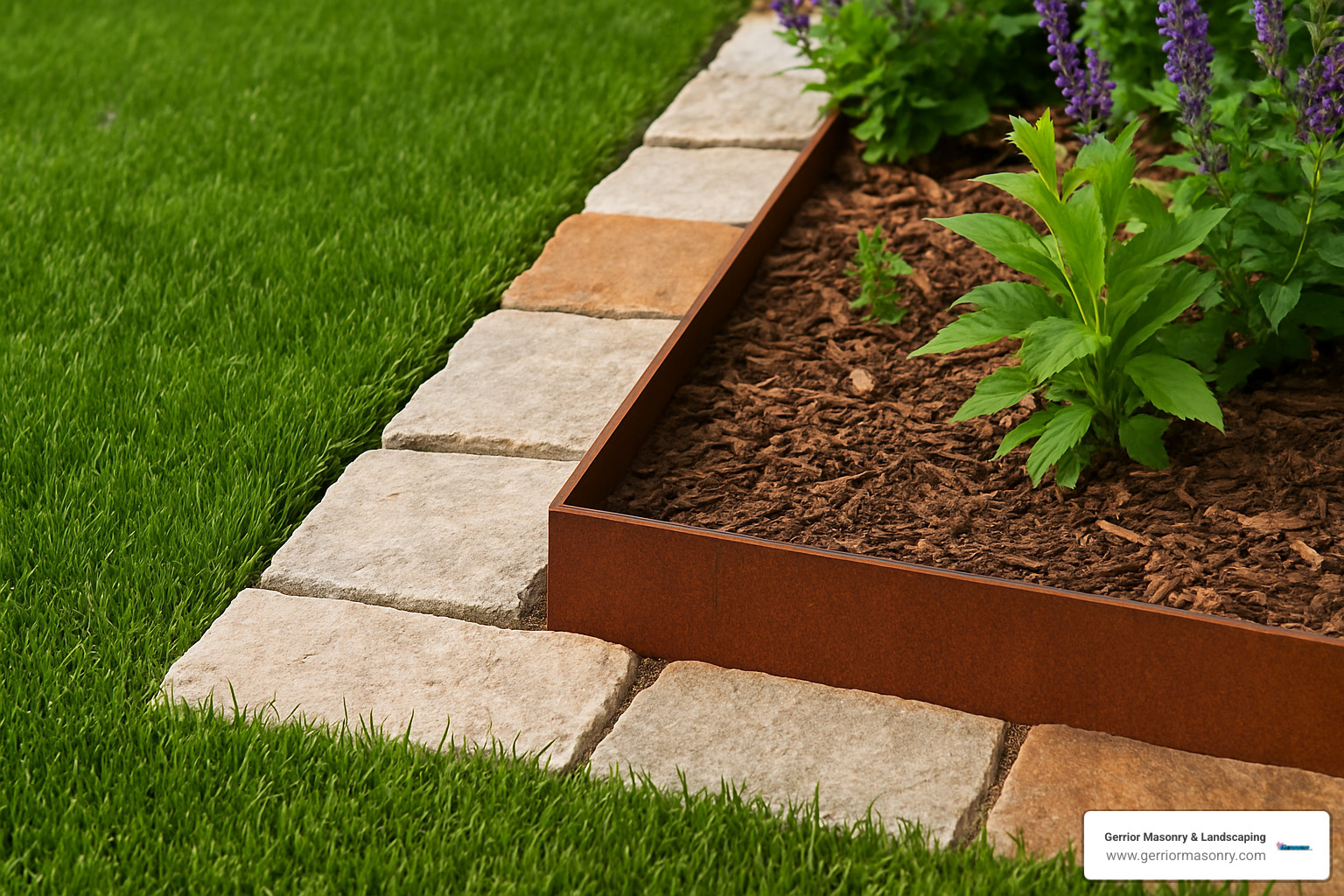
The most successful mixed borders I’ve installed feature thoughtful combinations like weathered Corten steel segments nestled between natural stone sections. The rich, rusty patina of the steel creates a beautiful contrast against the textural stone. Other compelling pairings include copper edging as accent pieces (which develops a gorgeous green patina over time) and decorative iron elements that add architectural interest.
One of my Winchester clients faced what initially seemed like a frustrating problem – they ran out of their selected stone halfway through their garden border project. Rather than waiting weeks for back-ordered material, I suggested incorporating sections of Corten steel to complete the border. They later told me, “What started as a problem turned into our favorite feature! The contrast between the stone and the rusty steel perfectly complements our contemporary cottage garden style.”
The key to making these combinations work is consistency in height. Even when materials vary dramatically in texture and appearance, maintaining a clear, level top line helps the border read as a single, intentional design element rather than a random collection of materials. This visual consistency is what transforms a potential design challenge into a stunning landscape feature.
Making mixed borders look cohesive | Stone garden border ideas
Creating successful mixed-material stone garden border ideas requires some thoughtful design principles to ensure everything works together harmoniously. Here’s what I’ve learned over three decades of installing these creative borders:
First, focus on repeating colors across your materials. If your stone features warm tan tones, Corten steel with its rusty orange patina makes a natural companion. For stones with cool gray tones, consider brushed stainless steel or zinc accents that pick up those silvery hues.
Second, establish a pleasing rhythm in how your materials alternate. Whether you prefer a simple ABAB pattern or something more complex, consistency in the arrangement helps the border feel intentionally designed rather than randomly assembled. This rhythm creates a sense of flow that guides the eye through your landscape.
Third, include anchor points at strategic locations like corners, curves, or entry points. Larger stones or distinctive metal elements at these junctions give the eye a place to rest and help define the overall structure of your border.
Finally, don’t be afraid to consider a phased installation strategy if budget constraints prevent completing your ideal border all at once. I worked with an Arlington family who initially installed a partial stone border with intentional gaps where metal sections would eventually be added. “We couldn’t afford to do everything at once,” they explained, “but by planning for the mixed materials from the beginning, we were able to add the metal sections the following year without the border looking like an afterthought.”
The beauty of mixed-material borders lies in their uniqueness – they allow for personal expression and adaptation to specific site conditions, creating truly custom landscape features that reflect your personal style. Whether you’re dealing with leftover materials or deliberately seeking a one-of-a-kind look, these creative combinations can become the most distinctive element in your garden.
DIY Toolkit & Step-by-Step Installation
Ready to tackle your own stone garden border ideas project? While our team at Gerrior Masonry handles professional installations throughout Middlesex and Essex Counties, we understand the satisfaction that comes from completing landscape projects yourself. Let me walk you through the essentials to help make your DIY border installation a success.
Creating a beautiful stone border starts with proper planning and preparation. Begin by mapping out your border’s path using a garden hose or marking paint. This flexible approach lets you step back, view the layout from different angles, and make adjustments until the flow feels right. Take your time with this step—it’s much easier to move a hose than to relocate stones!
Before you dig even an inch, call 811 to connect with Dig Safe. This free service marks underground utilities and can save you from dangerous and costly mistakes. It’s not just smart—it’s required by law in Massachusetts.
Once you’re cleared to dig, excavate a trench about 2-3 inches deep and slightly wider than your stones. If you’re creating a taller border, dig deeper—a good rule of thumb is to bury about one-third of the total height for stability. This extra depth makes a tremendous difference in how well your border holds up through New England’s freeze-thaw cycles.
“The most common mistake I see in DIY stone borders is an inadequate base,” shares Joe Gerrior. “Taking time to create a proper foundation prevents shifting and ensures your border looks great for years to come.”
Next, spread 1-2 inches of leveling sand in your trench and compact it thoroughly with a tamper. This creates a stable, well-drained base that helps prevent stones from settling unevenly. Now you’re ready to place your stones, adjusting their position with a rubber mallet and checking frequently with a level to ensure they’re even and stable.
For curved sections, temporary stakes can help maintain your desired shape until the border is complete. Once all stones are positioned correctly, fill any gaps around them with the excavated soil to secure them in place and provide additional stability.
Material checklist & pro-tips
For your DIY stone border project, you’ll need some basic tools and materials. Most are common household items, while others might require a trip to the hardware store or a rental center.
You’ll need a shovel and mattock for digging, a tamper for compacting base materials, a rubber mallet for adjusting stones, and both a 2-foot and torpedo level for ensuring everything’s straight. Don’t forget a tape measure, string line and stakes for marking straight sections, and a garden hose or marking paint for outlining curves. A wheelbarrow will save countless trips, and always wear work gloves and safety glasses for protection.
For materials, beyond your chosen edging stones, you’ll need leveling sand, weed prevention membrane (optional but highly recommended), polymeric sand for joints if you’re creating tighter-fitting borders, and landscape adhesive or silicone for securing stacked stones.
Here are some insider tips from our experienced team:
Buy extra stone. When working with natural stone, purchase 10-15% more than your measurements indicate. This accounts for variations, breakage, and gives you options to select the best-looking pieces.
Match stone size to your design. For curves, smaller stones follow contours more easily, while large, rectangular pieces work best on straight runs. This simple adjustment makes installation easier and looks more intentional.
Consider visibility from all angles. If your border will be visible from both sides, select stones with attractive faces on both edges—a detail that lifts the finished look.
Prevent future maintenance headaches. Installing weed membrane under and behind your border prevents grass and weeds from growing through joints, saving you significant maintenance time later.
While DIY installation works well for basic borders, more complex designs or borders that function as retaining walls often benefit from professional installation. Our team at Gerrior Masonry brings over 34 years of experience to ensure proper structural integrity and beautiful, lasting results.
For more detailed guidance on wall installations, check out our garden wall installation guide, which includes additional tips and techniques for more complex projects.
Care, Maintenance & Common Mistakes to Avoid
Stone borders are loved for their durability, but even the sturdiest landscape features benefit from a little TLC. One of the joys of implementing stone garden border ideas in your landscape is that they require minimal upkeep compared to other materials – but “minimal” doesn’t mean “none.”
Each spring, take a leisurely stroll around your garden to inspect your stone borders. Our New England freeze-thaw cycles can be tough on hardscaping, sometimes causing stones to shift slightly during winter. When you spot a stone that’s moved out of alignment, simply lift it gently, add a bit more base material if needed, and reset it level. This small effort prevents bigger problems down the road.
“I recommend adding ‘border inspection’ to your spring garden awakening ritual,” says Joe Gerrior. “Fifteen minutes of attention each year can prevent hours of repairs later.”
For borders that have developed a bit of algae or moss (especially common in shadier spots), a quick scrub with a stiff brush and mild soapy water will refresh their appearance. If you’re dealing with stubborn growth, power washing is an option, but always use a low-pressure setting – we’ve seen too many stones damaged by overzealous pressure washing!
Concrete block borders benefit from sealing every 2-3 years to maintain their color and protect against staining, particularly for lighter-colored materials. This small investment in time extends their beauty significantly.
Don’t forget to check that water isn’t pooling along your stone borders. Proper drainage is crucial for longevity, and standing water can undermine even the most carefully installed edge over time.
The most common mistakes we’ve encountered in our decades of installing stone garden border ideas across Middlesex County are easily avoidable with proper planning:
Inconsistent heights create a disjointed appearance and can become tripping hazards – take time during installation to maintain a clean, level line. Insufficient base preparation almost always leads to settling and shifting later. The hour you spend creating a solid foundation saves days of frustration later.
We frequently see mulch piled too high against stone borders, which leads to organic staining and creates perfect conditions for weeds to establish between stones. Keep mulch at least half an inch below the top of your border for best results.
Drainage issues are silent destroyers of beautiful borders. Ensure water can flow away from, rather than pool against, your stone edge. And finally, using stone unsuited to our climate is a recipe for disappointment.
A client in Reading learned this lesson the hard way: “After just one winter, we noticed significant cracking and spalling in our imported limestone border,” they shared. “We ended up replacing it with locally sourced granite that’s weathered beautifully for years now.”
The most expensive mistake? Ignoring small maintenance needs until they become big problems. When maintenance issues are left unaddressed, repair costs can balloon to three times what regular maintenance would have cost. A stitch in time really does save nine when it comes to stone borders.
For borders that function as small retaining walls, pay special attention to the backside drainage. A properly installed drainage layer behind the wall prevents water pressure from building up and potentially pushing stones out of alignment during freeze-thaw cycles.
With proper installation and minimal maintenance, your stone garden borders will continue to define and improve your landscape for decades to come – one of the best investments you can make in your property’s beauty and value.
Frequently Asked Questions about Stone Borders
How do stone borders compare to metal, wood or plastic?
When folks ask us about stone garden border ideas versus other materials, I like to walk them through the key differences that really matter in the long run.
Stone is truly the marathon runner of edging materials. While a metal edge might serve you well for 10-15 years and treated wood might hang in there for 5-10 years (depending on your soil conditions and moisture levels), stone borders can literally last generations. We’ve restored stone borders that were installed by homeowners’ grandparents!
The beauty of stone is simply best. It has a timeless quality that improves virtually any landscape style, from colonial to contemporary. Metal can provide a sleek, modern look but often feels a bit industrial. Wood offers natural warmth but you’ll watch it slowly deteriorate over time. And plastic? Well, it’s functional, but rarely adds to your garden’s beauty.
Installation effort is definitely greater with stone—I won’t sugarcoat that. You’ll invest more time and muscle (or budget if hiring professionals) upfront. Metal and plastic edges are weekend warrior projects by comparison. Wood falls somewhere in the middle difficulty-wise.
Yes, the initial cost is higher for stone, but I always remind clients to think long-term. When you spread that investment over decades rather than years, stone often becomes the most economical choice. You won’t be replacing it every few seasons like you might with plastic edging.
From an environmental perspective, natural stone is hard to beat. It requires minimal processing, contains no chemicals, and can be repurposed indefinitely. Many of our Massachusetts clients appreciate this sustainability aspect.
Can I retrofit stone edging without tearing up existing beds?
Absolutely! Many homeowners worry they’ll need to start from scratch, but we’ve added stone garden border ideas to established gardens many times with minimal disruption.
Our approach is pretty straightforward but requires patience:
We work in small sections, carefully digging a narrow trench around your bed’s perimeter while being mindful of existing plant roots. For gardens with mature plantings, we’ll often recommend border styles that don’t need deep foundations—single-course flagstone or boulder edges work beautifully in these situations.
When working near established trees or shrubs, we hand-dig rather than bringing in equipment. It takes longer but preserves those precious root systems. Whenever possible, we schedule these retrofits during dormant seasons to reduce plant stress.
I remember a lovely garden in Winchester where the owner had spent 20 years cultivating her perennials. She wanted stone edging but was terrified we’d damage her plants. We used a single course of flat fieldstones that required minimal digging, working carefully around each plant. She was amazed at how little disturbance there was—the plants barely noticed, but the garden looked dramatically more polished when we finished.
What’s the most budget-friendly stone option for large yards?
When you’ve got extensive borders to create, cost becomes a real consideration. I’ve helped many homeowners find stone garden border ideas that won’t break the bank.
Local fieldstone is often your best friend for budget-conscious projects. Many Massachusetts communities have abundant native stone, and we sometimes find usable material right on the property during excavation for other projects. This dramatically reduces material costs and gives your landscape an authentic regional character.
Consider using a single-course edge rather than stacked designs. Using one layer of larger stones instead of multiple layers of smaller ones cuts both material and labor costs while still providing that defined edge you’re looking for.
A mixed material approach can be both practical and visually interesting. Alternating sections of stone with more affordable materials like wood or metal creates rhythm in your design while stretching your budget.
Don’t underestimate the power of phased installation. Many of our clients implement their borders over multiple seasons, which allows them to spread the investment while still working toward a cohesive end result. We can help you plan this approach so each phase looks complete.
Reclaimed materials offer unique character at lower cost. We’ve created beautiful borders using stone salvaged from old foundation walls, demolished patios, or architectural salvage yards.
One Sudbury family needed to edge nearly 300 linear feet of garden beds—a substantial project by any measure. We helped them use fieldstone collected during their driveway excavation, supplemented with locally sourced material. The result was a beautiful natural border at about half the cost of purchased stone.
Gerrior Masonry & Landscape Construction is based in Woburn, MA, and services homeowners across Middlesex and Essex County with expert stone edging and hardscape solutions.
Conclusion
As we’ve explored together in this guide, stone garden border ideas represent that rare combination of beauty and practicality in landscaping. These enduring elements don’t just define spaces—they transform them, adding character and structure that improves your entire property.
The beauty of stone borders lies in their versatility. Whether you’re drawn to the timeless appeal of stacked flagstone, the contemporary edge of gabion baskets, or the environmental benefits of permeable pavers, there’s a stone solution that perfectly complements your home’s architecture and your personal style.
I’ve seen how the right stone border can completely reinvent a landscape. One client described it perfectly: “It’s like putting a frame around a beautiful painting—suddenly everything looks more intentional and complete.”
While the initial investment in quality materials and proper installation may be higher than temporary alternatives, stone borders reward you many times over. They reduce ongoing maintenance headaches, improve your property’s curb appeal and market value, and provide daily enjoyment as you move through your beautifully defined outdoor spaces.
The key to success lies in thoughtful planning. Consider not just how your border will look today, but how it will mature with your landscape over the decades to come. Think about how it addresses practical needs like erosion control or grade changes while expressing your aesthetic vision. This balance between function and beauty is what makes stone borders so satisfying.
For those moments when you need professional guidance, expert advice can make all the difference between a good result and a truly exceptional one. Our team at Gerrior Masonry & Landscape Construction brings over three decades of experience creating custom stone features throughout Middlesex and Essex Counties. We understand the unique challenges of New England landscapes and how to create stone elements that withstand our challenging climate while enhancing your property’s natural beauty.
From initial concept through meticulous installation, we’re committed to helping you realize your landscape vision with stone garden border ideas that truly stand the test of time.
For more information about our stone garden edging services, we invite you to reach out for a conversation about your project. Gerrior Masonry & Landscape Construction—based in Woburn, MA—serves homeowners across Middlesex and Essex County with expert stone edging and hardscape solutions that transform ordinary yards into extraordinary landscapes.
