
Stone garden edging installation: 7 Proven Tips for Stunning Results
Transform Your Garden with Professional Edging
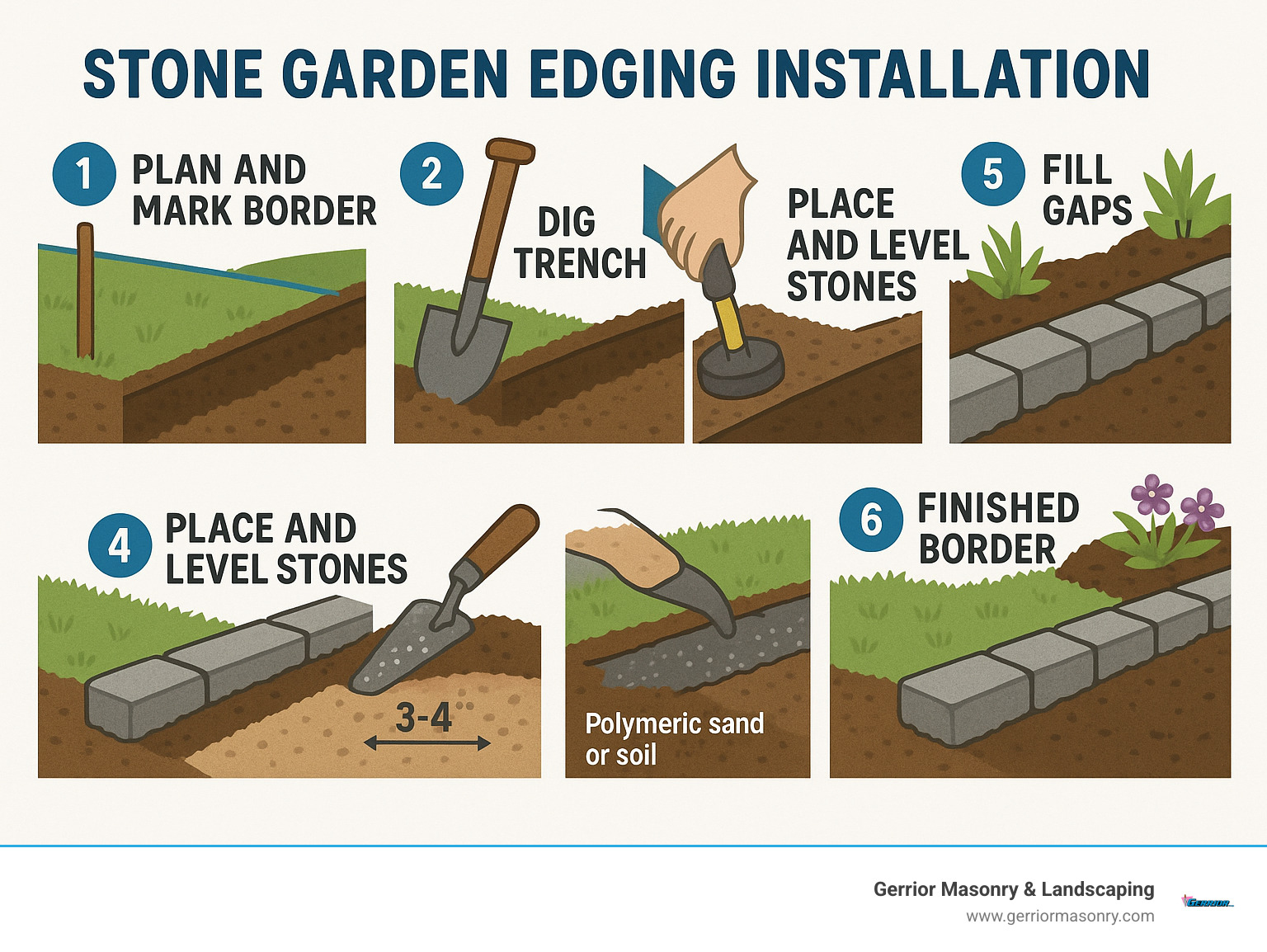
Stone garden edging installation is a straightforward weekend project that creates a clean border between your lawn and garden beds. Follow these simple steps for successful installation:
- Plan and mark your border using stakes, string or a garden hose
- Dig a trench 3-4 inches deep and 6 inches wide
- Add a base layer of sand or gravel and compact it
- Place stones side by side, checking level as you go
- Fill gaps with polymeric sand or soil to secure the stones
Stone garden edging installation creates both visual appeal and practical benefits for your landscape. A well-installed stone border defines planting areas, prevents grass invasion, and helps maintain soil moisture. With proper installation, your stone edging can last for decades with minimal maintenance.
For a bit of inspiration, consider the ancient craft of dry-stone construction that has kept walls standing for centuriesa testament to just how durable properly laid stone can be.
I’m Joe Gerrior, owner of Gerrior Masonry & Landscape Construction Corp., with over 34 years of experience installing stone garden edging for residential and commercial clients throughout Massachusetts. My team and I have perfected the techniques needed for durable and attractive stone garden edging installation that improves any property’s value and curb appeal.
Stone garden edging installation helpful reading:
– Decorative stone garden edging
– Stone edging for flower beds
– Stone garden border ideas
Why Choose Stone Edging? Benefits at a Glance
When considering garden borders, stone garden edging installation offers remarkable advantages that truly stand the test of time. I’ve seen how stone transforms ordinary gardens into stunning landscapes—and the benefits go far beyond just looks.
Durability and Longevity
Natural stone simply outlasts the competition. While plastic cracks and wood rots, properly installed stone edging remains beautiful for decades. Here in Massachusetts, where winter freeze-thaw cycles wreak havoc on lesser materials, stone stands strong season after season. At Gerrior Masonry, we regularly visit properties where our stone borders installed 30+ years ago still look fantastic—a testament to stone’s incredible staying power.
Effective Weed Barrier
Nothing frustrates gardeners more than constant weeding. Stone garden edging installation creates a physical barrier that stops grass and weeds in their tracks. Unlike flimsy barriers that allow determined roots to sneak through, stone edging extends deep enough to block underground invaders, keeping your garden beds pristine with far less maintenance.
Natural Pest Deterrent
Garden pests like slugs and snails hate crossing rough stone surfaces—it’s like nature’s own pest control! And unlike wood edging that can become a termite buffet, stone doesn’t attract wood-boring insects. This natural pest resistance means fewer chemicals and more peace of mind for your garden.
Moisture Retention and Temperature Regulation
Stone has a remarkable hidden talent—it acts like a natural moisture regulator. During hot summer days, stone slowly releases absorbed moisture, creating a more stable environment for nearby plants. This natural “sponge effect” helps maintain soil fertility and reduces water stress, particularly valuable during those dry New England summers when every drop counts.
Low Maintenance Requirements
Life’s too short for endless garden maintenance. Once your stone edging is properly installed, you can practically forget about it. No painting, no staining, no replacing rotted sections. Just a quick check after winter and perhaps an occasional cleaning is all you’ll need. Your weekends are freed up for enjoying your garden, not fixing its borders.
Improved Property Value
Beautiful stone edging catches the eye—and opens the wallet. When potential buyers see thoughtfully installed stone borders, they recognize quality and craftsmanship. According to landscape industry figures, well-executed hardscaping elements like stone borders can return 100-200% of their investment at sale time. It’s one of the few home improvements that truly pays for itself.
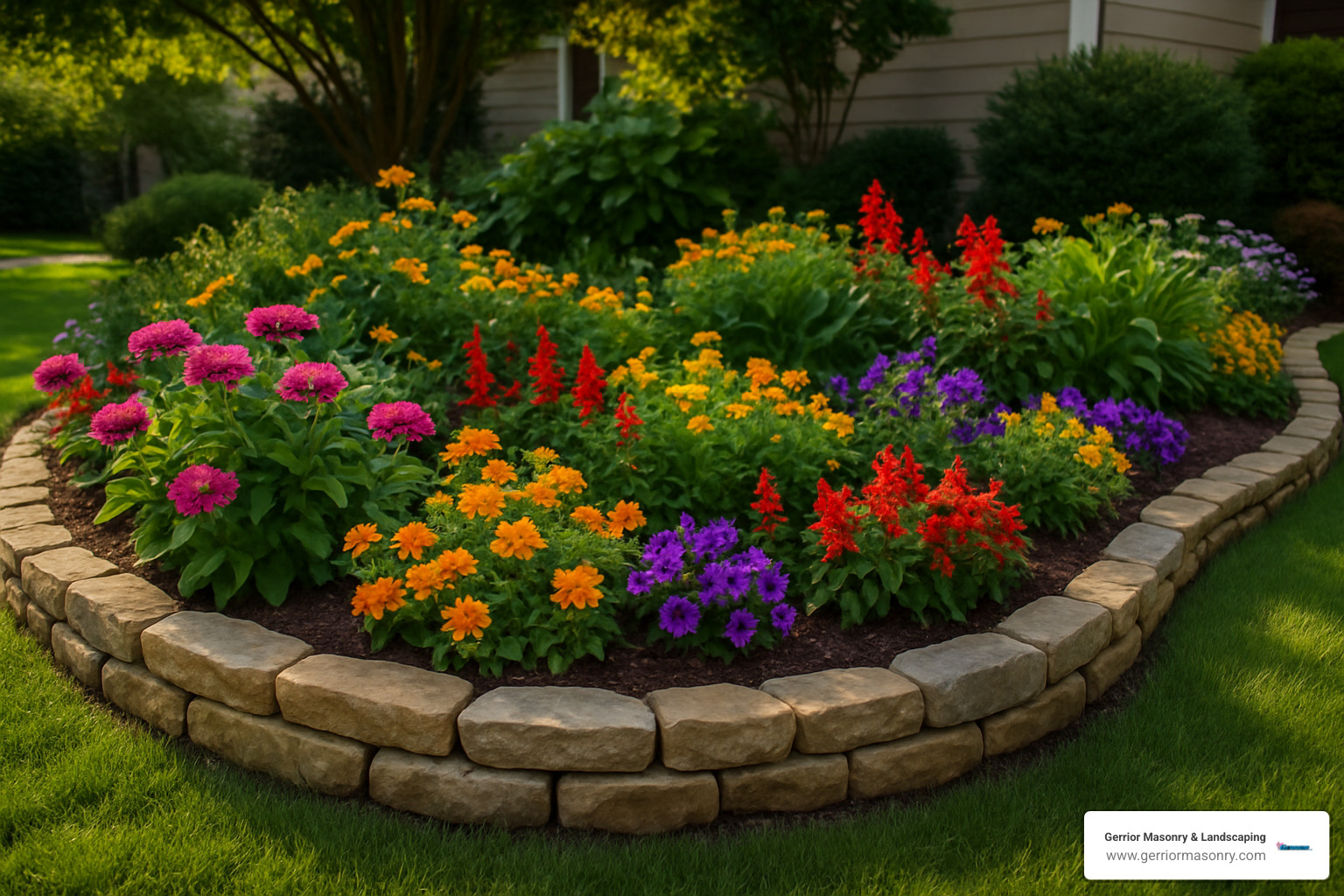
I’ve watched countless homeowners fall in love with their gardens all over again after adding stone edging. The clean lines, natural beauty, and practical benefits create spaces that aren’t just maintained—they’re cherished.
For more inspiration on how stone garden borders can lift your landscape, browse our collection of Stone Garden Border Ideas.
Planning, Tools & Materials
Getting ready for stone garden edging installation is half the battle! With proper planning and the right supplies, you’ll set yourself up for a beautiful, long-lasting border that improves your landscape for years to come.
Types of Stone for Garden Edging
The stone you choose will dramatically influence both the look and performance of your garden border. Here in Massachusetts, we regularly work with several excellent options:
Granite offers incredible durability and comes in various sizes and colors. I’ve installed granite pavers that have stood strong for decades through our harsh New England winters. They create a more formal, structured appearance that complements many architectural styles.
Limestone brings a softer, more natural look with its subtle color variations. While easier to shape and cut than granite, it does weather more visibly over time – which many homeowners actually prefer for the character it develops.
Fieldstone collected from local fields and forests delivers that authentic, weathered appearance that’s perfect for cottage gardens or natural landscapes. Each stone tells a story, and no two borders look exactly alike.
Cobblestones are a classic New England choice that adds historical charm. Walking past a cobblestone border instantly transports you to old-world Boston or Salem.
Manufactured Pavers provide consistency in size and color, making them particularly DIY-friendly. While not as unique as natural stone, they offer reliable results and often easier installation.
Essential Tools and Materials
For a professional-quality stone garden edging installation, you’ll want to gather these items before breaking ground:
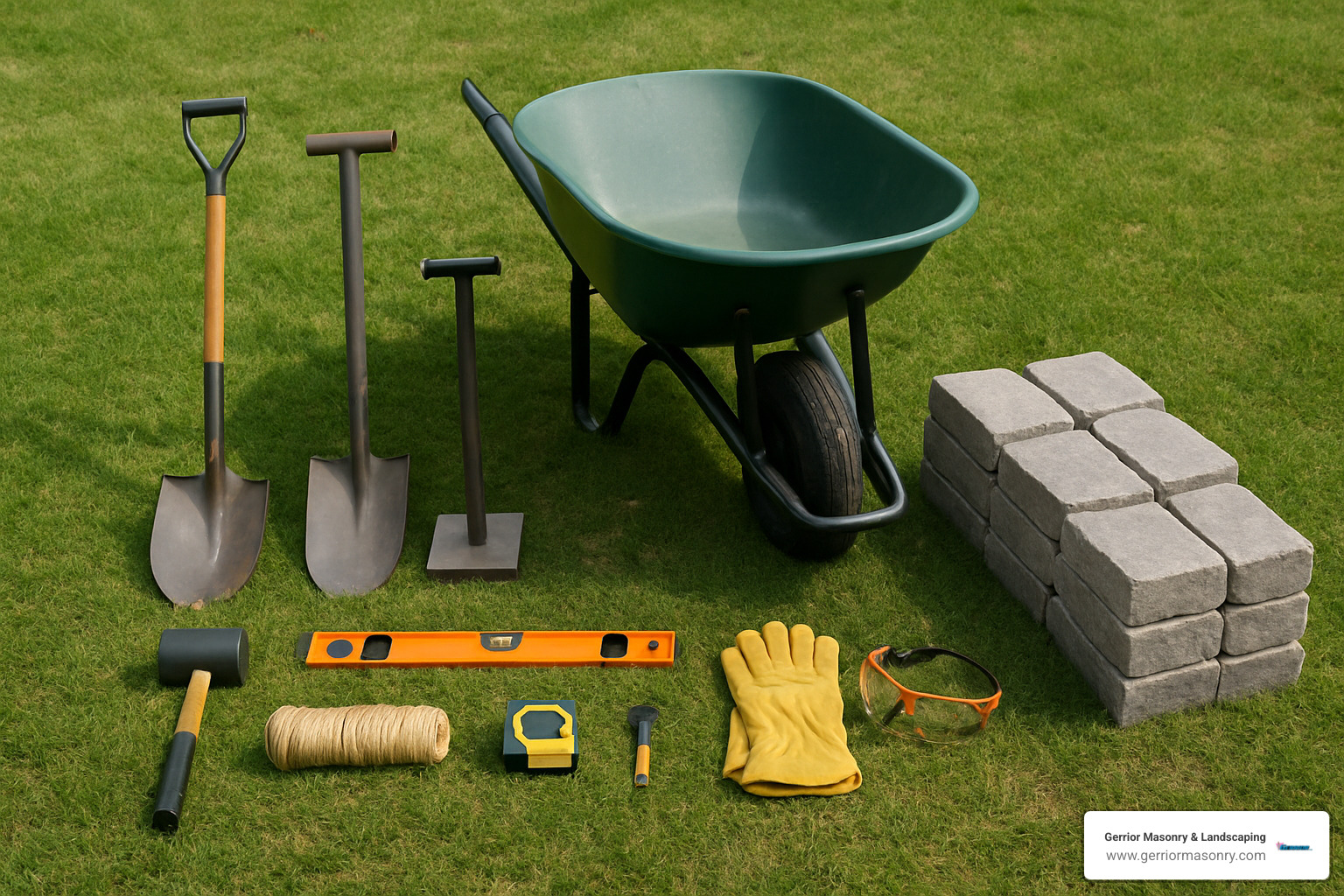
Your tool collection should include a sturdy shovel and spade for digging, a wheelbarrow for moving materials, and a rubber mallet for gently tapping stones into place. A carpenter’s level (both 2-foot and torpedo size) will ensure everything stays even. Don’t forget a tamper – either hand or power – to compact your base materials properly.
For marking your border, grab some string or a garden hose, plus a tape measure for precision. Safety should never be an afterthought, so have your safety glasses, gloves, and knee pads ready – your future self will thank you after a day of kneeling on gravel!
Materials-wise, beyond your chosen edging stones, you’ll need paver base or ¾-inch crushed stone for drainage, coarse sand for leveling, and potentially Portland cement if you’re doing a mortared installation. Landscape fabric underneath helps prevent weeds, while polymeric sand fills those joints beautifully. And don’t forget stakes, string, or spray paint for marking your layout.
Safety First: Call Before You Dig
I can’t stress this enough – before starting any stone garden edging installation, always call 811 to have underground utilities marked. This free service could literally save your life by preventing dangerous accidents with gas or electric lines. In Massachusetts, you must call at least 72 hours before digging (excluding weekends and holidays). I’ve been on too many job sites where homeowners were shocked to find utilities running through areas they assumed were clear!
For more in-depth guidance on planning your landscape project, visit our comprehensive Landscape Planning resource.
Stone garden edging installation: Choosing the right stone
Finding the perfect stone isn’t just about aesthetics – it’s about matching your landscape needs and installation skills.
Flagstone creates a wonderfully natural, rustic look with its irregular shapes. It’s particularly beautiful when laid on edge for a distinctive border. The trade-off? It requires more skill to fit pieces together like a puzzle, and often needs cutting for the best fit. My clients with natural, informal gardens with curved borders particularly love this option.
Manufactured Pavers offer that uniform size and predictable shape that makes installation more straightforward, especially for beginners. While they lack some of the character of natural stone, their consistent color and shape create clean, precise borders. These work beautifully in modern landscapes and straight-edged designs.
Recycled Stone gives your garden instant history and character while being environmentally friendly. Old cobblestones, reclaimed granite curbing, or salvaged wall stone can be repurposed into stunning borders. They often cost less but may require some cleaning or restoration. The stories these stones could tell make them perfect for historic properties.
At Gerrior Masonry, we always suggest choosing stones that complement your home’s architecture. A colonial home in Lexington deserves different treatment than a contemporary property in Newton. The right stone makes your edging look like it was always meant to be there.
Marking the layout & trench dimensions
The foundation of successful stone garden edging installation starts with proper layout planning:
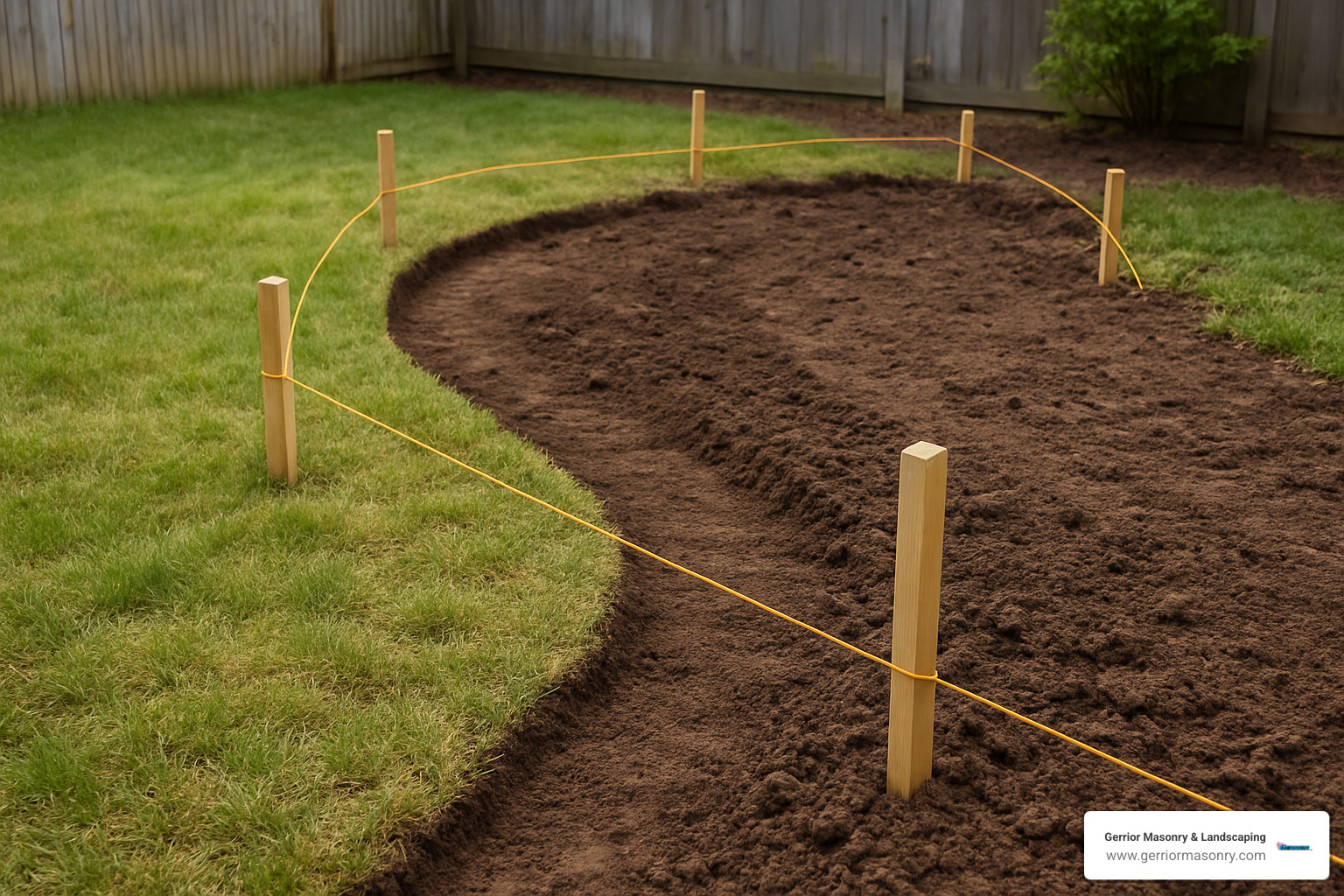
Start by visualizing your border using a garden hose for those lovely curved sections or stakes and string for straight runs. Take your time here – I’ve seen too many homeowners rush this step only to regret their border placement later. Walk around your yard, view it from different angles, and adjust until it feels right.
Once you’ve settled on the perfect layout, mark it clearly with spray paint, flour, or sand. This visual guide will keep you on track when digging begins.
For residential applications, I typically recommend a trench depth of 3-4 inches (plus extra if you want the stone to protrude above ground level). Width should be approximately 6 inches or about 2-3 inches wider than your stone to give you some wiggle room during placement.
Dry-Stack vs. Mortared Comparison:
| Feature | Dry-Stack Method | Mortared Method |
|---|---|---|
| Installation difficulty | Beginner-friendly | Requires more skill |
| Installation time | 1-2 days | 2-3 days (includes curing) |
| Durability | Good (7-15 years) | Excellent (20+ years) |
| Flexibility for ground movement | Adjusts naturally | May crack if ground shifts |
| Cost | $20-30 per linear foot | $30-40 per linear foot |
| Base requirement | Compacted gravel/sand | Concrete footing (4″ deep) |
| Best for | DIY projects, gentle slopes | Retaining soil, steeper areas |
The decision between dry-stack and mortared methods depends on your specific needs. Dry-stack offers flexibility and forgiveness, making it ideal for beginners, while mortared provides maximum stability for areas that need to retain soil or handle steeper grades.
Proper planning now saves countless headaches later. I’ve installed hundreds of stone borders throughout Middlesex and Essex counties, and the most successful ones always start with thoughtful preparation.
Stone Garden Edging Installation Step-by-Step
Now that you’ve planned your project and gathered materials, let’s dive into the heart of the process. Stone garden edging installation isn’t just about placing rocks in a line—it’s about creating a foundation that will beautify your landscape for years to come.
1. Prepare the Base
The secret to long-lasting stone edging lies beneath the surface. Think of the base as the unsung hero of your project:
Dig your trench along your marked line, making it 3-4 inches deep plus the height of your stones. Take your time here—removing all roots, rocks, and debris will prevent headaches later. Once excavated, level the bottom with a rake and level, maintaining consistent depth even around curves.
Next comes the foundation layer. Spread 2-3 inches of paver base or crushed stone evenly throughout your trench. This material isn’t just filler—it’s your drainage system and settling prevention in one.
Now for what I consider the most critical step: compaction. Use your tamper with purpose, making several passes until the surface feels solid underfoot. Skip this step, and you’ll likely be redoing your work next spring after frost heave has its way with your border.
Finally, add a 1-inch layer of coarse sand over your compacted base. This creates a forgiving setting bed that allows for those small adjustments that make the difference between amateur and professional results.
2. Set the Stones
This is where your stone garden edging installation transforms from a trench in your yard to a beautiful landscape feature:
Begin at a logical starting point—typically a corner or the most visible area. This first stone sets the tone for everything that follows, so take extra time checking it’s perfectly level in all directions.
Work methodically, placing each stone snugly against its neighbor. Your level becomes your best friend here—check it frequently to ensure consistent height and alignment. Small adjustments now prevent major disappointments later.
When a stone sits too high or low, don’t force it—a gentle tap with your rubber mallet or adding/removing a bit of sand underneath will bring it in line. Patience here pays dividends in the final appearance.
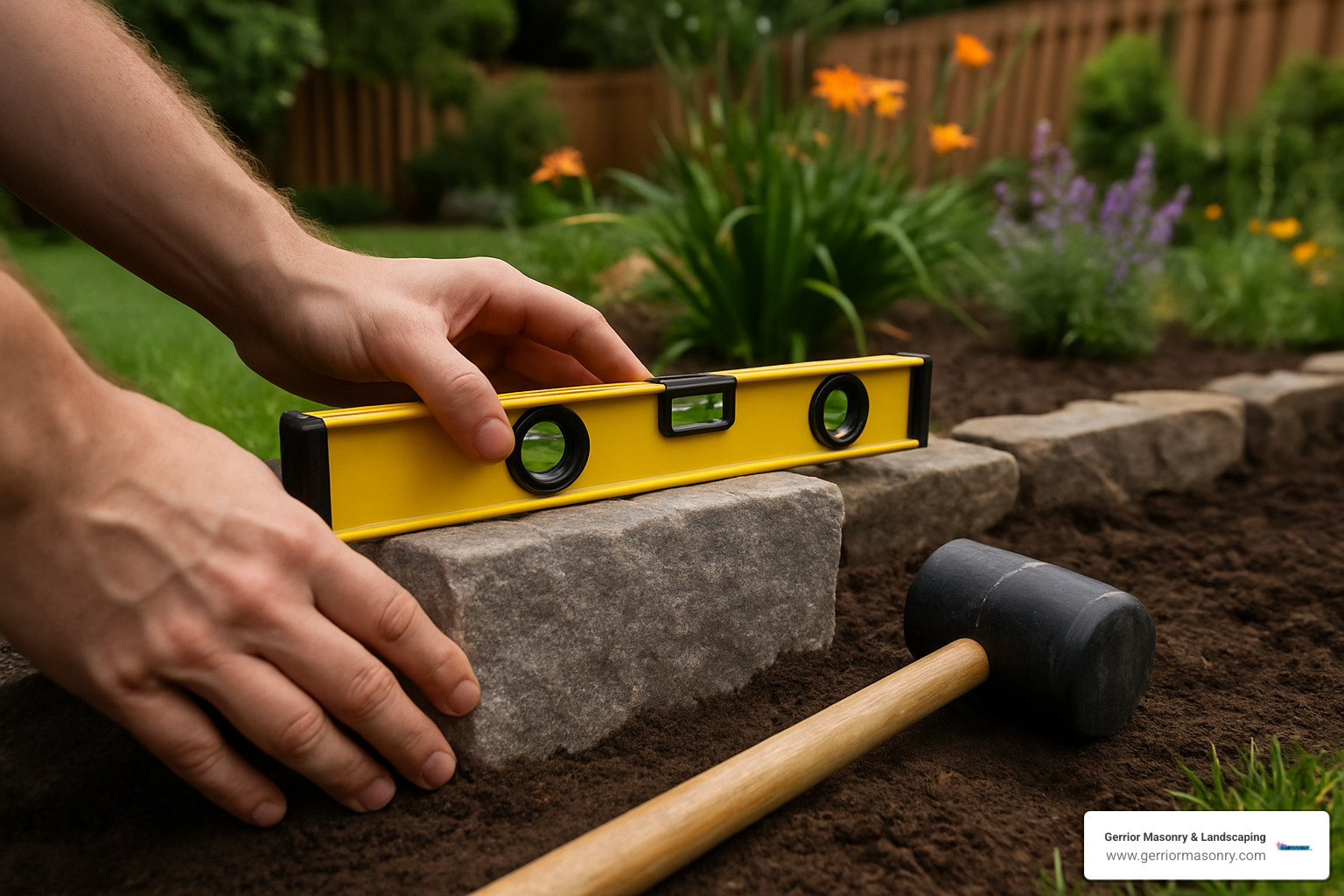
For those inevitable spots where a full stone won’t fit—especially around curves—careful measurement and cutting with a wet saw or chisel creates that custom-fit look. Always wear proper eye protection when cutting stone—I’ve seen too many DIYers learn this lesson the hard way.
3. Secure and Finish
The finishing touches transform good work into great work during your stone garden edging installation:
Fill the joints between stones with polymeric sand for dry-stack installations, sweeping it carefully into every gap. For mortared installations, use a pointing trowel to apply mortar between stones with precision.
Provide lateral support by backfilling soil against both sides of your edging. Gently compact this soil without displacing your carefully leveled stones. This step prevents edge stones from tipping over time—a common failure point in amateur installations.
Clean the surface thoroughly, removing excess sand, soil, or mortar from stone faces. For polymeric sand, follow manufacturer instructions for wetting, which activates the binding agents that lock your stones in place.
Finally, take a slow walk along your entire border. This final inspection often catches small issues that are easy to fix now but frustrating to address later.
For more inspiration and detailed techniques, check out our guide to Stone Edging for Flower Beds.
Stone garden edging installation: Dry-stack method
The dry-stack method is my go-to recommendation for homeowners tackling their first stone garden edging installation. It’s forgiving, flexible, and still delivers beautiful results.
After excavating your trench, add 2-3 inches of paver base or drainage gravel. Compact this thoroughly—I can’t stress enough how important this step is for preventing future settling. Then spread a 1-inch layer of coarse sand and level it with a screed board.
Place each stone with intention, nestling them firmly into the sand bed. The stones should touch their neighbors snugly without forcing. Once your stones are in place, sweep polymeric sand between them—this remarkable product hardens when wet while maintaining just enough flexibility for ground movement.
I love the dry-stack method for its practical benefits: it’s about 30-40% less expensive than mortared installations, accommodates natural ground movement without cracking, and can typically be completed in a single weekend. Plus, if you ever need to make adjustments, you can do so without breaking out the jackhammer.
Stone garden edging installation: Mortared method
When clients ask me about permanent, heirloom-quality borders, I point them toward the mortared method. This approach creates an installation that will likely outlast your time in the home.
Start with a proper concrete footing—4 inches deep using a 1:3:5 ratio of cement, sand, and gravel. Allow this to cure for a full 24 hours before proceeding. Your mortar mixture should have a peanut butter-like consistency, made from 1 part masonry cement to 3 parts sand, plus water.
Setting stones in mortar requires precision. Place a layer of mortar on the footing, then set each stone, checking for level in all directions. Apply mortar to the sides of each stone before placing the next one, maintaining consistent joint widths for a professional appearance.
Don’t forget to include weep holes every few feet, especially for retaining walls or raised beds. These small drainage gaps prevent water buildup that can damage your wall over time. After setting all stones, fill visible joints with mortar using a pointing trowel, creating your preferred finish—whether flush, recessed, or beaded.
According to research on concrete durability from the Home Depot blog, a properly installed 4-inch concrete footing provides a stable base that resists cracking even when the ground shifts over time. While this method requires more skill and patience, the 20+ year lifespan with minimal maintenance makes it worth considering for your forever home.
Handling Curves, Slopes & Custom Cuts
Creating those beautiful curved borders or navigating slopes in your yard doesn’t have to be intimidating during your stone garden edging installation. At Gerrior Masonry, we’ve perfected these techniques over decades, and I’m happy to share our secrets with you.
Creating Smooth Curves
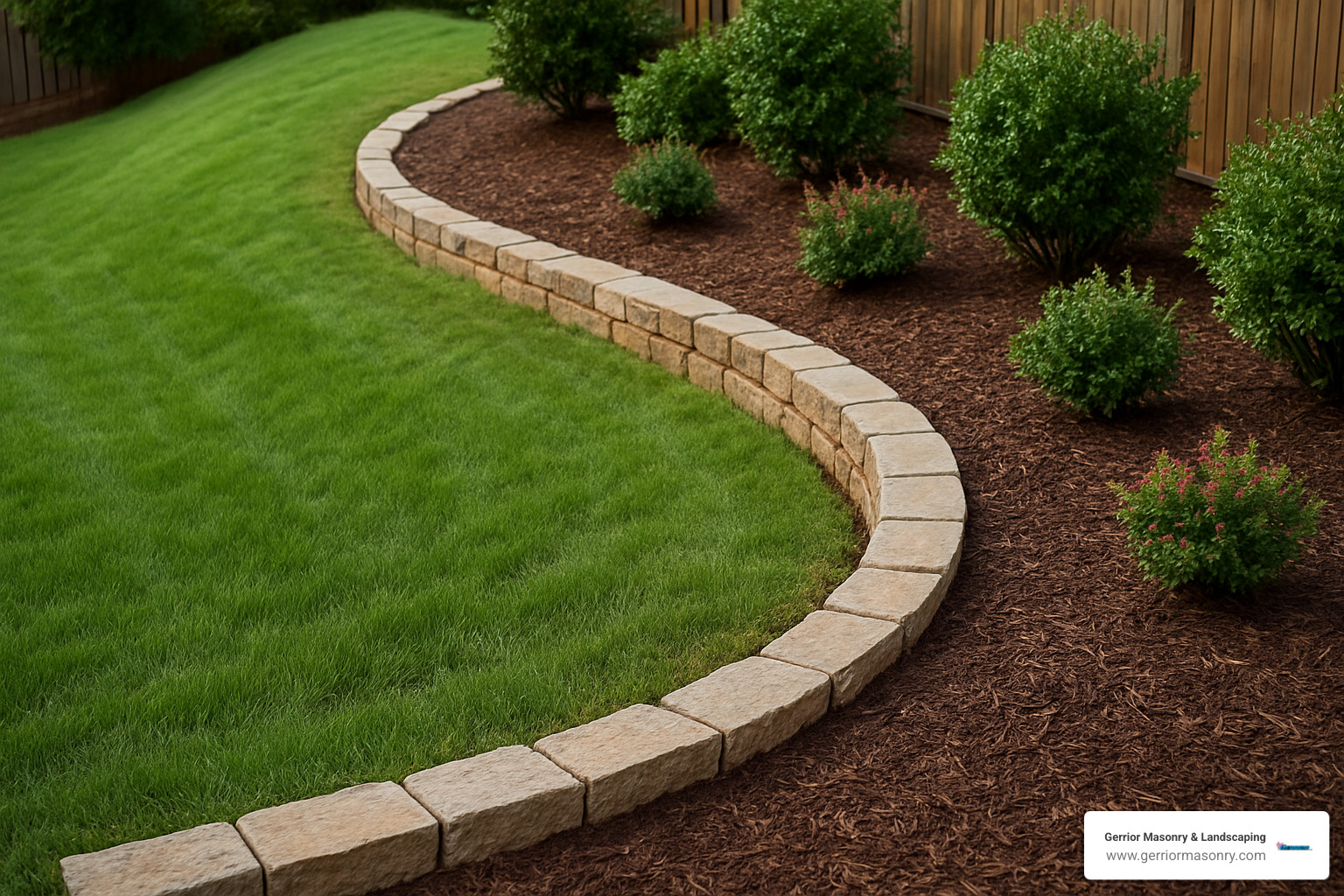
Nothing improves a landscape like graceful, flowing curves. When I’m creating curved edging for clients in Middlesex County, I always start by laying out the design with a garden hose. This flexible tool lets you visualize and adjust your curves until they feel just right with your landscape.
For tight curves, smaller stones are your best friends. Those large, rectangular pavers might look impressive, but they’ll fight you around corners. I often recommend trapezoid-shaped stones that naturally form curves when placed side by side – they’ll save you countless headaches and cutting time.
For especially tight turns, don’t be afraid to create custom keystones. These wedge-shaped pieces maintain consistent joint widths while accommodating even the sharpest curves. On gentler curves, you can often get away with slightly angling rectangular stones in a fan pattern, keeping that outer edge looking clean and intentional.
Managing Slopes and Grade Changes
Massachusetts yards often come with their share of slopes, but that doesn’t mean your edging can’t look professional. The key is to step your base rather than following the slope directly. Think of it like tiny terraces – each section is level, stepping down at regular intervals. This prevents the frustrating slide of stones that can happen when you try to follow a slope directly.
For steeper areas (anything over a 10% grade), I strongly recommend using the mortared method we discussed earlier. That extra stability makes all the difference, especially after a few New England freeze-thaw cycles. When digging your trench on slopes, remember to excavate the downhill side deeper to create a level foundation for your stones.
If you’re dealing with significant elevation changes, consider creating multiple tiers of edging rather than forcing a single line to follow a steep slope. Not only is this more stable, but it also creates visual interest and additional planting opportunities in your landscape.
Custom Cutting Techniques
Even with perfect planning, you’ll likely need to cut some stones for that professional finish. My number one rule after 34 years in the business? Measure twice, cut once. Double-checking your measurements before cutting will save you time, money, and frustration.
Always mark your cutting lines clearly with a wax crayon or pencil on all sides of the stone. For softer stones like limestone or sandstone, you can often score with a chisel and split with controlled hammer strikes. Harder stones like granite typically require a wet saw with a diamond blade for clean cuts.
For more creative approaches to your garden borders, check out our Decorative Stone Garden Edging resource.
Cutting and shaping stones safely
Safety isn’t just a suggestion when working with stone – it’s absolutely essential. Stone dust contains silica that can cause serious respiratory issues with prolonged exposure, so proper equipment is non-negotiable.
Before making any cuts, gather your safety gear: safety glasses or a face shield, hearing protection, a dust mask or respirator, work gloves, and knee pads. For equipment, you’ll need either a diamond blade wet saw (for precise cuts) or a brick chisel and hammer (for rough cuts or splitting).
Always use water when cutting with a power saw. This isn’t just about extending blade life – it suppresses harmful silica dust that can damage your lungs. A proper wet saw circulates water over the blade during cutting, keeping dust to a minimum.
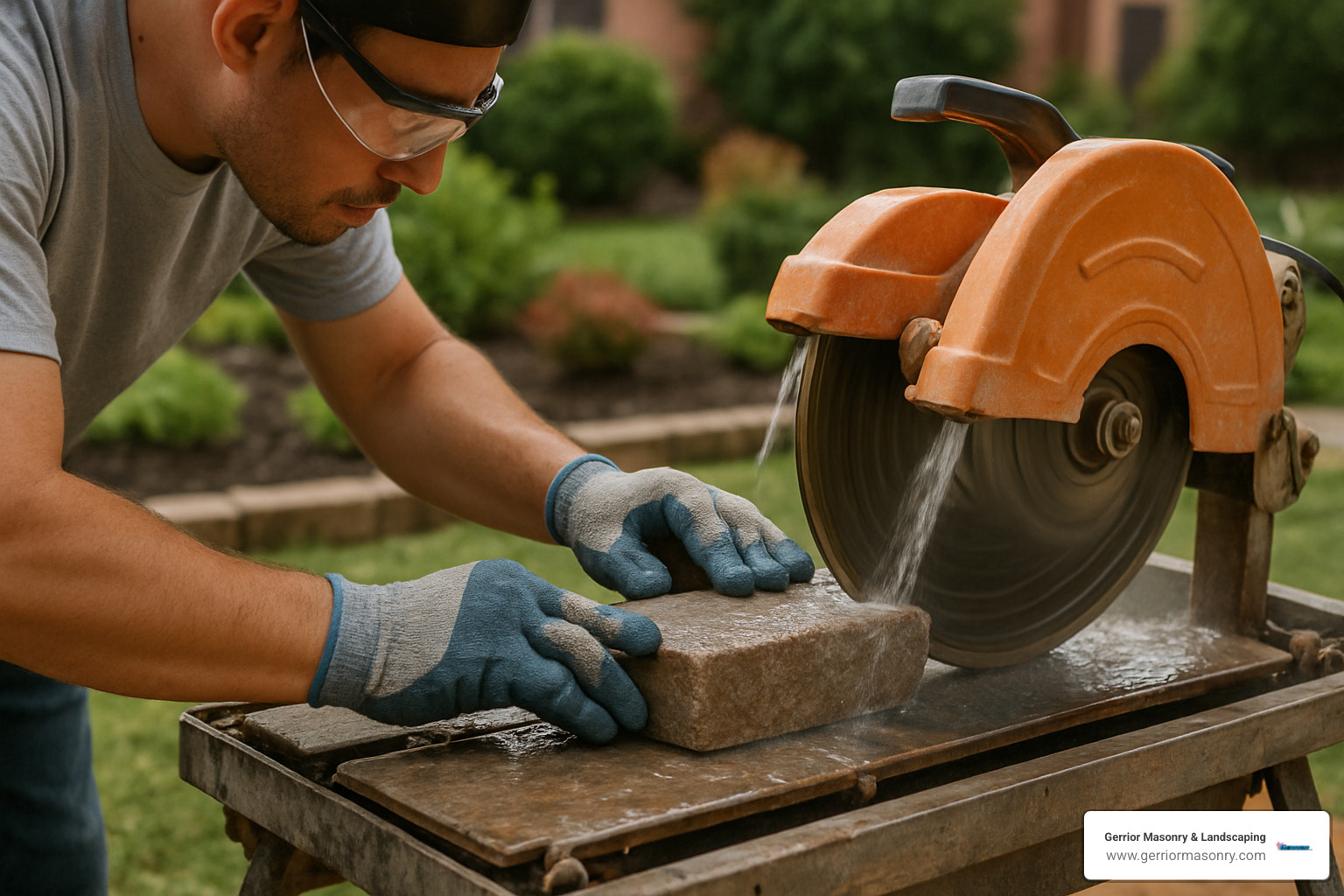
When using the saw, let the blade do the work at its own pace – never force the stone through, as this can cause dangerous kickback. Keep your hands at least 6 inches from the blade, and ensure the stone is fully supported on both sides of the cut line.
For manual cutting, I prefer the scoring method. Make multiple light passes around the entire stone rather than trying to split it with one heavy blow. Then place the scored stone on a soft surface like a door mat or sand bed, and strike the chisel handle (not the blade) with your hammer until the stone splits cleanly along your score line.
To minimize dust exposure, try to work outdoors whenever possible, and position yourself upwind of cutting operations. Keep a spray bottle handy to wet stones when scoring with a chisel, and wash your hands and face thoroughly after cutting. Your lungs will thank you years down the road.
At Gerrior Masonry, we take these safety precautions seriously on every job site, and I encourage all DIYers to do the same. There’s no shortcut worth risking your health – take the time to cut safely, and you’ll enjoy your beautiful stone edging for decades to come.
Costs, Maintenance & Common Mistakes
When you’re planning a stone garden edging installation, understanding what you’re getting into financially—and how to make it last—can save you headaches down the road. Let’s break down the costs, maintenance needs, and pitfalls to avoid for your garden border project.
Cost Considerations
I’ve installed countless stone borders over my years at Gerrior Masonry, and one of the first questions clients ask is about price. Here’s what you should expect:
The average cost for stone garden edging installation typically runs between $20-$40 per linear foot, though this can vary widely based on your choices. A simple dry-stacked border might cost as little as $20 per foot, while premium natural stone with a mortared base could reach $40 per foot. For truly custom, high-end installations with rare stone or intricate designs, prices can soar to $60-$120 per linear foot.
What drives these price differences? It comes down to your materials (manufactured pavers are more affordable than premium natural stone), installation method (mortared installations require more time and skill), and the complexity of your site. If you’re tackling it yourself, you’ll save on labor but need to factor in equipment rentals like plate compactors or wet saws.
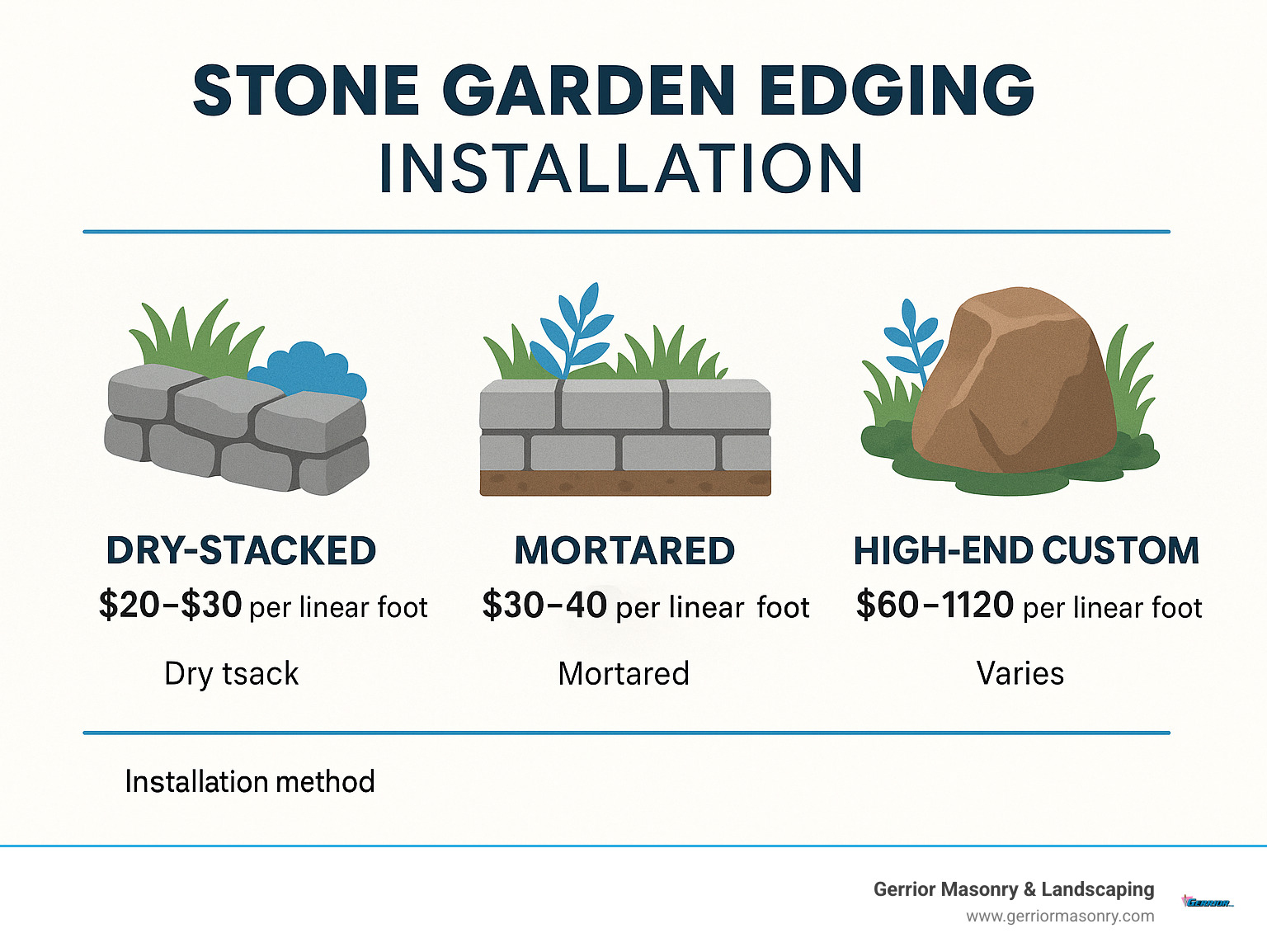
Note: These are average costs based on internet data and not actual costs for Gerrior Masonry services. Your specific project may vary based on site conditions, material choices, and design complexity.
Long-Term Maintenance
One of the joys of stone edging is its minimal maintenance requirements. With proper installation, your border can last decades with just a bit of seasonal attention:
Spring is the perfect time for an annual inspection. After winter’s freeze-thaw cycles, check for any stones that might have shifted and reset them before small problems become bigger ones. While you’re at it, pull any opportunistic weeds that have sprouted between stones—a splash of vinegar or boiling water works wonders for stubborn interlopers without harsh chemicals.
For dry-stack installations, you’ll occasionally need to top up polymeric sand in joints that have eroded over time. This simple step prevents weeds and keeps your stones firmly in place. A gentle cleaning with a stiff brush and water keeps your stones looking their best, especially in shady areas prone to moss or algae growth.
Don’t forget about edge maintenance—keeping a clean line between your lawn and stone border with regular trimming not only looks better but prevents grass from creeping into your garden beds.
For more comprehensive guidance on maintaining your hardscaping elements, our Hardscapes & Landscaping resources provide excellent tips.
Common Installation Mistakes to Avoid
Even experienced DIYers can stumble when installing stone garden borders. Here are the pitfalls I see most often:
Inadequate base preparation tops the list of errors. Skipping proper excavation and compaction is like building a house on sand—it might look fine initially, but won’t stand the test of time. Always take time to create a solid foundation with properly compacted materials.
Many homeowners also dig trenches that are too shallow, leaving stones vulnerable to shifting and frost heave. Remember: dig at least 3-4 inches below your intended stone height for a stable base.
Poor drainage planning can undermine even the most beautiful installation. Water needs somewhere to go, so ensure your design allows proper runoff away from foundations and hardscaped areas.
One dangerous mistake is forgetting to call 811 before digging. This free service marks underground utilities, potentially saving you from dangerous and costly accidents.
Other common errors include using interior-grade stone that won’t withstand the elements, rushing through cuts that create uneven joints, applying excessive mortar that creates messy spillover, and neglecting to check for level frequently during installation.
Budgeting your stone garden edging project
Smart budgeting prevents those mid-project panic moments when you realize you’ve underestimated costs:
Always measure carefully and then add 10% extra stone to account for cuts, breakage, and the occasional measuring error. I can’t tell you how many weekend warriors have had to halt their projects for an emergency stone run!
Shop around for materials—prices for identical stone can vary significantly between suppliers. The time spent getting three quotes can save you hundreds on larger projects.
Consider the long-term value of your choices. I’ve seen clients initially balk at spending more for quality stone, only to end up replacing a cheaper border a few years later. Premium materials often offer better durability and lower lifetime costs.
Don’t forget to factor in tool costs if you don’t already own specialized equipment. Renting a wet saw or plate compactor might add $50-$150 to your budget.
Always plan for surprises by setting aside 15-20% of your budget for contingencies. Maybe you’ll hit unexpected rocky soil or find drainage issues—having a buffer keeps your project moving forward.
Maintenance tips to make edging last decades
With proper care, your stone garden edging installation can remain beautiful for generations:
Make annual inspections a spring ritual, checking for any loose or shifting stones, especially after winter. Address minor issues immediately—a stitch in time truly saves nine when it comes to stone edging.
Use gentle cleaning methods to preserve your investment. High-pressure washers can erode mortar joints over time, so stick to garden hoses and soft brushes for routine cleaning.
For porous stones in areas prone to staining (like under pine trees), consider applying a breathable stone sealer every 2-3 years. This simple step prevents discoloration while allowing the stone to “breathe.”
Practice good vegetation management by keeping aggressive plants with invasive root systems (like mint or bamboo) away from your stone edging. These botanical bullies can push stones out of alignment over time.
During winter, avoid salt-based ice melters near your stone edging. Salt can cause spalling and deterioration that ruins the appearance and integrity of your stones. Sand provides traction without the damaging effects.
Mistakes to avoid during stone garden edging installation
Learning from others’ missteps can save you considerable frustration:
Poor planning leads to inconsistent results and wasted materials. Sketch your design, measure carefully, and visualize the finished project before breaking ground.
Rushing the process almost guarantees disappointment. Stone edging installation requires patience—each step builds on the previous one, and shortcuts become evident in the final result.
Skipping compaction steps is a recipe for disaster. Every layer—base, sand, and backfill—needs proper compaction to prevent settling and shifting.
Inconsistent joint widths create an amateur appearance. Take time to maintain even spacing between stones for a professional finish that improves your landscape.
Neglecting water management undermines even beautiful installations. Without proper slope and drainage, water can erode your base materials and destabilize your edging.
Gerrior Masonry & Landscape Construction is based in Woburn, MA, and services Middlesex and Essex County, Massachusetts.
Frequently Asked Questions about Stone Garden Edging Installation
What trench depth and width work best?
When homeowners ask me about trench dimensions for stone garden edging installation, I always explain that getting this right is crucial for long-term success.
For most residential projects around Massachusetts, I recommend digging your trench 3-4 inches deep, plus whatever portion of stone you want below ground level. Think of it this way – if you’re using 4-inch tall stones and want half showing above ground, you’ll need a 5-6 inch total trench depth. This depth ensures stability while preventing frost heave during our harsh New England winters.
Width-wise, aim for approximately 6 inches, or about 2-3 inches wider than your stones. This extra space isn’t wasted – it gives you room to make those small but critical adjustments during placement and allows proper backfilling to support your stones from both sides.
If you’re going with a mortared installation (which many of our clients prefer for maximum longevity), you’ll want to increase your depth by an additional 4 inches to accommodate the concrete footing. In areas with particularly severe freeze-thaw cycles – which we certainly experience throughout Massachusetts – consider going slightly deeper to get below the frost line for maximum stability.
Should I use sand, gravel or concrete under my stones?
The right base material makes all the difference between an edging that lasts decades and one that needs constant repairs. Your choice depends on your installation method and desired longevity.
Sand bases work fine for temporary installations or very low borders. They’re easy to work with and allow for quick adjustments as you place your stones. However, I’ve seen too many sand-only bases wash out over time or shift significantly with freeze-thaw cycles. I generally only recommend sand alone for simple projects with minimal structural requirements.
For most dry-stack installations, a gravel or paver base is your best bet. This provides excellent drainage (crucial in our New England climate), good stability, and helps prevent frost heave. The key is proper compaction – something we’re sticklers about at Gerrior Masonry. This approach works beautifully for most residential borders.
When maximum stability is needed, nothing beats a concrete base. I recommend this for mortared installations, retaining walls, or borders in high-traffic areas. While it creates a more complex installation process and is less forgiving of mistakes, the longevity is best. For many of our permanent installations, especially when supporting significant weight, this is our go-to method.
After 30+ years in the business, I’ve found that a combination approach typically delivers the best results: a well-compacted gravel base topped with a thin layer of coarse sand for precise leveling. This hybrid approach gives you both stability and adjustability.
Can stone edging stop weeds and grass from creeping in?
Yes! One of the most satisfying benefits of proper stone garden edging installation is how effectively it stops that annoying grass and weed encroachment. I’ve had countless clients express relief at no longer fighting the constant battle between lawn and garden bed.
The key to weed-blocking success lies in several important details. First, proper depth is essential – install your edging deep enough that grass roots can’t simply grow underneath. I’ve seen too many shallow installations fail within a season as aggressive grass roots find their way under the stones.
For persistent weed problems, consider installing landscape fabric beneath and behind your edging. This creates an additional physical barrier that most weeds can’t penetrate. Just be sure it extends far enough on both sides of your edging.
Pay attention to your joints as well. Tight joints between stones (or joints filled completely with polymeric sand) leave nowhere for weed seeds to settle and germinate. This simple detail makes a huge difference in maintenance requirements down the road.
Even the best installation benefits from occasional inspection and spot-treatment of any determined weeds that do appear. A quick check during spring cleanup usually catches any potential issues before they become problems.
One often-overlooked detail: consider your height placement. Edging that rises 1-2 inches above soil level creates a physical barrier that lawn mowers cannot cross, preventing grass from spreading over the top. This simple height difference creates a clean visual line while significantly reducing maintenance.
In my decades of experience installing garden borders throughout Middlesex and Essex County, stone edging consistently proves to be one of the most effective long-term solutions for maintaining clear boundaries between lawns and garden beds. The initial investment pays for itself many times over in reduced maintenance and frustration.
Gerrior Masonry & Landscape Construction is based in Woburn, MA, and services Middlesex and Essex County, Massachusetts.
Conclusion
Creating beautiful stone garden edging installation is more than just a weekend project—it’s an investment in your home that pays dividends for decades. Throughout this guide, we’ve walked through every step needed to create borders that not only look stunning but stand strong against New England’s challenging weather.
I’ve seen how properly installed stone edging transforms ordinary gardens into showcase landscapes. The clean lines between lawn and garden beds instantly lift your property’s curb appeal while solving practical problems like grass invasion and soil erosion.
What I love most about stone garden edging installation is how it connects your landscape to the rich architectural heritage of Massachusetts. Whether you choose traditional granite cobblestones that echo colonial Boston or modern cut stone that complements your contemporary home, these borders tell a story about your property.
Remember these essential points as you plan your project:
Take time with preparation. The invisible work beneath the surface—proper trenching, thorough compaction, and appropriate base materials—determines whether your border lasts for years or decades. Those extra hours spent on the foundation pay off tremendously.
Choose materials thoughtfully. While budget-friendly options exist, investing in quality stone often makes more sense in the long run. I’ve replaced plenty of deteriorating concrete edging, but rarely revisit well-installed natural stone borders.
Don’t rush the installation. Setting each stone with care, checking level frequently, and making precise cuts creates a finished product that looks professionally installed. The difference between a good border and a great one often comes down to patience.
Schedule simple maintenance checks. A quick annual inspection in spring lets you catch and fix minor issues before they become problems. Just a few minutes of attention keeps your edging looking fresh for years.
Whether you tackle this project yourself or call in professionals, stone garden edging represents one of the smartest investments you can make in your landscape. Few other improvements offer this perfect balance of practical function and timeless beauty.
For more inspiration and detailed information about options for your property, visit our comprehensive Stone Garden Edging resource page.
At Gerrior Masonry & Landscape Construction, we’ve spent over three decades perfecting the art of stone installation throughout Middlesex and Essex County, Massachusetts. Based in Woburn, MA, our team brings craftsmanship, attention to detail, and genuine care to every project—from simple garden borders to complex hardscape installations. We’d be delighted to help transform your outdoor space with the enduring beauty of stone.
