
Wood stove installation: 2025 Safe Mastery
Why Proper Wood Stove Installation Matters for Your Home
Proper wood stove installation is a complex project that demands careful planning and strict adherence to safety codes. A correct installation provides efficient, cost-effective heating, while an improper one creates severe fire risks and can void your homeowner’s insurance.
Key Wood Stove Installation Requirements:
- Permits: Building permits are required in most areas.
- Clearances: 36 inches from combustible walls (radiant stoves), 18 inches for single-wall pipe.
- Floor Protection: A non-combustible hearth extending 18 inches in front and 8 inches on sides.
- Venting: Class A chimney pipe for roof penetrations with proper height.
- Professional Inspection: WETT or NFI certified inspection is often required for insurance.
Modern wood stoves boast burning efficiencies of 60-70%, far surpassing traditional fireplaces (10-20%). With surface temperatures exceeding 400°F and internal temperatures over 1,000°F, professional installation is critical for safety. A complete DIY installation can take 3-4 days and cost between $1,400 to $3,300, but professional installation is strongly recommended to steer complex building codes and ensure safety.
I’m Joe Gerrior, owner of Gerrior Masonry & Landscape Construction Corp. With over 34 years of experience, our certified team has completed countless wood stove installations and chimney projects for Massachusetts homeowners. We prioritize safety and functionality, strictly adhering to clearances, venting standards, and local codes to protect your family and property.
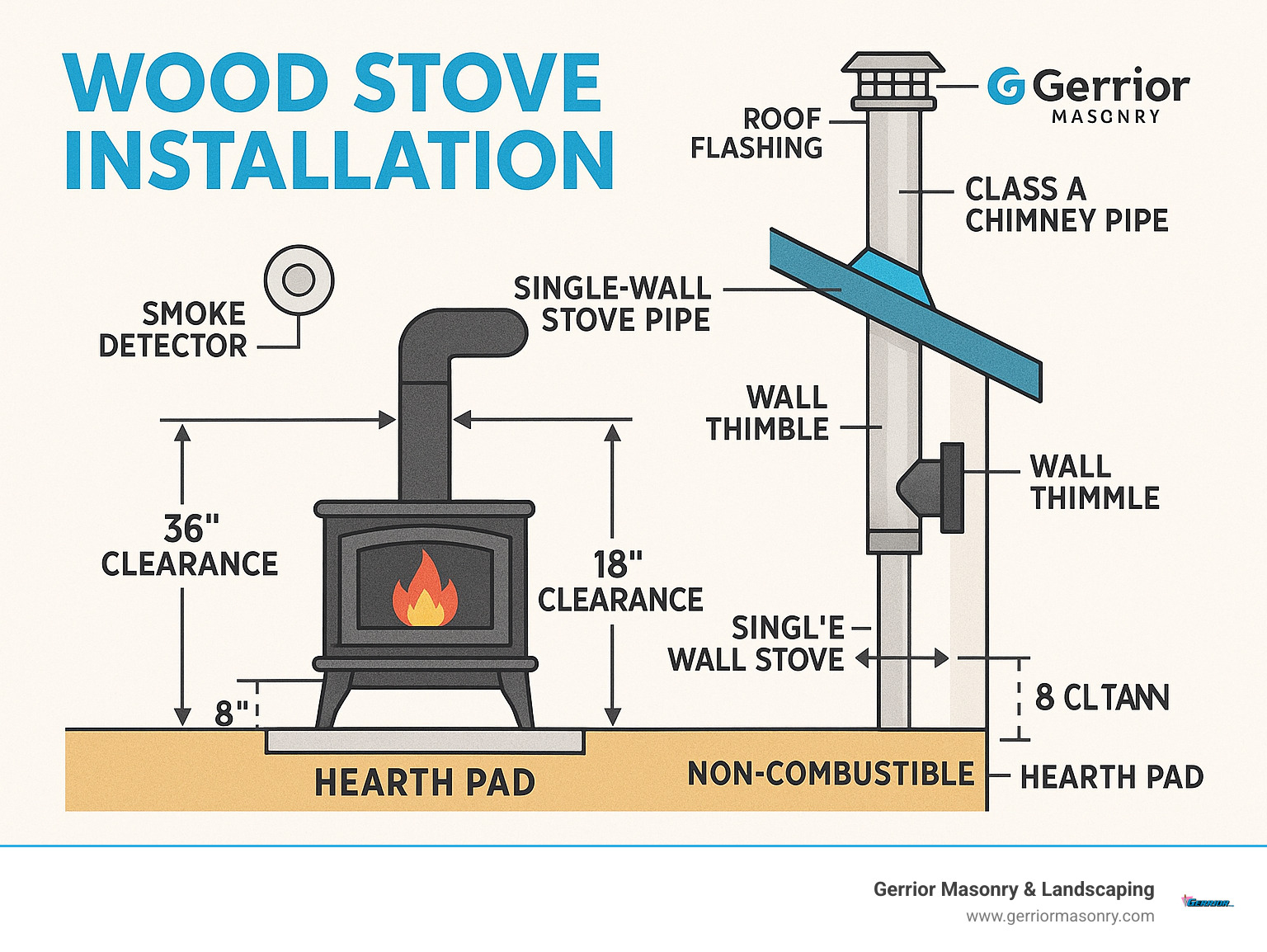
Wood stove installation terms you need:
The Complete Guide to Wood Stove Installation
Installing a wood stove is a rewarding project that adds warmth and efficiency to your home. However, a safe, compliant, and lasting wood stove installation requires careful planning and execution. This guide covers everything from permits to the final chimney connection.
Planning Your Installation: Permits, Sizing, and Stove Selection
Solid planning is the foundation of a safe and efficient heating system.
Getting Your Permits and Understanding Regulations
Before starting, you must check with your local building official and fire marshal. Skipping this step can lead to fines, safety hazards, and insurance issues. Every municipality has specific requirements for wood stove installation, as shown in examples like Portland’s building department guidelines. Also, contact your homeowner’s insurance agent beforehand. Most insurers require notification and an inspection by a WETT or NFI Certified professional to maintain your policy.
Choosing the Right Size Stove
A stove that’s too small won’t heat your space, while one that’s too large will cause overheating and creosote buildup. Focus on firebox size and the manufacturer’s heating capacity, typically broken down by square footage:
- Small Stoves: 600 to 1,000 sq. ft. (ideal for rooms or cabins)
- Medium Stoves: 800 to 2,000 sq. ft. (suits most average homes)
- Large Stoves: 800 to 3,000 sq. ft. (for large, open, or poorly insulated homes)
Your home’s insulation, climate, and wood type will also affect performance.
Understanding Stove Features
Modern stoves have features like air wash systems to keep the glass clean and blowers to circulate heat. You’ll also choose between catalytic stoves, which re-burn smoke for higher efficiency and longer burns but require more maintenance, and non-catalytic stoves, which are simpler to operate. Ensure your choice is listed in the EPA-Certified Wood Stove Database.
Understanding the Investment
Costs for wood stove installation vary. The prices below are averages based on internet data, not actual quotes from Gerrior Masonry. For accurate pricing, please contact us.
Wood stoves can range from $850 to over $5,400. Installation components like ceiling support kits ($500 – $2,500+), stove pipes ($50 – $240 per section), and hearth pads ($150 – $800) add to the cost. A complete professional wood stove installation, including the appliance and a new chimney, typically ranges from $1,400 to over $12,000.
Preparing the Space: Critical Safety Clearances
Properly preparing your space is the most critical safety step. Clearances are non-negotiable requirements.
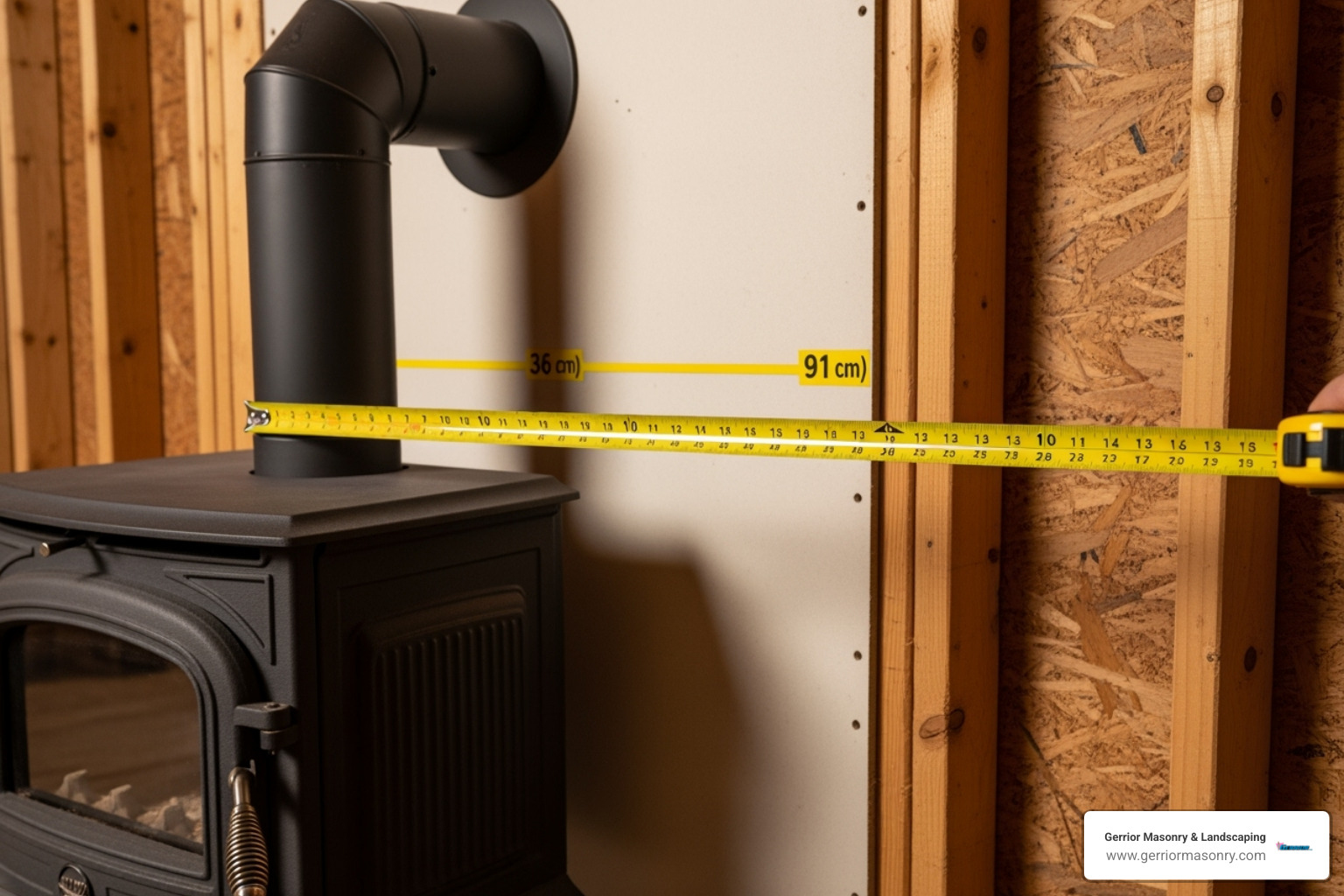
Floor and Wall Protection
Your floor requires a non-combustible hearth pad to protect against heat and embers. It must extend at least 18 inches in front of the firebox opening and 12 inches beyond all other sides. Common materials include sheet metal, mortared brick, or slate.
For walls, radiant-type stoves must be at least 36 inches from combustible surfaces. This can be reduced to 12 inches by installing a proper heat shield (like 28-gauge sheet metal) with a 1-inch air gap behind it for cooling. Always keep combustible materials like firewood, furniture, and curtains at least 36 inches away from the stove.
Venting and Chimney Essentials for a Safe Wood Stove Installation
Your venting system removes smoke and creates the draft needed for efficient burning. Getting it right is essential for safety and performance.
Choosing Your Stove Pipe
| Feature | Single-Wall Stove Pipe | Double-Wall Stove Pipe |
|---|---|---|
| Clearance to Combustibles | 18 inches | 6 inches |
| Average Cost | $50 – $100 | $100 – $240 |
| Heat Radiation | Higher | Lower |
| Creosote Buildup | Potentially higher | Lower |
| Durability | Shorter lifespan | Longer lifespan |
We recommend double-wall stove pipe for its reduced clearance and improved safety. When installing, ensure the crimped (male) end points down toward the stove to contain creosote, and secure all joints with at least three screws.
Chimney System Options and Requirements
Every wood stove installation needs a Class A chimney pipe. You can install it through-the-roof, which offers the best draft but is more complex, or through-the-wall, which is often easier but may lead to more creosote buildup in the colder, exterior chimney.
For height, follow the “3-2-10 rule”: the chimney must extend at least 3 feet above the roof penetration point and be 2 feet higher than anything within a 10-foot radius. You can learn detailed installation rules to ensure compliance. Key components include a ceiling support box, roof flashing, a storm collar, and a chimney cap to keep out rain and debris.
Ensuring Long-Term Safety and Performance
Your wood stove installation is just the start. Proper operation and maintenance are the secrets to years of safe, efficient heating.
Operating and Maintaining Your Wood Stove System
Once you learn the basics, operating your stove becomes second nature.
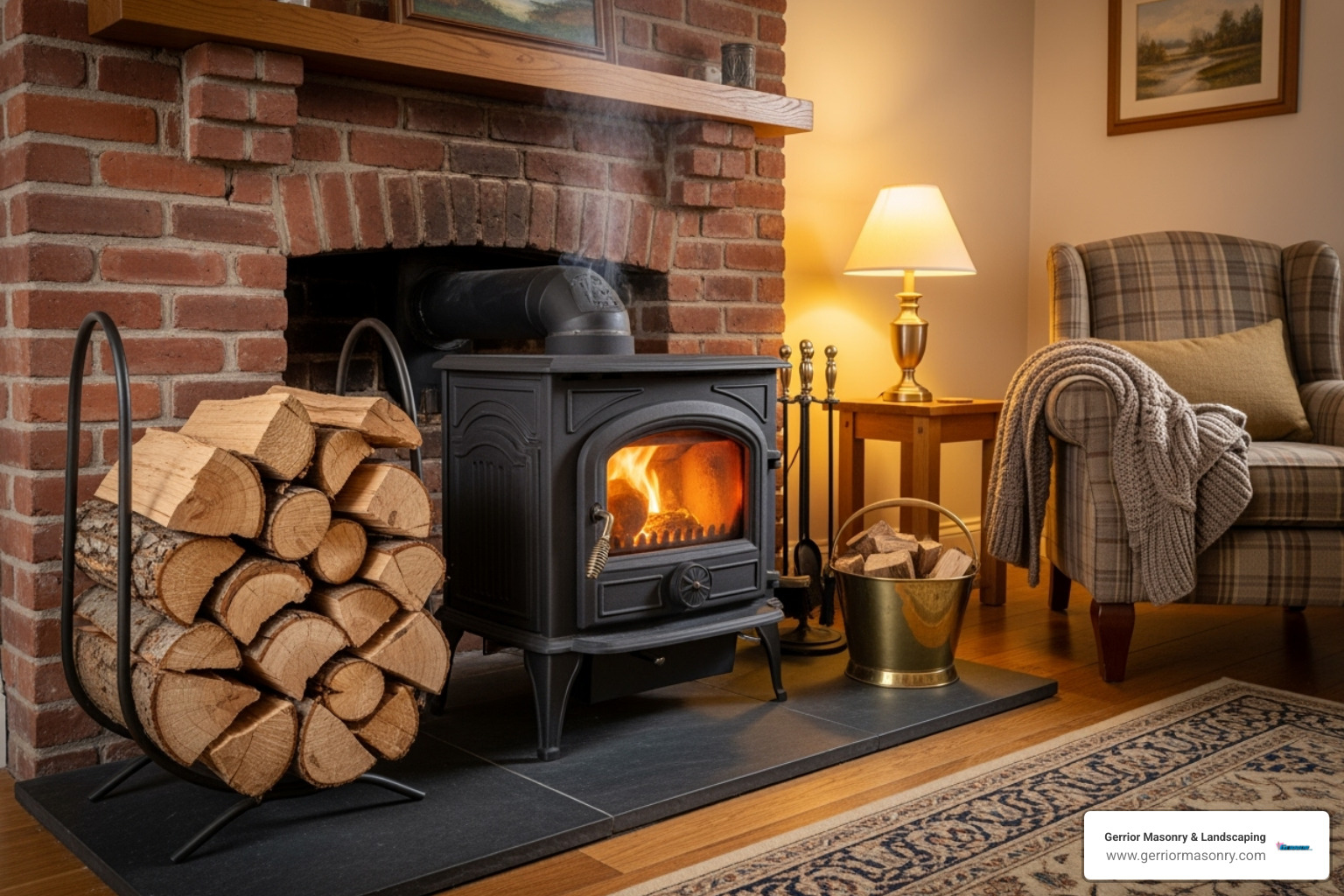
The Foundation of Good Burning: Quality Wood
Always use seasoned firewood—wood that has been dried for 6-12 months to a moisture content of 20% or less. Burning wet wood produces more smoke than heat and creates a dangerous, flammable buildup of creosote in your chimney. Hardwoods (oak, maple) burn long and hot, while softwoods (pine, fir) are great for starting a fire.
Smart Operating Techniques
Use your stove’s draft controls to manage the fire. Open them fully for 10-20 minutes when starting a fire or adding wood to burn off moisture and reduce smoke. A stovepipe thermometer helps you maintain the ideal burning temperature without over-firing. For more tips, learn how to use your stove efficiently and effectively.
Your Annual Maintenance Routine
Regular maintenance is crucial for safety and efficiency. Here’s an annual checklist:
- Inspect firebricks for cracks and replace them if needed.
- Clean the glass with a specialized wood stove glass cleaner.
- Check door and glass gaskets for wear and tear; replace them if they are brittle or torn to prevent air leaks.
- Schedule a professional chimney sweep at least once a year to remove creosote and inspect the system.
Always dispose of ashes in a covered, non-combustible metal container stored outside and away from anything flammable.
Common Problems and Chimney Fire Safety
Knowing how to spot problems and react in an emergency is key to keeping your family safe.
Troubleshooting Common Issues
A smoking stove is often caused by insufficient draft from a chimney that is too short, cold, or blocked. Leaky door gaskets and burning wet wood are also common culprits. A paint smell from a new stove is normal during the first few uses as the finish cures.
Recognizing and Responding to Chimney Fires
A chimney fire is a serious emergency. Know the signs and how to react.
Signs of a Chimney Fire:
- A loud roaring noise, like a jet engine.
- Dense, black smoke pouring from the chimney.
- A glowing red stovepipe.
What to Do:
- Close all draft controls on the stove immediately to cut off oxygen.
- Alert everyone and evacuate the house.
- Call 911, even if the fire seems to be out.
Never use the stove again until a certified professional has thoroughly inspected it for structural damage.
Why Professional Chimney Work Matters for Your Wood Stove Installation
While some attempt a DIY wood stove installation, the safety risks are too high. Professional installation ensures every detail is handled correctly.
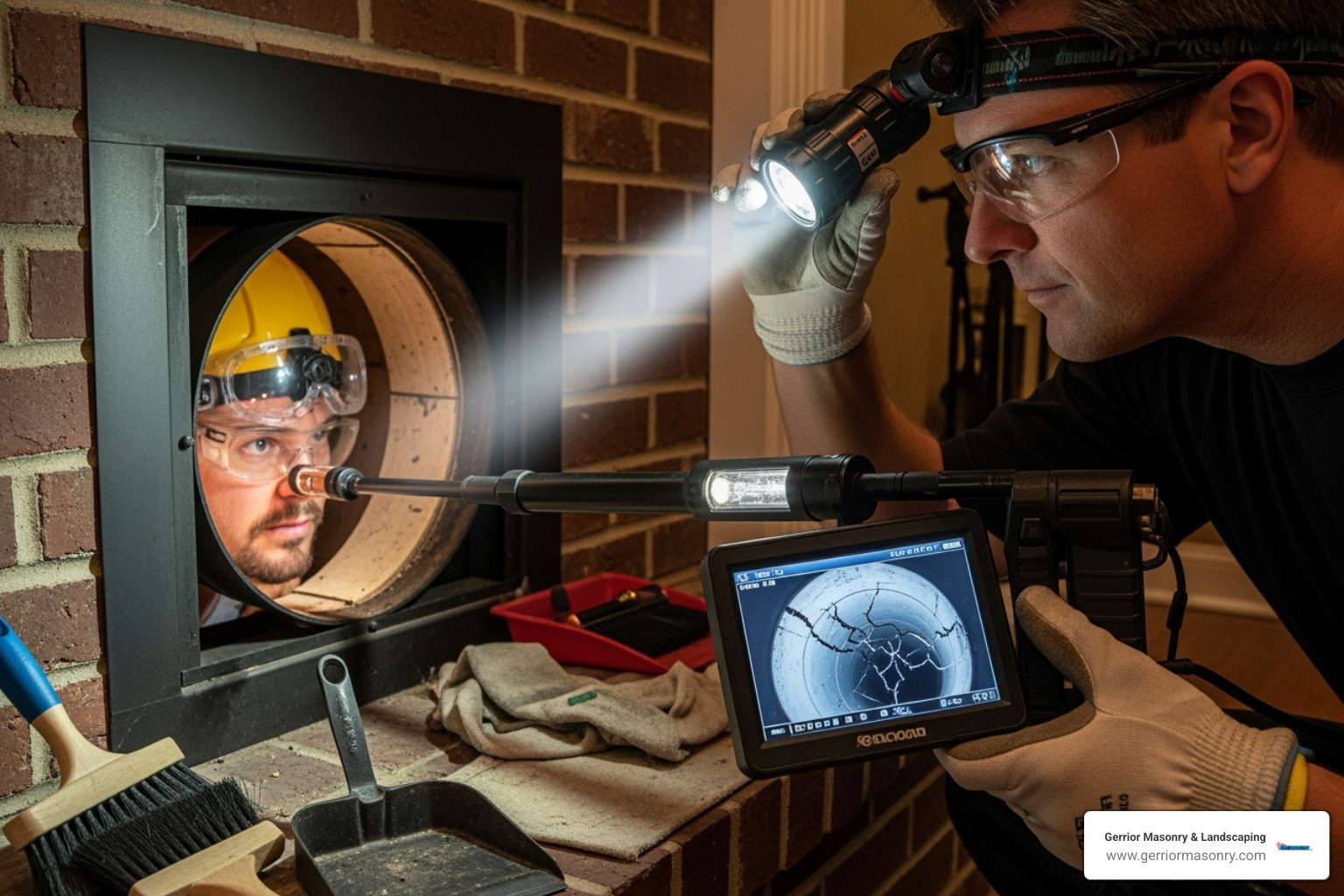
Certifications and Insurance
Insurance companies often require WETT or NFI certifications to verify that your installation meets safety codes. Notifying your insurer is mandatory; failing to do so can void your policy in the event of a fire. Choosing certified professionals provides peace of mind and ensures your system is insurable.
The Gerrior Masonry Advantage
With over 30 years of experience, Gerrior Masonry & Landscaping brings best expertise to every wood stove installation. Owner Joe Gerrior personally oversees our projects, ensuring every installation meets the highest safety standards and local building codes. Our deep masonry knowledge is invaluable for projects requiring chimney construction or modification.
For chimney construction or chimney repairs, trust our certified professionals to ensure your system is safe and up to code. Gerrior Masonry & Landscape Construction is based in Woburn, MA, and proudly services the communities of Middlesex and Essex County, Massachusetts.
