
Introduction to Solving Lawn Drainage Issues
A lawn dry well is an underground drainage system that collects excess water from your property and slowly releases it into the surrounding soil. It’s a permanent solution to eliminate standing water and protect your landscape from flooding damage.
Quick Answer for Lawn Dry Well Installation:
- What it is: An underground, gravel-filled pit or perforated container that stores and disperses stormwater.
- Best for: Downspout drainage, low spots, and other concentrated water problems.
- Key components: Excavated pit, drainage container/gravel, geotextile fabric, and inlet pipes.
- Installation depth: Typically 4+ feet deep, depending on soil percolation.
- Cost range: $300-$2,000+ depending on size and complexity (average costs based on internet data).
Standing water in your yard can damage your foundation, kill grass, and create mosquito breeding grounds. Heavy rainfall and poor soil drainage, especially the clay soil common in Massachusetts, turn beautiful lawns into swampy messes. A properly installed dry well offers a permanent solution that works with nature’s own drainage system.
For over 34 years, Gerrior Masonry & Landscape Construction Corp. has installed countless lawn dry well systems to solve these persistent drainage problems for Massachusetts homeowners, changing waterlogged properties into functional, healthy landscapes.
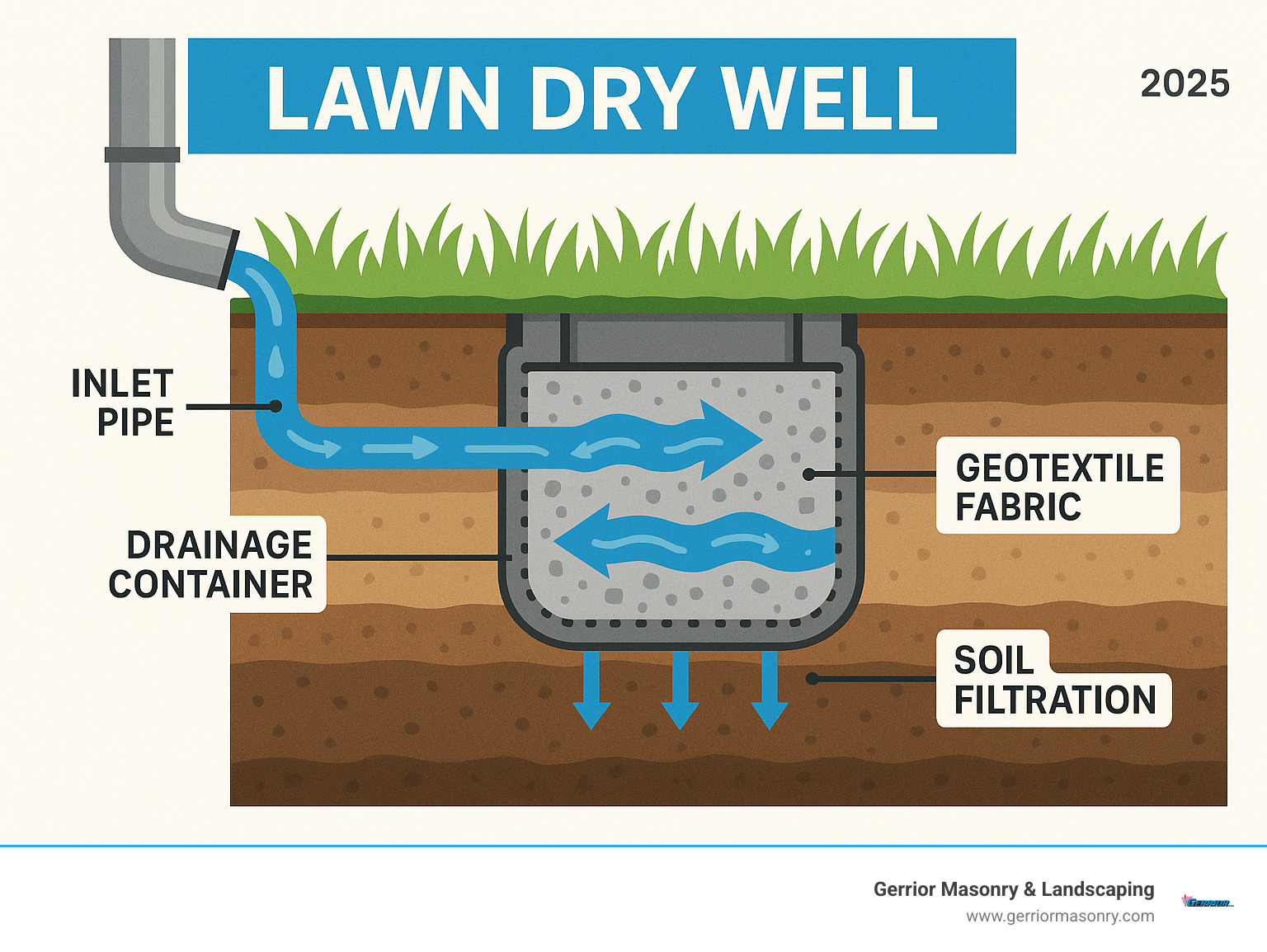
What is a Dry Well?
A dry well (also known as a soak pit) is an underground structure designed to manage stormwater runoff. It acts as a hidden reservoir, collecting excess water from downspouts or low spots on your lawn. Instead of pooling on the surface, water flows into the dry well and gradually seeps into the surrounding subsoil. This mimics nature’s filtration process, keeping your lawn dry and reducing the load on municipal storm drains. Once installed, a dry well is covered with soil and grass, making it completely invisible.
Why Proper Drainage is Crucial for Your Property
Effective drainage is a critical component of property maintenance. Here’s why it’s indispensable:
- Prevents Foundation Damage: Standing water creates pressure on basement walls, leading to cracks and leaks. Proper drainage is key to preventing expensive structural repairs. Learn more about More info about foundation repair.
- Protects Landscaping: Waterlogged soil deprives plant roots of oxygen, causing root rot and killing your lawn and garden.
- Avoids Soil Erosion: Uncontrolled runoff washes away valuable topsoil. Dry wells contain this flow, preserving your landscape’s integrity.
- Improves Lawn Health: A soggy lawn is prone to fungal diseases and pests like mosquitoes. Good drainage promotes a lush, healthy lawn.
- Increases Property Usability: Proper drainage transforms wet, muddy areas into functional spaces for recreation, gardening, or entertaining.
Everything You Need to Know About a Lawn Dry Well
This section covers the practical details of choosing, planning, and installing the right lawn dry well for your property.
Dry Well vs. French Drain: Which is Right for You?
Homeowners often ask whether they need a dry well or a French drain. The answer depends on your specific water problem. A dry well is a standalone pit that collects and disperses water in one spot, while a French drain is a sloped trench that redirects water along a path.
| Feature | Dry Well | French Drain |
|---|---|---|
| Purpose | Collects and disperses concentrated water into the ground | Collects and redirects water away along a path |
| Best For | Downspouts, isolated soggy spots, low areas | Foundation perimeters, long stretches of saturated ground |
| Water Flow | Vertical infiltration | Horizontal diversion |
| Soil Type | Requires good soil percolation | Can work in less permeable soils by moving water away |
| Installation | Typically a single, deeper pit | Long, shallower trench with perforated pipe |
| Visibility | Can be completely hidden | May have visible gravel trench or catch basins |
| Maintenance | Minimal, primarily preventing clogs | Requires periodic cleaning of pipes/catch basins |
A dry well is ideal for a specific point source of water, like a downspout or a low spot in the yard. A French drain is better for intercepting water spread over a larger area, like along a foundation. In Massachusetts, where clay soil is common, a French drain can be used to channel water to a dry well located in an area with better soil absorption. For more details, see our guide on drainage systems.
Planning Your Lawn Dry Well Installation
Proper planning is the key to a long-lasting dry well. Here are the critical steps:
- Sizing: The dry well must be large enough to handle the water volume from the intended drainage area (e.g., a roof section or patio). A common rule of thumb is to size it to hold at least one inch of rainfall from that area.
- Location: Place the dry well at least 10 feet from your home’s foundation to prevent water damage and at least 3 feet from property lines.
- Percolation Test: This is a non-negotiable step. Dig a test hole (approx. 8 inches wide, 4 feet deep) and time how long it takes for a set amount of water to drop one inch. Fast drainage (under 3 minutes per inch) is excellent; slow drainage may mean a dry well isn’t suitable or needs a modified design.
- Soil Type: Sandy soils drain quickly, while heavy clay soils drain slowly. Clay may require a deeper dry well to reach more permeable soil layers. Learn more about soil health and aeration.
- Permits and Safety: Check with your local building department for any regulations. Crucially, always call 811 before you dig to locate underground utility lines. It’s free, required by law, and prevents dangerous accidents. For a DIY guide, This Old House offers helpful tips on how to install a dry well.
Step-by-Step Installation Guide
Installing a lawn dry well involves careful work, but follows a clear process.
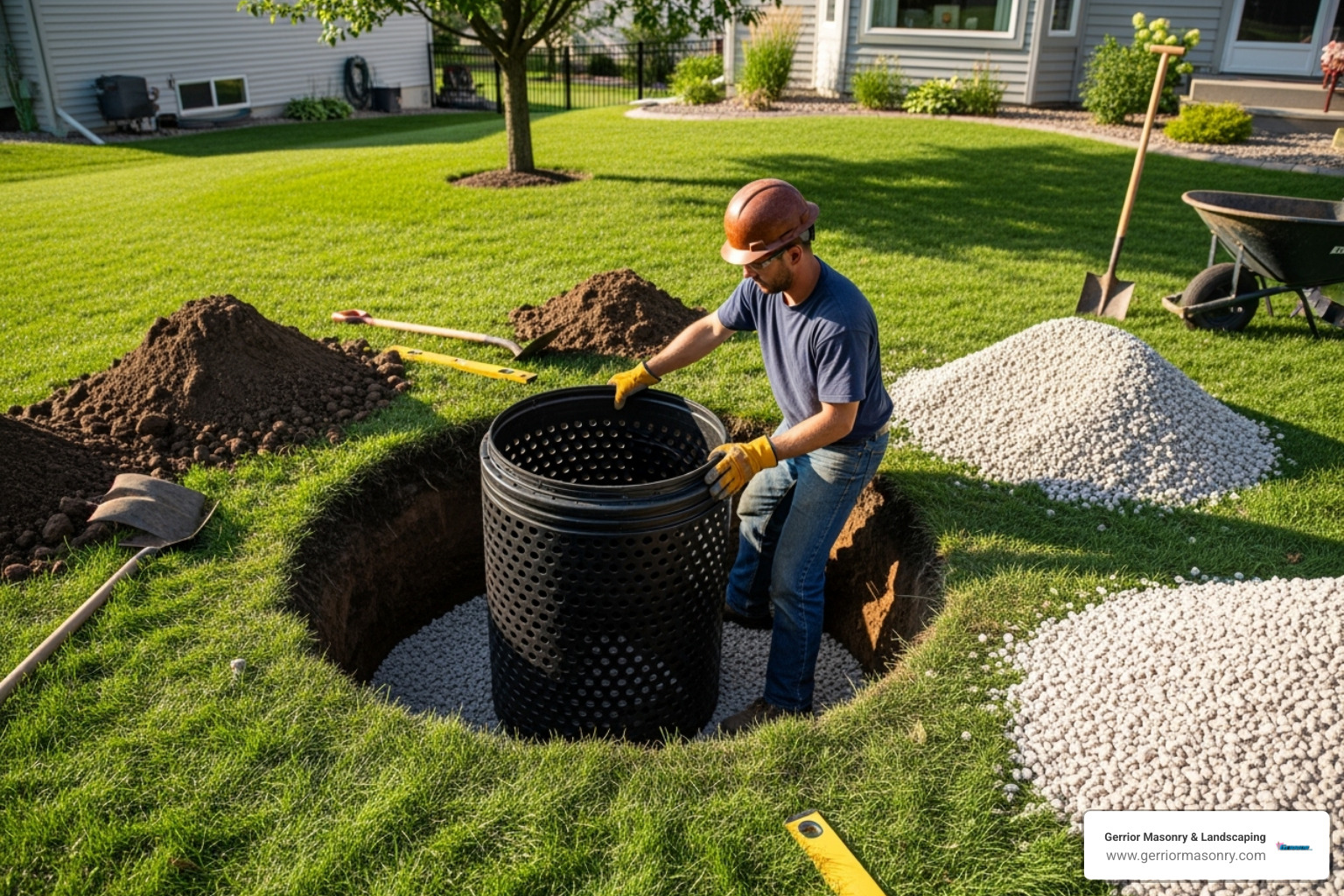
- Excavation: Dig a pit to the required dimensions (typically 4x4x4 feet) and a trench from the water source to the pit, ensuring a downward slope for gravity flow. This is heavy labor; professional excavation services can handle it efficiently.
- Gather Materials: You’ll need a perforated container or washed ¾-inch stone, non-woven geotextile fabric, a 4-inch PVC inlet pipe, and additional gravel.
- Line the Pit: Line the entire pit with geotextile fabric, leaving enough excess to fold over the top. This is critical to prevent soil from clogging the system.
- Install the System: Place a 6-inch layer of gravel at the bottom, then set your perforated container or begin filling with gravel. Connect the inlet pipe securely.
- Backfill: Fill the area around and above the container with washed gravel, leaving about 8-12 inches at the top.
- Cover and Finish: Fold the excess geotextile fabric over the top of the gravel, then cover with topsoil and seed or sod to blend it into your lawn.
Understanding the Costs and Maintenance of a Lawn Dry Well
A lawn dry well is a valuable investment. Here’s what to expect for costs and upkeep.
- Installation Costs: Costs vary by size and complexity. A DIY project might run $300-$800 for materials. Professional installation typically ranges from $1,500 to $8,000 or more for complex jobs. These are average costs based on internet data and not actual quotes from Gerrior Masonry & Landscaping.
- Potential Problems: The most common issue is clogging from silt and debris, which is prevented by using quality geotextile fabric. Poor soil percolation can also lead to failure if the site wasn’t tested properly.
- Maintenance Needs: A well-built dry well is virtually maintenance-free. The best preventative step is to install gutter guards if the dry well is connected to downspouts to keep leaves and debris out. Periodically check the area for slow drainage after heavy rain. If your system uses a sump pump, it will require regular testing and winterization.
Reclaim Your Yard with a Professional Drainage Solution
A lawn dry well is one of the most effective, low-maintenance solutions for managing standing water from downspouts or persistent low spots. A properly installed system works silently underground, using gravity to transform a waterlogged yard into a functional, beautiful space while protecting your property.
Key Benefits Summarized
Installing a lawn dry well offers significant advantages beyond just eliminating puddles:
- Eco-Friendly Stormwater Management: Reduces runoff into municipal storm systems and helps prevent local flooding by dispersing water naturally into the ground.
- Groundwater Recharge: Replenishes local groundwater aquifers, a vital benefit for the environment.
- Soil Erosion Prevention: Captures and controls runoff before it can wash away valuable topsoil and plantings.
- Foundation Protection: Directs water away from your home’s foundation, preventing costly hydrostatic pressure damage, cracks, and leaks.
- A Healthier, Usable Lawn: Eliminates soggy spots, creating ideal conditions for robust grass growth and making your entire yard enjoyable. This is a key part of our comprehensive landscaping services.
When to Call the Experts
While a dry well seems simple, professional expertise is crucial for a successful, long-lasting solution, especially in certain situations:
- Complex Drainage Issues: If you have widespread water problems, multiple runoff sources, or persistent flooding, a professional assessment is needed to design a comprehensive solution.
- Heavy Clay Soil: The poor drainage of clay soil, common in Massachusetts, often requires modified designs or alternative approaches that an expert can identify.
- High Water Table: Installing a dry well in an area with a high water table is ineffective without specialized solutions.
- Proper Sizing and Location: Experience is key to correctly sizing a system for your needs and placing it for maximum effectiveness while adhering to safety setbacks from foundations and property lines.
For a professional assessment and installation of your drainage system, contact the experts at Gerrior Masonry & Landscaping. We are based in Woburn, MA, and proudly serve the communities of Middlesex and Essex County, Massachusetts. With over 30 years of experience, we have the expertise to solve your drainage problems and protect your property investment.
Contact us for drainage solutions
