
Your First Line of Defense: Understanding Chimney Flashing
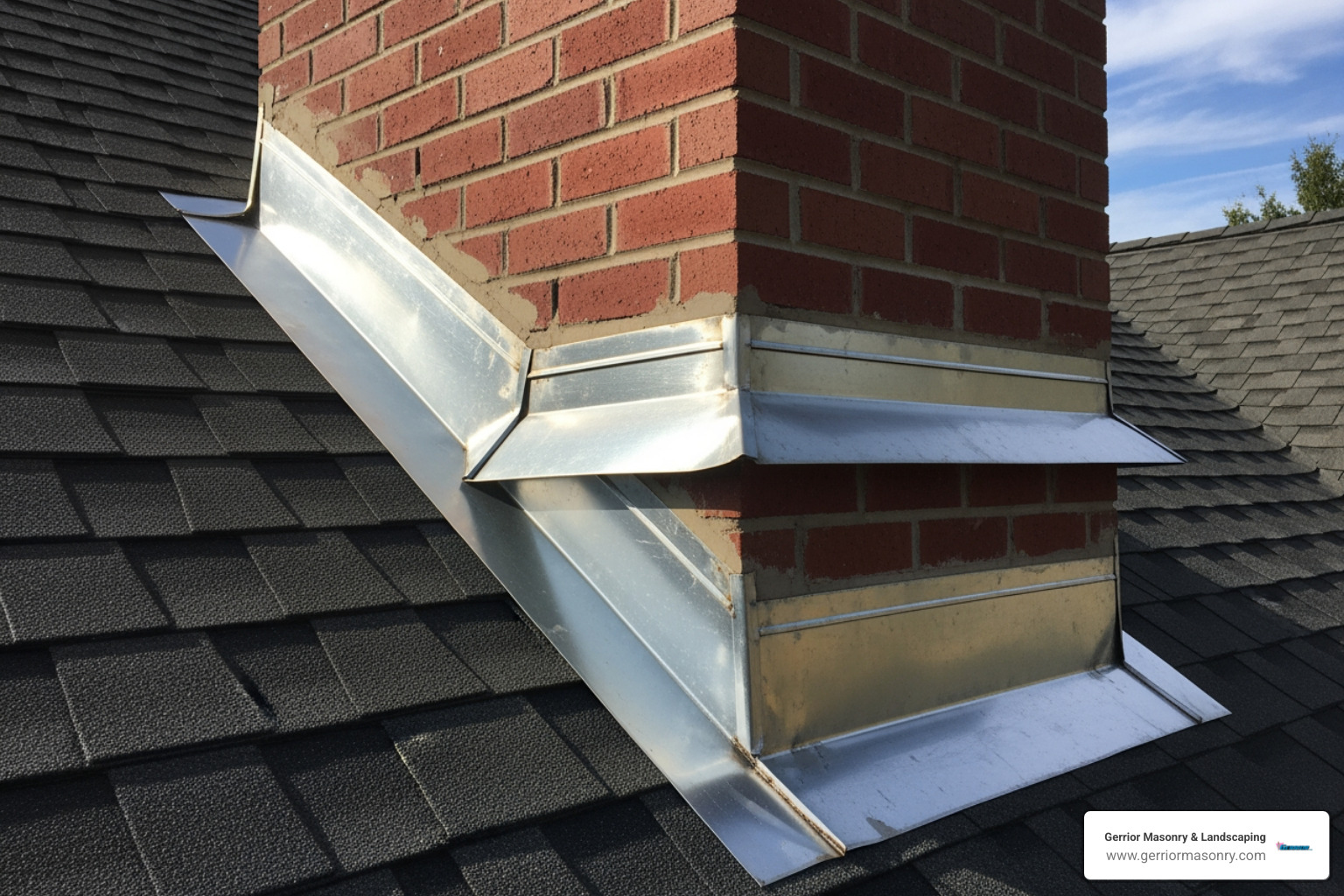
Chimney flashing repair services are essential for protecting your home from costly water damage. Leaks near your chimney often point to flashing failure, a problem that can escalate from minor stains to major structural issues.
Quick Answer: What to Expect from Chimney Flashing Repair Services
| Service Component | What It Includes |
|---|---|
| Inspection | Thorough assessment of flashing condition and leak sources |
| Repair or Replacement | Removal of damaged flashing, roof deck repair if needed, installation of new waterproof materials |
| Materials Used | Aluminum, galvanized steel, or copper flashing with high-quality sealants |
| Average Cost | $700-$4,500+ (based on internet data; not Gerrior Masonry pricing) |
| Timeframe | Typically 1-2 days depending on damage extent |
| Warranty | Professional services include workmanship guarantees |
Chimney flashing is the metal seal where your chimney meets the roof, acting as a critical defense against water. When it fails, water can seep in, causing rotted wood, mold growth, and crumbling masonry that costs thousands to repair. Fortunately, these problems are preventable with early detection.
I’m Joe Gerrior, owner of Gerrior Masonry & Landscape Construction Corp. With over 34 years of experience, we’ve protected countless Massachusetts homes with expert *chimney flashing repair services.* This guide covers how to identify, repair, and prevent flashing failures.
Similar topics to chimney flashing repair services:
What is Chimney Flashing and Why is it Essential?
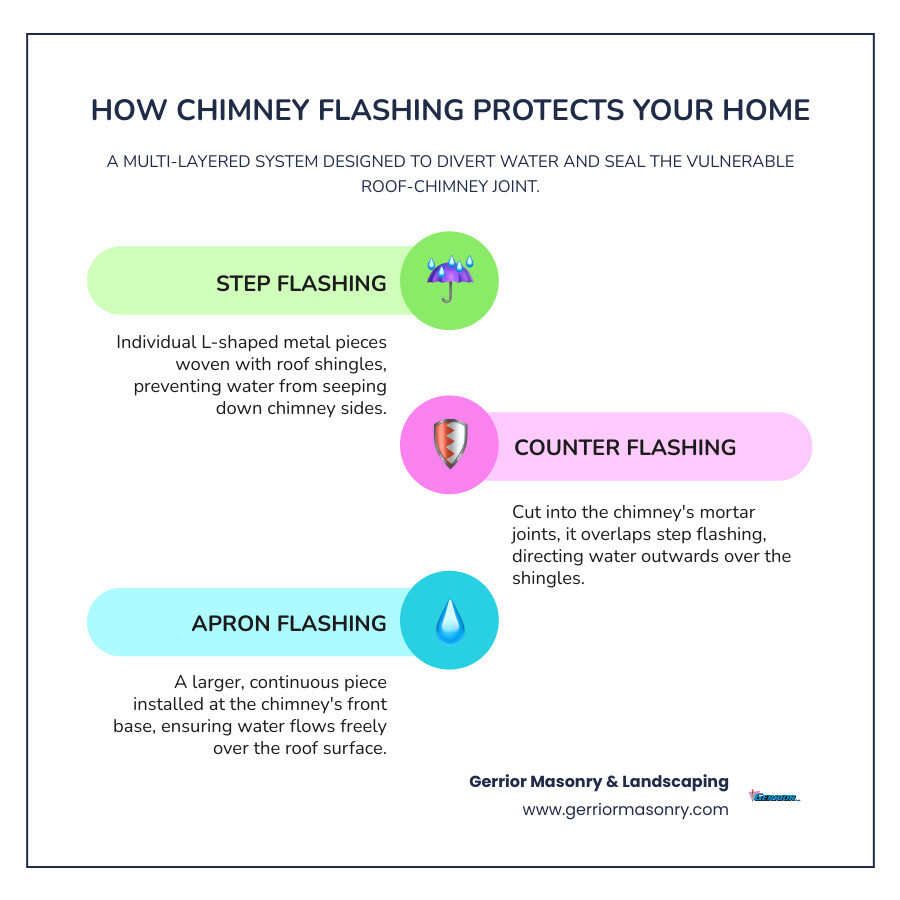
Chimney flashing is a waterproofing system that protects the vulnerable joint where the chimney meets the roof. It’s a multi-layered barrier made of durable metals like aluminum or copper that channels water away from the chimney base and into the gutters. Without it, water would seep into your home, causing significant damage.
The system includes several key parts:
- Step Flashing: L-shaped metal pieces woven with roof shingles to prevent water from running down the chimney’s sides.
- Counter Flashing: Installed over the step flashing and embedded into a groove (called a reglet) cut into the chimney’s mortar, this layer directs water over the step flashing, preventing it from seeping in from above.
- Apron Flashing: A continuous piece of metal at the front and back of the chimney base.
- Saddle Flashing (or Cricket): Required by most building codes for chimneys wider than 30 inches, this small, peaked roof on the high side of a wide chimney actively diverts water and debris, preventing damaging pile-ups of snow and ice.
Properly installed flashing is crucial for the long-term health of your home. For more details on chimney care, visit our page on More info about chimney repairs.
Common Signs of Flashing Failure
Catching flashing issues early is key. Be on the lookout for these warning signs:
- Interior Water Stains: Yellow or brown stains on ceilings or walls near the chimney.
- Visible Rust: Rust on the flashing indicates the material is deteriorating.
- Cracks and Gaps: Any visible openings or loose sections are direct entry points for water.
- Loose or Missing Shingles: Damaged shingles near the chimney can compromise the flashing system.
- Attic Dampness or Musty Odors: A musty smell in the attic suggests a slow leak and potential mold growth.
- Deteriorating Bricks: Discolored bricks or crumbling mortar can be caused by water seeping behind the flashing.
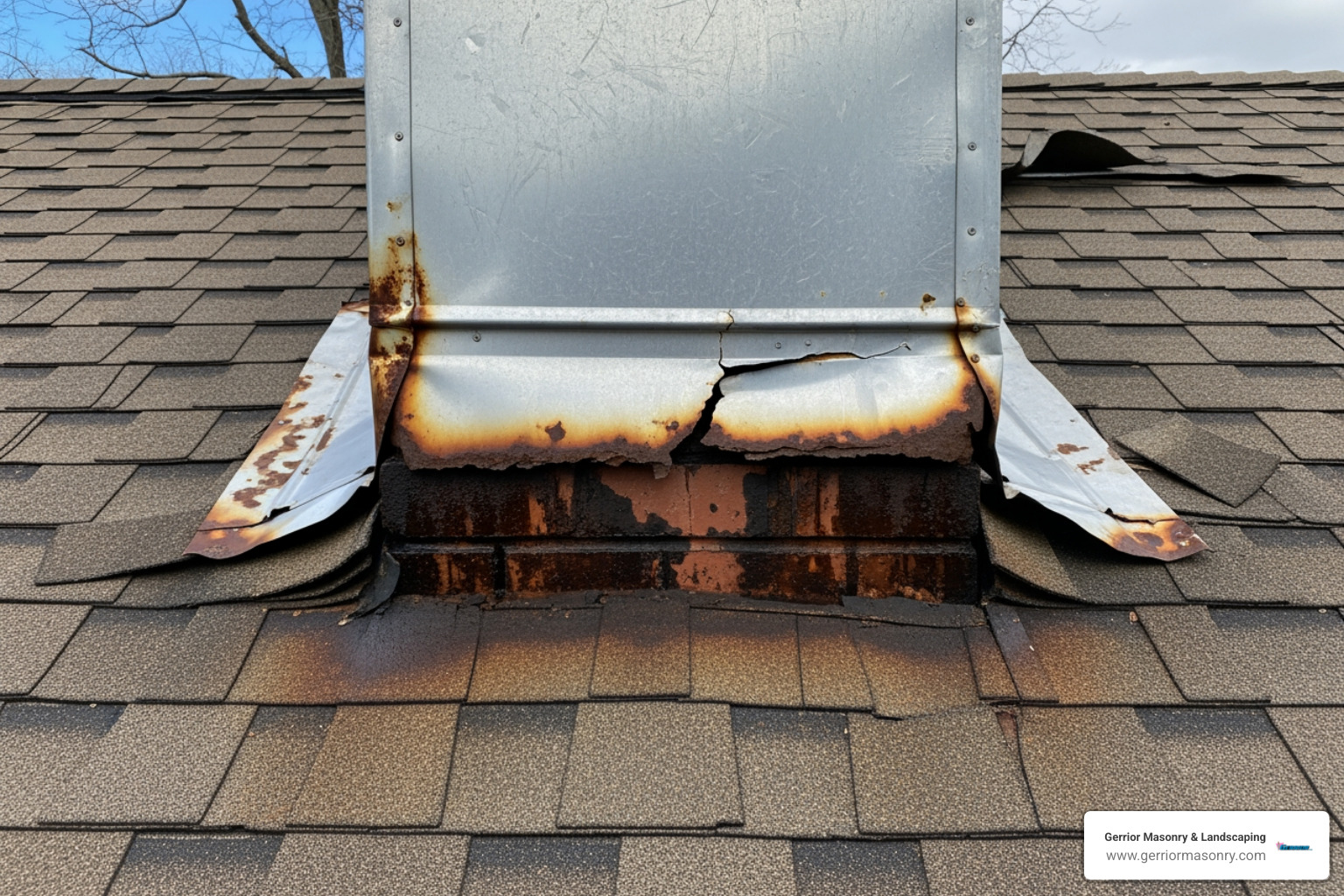
If you spot any of these signs, it’s time to consider professional chimney flashing repair services.
The Dangers of Neglecting a Chimney Leak
Ignoring a leaking chimney can lead to catastrophic and expensive problems. Here’s what can happen if you delay repairs:
- Roof Rot and Structural Decay: Water infiltration leads to rot in the roof decking, sheathing, and even structural supports like rafters. This decay weakens your home’s structure and can lead to much more complex and expensive repairs down the line.
- Mold and Mildew Growth: Persistent moisture creates a breeding ground for mold, which poses significant health hazards.
- Masonry Damage: In cold climates, water absorbed by bricks can freeze and expand. This freeze-thaw cycle forces the brick faces and mortar to crack and pop off, a process called spalling, which can eventually compromise the chimney’s stability.
- Interior Damage: Leaks can ruin drywall, paint, insulation, and flooring throughout your home.
The cost to repair flashing is minimal compared to the extensive damage that can result from neglect. Addressing issues proactively with chimney flashing repair services is a wise investment. For more on protecting your home’s foundation, see our guide on More info on foundation repair.
A Homeowner’s Guide to Chimney Flashing Repair Services
When facing chimney flashing issues, homeowners must decide between a DIY fix and hiring an expert. We’ll break down the professional process, materials, and costs to help you make an informed choice.
The Professional Repair and Replacement Process
Professional chimney flashing repair services follow a systematic process for lasting protection:
- Thorough Inspection: Technicians perform a comprehensive assessment of the chimney, roof, and flashing to pinpoint the exact source of the leak. This often involves more than a visual check; technicians may perform a controlled water test or use moisture meters to trace the exact path of the leak from the outside in, ensuring the true source is found.
- Old Material Removal: Damaged flashing, old sealant, and any compromised materials are carefully removed to create a clean surface.
- Roof Deck Repair (If Needed): Any rotted or deteriorated wood on the roof deck is repaired to ensure a solid foundation for the new flashing.
- New Flashing Installation: A new, multi-layered system is expertly installed. This process starts with a self-adhering ice and water shield applied directly to the roof deck as a final backup layer of protection. Then, the base flashing, step flashing woven with shingles, and counter flashing are meticulously set into the chimney’s mortar joints for a completely integrated, watertight seal.
- Watertight Sealing: All seams and edges are sealed with high-quality, durable caulk to prevent any water penetration.
- Final Quality Check: A final inspection, sometimes including a water test, ensures the repair is complete and ready to withstand the elements.
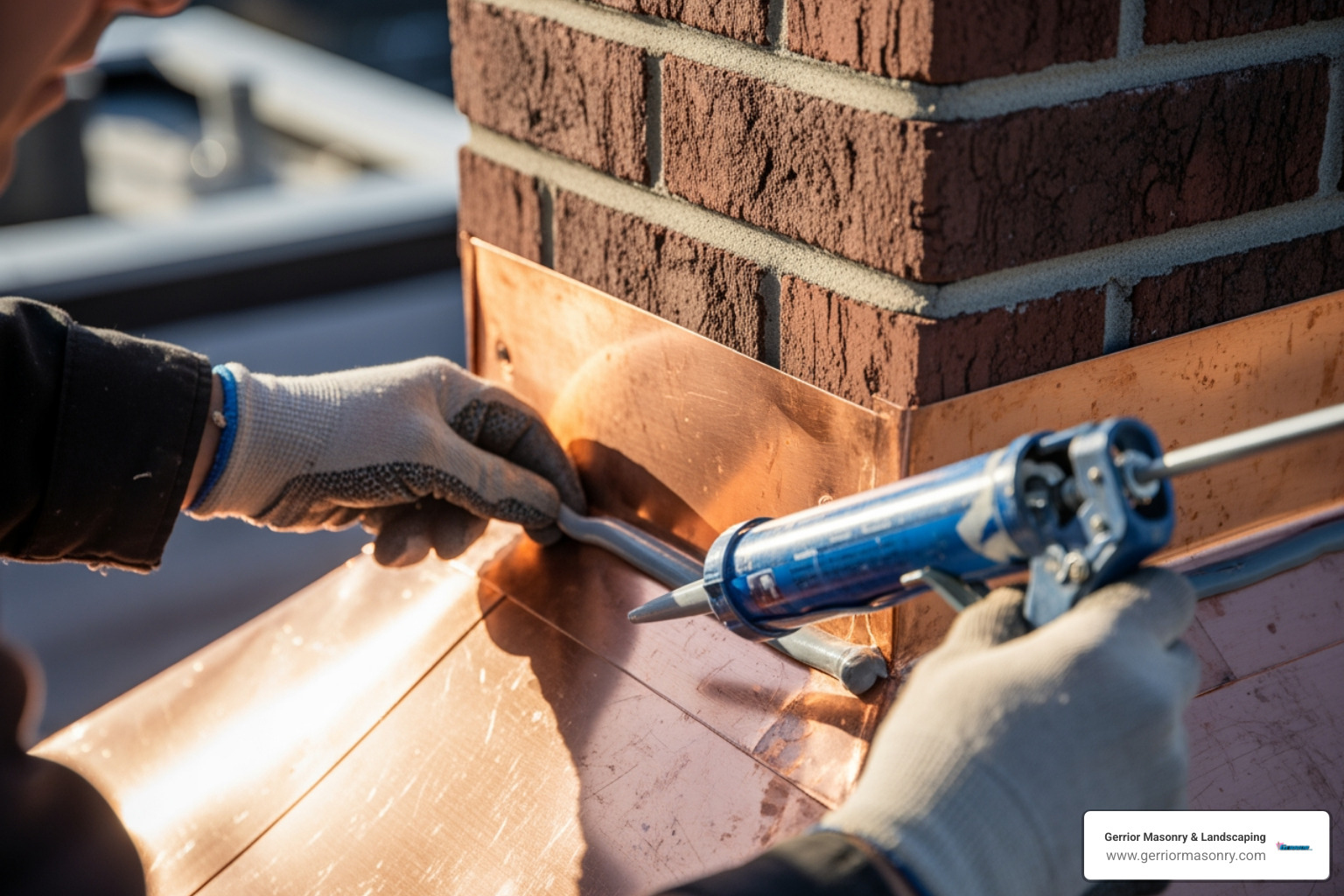
Companies that specialize in chimney flashing repair services include chimney specialists, roofers, and masonry contractors like us. With over 34 years of experience, we understand the complex relationship between your chimney and roof.
Flashing Materials, Lifespan, and Cost Considerations
The material used for your flashing affects its durability, lifespan, and cost. Here are some common options:
- Aluminum: Affordable and rust-resistant, but can be dented and may react with fresh mortar.
- Galvanized Steel: Economical and strong, but its protective coating can crack, leading to rust.
- Copper: Highly durable, corrosion-resistant, and aesthetically pleasing, but more expensive.
- Stainless Steel: Offers excellent durability and corrosion resistance at a higher price point than steel or aluminum.
To better understand how flashing works as part of an overall weatherproofing system, you can also review general building flashing principles on flashing (weatherproofing)).
Properly installed, high-quality flashing can last up to 30 years. The cost of chimney flashing repair services varies based on damage extent, materials, and chimney complexity. Based on internet data, professional repairs typically range from $700 to $1,500, but complex jobs with extensive damage can exceed $4,500. This is an average based on internet data and not actual costs for Gerrior Masonry services. Minor resealing might start around $200, while DIY material costs average $100-$200.
For more information on ensuring your home is protected from the elements, you might find our insights on weatherproofing techniques helpful.
DIY vs. Hiring an Expert for Chimney Flashing Repair Services
While a DIY approach to chimney flashing repair services might seem to save money, it comes with significant risks that often make professional help the wiser choice.
DIY Risks:
- Safety Hazards: Working on a roof is dangerous. Falls and injuries from handling sharp metal are serious risks without proper safety gear and experience.
- Improper Installation: Flashing requires precise, overlapping layers. Common mistakes like using the wrong type of sealant, relying on face-nailing that creates new holes, or failing to properly embed counter-flashing into a mortar joint can actually trap water or create new leaks, making the original problem much worse.
- Voiding Warranties: DIY roof repairs can void existing warranties on your roofing materials.
Benefits of Professional Services:
Hiring a professional for chimney flashing repair services offers numerous advantages:
- Expertise and Experience: Our team has the specialized knowledge to diagnose complex leaks and perform precise, code-compliant repairs.
- Proper Tools and Materials: We use professional-grade tools and high-quality materials for a durable, long-lasting repair.
- Safety and Insurance: Professionals are trained in roof safety and are insured, protecting you from liability.
- Guaranteed Workmanship: Reputable contractors offer warranties, giving you peace of mind that the job is done right.
When selecting a contractor, ensure they are licensed and insured, check their experience and reviews, get multiple detailed quotes, and ask about warranties. For more on professional masonry solutions, explore our More info on masonry services.
Protect Your Investment: Next Steps and Professional Help
Your chimney flashing is a critical component protecting your home from the elements. Neglecting it can lead to severe structural damage, mold, and costly repairs. The best way to avoid these issues is through proactive maintenance and timely intervention. Proactive maintenance is always more cost-effective than reactive repairs. This guide has highlighted the key signs of flashing failure, the dangers of delaying repairs, and the meticulous process required for a durable solution.
We recommend annual professional inspections to catch minor wear and tear before they become major problems. Addressing issues early with expert chimney flashing repair services is the most effective way to protect your investment and ensure your flashing is ready for harsh Massachusetts weather.
At Gerrior Masonry & Landscape Construction, our skilled team brings over 34 years of experience to every project. As a local business serving Middlesex and Essex County, we understand the toll that harsh New England weather takes on chimneys. Our expertise is not just in masonry, but in creating complete waterproofing systems designed to withstand freeze-thaw cycles and heavy precipitation. Overseen by owner Joe Gerrior, we deliver durable, high-quality solutions custom to our local climate, protecting your home for years to come.
Don’t wait for a small leak to become a major problem. If you suspect your chimney flashing is compromised, we’re here to help. Gerrior Masonry & Landscape Construction is based in Woburn, MA, and proudly services Middlesex and Essex County, Massachusetts. Contact us for expert chimney repair services today to keep your home safe and dry.
