What Is a Basement Storm Door — and Which Type Is Right for You?
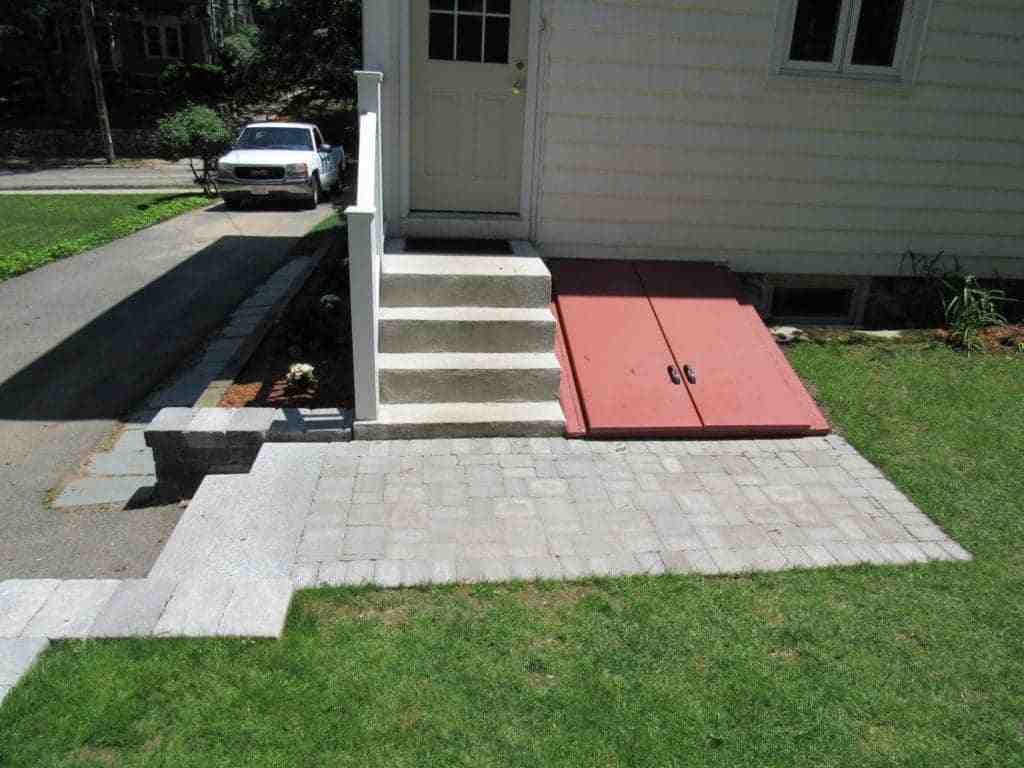
A basement storm door is an exterior door that covers the stairwell leading down into your basement or cellar from outside your home. These units are designed to provide a secure, weather-tight seal over the exterior stairwell, protecting your home’s foundation and interior from the elements. Historically, these were simple wooden “slapper” doors that homeowners had to build themselves, but modern engineering has transformed them into sophisticated, high-performance entry systems. Here’s a quick breakdown of your main options:
| Door Type | Best For | Common Material |
|---|---|---|
| Angled/sloped cellar door | Flat foundations | Steel, polyethylene |
| Flat (sloped wall) door | Sloped foundations | Steel |
| Sidewalk door | Ground-level access | Aluminum, diamond plate |
| Interior basement entry door | Bottom of cellar stairs | Insulated steel |
These doors go by many names depending on where you grew up — cellar door, bulkhead door, Bilco door, or simply hatchway. In parts of New England and the Mid-Atlantic, some people even call them storm doors, since they were originally built to protect basement access during severe weather and heavy snowmelt. In older coastal towns, you might even hear them referred to as “grade-level entries.”
Whatever you call them, they serve three core purposes:
- Security — keeping unauthorized entry out with heavy-duty locking mechanisms.
- Weather resistance — blocking rain, snow, and wind from flooding your stairwell and causing foundation rot.
- Emergency egress — meeting building code requirements for finished basement living spaces (per IRC 2021), ensuring a safe exit path.
I’m Joe Gerrior, owner of Gerrior Masonry & Landscape Construction, and over 34 years of working on Massachusetts homes I’ve replaced dozens of aging bulkheads and installed new basement storm doors across a wide range of foundation types. From the historic stone foundations of Salem to the modern poured concrete of Woburn, I’ve seen how the right door can transform a damp cellar into a dry, usable space. Understanding your options before you buy can save you serious time and money.
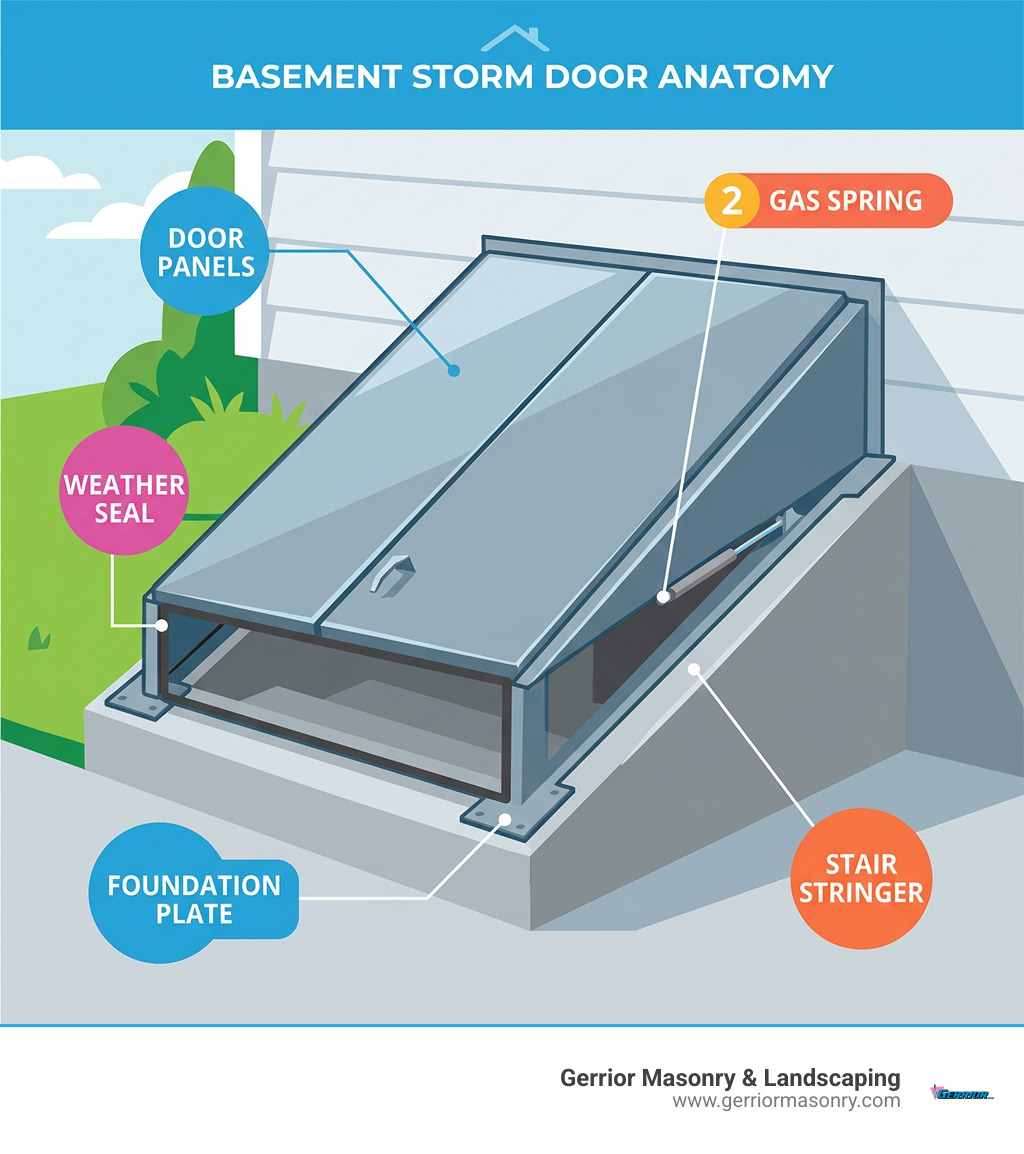
Key terms for basement storm door:
Comparing Basement Storm Door Materials and Designs
When you start looking for a new basement storm door, the first thing you’ll notice is that they aren’t “one size fits all.” Your choice depends heavily on how your house was built and the specific geometry of your exterior stairwell. If your foundation is flat at the ground level, you’ll likely need an angled door to allow for proper water runoff. If your foundation walls already slope upward (common in many older homes in Andover or Lexington), a flat door that sits on those sloped walls is the way to go. This design ensures that gravity does the work of shedding water away from the house.
Choosing the right material is just as critical as the design. We see everything from heavy-duty steel to modern high-tech plastics. Here is how the most common materials stack up in terms of longevity and performance:
| Feature | Steel | Aluminum | High-Density Polyethylene |
|---|---|---|---|
| Durability | Extremely High | High | High |
| Maintenance | Requires painting/priming | Low | Very Low |
| Weight | Heavy (needs gas springs) | Lightweight | Medium |
| Security | Maximum | High | Moderate |
| Rust Risk | Yes (if not coated) | No | No |
Beyond the doors themselves, you have to consider the “frame” components. Foundation plates are often necessary to provide a flat, level surface for the door to sit on if your masonry is uneven or crumbling. If your opening is deeper than a standard door length, door extensions can be added to bridge the gap and ensure a seamless fit. For those living in urban areas like Malden or Medford, sidewalk doors made of aluminum or diamond plate steel are designed to be flush with the ground and handle heavy foot traffic without buckling.
More info about basement access products
Benefits of a Steel Basement Storm Door
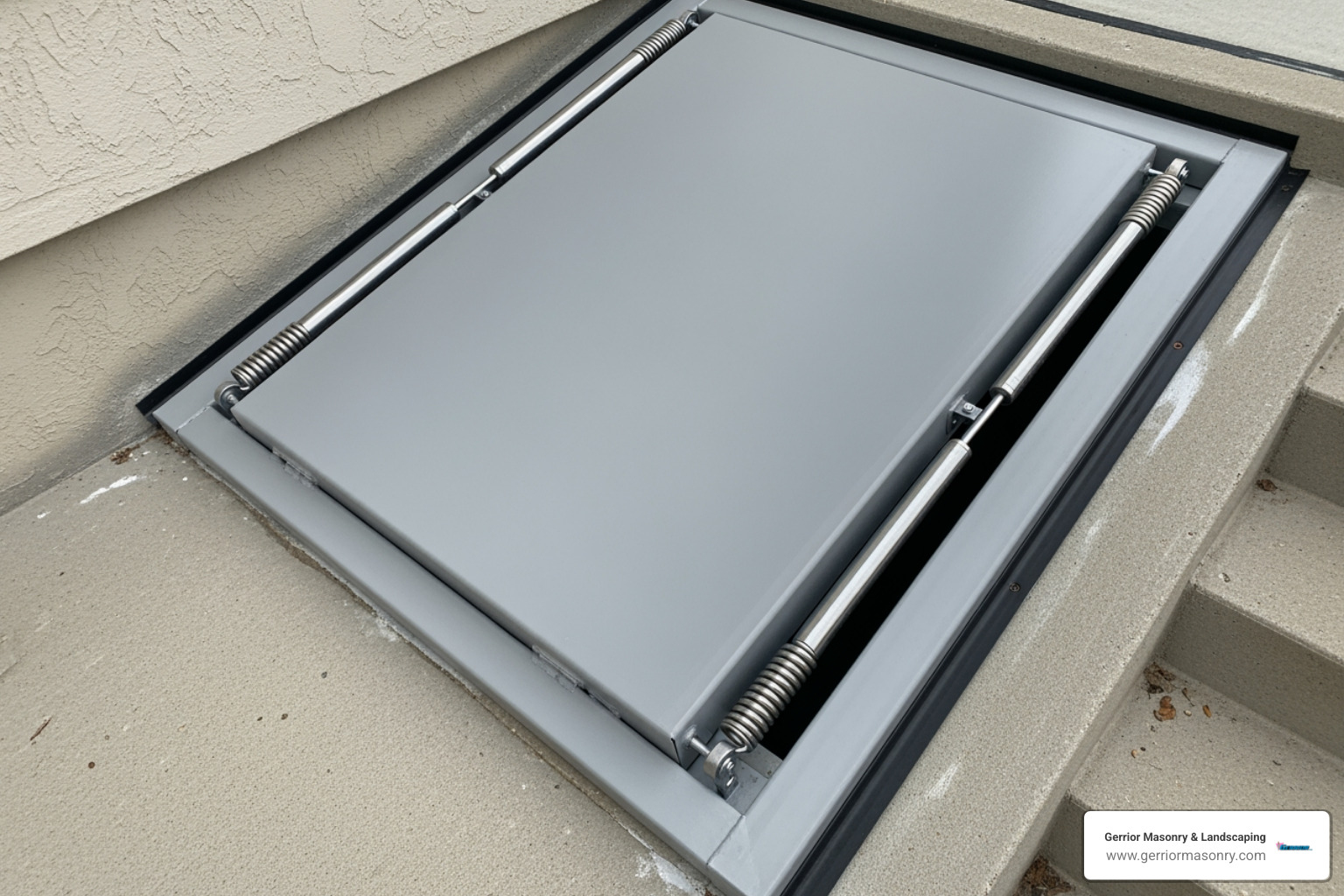
Steel remains the industry standard for a reason. If you want a “fortress” feel for your cellar, steel is the answer. Most homeowners we work with in Woburn and Winchester prefer steel because it offers the highest level of security against break-ins and can withstand the impact of falling branches or heavy snow loads.
Modern steel doors, like the Bilco Classic Series, often come with a factory-applied baked-on primer. This is a great starting point, but it does mean you (or your contractor) need to apply a high-quality finish coat of paint to protect it from the elements. If you want to skip the paintbrush entirely, you can opt for powder-coated finishes. These are superior to conventional paint because the coating is electrostatically applied and then cured under heat, offering incredible scratch resistance and a long-term warranty against flaking or peeling.
A high-quality steel basement storm door will feature:
- Rugged Construction: Heavy-gauge steel that won’t warp or twist over decades of use.
- Weather-tight Design: Overlapping flanges and side channels that shed water like a shingled roof, even in driving rain.
- Security: Internal locking mechanisms and slide bolts that are nearly impossible to tamper with from the outside.
More info about steel cellar doors
High-Density Polyethylene and Weatherproof Features
If you’re tired of worrying about rust or repainting every few years, high-density polyethylene (HDPE) is a fantastic alternative. Brands like the Bilco Ultra Series use this material to create doors that are virtually maintenance-free. They won’t rust, rot, or ever need painting. They often come in natural colors like “Driftwood” or “Sandstone” to blend in with your landscaping and home siding.
One of the coolest features of these modern doors is the use of gas springs. If you’ve ever struggled to lift a heavy old iron bulkhead door, you’ll appreciate these. They provide significant lift assistance, making the door easy to open with just one hand. More importantly, they act as a safety feature, preventing the door from slamming shut on your fingers or head during a gust of wind.
Weathertight seals are another major benefit of modern designs. HDPE doors and high-end steel models use sophisticated gasketing and weather stripping to keep out drafts and moisture. This is vital because poor drainage around basement doors is a major cause of interior mold and mildew. In fact, research shows that up to 70% of pollution in local aquifers and coastal areas is carried by storm-water runoff from impervious surfaces like those around basement entries. A well-sealed door helps keep that water out of your home and in the proper drainage channels.
Scientific research on cellar door finishes
Measuring for Your Basement Storm Door
Measuring is where most DIY projects go off the rails. If you’re off by even an inch, the door won’t be weathertight, and you’ll be inviting every spider and rodent in Middlesex County into your basement. To get the right fit, you need to measure the “clear opening” of the foundation.
To get the right fit, you need to measure:
- Length: The total distance from the house wall to the furthest edge of the foundation masonry.
- Width: The outside-to-outside measurement of the foundation opening (the “curb” width).
- Header Height: How high the door needs to sit against the house wall to clear the top step.
For sloped foundations, you also need to measure the angle of the masonry to ensure the door sits flush. If your home has a non-standard opening, don’t panic. While “quick-ship” doors come in standard sizes (like the popular 55 in. x 72 in. models), we can often order custom sizes or use extension kits to fit virtually any requirement.
More info on how to replace a bulkhead
Installation, Costs, and Maintenance Requirements
Installing a basement storm door is a bit more complex than hanging a standard front door. It involves precision anchoring into your concrete, brick, or stone foundation. This often requires foundation plates to ensure a secure, level fit and high-grade weather strips to block out the wind. If the foundation is uneven, we use specialized masonry saws to level the surface before the door is bolted down.
Beyond the door, you have to think about the stairs. If your old wooden stairs are rotting or pulling away from the wall, we often install stair stringers — these are the side supports for the steps — usually made of galvanized steel for longevity. These steel stringers are much more durable than wood and won’t rot in the damp environment of a cellar stairwell.
Safety is the most important part of the installation. According to the IRC 2021 building code, any finished basement living area must have an emergency egress. This means if you have a bedroom or a playroom in the basement, you must have a way out other than the main interior stairs. A properly installed bulkhead door satisfies this requirement, providing a clear, unobstructed path for your family to get out in case of a fire or other emergency.
More info about waterproof bulkhead doors
Average Costs for Replacement and Accessories
When budgeting for your project, it’s important to look at the full picture, including labor and site preparation. Based on general internet data, a new basement storm door can range anywhere from $50 to $2,500 depending on the material and size. Please keep in mind that these are average internet costs and do not reflect the specific project pricing for Gerrior Masonry & Landscaping, which includes professional installation and masonry repair.
Here is a wide look at what you might expect to pay for parts and units:
- Basic Primed Steel Units: $300 – $900 (requires DIY painting)
- High-End HDPE or Powder-Coated Units: $900 – $2,000+ (maintenance-free)
- Foundation Plates & Extensions: $150 – $500 (necessary for non-standard openings)
- Lock Kits & Weather Stripping: $50 – $200 (for added security and insulation)
- Full Professional Replacement: The high end can easily exceed $2,500 when you factor in masonry repair, new steel stairs, and premium materials.
More info on average cost to replace a bulkhead door
Maintenance Tips for Longevity
A little love goes a long way in making your door last for 30 years or more. If you have a primed steel door, check it every spring for chips in the paint. Rust is like a cold — if you catch it early, it’s easy to fix with a wire brush and some touch-up paint; if you wait, it becomes a structural problem that requires a full replacement.
Our top maintenance tips include:
- Lubrication: Keep the hinges and gas springs moving smoothly with a light silicone spray twice a year.
- Debris Removal: Sweep out leaves, pine needles, and dirt from the side channels. If water can’t drain out of the flanges, it will sit and cause corrosion.
- Seal Inspection: Check your weather stripping once a year. If it’s cracked or flattened, replace it to keep your basement dry and energy-efficient.
- Painting: For primed steel, use a high-quality exterior metal paint and avoid painting over the hinges.
More info about bulkhead door repairs
Professional Basement Entry Solutions
While some homeowners try to tackle a basement storm door replacement themselves, it often turns into a major headache when they realize the underlying masonry is cracked, leaking, or uneven. That’s where we come in. At Gerrior Masonry & Landscaping, we bring over 30 years of experience to every project, ensuring that the “bones” of your basement entry are as solid as the door itself.
We don’t just “slap a door on.” Our team ensures the foundation is solid, the drainage is handled, and the door is perfectly level. Because we specialize in masonry, we can repair any crumbling concrete or stone around the opening, ensuring your new door has a “fortress-like” seal. We also handle the installation of new steel stairs and proper flashing against the house siding. With owner oversight on every project, you can trust that the job is done right the first time, protecting your home for decades to come.
Upgrade your cellar with bulkhead replacement
Gerrior Masonry & Landscape Construction is based in Woburn, MA, and services Middlesex and Essex County, Massachusetts.