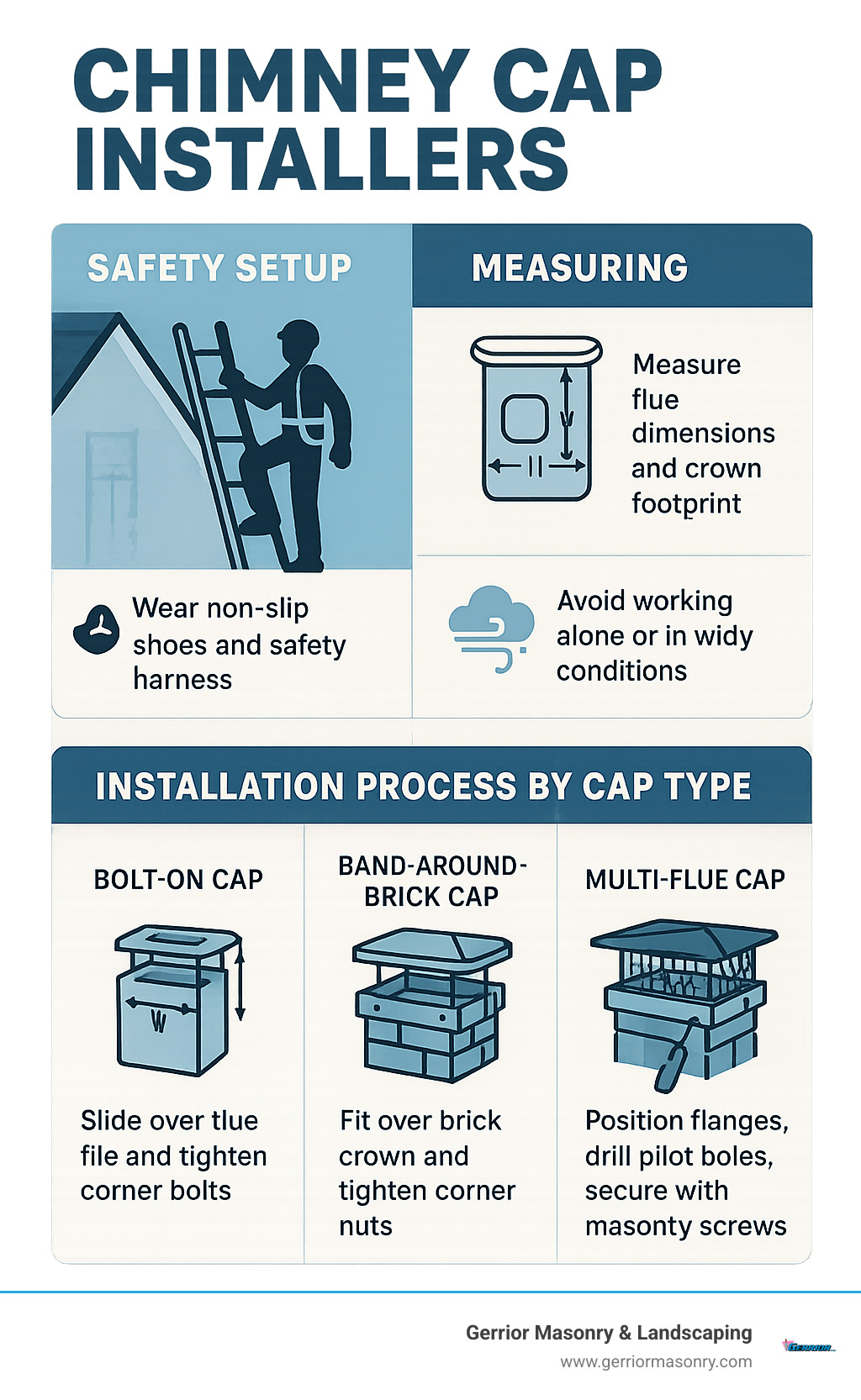
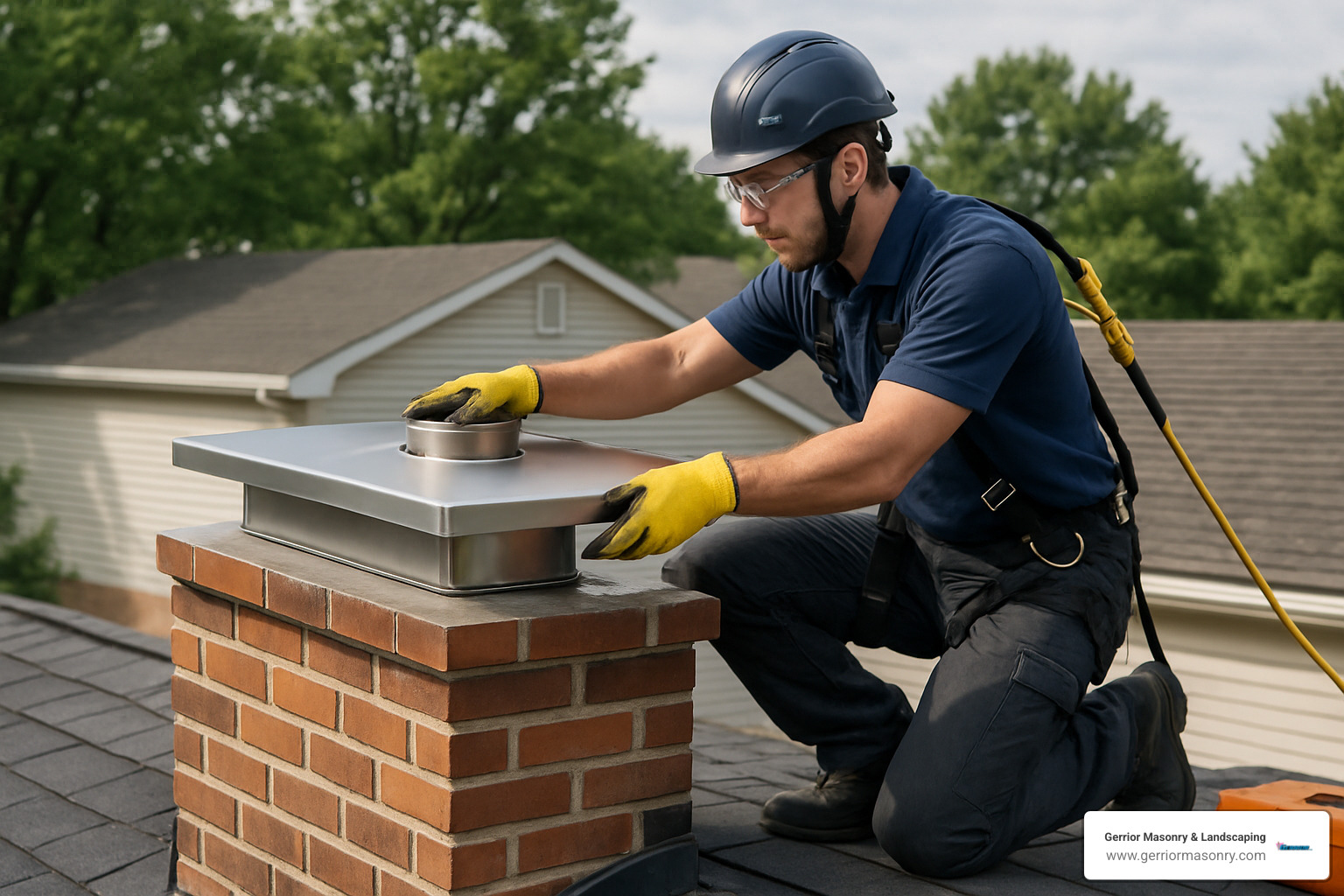
Average installation costs: roughly $300 (range $75–$1,000+ depending on roof pitch, cap size and material).* Time on-site: 1–3 hours for a standard cap.
Installing a cap sounds simple—until you’re 25 ft up with a tape measure, wind in your face, and seven cap styles to pick from. In 34 years of serving Massachusetts, I’ve seen DIY caps blow off in the first nor’easter because of one bad measurement.
The good news? A professionally installed cap lasts 3–25 years (material + climate decide the exact lifespan). This guide will help you choose whether to DIY or call the pros—so you can protect your chimney before the next storm hits.
*Internet averages, not Gerrior Masonry pricing.
What Is a Chimney Cap & Why Your Fireplace Needs One
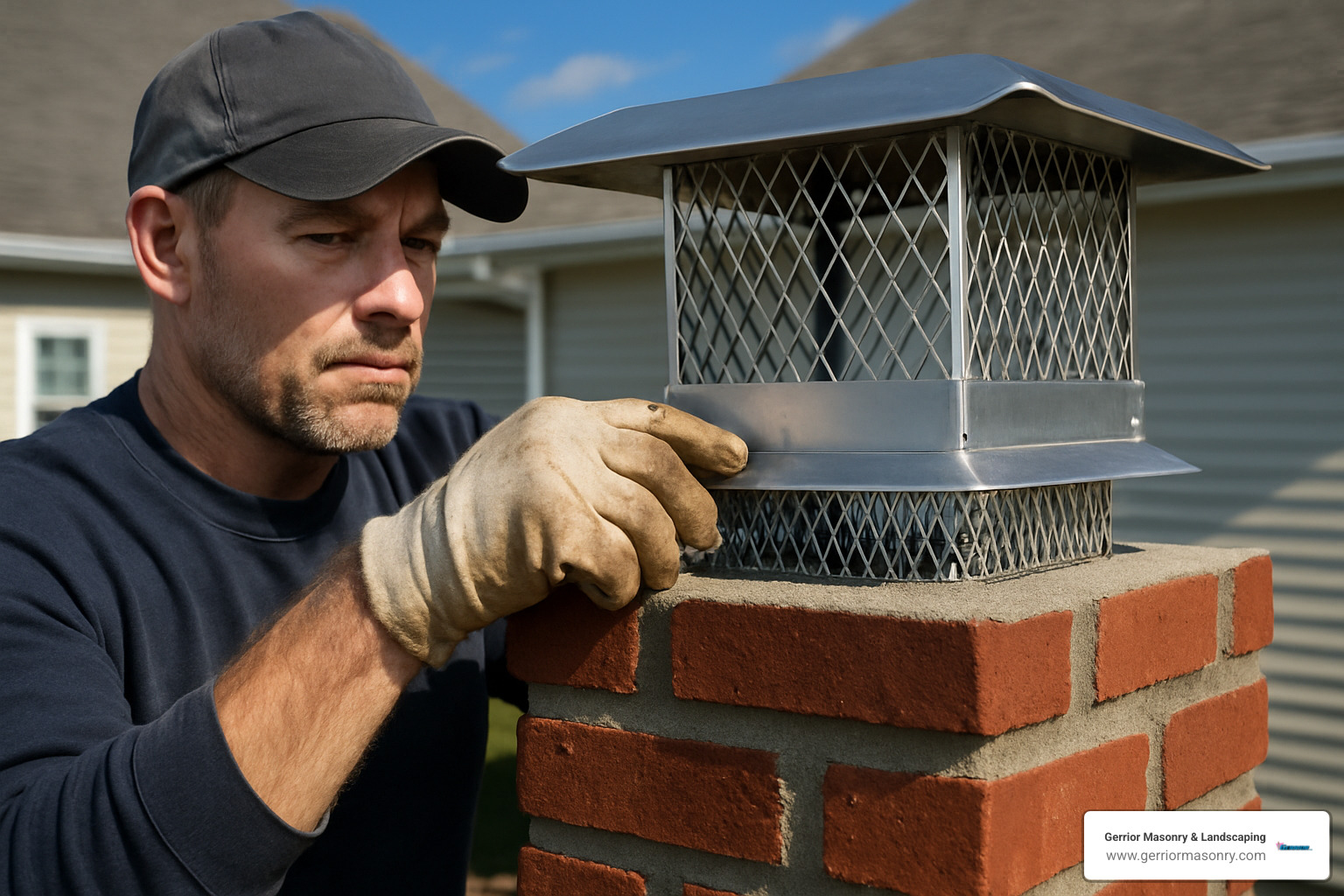
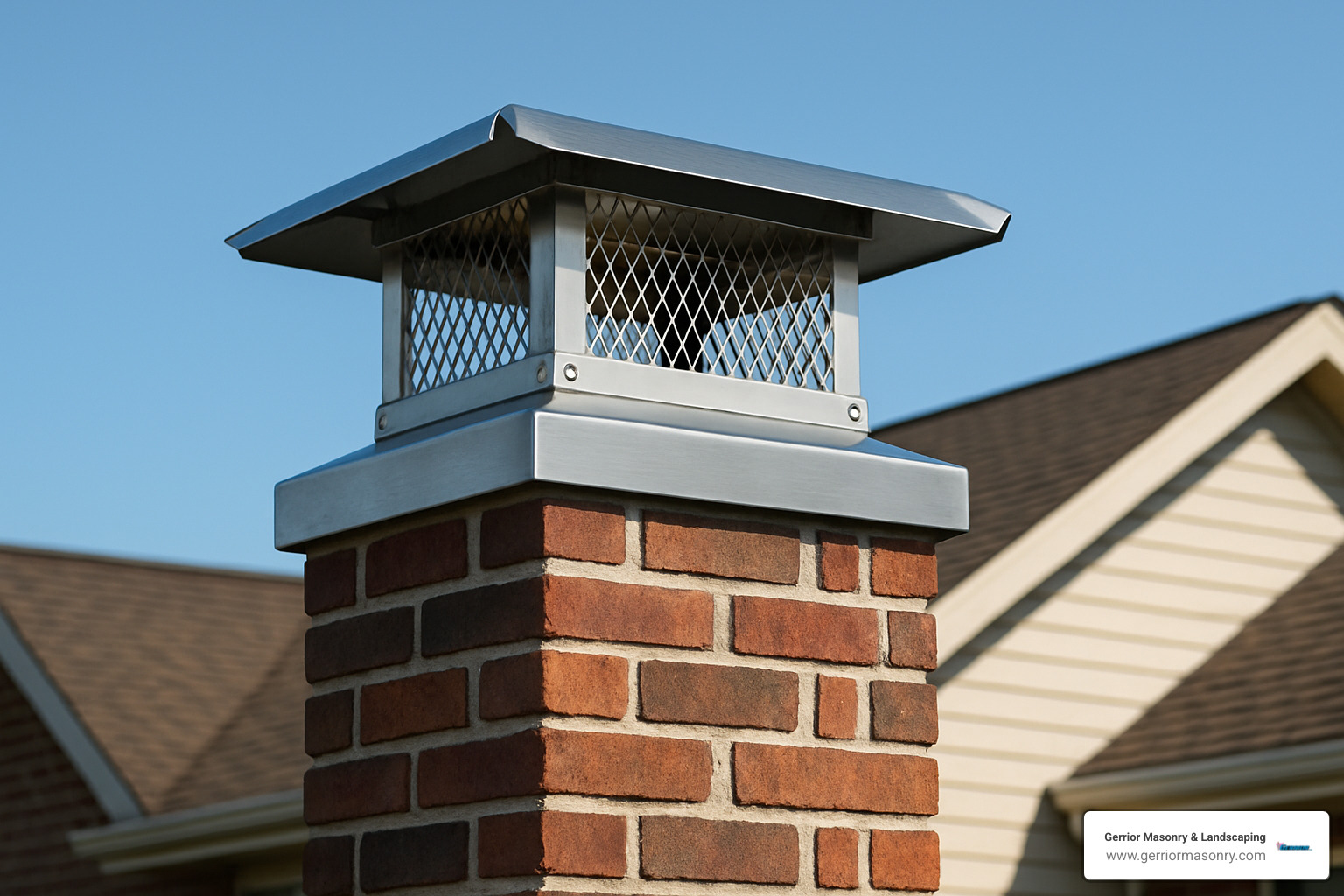
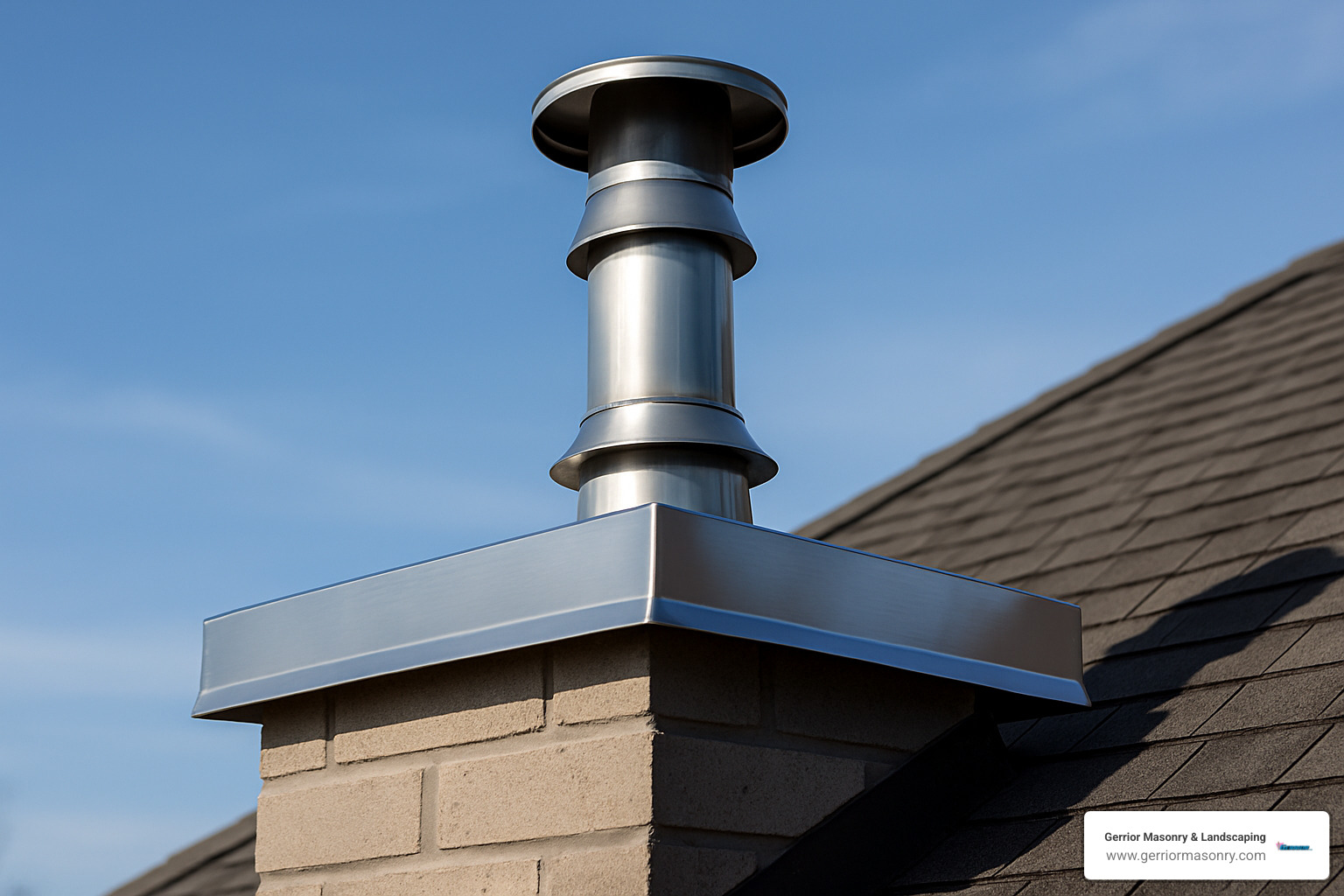
A chimney cap is a metal “hat” that covers the flue tile. The top plate blocks rain and snow, the mesh screens out sparks and animals, and the mounting system locks everything in place.
Key benefits at a glance
• Weather barrier: Keeps rain out, preventing brick spalling and rusted dampers.
• Spark arrestor: 5⁄8-in mesh stops embers from landing on your roof (per CSIA fire-safety research).
• Wildlife shield: No more raccoons, squirrels or birds setting up shop.
• Energy saver: Reduces heat loss and downdrafts.
• Structural protection: Extends crown and mortar life.
Risks of an Uncapped Chimney
• Water damage: Leads to efflorescence, liner cracks and mold.
• Animal nests: Block draft and create carbon-monoxide hazards.
• Higher repair bills: A $300 cap today beats a $5,000 crown rebuild tomorrow.
After decades in the field I’ve never met a homeowner who regretted adding a cap—but plenty who regretted waiting.
Types, Materials & How to Choose the Best Cap
Cap styles
• Single-flue: Sits on one tile—most common.
• Multi-flue: Covers the whole crown—best for multiple fireplaces.
• Draft-enhancing: Turbine top boosts airflow.
• Top-sealing damper caps: Combine an energy-saving damper with weather protection.
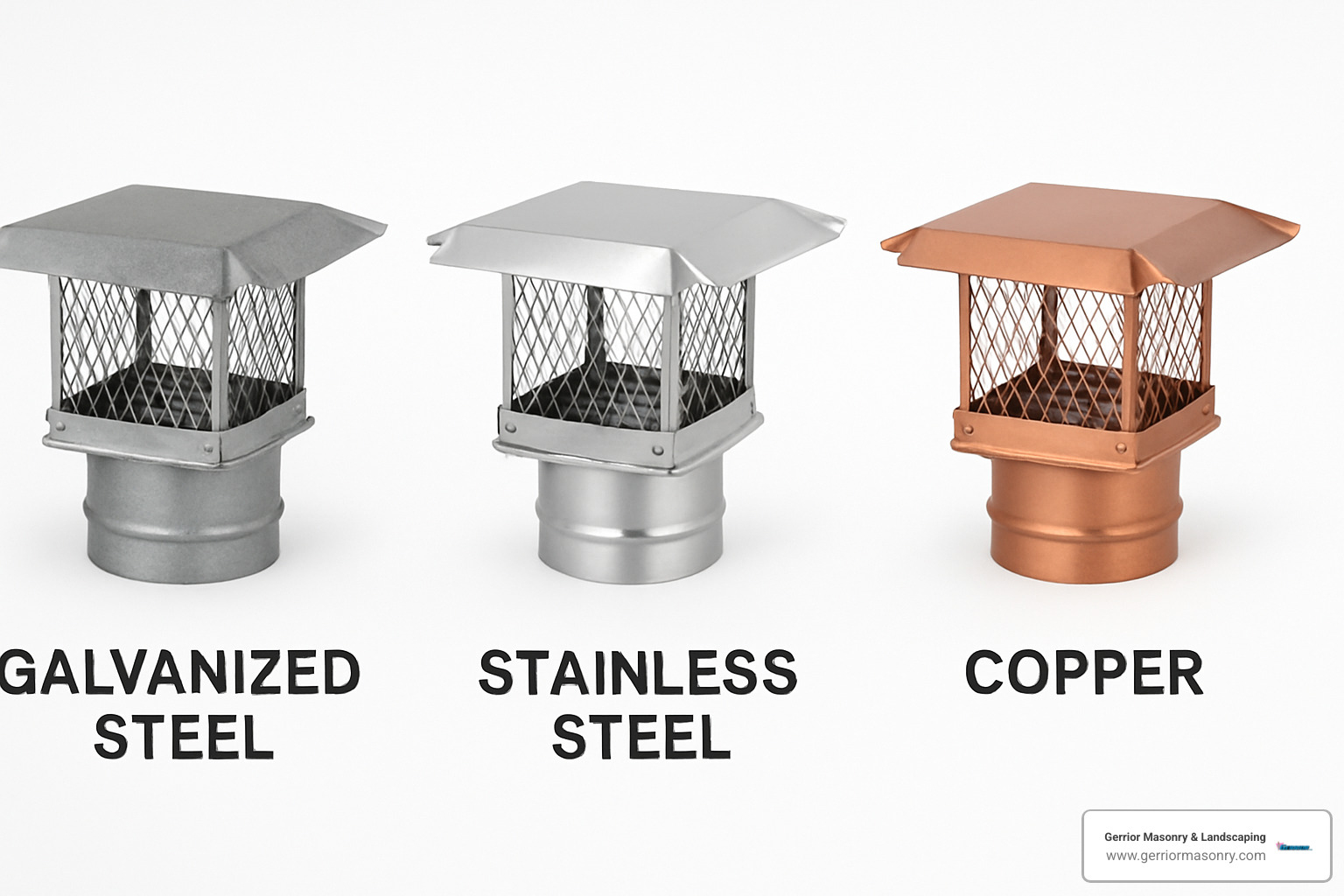
• Cap price: $75–$1,000+* (galv. to premium copper)
• Labor: $150–$500* (easy vs steep/custom)
• Extras: crown repair or flue extension can add $300–$1,500.*
In New England weather, expect:
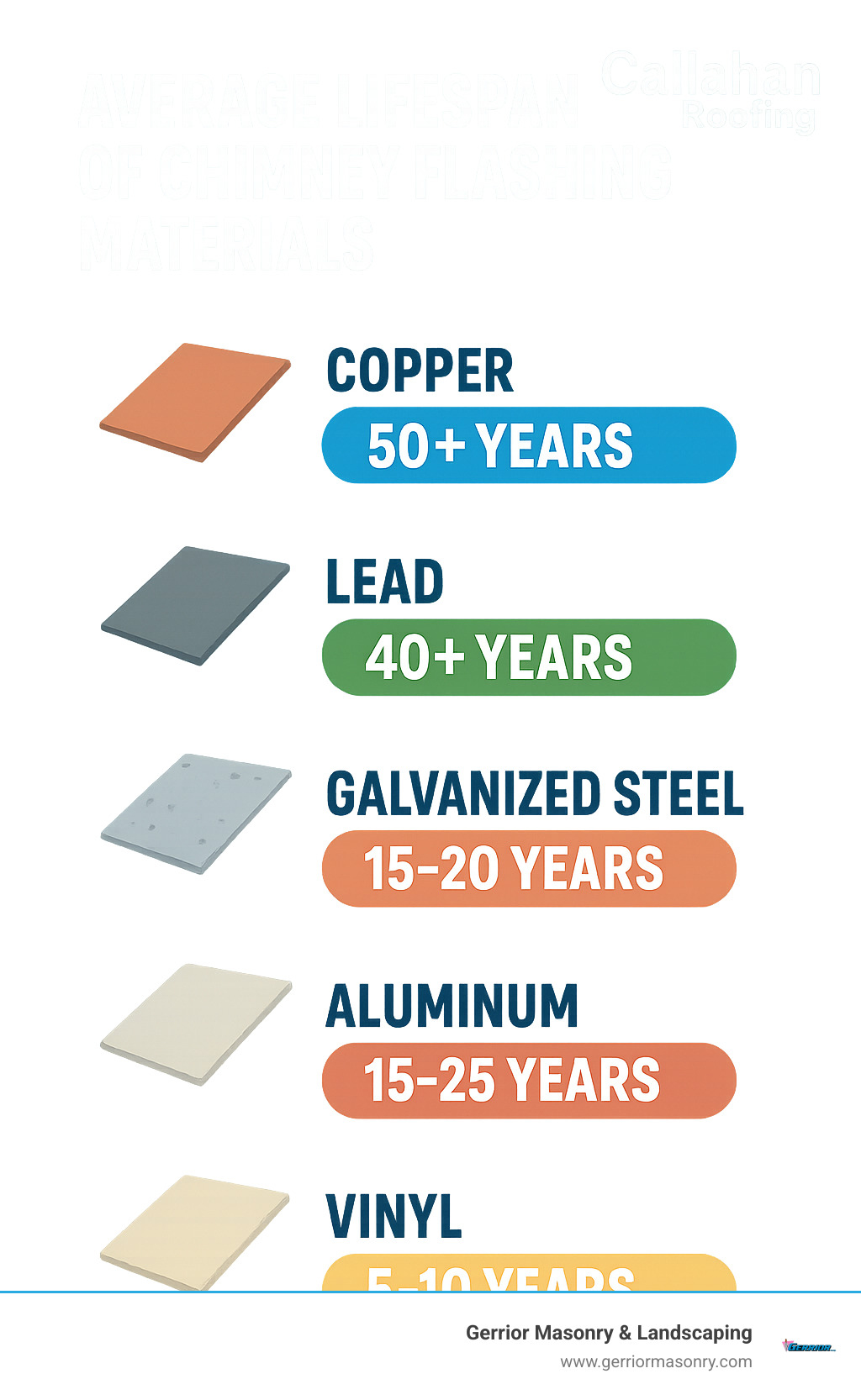
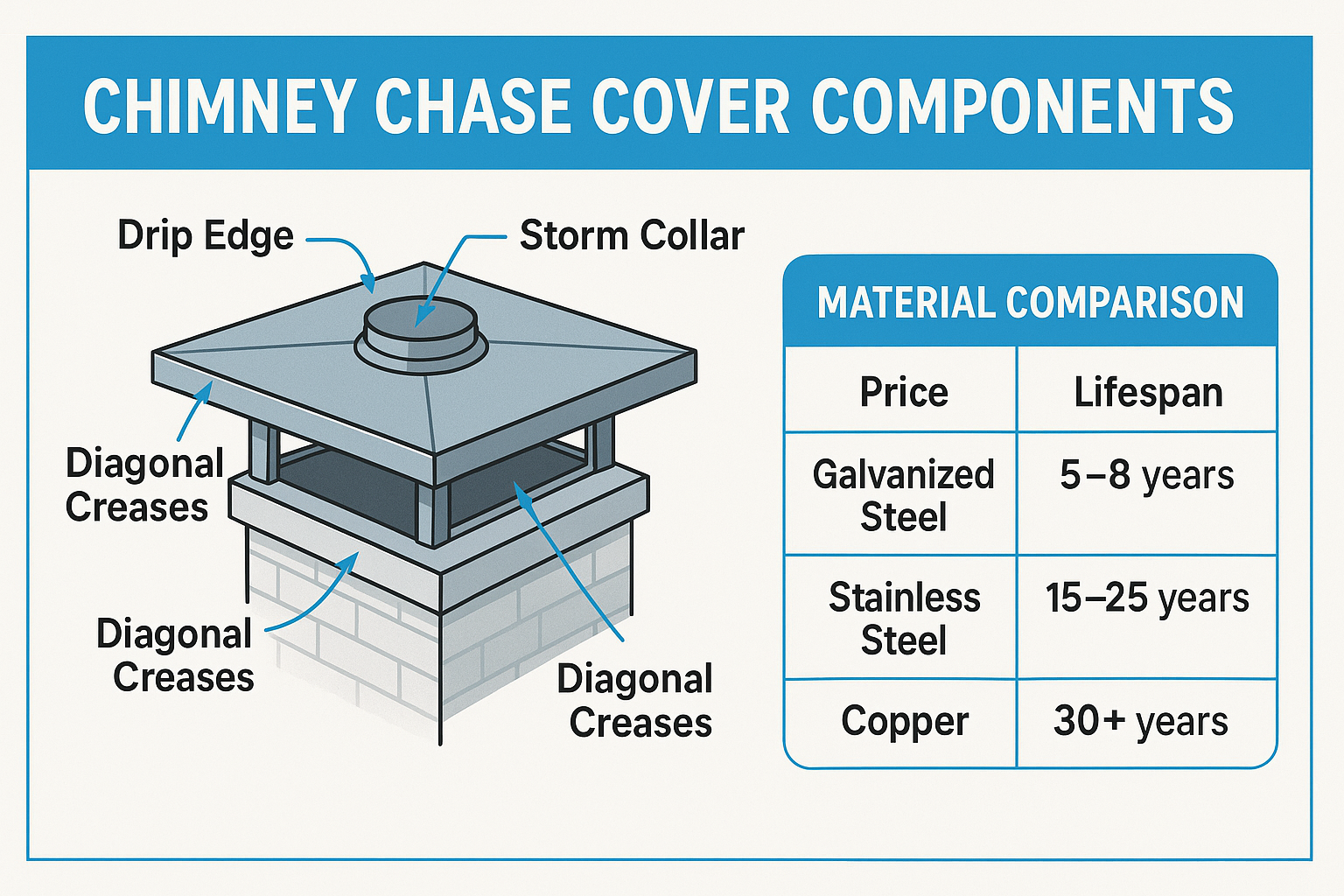
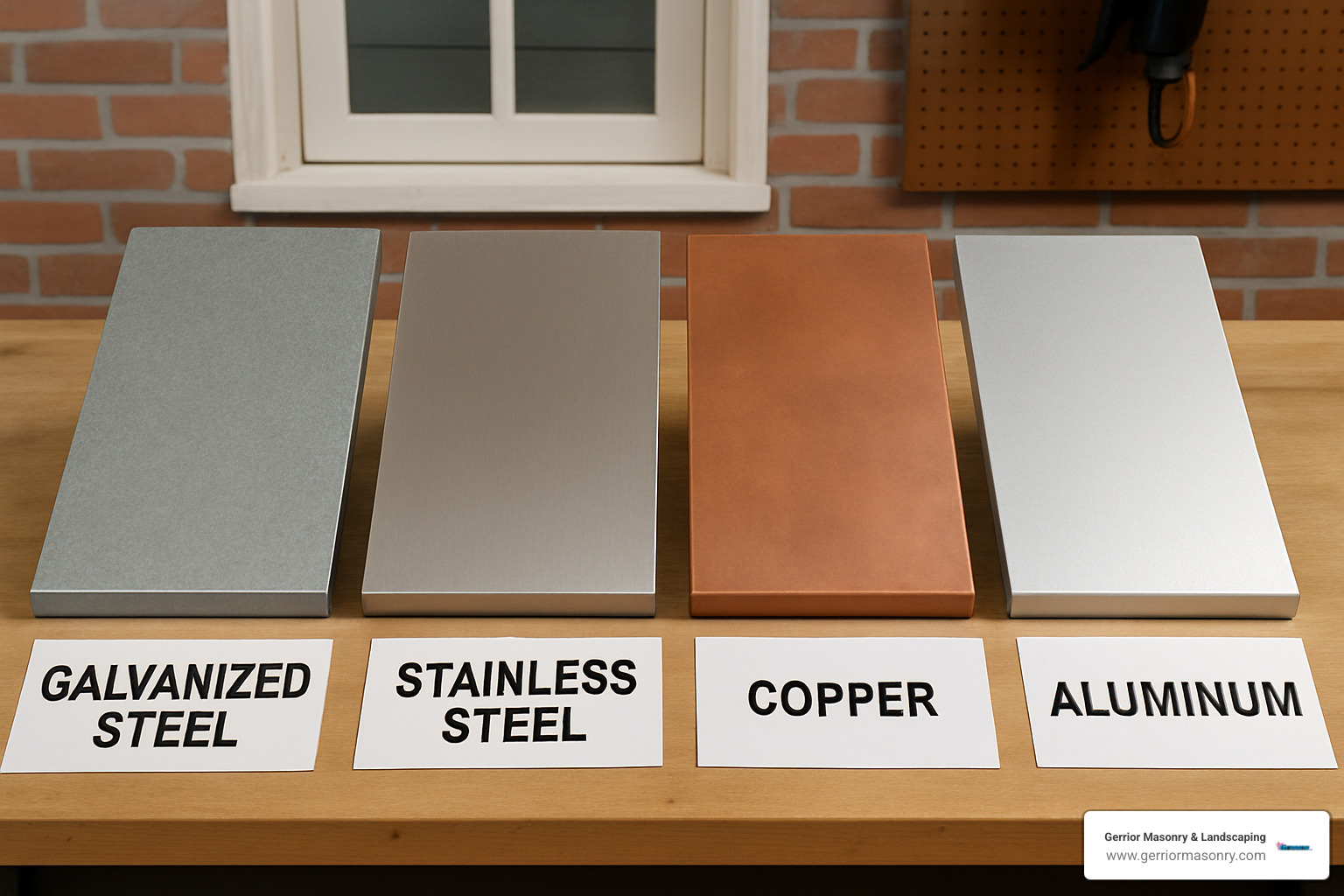
• Galvanized: 3–8 yrs
• Stainless: 15–25 yrs
• Copper: 25 yrs+
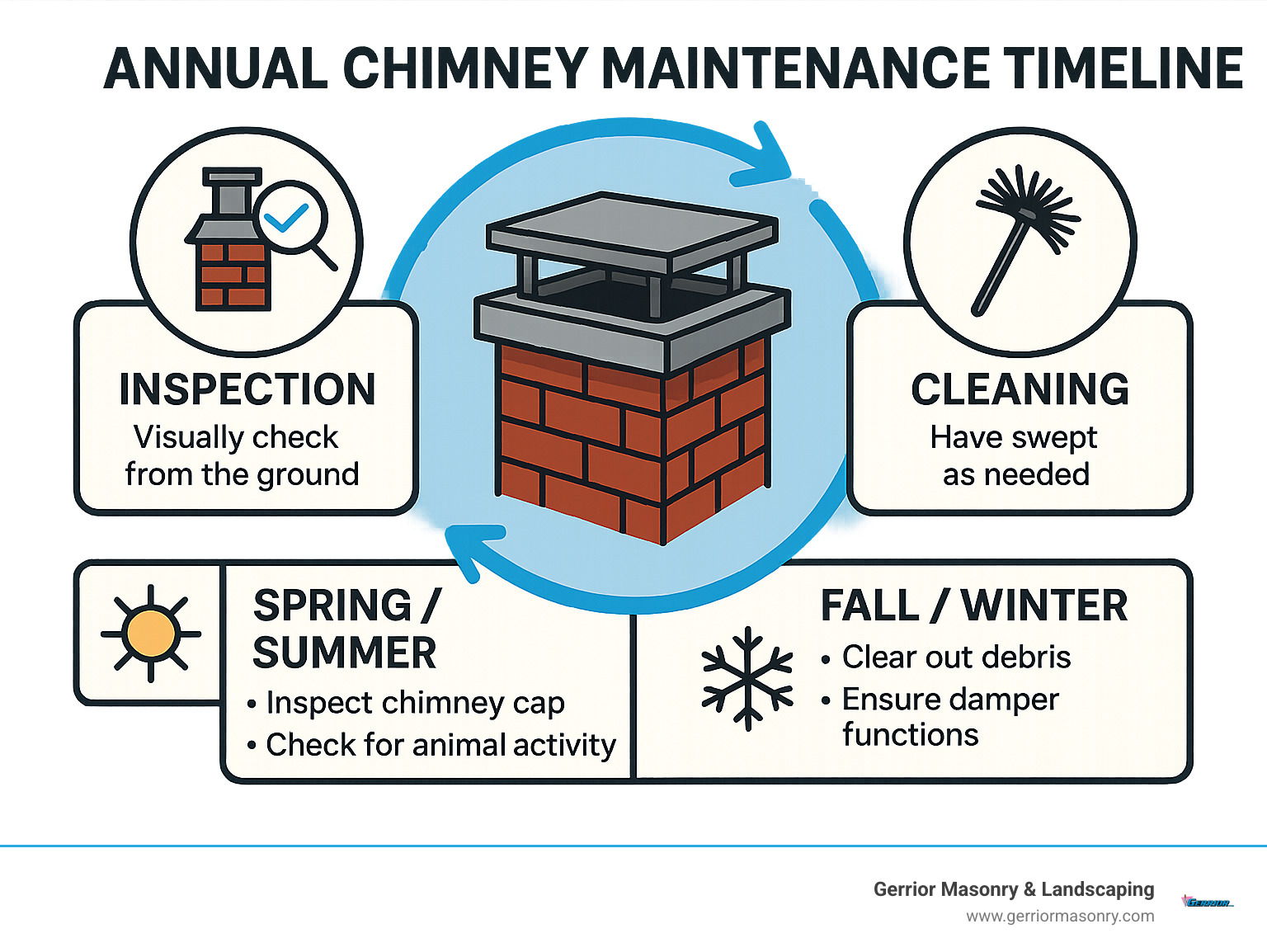
Simple Maintenance Checklist (15 min a year)
Inspect after major storms.
Clear leaves from mesh.
Tighten bolts lightly.
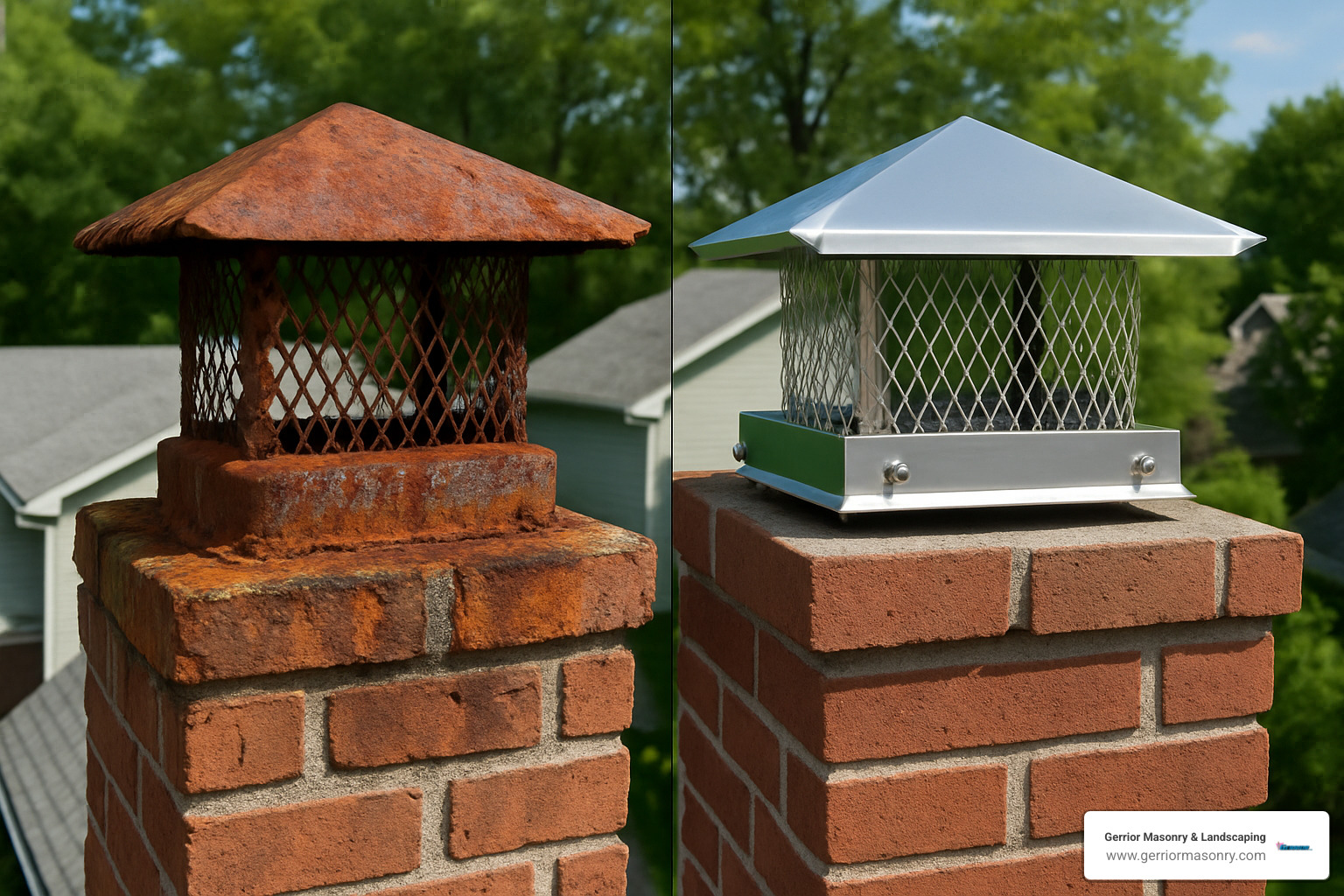
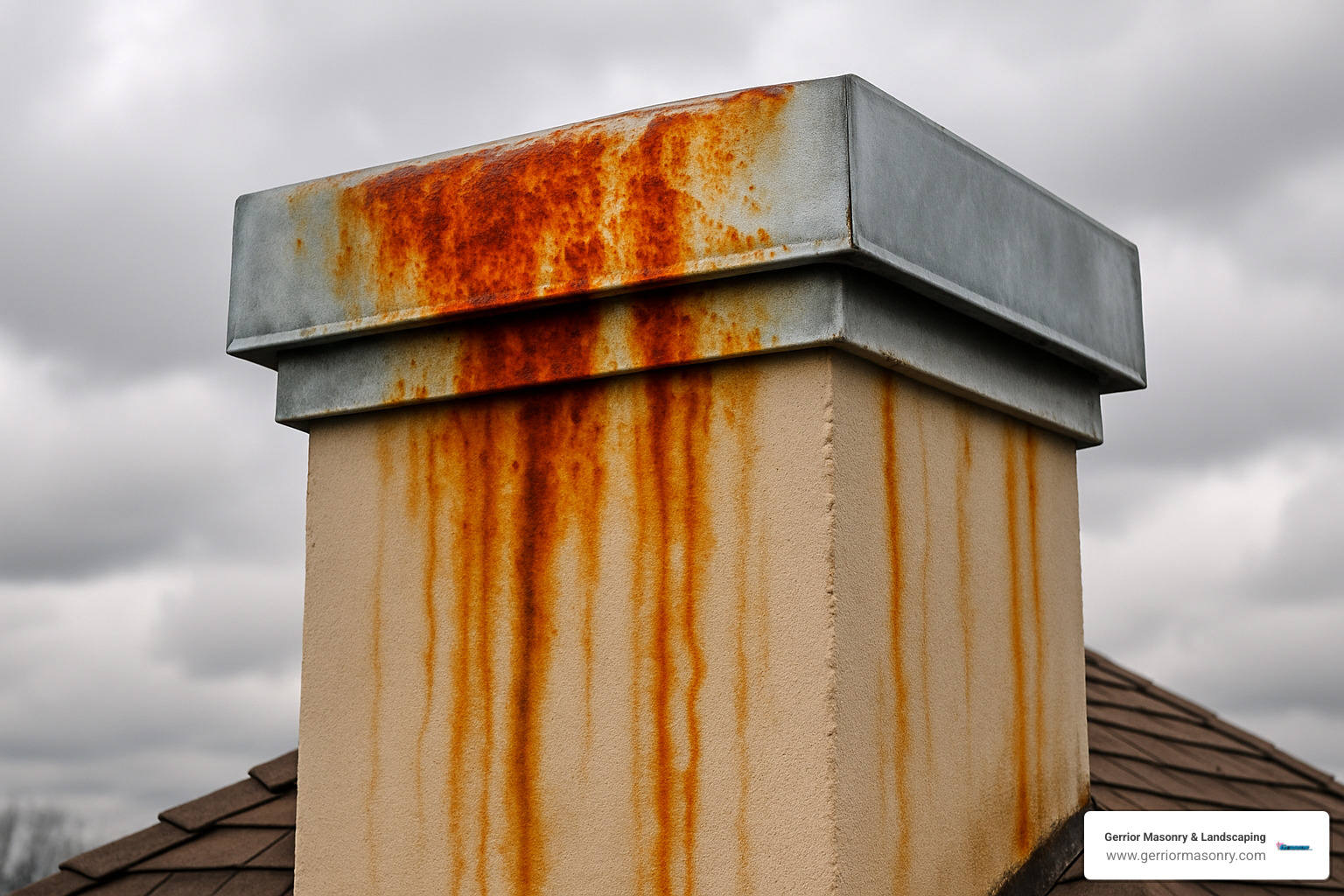
Touch-up small rust spots.
Professional cleaning every 3–5 yrs keeps warranties intact and extends life.
See detailed pricing in our chimney repair cost guide.
*Internet averages, not Gerrior Masonry pricing.
Frequently Asked Questions about Chimney Cap Installation
How long will my cap last? 3–8 yrs (galv.), 15–25 yrs (stainless), 25 yrs+ (copper) in MA weather.
Can I install a cap in winter? Only if it’s an emergency—ice and cold hinder safe, permanent installation. Pros have the gear; most homeowners should wait for spring.
Will a cap hurt my draft? A correctly sized, clean cap improves draft by blocking downdrafts. Clogged mesh or undersized caps reduce airflow.
Do I need a permit? Usually no, but caps must follow height clearances. Certified installers handle code compliance.
Signs I need a new cap? Visible rust holes, loose hardware, torn mesh, or persistent moisture/odor issues in the fireplace.
Conclusion
Your chimney deserves better than leaving it exposed to the elements, and your family deserves the peace of mind that comes with proper protection. After three decades of helping Massachusetts homeowners, I can tell you that installing a chimney cap is one of those rare home improvements that actually pays for itself – sometimes within the first winter storm.
The choice between DIY installation and hiring professional chimney cap installers really comes down to your comfort level with heights, your available time, and the complexity of your specific chimney. There’s no shame in either choice. I’ve seen skilled DIYers tackle straightforward installations successfully, and I’ve also seen the relief on homeowners’ faces when they hand the job over to experienced professionals.
What matters most is that you don’t wait. Every season without a cap increases your risk of water damage, wildlife invasions, and expensive repairs. We’ve responded to emergency calls where homeowners faced thousands in repair costs – all because they postponed this relatively simple protection measure.
If you’re dealing with damaged crowns, complex multi-flue systems, or need comprehensive chimney restoration beyond just cap installation, that’s where our expertise really shines. Sometimes a chimney cap installation reveals other issues that require the skilled hands of experienced masons.
Your chimney cap is working 24/7 – through blazing summer heat, driving winter storms, and everything Mother Nature throws at it. Investing in quality materials and proper installation, whether DIY or professional, ensures years of reliable protection for one of your home’s most important safety systems.
Gerrior Masonry & Landscape Construction is based in Woburn, MA, and proudly serves Middlesex and Essex County, Massachusetts.
Chimney Installation Near Me: 7 Trusted Pros for 2025 Success
Why Professional Chimney Installation Near Me Matters More Than Ever
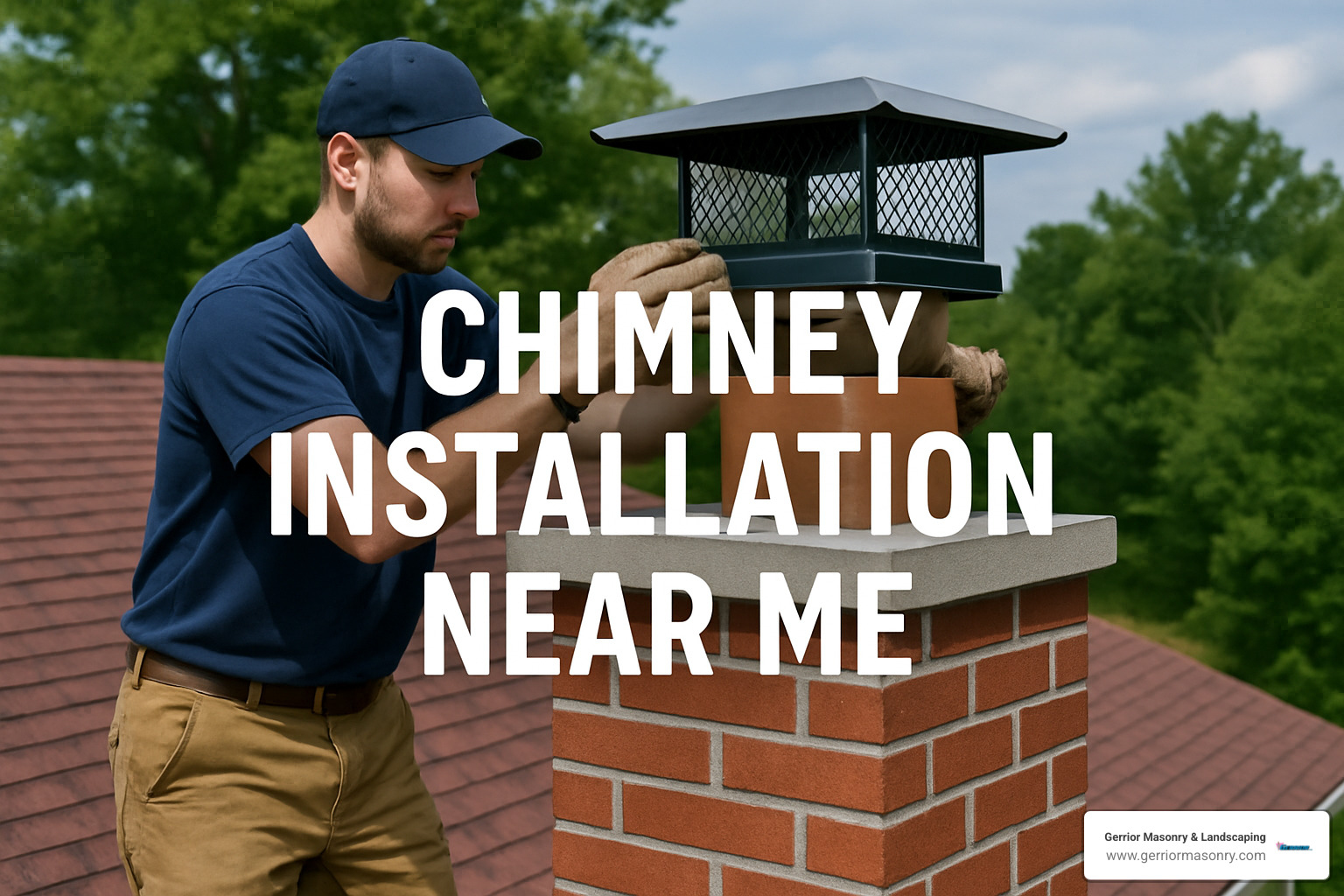
When searching for chimney installation near me, you need certified professionals who understand local codes, safety standards, and proper installation techniques. Here’s what quality chimney installation services should include:
Essential Chimney Installation Services:
• New chimney construction – Complete masonry or prefab systems
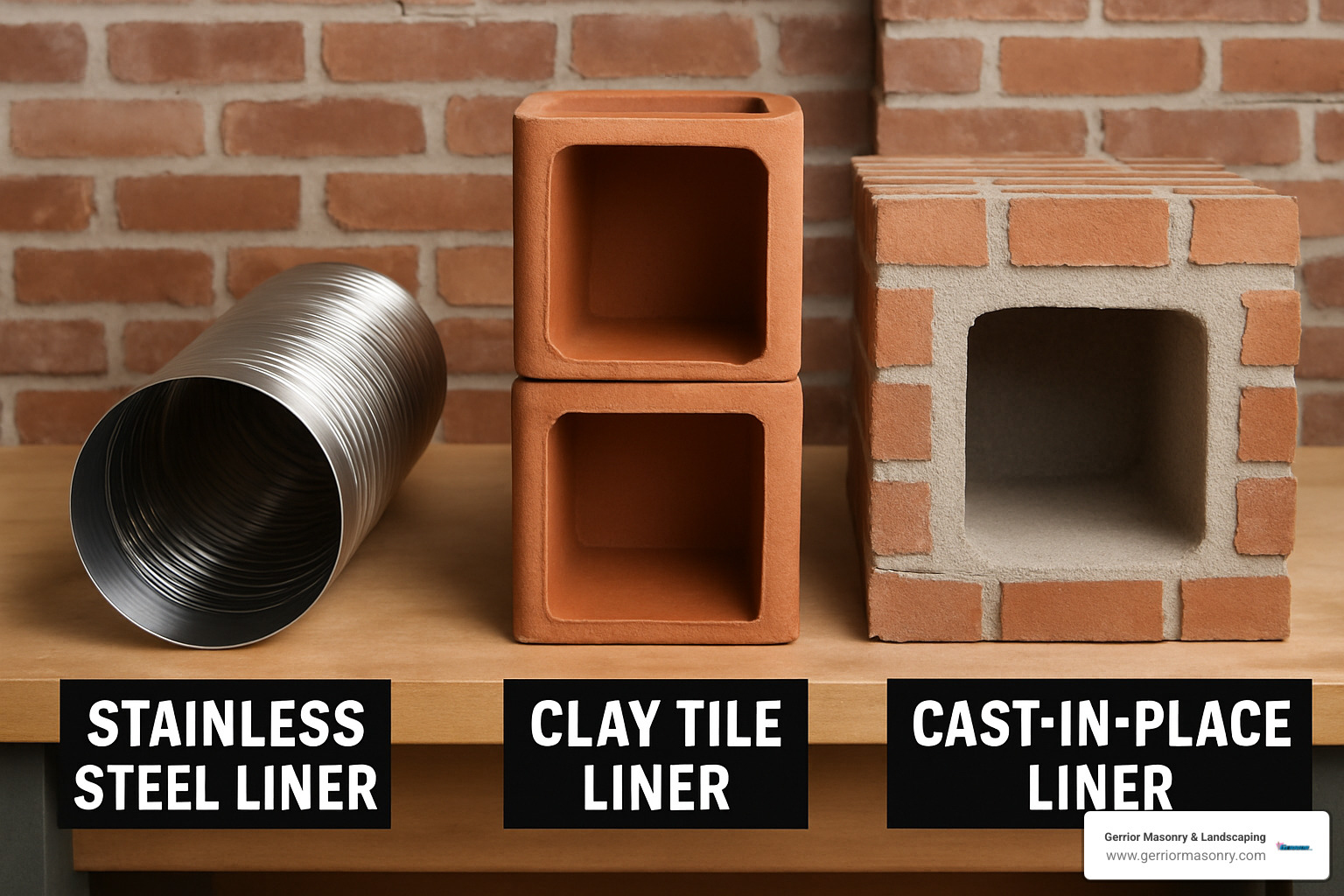
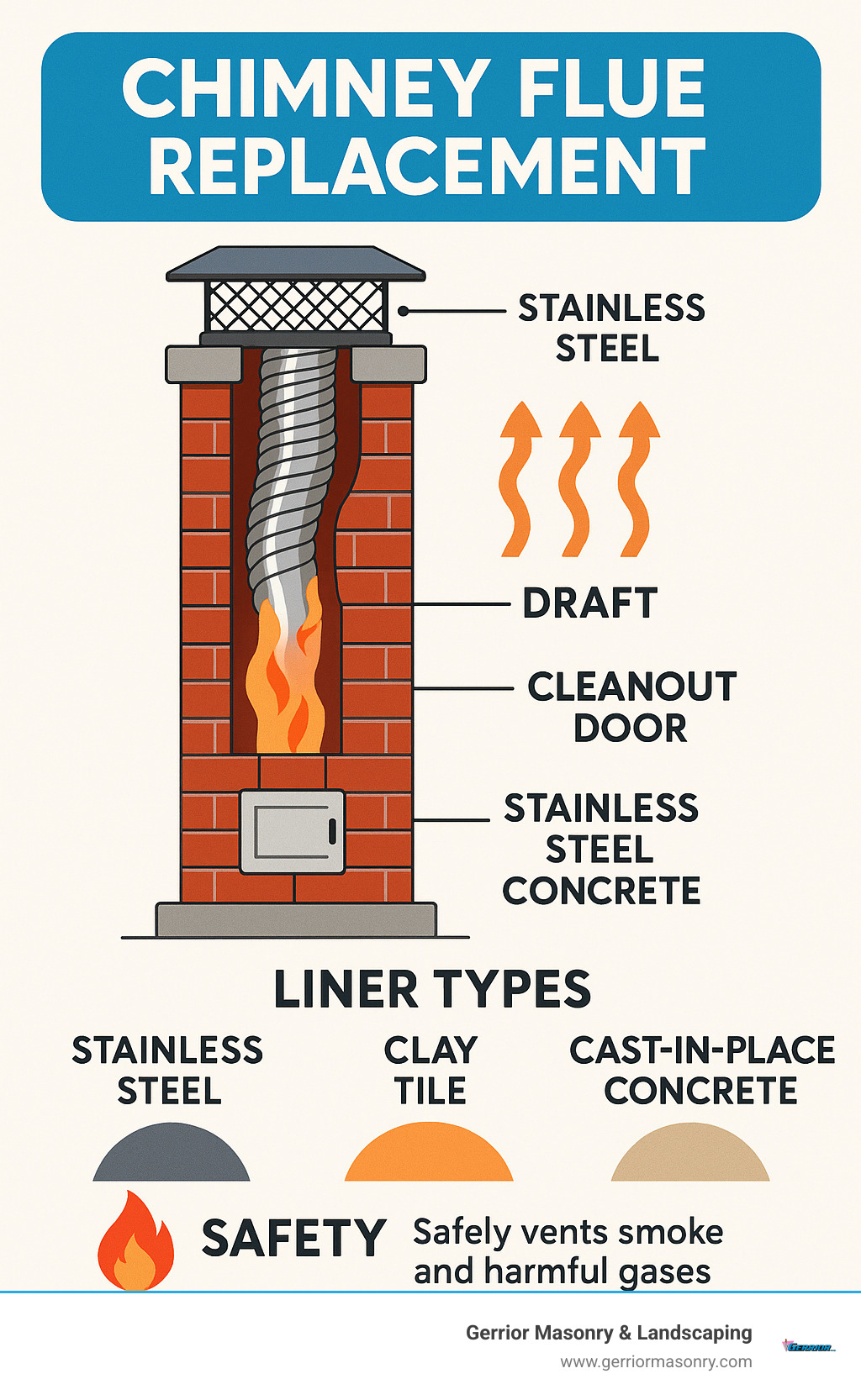
• Chimney liner installation – Stainless steel, clay, or cast-in-place options
• Damper and cap installation – Proper sealing and weather protection
• Flashing and waterproofing – Critical leak prevention
• Code compliance inspections – Meeting local Massachusetts requirements
The stakes couldn’t be higher. Research shows that chimney repairs cost about $455 on average, but can range from $160 to $15,000 depending on the type and extent of work needed. More importantly, improper installation can lead to carbon monoxide poisoning, house fires, and structural damage.
Modern appliances like electric and island chimneys have made life easier in kitchens, but as appliances have gotten more sophisticated, so have their installation requirements.
Why Professional Installation Matters:
Safety first – Prevents carbon monoxide leaks and structural fires
Code compliance – Meets NFPA standards and local regulations
Energy efficiency – Proper installation can save hundreds annually in heating costs
Long-term value – Quality work lasts decades with proper maintenance
I’m Joe Gerrior, owner of Gerrior Masonry & Landscape Construction Corp, and I’ve been helping Massachusetts homeowners with chimney installation near me projects for over 34 years. Our team combines traditional masonry skills with modern safety standards to deliver installations that protect your family and investment.
Why a Chimney Liner Is Your Home’s First Line of Defense
Think of your chimney liner as the unsung hero of your heating system. While you might not see it working, this crucial component literally stands between your family and some pretty scary scenarios—like carbon monoxide poisoning and house fires.
Here’s what keeps me up at night as a mason: flue gases can seep through even tiny cracks in masonry. When that happens, carbon monoxide has a direct path into your living space. It’s colorless, odorless, and deadly. The National Fire Protection Association doesn’t recommend annual inspections just to keep inspectors busy—they know how critical liner integrity really is.
Your liner works overtime in ways most homeowners never realize. Heat transfer protection might sound technical, but it’s simple: without that barrier, extreme heat goes directly to combustible materials in your walls. I’ve seen the aftermath of what happens when that protection fails, and trust me, it’s not pretty.
Draft improvement is another game-changer. A properly sized liner ensures optimal airflow, which means better combustion efficiency and no more smoke backing up into your living room during dinner parties. Plus, many insurance companies now require functional chimney liners for coverage—because they understand the risks better than most homeowners do.
The material choice matters more than you might think. Stainless steel liners offer lifetime durability and handle multiple fuel types like champs. Clay tile systems work beautifully for wood-burning applications but can crack over time (especially in our Massachusetts freeze-thaw cycles). Cast-in-place liners provide excellent insulation but need more complex installation.
According to scientific research on chimney fire statistics, properly lined chimneys significantly reduce the risk of structural fires and carbon monoxide incidents. When you’re searching for chimney installation near me, make sure your contractor understands these safety fundamentals.
Common Signs You Need a New Liner
Don’t wait for disaster to knock on your door. After three decades in this business, I’ve learned to spot trouble before it becomes catastrophic.
Cracked tiles are your chimney’s way of waving a white flag. If you find pieces of clay tile in your firebox or notice cracks during inspection, your liner is telling you it’s done fighting the good fight.
Excessive soot buildup goes beyond normal wear and tear. While some soot is expected, heavy accumulation usually means poor draft caused by liner problems. It’s like your chimney is coughing up warning signs.
Smoky odors that linger when your fireplace isn’t even running should make you pause. Persistent smoke smells suggest gases are escaping through liner cracks—exactly what we don’t want happening.
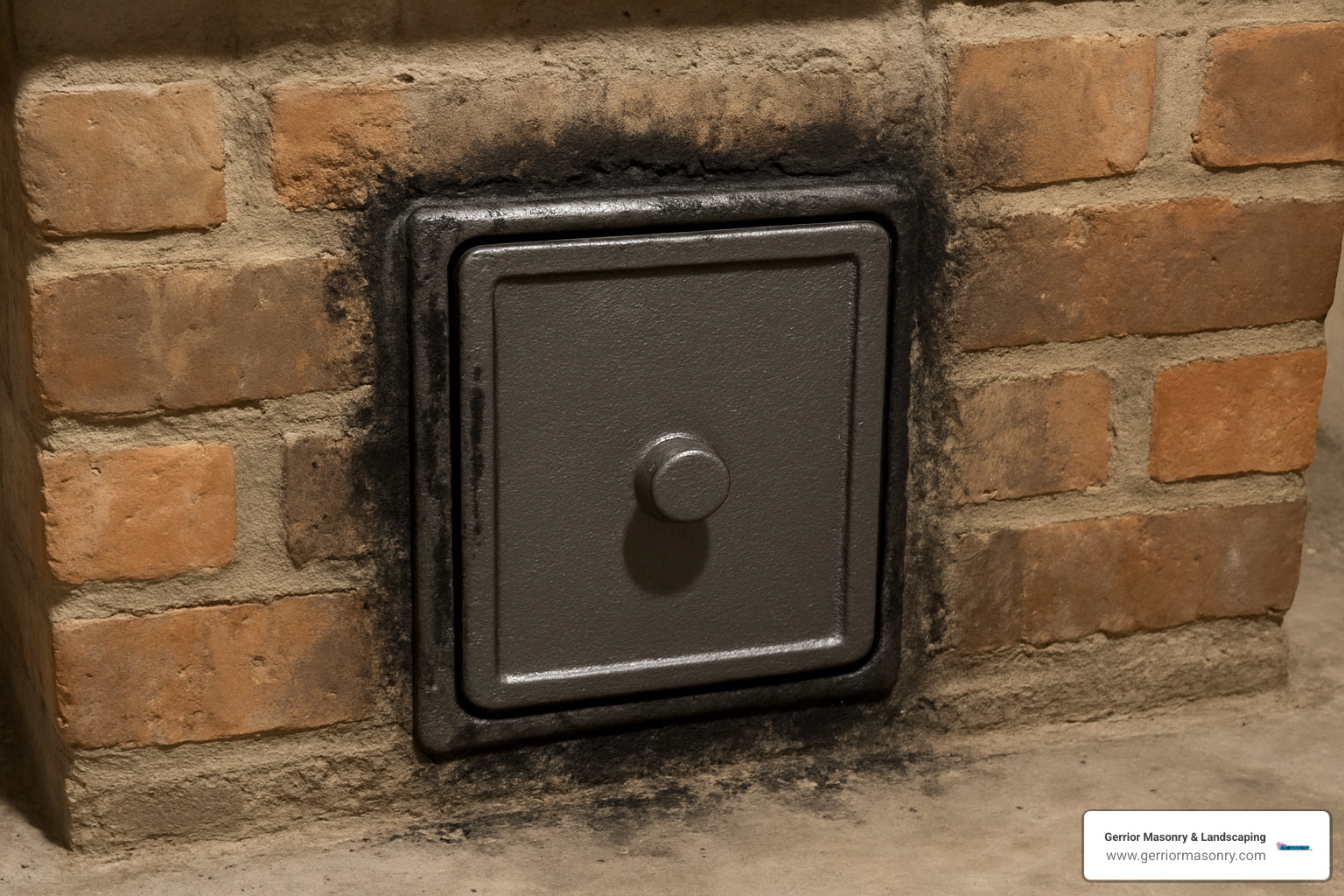
A rusted damper often signals moisture problems that damage your liner from the inside out. Moisture and masonry don’t play well together, especially when freeze-thaw cycles get involved.
Spalling bricks—when chimney bricks start flaking or crumbling—usually mean moisture is sneaking past a failing liner. It’s your chimney’s exterior showing you what’s happening on the inside.
I’ve watched too many homeowners ignore these warning signs until they’re facing emergency repairs that cost thousands more than preventive liner replacement would have. Don’t be that homeowner.
Types of Chimney Liners & Average Cost Breakdown
When homeowners search for chimney installation near me, one of their biggest questions is about liner materials and costs. After three decades of installations across Massachusetts, I’ve learned that the right choice depends on your heating system, budget, and how long you plan to stay in your home.
Stainless steel liners have become our go-to recommendation for most situations. They’re like the Swiss Army knife of chimney liners—compatible with gas, oil, and wood-burning appliances. Whether you’re planning to switch from oil to gas next year or just want maximum flexibility, stainless steel handles it all. The flexible versions can steer those tricky bends and offsets that make older Massachusetts chimneys so challenging.
Clay tile liners offer excellent value, especially for dedicated wood-burning setups. They handle high heat beautifully and cost less upfront. However, our New England freeze-thaw cycles can be tough on clay over time. We see cracking issues after 15-20 years, particularly in chimneys that don’t get regular use.
Cast-in-place liners are the custom suit of the liner world. We pour them right inside your existing chimney, creating a perfect fit regardless of shape or size. They’re fantastic for historical homes where maintaining the original look matters, plus they provide superior insulation.
The aluminum option works for certain gas appliances but has limited applications. We rarely recommend it unless specific manufacturer requirements call for it.
Now, let’s talk numbers. Based on industry data from across the internet (these aren’t Gerrior Masonry’s actual prices), here’s what homeowners typically invest:
Basic flexible stainless steel installations run $200 to $2,500, while premium insulated stainless steel systems range from $1,500 to $5,000. Clay tile replacement projects typically cost $500 to $3,000, and cast-in-place installations usually fall between $2,000 and $7,000. High-end custom jobs with complex access requirements can reach $15,000 or more.
Several factors affect where you’ll land in these ranges. Chimney height matters—a three-story colonial costs more than a single-story ranch. Access challenges like steep roofs or tight spaces can require scaffolding, adding to labor costs. Local permit fees vary by municipality, and fuel type compatibility affects material requirements.
Whether you’re dealing with a relining project or new construction also impacts pricing. Retrofitting an existing chimney often involves more labor than installing liners during initial construction.
For detailed cost breakdowns specific to different repair scenarios, check out our chimney repair cost guide.
Liner Material
Typical Lifespan
Upfront Cost Range
Best For
Stainless Steel
15-25+ years
$200-$5,000
Multi-fuel flexibility
Clay Tile
15-20 years
$500-$3,000
Wood-burning applications
Cast-in-Place
25+ years
$2,000-$7,000+
Custom fits, insulation
Aluminum
10-15 years
$200-$1,500
Specific gas appliances
When Stainless Steel Wins
Most of our Massachusetts customers end up choosing stainless steel, and for good reason. Multi-fuel compatibility means you’re covered whether you burn wood, use gas, or heat with oil. Planning to upgrade your heating system in a few years? No problem—your liner won’t need changing.
The warranty protection is impressive too. Quality stainless steel liners come with 15 to 25-year warranties, giving you real peace of mind. Compare that to clay tile, which typically has much shorter warranty periods.
Installation speed is another big advantage. Most stainless steel liner jobs take just 4 to 8 hours, so you’re back to normal quickly. No extended disruption to your daily routine.
The retrofit flexibility really shines in older homes. Flexible stainless steel can steer those quirky bends and offsets that make historic Massachusetts chimneys so characterful—and so challenging for rigid liner systems.
When Clay or Cast-In-Place Makes Sense
New construction projects often benefit from clay tile liners. When you’re building from scratch, installation is straightforward, and clay offers excellent value for dedicated wood-burning fireplaces.
High-heat wood burning situations favor clay’s superior heat resistance. If you’re someone who regularly builds roaring fires and pushes your system to high temperatures, clay handles the stress better than other materials.
Historical restoration work is where cast-in-place really shines. We can match original chimney profiles while bringing safety standards up to modern codes. It’s the perfect blend of preservation and protection.
Geographic factors matter too. Different areas of Middlesex and Essex County have varying soil conditions and local code requirements that can influence material choice and installation complexity.
How to Find & Vet Chimney Installation Near Me
Let’s be honest—finding the right contractor for chimney installation near me can feel overwhelming. With your family’s safety on the line, you can’t afford to guess. After three decades in this business, I’ve seen too many homeowners learn expensive lessons from choosing the wrong contractor.
The good news? Vetting chimney professionals doesn’t have to be complicated if you know what to look for.
Start with credentials that actually matter. Look for CSIA Certified technicians from the Chimney Safety Institute of America or NFI Certified professionals from the National Fireplace Institute. These aren’t just fancy certificates—they represent hundreds of hours of training and ongoing education. Any contractor worth hiring will proudly display these credentials.
Insurance verification comes next, and it’s non-negotiable. Every legitimate contractor should carry both liability insurance and workers’ compensation coverage. Don’t just take their word for it—ask for current certificates and call the insurance company to verify coverage. One uninsured accident could cost you thousands.
Local codes matter more than you might think. Massachusetts has specific requirements for chimney installation near me projects, including clearance to combustibles, proper venting for EPA-approved appliances, and specific permit requirements. Your contractor should know these codes inside and out, not scramble to look them up.
Written quotes separate professionals from amateurs. Any contractor offering phone quotes without inspecting your chimney is either inexperienced or dishonest. Quality contractors provide detailed, itemized estimates that break down materials, labor, permit fees, and realistic timelines. They’ll also explain why certain work is necessary rather than just telling you what needs to be done.
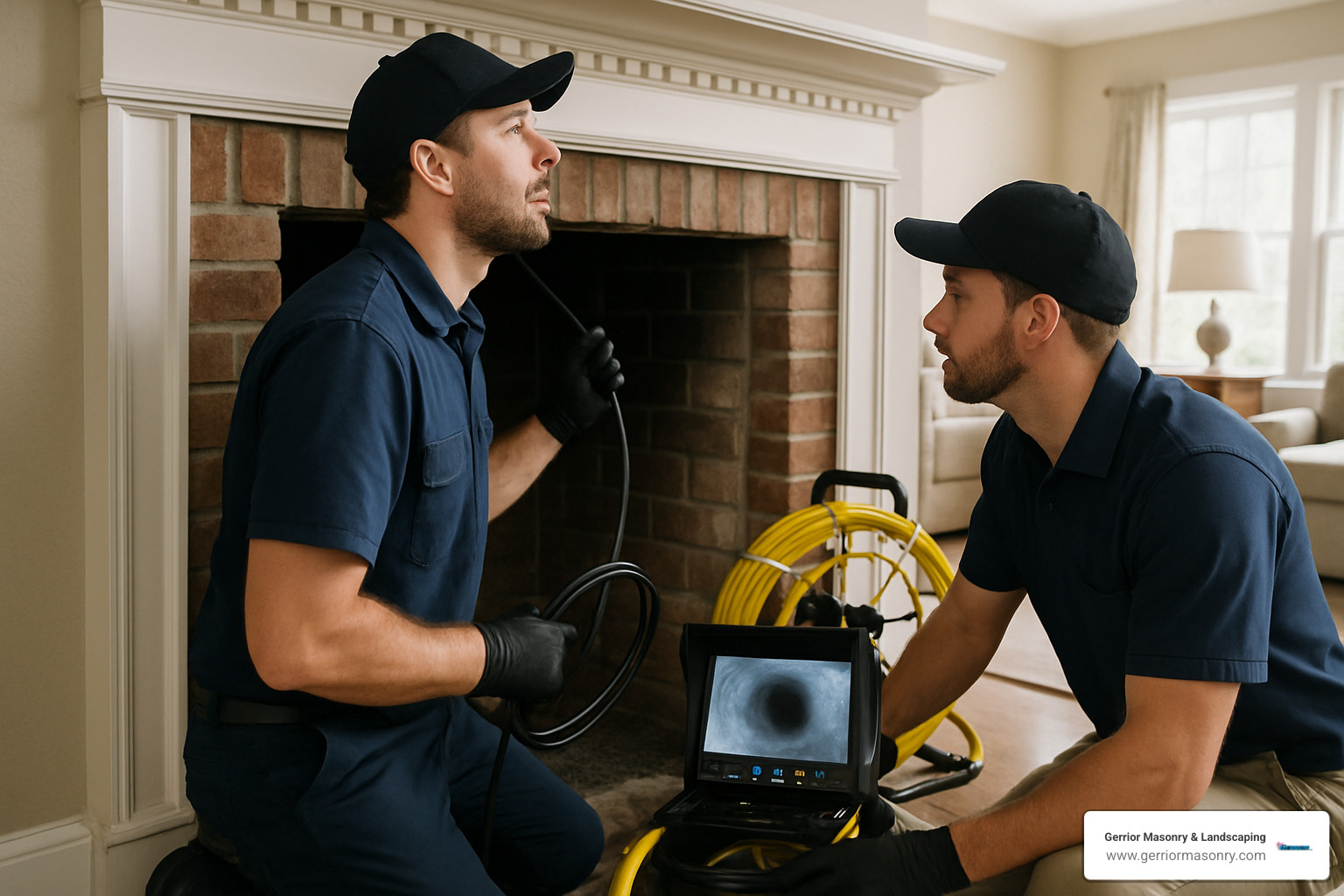
Video inspections have become standard practice for thorough evaluations. A Level-2 camera scan shows exactly what’s happening inside your chimney, giving both you and your contractor clear documentation of current conditions and needed repairs.
Top Certifications for Chimney Installation Near Me
When evaluating contractors for chimney installation near me, certain certifications stand out from the crowd.
CSIA certification represents the gold standard in our industry. These technicians undergo rigorous training in chimney safety, construction, and repair techniques. They’re required to stay current with changing codes and best practices through continuing education.
NFI certification specializes in gas appliance installation and venting systems. If you’re installing a gas fireplace or converting from wood to gas, NFI credentials demonstrate specialized expertise in gas safety and proper venting.
State gas licenses are required for any work involving gas appliances or venting systems. Don’t let anyone touch your gas lines without proper licensing—it’s both dangerous and illegal.
FIRE certification focuses on fireplace investigation and fire prevention. While not essential for basic installations, it shows commitment to understanding fire safety at the deepest level.
Red Flags When Hiring for Chimney Installation Near Me
Some warning signs should send you running, not walking, away from potential contractors.
No proof of insurance tops the list of deal-breakers. Uninsured contractors put your property and finances at serious risk. If they can’t provide current insurance certificates, find someone who can.
Phone-only quotes indicate either laziness or inexperience. Legitimate contractors need to see your chimney, measure dimensions, assess access challenges, and understand your specific situation before providing accurate pricing.
High-pressure sales tactics often signal desperation or dishonesty. Quality contractors don’t need to pressure you—their work speaks for itself. Be especially wary of door-to-door solicitors or contractors who “happen to be working in your neighborhood.”
Vague warranties protect no one. Professional contractors provide specific, written warranties covering both materials and workmanship. They’ll explain exactly what’s covered, for how long, and how to make warranty claims if needed.
Background checks through the Better Business Bureau and online review platforms like Angi provide additional insight into contractor reliability and customer satisfaction. Look for patterns in reviews rather than focusing on individual complaints—every contractor occasionally deals with difficult situations.
Step-by-Step Installation Process & Timeline
When you’re searching for chimney installation near me, understanding the complete process helps you know what to expect and ensures your contractor follows proper safety procedures. After three decades in the business, I’ve refined our installation process to minimize disruption while maximizing safety.
The journey starts with a thorough site inspection. We can’t properly size or install a liner without knowing exactly what we’re working with. That’s why we begin every project with a comprehensive camera inspection of your existing chimney. This Level-2 inspection reveals hidden cracks, obstructions, or structural issues that could affect the installation.
Before installation day arrives, we handle all the behind-the-scenes work. This includes obtaining necessary permits, ordering materials, and scheduling delivery. If your chimney requires scaffolding for safe access, we’ll set that up in advance. We also protect your home’s interior and landscaping with tarps and drop cloths.
Installation day itself follows a careful sequence. We start by removing any old liner material and thoroughly cleaning the chimney. Next comes the precision work of installing your new liner system, connecting it properly to your heating appliance, and installing the cap and damper. Every installation ends with a smoke test to verify proper draft and a final inspection to ensure everything meets safety standards.
Timeline expectations vary based on complexity. A standard stainless steel liner installation typically takes 4-8 hours from start to finish. More complex projects involving multiple flues or custom configurations might require 1-2 days. Complete chimney rebuilds can take 2-4 days, though these are less common. Don’t forget to factor in 1-2 weeks for permit processing before work begins.
Your new liner installation marks the beginning of a long-term maintenance relationship, not the end of our involvement. Think of it like buying a new car—proper maintenance keeps it running safely for decades.
Annual sweeping is non-negotiable. The National Fire Protection Association recommends yearly chimney cleaning for all solid fuel appliances. This removes dangerous creosote buildup and gives us a chance to inspect your new liner for any developing issues.
Understanding inspection levels helps you budget appropriately. Level-1 inspections are basic visual checks performed during routine cleaning. Level-2 inspections use camera equipment and are recommended when changing appliances, after severe weather, or if problems are suspected.
Creosote management becomes crucial with wood-burning appliances. This combustible substance builds up naturally but can ignite if allowed to accumulate. During heavy use seasons, professional cleaning every 3-4 months keeps your system operating safely.
Warranty protection gives you peace of mind. Quality stainless steel liners typically come with lifetime warranties against manufacturing defects. Our workmanship warranties cover installation issues for multiple years, though specific terms depend on the project scope.
Local Codes & Permits You Can’t Ignore
Massachusetts takes chimney safety seriously, and for good reason. Local codes protect your family and ensure your installation won’t cause problems when you sell your home.
Clearance to combustibles requirements specify exactly how far your chimney must be from wood framing and other flammable materials. These aren’t suggestions—they’re based on fire science and strictly enforced.
UL-1777 listing ensures your liner system meets rigorous Underwriters Laboratory standards for safety and performance. We only install listed products because your family’s safety depends on proven materials.
EPA appliance venting requirements affect modern heating appliances. EPA-certified wood stoves, gas fireplaces, and oil furnaces each have specific venting needs that influence liner sizing and installation methods.
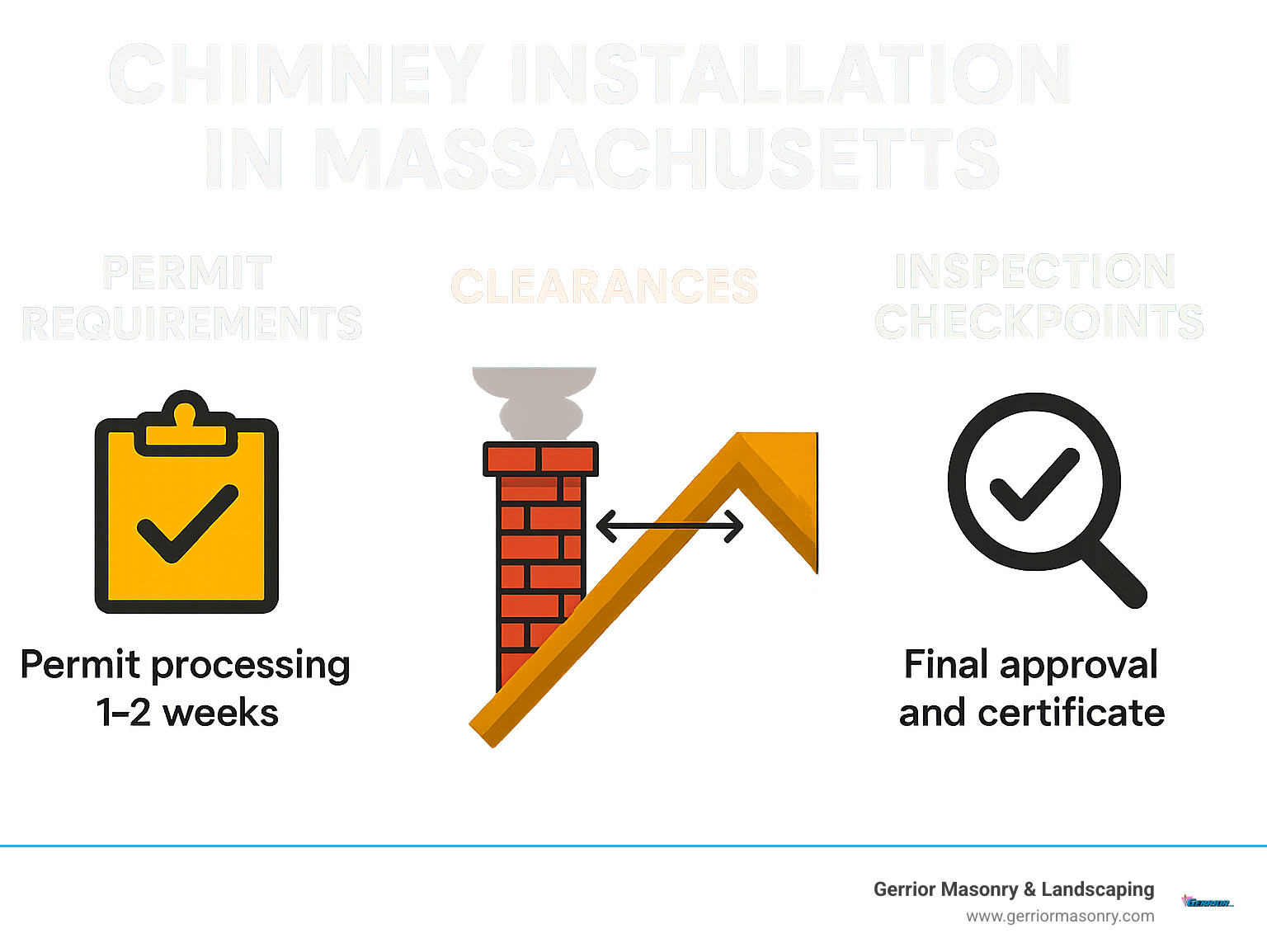
The permit process typically takes 1-2 weeks and includes several steps. We submit applications with detailed technical specifications, wait for plan review by the building department, schedule installation inspection, and obtain final approval certificates. While paperwork isn’t exciting, proper permits protect your investment and ensure insurance coverage remains valid.
Frequently Asked Questions about Chimney Installation Near Me
What does a chimney liner installation cost?
When homeowners ask about chimney installation near me pricing, I always explain that every project is unique. Based on industry data we’ve researched, chimney liner costs typically range from $200 to $7,000, with high-end custom installations reaching $15,000 or more. These are average internet-based costs and don’t reflect our specific pricing at Gerrior Masonry.
The wide price range reflects several important factors. Liner material makes a huge difference—basic aluminum liners cost much less than premium stainless steel systems. Chimney height and accessibility also matter significantly. A single-story ranch installation takes less time and equipment than a three-story colonial requiring scaffolding.
Local permit fees vary by municipality throughout Massachusetts, and some projects need special equipment or extensive prep work. The complexity of your existing chimney configuration can turn a straightforward job into something much more involved.
That’s why we always provide detailed written estimates after thorough inspection. No two chimneys are exactly alike, and cookie-cutter pricing just doesn’t work for quality installations.
How long will the installation take?
Timeline questions come up in almost every initial consultation, and I understand why—nobody wants their heating system out of commission longer than necessary.
For standard stainless steel liner installations, we typically complete the work in 4-8 hours. These are straightforward replacements in chimneys with good access and no complications.
Multi-flue or complex configurations usually take 1-2 days, especially when we’re working around existing appliances or dealing with unusual chimney layouts. Complete chimney rebuilds can extend to 2-4 days, depending on the scope of masonry work required.
Don’t forget about permit processing, which typically takes 1-2 weeks before we can start work. We handle all the paperwork, but municipal review takes time.
Weather affects our timeline too, especially for installations requiring roof work. Massachusetts weather can be unpredictable, but we schedule accordingly and communicate any delays promptly. After 34 years in business, we’ve learned that rushing leads to problems—better to do it right the first time.
How often should my new liner be inspected or cleaned?
This might be the most important question for long-term safety and performance. The National Fire Protection Association doesn’t make these recommendations lightly—they’re based on decades of fire investigation data.
Annual inspections are non-negotiable for all solid fuel burning appliances. Think of it like changing your car’s oil—skip it at your own risk.
Cleaning frequency depends on what you’re burning. Wood-burning fireplaces need cleaning every 3-4 months during heavy use seasons. Wood creates creosote, and creosote causes chimney fires. Gas appliances typically need annual inspection with cleaning as needed—they’re much cleaner burning but still require attention. Oil-burning equipment falls somewhere in between, requiring annual cleaning and inspection.
We’ve seen too many homeowners skip maintenance on new installations, thinking they’re good for years. A $200 annual cleaning prevents thousands in repair costs and keeps your family safe.
We provide maintenance reminders and can schedule annual service calls, making it easy to stay on top of this critical safety requirement. Regular maintenance protects your investment and ensures the safe operation that prompted you to search for chimney installation near me in the first place.
Conclusion
Finding the right chimney installation near me service isn’t just about getting the job done—it’s about protecting what matters most. Your family’s safety, your home’s value, and your peace of mind all depend on quality installation that prevents carbon monoxide poisoning, reduces fire risk, and keeps your heating bills manageable.
After three decades in the masonry business, I’ve seen what happens when corners get cut. I’ve also seen the relief on homeowners’ faces when they know their chimney system is properly installed and safe. That’s why we’ve built our reputation on skilled craftsmanship and owner oversight on every single project.
Whether you’re dealing with a cracked liner that needs replacement or planning a complete chimney reconstruction, the investment you make today protects your family for decades to come. Quality materials like stainless steel liners can last 25 years or more with proper maintenance, making them one of the smartest home improvements you can make.
We’re proud to serve homeowners throughout Middlesex and Essex County from our base in Woburn. Our trucks regularly visit Acton, Andover, Arlington, Bedford, Belmont, Beverly, Burlington, Chelmsford, Concord, Danvers, Lexington, Lowell, Medford, Newton, Peabody, Reading, Salem, Waltham, Winchester, and dozens of other communities where families count on us for safe, reliable chimney installation near me services.
Ready to move forward with confidence? We’ll start with a thorough inspection and provide you with a detailed written estimate that breaks down exactly what your project needs. No surprises, no pressure—just honest assessment and quality work.
Chimney Repair and Replacement: 10 Powerful Warning Signs 2025
When Your Chimney Needs Help: Fix It or Replace It?
Chimney repair and replacement decisions can be daunting for homeowners faced with a deteriorating chimney. Here’s what you need to know right away:
Repair Your Chimney When:
Replace Your Chimney When:
• Minor cracks in mortar joints
• Severe structural damage or leaning
• Damaged chimney crown or cap
• Extensive water damage throughout
• Flashing issues causing small leaks
• Previous chimney fire damage
• Minor brick spalling or efflorescence
• Outdated construction no longer safe
• Damaged damper or firebox
• Repair costs exceed 50% of replacement
A neglected chimney isn’t just an eyesore – it’s a serious safety hazard. When water infiltrates your chimney through cracks or damaged mortar, it can cause extensive structural damage, especially during freeze-thaw cycles. This deterioration creates the perfect conditions for chimney fires and carbon monoxide leaks.
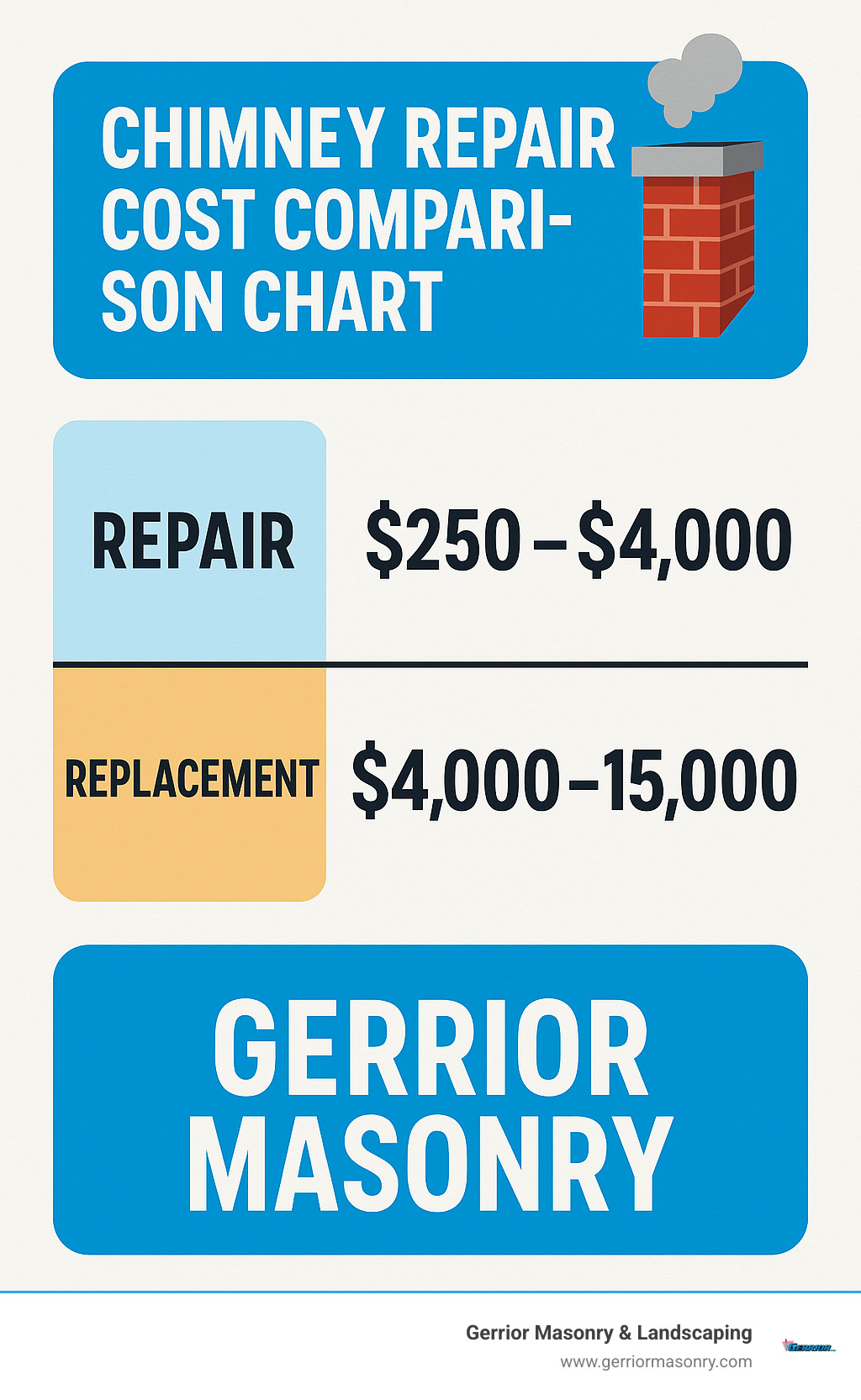
The average chimney repair costs between $250-$1,500 for minor fixes, while full replacement can run from $8,000-$30,000 depending on size, materials, and complexity. Annual inspections by a certified professional can help catch small issues before they require major intervention.
I’m Joe Gerrior, owner of Gerrior Masonry & Landscape Construction, and I’ve been handling professional chimney repair and replacement projects for over 34 years throughout Massachusetts, helping homeowners maintain safe and functional fireplaces.
In this comprehensive guide, we’ll walk you through everything you need to know about chimney maintenance, from identifying early warning signs to making informed decisions about repair versus replacement. We’ll cover cost considerations, the repair and replacement process, and provide essential maintenance tips to extend your chimney’s lifespan.
Whether you’re a new homeowner wondering about that aging chimney on your roof or you’ve noticed some concerning signs like water stains or crumbling bricks, this guide will help you understand when to act and what options are available to you.
Spotting Trouble Early: 10 Red Flags
Catching chimney problems early can save you thousands in repair costs and prevent dangerous situations. As a homeowner, knowing what to look for can make all the difference between a simple repair and a complete replacement.
Your chimney speaks its own language when something’s wrong. Let me translate those signals for you:
White, chalky deposits on your chimney’s exterior (known as efflorescence) are essentially your chimney waving a white surrender flag to moisture intrusion. As chimney expert Jim Fuson puts it, “Efflorescence is like your chimney waving a white flag—it’s surrendering to moisture intrusion.”
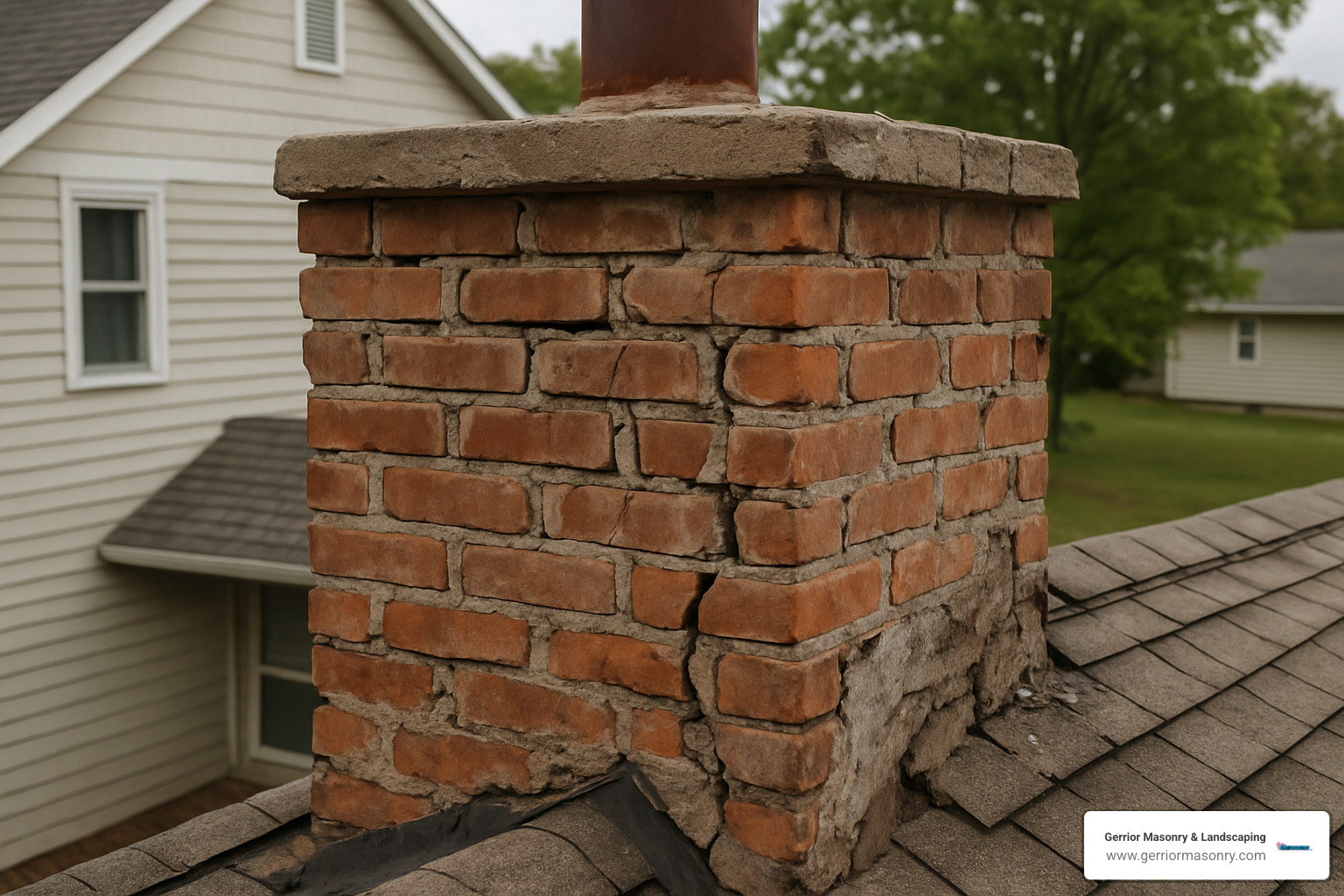
Cracked mortar joints between bricks might seem minor, but they’re actually open invitations for water to enter and wreak havoc. Think of mortar as your chimney’s defensive wall—once breached, the whole structure becomes vulnerable.
When you notice bricks flaking, popping out, or pieces falling off (spalling), that’s a clear sign that freeze-thaw cycles have taken their toll. Water seeps in, freezes, expands, and gradually destroys your masonry from the inside out.
A leaning chimney is never just a quirky architectural feature—it’s a serious structural red flag that demands immediate professional attention. Chimneys should stand tall and proud, not tilt like the Tower of Pisa.
Rust on your damper or firebox tells you that unwelcome moisture has found its way into your system. Like a canary in a coal mine, rust appears well before the more serious structural damage follows.
When smoke enters your living space rather than going up and out, something’s blocking its natural path. This back-drafting isn’t just annoying—it could indicate dangerous blockages or structural failures.
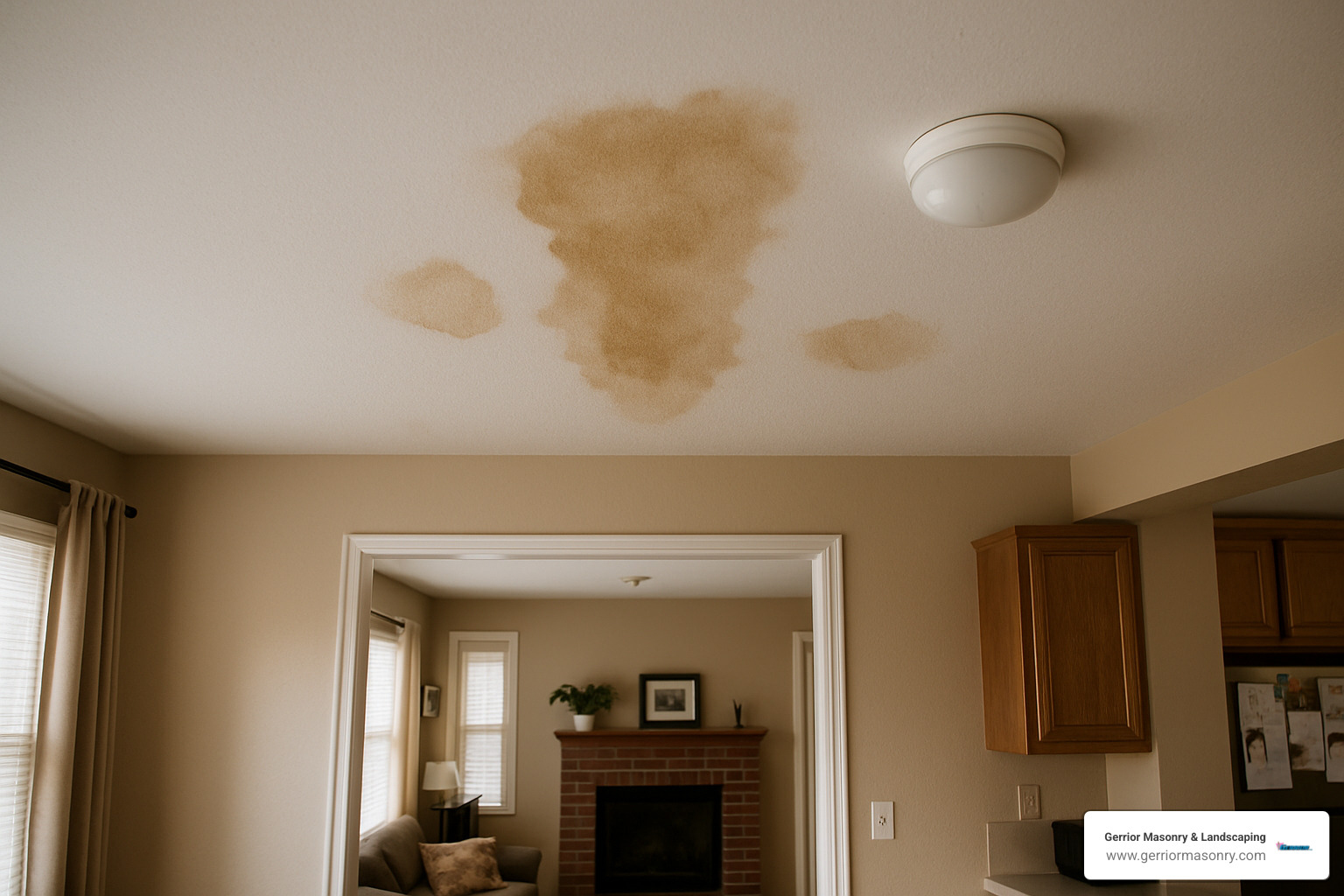
Water stains on walls or ceilings near your chimney are telltale breadcrumbs leading to leaks that need addressing. These discolorations are your home’s way of pointing directly to the problem.
A strong, acrid smell or visible black, tar-like substance (creosote) inside your chimney significantly increases your fire risk. Creosote is highly flammable and builds up with each fire you enjoy.
Animal visitors making homes in your chimney might seem charming in a Disney movie, but in reality, they block proper ventilation and create serious fire hazards. Those scratching sounds or chirps mean it’s time for a professional inspection.
A missing or damaged chimney cap leaves your entire system vulnerable to the elements. Without this protective cover, water, animals, and debris have an open invitation to cause trouble.
DIY vs Pro Inspections
While professional inspections are essential, you can perform some preliminary checks yourself to monitor your chimney’s health between professional visits:
Simple DIY Checks:
– Grab a pair of binoculars and examine your chimney from the ground, looking for visible cracks, missing mortar, or damaged bricks
– Visit your attic with a flashlight to check for water stains near the chimney penetration
– Look inside your fireplace for unusual debris that might have fallen from above
– When safe to do so, check your chimney crown (the concrete top) for visible cracks
Professional inspections provide a level of thoroughness that DIY checks simply can’t match. According to the National Fire Protection Association (NFPA), every chimney should be inspected annually by a qualified professional. This isn’t just cautious advice—it’s a safety essential.
Professional chimney inspections typically include camera scope technologies that can detect damage invisible to the naked eye. These specialized tools allow technicians to see inside your flue and identify cracks, deterioration, or dangerous creosote buildup before they become catastrophic problems.
“Have your chimney checked every year, as recommended by the National Fire Protection Agency, to make sure the chimney can do its job to properly vent hot, toxic gases and carbon monoxide from the heating system to the outdoors,” advises the NFPA. This guidance becomes even more critical when you consider that temperatures inside your chimney can exceed 2000 degrees Fahrenheit during normal use.
When it comes to chimney repair and replacement, catching problems early doesn’t just save money—it potentially saves lives. The small investment in regular inspections pays dividends in safety and peace of mind.
Chimney Repair and Replacement 101
Making the choice between fixing or fully replacing your chimney isn’t always straightforward. Let’s break down what you need to know to make an informed decision that keeps your family safe and your home protected.
When “chimney repair and replacement” becomes urgent
Some chimney problems simply can’t wait. Here are the situations that demand immediate attention:
Flue Cracks or Damage: Think of your chimney flue as the protective shield between the intense heat of your fire and the wooden structure of your home. When this barrier cracks, you’re facing two serious risks: fire hazard from heat transfer to combustible materials and the silent danger of carbon monoxide seeping into your living spaces.
Crown Failure: That concrete cap on top of your chimney isn’t just decorative – it’s your first line of defense against water damage. When it starts crumbling or cracking, water can work its way down through your entire chimney structure, causing extensive (and expensive) damage over time.
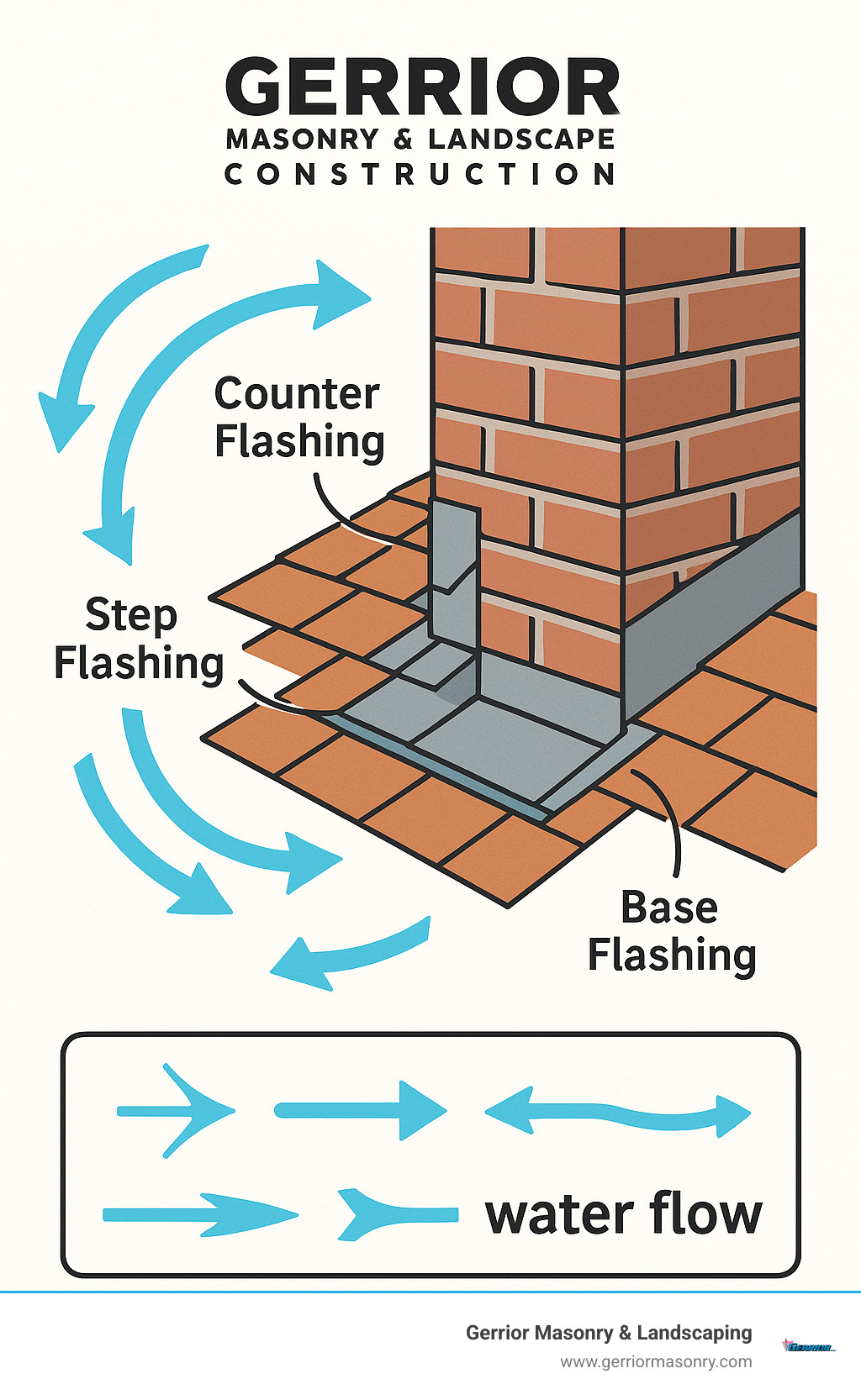
Flashing Leaks: The metal flashing that creates a watertight seal between your chimney and roof is critical. When it fails, water doesn’t just damage your chimney – it can penetrate your roof structure and lead to interior ceiling damage too.
One of our Arlington homeowners learned this lesson the hard way: “I ignored what seemed like minor cracks in my chimney crown for two years. By the time I called Gerrior Masonry, water had penetrated so deeply that I needed a complete rebuild above the roofline. What could have been a $750 repair became a $7,500 project.”
Choosing repair or full “chimney repair and replacement”
When Repair Makes Sense:
Sometimes a full replacement is overkill. Partial rebuilds often work well, especially when damage is limited to the portion above your roofline – the area most exposed to harsh weather. We can remove and rebuild just the top few courses of brick and install a fresh crown, saving you thousands.
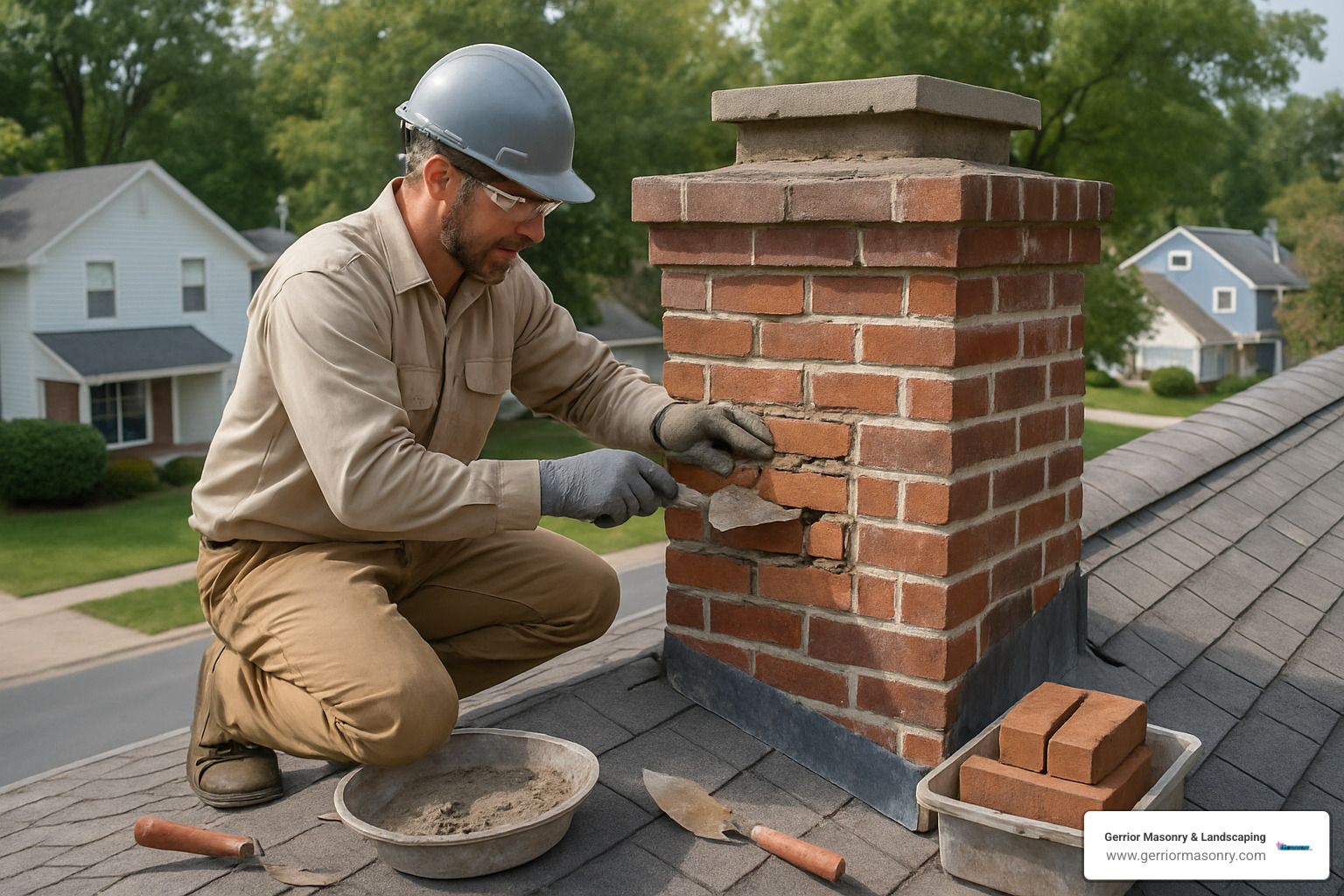
Tuckpointing (also called repointing) is another cost-effective repair option. This process carefully removes deteriorated mortar and replaces it with fresh material, preserving your original bricks while restoring structural integrity. It’s like dental work for your chimney – fill the cavities before they require a full extraction!
Sometimes you only need to replace specific components like the chimney cap, crown, flashing, or damper. These targeted repairs can resolve specific issues without the need for extensive reconstruction.
When Full Replacement Is The Right Call:
Full replacement becomes necessary when your chimney shows signs of severe structural damage – like leaning, extensive brick deterioration, or foundation issues. Safety comes first, and sometimes starting fresh is the only way to ensure it.
If your chimney has experienced a chimney fire, hidden damage may lurk within the structure, compromising its integrity in ways that aren’t immediately visible. The peace of mind from a replacement is worth the investment.
Many older chimneys were built before modern safety standards. These outdated constructions may lack proper liners or use materials that don’t meet current building codes. Replacement provides an opportunity to bring everything up to modern safety standards.
From a practical standpoint, when repair costs climb above 50% of replacement costs, starting fresh often provides better long-term value and safety. As one Woburn client told us, “After getting quotes for extensive repairs on my 85-year-old chimney, I opted for a full replacement with modern materials. Not only did I get a safer chimney, but the energy efficiency of my heating system improved dramatically.”
Step-by-Step Process
Whether you choose repair or replacement, here’s what you can expect from a quality Chimney Repair Services project:
Comprehensive Inspection: We start with a thorough assessment using specialized equipment like camera scopes to detect both visible and hidden damage.
Detailed Estimate: You’ll receive a clear breakdown of costs, timeline, and scope of work – no surprises.
Permitting: We handle all the necessary permits from local building authorities (one less headache for you).
Preparation and Protection: Before work begins, we set up protective barriers to shield your home and landscaping from debris.
Demolition (if needed): We carefully remove damaged portions or the entire chimney structure, minimizing disruption to your home.
Masonry Work: The rebuilding phase uses appropriate materials to ensure proper structural integrity and water resistance.
Curing Time: New masonry work needs time to properly set and cure – rushing this step leads to problems down the road.
Installation of Components: We add or replace the crown, cap, flashing, and liner as needed to complete your system.
Cleanup: Once the work is complete, we thoroughly remove all debris and materials from your property.
Final Inspection: We verify that all work meets safety standards and specifications before considering the job complete.
For projects requiring complete reconstruction, our Chimney Replacement service ensures your new chimney will provide decades of safe, reliable service. We take pride in doing the job right the first time – because when it comes to fire safety, there’s no room for shortcuts.
What Will It Cost? Average Repair vs Replacement Prices
Planning your budget for chimney repair and replacement starts with understanding the potential costs. While every project is unique, having a general idea of price ranges helps you make informed decisions.
Average Repair Costs
Based on industry data (not Gerrior Masonry’s specific pricing), chimney repairs typically fall into three categories:
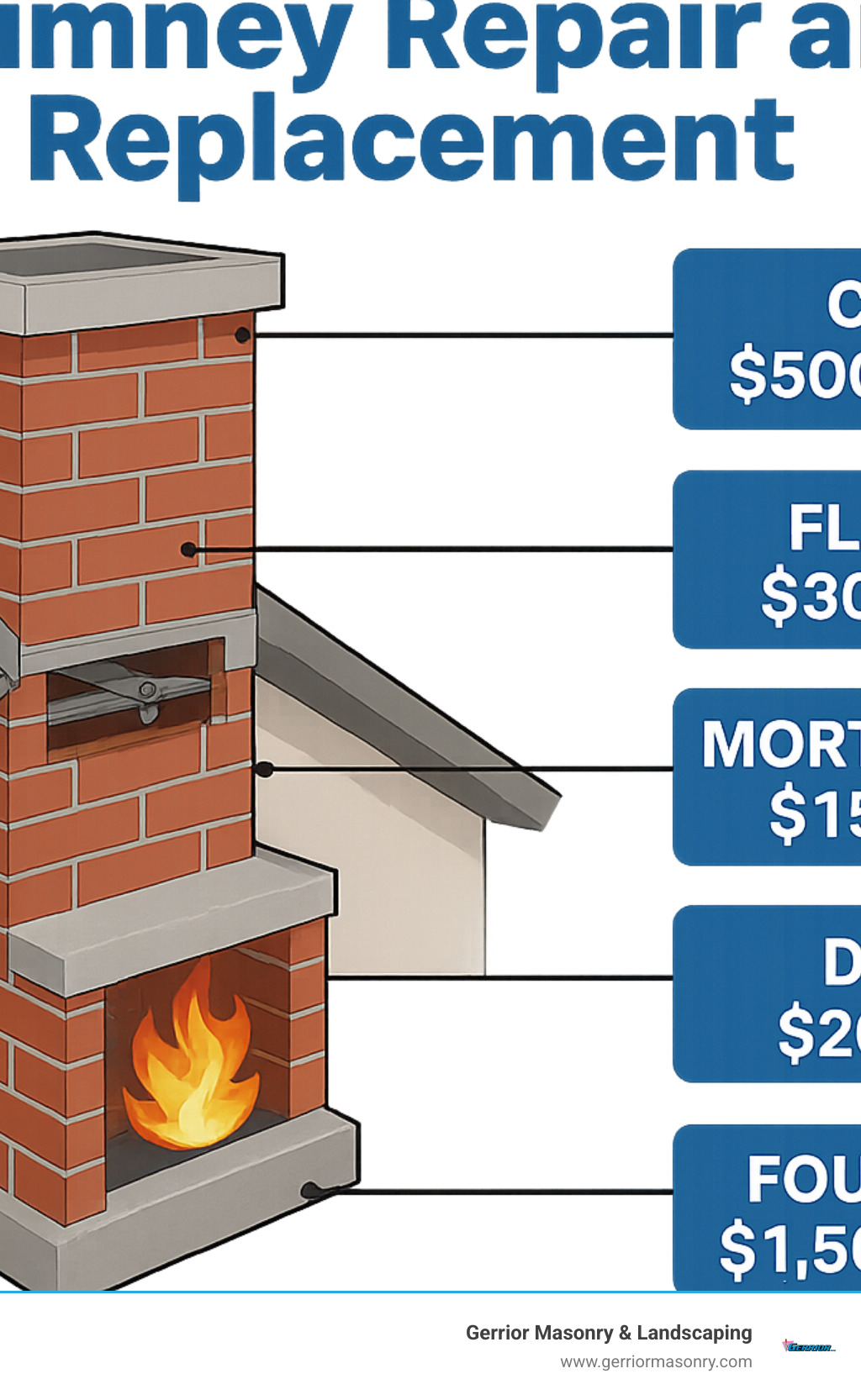
Minor Repairs: $250-$1,500
Those small but important fixes can add up. A new chimney cap might run $100-$500, while crown repairs typically cost $150-$1,000. Minor mortar joint repairs often fall in the $200-$800 range, and flashing repairs generally cost $150-$500. These relatively affordable fixes can prevent much costlier damage down the road.
Moderate Repairs: $1,500-$7,000
When problems have progressed beyond simple fixes, you’re looking at moderate repairs. A partial rebuild above the roofline might cost $1,000-$3,500, while flue liner repairs or replacements typically run $1,000-$5,000. Extensive tuckpointing work can range from $500-$2,500, and adding a chimney cricket (that small peaked structure that diverts water) generally costs $300-$1,000.
Major Repairs: $7,000-$13,300+
Serious structural issues demand significant investment. Structural repairs often start around $3,000 and can reach $8,000 or more. Smoke chamber repairs typically cost $1,000-$3,000, while foundation repairs can be particularly expensive, ranging from $3,000-$10,000.
Average Replacement Costs
When repair isn’t enough, full chimney repair and replacement becomes necessary. Most complete replacements fall between $8,000-$15,000, though complex projects can reach $30,000 or more.
The final price tag depends heavily on your chimney’s size and height. Taller chimneys with multiple flues naturally cost more to replace. The accessibility of your site matters too – chimneys that are difficult to reach require additional safety measures and equipment.
Material choices significantly impact costs as well. Traditional brick masonry, natural stone, or modern prefabricated options each come with different price points. Don’t forget to factor in disposal fees for old materials and possible equipment rental costs – especially if your project requires a crane for a tall chimney.
As one of our Bedford customers wisely noted: “The initial sticker shock of replacement was significant, but when I calculated the ongoing repairs I’d been making for years, plus the improved efficiency and safety, the investment made sense.”
Factors That Move the Needle
Several key elements can dramatically shift your project’s bottom line:
Height and Accessibility play a major role in determining costs. That charming three-story chimney might be beautiful, but reaching it safely requires additional equipment, labor, and time. Limited access points around your home can also complicate the work process and increase costs.
Liner Type decisions balance upfront costs against long-term durability. Stainless steel liners cost more initially (averaging $65-$100 per square foot) but offer exceptional longevity and often come with lifetime warranties. Clay liners cost less upfront but may need replacement sooner.
Weatherproofing Extras are worth considering for long-term protection. Water repellent treatments, quality chimney caps, and proper Chimney Flashing Replacement add to your initial investment but can significantly extend your chimney’s lifespan by preventing water damage.
Geographic Location affects labor rates significantly. Here in Massachusetts, particularly around the Boston metro area, skilled masonry labor typically costs more than the national average. This reflects both the higher cost of living and the specialized expertise required for proper work on New England homes, many of which have historic elements.
Insurance Coverage might offset some costs, particularly if your chimney was damaged by a specific event like lightning or a severe storm. However, most policies won’t cover damage resulting from normal wear and tear or neglect. It’s always worth checking with your insurance provider before beginning major work.
When weighing repair versus replacement costs, investing in quality work now often saves money in the long run. A properly rebuilt chimney should serve your home for decades to come, providing both safety and peace of mind through countless New England winters.
Pro Tips for a Healthy, Long-Lasting Chimney
With proper maintenance, a well-built chimney can last 50-100 years. Here are expert tips to extend your chimney’s lifespan:
Your chimney works hard during cold Massachusetts winters. Treating it right means it’ll keep your family warm and safe for generations. As we often tell our Middlesex County clients, “An ounce of prevention saves a ton of bricks!”
Annual sweeping isn’t just a good idea—it’s essential safety maintenance. The Chimney Safety Institute of America (CSIA) makes it clear: chimneys should be swept whenever creosote buildup exceeds 1/8 inch. This flammable substance is the leading cause of chimney fires, but regular cleaning keeps your family protected.
After repairs, we strongly recommend applying a breathable waterproof sealer to your masonry chimney. Think of it as a GORE-TEX jacket for your bricks—it prevents water absorption while still allowing the masonry to “breathe” and release trapped moisture. This simple step dramatically extends the life of your repairs.
A quality stainless steel chimney cap is perhaps the most cost-effective protection you can buy. For just $100-$500, this simple addition prevents water entry, blocks curious animals, and reduces annoying downdrafts. I’ve seen countless chimneys suffer thousands in damage that a simple cap would have prevented.
When relining becomes necessary, consider investing in a stainless steel liner. While the upfront cost exceeds that of clay alternatives, many come with lifetime warranties and provide superior protection against the extreme heat cycles your chimney endures.
Don’t overlook your mortar joints! Regular chimney tuckpointing (removing and replacing deteriorated mortar) preserves your chimney’s structural integrity and creates a water-tight seal. We recommend using a quality brick cleaner before repointing to ensure proper adhesion.
Here’s an insider tip: schedule your chimney work during spring or summer. You’ll not only avoid the fall rush when everyone suddenly remembers their chimney needs attention, but you might also secure better rates and availability. Your chimney will be ready when that first autumn chill arrives.
Maintenance Checklist
Smart homeowners follow a seasonal maintenance rhythm. After the heating season ends, schedule your spring inspection to assess winter damage and make minor repairs before small problems grow. Look for cracked mortar, damaged caps, or signs of water intrusion.
After severe storms, perform a quick post-storm check from ground level using binoculars. High winds can damage caps and crowns, while lightning strikes can create dangerous structural problems that aren’t always visible from inside your home.
Don’t forget the connection between your gutters and chimney health. Clogged gutters overflow onto chimney bases, accelerating deterioration. Keep them clean and properly functioning, especially where they run near your chimney structure.
One Winchester client who’s followed our maintenance advice for over two decades told me: “In 22 years, I’ve only needed minor tuckpointing because we follow Gerrior’s maintenance schedule. The annual inspection costs are minimal compared to what my neighbors have spent on major repairs.”
Frequently Asked Questions about Chimney Repair and Replacement
What are the health and safety risks of a damaged chimney?
A damaged chimney isn’t just a structural concern—it’s a serious health and safety risk. Fire hazards top the list, as cracks in the flue or chimney structure can allow heat and sparks to reach combustible materials in your home. The National Fire Protection Association reports over 25,000 chimney fires annually in the United States.
Even more insidious is the risk of carbon monoxide poisoning. This colorless, odorless gas can seep into your home through a blocked or damaged chimney. Since you can’t see or smell it, the first signs might be headaches, dizziness, or worse.
Severely damaged chimneys can suffer structural collapse, causing property damage and potential injury. I’ve seen leaning chimneys that looked stable suddenly fail during storms, causing tens of thousands in damage.
For families with asthma or allergies, respiratory issues can worsen when leaking chimneys allow smoke and particulates to enter living spaces. Proper venting isn’t just about comfort—it’s about health.
Does homeowners insurance cover chimney damage?
The answer depends largely on what caused the damage. Most policies cover sudden, accidental damage from specific events like lightning strikes, fire damage (not originating in the chimney), fallen trees, or severe storm damage.
What’s typically not covered? The slow enemies of masonry: gradual deterioration, wear and tear, lack of maintenance, and pre-existing conditions. Insurance companies expect homeowners to maintain their chimneys properly.
To maximize potential coverage, document all chimney maintenance with receipts and photos. If damage occurs, take detailed photos immediately and have a professional assessment done promptly. File claims as soon as possible, as delays can complicate approval.
Always review your specific policy details, as coverage varies significantly between insurers. Some premium policies offer more comprehensive protection than standard homeowner packages.
How long should a well-maintained chimney last?
A quality masonry structure can be remarkably durable. A well-built brick chimney often lasts 50-100+ years with proper care. In fact, we regularly work on colonial-era chimneys throughout Massachusetts that are still performing beautifully after centuries of service.
Internal components have shorter lifespans. Clay tile liners typically need replacement every 15-20 years, while stainless steel liners can last 25+ years and often come with lifetime warranties. A properly constructed concrete crown should give you 10-15 years of protection before needing repairs.
Your chimney cap might need more frequent attention. Galvanized caps may need replacement every 5 years in our harsh New England climate, while stainless steel caps can last 15+ years.
As one of our senior masons likes to say, “A chimney is only as old as its maintenance schedule.” We’ve worked on 200-year-old chimneys in historic Massachusetts homes that are in better condition than 20-year-old neglected ones.
Gerrior Masonry & Landscape Construction is based in Woburn, MA, and proudly serves homeowners throughout Middlesex and Essex County, Massachusetts.
Conclusion
Your chimney isn’t just a charming architectural feature—it’s a vital component of your home’s safety system that deserves proper attention. Whether you’re facing minor mortar damage or considering a complete rebuild, addressing chimney issues promptly can save you thousands in future repairs while keeping your family safe and warm.
Here at Gerrior Masonry & Landscape Construction, we’ve weathered more than three decades of New England’s harshest conditions alongside the chimneys we build and repair. After 34 years of climbing onto rooftops throughout Middlesex and Essex Counties, we’ve seen how proper maintenance can extend a chimney’s life by decades, and how neglect can lead to dangerous conditions.
A well-maintained chimney is your best defense against fire hazards and carbon monoxide risks. While those DIY binocular inspections from your driveway can help spot obvious issues, nothing replaces the trained eye of a professional who knows exactly what to look for inside and outside your chimney structure.
Annual inspections aren’t just a suggestion—they’re recommended by fire safety experts for good reason. Those small cracks you might overlook today could become major structural problems after just one more freeze-thaw cycle.
For homeowners in our service area, we’re always available to answer questions about your specific chimney concerns. If you’d like more detailed information about what repairs might cost for your particular situation, our chimney repair cost page offers comprehensive guidance on budgeting for your project.
When it comes to chimney repair and replacement, working with experienced professionals ensures your investment will stand the test of time. Our team takes pride in delivering solutions that not only solve immediate problems but prevent future issues through proper technique and quality materials.
Don’t wait until you smell smoke in your living room or notice water stains on your ceiling—give your chimney the regular care it needs. A small investment in maintenance today can prevent major headaches tomorrow.
Gerrior Masonry & Landscape Construction is based in Woburn, MA, and proudly serves Middlesex and Essex County, Massachusetts, including Arlington, Bedford, Burlington, Lexington, Winchester, and surrounding communities.
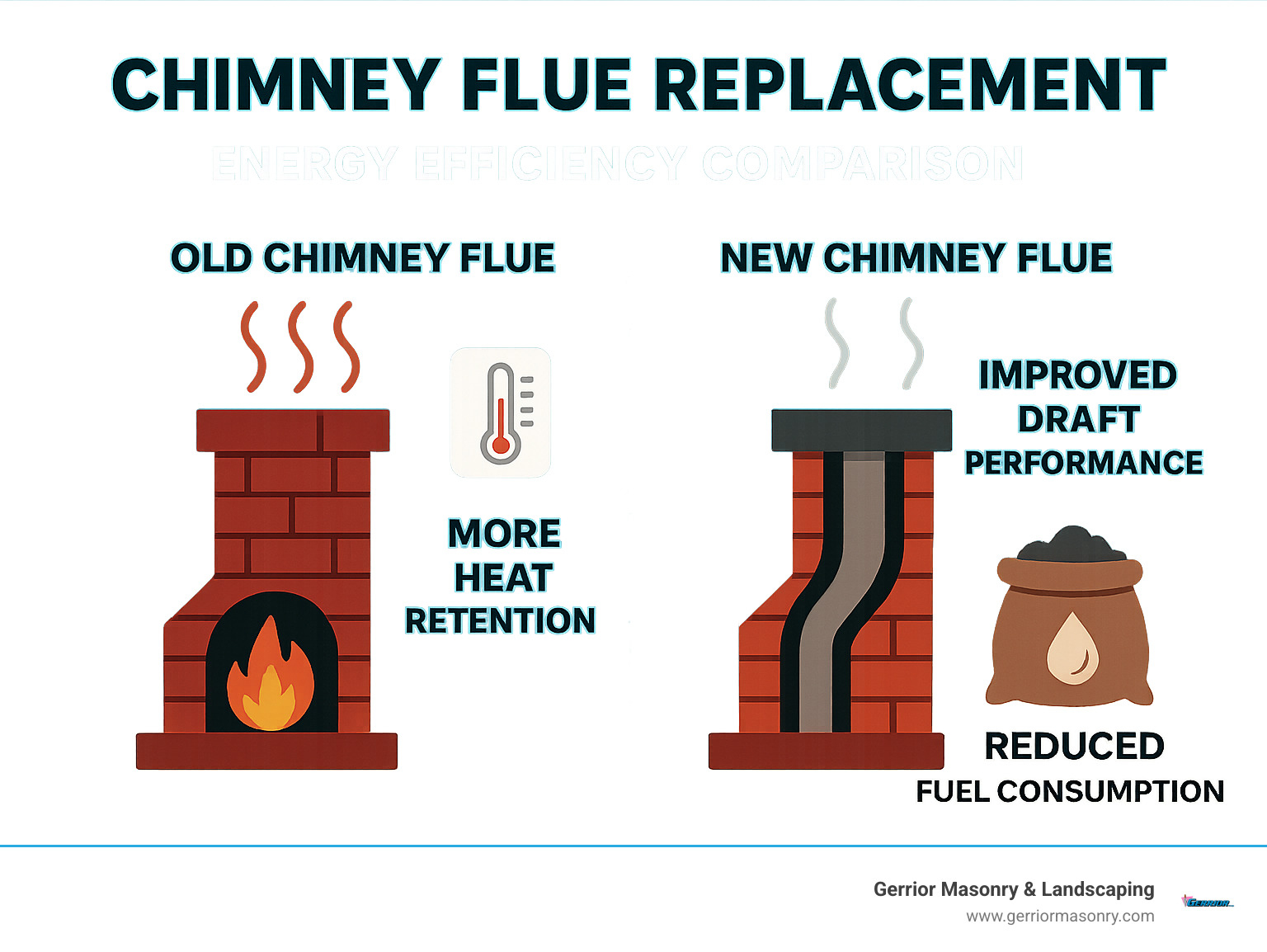
Your chimney flue plays a critical role in your home’s safety system. A damaged or deteriorated flue can lead to serious problems including carbon monoxide poisoning, house fires, and reduced heating efficiency. Over time, the extreme temperature changes, moisture, and corrosive byproducts from combustion can deteriorate even the most durable flue liners.
When it’s time for a chimney flue replacement, you have several options to consider. The right choice depends on your chimney’s condition, the type of heating appliance you use, and your budget. Modern replacement options offer improved safety, better draft performance, and greater energy efficiency compared to older systems.
I’m Joe Gerrior, owner of Gerrior Masonry & Landscape Construction, with over 30 years of experience handling chimney flue replacement projects throughout Massachusetts. Our team specializes in evaluating chimney systems and recommending the most appropriate and cost-effective flue replacement solutions for your specific situation.
Your chimney flue isn’t just a smoke channel—it’s the lifeline of your entire heating system and a critical safety feature in your home. When functioning properly, a chimney flue creates the perfect draft to escort dangerous combustion gases safely outside while preventing hazardous backdrafts that could silently introduce carbon monoxide into your living spaces.
“A chimney is one of the most important fire prevention measures in your house,” as one certified chimney safety expert puts it. “Improperly installed or sized flues can lead to carbon monoxide buildup—a silent killer that puts your entire family at risk.”
Throughout Massachusetts and nationwide, building codes strictly require chimney flues to be intact, correctly sized, and completely free of obstructions. This isn’t just red tape—a damaged flue not only violates these codes but could potentially invalidate your homeowner’s insurance if it contributes to a house fire. That’s a risk no homeowner should take.
When considering chimney flue replacement, understanding your material options is essential:
Flue Material
Lifespan
Temperature Rating
Best For
Cost Range
Clay Tile
50+ years
Up to 2,100°F
Traditional masonry, moderate use
$1,500-$5,000
Stainless Steel
15-25 years
Up to 2,100°F
All fuel types, retrofit
$900-$3,500
Cast-in-Place
50+ years
Up to 1,800°F
Structural reinforcement, older chimneys
$2,500-$7,000
“We’ve seen how a deteriorated flue can compromise an entire chimney system,” shares our senior mason at Gerrior Masonry. “Many homeowners don’t realize their chimney issues started with flue damage until we conduct a thorough inspection and show them the evidence.”
Key Signs You Need Chimney Flue Replacement
Recognizing when your chimney flue needs replacement can prevent dangerous situations and save you from more expensive repairs down the road. Keep an eye out for these warning signs:
Cracked or damaged flue tiles are often invisible to the naked eye but can be detected during a professional inspection. These cracks create dangerous pathways for heat, smoke, and carbon monoxide to escape into your home’s structure.
Spalling bricks or mortar is a red flag you shouldn’t ignore. If you notice pieces of tile, brick, or mortar in your fireplace or at the bottom of your chimney, your flue might be deteriorating from the inside out.
Smoke backing up into your living space isn’t just annoying—it’s a clear danger signal. When smoke can’t properly vent upward and out, it often indicates flue damage or blockage that requires immediate attention.
White staining or moisture on chimney walls, known as efflorescence, tells you that water is penetrating your chimney. Over time, this moisture can severely damage your flue liner and compromise structural integrity.
Evidence of animals or nests suggests your chimney is accessible to wildlife. Birds, squirrels, and other critters often find their way into damaged flues, creating dangerous blockages and fire hazards.
“During a recent inspection in Lexington, we found a chimney where the flue tiles had completely crumbled at several joints,” recalls our inspection specialist. “The homeowner had no idea until we showed them the camera footage—they were shocked at how close they’d come to a potential house fire.”
Average Costs & Timelines
When planning for a chimney flue replacement, costs can vary widely based on several factors including the height of your chimney, diameter needs, material choice, and complexity of installation. Based on internet research and industry averages, here’s what homeowners might expect:
A basic stainless steel liner installation typically runs $900-$2,500, while a mid-range relining with proper insulation might cost $2,000-$5,000. For premium cast-in-place solutions that provide structural reinforcement, expect to invest $3,500-$7,000. In cases requiring a complete chimney rebuild with a new flue, costs can range from $5,000-$15,000.
Most standard chimney flue replacement projects take just 1-2 days to complete, though more complex jobs naturally require additional time. Weather conditions play an important role too—proper curing of materials like mortar is essential for a safe, long-lasting installation.
Many local municipalities require permits for chimney work, especially when structural components are involved. When you work with professional chimney services, they’ll typically handle the permit process for you, ensuring your project meets all local building codes and requirements.
Please note that these are average costs based on internet data and not actual costs for Gerrior Masonry services. Your specific project may vary significantly based on your chimney’s condition and requirements.
1. Stainless Steel Flexible Liner Kits
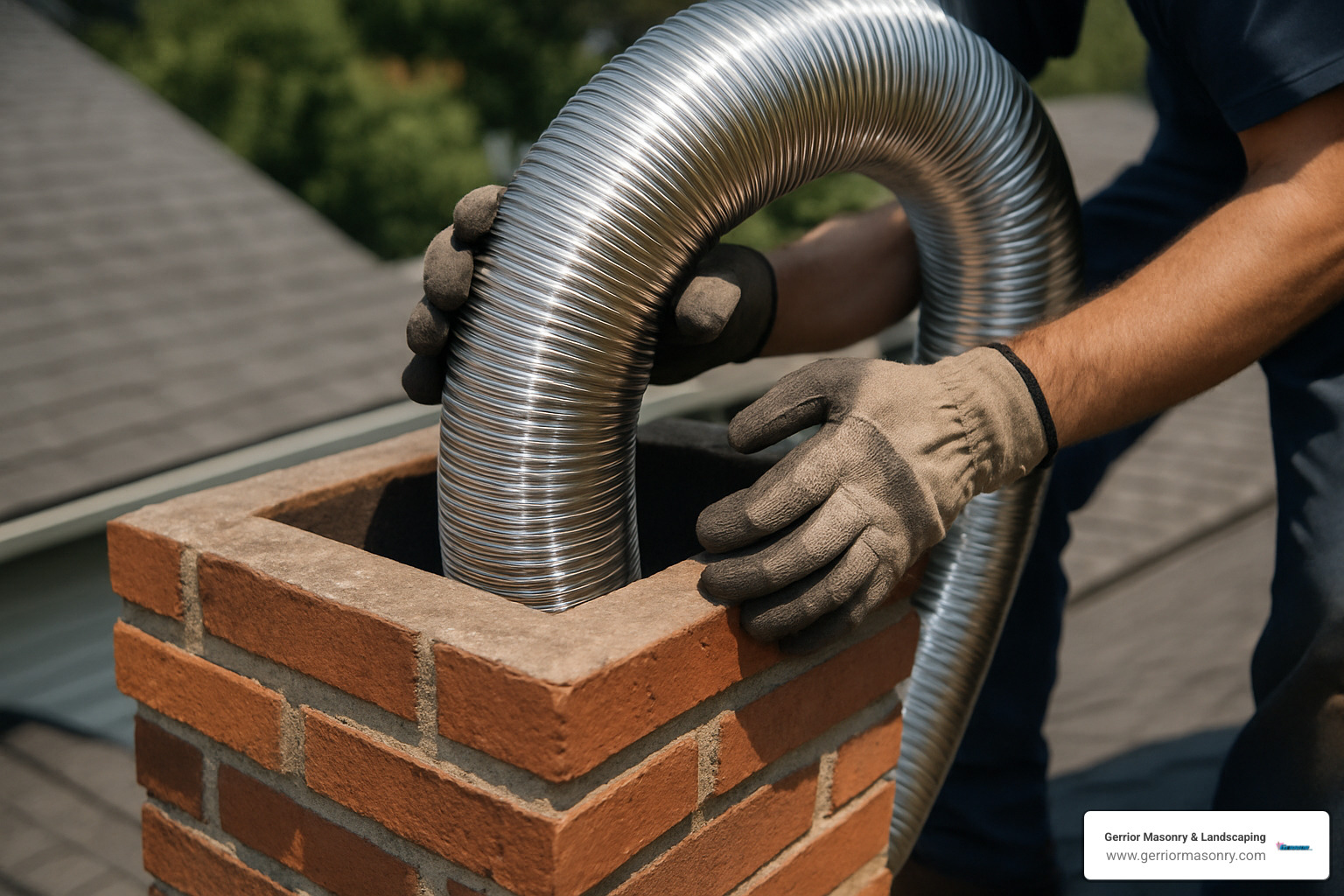
When it comes to chimney flue replacement, stainless steel flexible liners have earned their place as the gold standard in the industry. These remarkable liners offer a perfect blend of durability, versatility, and safety that’s hard to beat for almost any home.
“I remember installing a flexible liner for a family in Winchester last winter,” shares Joe Gerrior, our founder. “Their chimney had been smoking back into their living room for months. Once we slipped in that new liner, the difference was like night and day—warm fires without the worry.”
What makes these liners so special is their continuous, seamless design. Unlike traditional clay tiles with their numerous joints, a stainless steel flexible liner creates an unbroken passage that prevents dangerous gases like carbon monoxide from seeping into your home through deteriorating masonry.
The quality of stainless steel makes all the difference in how long your liner will last. Premium liners typically come in two grades: 316-grade stainless steel, which works beautifully for wood-burning applications, and 904-grade stainless steel, which offers superior protection against the corrosive effects of gas or oil appliances. Many manufacturers stand behind these products with lifetime warranties when they’re professionally installed—that’s confidence you can count on.
A typical flexible liner kit includes everything you need: the liner itself, top and bottom connecting plates, an appliance connector, and sometimes an insulation wrap (though this might be sold separately, we strongly recommend it for improved performance and safety).
These flexible marvels come in diameters ranging from 3 inches for small pellet stoves all the way up to 12 inches for large open fireplaces. Their flexibility is a game-changer for older homes with chimneys that twist and turn.
“We recently worked on a 1920s colonial in Lexington,” notes our senior technician. “That chimney had three separate offsets that would have made traditional relining impossible. The flexible liner steerd those turns beautifully, and now the family enjoys their fireplace without worry.”
For more comprehensive information about full chimney rebuilds, check out our detailed guide on Chimney Replacement.
Choosing the Right Diameter
Getting the diameter right is perhaps the most critical decision you’ll make for your chimney flue replacement. It’s a bit like Goldilocks—not too small, not too big, but just right.
An undersized liner creates poor draft, causing smoke to back up into your home and accelerating dangerous creosote buildup. On the flip side, an oversized liner allows flue gases to cool too quickly, creating condensation that can damage both the liner and your masonry over time.
The perfect size depends primarily on three factors:
First, consider your appliance’s BTU output. Higher BTU appliances produce more exhaust gases and need larger diameters to handle the volume. Your wood stove or fireplace insert should have a manufacturer’s recommendation for minimum flue size.
Second, factor in your chimney’s height. Taller chimneys naturally create stronger draft, but longer runs sometimes benefit from increasing the diameter by an inch over the minimum recommendation, especially for vertical runs over 15 feet.
Third, think about your fuel type. Wood-burning appliances typically need larger flues than gas appliances with similar BTU ratings due to the different combustion characteristics.
Here’s a helpful reference point: a standard wood stove usually requires a 6-8″ liner, while a gas fireplace might only need 4-6″. Pellet stoves can often work with even smaller 3-4″ liners, while large open fireplaces might require 8-12″ diameters.
I strongly recommend adding an insulation sleeve around your flexible liner. “It’s one of those upgrades that pays for itself,” explains our installation team leader. “Insulation keeps flue gases warmer, which improves draft, reduces creosote buildup, and extends the life of your liner by preventing damaging condensation.”
One of our Woburn customers called recently to thank us for insisting on the insulation sleeve with her liner. “My fires start easier, smoke less, and seem to burn hotter now,” she told us. “Plus, I’m using less wood than before!”
Gerrior Masonry & Landscape Construction is based in Woburn, MA, and services Middlesex and Essex County, Massachusetts. With decades of experience installing flexible chimney liners, we’d be happy to help determine the perfect size and configuration for your home.
2. Rigid Stainless Pipe Systems
When it comes to chimney flue replacement, rigid stainless steel pipe systems represent the Cadillac of options. Unlike their flexible cousins, these systems feature perfectly smooth interior walls that create a chimney sweeper’s dream – optimal draft conditions with minimal places for creosote to hide.
Think of rigid systems as building a smooth highway for smoke and gases, rather than a winding country road. These systems consist of interlocking sections (typically in 1-foot or 3-foot lengths) that create a straight pathway upward. Each joint is carefully sealed with high-temperature silicone or specialized locking bands to ensure exhaust gases stay exactly where they belong – inside the flue.
“The difference between a flexible liner and a rigid system is like comparing a garden hose to a drain pipe,” explains our lead technician. “Both work, but when you need consistent, powerful flow, the rigid option simply performs better.”
The benefits of choosing rigid stainless steel are substantial. Their superior draft performance means your wood stove or fireplace draws better, creating more efficient burns and less smoke in your living space. The straight sides make chimney sweeping more effective since brushes can make complete contact with every inch of the surface. Their heavy-gauge construction stands up to years of high temperatures without warping or deteriorating.
We recently installed a rigid system for a family in Lexington who had struggled with a smoky wood stove for years. “They called the next day absolutely amazed,” our installation team leader shares. “Their stove now reaches temperature in half the time, and they haven’t seen a wisp of smoke in the house since.”
Most quality rigid systems come in either 304-grade or 316-grade stainless steel, with the latter offering better protection against moisture and corrosive byproducts. While they do cost about 20-30% more than flexible liners, the performance advantages make them worth considering for serious wood-burners.
When Rigid Beats Flexible for Chimney Flue Replacement
While flexible liners are the go-to for most homes, there are specific situations where rigid stainless steel systems clearly shine brightest:
For straight chimneys without any bends or offsets, rigid systems offer best performance advantages. Without the need to steer turns, you might as well enjoy the superior draft and easier maintenance of a rigid system.
Commercial applications like restaurant kitchens, boilers, and industrial exhaust systems benefit tremendously from rigid systems’ strength and optimal airflow. We installed one for a popular wood-fired pizza restaurant in Burlington, and not only did it meet strict fire code requirements, but it helped their ovens maintain more consistent temperatures.
If you’ve invested in a high-efficiency wood stove (especially newer EPA-certified models), pairing it with a rigid flue system helps you get the most from your purchase. These stoves are designed to perform optimally with excellent draft conditions, which rigid systems excel at providing.
Homeowners in wildfire-prone areas often choose rigid systems for their superior heat resistance and structural integrity. When embers land on your roof during fire season, the extra protection of a heavy-duty rigid system provides invaluable peace of mind.
For extremely tall chimneys exceeding 30 feet, rigid systems maintain better structural integrity over time. The interlocking sections won’t stretch or sag like flexible liners might in very tall applications.
“We always present both options to our customers,” says our project manager. “But in certain situations, I’ll strongly recommend rigid systems because I know they’ll provide a better long-term solution. It’s like the difference between good and great – both work, but one clearly outperforms in the right circumstances.”
3. Cast-In-Place Poured Concrete Liners
For chimneys with structural issues or those in need of comprehensive restoration, cast-in-place concrete liners offer a solution that goes beyond simply relining the flue. This method creates a seamless, monolithic liner that reinforces the entire chimney structure while providing a safe, durable flue.
Cast-in-place liners are formed by pouring specialized refractory concrete around a temporarily inflated form inside your chimney. Once the concrete cures, the form is removed, leaving behind a smooth, seamless flue liner that’s perfectly sized for your chimney.
These systems offer impressive specifications:
– Temperature rating of up to 1,800°F
– Expected lifespan of 50+ years
– Ability to conform to irregular chimney interiors
– Structural reinforcement for aging masonry
“Cast-in-place liners are particularly valuable for historic homes,” notes our restoration specialist. “We recently completed a chimney flue replacement using this method for a 180-year-old Federal-style home in Concord. The system not only restored safe function but also helped preserve the historic masonry.”
This method is also ideal for earthquake retrofitting in older homes. The continuous concrete sleeve adds significant structural integrity to the chimney, helping it resist seismic forces that might otherwise cause catastrophic failure.
Pros & Cons for Chimney Flue Replacement
Pros of Cast-in-Place Liners:
– Creates a seamless, joint-free surface that eliminates the risk of exhaust leakage
– Adds structural strength to deteriorating masonry chimneys
– Conforms perfectly to irregular chimney interiors
– Excellent insulating properties improve draft and efficiency
– Exceptionally long service life (50+ years)
– Can be installed in chimneys with offsets or irregular shapes
Cons of Cast-in-Place Liners:
– Higher cost than stainless steel liners (typically $2,500-$7,000)
– Installation is more complex and time-consuming
– Cannot be easily removed or replaced if damaged
– Requires specialized equipment and expertise
– Not ideal for DIY installation
– May reduce flue diameter more than other options
“For a client in Winchester with a severely deteriorated chimney, we recommended a cast-in-place solution,” explains our senior mason. “The chimney had multiple cracks in the masonry and flue tiles. The poured liner not only restored safe function but also reinforced the structure, avoiding the need for a complete rebuild that would have cost thousands more.”
The decision to use a cast-in-place liner should be based on a thorough inspection of your chimney’s condition. While more expensive initially, this solution can be more cost-effective than major masonry repairs or complete chimney rebuilding when structural issues are present.
4. Chimney Flue Draft Stoppers & Plugs
Once you’ve invested in a chimney flue replacement, don’t overlook the importance of managing your chimney during its downtime. Those beautiful winter evenings by the fire are wonderful, but what about the other 99% of the time when your fireplace sits unused? That’s where chimney draft stoppers come in—your secret weapon against wasting energy.
Think of your chimney as a highway for your home’s heated air to escape. Without proper sealing, your hard-earned warmth simply travels up and out, while cold air rushes down to replace it. It’s like leaving a window wide open during winter!
The Flueblocker wool plug has become something of a homeowner favorite, boasting an impressive 4.4-star rating from over 1,200 reviews. Customers rave about the immediate difference they feel in rooms with fireplaces after installation. One Massachusetts homeowner told us, “It’s like someone finally closed that invisible window we didn’t know was open all winter.”
Draft stoppers come in several effective varieties. Wool chimney sheep conform beautifully to irregular flue shapes and last for years. Inflatable pillows create an airtight seal and adjust to various sizes but need occasional reinflation. Rigid foam plugs offer durability and excellent insulation, though they work best with standard-sized flues. Damper sealing kits improve existing dampers that often leave surprising gaps even when “closed.”
“I’ve seen countless homes where people are essentially heating their backyards through poorly sealed chimneys,” shares our energy efficiency specialist. “After completing a chimney flue replacement for a family in Reading, we installed a wool chimney sheep as the final touch. They called a week later amazed at how much less their heating system was running.”
Integrating Draft Stoppers After Chimney Flue Replacement
Adding a draft stopper is the perfect finishing touch to your chimney flue replacement project. The benefits are immediate and significant.
Reduced heating costs top the list—energy studies suggest an unsealed chimney can increase your heating bills by 10-20%. That’s potentially hundreds of dollars floating away each winter! By blocking that escape route, draft stoppers quickly pay for themselves.
Improved comfort is something our customers notice right away. Those mysterious cold spots and drafts that seemed to appear from nowhere? They often originate from your chimney pulling warm air up and out while allowing cold air to sink down into your living spaces.
Draft stoppers also provide excellent odor control, preventing outside smells, rain odors, and even barbecue smoke from neighboring homes from wafting into your living room. They create an effective pest barrier too, blocking the entry point for curious critters looking for a cozy new home.
Installation couldn’t be simpler. Measure your flue opening, select a stopper slightly larger than those dimensions, and insert it when your fireplace is completely cool. The most important safety step? Remembering to remove it before lighting your next fire! We always recommend attaching a visible reminder tag to your fireplace tools.
“One clever trick we recommend to our clients is taking a photo of your draft stopper installed, then printing it and taping it to your fireplace screen or tools,” suggests our safety specialist. “It’s a foolproof visual reminder to remove it before starting a fire.”
With most quality draft stoppers priced between $45-$65, they’re an affordable addition that delivers immediate comfort and energy savings. It’s the perfect final touch to your chimney flue replacement project that keeps on giving back year after year.
5. Chimney Caps & Rain Guards
The finishing touch to any chimney flue replacement project isn’t just a nice-to-have—it’s a must-have. A quality chimney cap or rain guard serves as your new flue’s first line of defense against the elements, and skipping this step would be like buying a new car and parking it permanently in the rain.
Think of chimney caps as the umbrella for your chimney system. They typically feature a metal cover supported by legs or a cage, with mesh sides that allow smoke to escape while keeping rain, animals, and debris out. The design is simple but incredibly effective at protecting your investment.
When shopping for a chimney cap, you’ll find several material options to consider. Stainless steel caps are the gold standard, offering exceptional corrosion resistance even in harsh coastal environments. While they come with a higher price tag, their 15-25 year lifespan makes them worth every penny. For budget-conscious homeowners, galvanized steel caps provide decent protection at a lower cost, though they’ll typically need replacement after 5-10 years when rust begins to take hold.
For those looking to add a touch of elegance to their home, copper chimney caps are best in both beauty and longevity. They develop a gorgeous patina over time and can last 50+ years, making them a true lifetime investment. And for homes with complex chimney systems, multi-flue caps provide comprehensive coverage for chimneys with multiple flue openings.
“I’ll never forget the client in Winchester who insisted they didn’t need a cap after their chimney flue replacement,” shares our seasoned mason. “Six months later, we were back to clear out a raccoon family that had made themselves quite comfortable in their chimney. The cost of animal removal and cleanup was four times what a quality cap would have cost!”
Based on internet research, chimney caps typically range from $50 for basic models to $300+ for custom copper designs—a small price to pay for protecting your much larger flue replacement investment.
After investing in a chimney flue replacement, leaving your chimney without a cap is like buying a new smartphone without a case—unnecessarily risky. A quality chimney cap delivers benefits that far outweigh its modest cost.
Water protection is perhaps the most crucial benefit. Rain entering your chimney is the number one enemy of both masonry and metal components. Even stainless steel liners can develop corrosion at seams where water collects. A properly installed cap keeps your flue dry, potentially doubling the lifespan of your liner.
Your chimney’s draft performance actually improves with the right cap design. By preventing swirling winds from pushing down your chimney (downdrafts), caps help maintain the steady upward flow that’s essential for proper exhaust venting and efficient burning.
The wildlife barrier function of chimney caps can’t be overstated. Birds don’t just build nests—they bring twigs, debris, and parasites into your chimney system. Squirrels and raccoons can cause even more damage, tearing at liners and masonry in their nesting efforts. The mesh sides of a quality cap create an effective barrier while still allowing smoke to exit.
For those using wood-burning appliances, the spark arrestor feature (typically 3/4″ mesh openings) prevents live embers from landing on your roof or nearby trees—a critical safety feature, especially in dry conditions. This feature is so important that many local building codes now mandate spark arrestors, particularly in wildfire-prone areas.
“We recently completed a chimney flue replacement for a lovely colonial in Reading,” notes our project manager. “The homeowner opted for our recommended stainless steel cap with a lifetime warranty. During our first heavy rainstorm after installation, she called just to thank us—she could finally enjoy a rainy evening without the constant dripping sounds she’d endured for years.”
When selecting your cap, consider both function and aesthetics. The right cap not only protects your investment but can improve your home’s appearance. For secure installation, we recommend top-mounted models that bolt directly to the flue tile or crown, providing superior wind resistance compared to simpler slip-in designs.
Gerrior Masonry & Landscape Construction, based in Woburn, MA, provides expert chimney flue replacement services throughout Middlesex and Essex County, Massachusetts. Our experienced team can help you select and install the perfect chimney cap to protect your investment for years to come.
Frequently Asked Questions about Chimney Flue Replacement
How often should a flue be inspected after replacement?
After investing in a chimney flue replacement, regular maintenance becomes your best friend for long-term safety and performance. The National Fire Protection Association (NFPA) recommends annual inspections by a CSIA-certified chimney sweep, and we couldn’t agree more.
Think of your chimney like your car—regular check-ups prevent bigger problems down the road. For most homes, an annual inspection before winter hits is perfect timing. But if you’re a frequent fire enthusiast (burning more than three times weekly during cold months), consider bumping that up to twice yearly—once before the season starts and again midway through.
“I remember visiting a client in Burlington for a routine one-year follow-up,” shares our inspection specialist with a smile. “We finded their new stainless steel liner had a small separation at one connection point. Nothing major yet, but catching it early saved them from what could have become a serious safety headache down the road.”
Today’s inspections have gone high-tech, with specialized video cameras that can spot tiny issues invisible to the naked eye. These camera scans let us thoroughly check your system without tearing anything apart—giving you peace of mind that everything’s working exactly as it should.
Can I DIY a chimney flue replacement?
The question of DIY chimney flue replacement reminds me of that time my neighbor decided to replace his own car transmission after watching a YouTube video. Let’s just say his car didn’t move for months afterward!
While technically possible for those with serious home improvement skills, I generally recommend leaving flue replacement to the professionals. The stakes are simply too high—improper installation risks house fires, carbon monoxide poisoning, and structural damage.
That said, if you’re determined to tackle this yourself, here’s what you should know:
DIY is most feasible when you have a single-story home with a straight chimney and you’re installing a flexible liner. Rigid systems and cast-in-place liners require specialized equipment that most homeowners don’t have sitting in their garage.
Safety comes first—you’ll need proper gear including a respirator, eye protection, heavy gloves, knee pads, and a hard hat. For roof work, fall protection isn’t optional! You’ll also need to check local building codes and pull permits, as many towns require inspections even for DIY chimney work.
“We’ve unfortunately had to correct several DIY flue installations gone wrong,” our repair specialist notes with a sympathetic shake of his head. “In most cases, the homeowner ended up spending more on corrections than professional installation would have cost in the first place.”
If you’re still considering the DIY route, at least consult with a professional first. Many chimney experts offer consultation services that can help you avoid costly mistakes and keep your family safe.
Do new liners improve energy efficiency?
Absolutely! A proper chimney flue replacement can make a noticeable difference in your home’s energy efficiency—and you’ll likely feel it in both comfort and costs.
When we install a new liner, we’re essentially creating an optimized pathway for combustion gases. This improves draft performance, helping your heating appliance operate at its peak efficiency. Poor draft conditions cause incomplete combustion, which is basically throwing money up the chimney in the form of wasted fuel.
Modern liners, especially those with insulation, keep flue gases warmer as they rise. This creates stronger updraft while reducing the amount of your home’s heated air that gets pulled up the chimney. It’s like the difference between a well-fitted winter coat and one that’s two sizes too big—both might keep you warm, but one does it much more efficiently.
For wood-burning systems, better draft and higher flue temperatures reduce creosote buildup. Less creosote means a cleaner flue that maintains efficient operation longer between cleanings.
“I’ll never forget the call from our client in Winchester,” shares our energy efficiency specialist with a grin. “After we installed an insulated stainless steel liner, he was amazed that his wood stove was producing more heat while actually using less wood. His exact words were ‘My wife doesn’t need to wear two sweaters in the living room anymore!'”
For maximum efficiency, consider pairing your new flue with a quality draft stopper to use when the fireplace isn’t burning. This simple addition prevents warm air from escaping up the chimney during heating season—a small investment that pays dividends on cold winter nights.
Conclusion
Investing in a quality chimney flue replacement is one of the most important safety upgrades you can make for your home. Beyond keeping your family safe from carbon monoxide and preventing house fires, a properly functioning flue improves heating efficiency, extends the life of your heating appliance, and gives you valuable peace of mind during those cold winter months.
When the wind is howling outside and your fireplace is crackling with warmth, there’s comfort in knowing your chimney system is working exactly as it should. After helping hundreds of Massachusetts homeowners with their chimney needs, we’ve seen how the right flue replacement transforms both safety and comfort.
When selecting the right flue replacement for your home, consider these essential factors:
Your heating appliance needs different venting requirements depending on whether you’re using wood, gas, or pellets. The structural condition of your existing chimney matters too—some chimneys need the reinforcement that only cast-in-place liners can provide. While stainless steel and cast-in-place liners cost more initially, their durability often provides better long-term value for your investment.
Don’t forget the accessories that complete your chimney system. A quality chimney cap prevents water damage and keeps animals out, while draft stoppers significantly improve your home’s energy efficiency when the fireplace isn’t in use. These simple additions protect and improve your flue replacement investment.
“After completing hundreds of chimney flue replacements, I’ve seen how transformative proper venting can be,” says Joe Gerrior. “Not only do our clients enjoy greater safety, but many report their heating appliances performing better than ever before.”
At Gerrior Masonry & Landscape Construction, we’ve been helping homeowners throughout Middlesex and Essex Counties with their chimney flue replacement needs for over 30 years. Our experienced team provides thorough inspections, honest recommendations, and expert installation services to ensure your chimney system operates safely and efficiently for years to come.
Gerrior Masonry & Landscape Construction is based in Woburn, MA, and services Middlesex and Essex County, Massachusetts, including Arlington, Lexington, Winchester, Burlington, Bedford, and surrounding communities. Contact us today for expert chimney flue replacement and repairs.
chimney flashing replacement: 7 Powerful Ways to Stop Leaks 2025
Why Proper Chimney Flashing Matters for a Leak-Free Home
If you’re dealing with a leaky chimney, chimney flashing replacement is likely the solution you need. Here’s what you should know:
Chimney Flashing Replacement at a Glance:
* Average Cost: $400-$1,600 (based on internet data)
* DIY Cost: $20-$200 for materials
* Professional Labor: Approximately $75/hour
* Typical Lifespan: 15-30 years when properly installed
* Signs of Failure: Water stains on ceiling, rust streaks, discolored bricks
* Best Time for Replacement: During roof replacement or in dry, mild weather
Chimney flashing replacement involves installing new metal barriers where your chimney meets the roof to prevent water infiltration. This critical roofing component creates a waterproof seal that diverts rainwater away from the vulnerable junction where your chimney penetrates the roof. When flashing fails, it’s often the first place experienced roofers check when water intrusion occurs.
Like weather stripping for your doors and windows, flashing creates a protective barrier against the elements. However, unlike simple weather stripping, flashing failure can lead to extensive and expensive water damage to your home’s structure.
Most chimney leaks aren’t actually from the chimney itself but from deteriorated or improperly installed flashing. Sheet-metal flashings are the most common cause of chimney leaks, and while temporary fixes like roofing tar might seem to solve the problem, they only mask the underlying issue.
I’m Joe Gerrior, owner of Gerrior Masonry & Landscape Construction, and I’ve overseen hundreds of chimney flashing replacement projects throughout my 34 years of experience serving Massachusetts homeowners. Our team specializes in ensuring your chimney isn’t just visually appealing but also functionally sound against New England’s challenging weather.
According to the National Roofing Contractors Association, proper flashing installation is critical to preventing water damage in homes, and should be inspected regularly as part of routine roof maintenance.
Why Chimney Flashing Fails and How to Spot Trouble
There’s an old saying among Massachusetts homeowners: “April showers bring May flowers—and chimney leaks.” As the spring rains arrive, our phone at Gerrior Masonry starts ringing with calls about water finding its way inside homes through chimney areas.
Your chimney stands as one of the most vulnerable points on your entire roof. The place where the chimney meets your roof creates a natural interruption in your home’s water-shedding system. When chimney flashing replacement becomes necessary, it’s usually because of one of these common failures:
Age and weathering take their toll on even the highest quality flashing. After years of expanding in summer heat and contracting in winter cold, metal flashings fatigue and crack. The sun’s UV rays break down caulking compounds, while wind-driven rain tests every seam.
Improper installation is surprisingly common, especially when the original roofer rushed or cut corners. “I’ve seen flashing that wasn’t even properly stepped into the shingles,” notes our lead mason. “It looked fine from the ground but provided zero protection.”
Rust and corrosion eat away at galvanized steel flashing over time, particularly in coastal areas where salt air accelerates deterioration. Those tiny rust spots eventually become actual holes.
House settling creates subtle movements that can break flashing seals. As your foundation shifts slightly over decades, that rigid chimney doesn’t move with it, stressing the connection point.
Ice dam formation in New England winters can be particularly damaging. When ice builds up along your roof edge, the expanding ice can literally lift or tear flashing away from the chimney.
What makes chimney leaks particularly tricky is how they manifest. Water entering around your chimney rarely drips straight down. Instead, it typically travels along rafters or roof decking before appearing as ceiling stains—often several feet away from the actual chimney. I’ve seen homeowners focus on plumbing leaks or roof vents when the real culprit was failing chimney flashing all along.
“Once flashing fails, it should be fully replaced to avoid recurring leaks,” explains our lead mason. “Cement and caulk are temporary fixes at best.”
Early-Warning Signs You Can’t Ignore
Don’t wait until your ceiling resembles a Rorschach test of water stains. Here are the early warning signs that your chimney flashing replacement time has arrived:
Puddles in the firebox often surprise homeowners who assume water in the fireplace must be coming down the flue. In reality, water collecting in your firebox typically indicates flashing failure, not a chimney cap problem.
Discolored bricks around your chimney tell a story. Dark water stains or white chalky deposits (called efflorescence) mean moisture is penetrating the masonry—often through failed flashing.
Rust streaks running down from flashing points are like neon signs announcing corrosion. These orange-brown trails indicate your metal flashing is actively deteriorating.
Mortar gaps where counter flashing meets the chimney brick provide easy entry points for water. When this mortar cracks or falls out, your water barrier is compromised.
One client in Wilmington called us after noticing a musty smell in their living room. Our inspection revealed water had been seeping through deteriorated flashing for months, creating hidden mold inside the wall adjacent to the chimney. What could have been a simple chimney flashing replacement had escalated to a much costlier repair.
How Often Should You Inspect?
The best defense against expensive water damage is regular inspection. Here’s the schedule we recommend to our Massachusetts clients:
Yearly professional inspection should be part of your home maintenance calendar. The National Fire Protection Association recommends annual chimney inspections not just for fire safety but also to identify water issues before they cause structural damage. Late autumn is ideal timing, before winter weather puts your flashing to the test.
Seasonal self-checks with binoculars from ground level can catch obvious problems. Look for missing or lifted flashing, excessive rust, or damaged caulking. The changing of seasons—particularly after winter—is the perfect time for these visual inspections.
Post-storm walk-arounds are worth your time after severe weather. High winds, hail, or heavy rain can damage or dislodge flashing. A quick check might catch problems before the next rainfall turns them into leaks.
Spring leak vigilance pays off because this is when most chimney leaks reveal themselves. As snow melts and spring rains arrive, water infiltration becomes more obvious. Don’t ignore even minor signs of moisture.
Most quality flashing installations last 15-30 years, but this lifespan varies dramatically based on your local climate, the materials used, and installation quality. If your flashing is approaching the 15-year mark, a professional evaluation makes sense even without visible problems.
Preventative maintenance always costs less than emergency repairs and water damage restoration. A timely chimney flashing replacement could save you thousands in potential damage to your home’s structure, insulation, and interior finishes.
Gerrior Masonry & Landscape Construction is based in Woburn, MA, and services Middlesex and Essex County, Massachusetts.
Anatomy & Material Choices for a Leak-Proof System
Understanding the components of chimney flashing helps you make informed decisions about replacement options. A proper chimney flashing system isn’t just a single piece of metal—it’s like a well-choreographed dance of components working together to channel water away from where your chimney meets your roof.
Understanding the Three-Piece System
When we talk about chimney flashing replacement, we’re actually discussing a system of three main components working together. Think of it as a three-layer defense against water intrusion.
The first layer is your base flashing, also called apron flashing. This is essentially the foundation of your flashing system—a wide piece at the bottom that extends from under your shingles and runs 4-6 inches up the front of your chimney. It’s your first line of defense, directing water onto the roof surface rather than behind the chimney.
Next comes the step flashing, those L-shaped pieces running up both sides of your chimney. Each piece overlaps the one below it and weaves between your shingle courses—creating a series of “steps” that channel water away from the chimney. I often tell homeowners to picture it like shingles for your chimney’s sides.
The final protective layer is your counter flashing or cap flashing. This is embedded directly into the mortar joints of your chimney and overlaps both the base and step flashing below. It’s like the roof over your flashing system, preventing water from sneaking in from above.
“Flashing components work like a zipper’s teeth,” explains our senior mason. “Each piece must properly overlap and interlock with adjacent pieces to create a waterproof barrier. If even one piece is compromised, the entire system can fail.”
For wider chimneys (over 30 inches), we also install what’s called a chimney saddle or cricket. This isn’t technically flashing, but rather a small peaked structure installed behind the chimney that diverts water around it instead of allowing it to pool. As one client memorably described it, “It’s like a tiny roof for your chimney’s back.”
Material Pros, Cons & Service Life
The material you choose for your chimney flashing replacement makes a huge difference in how long it will last and how much you’ll spend. Here’s what you need to know about the most common options:
Galvanized steel is the budget-friendly workhorse, costing around $0.50 per linear foot with a lifespan of 15-20 years. It’s readily available and gets the job done, but it will eventually rust and requires periodic painting to extend its life. For most Massachusetts homes on a budget, we recommend 26-gauge galvanized steel with proper painting.
Aluminum runs about $0.75 per linear foot and lasts 15-25 years. It’s lightweight and won’t rust, making it particularly good for coastal Massachusetts homes where salt air is a concern. The downside? It dents more easily than steel and has a somewhat shorter overall lifespan.
Copper is the premium choice at $2-$3 per linear foot, but its 50+ year lifespan makes it worth considering. “Copper flashing is like buying a forever home—you’ll likely move before it needs replacement,” notes our project manager. It develops a beautiful patina over time and is particularly appropriate for historic New England homes. We typically use 16-oz copper for premium installations.
Lead costs $1.50-$2 per linear foot and lasts 40+ years. It’s incredibly malleable, making it excellent for complex chimney shapes, but environmental concerns have made it less common in modern installations.
Vinyl/PVC is the cheapest option at about $0.30-$0.40 per linear foot, but its 5-10 year lifespan makes it truly a temporary solution. It’s prone to cracking in our harsh New England winters and is generally not recommended for permanent installations.
One critical consideration that many homeowners overlook is material compatibility. Mixing different metals can cause galvanic corrosion, where one metal essentially attacks the other. For example, rainwater running from copper flashing onto galvanized steel can accelerate corrosion. Always use matching metals throughout your entire flashing system—this isn’t a place to mix and match!
When choosing materials, consider both your budget and how long you plan to stay in your home. The higher upfront cost of copper often pays for itself in longevity and reduced maintenance, while galvanized steel offers a solid middle-ground option for most Massachusetts homes.
When it comes to chimney flashing replacement, understanding the costs involved helps you plan your home maintenance budget effectively. Based on internet data (not Gerrior Masonry’s specific pricing), most homeowners spend between $400 and $1,600 for a standard replacement, though more complex jobs can reach upwards of $4,800 for larger or more intricate chimneys.
“The price range for chimney flashing replacement reminds me of buying a suit,” says Joe Gerrior. “You can get something off the rack or custom-custom, depending on your needs and budget.”
Several key factors influence what you’ll pay:
Your chimney’s size matters significantly – a standard chimney might run $750-$1,000, while larger ones requiring cricket installation can cost two to three times more. The steepness of your roof also impacts the bottom line, with particularly pitched roofs adding 20-30% to labor costs due to additional safety requirements.
Accessibility plays a major role too. That charming third-floor chimney might look beautiful, but reaching it safely requires more equipment and time. Material choices further affect your investment – copper flashing might cost substantially more upfront than galvanized steel but could outlast it by decades.
Professional installation typically runs about $75 per hour, with labor representing 60-70% of your total cost. If you’re considering the DIY route, materials alone might cost just $20-$200, but the expertise gap can lead to costly water damage down the road.
Budget Break-Down & Money-Savvy Moves
Smart homeowners find ways to maximize value while ensuring quality work. One of our Chelmsford clients saved nearly 25% by scheduling her chimney flashing replacement during her annual chimney maintenance visit.
Bundle services whenever possible. Combining flashing work with chimney cleaning or minor roof repairs often results in package pricing that benefits everyone. Your contractor saves on travel time and setup, passing those savings to you.
Consider off-season timing. Massachusetts contractors often have more flexible schedules during late fall or early spring. As one client joked, “Nobody wants to be on a roof in November except people who really know what they’re doing!”
Choose materials strategically. While copper offers best longevity (and a beautiful patina over time), properly installed aluminum or galvanized steel provides excellent protection at a lower price point. For historic homes, the investment in copper often makes sense; for newer construction, other options might be more cost-effective.
Address small problems before they become big ones. That minor rust spot or lifted flashing corner won’t fix itself, and early intervention prevents the extensive water damage that drives up repair costs dramatically.
Check your insurance coverage. Some homeowners’ policies cover flashing replacement, particularly if damage resulted from a specific event like a severe storm. It never hurts to ask!
When Is Full Replacement Unavoidable?
Sometimes repairs simply won’t cut it. When rust has eaten through your flashing in multiple spots, you’re facing a full replacement situation. Multiple leak points generally indicate system-wide failure rather than isolated problems.
Roof replacement time is flashing replacement time. One of the most shortsighted mistakes homeowners make is reusing old flashing when installing a new roof. This undermines your entire roof investment and virtually guarantees problems down the road.
After chimney rebuilding or significant repairs, new flashing installation is non-negotiable. The interface between your newly repaired chimney and existing roof needs proper protection from day one.
For sided chimneys, improper clearance between siding and roofline often requires correction through comprehensive flashing replacement. This is particularly important in New England, where freeze-thaw cycles can wreak havoc on improperly flashed joints.
It’s also worth noting that The International Building Code requires chimney crickets on units over 30 inches wide. According to the International Code Council, this requirement helps prevent water pooling behind chimneys, which can lead to significant damage over time. If your wide chimney lacks this important water-diverting feature, replacement provides the perfect opportunity to bring your home up to code while solving water issues.
Many homeowners find additional information about related services helpful when planning their chimney flashing replacement. You might want to explore Chimney Repair Cost or consider Chimney Repointing Near Me as complementary services to ensure your entire chimney system functions properly.
Step-by-Step Chimney Flashing Replacement Guide
Whether you’re considering DIY or want to understand what professionals will do, here’s a comprehensive guide to the chimney flashing replacement process.
DIY Chimney Flashing Replacement Checklist
Note: This is an advanced DIY project requiring roofing experience, proper safety equipment, and comfort working at heights. When in doubt, consult professionals.
Tools and Materials Needed:
– Safety harness and roof brackets
– Extension ladder with stabilizers
– Heavy-duty gloves and non-slip boots
– Pry bar and hammer
– Utility knife and tin snips
– Roofing nails and hammer
– Self-adhering ice-and-water shield
– Sheet metal for flashing (galvanized steel, aluminum, or copper)
– Polyurethane caulk and caulk gun
– Masonry drill and anchors (for counter flashing)
– Angle grinder with masonry blade (for reglet cutting)
Step 1: Preparation and Safety
– Set up fall protection equipment including roof brackets and planks
– Secure ladder with a helper at the base
– Work early in the morning to avoid heat-softened shingles
– Take detailed measurements of your chimney and roof slope
Step 2: Remove Old Flashing
– Remove shingles within 18-24 inches of the chimney
– Carefully pry out old flashing pieces, working from top down
– Clean all surfaces of old caulk, tar, and debris
– Inspect roof decking for water damage and repair if necessary
Step 3: Apply Waterproof Membrane
– Install self-adhering ice-and-water shield around the chimney base
– Extend membrane at least 12 inches past each side of the chimney
– Run it 4-6 inches up the chimney sides
– This critical step provides backup protection under the flashing
Step 4: Install Base Flashing
– Cut and bend base flashing to fit the front of the chimney
– Extend it at least 4 inches up the chimney face and 3 inches onto the roof
– Secure with roofing nails along the roof edge only (not on the vertical surface)
– Begin shingling up to this point
Step 5: Install Step Flashing
– Cut L-shaped step flashing pieces (typically 8×8 inches)
– Install the first piece at the chimney corner, overlapping the base flashing
– Place a shingle over this flashing, then the next step flashing piece
– Continue alternating shingles and step flashing up the chimney sides
– Each piece should overlap the previous one by at least 2 inches
Step 6: Install the Chimney Saddle/Cricket (if needed)
– For chimneys wider than 30 inches, install a pre-fabricated or custom-built cricket
– This diverts water around the back of the chimney
– Flash the cricket with the same material as the chimney flashing
Step 7: Install Counter Flashing
– Cut a reglet (groove) in the mortar joints about 1 inch deep
– Cut counter flashing pieces to fit, with the upper edge bent at 90 degrees to insert into the reglet
– Insert flashing into the groove and secure with masonry anchors
– Bend the lower portion down to cover the step flashing by at least 2 inches
– Seal the reglet with matching mortar or polyurethane caulk
Step 8: Finish and Test
– Apply polyurethane caulk at all joints and overlaps
– Complete shingling around the chimney
– Test the installation by running water around the chimney for at least 5 minutes
– Check the attic and interior for any signs of leaks
One DIY enthusiast from Woburn shared: “Having the sheet metal shop pre-cut my flashing pieces saved hours of frustration. I just provided the measurements and picked up custom-bent pieces three days later.”
Professional Chimney Flashing Replacement Timeline
When hiring professionals like our team at Gerrior Masonry, here’s what to expect:
Day 1: Preparation and Assessment (1-2 hours)
– Detailed inspection of existing flashing, chimney, and surrounding roof
– Measurements for custom flashing fabrication
– Site preparation including safety equipment setup
Day 2: Installation (4-6 hours)
– Removal of old flashing and inspection of decking
– Application of ice-and-water shield
– Installation of base, step, and counter flashing
– Cricket installation if required
– Quality checks and cleanup
Post-Installation: Documentation and Warranty
– Final inspection and documentation per NRCA recommendations
– Provision of warranty information
– Guidance on maintenance and future inspections
Our team documents every step of the process with photos, creating a comprehensive record of the installation that can be valuable for warranty purposes or future reference.
Safety First on the Roof
Whether DIY or watching professionals work, safety should always be the priority in chimney flashing replacement:
Fall protection: Always use a personal fall arrest system when working on roofs
Ladder safety: Secure ladders at a proper angle (1:4 ratio) with stabilizers
Footwear: Wear soft-soled, non-slip boots for roof traction
Weather conditions: Never work on wet roofs or during windy conditions
Power tool safety: Use eye and ear protection when cutting reglets or metal
Buddy system: Have a helper on the ground for emergency assistance
“No chimney repair is worth risking your safety,” emphasizes our safety coordinator. “Professional roofers and masons have the training and equipment to work safely at heights that can be dangerous for homeowners.”
Pro Tips, Common Mistakes & Maintenance Hacks
After three decades of chimney flashing replacement work throughout Massachusetts, we’ve seen every mistake possible. Here are the most common pitfalls to avoid and professional insights to ensure your flashing lasts:
Common Mistakes
That black goop you see in the photo above? That’s what we call a “temporary fix that becomes permanent until it fails.” Over-reliance on roofing tar is probably the most common mistake we encounter in our work.
“Sealant should be a redundancy, not the primary waterproofing method,” explains our lead mason. Many budget contractors slather on roofing cement to compensate for poor flashing installation, but within a year or two, that tar cracks and water finds its way in. Proper mechanical overlaps should direct water away even if all the sealant disappeared overnight.
Another frequent blunder we see is mixing metals – like installing copper step flashing with aluminum counter flashing. This creates a chemical reaction called galvanic corrosion that can eat through your flashing in half the expected time. As one homeowner in Reading finded, “My bargain contractor’s mixed-metal installation cost me $3,000 in water damage repairs just 18 months later.”
Skipping the ice-and-water shield underneath your flashing is like forgetting to wear a belt with suspenders – you’re missing a critical backup system. This self-adhering membrane creates a second line of defense when water inevitably finds its way behind the flashing. The National Roofing Contractors Association specifically recommends it for all roof penetrations.
On sided chimneys, we frequently see siding installed flush against the roofline. This is a recipe for disaster. Water needs at least a ¼-inch gap (preferably 1 inch) to drain properly. As one client colorfully put it, “Water needs somewhere to go besides into your walls.”
Forgetting the cricket behind wide chimneys is another common oversight. If your chimney is wider than 30 inches, you need this small peaked structure to prevent water pooling. This isn’t just a good idea—it’s required by the International Building Code for new construction. One Lexington homeowner told us, “I never knew what a cricket was until water damage forced me to learn – the expensive way.”
Pro Maintenance Tips
“An ounce of prevention is worth a pound of cure” might be a cliché, but it’s absolutely true when it comes to chimney flashing replacement. Smart homeowners combine chimney flashing checks with their annual chimney sweep for efficiency and savings. Our customers who bundle these services typically save 15-20% compared to scheduling them separately.
Those gutters you’ve been meaning to clean? They’re more connected to your chimney flashing than you might think. Clogged gutters cause water to back up and find the path of least resistance – often behind your flashing. A twice-yearly gutter cleaning can prevent this common problem.
For galvanized steel flashing, a little paint goes a long way. To extend its lifespan, it should be cleaned and repainted every 3-5 years. “Think of it as sunscreen for your flashing,” our team often explains. “It prevents the harmful UV rays from breaking down the galvanization.”
Documentation might sound boring, but it’s incredibly valuable. Keep records of installation dates, materials used, and any repairs for warranty purposes. One Arlington homeowner shared this brilliant tip: “I take photos of my chimney flashing every spring and compare them to previous years’ photos. It’s amazing how this simple habit helps me spot gradual changes before they become problems.”
When winter arrives, be cautious with snow removal. When clearing snow from the roof, stay at least 12 inches away from the chimney to avoid damaging flashing with your shovel or rake. We’ve repaired countless flashing systems damaged by overzealous snow removal.
Perhaps the most important maintenance tip is also the simplest: address small issues immediately. A $10 tube of quality polyurethane caulk can prevent thousands in water damage if applied at the first sign of separation. It’s like dental work – a small filling now prevents a root canal later.
For homeowners looking to learn more about maintaining their chimneys, our Chimney Repointing Near Me guide provides additional insights into keeping your entire chimney system in top condition. Flashing is just one component of your chimney’s defense against the elements – regular maintenance of the mortar, crown, and cap are equally important for preventing costly water damage.
Frequently Asked Questions about Chimney Flashing Replacement
How long does properly installed flashing last?
The lifespan of your chimney flashing largely depends on what it’s made of and your local weather conditions. Copper flashing is the marathon runner of the bunch, often lasting 50+ years with proper care. Galvanized steel typically needs replacement after 15-20 years, while aluminum generally falls somewhere in between at 15-25 years.
If you live in coastal Massachusetts towns like Marblehead or Swampscott, be aware that salt air can be pretty tough on your flashing, potentially shortening its life by 20-30%. It’s like how beach houses need more frequent painting—salt air just accelerates wear on metals.
“My copper flashing is 40 years old and still performing perfectly because the previous owner was religious about maintenance,” one Lexington homeowner told us recently. This highlights an important point: regular check-ups and quick fixes to small issues can add years to your flashing system. Think of it like dental care—regular cleanings prevent bigger problems down the road.
Is chimney flashing replacement a DIY project or professional job?
While technically you could tackle chimney flashing replacement yourself if you have roofing experience, there are several compelling reasons to call in the pros:
Safety concerns top the list—working on roofs (especially steep ones) carries significant fall risks. Professional crews come equipped with proper harnesses, roof brackets, and the training to use them correctly.
Specialized tools make a big difference too. Proper installation requires equipment like metal brakes for bending flashing, reglet cutters for creating grooves in mortar, and other specialized tools most homeowners don’t have sitting in their garage.
The technical expertise involved shouldn’t be underestimated either. Creating proper overlaps, bends, and securing techniques requires experience to ensure everything stays watertight during New England’s notorious weather changes.
A Woburn homeowner put it perfectly: “I’m pretty handy, but after researching what’s involved in flashing replacement, I realized the $800 I spent hiring professionals was worth every penny for the peace of mind alone.”
If you’re still determined to DIY, here’s a smart compromise: have a sheet metal shop fabricate the custom pieces based on your measurements. This simplifies the most technical aspect of the job while still saving some money.
Can flashing be repaired or does it always need full replacement?
Sometimes you can get away with repairs rather than a complete overhaul. Minor issues that might qualify for repair include:
Small holes or punctures in otherwise sound flashing can be patched with compatible material and sealed with high-quality caulk. Loose counter flashing that’s still in good condition can be reattached and resealed. And if the only issue is deteriorated caulk, simply removing and replacing it with fresh polyurethane sealant might do the trick.
However, our senior mason often tells clients, “Repairing flashing is like putting a Band-Aid on a deep cut that needs stitches. It might stop the bleeding temporarily, but it’s not addressing the underlying problem.”
Complete replacement becomes necessary when your flashing shows extensive rust or corrosion, has multiple failure points, or if you’re experiencing recurring leaks despite repairs. And it’s always best to replace flashing when installing a new roof, even if it looks okay—the savings from reusing old flashing are minimal compared to potential water damage costs.
One Burlington client learned this lesson the expensive way: “We tried three different repairs over two years before finally replacing the entire flashing system. We could have saved money by doing it right the first time.”
Gerrior Masonry & Landscape Construction is based in Woburn, MA, and services Middlesex and Essex County, Massachusetts. Our experienced team can help determine whether your chimney flashing needs repair or replacement.
Conclusion
When it comes to protecting your home from water damage, chimney flashing replacement isn’t just another maintenance task—it’s an essential investment in your home’s long-term health and your family’s comfort.
Think of your chimney flashing as the first line of defense where your roof meets your chimney. Like a good raincoat with properly sealed seams, it keeps water flowing away from this vulnerable junction rather than seeping into your home’s structure.
Throughout my years serving Massachusetts homeowners, I’ve seen how proper flashing installation prevents thousands in potential damage. One Tewksbury client told me, “After replacing our flashing, we finally had our first rainstorm without checking the ceiling for new water stains. That peace of mind is priceless.”
Whether you decide to hire professionals (which I recommend for most homeowners) or tackle this as an advanced DIY project, understanding what goes into a quality installation helps ensure you’ll get results that stand up to our challenging New England weather.
As you consider your options, remember these essential points:
Make annual chimney inspections part of your home maintenance routine, particularly before winter sets in. Those few minutes with binoculars from the ground could save you thousands in potential repairs.
Don’t ignore small problems—that minor rust spot or tiny gap in your caulking won’t fix itself, and water is remarkably persistent in finding its way into your home.
Choose quality materials that match your budget and climate needs. While copper offers the longest service life, properly installed aluminum or galvanized steel can provide excellent protection when maintained regularly.
Proper installation with correct overlaps and mechanical fastening is far more important than relying on sealants alone. As we say in the trade, “Caulk is your backup, not your primary defense.”
At Gerrior Masonry & Landscape Construction, we’ve been protecting Massachusetts homes with expert chimney flashing replacement for over three decades. Our attention to detail ensures your chimney won’t just look good—it will provide reliable protection against whatever weather comes your way.
For more information about our comprehensive chimney services, visit our chimney repairs page or reach out for a personalized consultation. We’re based in Woburn, MA, and proudly serve communities throughout Middlesex and Essex County, Massachusetts.
chimney chase cover replacement near me: Top 3 Proven Solutions 2025
Protecting Your Home From Water Damage and Fire Hazards
That rusty metal cap sitting atop your chimney might not look like much, but it’s actually your home’s first line of defense against the elements. When you’re searching for chimney chase cover replacement near me, you’re not just looking for a cosmetic upgrade—you’re protecting your family and your investment.
Let me break down what you need to know about these essential protective shields:
Most homeowners can expect to pay between $300-$700 for standard-sized chase covers with professional installation, though prices vary widely based on materials and your chimney’s specifications. Material options range dramatically in price and lifespan: galvanized steel ($200-$450) might last 5-8 years, stainless steel ($400-$1,200) typically serves you well for 15-25 years, while premium copper ($600-$3,800) can protect your home for 30+ years with a beautiful patina that develops over time.
How do you know it’s time for replacement? Look for telltale signs like rust streaks down your chimney, water leaks after rainstorms, mysterious ceiling stains near your fireplace, or a cover top that’s starting to cave inward. Any of these symptoms means your home’s protection system is compromised.
A damaged chase cover isn’t just an eyesore—it’s a genuine hazard waiting to cause trouble. When water seeps past a deteriorating cover, it can trigger a cascade of expensive problems: wood rot in your chimney structure, mold growth in your attic, and even compromise the integrity of your flue liner. What might have been a straightforward $500 replacement can quickly balloon into thousands in water damage restoration costs.
I’ve seen it happen countless times in my 34 years helping Massachusetts homeowners. That’s why at Gerrior Masonry, we emphasize quality materials and proper installation techniques that prevent costly disasters and extend your chimney’s lifespan by decades.
When searching for chimney chase cover replacement near me, always prioritize licensed, CSIA-certified professionals who carry proper insurance and offer solid warranties. The peace of mind that comes with professional installation far outweighs the initial cost savings of cutting corners.
Gerrior Masonry & Landscape Construction is based in Woburn, MA, and proudly serves homeowners throughout Middlesex and Essex County, Massachusetts with expert chimney services that protect what matters most—your home and family.
What Is a Chimney Chase Cover & Why Replacement Matters
Think of your chimney chase cover as the unsung hero of your home’s defense system. Unlike traditional brick chimneys with concrete crowns, prefabricated or factory-built chimneys rely on these metal shields to protect the wooden chase structure beneath. It’s not just a simple cap – it’s your chimney’s personal bodyguard.
Your chimney chase cover works overtime as a weather shield, preventing rain, snow, and ice from infiltrating your chimney and home. It maintains proper draft control for efficient fires and contributes to your home’s energy efficiency by reducing heat loss during those bitter Massachusetts winters. The cover also serves as a wildlife block, keeping curious critters from turning your chimney into their personal high-rise condo.
A quality chase cover includes several essential features that dramatically improve its performance. The drip edge forces water away from your chimney sides rather than allowing it to seep down the chase. Those diagonal creases you might notice aren’t just for looks – they channel water toward the drip edge to prevent damaging pooling. The storm collar creates a watertight seal where your flue pipe exits the cover, while a UL listed certification ensures your cover meets rigorous safety standards for fire protection.
As I often tell my customers in Middlesex County, “Skimping on your chase cover is like buying a luxury car and putting the cheapest tires on it.” The truth is sobering: replacing a damaged chimney from water intrusion can cost anywhere from $1,500 to $10,000 – and in worst-case scenarios, you could be rebuilding after a house fire.
When water mixes with creosote deposits inside your chimney, it creates highly toxic compounds. According to scientific research on creosote exposure, these substances can cause respiratory problems, skin burns, and have been linked to certain cancers with prolonged exposure.
The Hidden Costs of Neglect
Ignoring a damaged chimney chase cover replacement near me need can release a cascade of expensive problems that go far beyond the chimney itself.
Water seeping into your wooden chase structure causes rot repairs that can compromise your entire chimney system. That same moisture creates perfect breeding grounds for mold, which doesn’t politely stay in one place – it spreads to adjacent areas of your home, affecting air quality and potentially causing health issues.
During our harsh New England winters, water that enters your flue can freeze and expand, creating flue liner cracks. As my colleague with 30+ years of inspection experience warns, “A cracked flue is dangerous and can leak hazardous gases into the home, causing carbon monoxide poisoning – the silent killer.”
Your wallet takes a hit too. A damaged cover allows warm air to escape in winter and cool air in summer, driving up utility bills month after month. Perhaps most concerning is that many insurance claims for water damage may be denied if the company determines it resulted from neglected maintenance.
The small investment in a quality chase cover today prevents massive headaches tomorrow. As we say at Gerrior Masonry, “At the top of your chimney sits a chase cover that, combined with your chimney cap, keeps water out of your fireplace flue – it’s like a masonry chimney crown, except for prefabs, it’s made of sheet metal that needs proper installation and materials.”
Signs You Need Chimney Chase Cover Replacement Near Me
Knowing when to search for “chimney chase cover replacement near me” can save you thousands in potential damage. Here are the telltale signs your chase cover needs immediate attention:
Your chimney will often tell you when it’s in trouble – if you know what to look for. Beyond the obvious signs like visible rust and water leaks, watch for subtle clues like peeling paint on nearby walls, mysterious ceiling stains, unexplained damp smells, warped metal on the cover itself, missing screws that have rusted away, strange animal noises coming from your chimney, or even moss growth on your chase structure.
Rust is your chimney’s way of waving a red flag. When I visit homes in Middlesex County, these rust signals are often what prompted the homeowner’s call in the first place.
Rust streaks running down your chimney sides aren’t just unsightly – they’re a clear indicator that your metal cover is deteriorating. These orange-red trails often leave siding stains below the chimney that can be difficult to remove. Worse yet, visible metal fatigue – those holes, pits, or thinning sections of your cover – means water is already bypassing your first line of defense.
I’ll never forget a Burlington homeowner who ignored those rust trails for over two years. By the time they called us, water had penetrated so deeply that the wooden chase structure needed complete rebuilding. What should have been a simple $500 replacement ballooned into a $3,800 repair project. A costly lesson in the importance of timely maintenance.
‘chimney chase cover replacement near me’ Warning Sign #2: Water or Debris Inside Firebox
Your fireplace itself often provides the clearest evidence of a failing chase cover. When you peek inside your firebox and notice any unusual moisture or debris, it’s time to act.
Water drips on your damper or inside the firebox during or after rain are never normal. Similarly, soggy ash in your fireplace indicates water is finding its way down your chimney. And if you’re finding bird nests or debris like twigs and leaves inside, something is definitely wrong up top.
A Lexington client called us after hearing chirping sounds from their fireplace – not exactly the comforting crackle you want from your hearth! Our inspection revealed a family of birds had made themselves at home through a rusted hole in the cover. The nest had partially blocked the flue, creating a dangerous situation where smoke couldn’t properly vent. This wasn’t just a nuisance – it was a potential carbon monoxide hazard.
‘chimney chase cover replacement near me’ Warning Sign #3: Concave or Pooling Cover Top
A properly designed chase cover should shed water like an umbrella, not collect it like a bucket. Unfortunately, many older or poorly installed covers develop problems over time.
Standing water on your cover is never good news. A properly designed cover should be slightly crowned or angled to channel water away, not create puddles. In our harsh New England winters, those puddles become ice dams that can force water under the cover edges when they freeze and expand. Most concerning is structural sag – when the entire cover begins to sink inward, which often indicates bigger problems with the wooden structure beneath.
“A traditional galvanized chimney chase cover typically functions well for 7-9 years at most,” as my colleagues in the industry often note. In our harsh Massachusetts climate, with freezing winters and humid summers, this lifespan can be even shorter without proper maintenance.
Don’t wait until water damage appears on your ceiling. By the time that happens, you’re already looking at extensive repairs. If you notice any of these warning signs, it’s time to search for “chimney chase cover replacement near me” and protect your home before minor issues become major headaches.
Material & Cost Roundup: Picking the Right Cover for Your Budget
When you’re searching for “chimney chase cover replacement near me,” understanding your material options is crucial for making a smart investment. Your choice will impact both your wallet today and your maintenance needs tomorrow.
Based on internet data (not actual costs for Gerrior Masonry services), here’s what you might expect to pay:
Material
Average Cost Range (Installed)
Typical Lifespan
Pros
Cons
Galvanized Steel
$200-$450
5-8 years
• Lowest upfront cost
• Readily available
• Easy to install
• Easily damaged by debris/animals
• Dents and bends
• Shortest lifespan
Stainless Steel
$400-$1,200
15-25 years
• Excellent durability
• No rust or corrosion
• Good long-term value
• Higher upfront cost
• Heavier than aluminum
• May develop patina
Copper
$600-$3,800
30+ years
• Lifetime durability
• Develops attractive patina
• Improves home value
• Highest upfront cost
• May be targeted for theft
• Requires special installation
Your final price tag will depend on several factors beyond just the material. The size and shape of your chimney can add 20-50% for custom fabrication. Labor typically makes up about half the total cost, with steep roofs adding another 15-30% for safety precautions. Taller chimneys require extra equipment, and you might need local building permits ($20-$150). And don’t forget – scheduling during off-peak seasons (summer/fall) might save you a few dollars.
There’s a reason stainless steel has become the “Goldilocks” option for most homeowners – it’s just right in almost every way.
With a lifespan of 15-25 years, stainless steel chase covers provide exceptional value. The 304-grade stainless resists corrosion even in coastal areas where salt air would destroy lesser metals. While it costs more upfront than galvanized options, the cost-per-year makes it the economical choice for most homes.
“Nothing says ‘I’m never dealing with this again’ quite like a copper chase cover, but stainless steel is the sweet spot for most homeowners,” as one of our senior technicians often tells clients. “The ROI period is about 2 years, with increased efficiency of 10-15% and safety for a lifetime.”
For a standard-sized chase cover in Massachusetts, internet averages suggest you might pay between $400-$800 for a quality stainless steel option with professional installation (not actual Gerrior Masonry pricing).
When to Splurge on Copper
Copper chase covers are the crown jewels of chimney protection. While they represent the premium end of the market, certain situations justify their investment:
Historic or luxury homes gain aesthetic value from copper that complements high-end architecture. With 30+ years of service life, it’s truly a “one and done” purchase. New England’s notoriously harsh weather is particularly brutal on metal, but copper withstands it with grace, developing a beautiful patina over time that many homeowners find attractive.
I’ll never forget the Concord homeowner who initially hesitated at the price of a copper chase cover but ultimately chose it for his colonial home. Five years later, he called just to thank us. The patina had developed beautifully, and several neighbors had replaced their galvanized covers twice in the same period.
Budgeting Tips for Galvanized & Aluminum Covers
If budget constraints make stainless steel or copper impossible right now, galvanized steel or aluminum covers can be viable short-term solutions. Just be strategic:
Plan for replacement within 5-9 years and apply high-temperature paint designed for metal to extend the lifespan a bit. Make it a habit to check annually for signs of deterioration, and set aside a small amount each year toward the eventual upgrade to stainless steel.
As we often tell homeowners, “Do it right, or do it twice.” While galvanized covers cost less upfront, they often cost more over time when factoring in replacement frequency and potential damage repair. That $200 galvanized cover might end up costing you $600+ over the same period a single stainless steel cover would have lasted.
The gauge (thickness) of the metal matters too – look for 20-24 gauge material for optimal performance. Thinner metals might save a few dollars today but will fail much sooner.
Gerrior Masonry & Landscape Construction is based in Woburn, MA, and services Middlesex and Essex County, Massachusetts.
DIY vs Professional: Getting the Best Chimney Chase Cover Replacement Near Me
When staring up at that rusted chase cover, it’s tempting to think, “I could probably replace that myself and save a few hundred bucks.” Before you dust off the extension ladder, let’s have an honest conversation about DIY versus professional installation – because sometimes the cheapest option ends up being the most expensive in the long run.
DIY Reality Check
I’ve seen plenty of well-intentioned homeowners climb up to their roofs with determination in their eyes and a shiny new chase cover in hand. Unfortunately, I’ve also seen many of those same homeowners call us months later when water starts dripping into their living room.
The DIY approach requires more than just basic handiness. You’ll need an extension ladder tall enough to safely reach your roof, proper safety harness and anchors (please don’t skip these), drill with metal bits, high-quality silicone sealant for the storm collar, precise measuring tape, and various hand tools. You’ll also need a helper – roof work should never be a solo trip.
What most DIY guides won’t tell you is how unforgiving metal fabrication can be. Even being off by ¼” in your measurements can create gaps where water will find its way in. I remember a homeowner in Woburn who carefully installed his own galvanized cover last fall. By spring, the improperly sized cover had warped, creating a small gap that allowed water to seep in. What should have been a $500 professional installation turned into over $1,200 in water damage repairs.
Beyond measurement issues, DIY installations often miss critical details like proper storm collar sealing or correct pitch for water runoff. Most manufacturers also void material warranties on DIY installations, leaving you unprotected if problems arise. And let’s not forget the safety aspect – roof falls send thousands of homeowners to emergency rooms every year.
Pro Hiring Checklist & Questions to Ask
When searching for “chimney chase cover replacement near me,” not all professionals are created equal. Here’s what to look for in a qualified chimney specialist:
Look for a CSIA certification (Chimney Safety Institute of America), which indicates proper training and knowledge of current safety standards. Verify proper licensing for your state and local requirements, and never hire anyone without both liability insurance and workers’ compensation coverage. A quality professional will provide detailed written estimates that break down materials, labor and timeline expectations.
Before signing any contract, ask pointed questions like: “How will you measure for the proper fit?” “What gauge metal do you use?” and “Do you fabricate custom covers or use pre-made sizes?” A true professional will explain their process for ensuring water doesn’t penetrate around the flue pipe and what happens if they find additional damage during replacement.
Don’t forget to check their Better Business Bureau rating and ask for references from recent local projects. As one of our clients in Reading told us after we replaced her chase cover, “What impressed me most wasn’t just the quality of work, but how thoroughly they explained what they were doing and why at each step.”
FAQ Lightning Round (3 Quick Answers)
Q: How long will my new chase cover last?
A: Material makes all the difference here. Galvanized steel typically lasts 5-8 years in our New England climate, while aluminum might only give you 3-5 years. Stainless steel is the sweet spot at 15-25 years of protection, and copper is truly the lifetime solution at 30+ years. Whatever you choose, annual visual inspections (even just with binoculars from the ground) can help catch problems before they become expensive.
Q: What affects the total price of my chase cover replacement?
A: Beyond just material choice, several factors influence your bottom line. The size and shape of your chimney (custom sizes cost 20-50% more), the height and accessibility of your chimney, your roof pitch (steeper roofs mean more safety equipment and time), any additional repairs needed, and even the time of year all play roles in the final price. Fall is our busiest season, so scheduling in summer might save you a bit.
Q: What maintenance is required after replacing my chimney chase cover?
A: Even the best cover needs some attention. I recommend a quick visual check after major storms (looking for debris or obvious damage), a professional inspection every 1-2 years, and checking for loose fasteners or failing sealant around the storm collar. If you opted for galvanized steel, applying rust-inhibiting paint every 2-3 years can extend its life considerably. Think of it like changing your car’s oil – a little preventive maintenance saves thousands in the long run.
Gerrior Masonry & Landscape Construction is based in Woburn, MA, and proudly services Middlesex and Essex County, Massachusetts. Our team of chimney experts brings over three decades of experience to every project, ensuring your home stays safe and dry for years to come.
Conclusion
Investing in proper chimney chase cover replacement near me is one of the most cost-effective ways to protect your home from water damage, structural issues, and potential fire hazards. As we’ve seen, the right material choice can mean the difference between replacing your cover every few years or enjoying decades of worry-free protection.
You know, I’ve seen so many homeowners breathe a sigh of relief after we’ve installed a proper chase cover. There’s something deeply satisfying about knowing your home is protected from the elements. That peace of mind is priceless, especially during those fierce New England winters when the last thing you want is water seeping into your chimney structure.
Don’t delay replacement when you see those early warning signs. A few hundred dollars today can save you thousands tomorrow. I remember one Winchester family who postponed their chase cover replacement through two rainy seasons – by the time we arrived, they needed extensive interior drywall repair that cost nearly five times what the initial cover would have cost.
Choose quality materials that make sense for your situation. While galvanized steel might seem budget-friendly at first glance, I’ve watched too many homeowners repeat the replacement cycle every 5-7 years. Stainless steel often pays for itself within the first decade, and copper – though pricier upfront – can be the last chase cover you’ll ever need to buy.
Hire qualified professionals who understand the nuances of proper installation. A chase cover that’s even slightly off in measurements can allow water to infiltrate, defeating its entire purpose. Our CSIA-certified technicians take precise measurements and ensure proper drip edges and storm collars that truly protect your home.
Maintain regularly with annual inspections. Like most things in home ownership, a little attention goes a long way. We’ve saved countless homeowners from major repairs simply by catching small issues during routine check-ups.
I’ve been in this business long enough to see how improved energy efficiency follows proper chimney maintenance. Many of our customers report lower heating bills after we’ve replaced their damaged chase covers, as warm air stops escaping up the chimney. One Lexington client told me her living room finally stayed cozy during winter evenings after we installed her new stainless steel cover.
At Gerrior Masonry & Landscape Construction, we’ve been helping homeowners throughout Middlesex and Essex County with their chimney needs for over three decades. Our team understands the unique challenges New England weather poses to chimney systems – from freezing rain to heavy snow loads to salt air in coastal communities. We’re committed to providing solutions that stand the test of time because we take pride in our craftsmanship and your satisfaction.
Whether you’re dealing with a rusted galvanized cover that’s seen better days, water damage from a failing chase cover that’s letting rainwater trickle into your living space, or simply want to upgrade to a more durable material that won’t need replacing again in your lifetime, we’re here to help. Our experienced technicians can assess your current situation and recommend the best solution for your home and budget.
For more detailed information about chimney repairs and services, visit our chimney repairs page to explore all your options.
Gerrior Masonry & Landscape Construction is based in Woburn, MA, and proudly serves Middlesex and Essex County, Massachusetts. Contact us today to protect your home with professional chimney chase cover replacement near me services that will keep your family safe and your home dry for years to come.