
How to design front yard hardscape: 7 Stunning Steps
The Foundation of Stunning Curb Appeal
How to design front yard hardscape begins with understanding what creates a welcoming first impression. Here’s the essential process:
Quick Steps to Design Front Yard Hardscape:
- Plan – Define your goals, style, and budget
- Select Elements – Choose walkways, walls, patios, and features
- Apply Design Principles – Create balance, unity, and focal points
- Choose Materials – Pick stone, pavers, or concrete for your climate
- Integrate Plants – Soften hardscape with complementary landscaping
- Adapt for Challenges – Work with slopes, small spaces, or drainage issues
- Add Finishing Touches – Include lighting, planters, and decorative elements
Hardscape—the non-living elements like stone walkways, retaining walls, and patios—creates the backbone of your outdoor design. It provides permanent, year-round structure, unlike softscape (plants and grass).
A well-designed front yard hardscape can increase your property value by 15-20% while creating a crucial first impression. Whether you’re dealing with a steep slope, a tiny space, or a boring flat lawn, the right hardscape design transforms any front yard into an inviting entrance.
I’m Joe Gerrior, owner of Gerrior Masonry & Landscape Construction. For over 34 years, my team and I have helped Massachusetts homeowners design beautiful, functional front yard hardscapes that complement their homes and withstand New England’s weather.
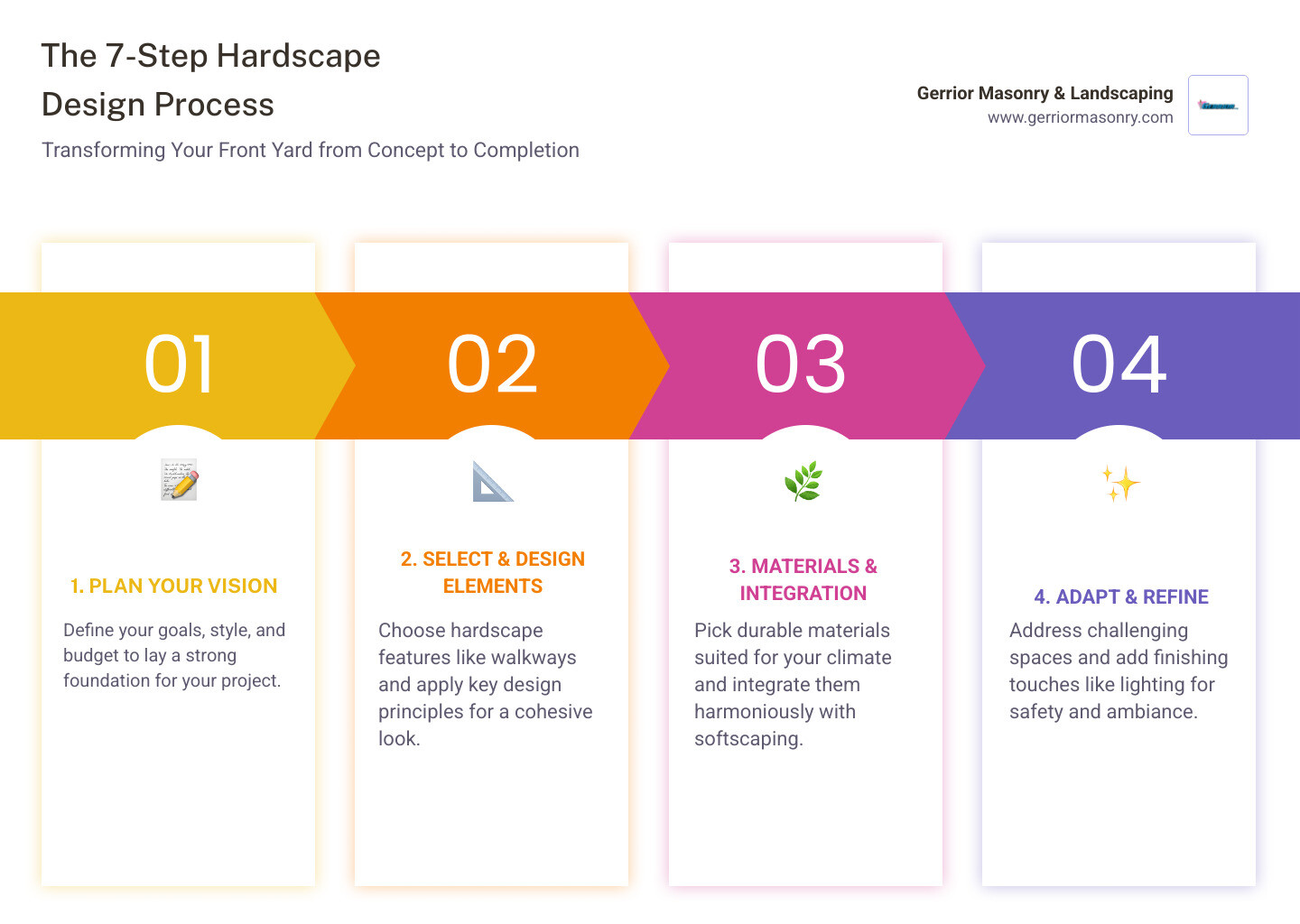
How to design front yard hardscape terms to know:
Step 1: Plan Your Project by Defining Your Goals and Style
Planning your front yard hardscape starts with understanding your home and lifestyle. A solid plan is the first step in learning how to design front yard hardscape that works for you.
First, assess your needs. Do you need a clear path to the mailbox? A designated spot for guests to park? Or a cozy seating area to enjoy your morning coffee? The key is to balance functionality with aesthetics. A beautiful water feature is great, but a safe, non-icy walkway might be the real priority. Function first, beauty will follow.
Define your budget early. Hardscape projects range from simple DIY additions to elaborate professional installations. An honest budget prevents disappointment later. Let your home’s architecture guide your style. A modern home calls for clean, geometric designs, while a Colonial suits traditional brick or stone paths.
Create a simple base map. Sketch your yard on paper or use a garden hose to visualize walkways. For a tech-savvy approach, landscape design apps like iScape can help you experiment with ideas. Finally, check local regulations for rules on impervious surfaces or property line setbacks to avoid headaches later.
How to Match Hardscape to Your Home’s Architectural Style
Your hardscape should feel like a natural extension of your house. Coordinate materials and styles for a harmonious look.
- Colonial: Symmetrical, formal designs. Think traditional brick or bluestone paths and balanced planting beds.
- Craftsman: Natural, handcrafted materials. Use flagstone, stacked stone walls, and warm-toned pavers.
- Modern/Contemporary: Clean lines and a minimalist feel. Choose large-format pavers, smooth concrete, or sleek natural stone in neutral tones.
- Ranch: Horizontal, relaxed designs. Wide walkways and front patios extend the home’s casual vibe.
- Material and Color Consistency: Coordinate hardscape materials with your home’s exterior. Warm brick pairs with warm-toned stone; cool gray siding works with bluestone.
Budgeting for Your Front Yard Change
Even the best design needs a realistic budget. Here’s how to plan your investment.
Your biggest budget decision is DIY vs. professional installation. DIY can save thousands but requires skill, time, and heavy lifting. Be honest about your abilities before you start.
Material and labor are the biggest costs. Consider a phased approach: start with essential elements like a walkway, then add features like walls or seating areas in future seasons. This spreads out the investment while allowing you to enjoy progress along the way.
Always include a 10-15% contingency fund in your budget. Unexpected issues like poor drainage are common, and this cushion turns potential disasters into minor adjustments.
Step 2: Select the Right Hardscape Elements for Your Yard
With a plan in place, it’s time to choose your hardscape elements. The key is to select features that work together to create a cohesive look. Walkways guide visitors, driveways boost curb appeal, retaining walls solve slope issues, and garden borders define planting areas. Don’t forget a welcoming front porch, seating areas, or water features to complete the space.
Creating a Welcoming Entry with Walkways and Stairs
Your walkway is the first physical connection visitors have with your home. It should be both functional and inviting.
- Material Options: Natural stone (flagstone) offers timeless elegance. Pavers provide endless patterns and colors. Brick adds classic warmth, while poured concrete can be modern and sophisticated.
- Path Shape: The shape sets the mood. Straight paths are formal, while curved paths feel more relaxed and natural.
- Width: Main walkways should be 36-48 inches wide, allowing two people to walk side-by-side comfortably.
- Safety: Prioritize safety with non-slip surfaces, good lighting, and uniform step heights.
For more ideas, see our guide to walkway and stair installation.
Adding Structure and Dimension with Walls and Borders
In hardscape design, walls connect elements and create structure.
- Retaining walls turn sloped yards into beautiful, usable terraced gardens and add architectural interest.
- Decorative garden walls and planter boxes create “rooms” in your landscape and bring plants to eye level.
- Edging provides a clean, professional finish between your lawn, garden beds, and hardscape.
These elements work together to create flow and connection. Learn more about the possibilities at our landscape walls page.
Designing a Functional Front Yard Patio or Seating Area
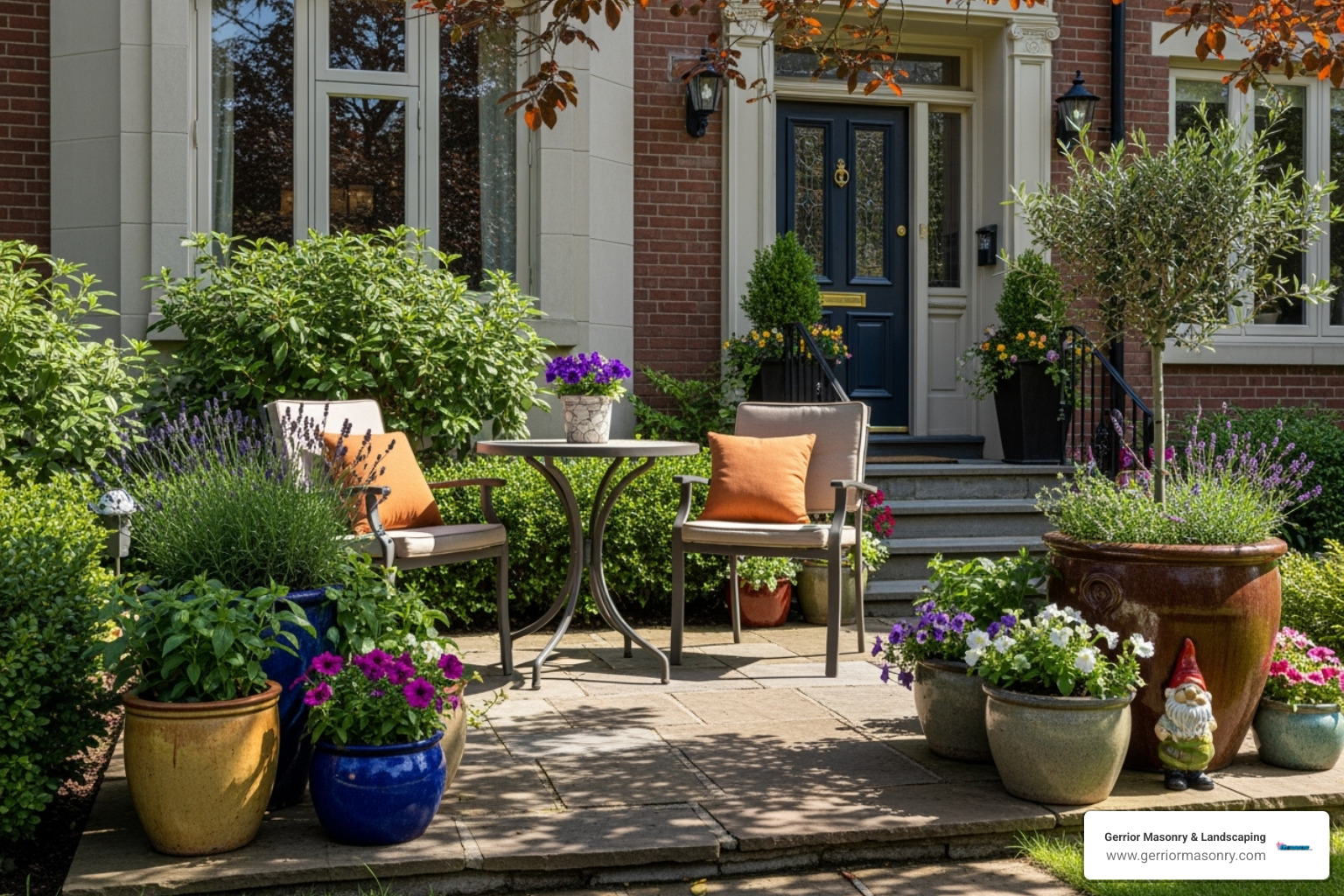
A front yard patio or seating area can be a perfect spot for morning coffee or chatting with neighbors. Make it feel like an intentional destination; even a small patio with stone pavers can feel inviting. Ensure privacy with strategic plantings, decorative screens, or low walls. Arrange furniture to encourage conversation and consider sun patterns for comfort.
For more inspiration, explore our insights on patio design and installation.
Step 3: Apply Key Design Principles for a Cohesive Look
Design principles are the key to a unified look, changing a collection of features into a stunning, cohesive design. When learning how to design front yard hardscape, focus on unity, balance, proportion, focal points, and rhythm to weave all the elements together.
Achieving Balance and Proportion in Your Design
Balance and proportion ensure your design feels stable and appropriately scaled.
- Symmetrical balance creates a formal look with mirrored elements on either side of an entrance.
- Asymmetrical balance is more informal, balancing the visual weight of different elements (e.g., a large tree on one side, a smaller wall and shrubs on the other) for a natural feel.
- Balance hardscape with softscape by aiming for a mix where stone and plants complement each other, avoiding a look that’s too cold or too messy.
- Scale elements to your house and yard. Ensure hardscape features are appropriately sized to create a harmonious look.
Guiding the Eye with Lines and Focal Points
Use lines and focal points to create a natural flow and draw attention to key features.
- Use lines in your walkways to direct visitors. Straight paths are direct and formal; curved paths create a sense of findy.
- Create a focal point to draw the eye. This could be a unique tree, a fountain, or distinctive front steps.
- Use repetition of materials, shapes, or colors to create rhythm and a cohesive, professional look. For example, use the same stone from your walkway in your garden borders.
How to Design Front Yard Hardscape: The 7-Step Process (Steps 4-7)
We’re halfway there! With your plan in hand and design principles guiding us, the next steps in how to design front yard hardscape involve selecting materials, integrating plants, adapting to challenges, and adding those all-important finishing touches.
These final four steps are where your vision truly comes to life. You’ll find which materials work best for New England’s tough weather, learn how to blend hardscape with beautiful plantings, tackle any tricky spots in your yard, and add those special details that make visitors say “wow.”
After three decades of helping Massachusetts homeowners transform their front yards, I’ve seen how these finishing steps can make or break a project. The difference between a good hardscape and a great one often comes down to choosing the right materials for our climate and knowing how to work with what Mother Nature gives you.
Let’s explore the details that will turn your front yard from ordinary to extraordinary.
Step 4: Choose the Right Materials for Aesthetics, Durability, and Climate
Choosing the right materials is critical. They must be beautiful, durable, and suited to your climate and budget.
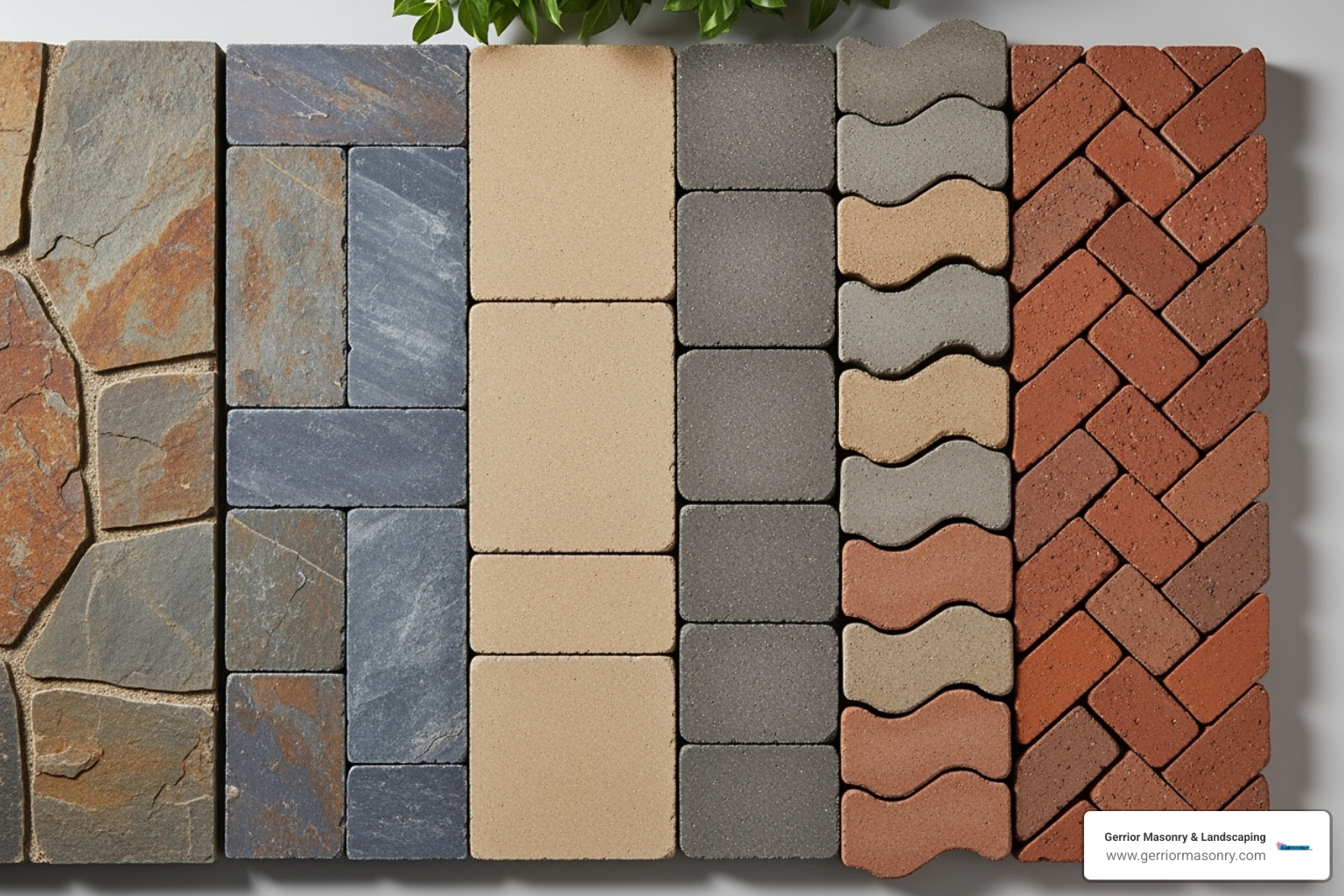
- Natural stone (flagstone, granite, bluestone): Timeless and organic beauty. It’s the most expensive option but can last for centuries.
- Concrete pavers: Highly versatile and more budget-friendly than stone. They can mimic natural materials and are easy to repair.
- Poured concrete: A cost-effective and durable option that can be stamped or colored for a modern or rustic look.
- Brick: Offers classic New England charm, pairs well with traditional homes, and is very durable.
- Gravel and decomposed granite: Affordable, permeable, and great for informal paths and seating areas.
In New England, materials must withstand our freeze-thaw cycles. Proper base preparation is non-negotiable for longevity, which is a key part of learning how to design front yard hardscape.
How to Design Front Yard Hardscape Materials for Your Climate
Understanding how materials perform in your climate is essential for long-term success.
| Material | Aesthetics | Cost (Material Only) | Durability | Maintenance |
|---|---|---|---|---|
| Natural Stone | Organic, unique, timeless, high-end | High | Very high; can last centuries if properly installed | Low-medium; occasional cleaning, sealing may be needed |
| Concrete Pavers | Versatile, uniform, mimics stone/brick, modern | Medium | High; resistant to cracking, easy to repair | Low-medium; occasional cleaning, sand sweeping, sealing |
| Brick | Classic, warm, traditional, charming | Medium-High | High; resistant to wear, colorfast | Low-medium; occasional cleaning, weed removal, sealing |
Consider permeable surfaces like permeable pavers or gravel. They allow rainwater to soak into the ground, which prevents erosion and reduces runoff. Sourcing local materials often reduces environmental impact and ensures a natural fit with the regional landscape. For more information on water-wise choices, you can visit sites like BeWaterWise.com.
Understanding Hardscape Costs
Disclaimer: The following are average costs based on internet data and do not represent a quote from Gerrior Masonry & Landscaping. Costs can vary significantly based on materials, site complexity, and location. Contact us for a detailed estimate.
- Paver walkways: Typically $10 to $30 per square foot. Intricate designs or premium materials can increase costs to $90 per square foot or more.
- Natural stone patios: Expect to budget $20 to $50 per square foot, with high-end installations exceeding $150 per square foot.
- Retaining walls: Costs vary from $40 to $100 per linear foot for basic walls, but complex engineered walls can reach $300 per linear foot or more.
The cheapest upfront option isn’t always the best value. Quality materials and installation cost more initially but save money on future repairs. This guide to paver patio pricing offers additional insights.
Step 5: Integrate Hardscape with Softscape for a Harmonious Balance
The magic of great landscape design happens when hardscape meets softscape. This step in how to design front yard hardscape is about integrating plants to bring your stone and concrete structures to life.
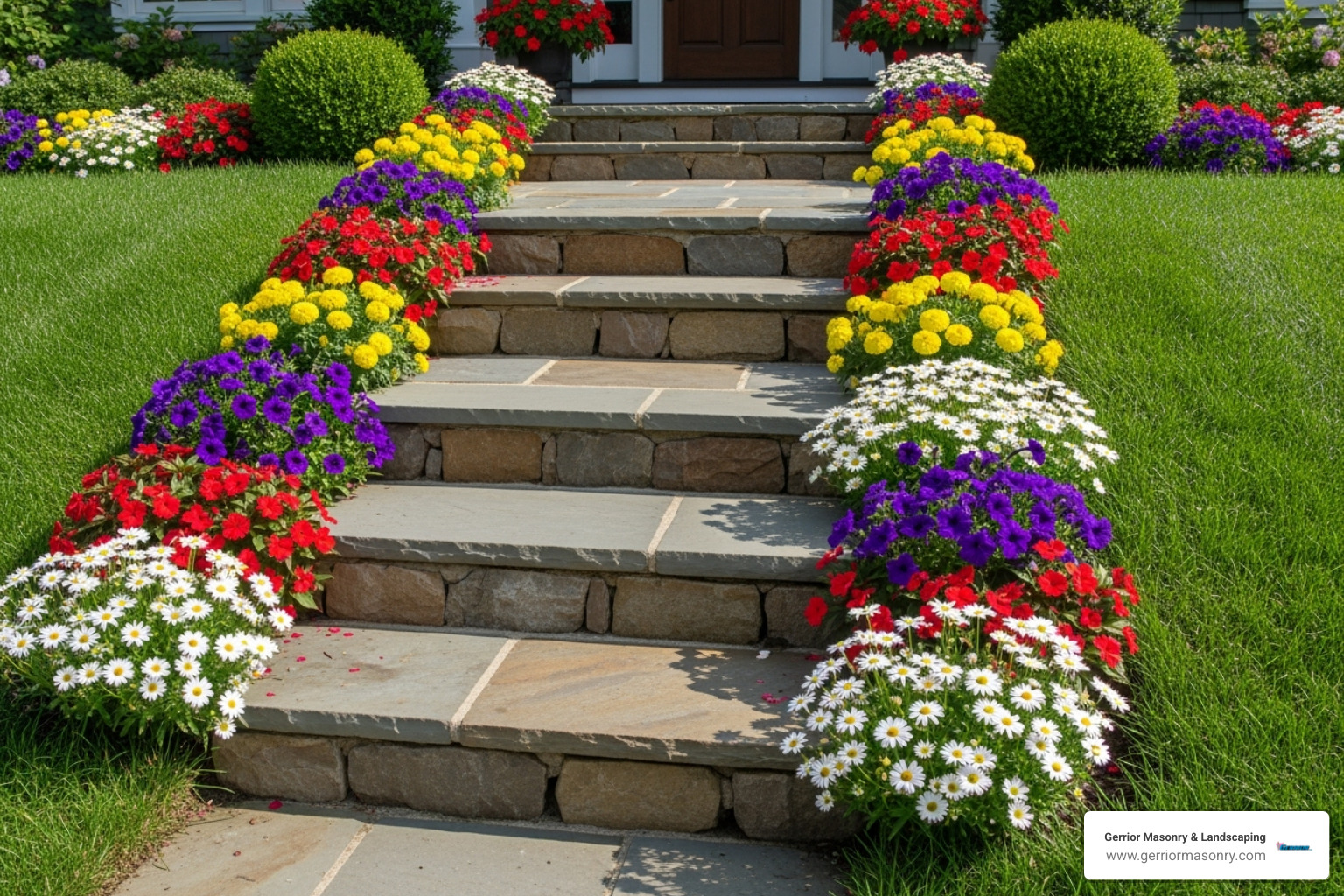
Soften hard edges with plants. Cascading perennials spilling over a retaining wall or ornamental grasses at its base can transform a harsh structure into a living composition.
Choose plants that complement your stone. Warm-toned flagstone pairs well with plants with golden or burgundy foliage, while cool bluestone looks great with silvery lavender or blue-green hostas.
Create planting pockets within patios or walkways to add charm and break up large hardscape surfaces. These living interruptions make the space feel more organic.
Plan for year-round interest, especially in Massachusetts. Use evergreens, ornamental grasses, and trees with interesting bark to ensure your yard looks beautiful even in winter. The goal is a seamless blend where the stone ends and the garden begins.
Step 6: Adapt Your Design for Challenging Yards
Not every yard is a flat, easy rectangle. Challenges like small spaces or steep slopes often lead to the most creative and beautiful hardscape solutions. Learning how to design front yard hardscape for these situations is key to open uping your yard’s potential.
How to Design Front Yard Hardscape for Challenging Spaces
- Small front yards: Focus on vertical interest. A retaining wall with built-in planters adds greenery without using ground space. A clear walkway can also make a small yard feel more spacious and intentional.
- Sloped yards: Use terracing with retaining walls. This prevents erosion and creates level, usable areas for planting or patios. Stone steps can connect the different levels, adding dramatic visual interest.
- Low-maintenance designs: Choose drought-tolerant plants and use more hardscape like decorative stone or pavers to reduce lawn size. River rock can replace traditional mulch for a clean look that requires less upkeep.
- Water management: This is critical, as poor drainage can ruin a hardscape installation. Plan for where water will go. This might mean using permeable materials or installing drainage systems to direct water away from your foundation. For complex issues, professional solutions like the drainage systems and dry wells we install may be necessary.
Step 7: Add Finishing Touches with Lighting and Decor
The final step in how to design front yard hardscape is adding finishing touches. These details bring safety, ambiance, and personality to your front yard.
- Outdoor lighting is crucial for safety and ambiance. Use path lights to guide visitors safely to your door.
- Uplighting can highlight your home’s architecture, a mature tree, or a textured stone wall, creating drama and depth after dark.
- A well-lit house number display is both a practical and stylish focal point.
- Planters and containers add flexible, seasonal color and texture. They can be changed with the seasons for year-round interest.
- A simple bench provides a quiet spot to relax and makes the space feel more inviting and lived-in.
- Water features, like a small fountain, add the soothing sound of trickling water, masking street noise and creating a tranquil atmosphere. Explore ideas for waterfalls and water features to add a unique sensory element.
Frequently Asked Questions about Front Yard Hardscape Design
Here are answers to common questions homeowners have when learning how to design front yard hardscape.
How much hardscape is too much for a front yard?
A good rule of thumb is 25-40% hardscape to 60-75% green space. This ensures a balanced, welcoming look. Too much hardscape can feel stark and may violate local regulations on impervious surfaces—materials that don’t let water pass through. Using permeable materials helps manage stormwater runoff and is better for the environment.
Can I design my own front yard hardscape?
Absolutely! Simple projects like a gravel path or a small paver patio are great for DIY enthusiasts. However, you should hire a professional for complex projects involving significant grading, drainage solutions, or retaining walls over 3-4 feet high. An expert’s design and installation knowledge can prevent costly mistakes and ensure a long-lasting, professional result.
What is the most budget-friendly hardscape material?
Gravel and decomposed granite are the most affordable options, perfect for informal paths and patios. Poured concrete is another economical choice. While interlocking concrete pavers cost more, they are significantly cheaper than natural stone and offer an excellent balance of durability, style, and value. When budgeting, always consider long-term value vs. upfront cost; a more durable material may save you money over time.
Bring Your Front Yard Vision to Life
A well-designed front yard hardscape is your home’s handshake with the world. It boosts curb appeal, increases property value, and creates a welcoming entrance. By mastering how to design front yard hardscape, you can turn your vision into a reality.
Following the seven steps—from planning and choosing materials to integrating plants and adding finishing touches—provides a clear roadmap. The right materials and design principles are key to creating harmony between your home, landscape, and lifestyle. Even challenging yards with slopes or small spaces have incredible potential when the right design is applied.
For homeowners in Massachusetts seeking expert craftsmanship, Gerrior Masonry & Landscaping has over 30 years of experience creating hardscapes that withstand New England’s climate. We believe in owner oversight and skilled craftsmanship to build hardscapes that last for generations. Contact our hardscaping contractor team for a consultation to bring your vision to life.
Gerrior Masonry & Landscape Construction is proudly based in Woburn, MA, and serves homeowners throughout Middlesex and Essex County, Massachusetts.
