
Why Proper Fireplace Mortar Repair Matters for Your Home’s Safety
Knowing how to repair fireplace mortar is crucial for any homeowner, as damaged joints can lead to serious safety hazards. Small cracks might seem minor, but they can allow dangerous gases to escape and compromise your fireplace’s structural integrity.
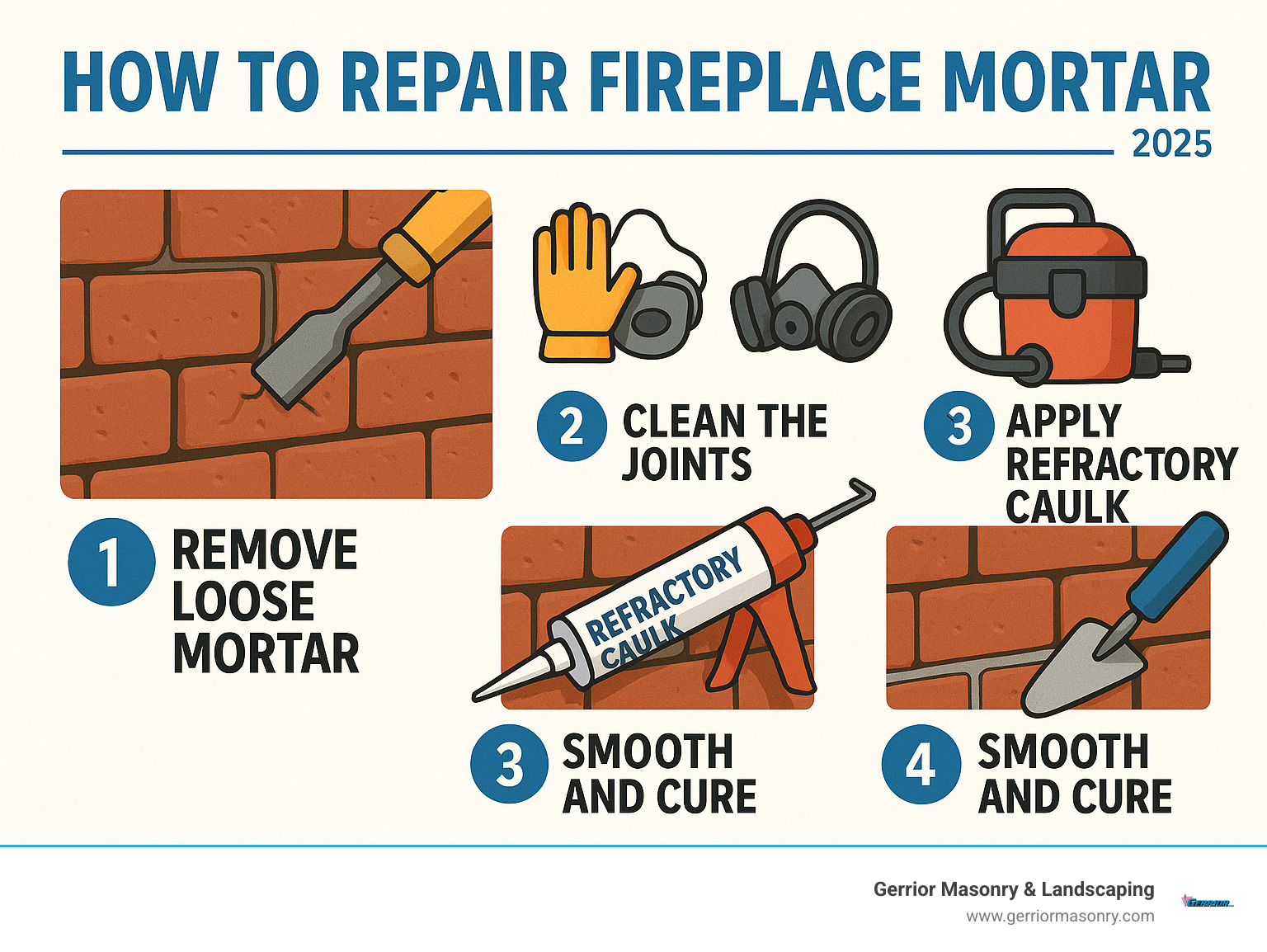
Here’s the quick process for minor repairs:
Quick Answer:
- Remove loose mortar – Use a chisel to scrape out crumbling material.
- Clean the joints – Vacuum all debris and dust from the gaps.
- Apply refractory caulk – Fill joints with high-temperature caulk.
- Smooth and cure – Tool the joints and allow proper heat curing.
Fireplace mortar is not like regular mortar. It’s a special refractory mortar designed to withstand extreme temperatures and constant expansion and contraction. Regular mortar would quickly fail, making specialized materials essential for a safe, lasting repair.
I’m Joe Gerrior, owner of Gerrior Masonry & Landscape Construction Corp. With over 34 years of experience in Massachusetts, I’ve seen how important proper mortar repair is. While some minor fixes are suitable for DIY, knowing when to call a professional is key to your home’s safety.
Relevant articles related to how to repair fireplace mortar:
Your Complete Guide on How to Repair Fireplace Mortar
Ready to tackle that crumbling mortar in your fireplace? This guide will walk you through everything you need to know about how to repair fireplace mortar, from understanding the materials to knowing when to call in the pros.
First, Understand Why Fireplace Mortar is Different
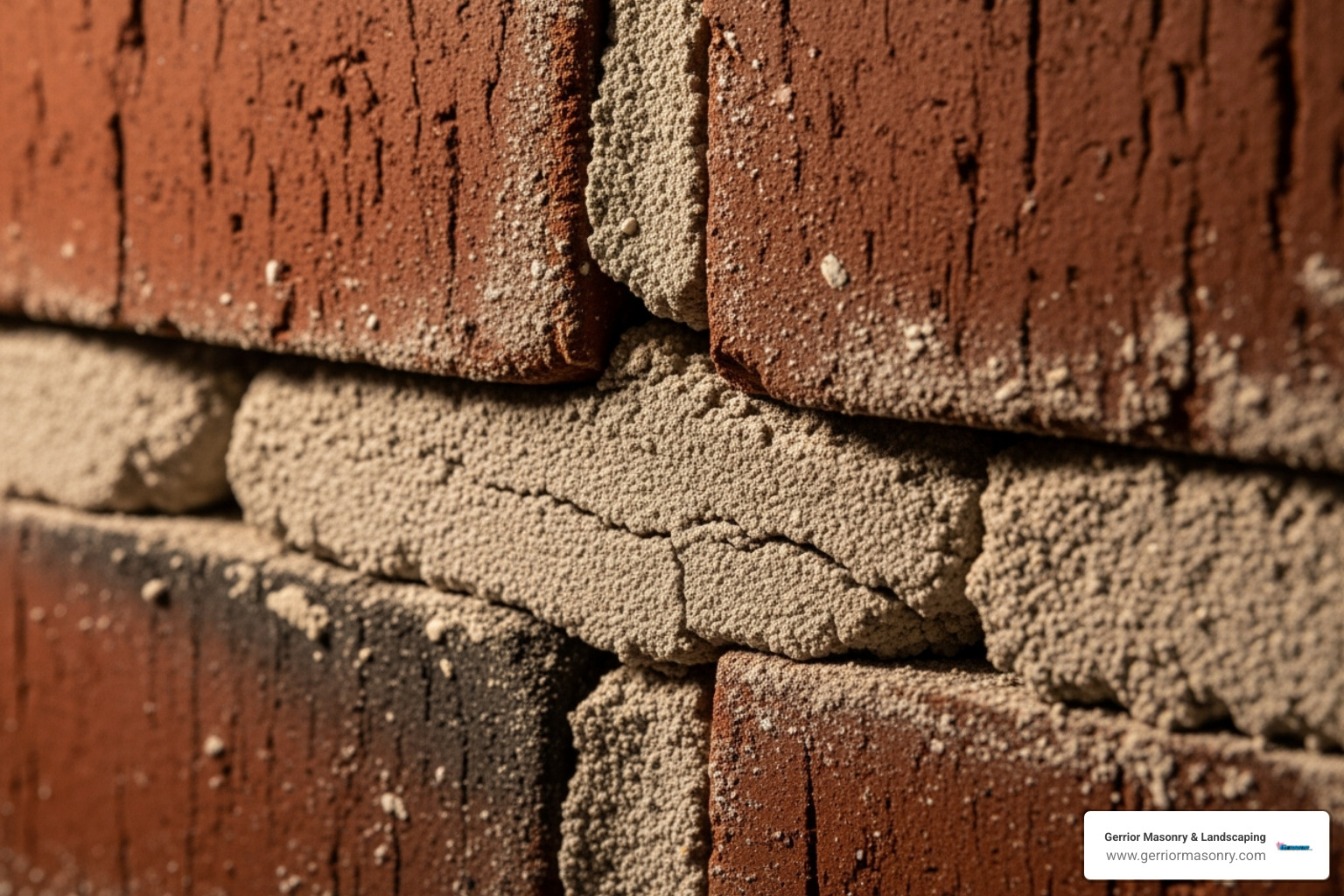
The mortar in your firebox is called refractory mortar, and it’s fundamentally different from standard construction mortar. Its key feature is the ability to withstand extreme temperatures—some types up to 2,000 degrees Fahrenheit. This is possible due to ingredients like silica and magnesium silicate, which allow the mortar to expand and contract along with the firebricks during heating and cooling cycles. This process is known as thermal expansion.
Regular mortar would crack and crumble under this stress, creating serious dangers of damaged mortar. Gaps can allow hot gases, smoke, and embers to escape into your walls, posing a fire hazard. They can also lead to carbon monoxide leaks and compromise the structural integrity of your fireplace.
For more information on chimney maintenance, see our guide on chimney repairs. You can also see what other homeowners are saying about firebox repairs.
Signs of Damage and When to Repair Fireplace Mortar
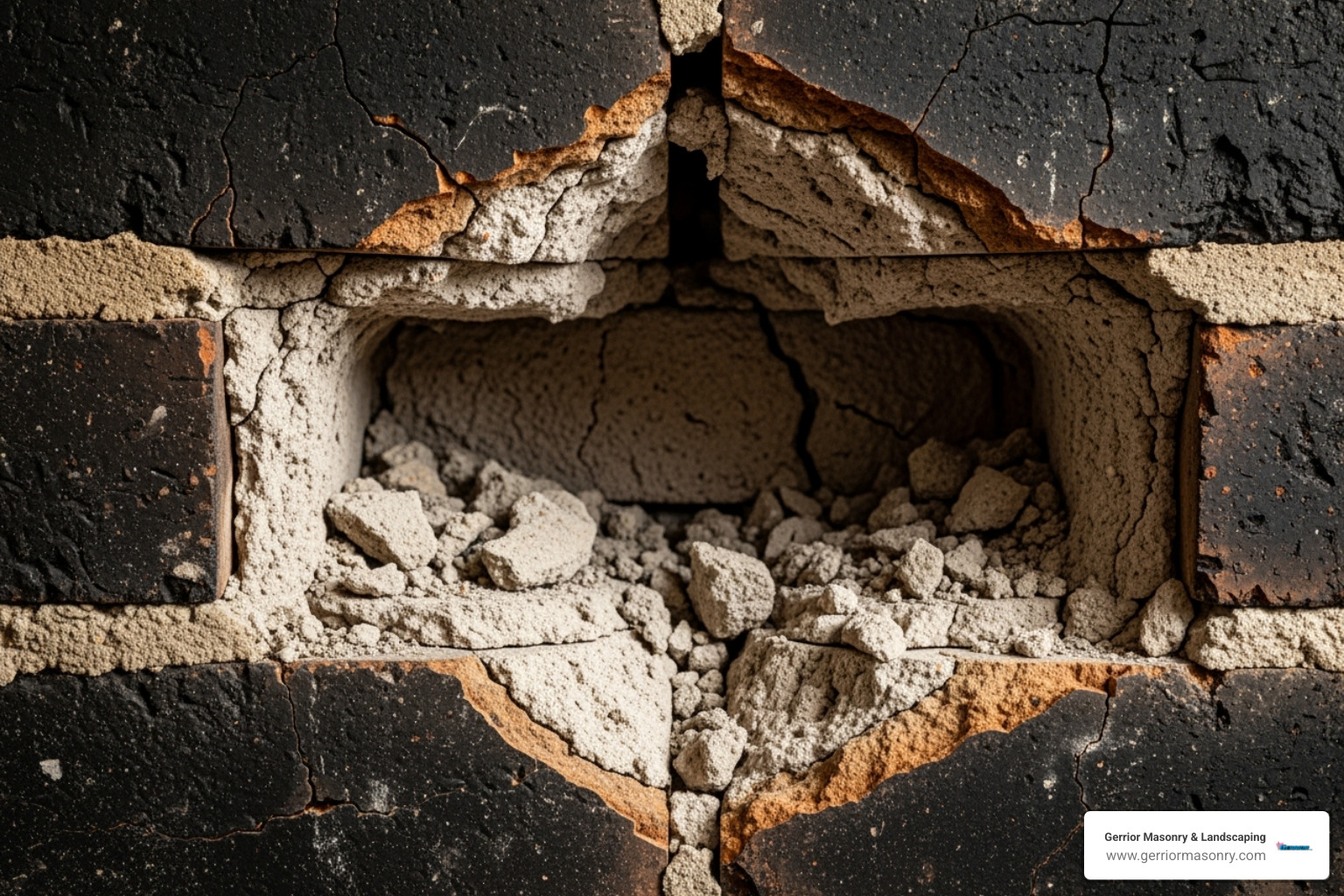
Inspect your firebox regularly for these common signs of mortar damage:
- Cracks: Hairline fractures that can grow over time.
- Gaps: Missing chunks of mortar between firebricks.
- Crumbling: Mortar that is powdery, sandy, or breaks away easily.
- Spalling Bricks: Flaking on the face of the bricks, often indicating moisture issues.
- Soot Stains: Dark stains on the exterior of your fireplace or chimney, signaling smoke leaks.
Common Causes of Damage:
- Heat Damage: The constant cycle of heating and cooling stresses the mortar.
- Moisture Issues: Water from a damaged cap or flashing can freeze and thaw, breaking mortar apart.
- Age: Mortar naturally deteriorates over 20-30 years.
If you notice any of these signs, especially if gaps are wider than 1/8 inch or mortar has deteriorated more than 1/4 inch deep, it’s time for a repair. Ignoring the problem can lead to fire risks, carbon monoxide poisoning, and structural failure.
If you suspect wider masonry issues, our foundation repair services might provide useful insights.
Gathering Your Tools and Materials for the Job
Having the right tools and materials makes the job safer and easier. Here’s what you’ll need:
- Safety Gear: Safety glasses, work gloves, and a dust mask or respirator are essential.
- Cleaning Tools: A fireplace brush, dustpan, shop vacuum, and a wire brush.
- Mortar Removal Tools: A putty knife, linoleum knife, or a grout removal tool.
- Repair Materials: A tube of refractory caulk, which is specifically designed for high-heat applications. Do not use regular caulk, as it will fail under high temperatures.
- Application Tools: A caulking gun, a small nylon paintbrush (for moistening joints), and paper towels or a damp sponge for cleanup.
For larger jobs, a tuck-pointing trowel may be needed for applying traditional refractory mortar. Always ensure the fireplace is completely cool before beginning any work.
Explore our comprehensive masonry services for more extensive projects.
Step-by-Step: How to Repair Fireplace Mortar
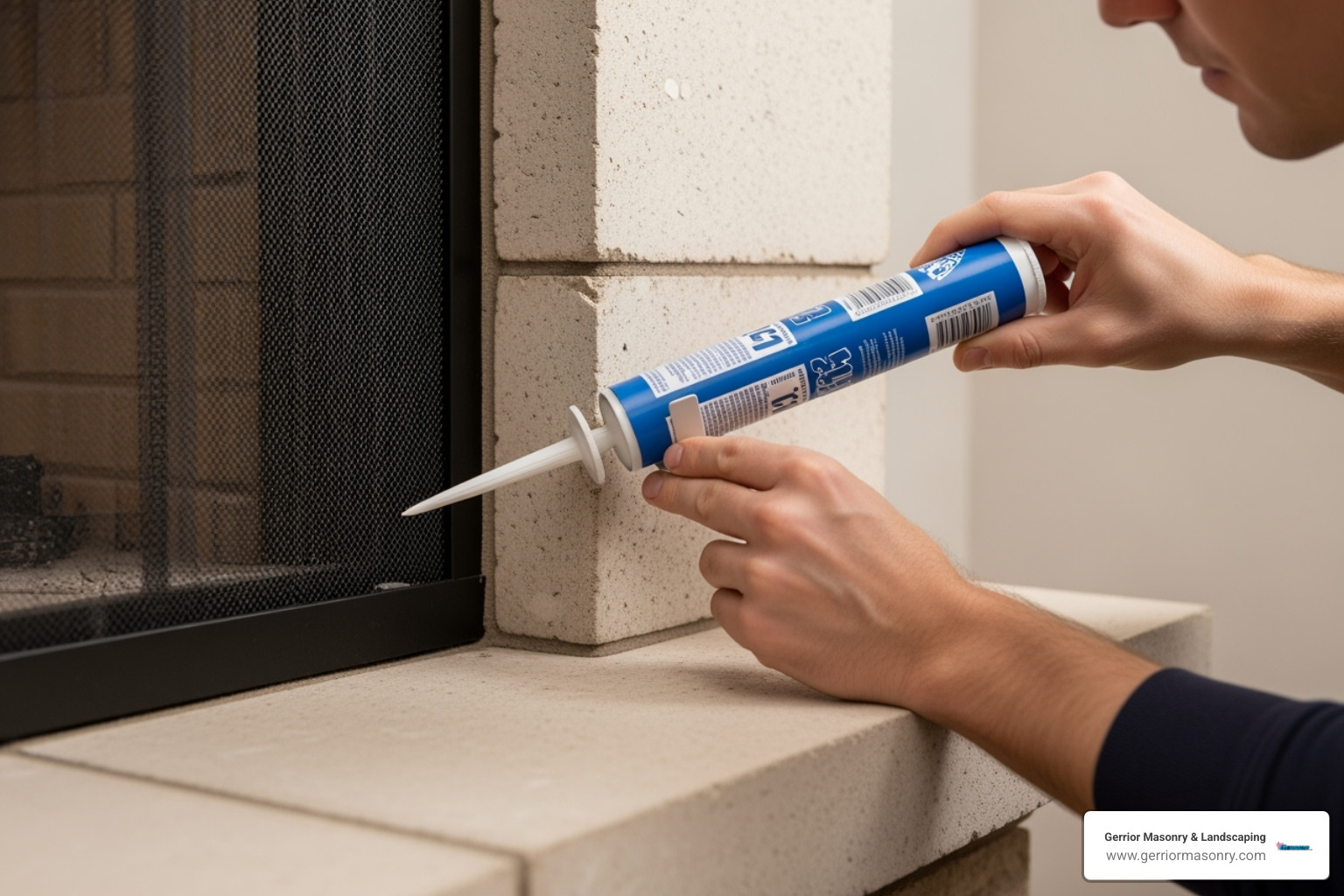
This process is for minor repairs using refractory caulk.
- Prepare the Firebox: Remove the fire grate and sweep out all ash and debris. Use a shop vacuum for a thorough cleaning.
- Remove Loose Mortar: Using a putty knife or grout removal tool, scrape out damaged mortar to a depth of about 2 to 2.5 times the joint’s width, or until you hit solid material.
- Clean the Joints: Vacuum all dust and debris from the cleaned-out joints. Use a wire brush to remove any stubborn grime.
- Moisten the Joints: Lightly dampen the joints with a wet paintbrush. This prevents the surrounding masonry from drawing moisture out of the new caulk too quickly, ensuring a stronger bond.
- Apply Refractory Caulk: Cut the caulk tube’s tip at an angle. Using a caulking gun, apply a steady bead of caulk deep into the joints, starting with the vertical ones. Ensure there are no air pockets.
- Smooth the Joints: Immediately after applying, use a gloved finger or a small tool to press the caulk firmly into the joint and create a smooth, concave finish. Wipe away excess caulk with a damp paper towel.
For a visual guide, see this video on Repairing Fireplace Mortar – YouTube.
Curing the Mortar and Final Steps
Proper curing is essential for the refractory caulk to gain its heat-resistant properties.
- Air Dry: Allow the caulk to air dry for at least 24 hours.
- Heat Cure: The first fire after the repair is part of the curing process. Start with a small fire and gradually increase the heat, maintaining a modest fire for about an hour. This heat curing activates the heat-resistant compounds in the caulk.
- Appearance: The new caulk will likely be lighter than the old, soot-stained mortar. It will darken over time with use, blending in naturally.
The repair will reach its maximum strength after several heating and cooling cycles.
DIY vs. Professional Repair: Knowing Your Limits
Knowing when to tackle a repair yourself versus calling a professional is key to your safety.
When to DIY:
- You’re dealing with hairline cracks (up to 1/8 inch wide).
- There are small, isolated gaps where mortar has crumbled.
- The repair can be handled with refractory caulk.
- DIY material costs typically range from $15-$45. Please note: These are average costs based on internet data and not actual costs for Gerrior Masonry services.
When to Call a Professional:
- You see extensive damage, with large crumbling sections or gaps wider than 1/4 inch.
- Firebricks are loose or spalling (flaking).
- There are signs of structural issues, like bulging walls or large cracks in the fireplace structure itself.
- The job requires tuckpointing or repointing—the complete removal and replacement of mortar.
Professionals have the specialized tools and expertise to diagnose underlying issues (like water damage) and ensure a structurally sound repair that complies with building codes. Professional repairs can range from a few hundred dollars for minor repointing to several thousand for a complete firebox rebuild, depending on the extent of the damage.
If you’re ever in doubt, call a professional. For related masonry work, learn about our repointing a foundation services.
Trust the Experts for a Safe and Lasting Fireplace
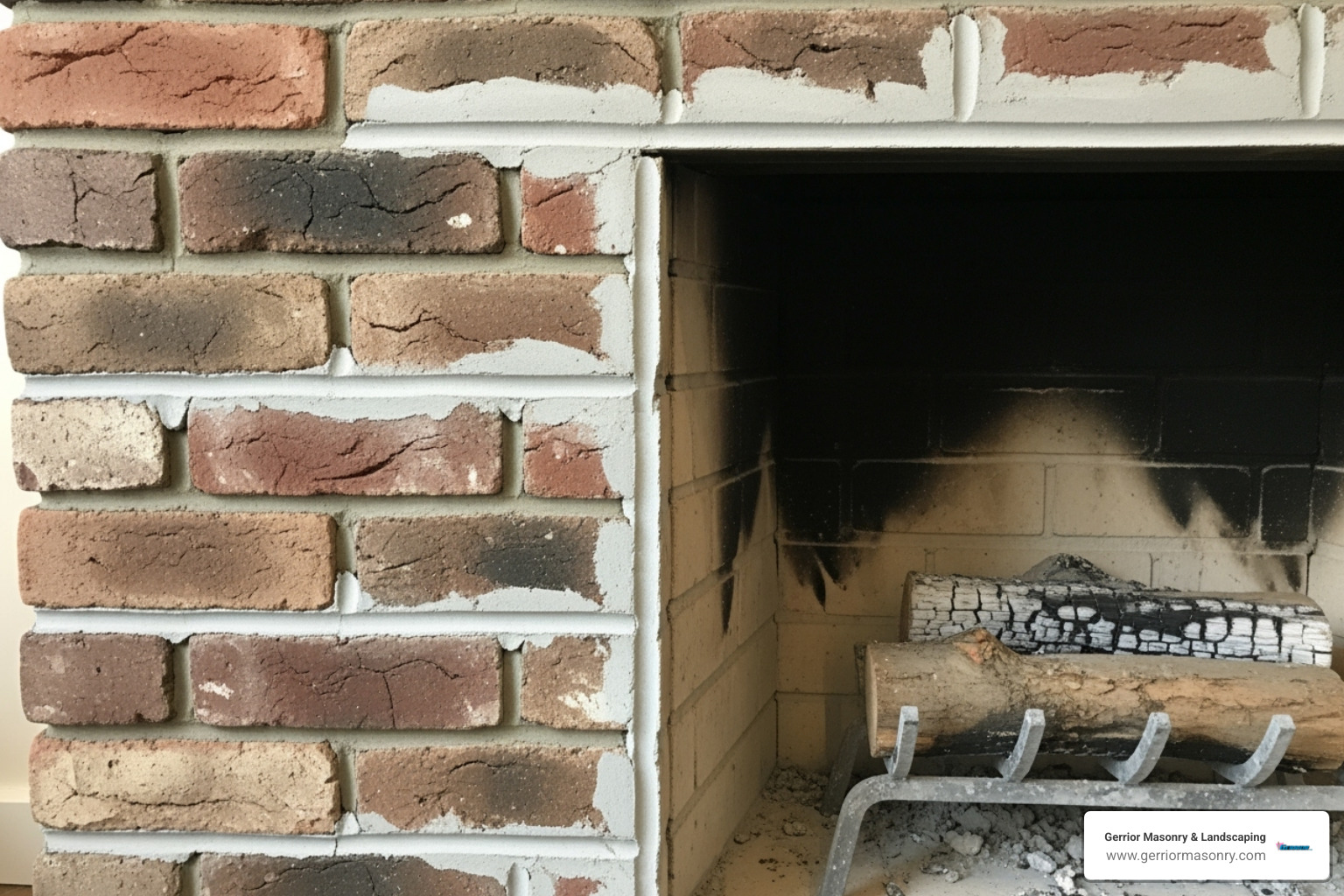
This guide provides the steps for how to repair fireplace mortar for minor issues, helping you maintain your fireplace’s safety and beauty. The key is using the right materials, like refractory caulk, and knowing when a problem is too big for a DIY fix.
Safety comes first. While refractory caulk is excellent for small cracks, it cannot fix underlying structural problems. If you see extensive damage, loose or spalling bricks, or signs of water infiltration, it’s time to call a professional. Attempting to patch major issues can lead to greater risks and more expensive repairs down the line.
At Gerrior Masonry & Landscaping, we have over 30 years of experience helping Massachusetts homeowners with complex fireplace and masonry repairs. Our skilled team, with owner oversight on every project, ensures a high-quality, lasting solution that protects your home and family.
If you’re facing fireplace mortar issues that go beyond a simple DIY repair, we’re here to help. Contact us for your fireplace mortar repair needs and let our experts restore the heart of your home.
Gerrior Masonry & Landscape Construction is based in Woburn, MA, and proudly services Middlesex and Essex County, Massachusetts.
