On this page
To repair a mortared rock wall, rake out the loose and cracked mortar, reset any stones that have come free, and repoint the joints with a mortar that is softer than the stone. For most stone wall repair around a home, that means a Type N or lime-rich mortar mixed with clean, washed mason sand. Then keep the fresh joints damp and protected from frost while they set.
That fixes the symptom. To make the repair last, you also need to know why the wall failed: water getting into the joints, a base that heaves in a Massachusetts winter, or soil pushing a retaining wall forward. A wall that is leaning, bulging or cracked straight through needs more than new mortar.
Below: what causes the damage, the best mortar mix for stone walls, the repair step by step, and how to tell when a wall is past a patch.
First, find out why the mortar failed
In a stone wall, the mortar is meant to be the weak link. It should crack and wear before the stone does, so it can be replaced. When joints open up, one of these is usually behind it:
- Water in the joints. Rain soaks into open joints or into the top of a wall with no cap. It freezes, expands and pushes the joint a little wider, and every freeze-thaw cycle repeats it.
- Mortar that is too hard. An old patch made with straight cement or a high-strength mix does not flex or breathe like the stone around it. Movement and moisture then work through the stone instead, so you see cracked or flaking stone beside the patch.
- Frost heave at the base. A wall on a shallow base moves up and down with the ground each winter. Cracks that step diagonally through the joints, or that open wider every spring, usually point to the base.
- Soil pressure. Wet soil behind a retaining wall pushes much harder than dry soil. Without drainage stone and weep holes, the wall leans or bows out.
If a few joints are open and a handful of stones are loose on a wall that is still straight and plumb, you have a repointing and resetting job. If the wall has moved, skip ahead to when to call a mason.
Best mortar mix for stone walls
The rule that matters most is that the mortar should be softer and more porous than the stone it holds. The National Park Service guide to repointing makes this point for historic masonry, and it holds for any mortared rock wall. When the joints are the weaker part, they take the movement and let the wall dry out, and they can be repointed again later. When the mortar is harder than the stone, the stone takes the damage, and stone is far harder to replace.
Type N, Type S, Type M and lime mortar
- Type N: a medium-strength cement and lime mortar, and the usual choice for repointing freestanding garden walls and above-ground stonework. The Mason Contractors Association of America describes a Type N mix of about 1 part portland cement, 1 part lime and 6 parts sand by volume, which is where the familiar 1:1:6 ratio comes from.
- Type S: stronger, with less lime. It is used where a wall carries load, sits below grade or holds back soil, and where the stone is hard, such as granite or New England fieldstone. It is a poor match for soft or very old stone.
- Type M: the strongest of the three, meant for heavy loads and foundations. It is rarely the right choice for repointing a stone wall.
- Lime mortar: softer and more breathable than all of the above. It is the right family for very old walls, softer stone, and walls that were first laid in lime.
Match what is already in the wall when you can. A wall laid in soft mortar should not be repointed with a hard one. Mortar also changes color a lot as it dries, so mix a small test batch and let it dry before you commit. Bagged products, including Quikrete, are labeled by mortar type, so read the type on the bag, not the brand.
Best sand for mortar
Use clean, washed mason sand. Dirty sand with clay or silt in it weakens the mix and stains the joints. Very fine, uniform sand such as play sand makes a weak, shrink-prone mortar. On rough fieldstone with wide joints, a sand that matches the texture of the old joints gives the closest match.
Best cement for a rock wall
Plain portland cement on its own makes a mortar that is too hard and brittle for stone. Use a mortar mix or masonry cement labeled with a mortar type. Do not use concrete mix: it has gravel in it and is not made for joints.
How to repair a stone wall with mortar, step by step
- Check that the wall is stable. Push gently on loose stones, sight down the face for bulges, and look at the base. If the wall has moved, stop and get it assessed.
- Remove loose stones and keep them in order. Lay each one on the ground in front of its spot so it goes back where it came from.
- Rake out the failed mortar. Use a plugging chisel or joint raker to remove loose and cracked mortar back to sound material, leaving a square back to the joint. Do not chase sound mortar or chip the stone edges. Our brick repointing guide covers the same raking and packing technique on brick.
- Clean and dampen. Brush out dust, then mist the joints and stone so they do not pull water out of the new mortar too fast. Damp, not dripping.
- Reset the loose stones. Spread mortar in the cavity, press each stone back in and pack mortar around it. Use small stone chips as shims so stone bears on stone, not on mortar alone.
- Pack deep joints in layers. Fill in thin layers and let each firm up before the next. One thick fill tends to slump and crack.
- Tool and brush. When the mortar is firm to a thumbprint, tool the joints to match the rest of the wall, then brush off the crumbs. Keep mortar off the stone faces.
- Cure it gently. Keep the repair shaded and lightly damp, and protect it from rain, hot sun and frost while it sets, following the directions for the product you used.
One thing not to do: do not coat the joints or the stone with a waterproof sealer. A film-forming sealer traps the moisture already in the wall, and trapped water is what freezes and pushes joints apart. Keep water off the wall instead, with a cap on top, drainage behind retaining walls, and downspouts aimed away.

Timing the repair in Massachusetts
Fresh mortar must not freeze while it sets, so spring through early fall is the easy window. Very hot, windy days are a problem too, because the joints dry before they cure. Repairs late in the season can work with the right product and protection; our post on cold-weather masonry repair explains what has to be in place first.
When to call a mason instead of patching
New mortar will not hold a wall that is moving. Get the wall looked at if you see any of these:
- The wall leans, bows out or has a belly in the middle.
- Cracks run through the stones themselves, or straight through the wall from face to back.
- The same section keeps failing after it has been repointed.
- The base has heaved or settled, or the ground at the foot of the wall is washing out.
- It is a retaining wall holding up a driveway, a slope or a patio.
- Large sections are loose, or the wall stands next to a walkway or play area.
In those cases the fix is usually taking down and rebuilding a section from a sound base, adding drainage behind a retaining wall, or both. Gerrior Masonry repairs and rebuilds stone walls as part of our masonry services, and builds new fieldstone and block walls through our retaining wall work. You can see finished walls in our landscape wall projects. An old dry-laid fieldstone wall, built without mortar, is handled differently: it is taken down and relaid, as explained in our post on stone wall restoration.

Repairing other stonework: bluestone, granite and veneer
The same thinking applies to the rest of the stone on a house: find the water or movement first, then match the material.
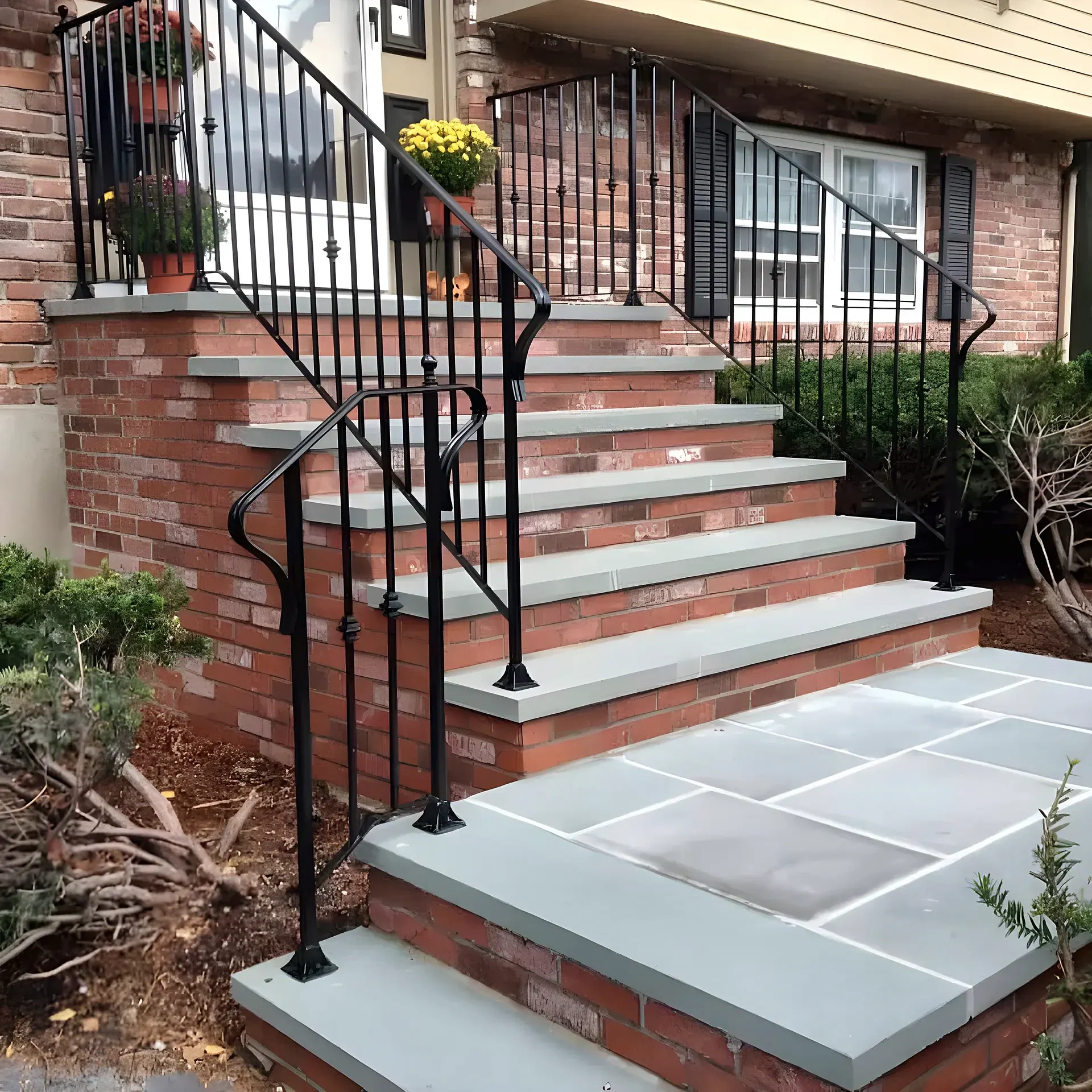
- Bluestone treads and caps. Bluestone is a layered stone. Once a piece cracks through or starts to split along its layers, it usually needs replacing rather than gluing. A stone yard can match thickness and color, and the new piece is set on a fresh mortar bed with a slight pitch to shed water.
- Granite steps and caps. Granite is very hard. A chipped edge can sometimes be dressed back, but a tread cracked through, or one that has settled and tipped, is reset or replaced on a sound base. See our post on front step repair or rebuild.
- Stone veneer. Loose veneer stones usually mean water has got behind them. Gluing them back without finding the leak only buys time. Our post on stone veneer installation explains how veneer should be built.
- Matching replacement stone. Older stone has weathered, so new stone of the same type can look brighter at first. Salvaged stone from a hidden part of the property is often the closest match.
Cindy J. of Reading, MA, describing her repeat projects with us: "They handled a masonry repair for us previously … They were on time, professional, and very easy to work with."
Common questions
Can I repair a stone wall myself?
Yes, if the wall is stable and the job is repointing open joints or resetting a few loose stones. If the wall leans, bulges, holds back a slope or keeps failing in the same spot, the cause is behind or under the wall, and a patch will not fix it.
What mortar should I use for a stone retaining wall?
Retaining walls built of hard stone are often laid in Type S because they carry soil load. For repointing, match the existing mortar and stay softer than the stone. A retaining wall also needs drainage behind it, which matters more than the mortar.
Should I seal a stone wall after repointing?
No. A film-forming sealer traps moisture in the wall, and trapped water is what freezes and cracks joints. Manage water with a cap, drainage and grading instead.
Why does new mortar crack in my stone wall?
The usual causes are a mix that is too hard or too wet, joints filled in one thick layer, mortar that dried too fast or froze, or a wall that is still moving. If cracks return in the same place, the wall needs to be assessed.
If your stone wall is leaning, cracking through or failing again after repairs, we can look at it and tell you whether it needs repointing, a partial rebuild or drainage. Gerrior Masonry is a family-owned company in Woburn, MA with over 30 years in masonry and hardscaping. We are fully insured, our work is guaranteed, and owner Joseph Gerrior oversees projects. Request a free estimate or call (781) 933-4157.

A family-owned masonry and hardscape company at 245 Salem St, Woburn, MA, in business for over 30 years. See our masonry work.