
Bulkhead Door Installation: 5 Best Tips for Success
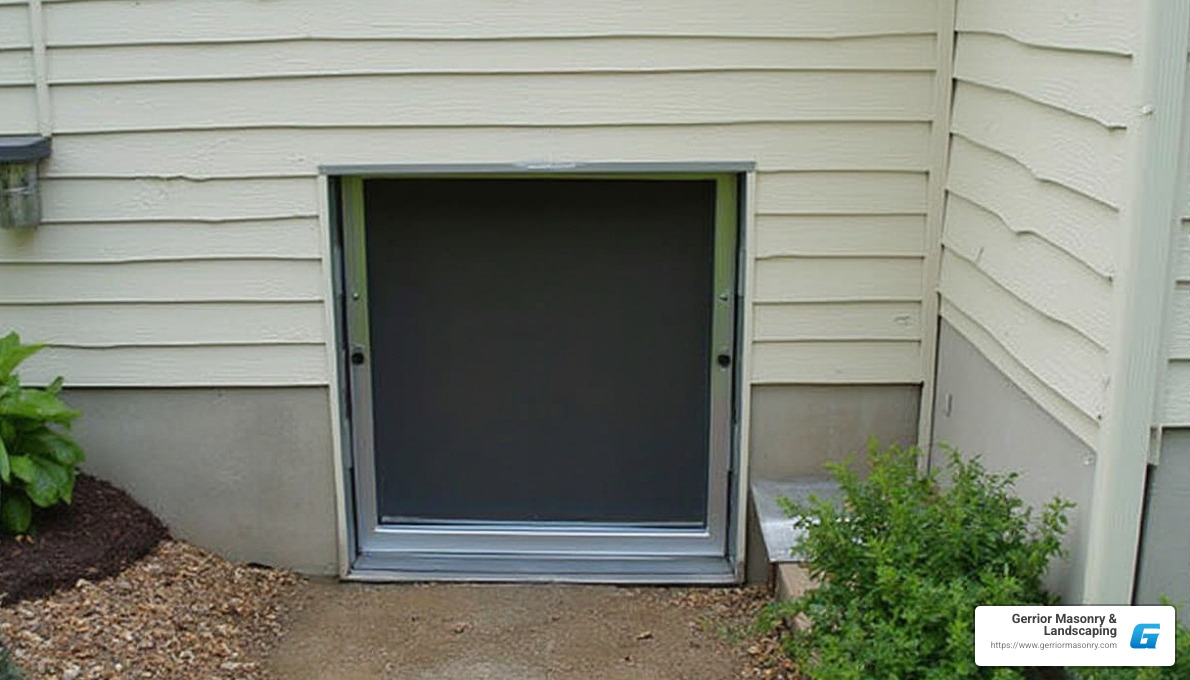
Bulkhead door installation is a crucial step in ensuring safe and reliable basement access while maintaining the structural integrity of your home. For those in a hurry, here’s a quick rundown:
- Purpose: Provides secure and efficient entry to basements, crucial in preventing water damage and ensuring home safety.
- Materials: Options include steel, wood, and sometimes plastic or fiberglass, each with its own pros and cons.
- Cost Range: Prices typically range from $500 to $2,000+ depending on material and complexity.
Bulkhead doors offer more than just an entrance to your basement; they’re a safeguard against the elements, intruders, and structural decay. Traditionally, older homes come with wooden bulkhead doors that may warp, rot, or fail to close properly. Replacing them with new steel doors can mean a 180-degree shift in durability and efficiency.
I’m Joe Gerrior, owner of Gerrior Masonry & Landscape Construction Corp. With over 34 years of trusted masonry and landscaping services, my team and I specialize in enhancing the practicality and safety of your home’s access points with expert bulkhead door installation.
Simple bulkhead door installation glossary:
– bulkhead door replacement near me
– how to replace a bulkhead
– waterproof bulkhead doors
Signs It’s Time for Bulkhead Door Replacement
Recognizing the signs of wear and tear on your bulkhead doors is crucial to prevent further damage. Here’s what to look for:
1. Visible Wear and Damage
Over time, bulkhead doors can suffer from general wear. Doors that don’t sit squarely on their frames are a clear indication that it’s time for a replacement. Misalignment can lead to gaps, making it easier for water and pests to enter your basement.
2. Water Damage
Water seepage is a major concern. If you notice water entering your basement around the bulkhead area, it’s a sign that your doors are not sealing properly. Water infiltration can lead to mold growth and structural damage, posing serious risks to your home’s foundation.
3. Rust and Corrosion
Steel doors, while durable, are not immune to rust. Significant rust and corrosion weaken the door’s integrity and appearance. Once rust sets in, it’s only a matter of time before the door becomes unusable.
4. Warped or Rotten Wood
Wooden bulkhead doors are prone to warping and rotting, especially if they’re not properly treated. Warped or rotten wood can prevent doors from latching properly, compromising security and insulation. If your wood doors no longer close as they should, it’s time to consider replacement options.
Don’t delay replacement once you notice these signs. Waiting too long can lead to extensive and costly repairs. Addressing these issues promptly ensures your basement remains dry, secure, and free from pests.
Next, we’ll explore how to choose the right material for your bulkhead doors, keeping these signs in mind.
Choosing the Right Material for Bulkhead Doors
When it comes to bulkhead door installation, selecting the right material is key to ensuring longevity and performance. Here’s a breakdown of the most popular options:
Steel Doors
Steel doors are a top choice for many homeowners due to their durability and strength. They are resistant to warping and can handle impact from debris, making them ideal for areas prone to harsh weather. Tom Silva, a home improvement expert, highlights the benefits of pre-primed steel doors, which offer excellent protection and require minimal maintenance. The cost for steel bulkhead doors typically ranges from $900 to $1,600.
- Pros: Long-lasting, low maintenance, strong.
- Cons: Can rust if not properly maintained.
Wood Doors
For those who prefer a more traditional look, wood doors are a viable option. Opt for woods like cypress, cedar, or mahogany, which are naturally resistant to decay and insects. Although wood doors are generally cheaper than steel, ranging from $500 to $1,500, they require more upkeep. Regular treatment and the use of stainless-steel hardware can extend their lifespan.
- Pros: Aesthetic appeal, natural resistance to decay.
- Cons: Requires regular maintenance, shorter lifespan than steel.
Plastic and Fiberglass
While plastic and fiberglass doors are available, they are not recommended. Plastic doors can easily break from impact, and fiberglass doors may crack or warp with prolonged sun exposure. Despite these drawbacks, their prices are comparable to wood and steel, ranging from $1,000 to $2,000.
- Pros: Lightweight.
- Cons: Prone to damage, not cost-effective.
Choosing the right material depends on your priorities, whether it’s durability, aesthetic, or budget. Steel offers longevity, while wood provides a classic look. Consider your local climate and maintenance capacity when making your choice.
Next, we’ll dig into the step-by-step process of installing bulkhead doors, ensuring a smooth and secure fit.
Bulkhead Door Installation Process
Installing a bulkhead door might seem daunting, but with the right tools and approach, it can be a straightforward project. Let’s break it down into manageable steps:
Tools and Materials
Before starting, gather these essential tools and materials:
- Tools: Angle grinder, hammer drill, caulk gun, utility knife, measuring tape, trowel, work gloves, and safety glasses.
- Materials: Fast-setting grout, masonry screws, metal primer, oil-based paint, pressure-treated lumber (2×10 and 2×6), self-adhesive membrane, sheet metal screws, silicone caulk.
Removing Old Doors
Begin by safely removing the existing doors. Use an angle grinder to cut through the hinges and brackets. This might take some effort, especially if the old doors are rusted or warped. Once the doors are off, clear any debris to prepare for the next steps.
Preparing the Foundation
Once the old doors are gone, inspect the foundation. Clean and wet the edges with a paintbrush to prevent the new grout from drying too quickly. Apply a layer of fast-setting grout with a trowel, ensuring a smooth and level surface. Allow it to dry for about an hour.
Installing New Sills
After the grout has cured, it’s time to install the new sills. Cut pressure-treated 2x10s to fit the sides of the opening and secure them with masonry screws. Make sure these sills are parallel and level. Then, install a 2×6 sill across the bottom, aligning it with the side sills.
Mounting the New Frame
With the sills in place, position the metal frame. Start with the bottom foundation plate, cutting it to the correct length. Apply a self-stick membrane on the sills to prevent corrosion. Secure the frame using nuts, bolts, and sheet metal screws. Ensure everything is square and fits snugly.
Sealing and Painting
To finish, seal the perimeter with silicone caulk. This prevents water seepage and improves durability. Leave the bottom of the foundation plate unsealed to allow drainage. Finally, apply a coat of metal primer on exposed areas and follow up with exterior-grade oil-based paint. Regular painting will protect the installation from rust and corrosion.
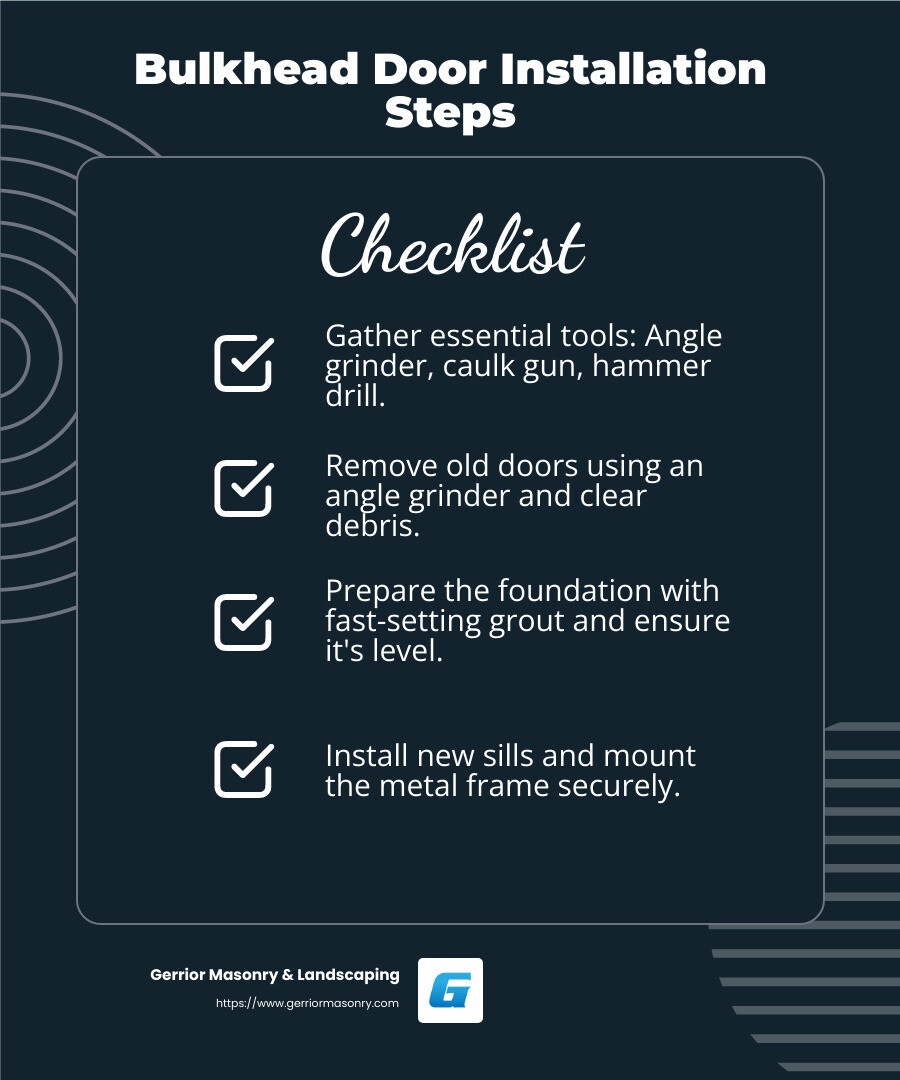
The bulkhead door installation process requires attention to detail and precision. By following these steps, you can ensure a secure and long-lasting fit. Next, we’ll explore the costs involved in installing bulkhead doors, helping you budget effectively for this essential home improvement project.
Bulkhead Door Installation Cost
Understanding the cost of bulkhead door installation is crucial for planning your home improvement project. Let’s break down the average costs, factors that influence these costs, and some handy budgeting tips.
Average Cost
The price for installing a new bulkhead door can vary significantly depending on the material and complexity of the job. On average, you can expect to pay between $900 and $1,600 for steel doors, which are durable and require little maintenance. Wood doors, which offer a classic look, generally range from $500 to $1,500, but they may need more upkeep over time. Other materials like plastic and fiberglass are not recommended due to their susceptibility to damage and similar cost range of $1,000 to $2,000.
Factors Influencing Cost
Several factors can affect the overall cost of your bulkhead door installation:
- Material Choice: The type of door material significantly impacts the price. Steel is pricier but offers durability, while wood is cheaper but may need more frequent maintenance.
- Labor Costs: Depending on your location and the complexity of the installation, labor costs can vary. Installing a bulkhead door requires mid-level carpentry skills, which might increase labor charges.
- Foundation Condition: If the foundation requires repairs or additional preparation, this can add to the cost. Ensuring a level and stable foundation is crucial for a successful installation.
- Additional Features: Extras such as insulation, paint, and weatherproofing can increase the total cost. These features, however, can improve the door’s longevity and performance.
Budgeting Tips
To manage your budget effectively, consider the following tips:
- Set a Clear Budget: Determine how much you can afford to spend before starting the project. This will help in making informed decisions about materials and optional features.
- Get Multiple Quotes: Contact different contractors to compare prices. This can help you find the best deal and ensure you’re getting quality work for your investment.
- Plan for Unexpected Costs: Always set aside a portion of your budget for unforeseen expenses. This could include unexpected repairs or upgrades that become apparent during the installation process.
- Prioritize Quality: While it might be tempting to go for the cheapest option, investing in quality materials and skilled labor can save you money in the long run by reducing the need for frequent repairs or replacements.
By understanding these cost components and planning accordingly, you can ensure a smooth and financially manageable bulkhead door installation. Up next, we’ll tackle some frequently asked questions about bulkhead doors to further assist you in your decision-making process.
Frequently Asked Questions about Bulkhead Door Installation
How much does it cost to install a bulkhead door?
The cost to install a bulkhead door can vary depending on several factors. On average, installing a steel bulkhead door ranges from $900 to $1,600, while wood doors generally cost between $500 and $1,500. Factors influencing these costs include:
- Material Choice: Steel doors are more expensive due to their durability, whereas wood doors are cheaper but may require more maintenance.
- Labor Costs: Installation complexity can affect labor costs, especially if special skills are needed.
- Foundation Condition: If the foundation needs repairs, expect additional costs.
- Additional Features: Insulation and weatherproofing can increase costs but improve longevity.
To stay within budget, consider setting a clear budget, getting multiple quotes, and planning for unexpected expenses.
What is the best wood for bulkhead doors?
When choosing wood for bulkhead doors, consider options like cypress, cedar, and mahogany. These woods are naturally resistant to decay and insects, making them excellent choices for outdoor use.
- Cypress: Known for its durability and resistance to water damage, cypress is a top choice for bulkhead doors.
- Cedar: Cedar offers a classic look and natural resistance to rot and pests, making it a popular and reliable option.
- Mahogany: Although more expensive, mahogany provides a rich appearance and excellent durability, making it ideal for those seeking a premium look.
Using stainless-steel fasteners and treating the wood with preservatives can extend the lifespan of your bulkhead doors.
What can I use instead of a bulkhead door?
If you’re considering alternatives to a bulkhead door for basement access, here are a few options:
- Egress Windows: These provide an emergency exit and allow natural light into the basement. They are a great alternative if you want to maintain safety and brighten up the space.
- Walkout Basement Doors: If your property allows, a walkout basement door can offer direct access to the basement without the need for a bulkhead.
- Interior Staircase: An interior staircase can connect the basement to the rest of the house, eliminating the need for an exterior bulkhead door.
Each alternative has its own set of benefits and installation requirements, so consider your specific needs and property layout when making a decision.
Conclusion
When it comes to bulkhead door installation, choosing the right professionals can make all the difference. At Gerrior Masonry & Landscaping, we pride ourselves on delivering high-quality, durable installations that stand the test of time. With over 30 years of experience, our skilled team ensures every project is handled with precision and care, providing peace of mind and enhancing your home’s functionality.
Maintenance Tips
Proper maintenance is key to extending the life of your bulkhead doors. Here are some simple tips to keep in mind:
- Regular Cleaning: Keep the doors and surrounding area free of debris to prevent damage and ensure smooth operation.
- Hinge Lubrication: Lubricate hinges and other moving parts annually to maintain ease of use and prevent rust.
- Inspect for Damage: Regularly check for signs of wear, such as rust, corrosion, or water seepage, particularly before and after winter.
- Weatherstripping Replacement: Replace weatherstripping as needed to maintain a tight seal and prevent water intrusion.
By following these maintenance tips, you can help ensure your bulkhead doors remain functional and attractive for years to come.
Professional Inspection
While regular maintenance can address many issues, having your bulkhead doors professionally inspected from time to time is also important. Our team at Gerrior Masonry & Landscaping offers expert inspections, identifying potential problems before they become costly repairs. This proactive approach not only preserves the structural integrity of your home but also improves safety and security.
In conclusion, whether you’re installing new bulkhead doors or maintaining existing ones, relying on experienced professionals like us ensures a job well done. For more information on our services or to request an estimate, visit our bulkhead replacement page. Let us help you protect and improve your home with quality craftsmanship and reliable solutions.
