When stormwater leaves your yard a soggy, unusable mess, it’s more than an inconvenience. Standing water can damage your foundation, kill plants, and create a breeding ground for mosquitoes. If your property struggles to drain after a storm, a dry well might be the answer.
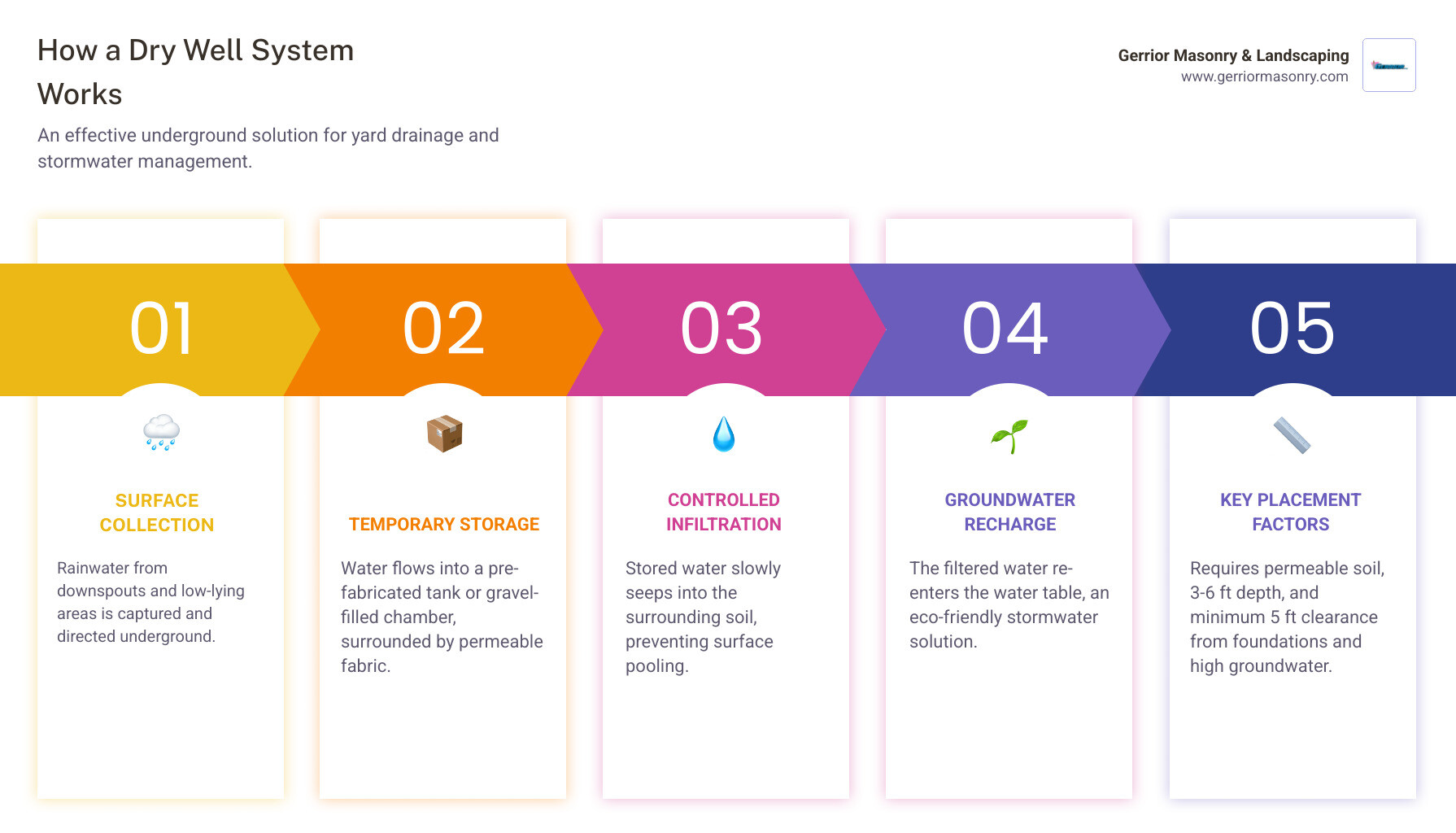
Dry well yard drainage is an underground system that collects excess water from downspouts and low spots, stores it in a chamber, and allows it to slowly soak into the ground. This recharges groundwater and prevents runoff, erosion, and flooding. It’s an ideal, low-maintenance solution for properties with persistent standing water and suitable soil.
I’m Joe Gerrior, owner of Gerrior Masonry & Landscape Construction. For over 34 years, I’ve helped Massachusetts homeowners protect their properties with custom dry well yard drainage systems. If you’re tired of a wet yard and basement moisture, understanding how a dry well works is the first step toward a solution.
Poor drainage can be obvious, like a pond in your backyard, or subtle, like a musty basement smell. Here are the top indicators that your property in Middlesex or Essex County could benefit from a dry well yard drainage system:
Persistent Water Pooling: Water stands in your yard for more than 24 hours after rain, drowning plants and attracting mosquitoes.
Gutter Downspout Overflow: Downspouts dump water near your foundation, causing erosion and puddles.
Marshy or Soggy Spots: Areas of your lawn feel consistently squishy, even when the rest of the yard is dry.
Basement Moisture or Flooding: Water pooling around your foundation seeps into your basement, causing dampness and mold. Learn more about investigating your exterior drainage.
Eroding Soil: Runoff washes away topsoil and mulch, creating trenches in your landscape.
Damaged Landscaping: Plants in certain areas show signs of root rot or fail to thrive due to overwatering.
Ignoring these signs can lead to costly structural damage to your home.
The Main Benefits of a Dry Well System
A dry well yard drainage system protects your home, improves your property, and helps the environment. Key benefits include:
Flood Prevention: By collecting and slowly dispersing excess water, dry wells prevent localized flooding, keeping basements and yards dry.
Foundation Protection: A dry well directs water away from your foundation, reducing the risk of cracks, leaks, and the need for costly foundation repair.
Usable Yard Space: Reclaim soggy patches of your lawn. A properly installed dry well is hidden underground, making your entire yard accessible and enjoyable after rain.
Eco-Friendly: Dry wells recharge local groundwater and reduce polluted runoff into municipal sewers and natural waterways, protecting our local ecosystem.
Low Maintenance: With proper installation and care, a dry well requires minimal upkeep and can last up to 30 years.
Increased Property Value: A well-drained property is more appealing to homebuyers, as it eliminates concerns about expensive water-related repairs.
The Complete Guide to Dry Well Yard Drainage
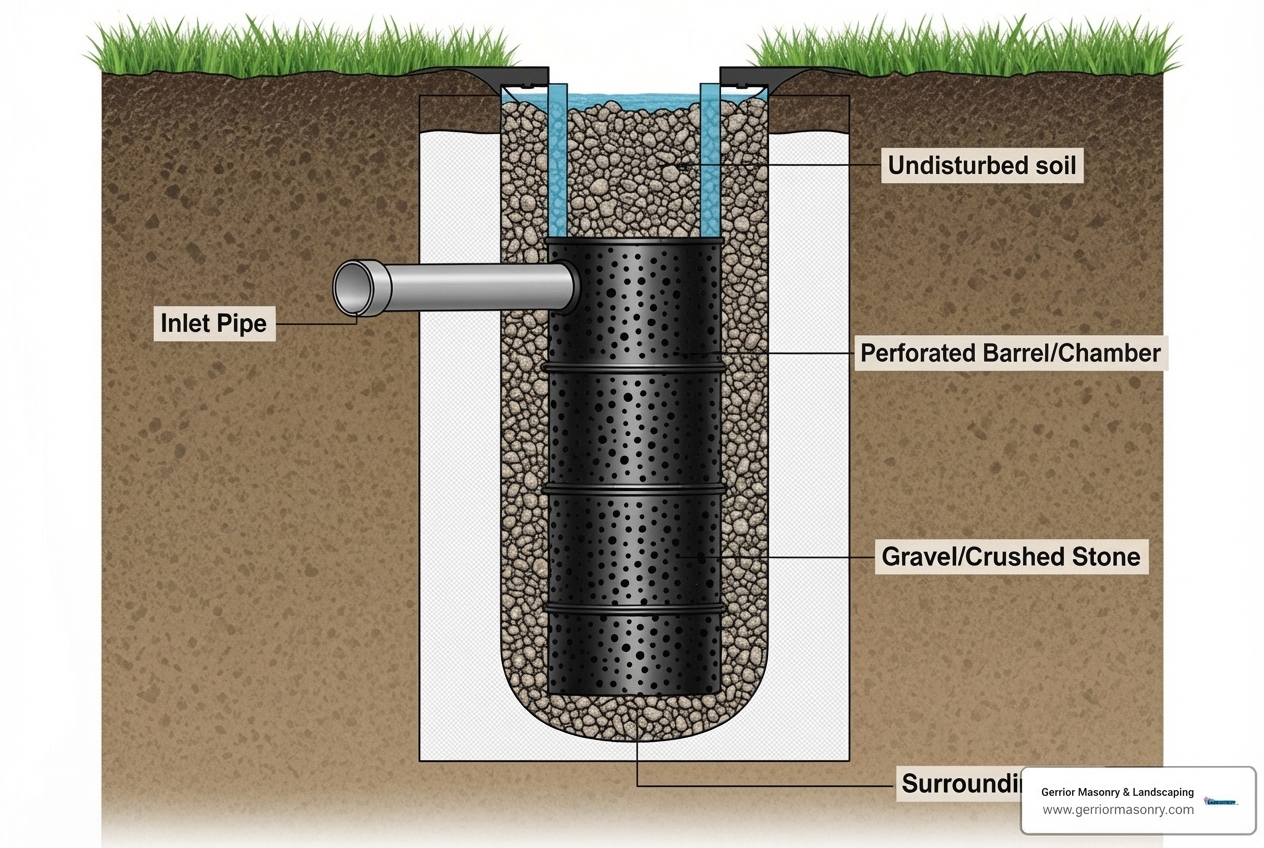
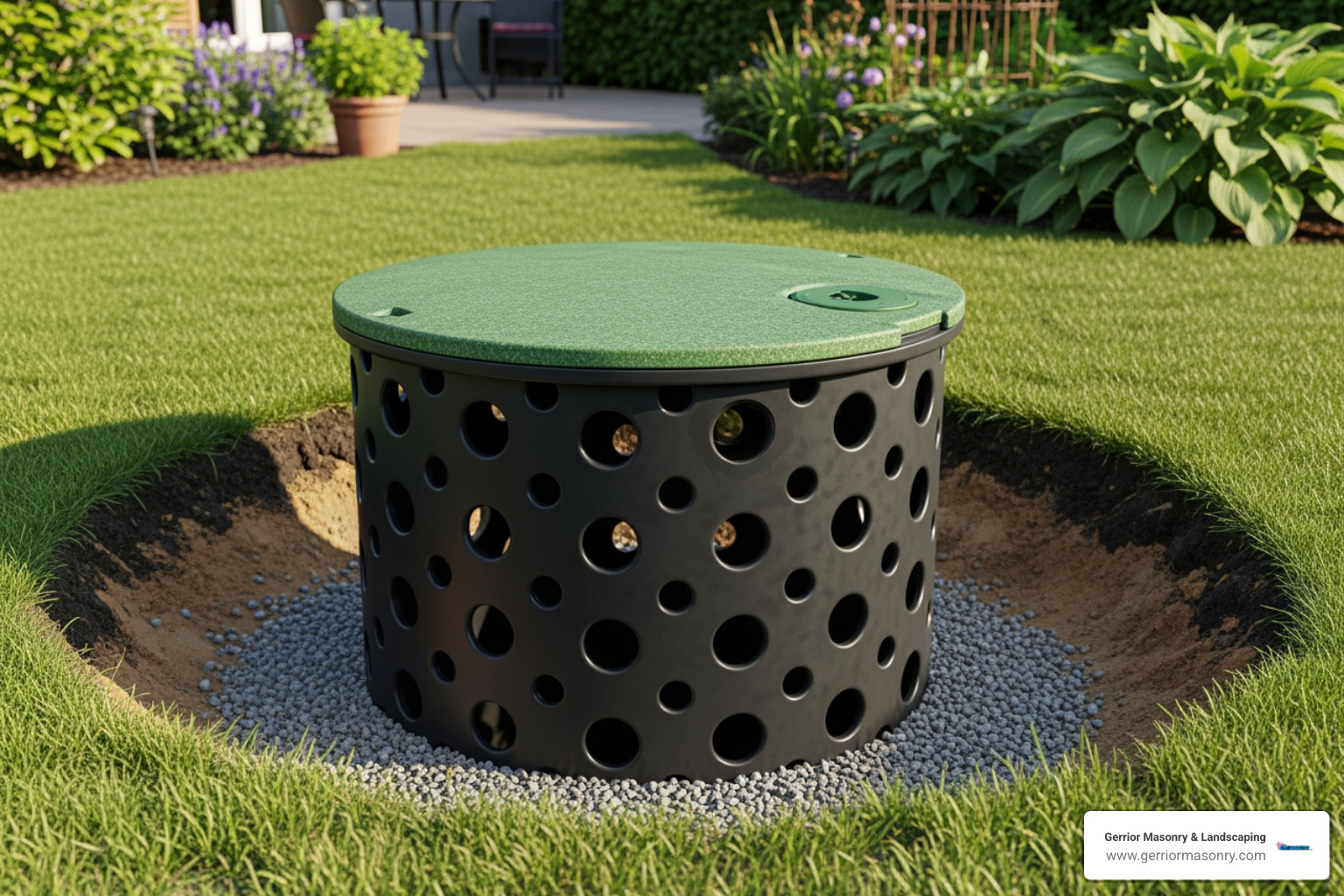
A dry well is a carefully engineered system designed to manage stormwater effectively. Understanding its components is key to successful dry well yard drainage.
Dry wells offer high infiltration capacity with a small footprint, making them a low-cost solution with rapid construction.
Key Design Factors for Dry Well Yard Drainage
Careful planning is crucial for an effective dry well yard drainage system. We consider several factors to design the right solution for your property.
Soil Percolation (Perc) Test: This critical test measures how quickly your soil absorbs water. We dig a test hole, typically 1-2 feet deep, and fill it with water. After the soil is saturated, we refill it and measure the rate at which the water level drops over a specific period. This rate, measured in inches per hour, determines the soil’s suitability. Fast-draining sandy soils are ideal, while slow-draining clay soils make dry wells less effective. A rate of at least 1 inch per hour is generally recommended for a dry well to be effective.
Sizing the Dry Well: The well’s size depends on the runoff volume and the soil’s infiltration rate. The calculation involves determining the catchment area (e.g., the square footage of your roof that feeds a specific downspout) and multiplying it by the rainfall from a typical heavy storm in our region. This gives us the total volume of water the dry well must handle. We then use the soil’s perc rate to ensure the well is large enough to store this volume and allow it to infiltrate within a reasonable timeframe, usually 24-72 hours, preventing overflow.
Depth Requirements: Dry wells are usually 3–6 feet deep, allowing water to bypass less permeable topsoil and reach more absorbent soil layers below. The exact depth is determined by the soil profile and the location of permeable layers.
Placement Restrictions: Proper placement is vital for safety and function. Placing a dry well too close to a foundation can lead to oversaturation of the soil supporting your home, potentially causing settling or basement leaks—the very problems we aim to solve. Setbacks from property lines prevent drainage issues for your neighbors. Keeping the well bottom well above the seasonal high water table is critical; if the well is in the groundwater, it cannot drain.
Foundations: Must be at least 10 feet (ideally 15-20 feet) away from foundations.
Property Lines: Must be a safe distance from neighboring properties, often specified by local code (typically 5-10 feet).
Groundwater & Impervious Layers: The bottom of the well must be at least 3-5 feet above the seasonal groundwater level and any impervious layers like rock or hardpan.
Step-by-Step Dry Well Installation
Professional installation is recommended to ensure your dry well yard drainage system is effective and long-lasting. Here’s a more detailed overview of the process:
Site Assessment and Planning: We conduct a thorough site assessment, including a professional perc test, to determine the best location, size, and design for your system. We also call DigSafe (811) to have all underground utilities located and marked before any digging begins.
Gathering Materials: We source high-quality materials, including a pre-cast concrete or modern polyethylene tank, clean, washed gravel (to prevent sediment introduction), non-woven geotextile landscape fabric, durable PVC pipes, and often a pre-filter or silt trap to catch debris.
Excavation: Our team excavates a pit to the specified dimensions, a task that often requires professional excavation services to ensure proper depth and safety. The excavated soil is carefully managed on-site or removed.
Lining the Pit: The entire pit is carefully lined with the geotextile landscape fabric, with enough overlap to fully enclose the system. This is a critical step to prevent surrounding soil and fine silt from migrating into the gravel and clogging the system over time.
Placing the Dry Well: The tank or chamber is carefully lowered and centered in the lined pit. It is checked to ensure it is level.
Backfilling with Gravel: We backfill the space around and above the tank with clean, washed gravel. This gravel field not only provides structural support but also significantly increases the system’s total water storage capacity and provides a large surface area for infiltration.
Connecting Inlet Pipes: A trench is dug from the collection point (like a downspout or catch basin) to the dry well. PVC pipes are laid with a slight downward slope (at least 1/8 inch per foot) to ensure positive flow and are connected securely to the dry well’s inlets. An overflow pipe leading to a safe discharge area may be added as a failsafe for extreme rain events.
Final Cover: The top of the gravel is covered with the overlapping landscape fabric. The area is then topped with a layer of soil and finished with sod or seed to match the surrounding lawn. Once finished, the dry well is completely hidden from view, leaving your yard fully usable.
Comparing Dry Well Yard Drainage to Other Solutions
Dry wells are just one of several dry well yard drainage solutions. Understanding how they compare to other methods helps determine the best fit for your property.
Feature
Dry Well System
French Drain System
Rain Garden (Bioretention Basin)
Primary Function
Collects and infiltrates concentrated runoff underground
Collects and redirects surface/subsurface water via pipe
Absorbs and filters surface runoff using plants & soil
How it Works
Underground chamber stores water for slow release into soil
Perforated pipe in a gravel trench diverts water elsewhere
Depressed garden with special plants and soil filters and absorbs water
Requires specific plants, can attract mosquitoes if water stands
A dry well is ideal for collecting concentrated water from a downspout or low spot, especially on flat properties with permeable soil. A French drain is better for intercepting and redirecting water across a linear area, like along a foundation. Often, the best solution is a custom combination of methods. Dry well yard drainage systems are for stormwater only; using them for gray water is not recommended and may be prohibited by local regulations.
Final Considerations Before You Dig
Before installing a dry well yard drainage system in Middlesex or Essex County, MA, it’s crucial to understand the long-term maintenance, costs, and regulations.
Maintenance, Lifespan, and Potential Drawbacks
While low-maintenance, dry wells require some care to ensure their impressive lifespan.
Longevity: A professionally installed dry well can last up to 30 years.
Clogging from Sediment: The main issue is clogging from sediment and debris. A silt trap or catch basin installed upstream is highly recommended to filter out debris before it enters the well.
Inspection and Cleaning: Periodically check inlets to keep them clear. A silt trap should be cleaned every year or two to maintain flow and prevent clogs.
Soil and Water Type: Dry wells are not effective in heavy clay soil and should only be used for stormwater, not gray water, to prevent clogging and groundwater contamination.
Understanding Costs and Local Regulations
The cost and regulatory requirements for a dry well yard drainage system are important considerations.
Typical Costs: Installation costs can range from $1,500 to over $5,000. Please note these are average costs based on internet data and are not actual costs for Gerrior Masonry & Landscape Construction. The final price depends on system size, excavation complexity, materials, and local labor costs.
Permit Requirements: Many Massachusetts towns require permits for drainage installations. It’s essential to check with your local building authority before starting a project.
DIY vs. Professional Installation: While a small system may seem like a DIY project, professional installation is crucial for proper sizing, placement, and longevity. Incorrect installation can fail to solve the problem and may even cause property damage. Professional planning is especially important for projects that impact drainage or involve hardscaping services.
Get Expert Help for Your Yard Drainage Needs
Dealing with persistent yard flooding and drainage issues can be frustrating, but you don’t have to tackle it alone. Our team at Gerrior Masonry & Landscape Construction is here to help.
We offer professional assessments to determine the root cause of your drainage problems and recommend the most effective solutions, whether it’s a dry well, a French drain, grading, or a combination of methods. With over 30 years of experience, we pride ourselves on our skilled team and owner oversight on every project, ensuring high-quality results that protect your property for years to come.
Gerrior Masonry & Landscape Construction is based in Woburn, MA, and proudly services Middlesex and Essex County, Massachusetts. Don’t let a soggy yard ruin your outdoor enjoyment or threaten your home’s foundation. Contact us today for your dry well drainage project and let us help you achieve a dry, beautiful, and functional outdoor space.
Brick and stone masonry offers timeless beauty and structural strength, improving your property’s curb appeal and long-term value. But finding a reliable, skilled mason when searching for masonry near me isn’t always straightforward. The quality of work varies dramatically, and a poor choice can lead to costly repairs. You need an expert who understands local building codes, weather conditions, and the specific needs of Massachusetts properties.
Quick Guide to Finding Local Masonry Services:
Check credentials – Verify licenses, insurance, and certifications
Review portfolios – Look at completed projects similar to yours
Get multiple quotes – Compare 3+ written estimates
Read reviews – Check Google, Houzz, and local recommendations
Ask about warranties – Quality work should be guaranteed
Verify experience – Ensure expertise in your specific project type
This guide walks you through everything you need to know about finding quality masonry near me services—from understanding common projects to vetting contractors.
I’m Joe Gerrior, owner of Gerrior Masonry & Landscape Construction Corp. For over 34 years, my team and I have provided Massachusetts homeowners with expert masonry solutions, from foundation repairs to custom hardscaping installations.
Finding the right masonry professional is about understanding the scope of services, the benefits of quality craftsmanship, and knowing what to look for in a contractor. Let’s explore the details that will help you make an informed decision when you need masonry near me.
Common Masonry Services for Your Home
Masonry contractors offer a wide array of services to build, repair, and improve your property. Here at Gerrior Masonry & Landscape Construction, our services for homeowners and businesses in Middlesex and Essex County, Massachusetts include:
New Construction: We create custom fireplaces, intricate stonework, and unique structural features for your home.
Patios & Walkways: We design and install inviting outdoor spaces, including multi-level patios and pool decks, using brick, stone, and pavers.
Retaining Walls: We build robust and attractive retaining walls to manage slopes, prevent erosion, and define your landscape.
Chimney Repair: We handle everything from minor repairs to full restorations, ensuring your chimney is safe and functional.
Foundation Repair: We address cracks, bowing, and water intrusion with comprehensive foundation repair, including cinder block foundation repair.
Bulkhead Replacement: We provide durable bulkhead replacements for secure basement access and waterproofing.
Hardscaping: We transform your outdoor space with patios, walkways, driveways, outdoor kitchens, and fire features.
Commercial Snow Removal (for businesses only): We provide reliable snow removal to keep commercial properties safe and accessible during winter.
Other services a masonry contractor might offer include brickwork, stonework, waterproofing, and power washing. Our team is equipped to handle a wide range of projects with quality craftsmanship.
The Enduring Benefits of Brick and Stone Masonry
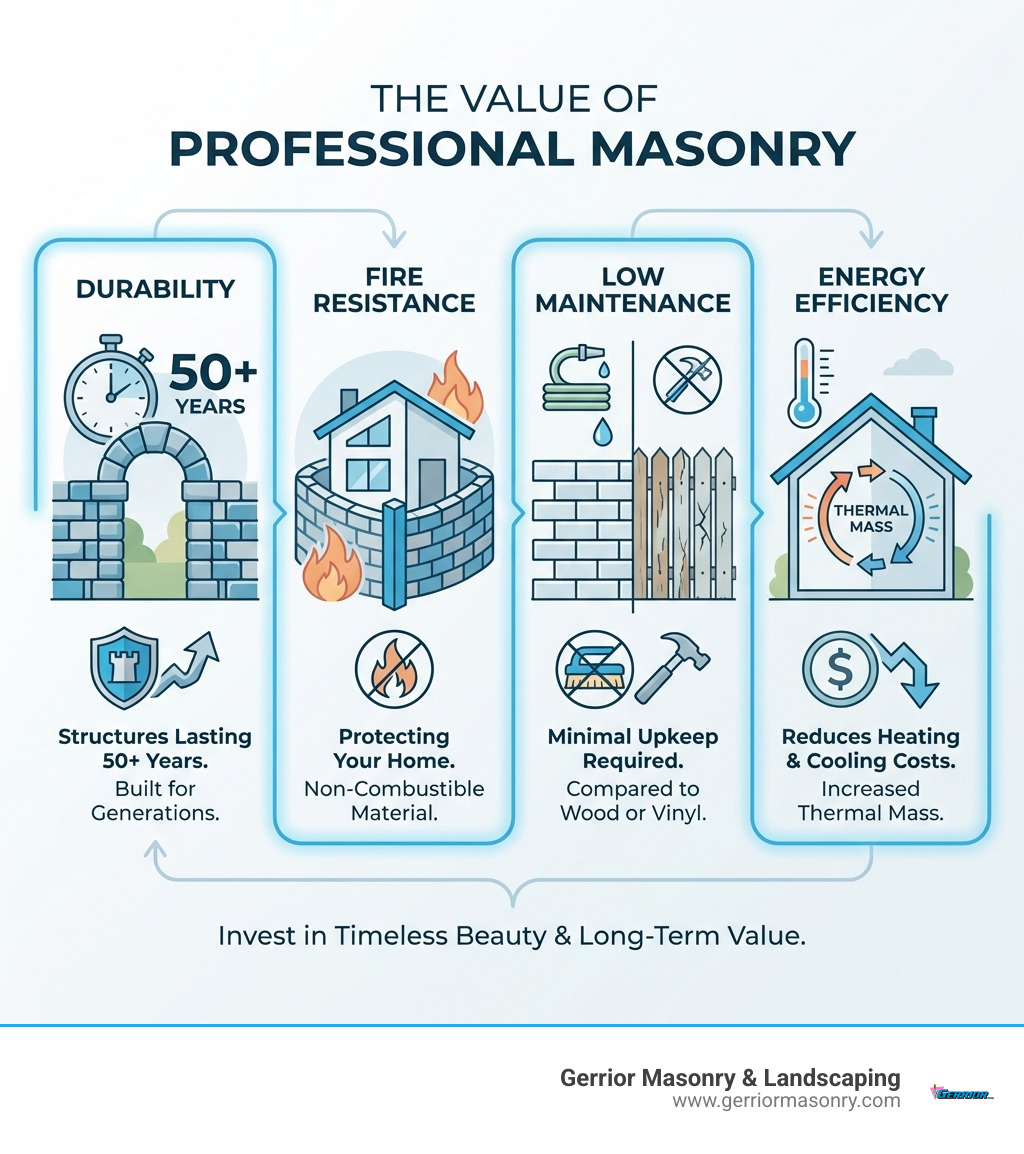
Choosing brick or stone offers practical and aesthetic benefits that increase your property’s value and longevity.
Durability & Longevity: Properly constructed masonry can last for centuries, with mortar joints typically needing maintenance like tuckpointing every 20-30 years.
Weather Resistance: Brick and stone naturally resist harsh weather, including heavy rain and extreme temperatures, making them ideal for the Massachusetts climate.
Superior Fire Protection: As non-combustible materials, brick and stone offer excellent fire resistance, a key safety benefit for your home.
Improved Energy Efficiency: The thermal mass of masonry helps regulate indoor temperatures by absorbing and slowly releasing heat, potentially lowering energy bills.
Low Maintenance Requirements: Unlike wood, masonry exteriors don’t require painting and are easy to clean, saving you time and money on upkeep.
Increased Property Value: The classic appeal and durability of masonry significantly boost your home’s curb appeal and market value.
Timeless Aesthetic Appeal: The natural textures and colors of stone and brick create a sophisticated, classic look that never goes out of style.
Telltale Signs Your Masonry Needs Repair
Even the most durable masonry shows wear over time. Recognizing these signs early can prevent more extensive and costly repairs. Keep an eye out for these indicators that your masonry near me might need professional attention:
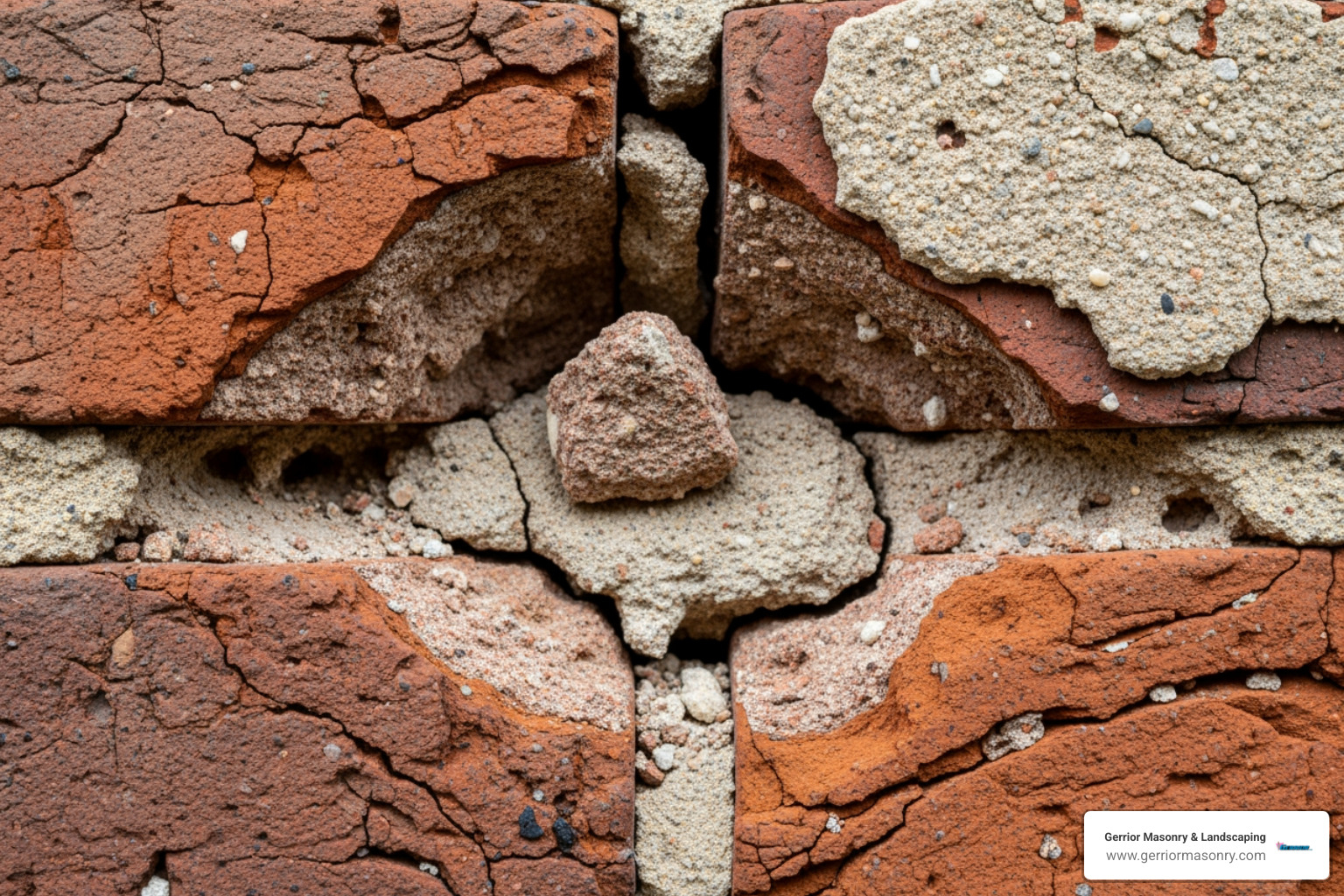
Cracked or crumbling mortar joints: If mortar is sandy or crumbles easily, it’s weakening and allowing moisture to penetrate.
Spalling (flaking or peeling bricks): This occurs when trapped moisture freezes and expands, causing the brick face to pop off and weakening the structure.
Efflorescence (white, powdery stains): These salt deposits on your brickwork are a clear sign that water is getting inside your masonry.
Bowing or leaning walls: A bulging or leaning wall indicates significant structural issues that require immediate attention.
Water intrusion in the basement: Dampness or leaks in your basement can signal foundation cracks or compromised bulkhead seals.
Cracked bricks: While small cracks can be cosmetic, large or stair-step cracks may signal serious foundational or structural problems.
Frost Boil: Common in cold climates, this happens when frozen ground expands and pushes against your foundation, causing cracks and shifting.
If you notice any of these signs, don’t wait. Early intervention can prevent minor issues from becoming major problems. For more information, check out our page about foundation repointing.
Masonry Repair vs. Restoration & Tuckpointing
When fixing masonry, you’ll hear terms like “repair,” “restoration,” and “tuckpointing.” Understanding these helps you communicate your needs to a masonry near me professional.
Masonry Repair defined: This involves small-scale fixes for specific, localized damage, like replacing a few spalled bricks or patching minor cracks to prevent further deterioration.
Masonry Restoration defined: This is a comprehensive process, often for older buildings, that aims to return a structure to its original condition and integrity by rebuilding large sections of masonry.
The process of tuckpointing: Also known as repointing, this is a specialized repair for mortar joints. It involves removing old, deteriorated mortar and replacing it with new mortar for a clean, weather-tight finish.
When tuckpointing is necessary: Mortar lasts about 20-30 years. If it’s crumbling or missing, tuckpointing is vital to seal out water and maintain the wall’s structural integrity.
Our team can assess your masonry and recommend the most effective solution, whether it’s a small repair or a specialized service like cinder block foundation repair.
The Typical Process for a Masonry Project Near Me
Knowing the steps of a masonry project helps ensure a smooth process from start to finish with your chosen masonry near me contractor.
Initial Consultation & Quote: We discuss your needs, inspect the site, and provide a free, detailed estimate outlining the scope, materials, timeline, and cost.
Material Selection: We guide you through selecting the best brick, stone, or pavers for your project, balancing durability, aesthetics, and budget. You can explore masonry product options.
Site Preparation: This includes excavation, grading, and ensuring proper drainage to create a safe and stable foundation for the work.
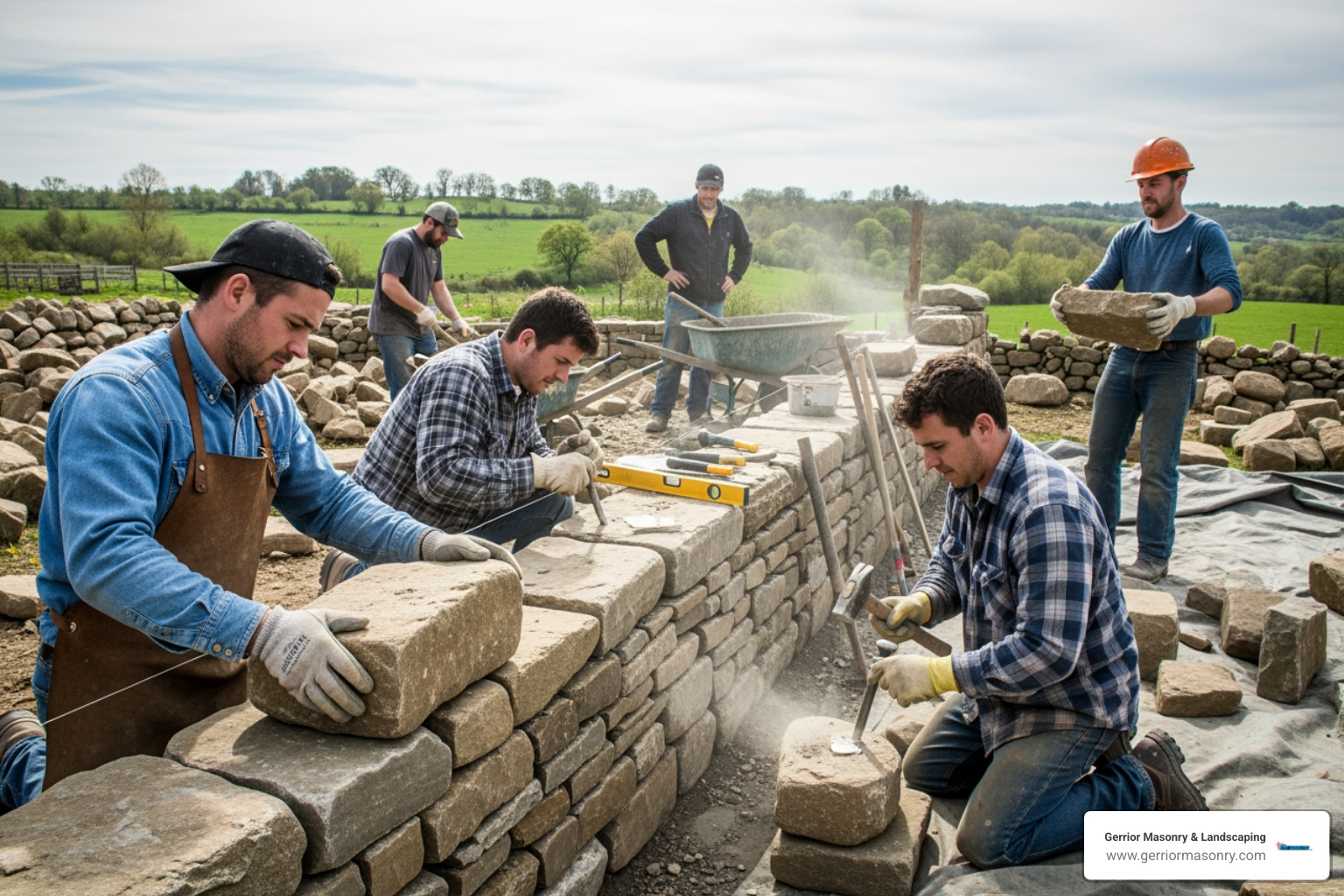
Construction Phase: Our skilled masons execute the project with precision and care, adhering to the highest industry standards while keeping your property as clean as possible.
Cleanup & Final Walk-through: After a thorough cleanup, we walk through the finished project with you to ensure your complete satisfaction.
Project costs vary based on complexity, materials, and labor. For example, average brick repair costs can range from $350 for minor fixes to over $1,000 for more complex issues. These are average costs based on internet data and not actual costs for Gerrior Masonry services. We provide a custom quote for every project.
How to Find a Reputable Masonry Contractor Near Me
Finding a skilled, trustworthy contractor is crucial for your project’s success. Here’s how to vet your options when searching for masonry near me.
Check Online Reviews & Testimonials: Use platforms like Google, Houzz, and Yelp to gauge customer satisfaction regarding quality, professionalism, and communication.
Ask for a Portfolio of Past Work: A reputable contractor will have a portfolio showcasing their craftsmanship. Look for examples of projects similar to yours.
Verify License & Insurance: This is non-negotiable. Ensure the contractor has both general liability and workers’ compensation insurance. General liability protects your property from damage, while workers’ compensation covers any injuries to the crew on your job site. Asking for a certificate of insurance is a standard and necessary step to protect yourself from significant financial and legal liability.
Get Detailed, Written Estimates: Obtain at least three itemized estimates from different contractors. Be wary of unusually low bids, which may signal shortcuts or hidden costs.
Assess Communication and Professionalism: Good communication from the first contact is a hallmark of a reliable professional who will keep you informed.
Check Experience and Specialization: Look for contractors with a proven track record and expertise that matches your specific project needs.
Here are some essential questions to ask a potential masonry contractor:
Can you provide references from recent clients?
Are you licensed and insured? Can I see proof?
How many years have you been in business?
Do you offer a warranty on your work? What does it cover?
What is your typical project process, from start to finish?
How do you ensure property cleanup during and after the project?
What materials do you recommend for my project, and why?
How do you handle unexpected issues or changes during the project?
What are your payment terms and schedule?
Will you obtain all necessary permits for the job?
Can you show me examples of similar projects you’ve completed in the area?
Choosing a contractor isn’t just about price; it’s about trust, quality, and peace of mind.
Partner with a Trusted Local Masonry Expert
The search for masonry near me should lead you to skilled professionals who deliver beauty, durability, and value. Investing in quality masonry is an investment in your home that will stand the test of time, enhancing your property for years to come.
At Gerrior Masonry & Landscape Construction, we bring over 30 years of experience to every project. Our unique approach of owner oversight on every job guarantees the highest standards of quality and craftsmanship, ensuring every client is happy with our work.
We are based in Woburn, MA, and proudly serve communities throughout Middlesex and Essex County, Massachusetts, including Acton, Amesbury, Andover, Arlington, Ayer, Bedford, Belmont, Beverly, Billerica, Boxford, Burlington, Carlisle, Chelmsford, Concord, Danvers, Dracut, Dunstable, Essex, Georgetown, Hamilton, Hudson, Ipswich, Lexington, Lincoln, Lowell, Lynnfield, Malden, Manchester-by-the-Sea, Marblehead, Medford, Melrose, Middleton, Natick, Newton, North Andover, North Reading, Peabody, Reading, Rowley, Salem, Saugus, Stoneham, Sudbury, Swampscott, Tewksbury, Topsfield, Wakefield, Waltham, Watertown, Wayland, Wenham, West Newbury, Westford, Weston, Wilmington, Winchester, and Woburn.
Why Gabion Walls are a Smart Choice for Your Landscape
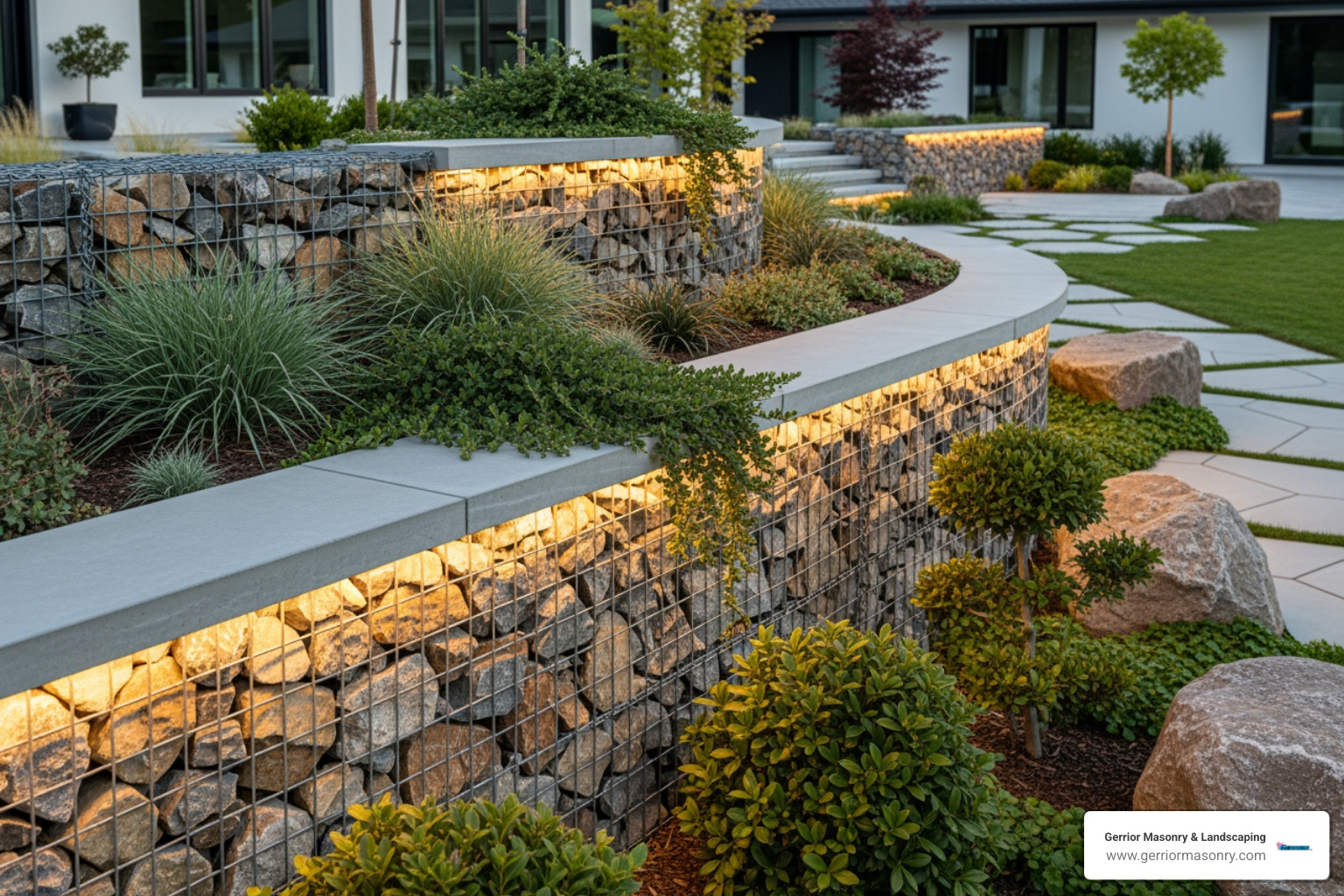
Installing a gabion retaining wall means filling wire mesh baskets with rock to create a durable, attractive structure. The basic process is:
Excavate 20-50cm below ground and add 20cm of compacted gravel.
Assemble wire mesh baskets with spiral connectors.
Fill baskets with 4-8 inch angular rocks in layers.
Install bracing wires (4 per square meter) to prevent bulging.
Stack additional rows, connecting each layer securely.
Backfill behind the wall with drainage materials.
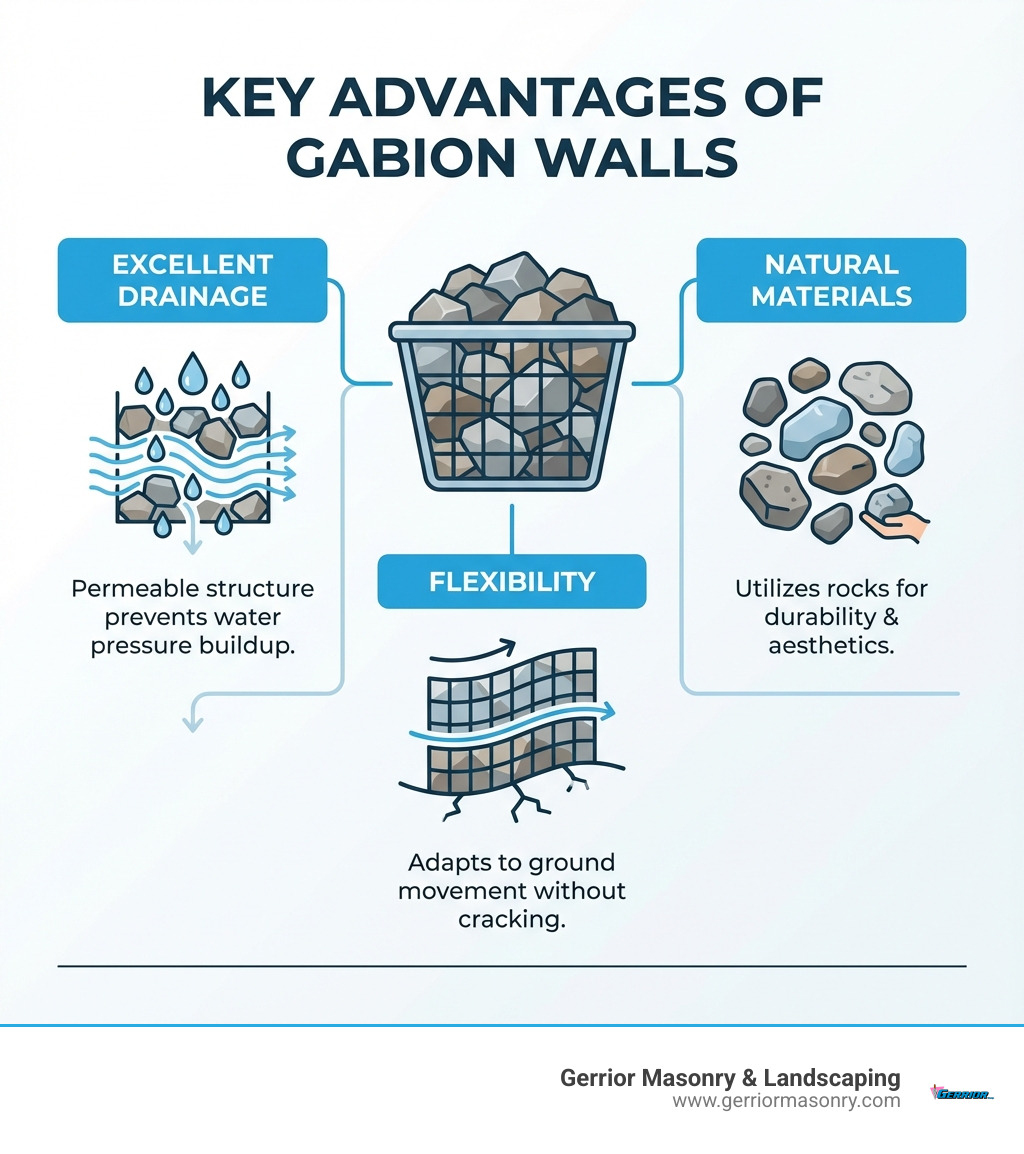
Gabion walls have compelling advantages. They are permeable, allowing water to pass through, which prevents the pressure buildup that can damage solid walls. Their flexibility lets them adapt to ground movement without cracking. For DIYers, they require no mortar or heavy machinery, just basic hand tools.
Gabions are also cost-effective. DIY material costs typically range from $50-200 per linear foot, less than poured concrete. Using local stone can further reduce costs and environmental impact. These structures are remarkably durable, lasting for decades with minimal maintenance.
I’m Joe Gerrior, owner of Gerrior Masonry & Landscape Construction Corp. Our team has built retaining walls across Massachusetts for over 34 years, including many gabion installations. Installing a gabion retaining wall requires careful foundation prep, bracing, and filling techniques, which we’ll cover in this guide.
The Step-by-Step Process for Installing a Gabion Retaining Wall
This section breaks down the project into manageable steps, from initial planning to the final rock placement, ensuring a professional result for your hardscape retaining walls.
Step 1: Planning, Tools, and Materials
Meticulous planning is key. Before starting, understand the project scope, check local regulations for permits, and gather all necessary tools and materials.
Here’s what you’ll need for installing a gabion retaining wall:
Essential Tools:
Flat and spade shovels
Rake and pick
Wheelbarrow
Tape measure
4-foot level and string line with stakes
Pliers with wire cutters or hog ring pliers
Heavy hammer or mallet
Plate compactor (for foundation preparation)
Post hole digger (for narrow walls needing internal posts)
Safety glasses and heavy-duty leather work gloves
Essential Materials:
Gabion Baskets: Choose between rigid welded mesh (decorative) or flexible woven mesh (engineering). For maximum durability, we recommend a Galfan coating, which outlasts standard galvanized wire. Purchase 5% extra to avoid shortages.
Rock Fill: Use dense, hard, and durable rocks that can resist weathering. A rock density of 2400 kg/m³ (150 lbs/ft³) or higher is ideal. Angular rocks are preferred as they interlock for better stability.
Geotextile Fabric: This non-woven fabric acts as a filter, preventing soil from clogging the gabions while allowing water to drain.
Perforated Drainage Pipe: An 80mm (3-inch) pipe is crucial for drainage behind taller walls.
Basecourse Gravel: A stable bed for your gabions. MOT Type 1 (crushed granite, limestone, etc.) is an excellent choice.
Lacing Wire, Spiral Wire, or Ring Fasteners: These connect the basket panels securely.
When it comes to rock fill, size matters. The rocks should always be slightly larger than the mesh openings of your gabion baskets to prevent them from slipping out. Here’s a quick guide:
Mesh Opening Size
Recommended Rock Size Range
Minimum Rock Size
Maximum Rock Size
3×3 inches
4-8 inches
4 inches
8 inches
6×8 type mesh
3-10 inches (approx.)
75mm (3 inches)
250mm (10 inches)
8×10 type mesh
4-10 inches
100mm (4 inches)
250mm (10 inches)
Step 2: Site Prep and Foundation for Installing a Gabion Retaining Wall
A gabion wall is only as strong as its foundation, so this step is critical.
Begin with site preparation. Call 811 a few days before digging to locate utility lines for safety. Then, mark the wall’s location with spray paint or string lines.
For excavation, retaining walls should typically start 20-50cm (8-20 inches) below ground on a solid substrate. Ensure the excavated area is smooth, level, and free of debris.
Next, add the basecourse requirements. This stable platform’s thickness depends on wall height:
1-meter (3.3 ft) high wall: 10cm (4-inch) basecourse.
2-meter (6.6 ft) high wall: 20cm (8-inch) basecourse.
3-meter (10 ft) or taller wall: 30cm (12-inch) basecourse.
Spread the basecourse material (e.g., MOT Type 1 gravel) evenly and use a plate compactor to create a dense, stable base. A loose foundation will cause the wall to settle. Keep heavy compaction equipment at least 1 meter (3.3 feet) away from placed baskets.
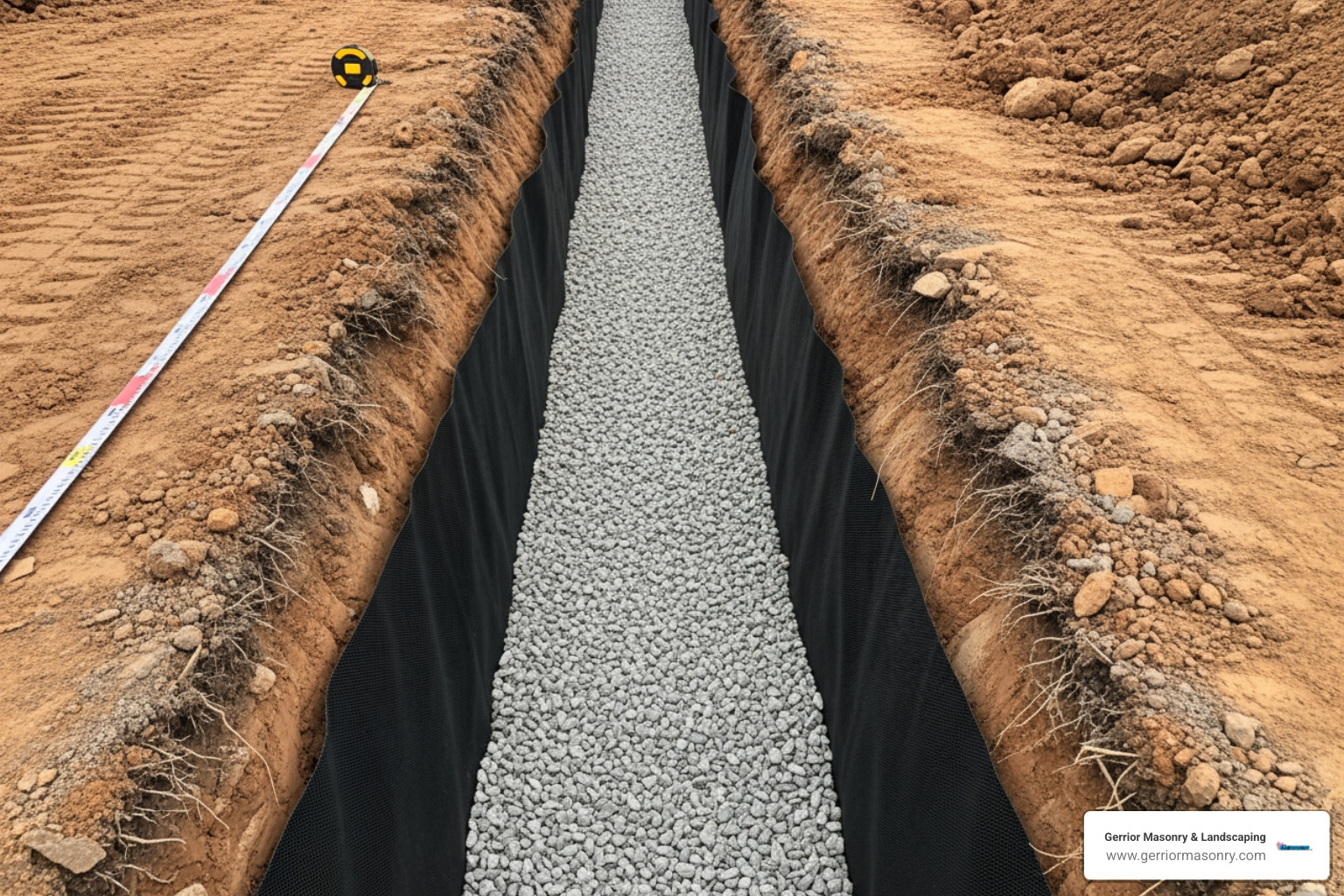
Proper drainage is essential. Install geotextile fabric behind the wall to act as a filter, preventing soil from clogging the baskets while letting water pass. For taller walls or areas with high runoff, install an 80mm (3-inch) perforated drainage pipe at the base, wrapped in geotextile and covered with 300-400mm (12-16 inches) of drainage gravel.
If you must build around existing utilities, design the gabions to accommodate them. For pipes under 400mm (16 inches), the mesh can be cut and bent to fit, with the opening sealed for structural integrity.
Step 3: Assembling, Connecting, and Stacking Baskets
Assembling the baskets is a straightforward process.
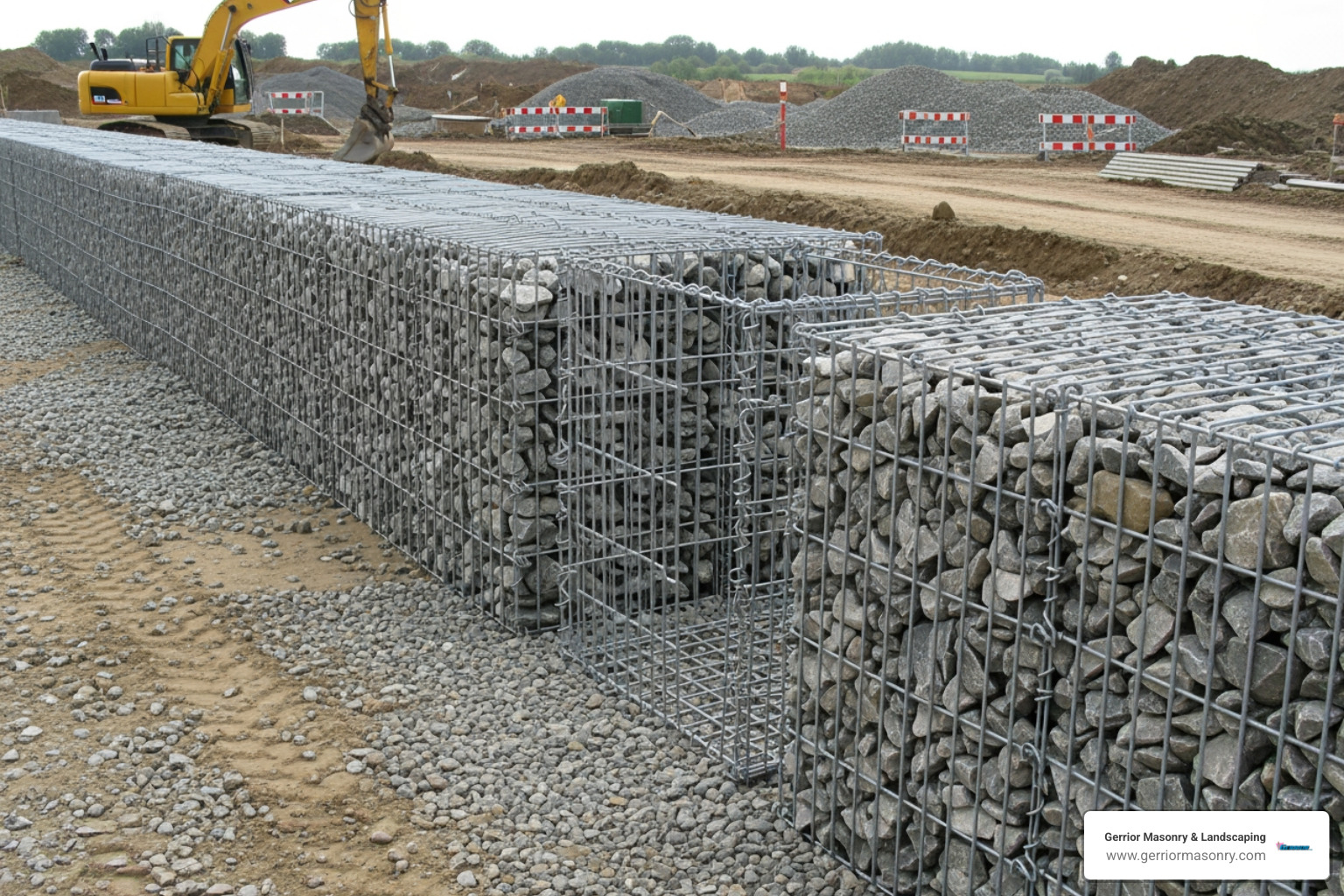
Gabion baskets arrive flat-packed. Unfold each unit, then lift the front, back, and end panels to form a box. Connect the panels using the provided lacing wire, spiral wire, or steel ring fasteners, threading them through adjacent mesh edges and securing the ends. For long walls, you can use shared end panels between baskets.
Longer baskets (6 feet or more) require a middle dividing panel (diaphragm) to prevent bulging. Secure these vertically inside the basket. Aim for a maximum connector spacing of 200mm (8 inches) for a robust structure.
Place assembled baskets on the prepared foundation. Lace adjacent units together along all touching edges to create a single, strong unit.
When building a taller wall, stack subsequent rows on top of the first. Staggering the vertical seams of the upper baskets improves overall stability. Connect the stacked layers along all contact edges with lacing wire or spirals.
Bracing wires are crucial for preventing the front face from bulging. Install a minimum of four bracing wires per square meter of the gabion’s front face, with a maximum spacing of 350mm (14 inches). For 1-meter deep gabions, fix wires at 1/3 and 2/3 of the depth. This keeps the wall’s face straight and uniform. A gabion construction frame can also help maintain alignment during filling.
Step 4: The Art of Filling Baskets and Creating Curves
Filling the baskets combines structural integrity with aesthetic appeal.
For a professional finish, hand-place the most attractive, angular stones against the visible face of the gabion, packing them tightly for a uniform look. The interior of the basket can be filled with smaller rocks or cheaper rubble to reduce costs without compromising strength.
To prevent bulging, fill each gabion in 1/3 increments, keeping adjacent cells within 0.3 meters (1 foot) of each other. This staged filling, along with bracing wires, distributes pressure evenly. Periodically compact the rocks with a mallet to eliminate large voids. Overfill the basket by 25-50mm (1-2 inches) to account for natural settlement. Finally, fold the lid down and lace it securely to all top edges, turning in any sharp wire ends for safety.
Gabions can also form curves and corners. They naturally conform to gentle bends (18-21 meter radius). For tighter curves, cut and fold the mesh or use shorter baskets. For sharp 90-degree corners, use L-shaped configurations or overlap baskets for strength.
Integrating the wall with your landscaping design is easy. The natural stone blends with any aesthetic. You can even create “green gabions” by placing live branches between the rocks that extend into the backfill soil, allowing the wall to become a living part of your landscape.
Finalizing Your Project: Costs, Regulations, and Long-Term Care
This final stage covers the details that ensure your wall is compliant, within budget, and built to last.
Advanced Considerations for Installing a Gabion Retaining Wall
Common installation issues include bulging, settlement, and poor drainage. Prevent bulging by using bracing wires (four per square meter), filling in 1/3 increments, and using interlocking angular rocks. Prevent settlement with a thoroughly compacted basecourse and proper drainage. Inadequate drainage is a primary cause of retaining wall failure.
For stability, the wall’s height should not exceed double its base width (a 2:1 ratio). Building the wall with a slight 5-6 degree backward lean also significantly improves stability.
Consider hiring a professional engineer for complex projects. DIY walls are generally best kept under 1 meter (3.3 feet). Walls over 2 meters (6.6 feet) almost always require professional design, especially on sites with poor soil, high water tables, or complex drainage. An engineer can test soil strength and determine if a concrete foundation is needed for extremely weak soils.
Permit requirements for installing a gabion retaining wall vary. In Massachusetts, walls under 1 meter (3.3 feet) often don’t need a permit, but taller walls usually do. Always check with your local building department in Middlesex or Essex County before starting.
Please note that the following cost ranges are average estimates based on internet data and are not actual costs for Gerrior Masonry & Landscape Construction services. For a precise quote, please contact us directly.
Estimated Material Costs (DIY):
Gabion Baskets: $15-50 per linear foot
Rock Fill: $30-100 per ton
Geotextile Fabric: $1-3 per square foot
Drainage Materials: $20-40 per linear foot
Total DIY Material Costs: $50-200 per linear foot. A 50-foot, 3-foot-high wall could cost $2,500 to $10,000 in materials.
Estimated Professional Installation Costs:
Labor: $25-75 per square foot
Total Installed Cost: $75-300 per linear foot. A 50-foot, 3-foot-high wall could range from $11,250 to $45,000.
Complex Projects: Can range from $200-900 per linear foot, depending on height, site access, and engineering needs.
Long-term maintenance for gabion walls is minimal. Periodically check for damage or deformation, especially after the first year or heavy rains. Keep drainage outlets clear of debris. Addressing any damage from impacts promptly will ensure the wall’s longevity.
For a professionally built structure that stands the test of time, explore our custom retaining walls services. With over 30 years of experience and owner oversight on every project, our team at Gerrior Masonry & Landscape Construction ensures high-quality results.
Gerrior Masonry & Landscaping is based in Woburn, MA, and proudly serves communities throughout Middlesex and Essex County, Massachusetts.
Understanding the cost to replace chimney structures is key to planning this critical home investment. A deteriorating chimney is a safety risk and can lower your property value. Whether you see cracked bricks or a leaning stack, knowing the potential costs helps you make an informed decision.
Quick Cost Overview:
Typical Range: $3,100 – $15,400+
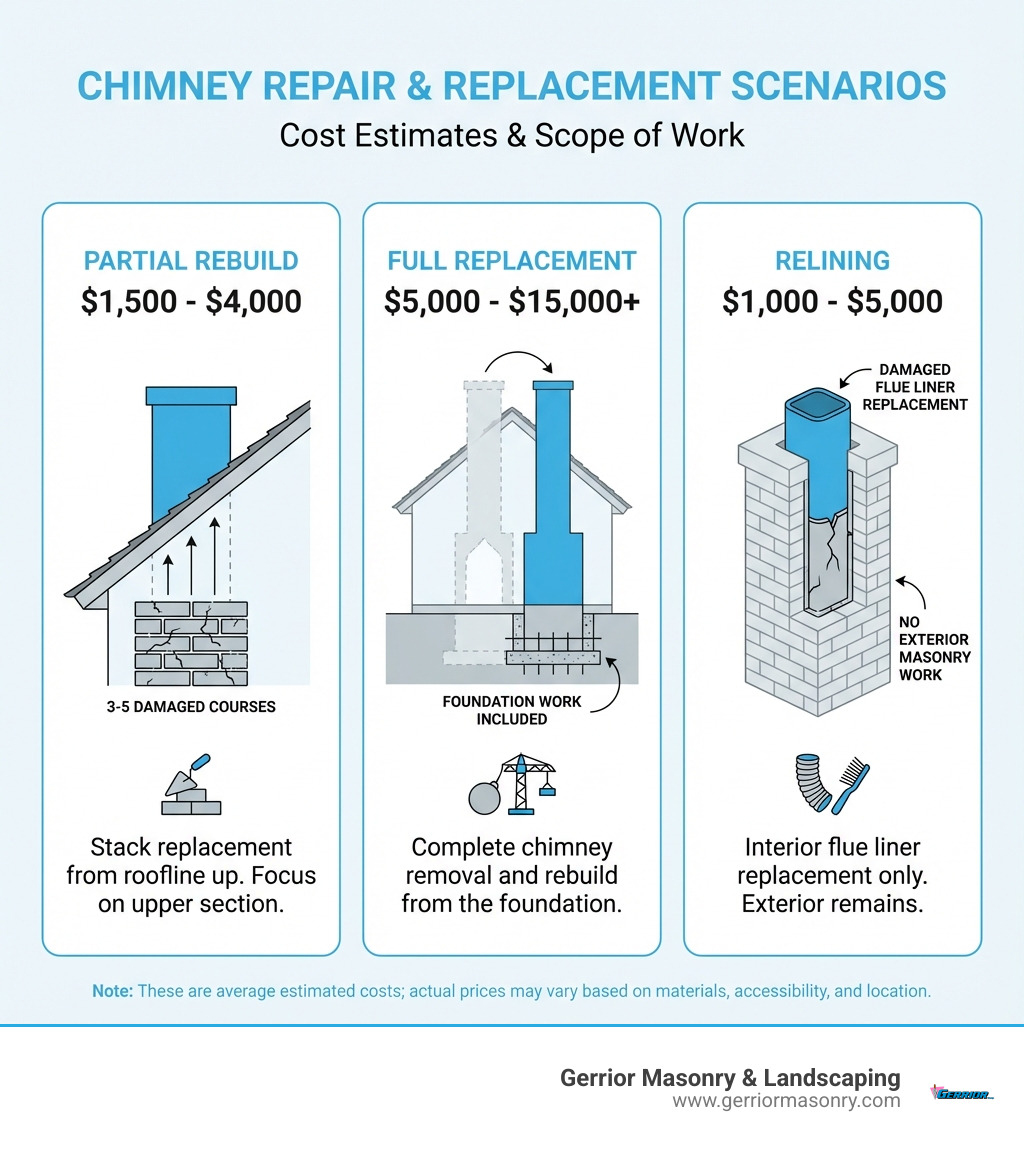
Partial Rebuild: $1,500 – $5,000
Full Replacement: $5,000 – $20,000+
By Material (per linear foot):
Brick: $60 – $200+
Stone: $80 – $250+
Metal: $40 – $120+
Note: These are average costs based on internet data and not actual costs for Gerrior Masonry services. Prices vary based on project scope, materials, and accessibility.
Ignoring chimney problems can lead to house fires, carbon monoxide leaks, or structural collapse. The final price depends on the extent of the damage, chimney height, materials, and whether you need a partial or full rebuild. Getting a professional estimate is crucial.
I’m Joe Gerrior, owner of Gerrior Masonry & Landscape Construction Corp. For over 34 years, my team has helped Massachusetts homeowners safely and efficiently manage chimney replacements. We’ve handled everything from minor repairs to complete rebuilds, ensuring your home is safe and secure.
When considering the cost to replace chimney components, it’s helpful to understand what drives the expenses. Our goal is to clarify the process so you can get a safe, durable, and aesthetically pleasing result for your home in Middlesex or Essex County, MA.
Key Factors That Influence the Cost to Replace a Chimney
Several elements determine the final price for a chimney replacement. Understanding these will help you evaluate quotes.
Chimney Size and Height: Taller, wider chimneys require more materials and labor, increasing the cost.
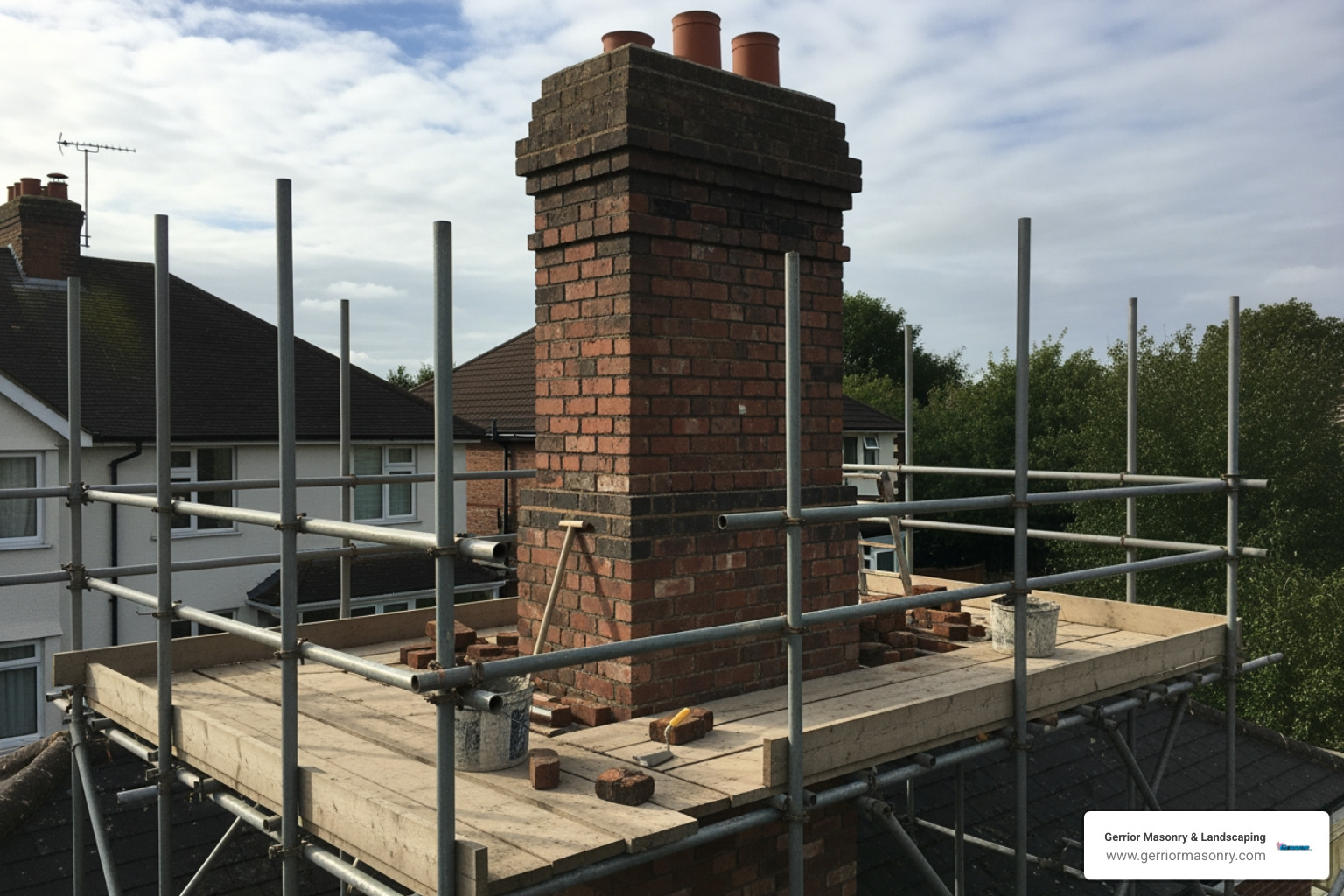
Accessibility: Difficult-to-reach chimneys that require extensive scaffolding, work on steep roofs, or navigation around obstacles will increase labor costs.
Extent of Damage: The scope of work depends on whether the damage is limited to the top courses of brick or extends to the foundation, which dictates if a partial or full rebuild is needed.
Material Choice: The type of material—brick, stone, or metal—directly impacts the cost. Each has a different price point for materials and installation.
Labor Costs: This covers skilled masons and demolition crews. Labor rates for masonry work can range from $50 to $150 per hour, depending on the project’s complexity.
Permit Fees: Most chimney replacements require a permit, typically costing $20 to $150. A structural engineer’s report, if needed, can add $400 to $1,200 to the project cost.
Chimney Replacement vs. Extensive Repair: What’s the Difference?
Deciding whether to repair or replace your chimney depends on the severity of the damage. While repairs may seem cheaper, a full replacement is often safer and more cost-effective long-term if the damage is structural.
Scope of Work
Average Cost Range*
Best Use Case
Partial Rebuild (Stack Rebuild)
$1,500 – $5,000
For damage limited to the stack above the roofline, like spalling bricks or cracked mortar, while the base and flue are intact.
Full Chimney Replacement
$5,000 – $20,000+
For severe structural issues like a leaning stack, foundation problems, or widespread masonry failure, where repairs are insufficient.
Foundation Repair
$1,500 – $5,000+
To correct a failing foundation that causes the chimney to lean, even if the upper masonry is still in good shape.
Flue Relining
$1,000 – $5,000+
When the flue liner is damaged but the exterior masonry is sound. This is a crucial safety repair to prevent fires and carbon monoxide leaks.
Costs are estimates and can vary based on the project’s complexity.
A partial rebuild typically addresses weather-related damage from the roofline up. A full replacement is necessary when the chimney’s stability is compromised. For homeowners in areas like Woburn or Reading, MA, foundation issues are common in older homes and are critical to address. Our expertise in Chimney Rebuilding allows us to provide the right solution for your home.
Warning Signs: When to Replace Instead of Repair
Knowing when to replace your chimney is key to your safety and budget. Patching up severe damage can lead to more expensive problems later. Here are signs that a replacement is likely needed:
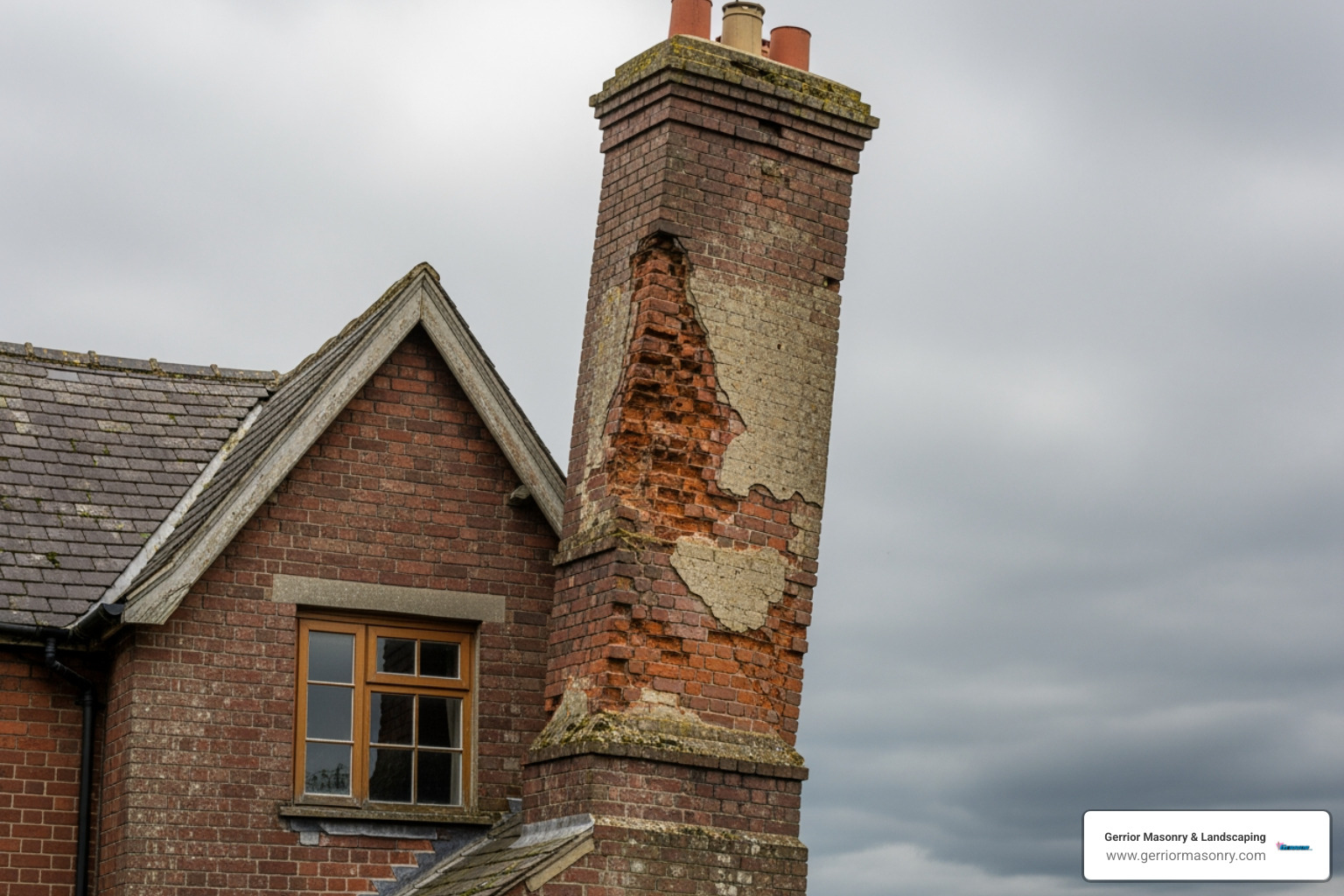
Severe Spalling: The face of the bricks is flaking, peeling, or crumbling. This indicates widespread moisture damage and material failure.
Major Masonry Cracks: Large, deep, or growing cracks suggest significant structural movement. These can compromise the chimney’s integrity and ability to contain heat and smoke.
Leaning Chimney: A visibly leaning chimney is a major red flag for a compromised foundation or internal structural failure. It poses a serious collapse risk and requires immediate attention.
Widespread Mortar Deterioration: If the mortar between bricks is crumbling or sandy throughout the structure, the chimney’s bonding is failing and a rebuild is necessary for stability.
Damaged Flue Liner: A cracked or broken flue liner is a fire hazard and can leak carbon monoxide into your home. While relining is sometimes an option (costing $1,000 – $5,000+), severe damage to the surrounding masonry often makes a full replacement the safer choice.
A good rule of thumb: if repair costs exceed 50% of a replacement, it’s wiser to replace it. For more on internal issues, see our Chimney Liner Repair Complete Guide.
How Material Choices Impact Your Budget
The material you choose significantly affects the cost to replace chimney structures, as well as their appearance and durability. We help homeowners in towns like Andover and Burlington, MA, select the best option for their style and budget.
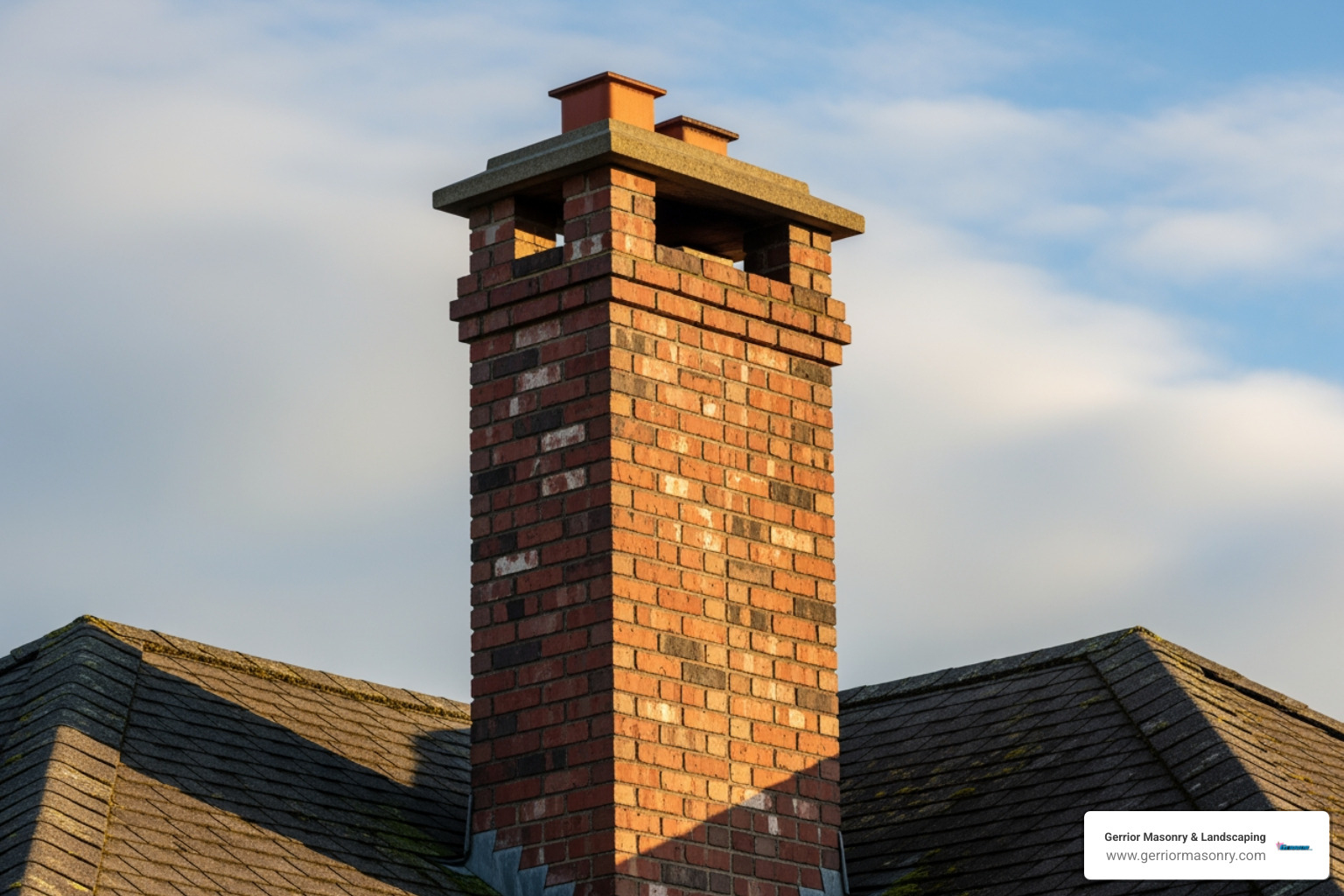
Brick Chimney Replacement: A classic and durable choice, a brick chimney replacement typically costs $60 to $200+ per linear foot. The price varies with brick type and project complexity. With proper maintenance like Chimney Tuckpointing, a brick chimney can last for generations.
Stone Chimney Replacement: Offering a high-end, rustic look, stone is exceptionally durable but more expensive. Expect costs from $80 to $250+ per linear foot due to higher material costs and the specialized labor required.
Metal Chimney Replacement: Prefabricated metal chimneys are often the most economical option, costing $40 to $120+ per linear foot. They are lightweight and easier to install, offering a modern, efficient alternative to traditional masonry.
When choosing, consider the upfront cost, long-term maintenance, and how the material complements your home’s aesthetic.
Understanding the Average Cost to Replace a Chimney
The total cost to replace a chimney typically ranges from $3,100 to $15,400, including removal and installation. However, complex projects on multi-story homes or those with significant structural issues can exceed $20,000.
The Perils of DIY Chimney Replacement
Chimney replacement is not a DIY job. The risks are severe:
Structural Failure: Improper construction can lead to a chimney collapse, causing catastrophic damage.
Fire Hazard: Incorrect flue installation creates a serious fire risk.
Carbon Monoxide Poisoning: A poorly sealed flue can leak deadly gas into your home.
Code Violations: DIY work often violates building codes, leading to fines and demolition orders.
Personal Injury: Working at heights with heavy materials is extremely dangerous.
Why Professional Help is Non-Negotiable
Hiring a certified professional is essential for safety and compliance with local building codes. Look for certifications from organizations like the Chimney Safety Institute of America. At Gerrior Masonry & Landscaping, our owner oversees every project, ensuring the highest standards. To Find a chimney specialist you can trust, contact our experienced team.
Additional Costs and Financial Considerations
Beyond the main rebuild, several other expenses can affect the total cost to replace chimney structures. Be sure to factor these into your budget:
Demolition and Disposal: Removing the old chimney can cost from $500 to $2,500 for just the stack, or $2,500 to $7,500 for a full demolition.
Scaffolding Rental: For taller or hard-to-reach chimneys, scaffolding is necessary for safety and will add to the project cost.
Chimney Liner Replacement: If the flue liner is damaged, a replacement is critical for safety and can cost $1,000 to $5,000+.
Chimney Flashing: Replacing the metal seal where the chimney meets the roof is vital to prevent leaks. Proper Chimney Flashing Replacement can cost $200 to $2,000, depending on the complexity.
Permits and Inspections: Permits typically range from $20 to $150. If a structural engineer is needed, expect an additional $400 to $1,200.
New Appliance Installation: If you’re also installing a new fireplace or stove, budget for these separate costs (all are estimates):
Gas Fireplace: $2,500 – $8,000
Electric Fireplace: $700 – $4,700
Wood Stove: $2,000 – $7,000
Stone Fireplace: $3,000 – $10,000
Financing Options: For this significant investment, consider options like home improvement loans, a Home Equity Line of Credit (HELOC), or contractor payment plans.
Conclusion: Making the Right Investment in Your Home’s Safety
Understanding the cost to replace chimney structures is more than just budgeting; it’s about making a crucial investment in your home’s safety and longevity. A well-maintained chimney is not only vital for the safe operation of your heating appliances but also contributes significantly to your property value and curb appeal. Ignoring the warning signs of a deteriorating chimney can lead to far more expensive repairs, safety hazards, and a loss of peace of mind.
At Gerrior Masonry & Landscape Construction, we take pride in our over 30 years of experience serving homeowners across Middlesex and Essex County, Massachusetts. Our skilled team, with owner oversight on every project, ensures that your chimney replacement or repair is handled with the utmost professionalism and craftsmanship. We’re here to provide durable solutions that stand the test of time, keeping your home safe and warm for years to come.
For a professional assessment and accurate quote for your project, contact our expert masonry team today. We are based in Woburn, MA, and proudly serve Middlesex and Essex County, Massachusetts.
Why Choosing the Right Paver Stone Contractor Matters
Paver stone contractors are the artisans who transform ordinary outdoor spaces into beautiful, functional extensions of your home, significantly improving its curb appeal and overall property value. Whether you’re envisioning a new patio for summer barbecues, a durable driveway that withstands New England winters, or an elegant walkway to welcome guests, selecting the right professional is the single most important decision you’ll make. It’s the difference between a stunning hardscape that lasts for decades and a surface that begins to heave, sink, and fail within just a few years.
When searching for reputable paver stone contractors, your vetting process should be thorough. Prioritize professionals who can readily provide proof of valid licensing and comprehensive liability insurance—this protects you from any potential accidents on your property. A proven portfolio of past projects is essential, as it showcases their craftsmanship and design capabilities.
Don’t hesitate to ask for strong local references you can contact. Furthermore, look for industry certifications, such as those from the Interlocking Concrete Pavement Institute (ICPI), which signal a commitment to ongoing education and adherence to the highest industry standards. A true professional will also provide detailed written estimates that break down all costs, offer robust material and labor warranties, and establish a clear communication process to keep you informed throughout your project.
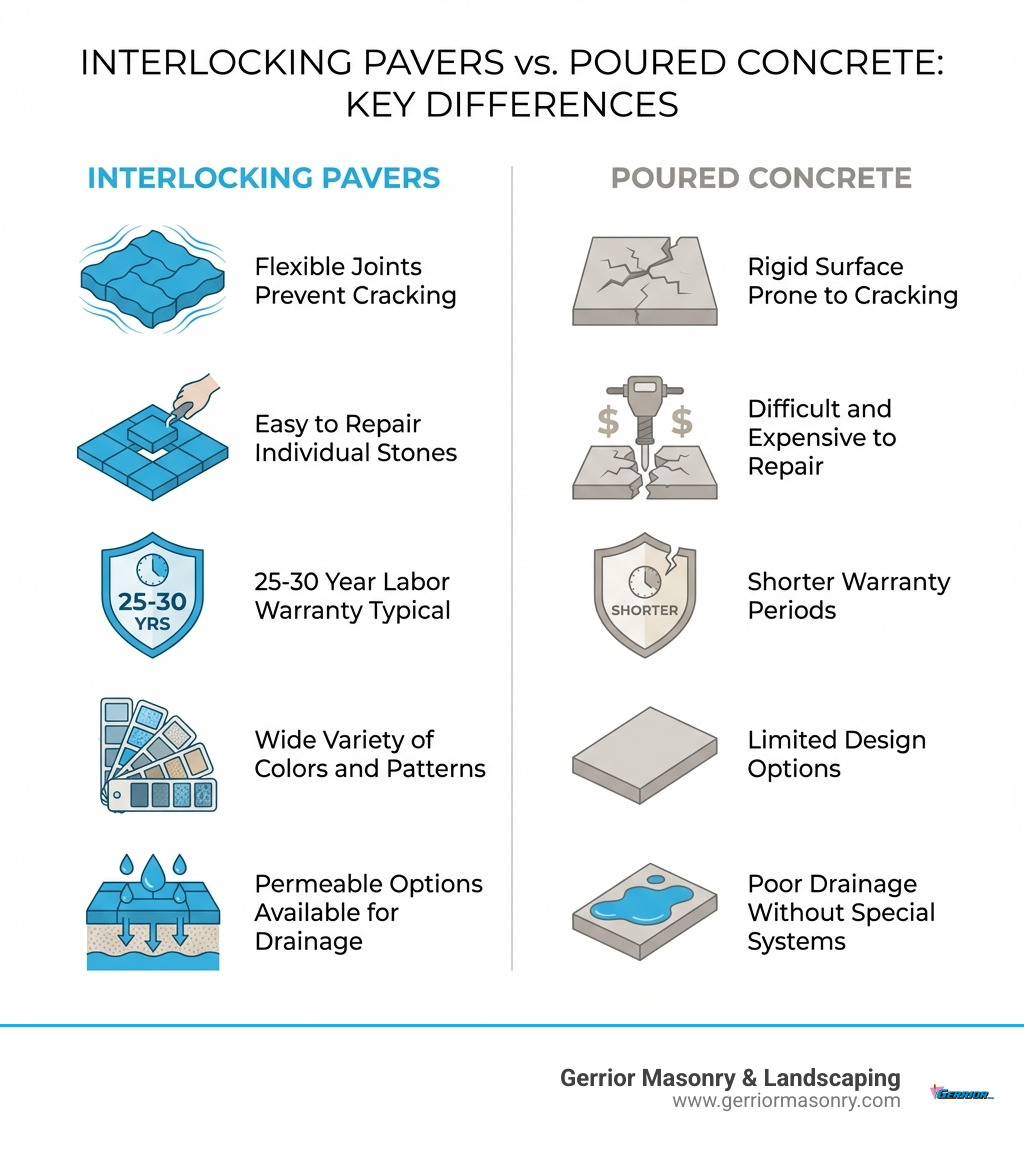
As more homeowners invest in creating sophisticated outdoor living areas, paver installations have surged in popularity, offering distinct and compelling advantages over traditional poured concrete. Pavers are engineered to resist the cracking that plagues concrete slabs, which are susceptible to damage from ground movement and freeze-thaw cycles.
The interlocking system allows for minute, flexible movements, preventing large, unsightly cracks. If a paver does become stained or damaged, it can be easily lifted and replaced, a simple and inexpensive repair compared to patching or replacing an entire concrete surface. The design possibilities are also virtually limitless, with a vast array of colors, shapes, and patterns available to create a truly custom look.
A proper installation is a complex process where the unseen work is just as important as the finished surface. The foundation is absolutely critical to the longevity of your project. A deep, well-compacted base of gravel and a precisely graded layer of sand create a stable, well-drained foundation that prevents the settling and shifting that lead to an uneven surface. Many unqualified contractors cut corners on this crucial step to lower their prices, resulting in premature failure and costly repairs down the road. Quality contractors understand that the durability of your paver patio or driveway is entirely dependent on the strength of the foundation built beneath it.
I’m Joe Gerrior, owner of Gerrior Masonry & Landscape Construction Corp., where we’ve been helping Massachusetts homeowners select and install quality paver stone systems for over 34 years. Our extensive experience with paver stone contractors has taught us exactly what separates exceptional, long-lasting installations from disappointing and short-lived ones.
This section will guide you through selecting materials and finding the right professional for the job.
Choosing the Right Pavers for Your Project
When envisioning your ideal outdoor space, the choice of paver stones is paramount. Pavers offer remarkable durability and flexibility, making them a superior choice for various outdoor applications. Unlike solid concrete slabs that crack under pressure from ground movement and temperature changes, individual pavers are designed to shift slightly without showing damage. This inherent flexibility, coupled with their ease of repair and vast aesthetic versatility, makes them a wise and lasting investment for any home.
The market offers a diverse range of paver types:
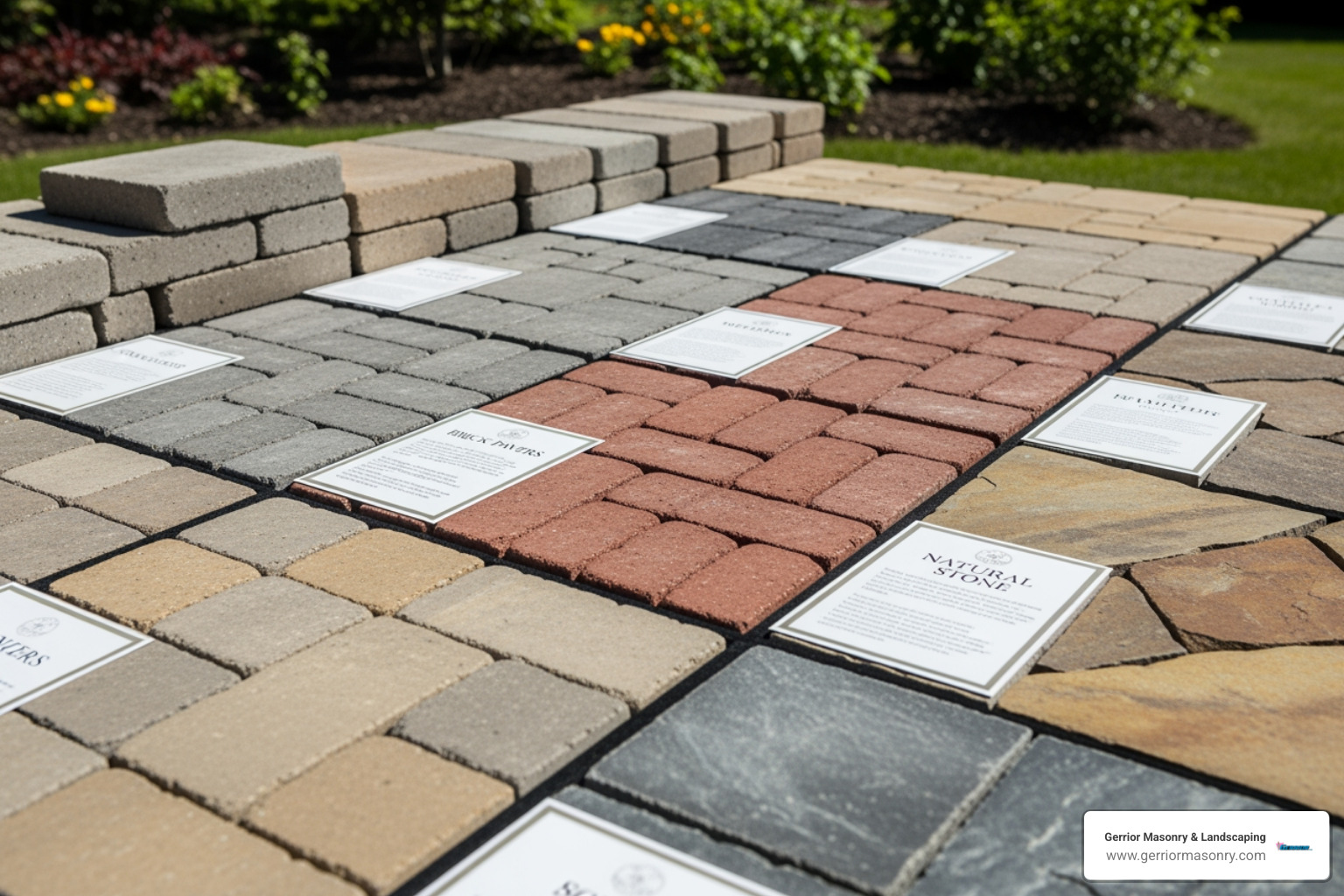
Concrete Pavers: As the most popular and versatile option, interlocking concrete pavers come in an endless array of shapes, sizes, colors, and textures. They can mimic natural stone or provide a sleek, modern look. Engineered for strength, they are ideal for high-traffic areas like driveways.
Natural Stone Pavers: For unparalleled, timeless elegance, natural stone options like travertine, bluestone, granite, and flagstone offer unique, organic variations in color and texture. While typically at a higher price point, they are incredibly durable and can last a lifetime, adding significant value to your property.
Brick Pavers: A traditional choice that exudes a classic, warm aesthetic. Made from fired clay, their rich, earthy tones are perfect for creating charming walkways and rustic patios. Brick pavers are known for their color retention and ability to stand up to heavy use.
Porcelain Pavers: A modern, high-performance option, porcelain is exceptionally durable and resistant to stains, fading, and weather. Its non-porous surface makes it excellent for pool decks and patios. It can replicate the look of wood or stone, ideal for contemporary spaces requiring minimal maintenance.
When selecting pavers, consider the application; driveways require thicker pavers than walkways. The style should complement your home, and you should consider long-term maintenance. For eco-conscious solutions, permeable pavers are an excellent choice. They are installed to allow rainwater to filter into the ground, reducing runoff.
Paver stones are perfect for a variety of applications, including:
Driveways
Patios
Walkways and Pathways
Pool Decks
Retaining Walls
No matter your vision, there’s a paver solution to match. To learn more about how we can improve your outdoor areas, visit our More info about hardscaping services.
Vetting Your Options: How to Find Qualified Paver Stone Contractors
Finding the right paver stone contractors is the most critical step for a successful installation. With over 30 years of experience in Middlesex and Essex County, Massachusetts, we know what makes a good contractor stand out.
Here’s how to effectively vet your options:
Check Reviews and Referrals: Start with word-of-mouth referrals from friends and neighbors. Supplement this by checking online reviews on platforms like Google and Yelp. Look for consistently high ratings and read feedback about communication, professionalism, and timeliness.
Review Their Work: Ask for a portfolio of completed projects and browse their website and social media. This allows you to see the quality of their work and design aesthetic. A confident contractor may even provide addresses of past projects so you can see how their work holds up.
Verify Credentials: This is non-negotiable. Ensure any contractor is fully licensed and insured in Massachusetts to protect yourself from liability. Also, check for industry certifications from organizations like the Interlocking Concrete Pavement Institute (ICPI), which indicates a commitment to best practices.
Inquire About Experience and Team: Longevity in the business often correlates with expertise. Ask how long they’ve been installing pavers and if their work is done by an in-house team rather than subcontractors to ensure quality control.
Understand the Process and Costs: A professional contractor will offer a free consultation and a detailed written estimate. This document should itemize all costs, including materials, labor, site prep, and a projected timeline. They should also have a clear communication process.
At Gerrior Masonry & Landscape Construction, we pride ourselves on our skilled team and direct owner oversight on every project. This personal involvement ensures promises are kept and the highest quality craftsmanship is delivered.
Understanding the Project: Installation, Costs, and Warranties
Understanding the paver installation process, costs, and warranties will help you manage expectations and budget effectively.
The Typical Paver Stone Installation Process:
Consultation and Design: Your vision is combined with professional expertise to select materials and create a detailed design plan.
Excavation and Site Prep: The area is cleared of old surfaces and soil. Proper Excavation services are crucial for establishing the correct grade for drainage and a stable base, with driveways requiring a deeper excavation than patios.
Base Foundation: A critical step involving a compacted gravel aggregate layer (e.g., 4-6 inches for a patio, 8-12 inches for a driveway) and a leveling bed of sand. This provides stability and drainage, preventing future settling.
Edge Restraints and Paver Laying: Edge restraints are installed to hold the design, and pavers are carefully laid in the desired pattern.
Joint Sand and Compaction: Polymeric sand is swept into the joints to lock pavers together and prevent weeds. The entire surface is then compacted to create a uniform, stable finish.
Sealing (Optional): A final sealer can be applied to improve color, protect against stains, and simplify maintenance.
Cost Considerations for Paver Stone Projects:
The cost of a paver project varies based on materials, project size, complexity, site accessibility, and prep work. These are average costs based on internet data and not actual costs for Gerrior Masonry services. Pricing can range widely, with the high end being at least 3x the average. You can generally expect costs from $10 to $50 per square foot. Basic concrete paver patios are on the lower end, while complex natural stone driveways are higher. We provide free, detailed estimates so you know exactly what to expect.
Warranties and Guarantees:
Professional paver stone contractors provide warranties that protect your investment.
Material Warranties: High-quality paver manufacturers often offer a lifetime guarantee on their products against defects.
Labor Warranties: Reputable contractors offer warranties on their installation work, which can range from 1 year to as long as 30 years. This guarantees the installation will remain stable and free from issues like settling or shifting.
Common Issues and How They Are Addressed:
A qualified contractor anticipates and addresses potential issues proactively:
Settling or Shifting Pavers: This is prevented with proper base preparation and drainage. If minor settling occurs, individual pavers can be easily adjusted.
Weed Growth: Using polymeric sand in the joints creates a hardened barrier that minimizes weed growth.
Drainage Problems: Proper grading and the use of permeable pavers or drainage systems effectively manage water runoff.
Efflorescence: This is a natural, temporary white haze that can appear on concrete products. A professional contractor can explain this phenomenon and advise on how to clean it or let it weather away naturally.
We are committed to providing quality craftsmanship that stands the test of time, backed by our experience and dedication to customer satisfaction.
Conclusion: Partner with an Expert for a Flawless Finish
Investing in a paver stone project improves your home’s beauty, function, and value, but its success depends on hiring the right paver stone contractors. As we’ve covered, choosing the right materials, properly vetting your contractor, and understanding the installation process are key to a lasting result. From verifying credentials and checking references to appreciating the importance of a solid base foundation, every step matters.
A quality installation backed by strong warranties provides long-term value and peace of mind. At Gerrior Masonry & Landscape Construction, our commitment to quality workmanship is paramount. With over 30 years of experience, a skilled in-house team, and direct owner oversight on every project, we bring your outdoor vision to life with precision and care. We are dedicated to delivering a beautiful, functional outdoor space built to endure the Massachusetts weather.
Install drainage – Add perforated pipe and gravel backfill.
Backfill and compact – Fill in layers, compacting thoroughly.
Add capstones – Secure the top course with construction adhesive.
Critical Success Factors:
Drainage is #1 – Poor drainage causes most retaining wall failures.
Compact the base – A solid foundation prevents settling.
Bury the bottom – The first course must be below ground for stability.
Get permits – Walls over 4 feet typically require engineering and permits.
A sloped yard in Massachusetts can feel like wasted space, prone to soil erosion during heavy New England storms and challenging to mow or landscape. A well-built retaining wall is the ultimate solution, transforming that problematic hillside into beautiful, functional, and level terraces perfect for patios, gardens, or play areas. It not only maximizes your usable property but also provides critical structural support and erosion control. While building a low-level retaining wall (under 4 feet) is a manageable DIY project, understanding the forces at play is crucial. The key is knowing how to manage immense soil pressure and why water management is the single most important factor for a long-lasting, successful wall.
I’m Joe Gerrior, owner of Gerrior Masonry & Landscape Construction Corp. With over 34 years of experience serving Massachusetts homeowners, my team and I have built countless retaining walls that combine structural integrity with visual appeal, turning problematic slopes into stunning landscape features.
Before digging, careful planning is crucial for a successful retaining wall project. This phase involves assessing your land, choosing the right materials, and understanding local regulations.
Choosing Your Materials: Pros, Cons, and Costs
The material you choose impacts aesthetics, durability, cost, and installation complexity. Here’s a rundown of common options:
Interlocking Concrete Blocks: A popular choice for DIYers due to their ease of installation and versatility.
Pros: Durable, many styles/colors, easy to install for low walls.
Cons: Can look less natural than stone, prone to efflorescence.
Average Cost: Based on internet data, $25 – $85 per square foot.
Pressure-Treated Timber: Offers a rustic, natural look.
Pros: Cost-effective, easy to work with, natural aesthetic.
Cons: Shorter lifespan (15-20 years), prone to rot and insects, can warp.
Average Cost: Based on internet data, $20 – $80 per square foot.
Natural Stone: For a premium, timeless look, natural stone retaining walls offer unparalleled beauty and longevity. Options like New England fieldstone or classic granite create a structure that is both a functional wall and a stunning landscape feature.
Pros: Extremely durable, lasts a lifetime, beautiful and unique aesthetic that blends seamlessly with the natural environment.
Cons: Most expensive material, requires skilled masonry work to fit and place irregular stones, difficult for DIYers.
Average Cost: Based on internet data, $40 – $280+ per square foot, depending on stone type and complexity.
Poured Concrete: Offers superior strength and durability for demanding situations.
Pros: Very strong, highly durable, can be customized.
Cons: Industrial look unless faced, requires professional pouring, not a DIY project.
Average Cost: Based on internet data, $60 – $210 per square foot.
Here’s a quick comparison of these materials:
Material
Average Cost (per sq. ft.)*
Lifespan
DIY-Friendliness
Aesthetic
Interlocking Concrete Blocks
$25 – $85
Very Long
High
Modern, structured, varied colors/textures
Pressure-Treated Timber
$20 – $80
15-20 years
Medium
Rustic, natural, blends with woodsy settings
Natural Stone
$40 – $280+
Lifetime (with proper install)
Low
Timeless, organic, high-end
Poured Concrete
$60 – $210
Very Long
Low
Industrial (can be faced), strong
*Please note: These are average costs based on internet data and not actual costs for Gerrior Masonry services. Project costs can vary significantly based on design complexity, site accessibility, and specific material choices.
Key Considerations Before You Build Retaining Walls
Before you pick up a shovel, assess your property and understand the rules.
Slope, Layout, and Location
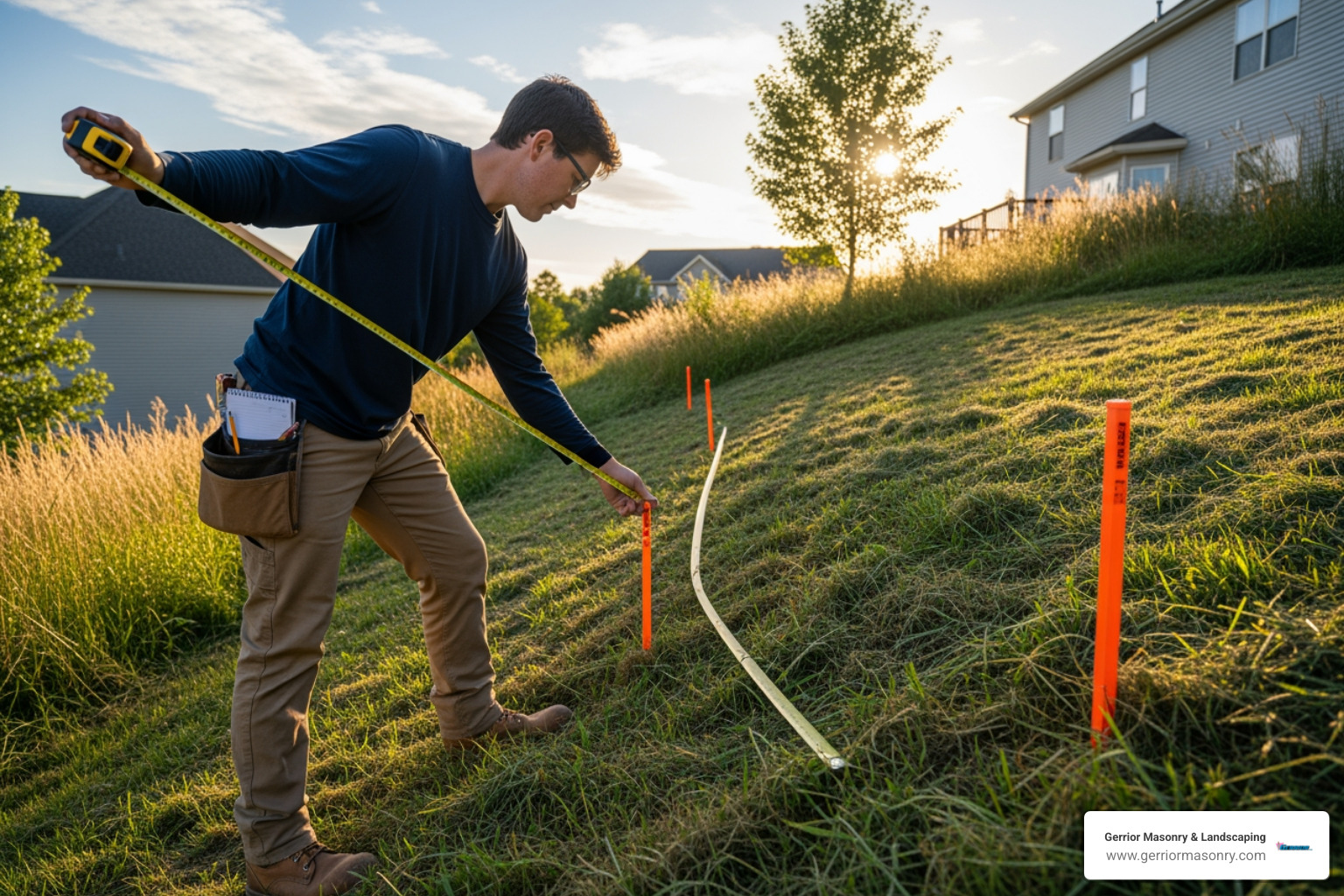
The slope of your land is a critical factor. Steeper slopes exert more pressure, demanding stronger designs. Learn more about how to build a retaining wall on a slope. Plan your layout by placing stakes to mark the front of the wall. Use a string line or garden hose to mark the entire length, ensuring it integrates with your landscape.
Building Codes, Permits, and Frost
In Massachusetts, walls over 4 feet tall or those supporting critical loads (like a driveway or pool) often require professional engineering and permits. Always check with your local municipality, as ignoring regulations can lead to fines or forced removal. You should hire a professional engineer if your wall exceeds 4 feet, supports heavy loads, is on a steep slope, or is part of a tiered system. Also, consider frost heave; your wall’s foundation must extend below the local frost line. You can Find your area’s frost line depth to plan accordingly.
Call Before You Dig
Before any excavation, it is legally required to call 811 (Dig Safe in Massachusetts) a few days in advance. This free service marks the approximate location of underground utility lines on your property, including gas, electric, and communication cables. Digging without this clearance is dangerous and can lead to costly repairs and fines. Plan this into your project timeline.
Gathering Your Tools and Materials
Gather the right tools and materials to make construction smoother. Purchase about 10% more material than your estimates to account for cuts and errors.
Materials: Retaining wall blocks, crushed stone, landscape fabric, perforated drain pipe, construction adhesive, coarse sand, and approved backfill soil.
Safety Gear: Heavy-duty gloves, safety glasses, sturdy work boots, and a respirator mask (when cutting blocks).
The Step-by-Step Construction Guide
With planning complete and materials ready, it’s time to start building. This is where the vision for your new retaining wall takes shape. You can find more detailed instructions on retaining wall installation.
Preparing the Trench and a Stable Base
The foundation is the most critical part of your wall. A solid, level base ensures longevity and stability.
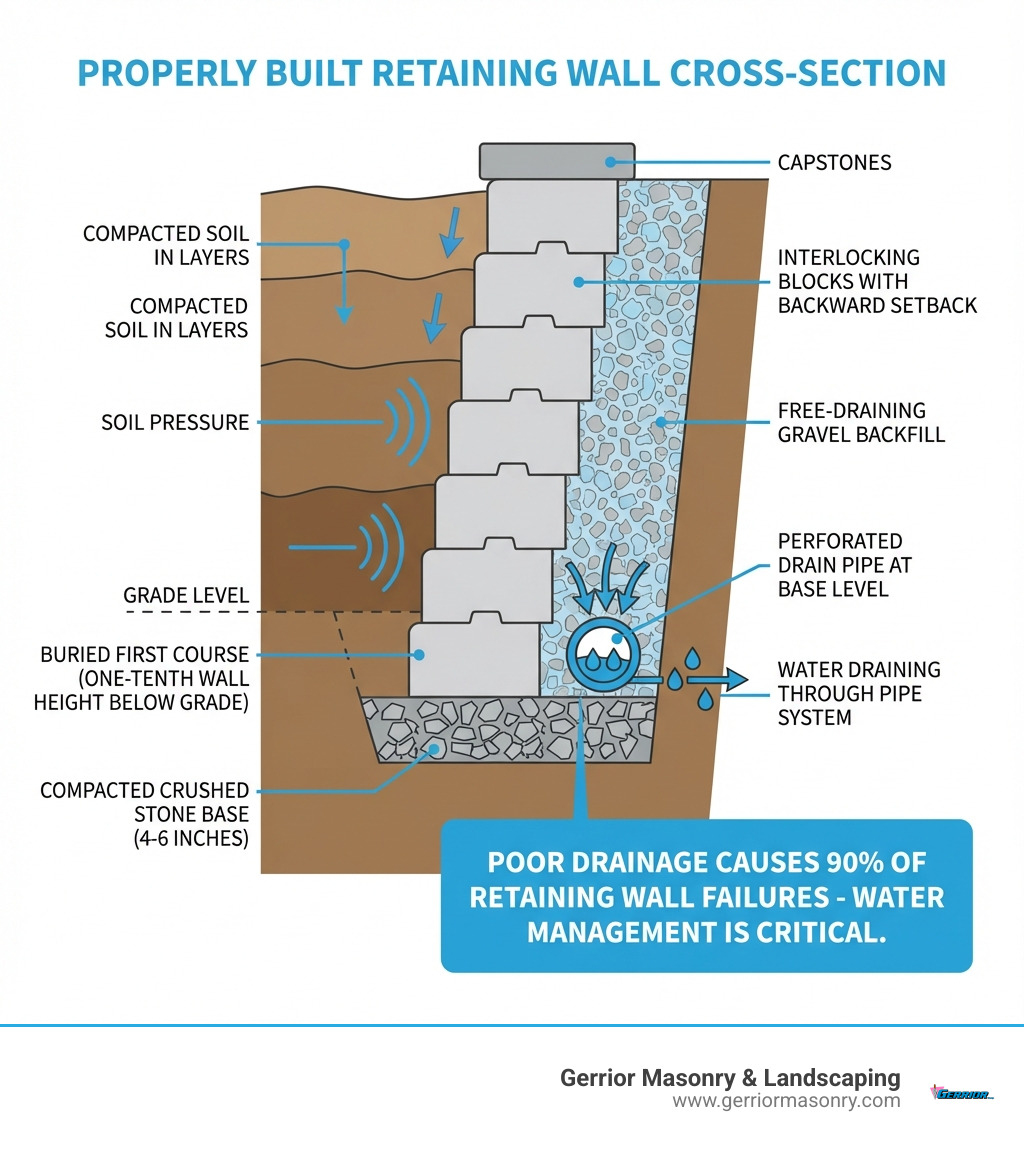
Excavate the Trench: After marking the wall’s location, dig a trench at least twice as wide as your blocks. For walls under 4 ft., dig the trench 4-6 in. deep, plus additional depth to bury the first course.
Bury the First Course: To anchor the wall, bury the first course of blocks. A good rule is to bury one-tenth of the total wall height.
Create a Leveling Pad: Add a minimum of 4 to 6 inches of crushed stone to the trench to create a firm, level base.
Compact the Base: Use a plate compactor to thoroughly compact the crushed stone. A solid base for retaining wall is essential to prevent shifting and failure.
A Step-by-Step Guide to Build Retaining Walls
With the base ready, you can begin laying the blocks. Precision is key for stability and aesthetics.
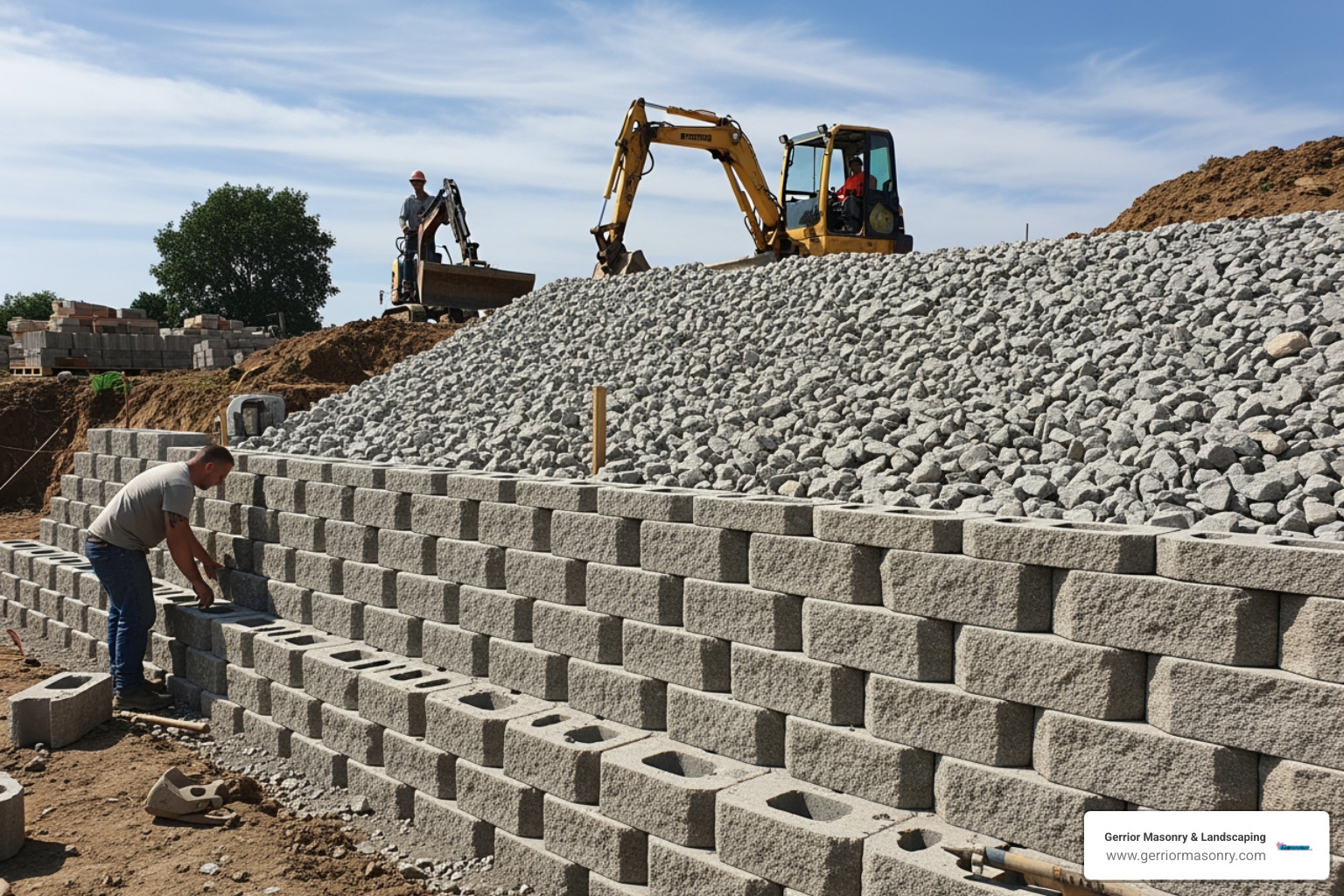
Lay the First Course: Place the first course of blocks on the compacted base, starting at the lowest point. Use a level to ensure each block is perfectly level. This first course is the most critical.
Stack Subsequent Courses: Stagger the joints of each new course by at least one-quarter of a block’s length for strength. Continuously check for level and alignment.
Use a Setback (Batter): Build the wall with a slight backward lean into the hillside. Each course should be set back slightly from the one below it to help resist soil pressure.
Install Drainage and Backfill: Poor drainage is the #1 cause of wall failure. As you build, install a perforated drain pipe (with holes facing down) behind the first course, sloped to drain water away to a safe location. Backfill at least 12 inches directly behind the blocks with free-draining gravel or crushed stone. This creates a drainage zone. Behind the gravel, add your native soil or approved backfill in 3-4 inch layers (lifts). It’s crucial that this soil is not heavy clay, which retains water. Thoroughly compact each lift with a plate compactor before adding the next.
Finishing Touches for a Lasting Wall
Once all courses are laid and backfilled, add the finishing touches to protect your investment.
Finalize Drainage: Ensure the perforated pipe at the base is completely surrounded by the free-draining gravel. To prevent soil from mixing with and clogging the gravel drainage zone, place a layer of professional-grade landscape fabric over the gravel, separating it from the final topsoil. Finally, grade the ground surface behind the wall to create a gentle slope that directs surface water away from the wall, not towards it.
Installing Capstones: The capstone is the final touch. Secure these top blocks with construction adhesive, creating a slight overhang for a professional look. This provides a clean, finished appearance and protects the wall from weather.
Building a retaining wall is a significant undertaking. While many smaller walls can be a rewarding DIY project, understanding the critical role of proper drainage, a stable base, and meticulous construction is essential. For walls over 4 feet tall, or for complex projects on challenging slopes, we strongly recommend consulting with a professional.
Here at Gerrior Masonry & Landscaping, we have over 30 years of experience helping homeowners in Middlesex and Essex County, Massachusetts, build retaining walls that are not only beautiful but also built to last. Our skilled team and owner oversight on every project ensure high-quality results from foundation to finish.