
Understanding the Basement Gutter Drainage System and How It Works
A basement gutter drainage system is one of the most effective ways to protect your home from water damage, mold, and structural deterioration. Here’s a quick overview of what it is and how it works:
What is a basement gutter drainage system?
- An interior perimeter channel installed along the base of your basement walls
- It collects water that seeps through the wall-floor joint and redirects it to a sump pump
- The sump pump then discharges the water safely away from your home
- It relieves hydrostatic pressure — the force of groundwater pushing against your foundation
Who needs one?
- Homeowners with damp, musty, or visibly wet basements
- Properties with water stains, efflorescence, or mold on basement walls
- Homes in areas with heavy clay soil or high groundwater tables
This matters more than most homeowners realize. According to the Environmental Protection Agency (EPA), over 50% of the air you breathe upstairs originates from your basement or crawl space. A wet, moldy basement doesn’t stay in the basement.
Here in Massachusetts — from Woburn and Burlington to Winchester — homes face significant hydrostatic pressure from clay-heavy soils, freeze-thaw cycles, and seasonal heavy rainfall. These conditions make basement water intrusion a common and serious problem for homeowners across the region.
I’m Joe Gerrior, owner of Gerrior Masonry & Landscaping, and over 34 years of foundation repair and drainage work in Massachusetts, I’ve seen how the right basement gutter drainage system protects homes from costly water damage. In this guide, I’ll walk you through everything you need to know — from how these systems work to what installation really involves.
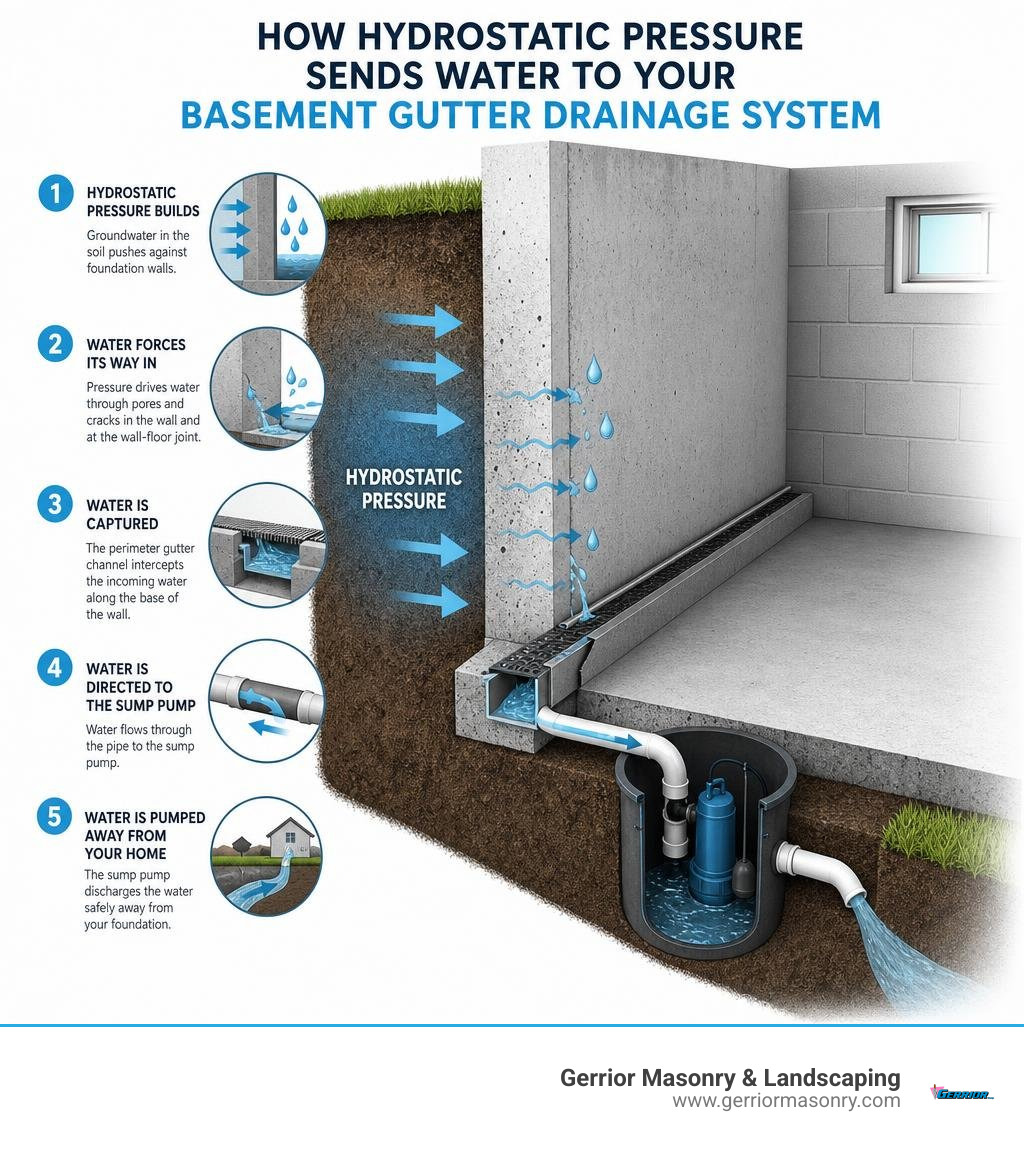
Basement gutter drainage system basics:
To understand why a basement gutter drainage system is so effective, we first have to look at how water enters your basement. The most common entry point is the “cold joint” or the floor-wall joint. When your home was built, the concrete foundation walls and the concrete floor slab were poured separately, leaving a tiny gap between them.
During heavy rains or spring snow thaws in towns like Woburn and Burlington, groundwater accumulates in the soil surrounding your foundation. This creates hydrostatic pressure—a heavy force that pushes water through any microscopic crack, porous concrete block, or the floor-wall joint itself.
An interior perimeter drainage system works by relieving this pressure. Instead of trying to create an absolute, unrealistic barrier against the water, we create a controlled path of least resistance. The system catches the water the moment it seeps inside and channels it safely beneath the floor to a sump pump, which then ejects it from the home. If you want to permanently resolve these issues, working with an experienced Basement Waterproofing Company for professional Basement Waterproofing is the most reliable path forward.
Interior vs. Exterior Foundation Drainage Solutions
When evaluating your options, you will generally choose between interior and exterior drainage systems. Both have their place, but they differ significantly in cost, disruption, and application:
- Exterior Drainage Systems: This method requires excavating the soil all the way down to your foundation footings. While highly effective for block walls, it is incredibly disruptive to your property. It requires tearing up mature landscaping, patios, walkways, and driveways. Because of the heavy excavation, the process can take weeks and is highly labor-intensive. Furthermore, exterior drains are susceptible to soil shifting, clogging from outdoor debris, and root intrusion from nearby trees.
- Interior Drainage Systems: These systems utilize sub-floor channels installed along the interior perimeter. Because we do not have to dig up your yard, interior systems are vastly more cost-effective and typically take only one to two days to install. They capture wall and floor seepage directly at the source, offering a clean, fast, and highly reliable solution. Because they are protected inside the home, they are completely shielded from external environmental hazards like tree roots and soil erosion.
For most established homes in Massachusetts, especially those with beautiful mature landscaping, interior channels are the preferred choice. For more details on managing exterior water before it reaches your basement, read about Drainage Around Foundation and Drainage Around House Foundation.
Key Components of an Interior Basement Gutter Drainage System
A high-performing interior drainage system relies on several engineered components working seamlessly together:
- Sub-Floor Drainage Channel: A rugged, specially designed PVC channel that sits on top of the foundation footing rather than down in the dirt, preventing it from clogging with mud and sediment.
- Wall Flange: A built-in 3/8-inch flange that extends slightly up the wall to collect any water trickling down the foundation face or weeping from block cores.
- Sump Pump Basin: A heavy-duty perforated basin (usually 30 to 36 inches deep) that houses the pump.
- Submersible Sump Pump: The heart of the system. We highly recommend submersible pumps with vertical float switches over pedestal pumps because they are quieter, run cooler, and are far more reliable.
- Check Valve: A one-way valve installed on the discharge pipe that prevents pumped water from running back into the basin when the pump cycles off.
- Discharge Pipe: High-quality Schedule 10 or 40 PVC pipe that routes the water up, out, and far away from the foundation.
- Washed Filter Stone: Clean, 3/4-inch washed river gravel packed around the drainage channel. This acts as a natural filtration barrier, preventing fine soil particles from entering the channel while maximizing water flow rate.
To ensure your exterior drainage is equally prepared to handle this water, we often integrate these systems with Downspout Drainage Systems and broader Domestic Drainage Systems.
Addressing Monolithic Foundations and Special Floor Types
A monolithic foundation is a structural design where the concrete floor slab and the foundation footing are poured as a single, continuous piece of concrete. This creates extremely thick concrete edges along the perimeter of the basement.
For standard drainage systems, monolithic slabs present a major challenge because trenching through this thick concrete is incredibly difficult, loud, and structurally risky.
Fortunately, we have specialized solutions. An above-floor baseboard channel system (such as DryTrak) can be permanently sealed to the top of the slab using a high-strength epoxy adhesive. This system collects water weeping from the walls and directs it to the sump pump without requiring any jackhammering of the floor. If you are dealing with leaks in a monolithic foundation, a targeted Foundation Leak Repair plan is essential.
Installing a Basement Gutter Drainage System: Why DIY is Risky
While some home improvement guides present interior drainage installation as a straightforward weekend project, the reality is highly demanding and physically punishing.
The process requires:
- Using an electric jackhammer to break up a 6-to-12-inch trench of concrete along your entire basement perimeter.
- Hauling hundreds of pounds of heavy concrete debris up stairs and out of basement windows.
- Digging a deep trench and grading it precisely (at least 1/4 inch of fall per 10 feet) to ensure water flows properly to the sump basin.
- Backfilling the trench with clean, washed stone, laying the pipe, and pouring new, smooth concrete to match your existing floor.
A single mistake in the slope of your pipe can cause standing water, sediment buildup, and system failure. Furthermore, improper jackhammering can crack your footing or damage the structural integrity of your foundation walls. In historical areas like Lexington and Arlington, where foundations require delicate care, DIY is simply not worth the risk. We strongly advise hiring professionals to handle your Basement Waterproofing to guarantee a clean, dust-controlled, and structurally sound installation.
Mitigating Common System Issues: Clogs, Freezing, and Radon
A poorly designed or cheap drainage system can fall victim to several common issues:
- Silt and Sediment Clogging: Traditional perforated pipes placed deep in the dirt can easily clog with mud over time. Our advanced systems sit safely on top of the footing, completely out of the “mud zone,” and are surrounded by washed river stone to keep the channel clean.
- Frozen Discharge Lines: During harsh Massachusetts winters, discharge lines can freeze, causing water to back up and flood your basement. We install specialized grated exterior outlets (like IceGuard) that allow water to escape automatically even if the main pipe is blocked by ice.
- Radon Gas: Because an interior drain opens up a pathway around your foundation, it can allow radon gas to enter. We mitigate this by using airtight sump pump basin lids and specialized drainage channels that feature built-in air locks. This ensures that your indoor air quality remains safe and healthy.
- Iron Bacteria: In some regional soils, a harmless but slimy orange iron bacteria can build up. We install convenient, accessible inspection ports along the channel, allowing us to easily flush the system with hot water or eco-friendly treatments. If you need to route water to an exterior drainage point, a professional Dry Well Drainage system is an excellent pairing.
Integrating Drainage with Wall Vapor Barriers and Dehumidifiers
For a completely dry, finished basement, a drainage channel should not work alone. We often combine our drainage systems with heavy-duty plastic wall vapor barriers. If water leaks through cracks higher up on your foundation walls, the vapor barrier catches it and directs it behind the wall directly into the drainage flange, keeping your finished studs and drywall completely dry.
Additionally, we can route your basement dehumidifier’s condensate drain line directly into one of the system’s dedicated access ports. This comprehensive approach keeps your relative humidity low (ideally below 50%), prevents musty odors, and stops mold growth in its tracks, ensuring complete compliance with Domestic Drainage Systems best practices.
Professional Installation, Costs, and Next Steps in Massachusetts
When you are ready to invest in protecting your home, understanding the financial scope is key. Based on publicly available online data, the average cost for a professional interior basement drainage system in the Massachusetts area typically ranges from $13,000 to $35,000 depending on the linear footage, foundation type, and sump pump configuration.
Please note: These figures are average industry estimates compiled from public sources and do not represent the actual pricing or guaranteed rates of Gerrior Masonry & Landscaping.
At Gerrior Masonry & Landscaping, we provide tailored, high-quality drainage and masonry solutions designed specifically for the unique architectural and soil conditions of Winchester, Woburn, Burlington, Lexington, and Arlington. With over three decades of experience, our skilled team offers close owner oversight on every single project to ensure your home is protected for the long haul.
Investing in a professional basement gutter drainage system not only protects your home’s foundation but also increases your property’s overall market value. A dry, certified basement is a major selling point for future buyers in the competitive Massachusetts real estate market. By choosing a local, experienced contractor, you ensure that the work complies with all local building codes and environmental regulations, giving you peace of mind for decades to come.
Beyond basement waterproofing, we specialize in a wide range of residential and commercial services to improve and protect your property, including:
- Hardscaping and Masonry Services (Patios, walkways, stairs, and retaining walls)
- Landscaping Services (Landscape design and site grading)
- Commercial Snow Removal
Don’t let a wet basement threaten your home’s structural integrity or your family’s health. Request an Estimate Online to take the first step toward a permanently dry, healthy home. Let us help you protect your investment with our premier Basement Waterproofing solutions!
