
Why Backyard Drainage Problems Destroy Lawns, Foundations, and Property Value
Backyard drainage problems are one of the most damaging — and most overlooked — issues a Massachusetts homeowner can face. That familiar puddle that appears after every rainstorm? It’s rarely just an eyesore. Left unaddressed, standing water can crack your foundation, kill your lawn, breed mosquitoes, and quietly reduce your property value.
Here’s a quick summary of what you need to know:
- Most common causes: improper grading, clay-heavy soil, soil compaction, clogged gutters, and inadequate drainage infrastructure
- Key warning sign: water that remains visible more than 24–48 hours after rain stops
- Risks of ignoring it: foundation damage, mold growth, plant loss, pest infestations, and lower resale value
- Most effective solutions: regrading, French drains, dry wells, catch basins, and permeable hardscaping
- When to call a pro: any time water pools near your foundation, stays soft for 48+ hours, or reaches structures
Poor drainage is one of the leading contributors to residential water intrusion issues — and in towns across Massachusetts like Woburn, Lexington, and Winchester, where clay-heavy soils and variable rainfall are common, the problem is especially widespread.
Water doesn’t need to be dramatic to cause serious damage. It works slowly, silently, and persistently — and by the time most homeowners notice the signs, the damage has already begun.
I’m Joe Gerrior, owner of Gerrior Masonry & Landscape Construction Corp., a family-owned business based in Woburn, Massachusetts, with over 34 years of experience solving backyard drainage problems for residential and commercial clients. In this guide, I’ll walk you through exactly how to identify, diagnose, and fix the most common drainage issues we see across the region.
Handy backyard drainage problems terms:
Identifying and Diagnosing Backyard Drainage Problems
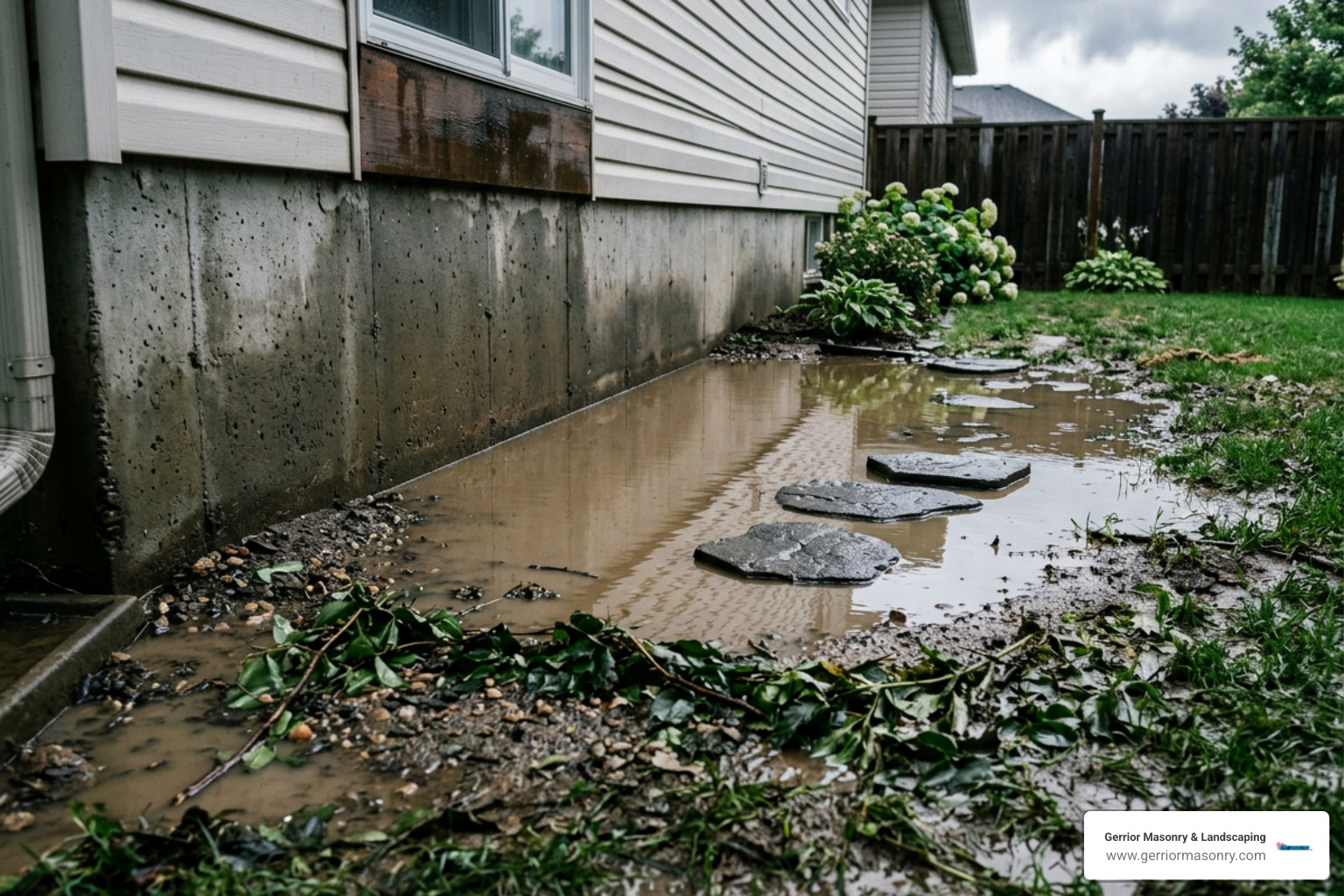
Before you can implement an effective solution, you must accurately diagnose the underlying cause of your wet yard. Water behaves predictably, flowing along the path of least resistance. When that path leads directly to your foundation or pools in your lawn, it is a symptom of a larger design or soil issue.
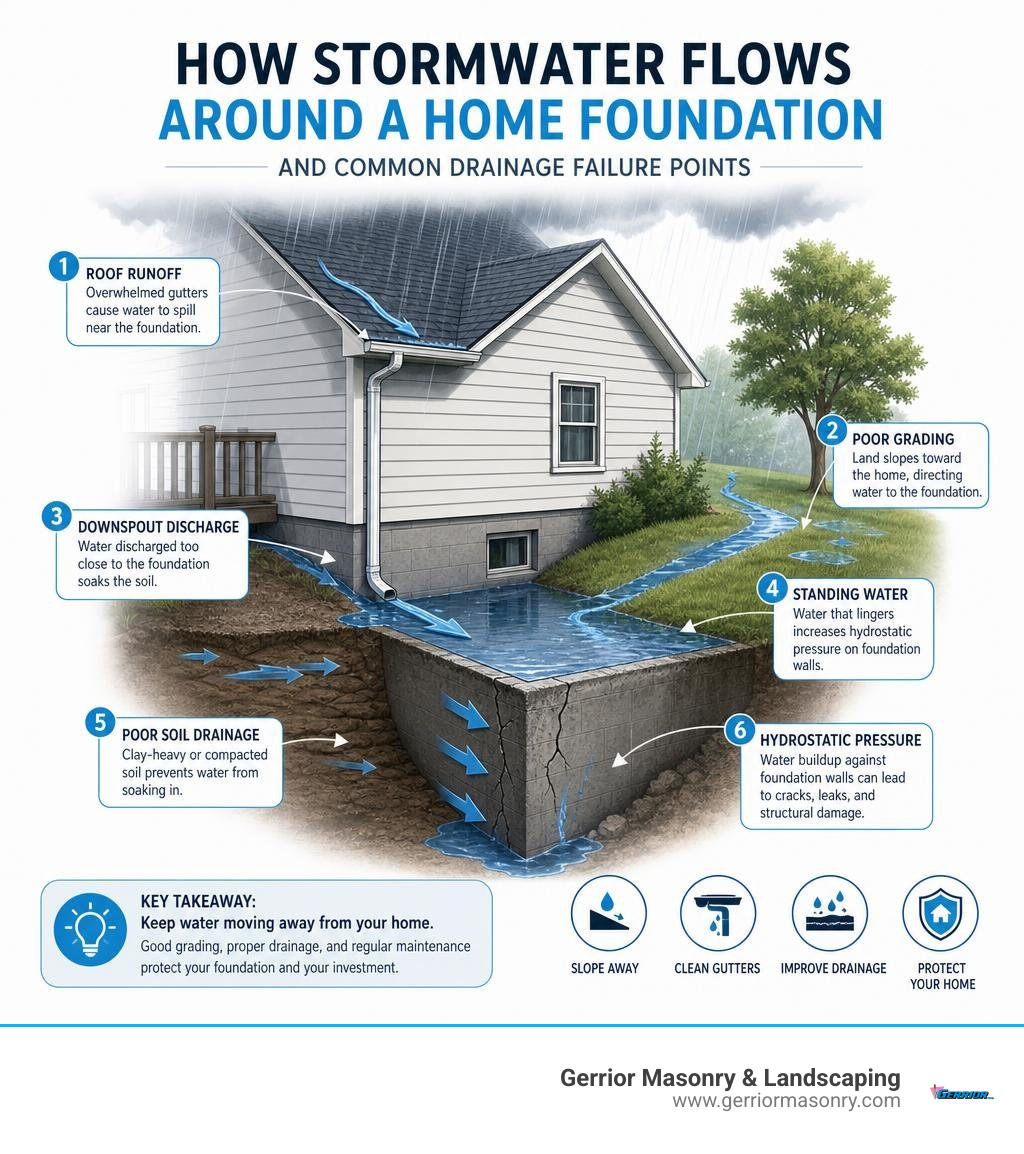
Understanding backyard drainage issues, causes, and risks is the first step toward reclaiming your property. When water pools on the surface, it saturates the soil. This saturated soil exerts immense hydrostatic pressure against your basement walls. Over time, this pressure can push water through microscopic pores in concrete, leading to damp basements, musty odors, and structural shifts.
To determine the severity of your yard’s issues, we recommend conducting a simple site assessment. Take photos of your property during a heavy storm and check the areas where water collects. Many homeowners make the mistake of focusing only on the visible wet spots, but backyard drainage problems homeowners ignore often stem from upstream causes, such as concentrated runoff from a neighbor’s driveway or poorly positioned downspouts.
Early Warning Signs of Backyard Drainage Problems
You do not have to wait for a flooded basement to realize you have a problem. The early warning signs of poor water management are often etched directly into your landscape:
- The 48-Hour Rule: If you notice pooling water or extremely mushy turf that persists for more than 48 hours after a rainstorm, your yard’s natural absorption and runoff capabilities have failed.
- Foundation Cracks and Damp Bulkheads: Water pooling near your home’s perimeter will eventually find a way in. Keep a close eye on your basement walls and bulkheads for moisture.
- Mold, Mildew, and Moss: Persistent dampness encourages moss growth on your lawn and mold along your foundation.
- Turf Yellowing and Bare Patches: Excess water smothers grass roots, causing root rot and leaving behind muddy, yellowing patches.
If you are noticing these signs on your property in Winchester, Massachusetts or Lexington, Massachusetts, it is critical to take action. Addressing these issues early by fixing pooling water in yard spaces can save you thousands of dollars in structural repairs down the road.
Primary Causes: Soil Compaction, Grading, and Runoff
Why does water pool in the first place? In our decades of working in Massachusetts, we have found that almost every drainage issue boils down to three primary culprits:
- Clay Soil and Soil Compaction: Many properties in Woburn, Massachusetts and Belmont, Massachusetts sit on dense clay-heavy soil. Unlike sandy soils that drain quickly, clay particles pack tightly together, slowing water infiltration to a crawl. Heavy foot traffic, lawn equipment, and winter snow cover further compact this soil, creating an impenetrable barrier.
- Improper Site Grading: Proper site grading is one of the most critical elements of home construction. The ground should always slope away from your home’s foundation at a rate of at least 6 inches of drop over the first 10 feet. When settled low spots form or the yard slopes toward the house, gravity forces water straight to your foundation.
- Concentrated Roof and Hardscape Runoff: A standard roof or large patio generates an incredible volume of runoff. For example, a 1,000-square-foot roof sheds over 600 gallons of water during just one inch of rainfall. If your gutters are clogged or your downspouts discharge water right next to the foundation, you are actively flooding your own home. Ensuring proper drainage around foundation walls is essential to redirecting this massive volume of water safely away.
Professional Engineering and Hardscaping Solutions for Wet Yards

When simple maintenance is not enough to keep your lawn dry, it is time to look at professional, engineered solutions. Managing water on a residential or commercial property in Arlington, Massachusetts requires strategic site planning and a clear understanding of hydrology. We design systems that do not just hide the water, but actively collect, transport, and discharge it to safe, designated municipal or natural areas.
Subsurface Systems: French Drains and Dry Wells
Subsurface drainage systems are the gold standard for managing chronic groundwater and surface pooling.
- French Drains: A French drain consists of a sloped trench filled with washed gravel and a perforated pipe. The holes in the pipe face downward, allowing groundwater to rise into the pipe and flow away via gravity. To prevent the system from failing, we wrap the entire gravel envelope in high-quality non-woven filter fabric to keep silt and soil from clogging the pipe.
- Dry Wells: While French drains transport water horizontally, dry wells manage water vertically. A dry well is an underground plastic or concrete basin surrounded by stone that collects runoff and slowly filters it back into the local water table.
Choosing between a dry well vs French drain depends entirely on your yard’s topography and soil profile. For many homes, our team of dry well installers in Winchester, Massachusetts and Lexington, Massachusetts will combine both systems—routing a French drain or downspout directly into a lawn dry well or dry well yard drainage system to handle heavy downpours.
Hardscape Integration and Proper Site Grading
One of the most common mistakes we see is hardscaping installed without a proper drainage plan. Patios, walkways, and retaining walls act as impervious surfaces, shedding water just like a roof.
To prevent pooling, we integrate drainage directly into our hardscape and masonry designs. This includes:
- Regrading: Carefully reshaping the land to achieve a minimum 2% slope (a 1-foot drop per 50 feet of run) to carry water away from living spaces.
- Permeable Pavers: Using specialized paving stones that allow rainwater to filter directly through the joints into a stone sub-base, reducing surface runoff.
- Channel Drains: Installing sleek, grated trench drains along the edges of patios and driveways to catch sheeting water before it reaches your lawn.
As we emphasize in our guide on the importance of proper drainage in hardscaping and masonry projects, planning for water movement before laying a single stone is the only way to ensure your outdoor investment lasts for decades in towns like Belmont, Massachusetts and Arlington, Massachusetts.
Resolving Severe Backyard Drainage Problems in Massachusetts
For properties experiencing extreme water accumulation, a single drain is rarely enough. A comprehensive, multi-layered system is required to handle the volume.
| Drainage Solution | Primary Function | Best Used For |
|---|---|---|
| French Drain | Directs subsurface groundwater away | Soggy turf, saturated soil, and fence-line pooling |
| Dry Well | Disperses heavy runoff underground | Downspout discharge and hardscape runoff |
| Catch Basin | Captures rapid surface water | Low-lying lawn depressions and patio corners |
When designing these systems, we carefully navigate local Massachusetts environmental codes and municipal regulations. Many towns have strict rules regarding where you can discharge stormwater, often prohibiting homeowners from directing runoff onto neighboring properties or directly into the public street. Implementing smart backyard drainage ideas and consulting professional yard drainage solutions ensures your project remains fully compliant while keeping your yard dry.
When to Hire a Professional Drainage and Masonry Contractor
While minor tasks like cleaning your gutters or adding a basic downspout extension can be handled on a weekend, major drainage modifications require heavy machinery, precise transit levels, and deep structural expertise. Excavating without checking for underground utilities can be incredibly dangerous and costly.
If you are searching for a reliable yard drainage company near me, Gerrior Masonry & Landscaping is here to help. Based near Woburn, we serve homeowners and businesses across Lexington, Arlington, and Belmont in Massachusetts, bringing over three decades of hands-on experience and direct owner oversight to every project.
Please note: While average industry pricing for professional drainage systems can range from $3,000 to $25,000 based on online data, these figures are general industry estimates and do not reflect the actual rates or guarantees of Gerrior Corp. Every property has unique grading, soil, and structural needs.
Don’t let standing water threaten your home’s foundation or ruin your landscape. Contact our team today to discuss our professional residential drainage solutions.
- Call us directly: +781-713-1225
- Request an estimate online: Request an Estimate
