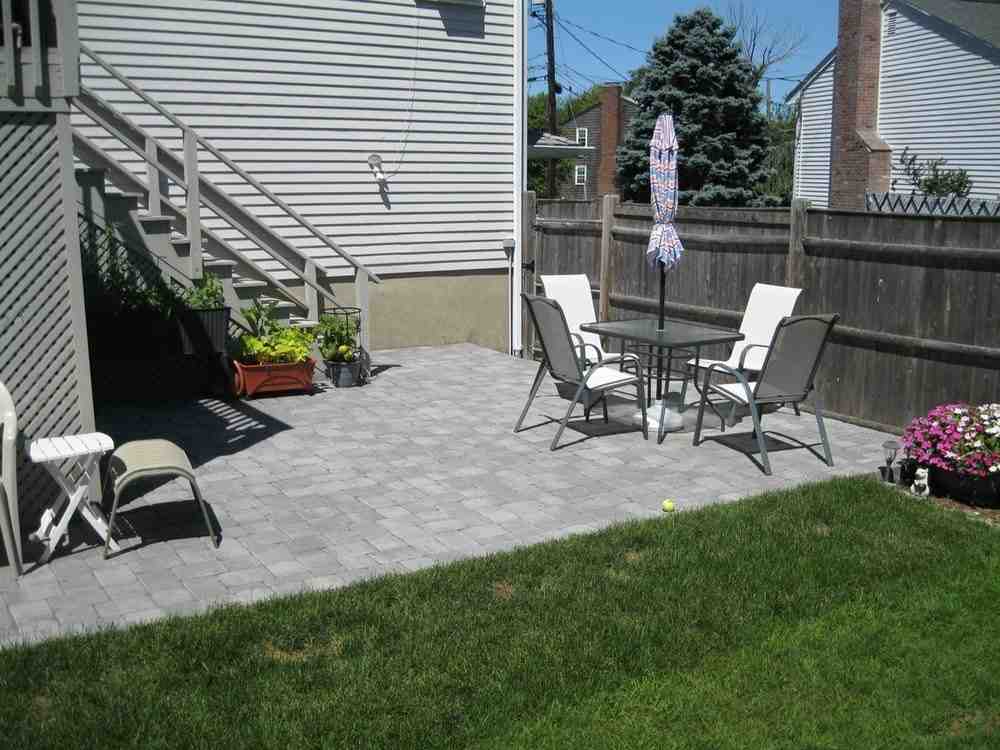
Why Backyard Patio Construction Is One of the Best Home Investments You Can Make
Backyard patio construction is a project that can transform an unused yard into a functional outdoor living space — and return 80% or more of its cost in added home value.
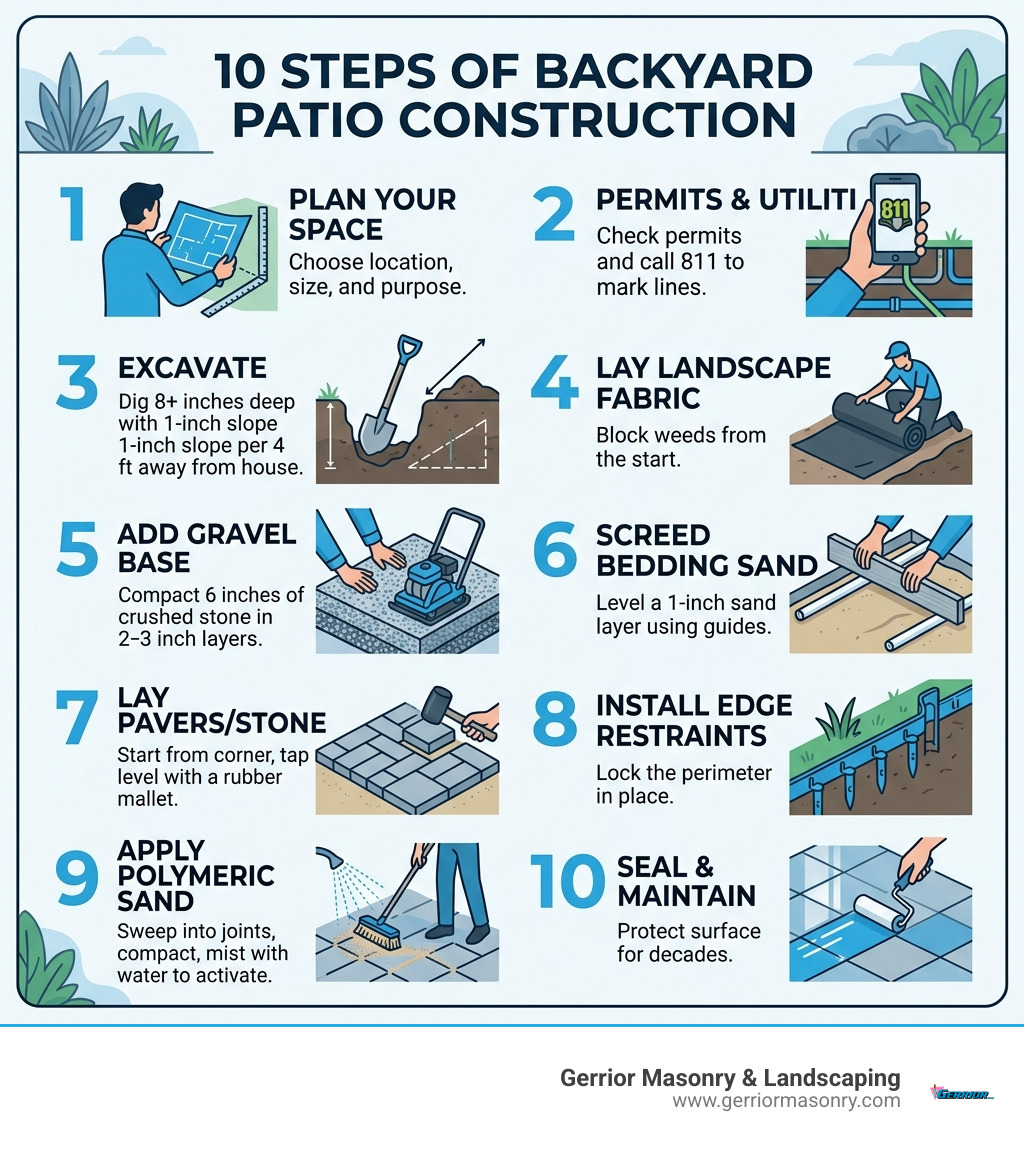
Here are the core steps to build a backyard patio:
- Plan your space — Choose location, size, and purpose
- Check permits and call 811 — Mark underground utilities before digging
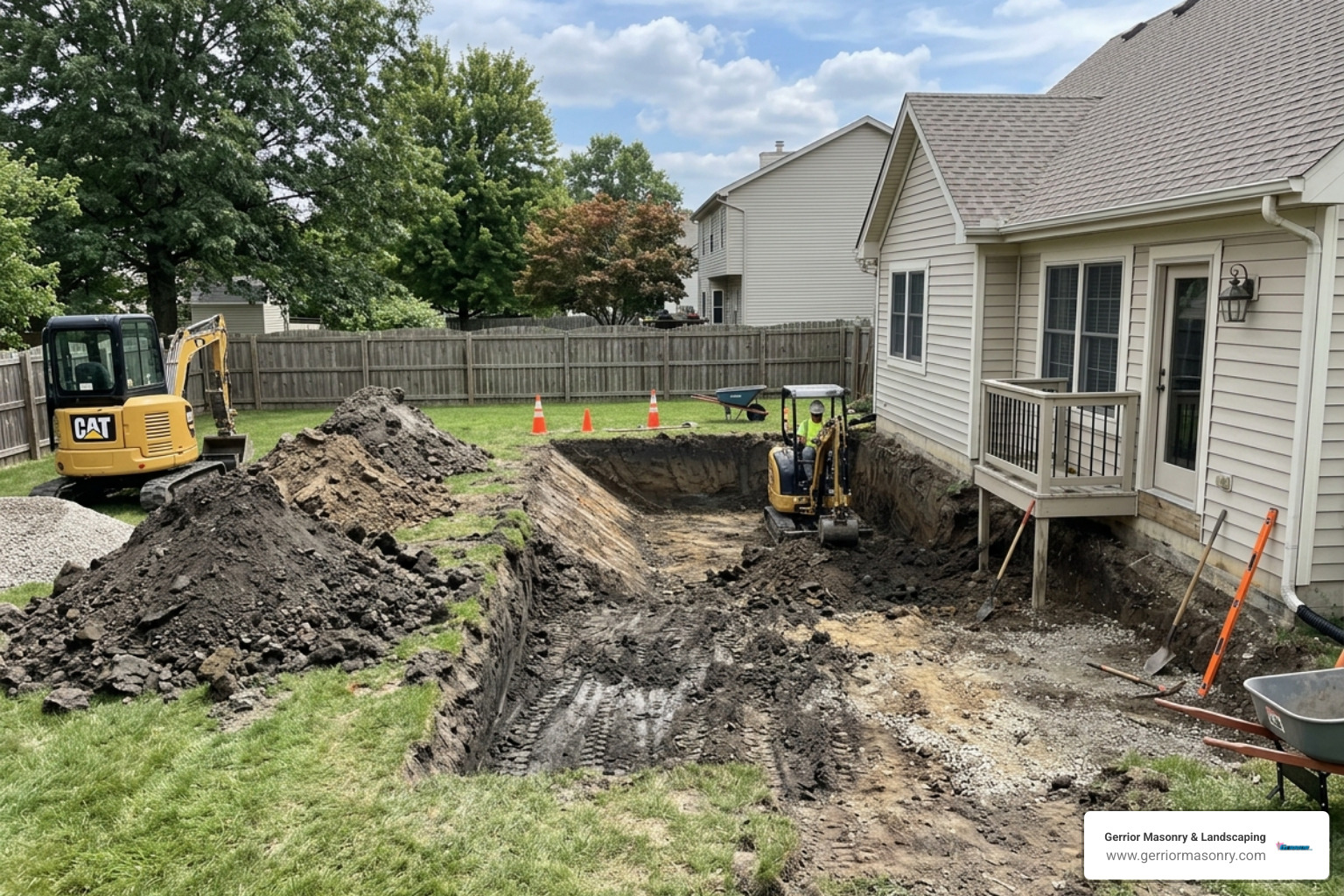
- Excavate — Dig 8+ inches deep with a 1-inch slope per 4 feet away from the house
- Lay landscape fabric — Block weeds from the start
- Add gravel base — Compact 6 inches of crushed stone in 2-3 inch layers
- Screed bedding sand — Level a 1-inch sand layer using PVC pipes as guides
- Lay your pavers or stone — Start from a corner, tap level with a rubber mallet
- Install edge restraints — Lock the perimeter in place
- Apply polymeric sand — Sweep into joints, compact, then mist with water to activate
- Seal and maintain — Protect your surface and keep it looking sharp for decades
Whether you’re a confident DIYer or planning to hire a pro, understanding the full process helps you make smarter decisions — and avoid costly mistakes.
I’m Joe Gerrior, owner of Gerrior Masonry & Landscape Construction Corp., with over 30 years of hands-on experience in backyard patio construction for homeowners across Massachusetts. In this guide, I’ll walk you through everything you need to know — from picking the right materials to getting a patio that lasts 50+ years.
Backyard patio construction terminology:
Planning and Executing Your Backyard Patio Construction
Before you ever pick up a shovel, you need a blueprint. Many homeowners jump into a project because they saw a beautiful image online, only to realize halfway through that they didn’t account for the slope of their yard or the size of their furniture. Planning is the most critical phase of backyard patio construction.
Site Selection and Purpose
The first question we ask our clients in towns like Lexington or Winchester is: “What is the primary purpose of this space?”
- Dining Zone: If you plan to host dinners, you’ll need a minimum of 10×10 feet for a table of four, but 14×14 feet is much more comfortable for circulation.
- Relaxation Nook: For a simple fire pit and a few chairs, a circular design or a smaller 10×10 square often works perfectly.
- Proximity to the House: Most patios are built directly off the back door for convenience, but you must ensure the foundation is protected from water runoff.
Drainage and Slope: The “Silent Killer” of Patios
Water is the enemy of any masonry project. If your patio is perfectly level, water will pool, leading to algae, mold, and shifting stones. Even worse, if it slopes toward your house, you’re looking at a flooded basement.
The industry standard for backyard patio construction is a slope of 1 inch for every 4 feet of distance. We use string levels and stakes to ensure the ground drops away from the foundation. If you’re building in a particularly wet area of Middlesex County, you might even consider installing a drainage system or dry well to manage runoff effectively.
For a deeper dive into the planning phase, check out this step-by-step guide to elevating your outdoor space.
Essential Steps for Backyard Patio Construction Success
Success in backyard patio construction isn’t about how pretty the stones look on top; it’s about the 8 to 12 inches of material hidden underneath them.
1. The 811 Call and Permits
Never dig without calling 811. It’s free and prevents you from hitting a gas line or fiber optic cable. Additionally, while many ground-level patios don’t require a building permit, some municipalities have strict “impervious surface” laws. Always check with your local building department in cities like Newton or Medford before starting.
2. Excavation Depth
In Massachusetts, we deal with “frost heave”—the ground expanding and contracting as it freezes.
- Standard Depth: 4 inches of gravel base + 1 inch of sand + the thickness of your paver (usually 2–3 inches). This totals about 8 inches.
- New England Best Practice: For maximum durability, we often recommend 6–8 inches of gravel base, bringing your total excavation depth to 10–12 inches.
3. Landscape Fabric: Don’t Skip It
We always lay a high-quality geotextile landscape fabric at the bottom of the excavated hole. This prevents the native soil from mixing with your clean gravel base and acts as a secondary barrier against weeds.
4. The “Layered Cake” Base
A patio is only as stable as its base. We use angular crushed stone because the jagged edges lock together when compacted. Add the gravel in 2-inch “lifts” and compact each layer with a plate compactor until it’s rock hard. A plate compactor builds a patio that stays flat for 50 years.
5. Bedding Sand and Screeding
On top of the gravel goes a 1-inch layer of coarse sand. To get this perfectly level, we use 1-inch PVC pipes as “rails” and drag a straight 2×4 board across them. This is called “screeding.” Once this layer is set, do not walk on it!
Learn more about the technical side of installing a patio here.
Choosing Materials for Your Backyard Patio Construction
The materials you choose will define the aesthetic and maintenance requirements of your space. Whether you prefer the clean lines of concrete pavers or the rugged beauty of natural flagstone, each has its pros and cons.
| Material | Average Cost (per sq ft)* | Lifespan | Pros | Cons |
|---|---|---|---|---|
| Concrete Slabs | $2 – $15 | 30–50 Years | Affordable, versatile | Prone to cracking in cold climates |
| Concrete Pavers | $2.25 – $11 | 50+ Years | Durable, easy to repair | Can fade over decades if not sealed |
| Brick | $4 – $10 | 25–30 Years | Classic look | Can be slippery when wet |
| Natural Stone | $3 – $18 | 50+ Years | High-end look | More difficult to install |
| Gravel | $1 – $3 | 10–20 Years | Very affordable | Messy with kids/pets |
*Note: These are average costs based on internet data and not actual costs for Gerrior Masonry services.
Pavers vs. Poured Concrete
In Massachusetts, we almost always recommend pavers over solid concrete slabs. With our extreme temperature swings, a solid slab is under immense pressure and prone to cracking. Pavers, however, are a “flexible” pavement system that can move slightly with the earth and are easily replaced if one stone gets damaged.
For more help deciding, see our guide on choosing the perfect flooring material.
Professional vs. DIY Patio Installation Costs
DIY backyard patio construction typically saves you about 45% in labor costs. However, you have to weigh that against the cost of renting heavy equipment and the physical toll of moving tons of rock.
- DIY Costs: For a 200 sq ft paver patio, DIYers usually spend between $1,800 and $4,400.
- Professional Costs: For that same 200 sq ft patio, professional installation usually ranges from $3,000 to $7,600, though high-end custom stone work can easily exceed $15,000 depending on complexity.
When you hire a professional team like ours, you aren’t just paying for labor; you’re paying for the 30+ years of experience that ensures your backyard patio cost is a one-time investment.
Finishing Touches and Long-Term Maintenance
You’ve laid the stones, and the patio looks great, but the “finishing” steps are what separate an amateur project from a professional one.
The Magic of Polymeric Sand
Today, we use polymeric sand, a mix of fine sand and special additives that turn into a powerful “glue” when wetted.
- Sweep: Fill the joints completely while the pavers are bone-dry.
- Vibrate: Run the plate compactor over the pavers to settle the sand.
- Clean: Blow off every speck of sand from the surface to prevent a white haze.
- Activate: Lightly mist the joints with water to trigger the chemical bond.
Edge Restraints: Keeping It All Together
Without edge restraints, your patio will eventually “creep” outward. We use heavy-duty plastic or aluminum edging secured with 10-inch steel spikes every 12 inches. For those interested in a more permanent look, a complete guide to concrete patios can offer insights into mortared edges.
Enhancing Your Space with Design Add-ons
- Outdoor Fire Pits: Whether it’s a stone ring or a gas-powered feature, a fire pit is the #1 requested add-on in Massachusetts. Learn more about outdoor fire pits.
- Seating Walls: These provide extra places for guests to sit without cluttering the patio with furniture and help define the “zones” of your yard.
- Outdoor Lighting: Low-voltage LED lights can be integrated directly into the pavers or seating walls, creating a stunning ambiance for evening gatherings.
Get more inspiration from our ultimate list of backyard patio designs.
Ensuring Durability and Proper Drainage
Maintenance is the key to ensuring your backyard patio construction lasts for decades.
Cleaning and Sealing
We recommend power washing your patio every spring to remove winter grime. Applying a high-quality sealer every 3 to 5 years will protect the color of your pavers and prevent oil or food stains from sinking in.
Permeable Paving: The Eco-Friendly Choice
If you live in an area with strict runoff regulations, consider permeable pavers. These allow rainwater to filter directly into the ground, reducing the load on local storm drains and keeping your yard from becoming a swamp after heavy rain.
Expert Hardscaping and Professional Installation
While we love the spirit of DIY, backyard patio construction is a massive undertaking. Moving 2.5 tons of base rock and 0.75 tons of sand for a small patio is a grueling task.
At Gerrior Masonry & Landscaping, we take the stress out of the process. Our skilled team handles everything from the initial excavation to the final misting of the polymeric sand. With owner oversight on every project, we ensure that the quality of work meets the high standards our clients in Woburn, Andover, and beyond expect. Explore our patio installation services to see how we can transform your yard.
Gerrior Masonry & Landscape Construction is based in Woburn, MA, and services Middlesex and Essex County, Massachusetts.