
Retaining Wall With French Drain: 7 Powerful Ways to Prevent Failure 2025
Why Retaining Walls Need Proper Drainage
A retaining wall with french drain is essential for any wall that holds back soil and water. Without proper drainage, your retaining wall faces significant risk of failure.
Quick Answer: How to Install a French Drain with a Retaining Wall
- Dig a trench at least 12 inches wide and 18-24 inches deep behind the wall
- Line the trench with non-woven geotextile fabric
- Place a 4-inch perforated pipe at the bottom with holes facing down
- Ensure the pipe slopes at least 1 inch per 8 feet toward the outlet
- Surround the pipe with clean, angular ¾-inch gravel
- Wrap the fabric over the gravel like a burrito
- Backfill the remaining space and grade soil away from the wall
Hydrostatic pressure from water buildup is the leading cause of retaining wall failure, accounting for up to 80% of structural issues in residential retaining walls. This invisible force can turn your beautiful landscape feature into a leaning, cracking eyesore—or worse, a complete collapse.
Properly installed French drains can extend the lifespan of a retaining wall by 2 to 3 times compared to walls without adequate drainage.
I’m Joe Gerrior, owner of Gerrior Masonry & Landscape Construction Corp., and I’ve installed hundreds of retaining walls with French drains over my 34 years in the industry, helping homeowners throughout Massachusetts protect their investments and prevent costly failures.
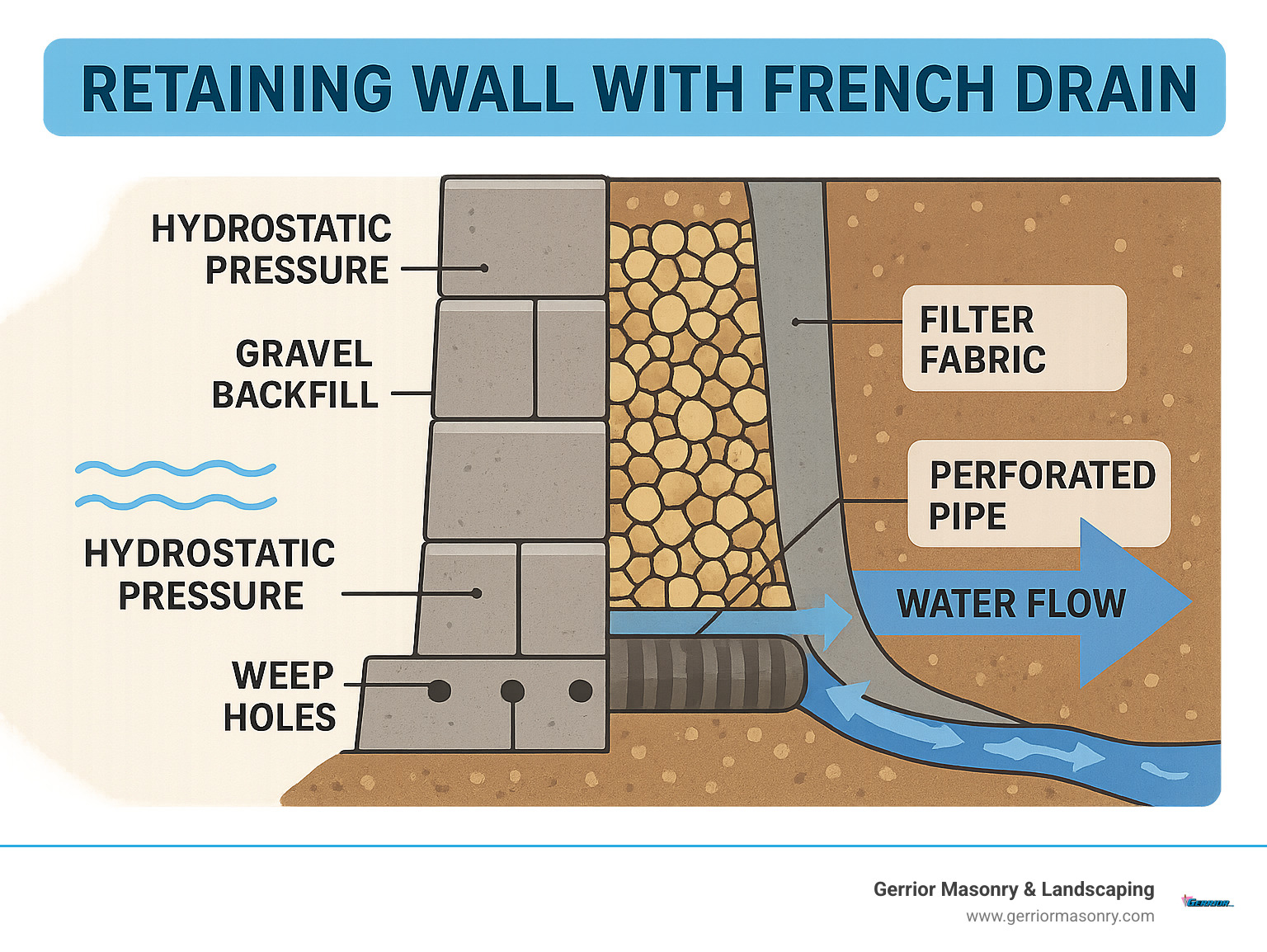
Quick look at retaining wall with french drain:
– perforated drain pipe retaining wall
– retaining wall drain pipe installation
Retaining Walls 101: Forces, Functions, Failure Signs
Retaining walls are the unsung heroes of challenging landscapes. They don’t just add visual appeal to your property—they’re hardworking structures that transform unusable slopes into functional outdoor spaces.
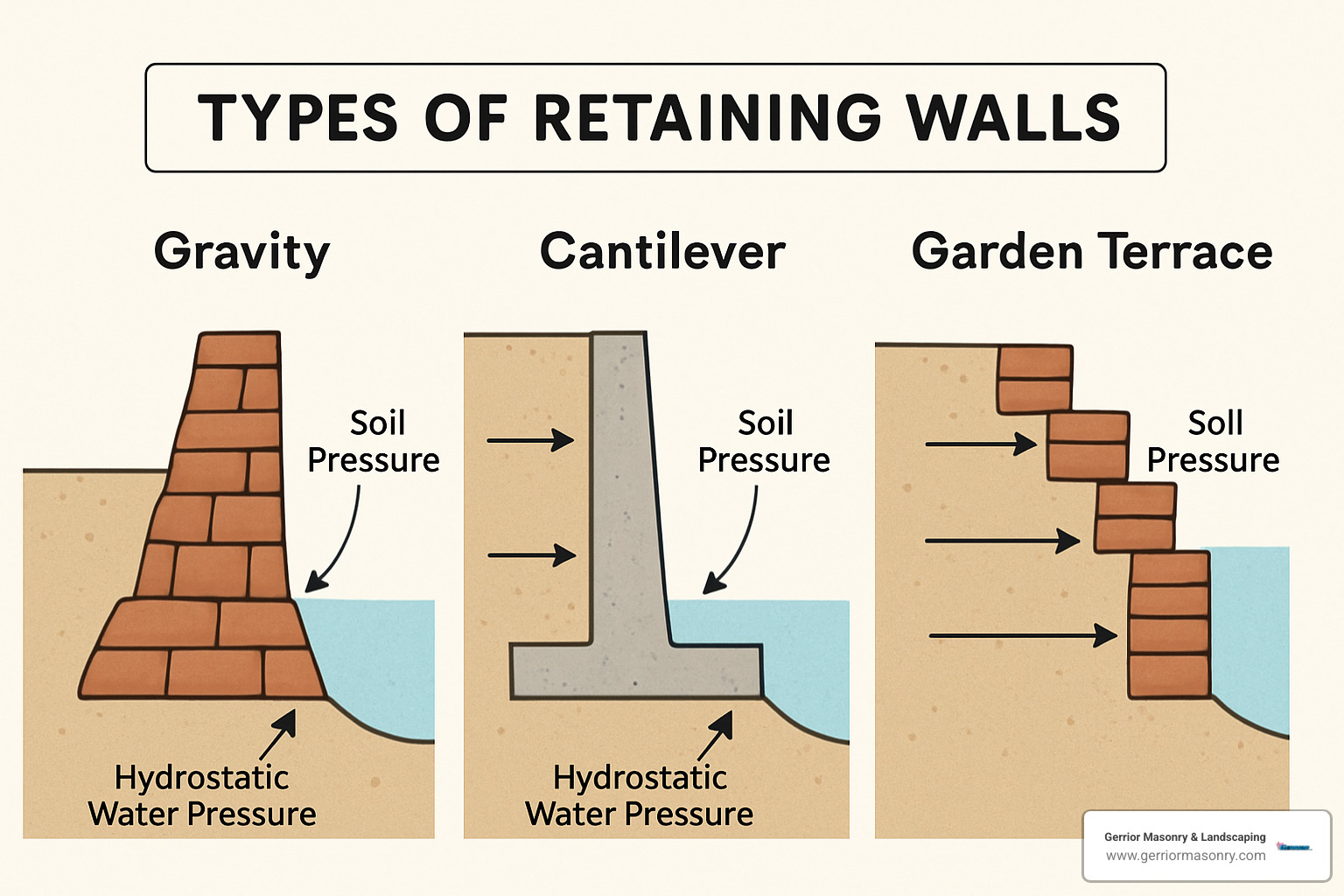
We typically build three main types of retaining walls:
- Gravity walls use their substantial mass and weight to stand strong against soil pressure
- Cantilever walls employ clever engineering with a reinforced base that extends under the soil
- Garden terraces create beautiful stepped levels that provide multiple planting areas
Every retaining wall battles two relentless forces: the horizontal pressure from soil pushing outward and the tremendous force of water building up behind the structure. When winter arrives in Massachusetts, that trapped water freezes and expands, creating pressure that can crack even substantial walls if they’re not properly drained.
Your wall might be in trouble if you notice it leaning forward, bulging in the middle, cracking in the mortar or blocks, separation between sections, or soil washing out from underneath.
The difference between a well-built wall with proper drainage and one without is dramatic. Industry data shows that a retaining wall with french drain can last 50-100 years, while those without might fail within just 5-10 years.
Need some inspiration for your next project? Our Stone Wall Design Ideas page showcases beautiful examples of walls that deliver both stunning looks and rock-solid performance.
What Does a Retaining Wall Do?
A good retaining wall holds back soil that would otherwise slide downhill during heavy rains or spring thaws.
Beyond just preventing erosion, retaining walls transform steep slopes into usable terraces, effectively expanding your outdoor living space. For many of our clients in Middlesex and Essex County, this means turning previously wasted hillsides into beautiful garden beds, patios, or play areas.
Retaining walls also protect your home and other structures from the relentless pressure of moving soil. Without this protection, foundations can crack, basements can leak, and driveways can buckle.
How to Spot Trouble Early
Catching retaining wall problems early can save you thousands in repairs. Here’s what to watch for:
After a rainstorm, does water pool at the base of your wall? This suggests drainage issues. Notice white, chalky deposits (called efflorescence) on the wall face? That’s a telltale sign that water is moving through your wall.
Mold or algae growth indicates persistent moisture problems. Pay attention to blocks or stones that suddenly seem misaligned or if you hear cracking noises when walking near the wall.
Look for soil erosion or tunnels forming behind or beneath the wall, which indicate water is finding its own path. Even weeds or plants sprouting from the joints between stones can signal moisture issues that need addressing.
Why Drainage Matters More Than You Think
Water is both a life-giving force and a potential destroyer of structures. When it comes to your retaining wall, proper water management isn’t just important—it’s absolutely essential. Industry data reveals that hydrostatic pressure causes up to 80% of all residential retaining wall failures.
Hydrostatic pressure is simply the force exerted by standing water against a surface. As rainwater soaks into the soil behind your retaining wall, it accumulates and creates pressure that can be surprisingly powerful. This invisible force can literally push over or crack substantial walls over time.
Water creates several other problems beyond just pressure:
Soil erosion silently undermines your wall’s foundation, frost heave creates additional pressure during freeze-thaw cycles, mosquitoes find breeding grounds in standing water, and all wall materials experience accelerated deterioration when constantly wet.
Professional hardscapers use what we call the “drainage chimney” concept—creating a column of permeable material behind the wall that allows water to flow downward rather than building up pressure.
For a deeper dive into protecting all your hardscaping investments, check out our guide on The Importance of Proper Drainage in Hardscaping and Masonry Projects.
If you’re researching costs, this Forbes guide on retaining wall cost provides helpful context for understanding the investment required for a properly constructed wall.
Risks of Skipping Proper Drainage
Cutting corners on drainage is like skipping insurance—it might save money today, but the long-term gamble rarely pays off. When retaining walls lack proper drainage, the consequences can be severe and expensive.
Complete wall collapse is the most dramatic and dangerous outcome, potentially causing property damage or even injury. Foundation damage to nearby structures often follows as water redirects to the path of least resistance—usually toward your home’s basement or crawlspace.
Landscape washout can destroy carefully planned gardens and create unsightly erosion channels across your yard. Saturated clay soils expand and contract dramatically, creating even more pressure against your wall.
The initial investment in a retaining wall with french drain pays for itself many times over through extended wall life and avoided repairs.
Key Elements of an Effective Wall Drainage System
A comprehensive drainage system for your retaining wall isn’t complicated, but each component plays a vital role:
Weep holes create small openings at the base of the wall that allow water to escape. Filter fabric (geotextile) prevents soil from clogging your drainage system while allowing water to pass through.
Gravel backfill creates a permeable zone behind your wall. Industry guidelines recommend at least 12 inches of gravel backfill behind all retaining walls over 2 feet tall.
Perforated pipe (the French drain itself) collects and channels water away from your wall. Daylight outlet provides a protected exit point where water can safely discharge away from the wall.
Proper slope ensures water actually flows away. We maintain a minimum 1% slope (1 inch drop per 8 feet) so gravity keeps things moving in the right direction.
Meet the French Drain: Simple Physics, Big Protection
The French drain isn’t from France at all—it’s named after Henry French, a Massachusetts judge and farmer who popularized this drainage system in the 19th century. We find it fitting that this essential drainage solution has roots right here in Massachusetts!
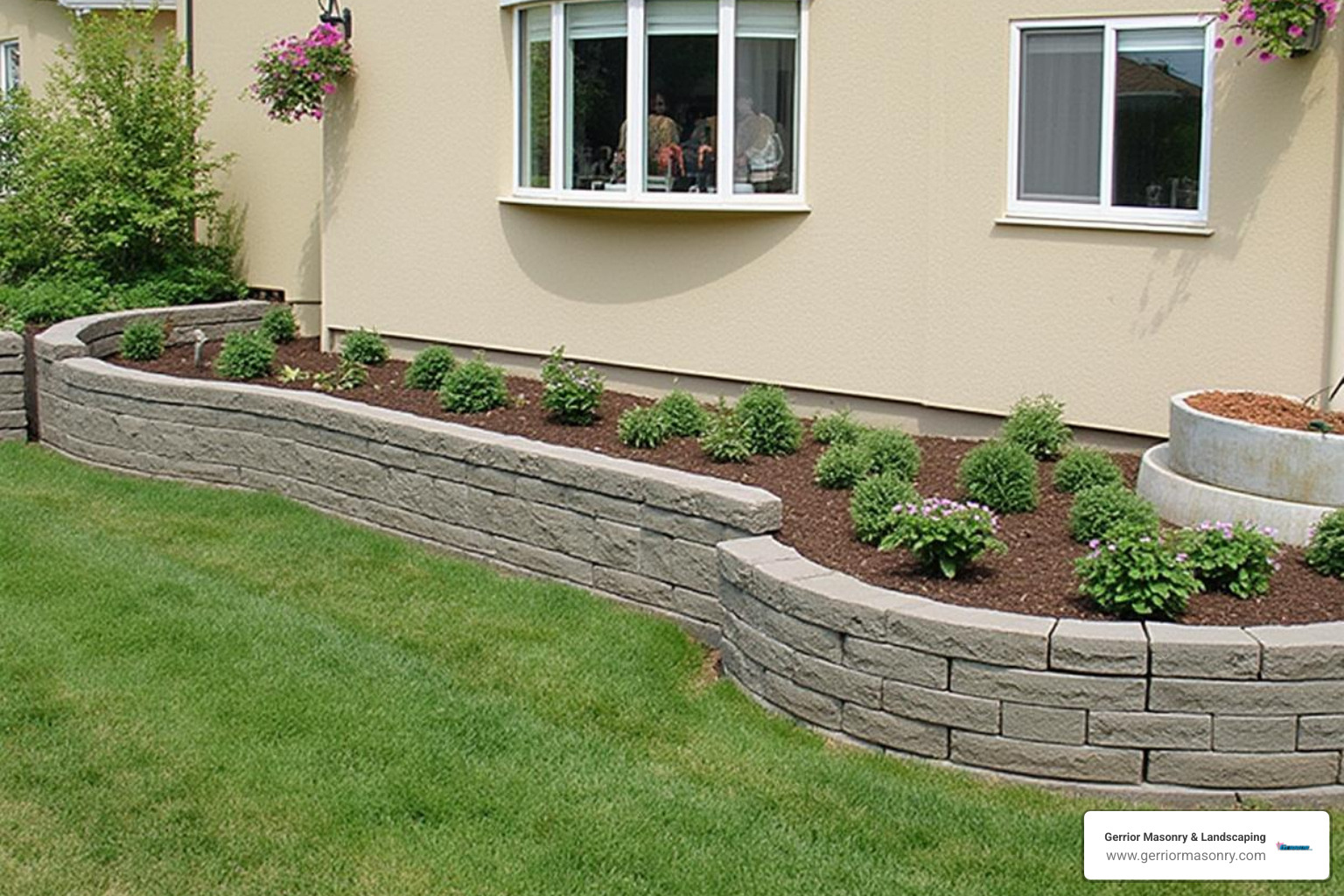
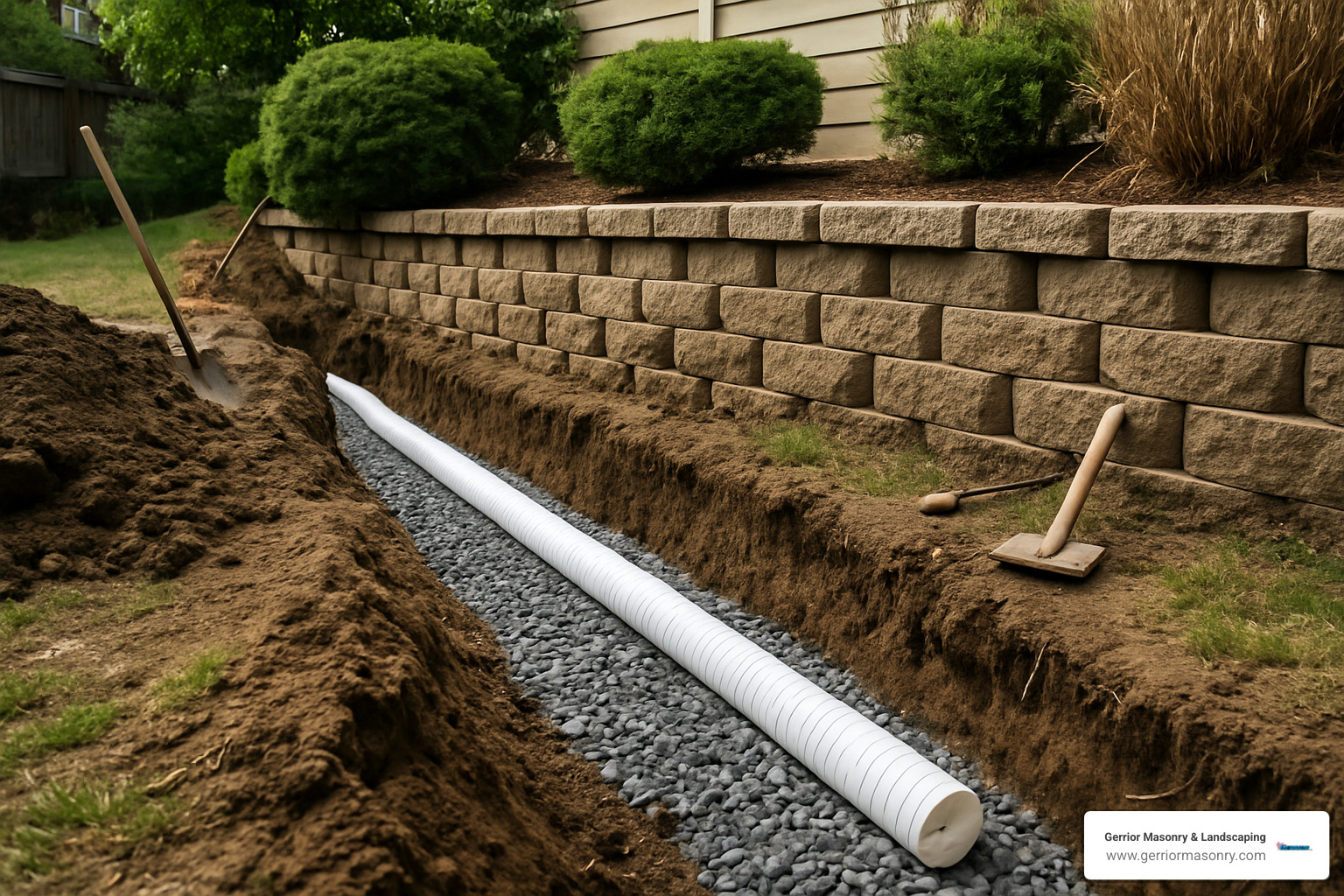
There’s a beautiful simplicity to a French drain—just a trench filled with gravel surrounding a perforated pipe that collects and redirects water. This humble system is remarkably effective at managing water and protecting your retaining wall investment.
When we install a retaining wall with French drain at Gerrior Masonry, we typically dig a trench 12-18 inches wide and 18-24 inches deep behind the wall. We then place a 4-inch perforated pipe wrapped in a filter sock at the bottom. The pipe needs a consistent downward slope—at least 1 inch per 8 feet—so gravity can work its magic moving water away from your wall.
Clean, angular gravel (½–¾ inch size) surrounds the pipe, creating pathways for water while providing structural support. We wrap this entire gravel-pipe package in geotextile filter fabric, creating what we often call a “drainage burrito” that keeps soil out while letting water flow freely.
The final piece of the puzzle is the outlet—where water safely exits the system. This might be a daylight discharge point on a slope, a dry well for dispersal, or connection to a sump pump in challenging situations. For more details on these options, check out our comparison of Dry Well vs French Drain systems.
How a French Drain Works
The genius of a French drain is how it harnesses gravity—nature’s most reliable force. When rain falls or groundwater rises behind your retaining wall, it naturally seeps into the permeable gravel layer we’ve installed. As water always seeks the lowest point, it filters down through the gravel toward the perforated pipe.
We typically position these pipes with the holes facing downward, which might seem counterintuitive at first. But this orientation actually prevents clogging while still allowing water to enter from below. Once inside the pipe, water follows the gentle slope we’ve created, flowing away from your wall to the outlet point.
The best part? This system works 24/7 with no electricity, no moving parts, and no maintenance headaches. It’s just physics doing what physics does best.
When & Where to Use a French Drain
After 30+ years installing drainage systems throughout Middlesex and Essex Counties, we’ve identified several scenarios where French drains are absolutely essential:
High rainfall areas are prime candidates, and let’s face it—New England weather keeps our drainage systems busy! Our region’s significant precipitation throughout the year makes proper drainage a necessity, not a luxury.
Properties with clay soil benefit tremendously from French drains. Clay acts like nature’s sponge, holding water and dramatically increasing hydrostatic pressure behind walls.
Industry standards recommend drainage for all retaining walls over 2 feet tall. The taller the wall, the greater the potential water pressure—and the more important proper drainage becomes.
French drains also excel at retrofitting existing walls that show early warning signs of water damage. If your wall is starting to lean forward or showing cracks, installing a French drain may save it from complete failure.
Installing a Retaining Wall with French Drain — Step-by-Step Guide
Installing a retaining wall with french drain is like building insurance for your landscape investment. It’s a project that demands attention to detail, but the payoff is a wall that will stand strong for decades instead of years.
Before grabbing your shovel, consider whether this project belongs in your DIY portfolio or if calling in the pros makes more sense:
| Aspect | DIY Installation | Professional Installation |
|---|---|---|
| Time Required | 3-7 days for average wall | 1-3 days for average wall |
| Tools Needed | Excavator/trencher, compactor, levels, shovels, wheelbarrow | Professional-grade equipment |
| Skill Level | High – requires precise grading | Expert – years of experience |
| Risk Factors | Improper installation can lead to wall failure | Reduced risk with proper training |
| Typical Cost Range* | $15-30 per linear foot (materials only) | $30-150 per linear foot (varies by wall type and site conditions) |
| Warranty | None | Often 1-5 years on workmanship |
*Note: These are average costs based on internet data and not actual costs for Gerrior Masonry services. Complex sites with challenging access or soil conditions may cost significantly more, potentially $200+ per linear foot.
Planning & Layout: Slope, Depth, Width
Start with a topographic survey to understand how water naturally flows across your property. The goal is to identify the natural water pathways so you can work with them, not against them.
Determine where your drain will daylight (outlet). This should be downhill from your wall and away from any structures. For your trench dimensions, aim for 18-24 inches deep below the wall base and at least 12 inches wide. The slope should be 1-2% (that’s 1-2 inches of drop for every 8 feet of run).
Before you dig, always call Dig Safe at 811! Once you’re cleared to dig, use stakes and string to mark your trench location, checking your slope with a level as you go.
Materials You’ll Need
For a proper retaining wall with french drain, you’ll need:
4-inch SDR-35 perforated pipe is the industry standard for residential French drains. Clean, angular ¾-inch crushed stone provides both drainage and structural support. Non-woven geotextile fabric is your system’s filter.
You’ll also need a pipe sock (filter sleeve), compaction equipment, and outlet protection like a grate or stone cover.
For more detailed guidance on pipe selection, check out our guide on Perforated Drain Pipe Retaining Wall systems.
Building the Trench “Burrito”
Start by digging your trench to the planned dimensions, making sure to maintain that critical 1-2% slope. Line the entire trench with filter fabric, leaving enough excess hanging over the sides to fold over the top later. Add a 2-3 inch base layer of crushed stone and compact it well.
Place your perforated pipe with the holes facing DOWN, not up. This actually helps prevent clogging, as water enters from below where there’s less sediment. Check your slope again with a level—this is crucial for proper drainage.
Cover the pipe with more crushed stone, then fold the fabric over like you’re closing a burrito, overlapping any seams by at least 6 inches. Add your final layer of stone if needed, compacting in lifts no more than 6 inches thick.
Maintenance, Retrofits & Future Innovations
Even the best retaining wall with french drain system needs some TLC to keep it performing year after year. Think of it like changing the oil in your car—a little maintenance goes a long way toward preventing bigger problems down the road.
At Gerrior Masonry, we recommend a simple annual maintenance routine that takes just minutes but can save thousands in repairs. Each spring, check those drain outlets—clear away any leaves, soil, or debris that might be blocking water flow.
Every few years (typically 3-5), consider having your drainage pipes professionally flushed. This removes any sediment that’s gradually accumulated inside.
Be mindful of landscaping choices near your drainage system. Those beautiful maple trees have aggressive roots that love finding their way into perforated pipes. We recommend keeping trees at least 10 feet away from your drain lines whenever possible.
After heavy rains, take a quick look for any soil erosion around your wall or drain outlet. Catching these issues early prevents them from becoming major problems.
Common Mistakes to Avoid
When it comes to installing a retaining wall with french drain, even experienced DIYers can make critical errors. The most common mistake we see is insufficient slope—water needs gravity to flow, and a perfectly level pipe simply won’t drain. Always ensure your pipe drops at least 1 inch for every 8 feet of run.
Using the wrong stone is another frequent error. Those smooth, rounded pea stones might look nice, but they shift too easily and don’t provide the stability your system needs. Angular crushed stone locks together, creating stable drainage pathways that won’t settle over time.
Filter fabric issues plague many installations. Either it’s missing entirely (leading to clogged pipes within months) or it’s improperly installed, allowing soil to mix with your drainage stone.
Perhaps the most frustrating mistake is the buried outlet. Your drain system needs somewhere to discharge water, and if that outlet gets covered by landscaping or buried during yard work, the entire system backs up.
Average Cost Ranges*
Investing in proper drainage protection varies considerably based on your specific situation and property conditions:
- Installing a French drain during initial wall construction typically runs $20–$45 per linear foot
- Retrofitting an existing wall costs more, usually $50–$150 per linear foot
- Complex sites with access challenges or difficult soil conditions can reach $200+ per linear foot
- Additional features like dry wells or multiple outlet points add $300-900 each to the project
*These are average costs based on internet data and not actual costs for Gerrior Masonry services.
When considering these costs, repairing or replacing a failed retaining wall often costs 3-5 times more than getting it right the first time.
The drainage technology landscape continues to evolve with exciting innovations. Sensor-equipped smart drains can now monitor water levels and flow rates, alerting homeowners to potential issues before they become problems. Bio-swales offer environmentally friendly alternatives that filter water naturally while adding beauty to your landscape.
For more comprehensive information about drainage options beyond French drains, visit our detailed guide to Drainage Systems & Dry Wells.
Frequently Asked Questions about Retaining Wall Drainage
Do walls under 2 ft really need drains?
This is one of the most common questions we hear at job sites across Middlesex County. While industry guidelines often suggest that walls under 2 feet may not require extensive drainage, our experience in New England tells a different story.
The short answer? Yes, even small walls benefit from basic drainage.
Our region’s freeze-thaw cycles can be brutal on masonry structures. When water freezes behind a wall, it expands with tremendous force – enough to move even substantial structures over time.
For walls under 2 feet, we typically recommend a simplified system that includes:
– Gravel backfill behind the wall
– Geotextile separation fabric to prevent soil migration
– Weep holes if using solid materials like block or stone
– Proper surface grading away from the wall
The investment in these basic drainage elements is minimal – often just 10-15% of your total project cost – but the payoff in extended wall life and reduced maintenance is substantial.
How deep should the French drain sit behind the wall?
Proper placement of your retaining wall with French drain is crucial for system effectiveness. The drain should typically be positioned at or slightly below the bottom of the wall footing. This strategic placement ensures it captures water before it can accumulate and create pressure against the wall foundation.
For most residential retaining walls we install in the Woburn area:
– We dig the trench 18-24 inches deep (always below the frost line in our Massachusetts climate)
– The pipe sits on a 2-3 inch bed of crushed stone for stability and initial filtration
– The entire assembly remains protected from potential frost heave
This careful placement allows the drain to intercept groundwater before it reaches the wall while providing enough cover to protect the pipe from damage.
Can I tie gutter downspouts into the French drain?
I understand the temptation – you’ve got water from your roof and you’ve got a drainage system behind your wall. Why not connect them? Unfortunately, this is generally not a good idea for several important reasons.
First, volume concerns are significant. A typical roof can generate hundreds of gallons of runoff during even moderate rainfall. French drains are designed primarily for groundwater management, not the concentrated deluge from downspouts.
Second, debris issues create maintenance headaches. Leaves, twigs, and roof granules can quickly clog a French drain system designed with small perforations for groundwater entry.
Instead, we recommend these safer alternatives:
– Direct downspouts away from the wall using extensions or underground solid pipe
– Create a separate drainage system specifically designed for roof runoff
– Ensure downspout discharge points are at least 10 feet from any retaining wall
Conclusion
A retaining wall with french drain isn’t just a construction best practice—it’s essential insurance for your landscape investment. Throughout this guide, we’ve seen how proper drainage transforms a vulnerable structure into a resilient, long-lasting feature of your property.
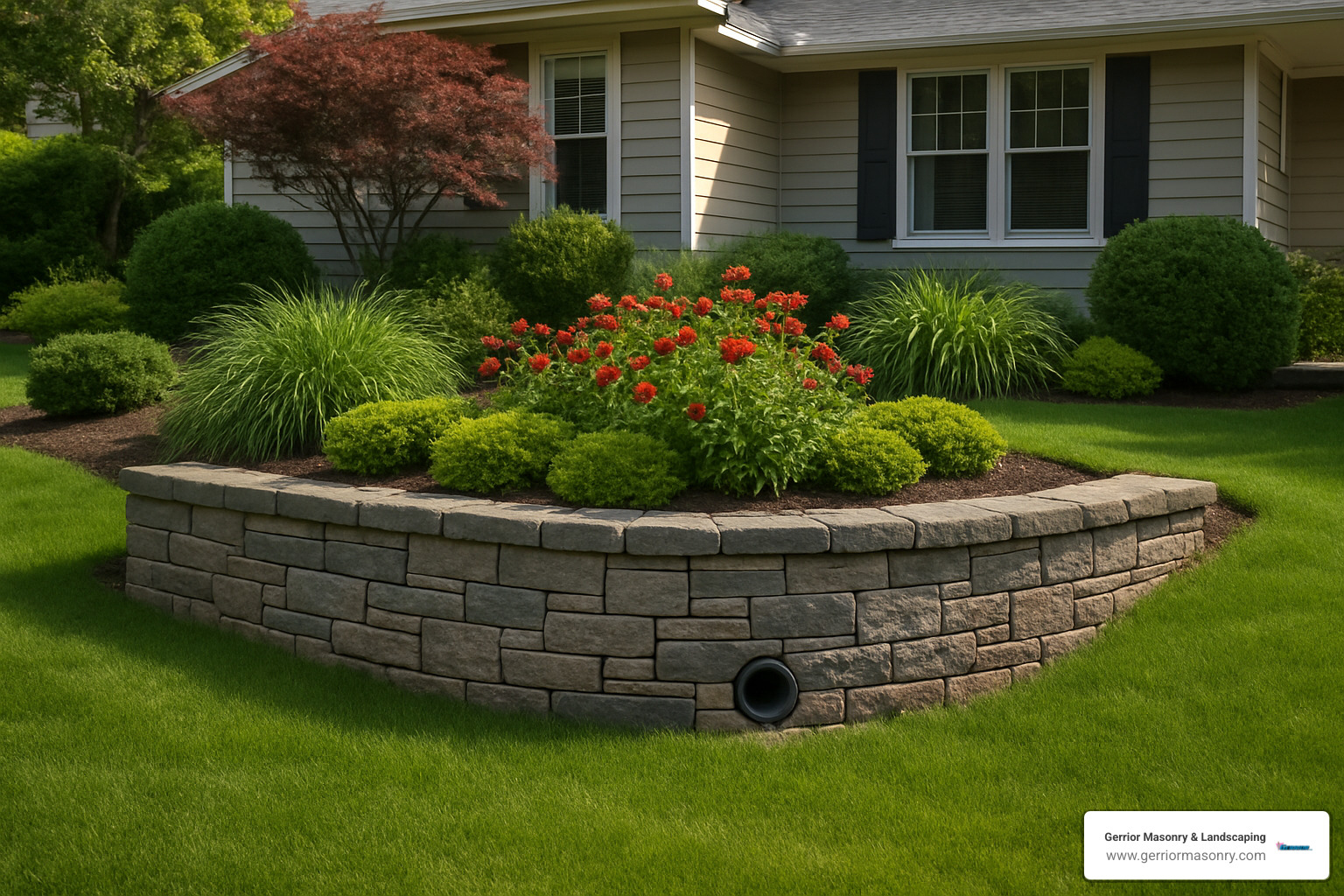
The numbers tell a compelling story: walls with proper drainage systems typically last 2-3 times longer than those without. Think about that—the difference between a wall that needs replacement in 10 years versus one that stands strong for 30 years or more.
For simple walls on naturally well-draining sites, handy homeowners might successfully tackle installation themselves. But most retaining wall projects in our New England soil conditions benefit tremendously from professional expertise. Complex slopes, walls over 3 feet tall, or sites with clay soil really demand the knowledge and equipment that comes with years of experience.
Want to learn more about how we can help with your retaining wall project? Visit our Landscape Retaining Wall page for additional details and inspiration.
Gerrior Masonry & Landscaping—serving Woburn, MA and all of Middlesex & Essex County—has 30+ years of expert hardscaping experience to keep your retaining walls standing tall and dry. When we build a wall, we’re not just creating something that looks beautiful today—we’re constructing a feature designed to improve your property for decades to come.
