On this page
- Bulkhead, cellar door, hatch: the same thing by different names
- Types of bulkhead doors
- Steel, aluminum or polyethylene: how they compare
- Standard bulkhead door sizes and how to find yours
- Bilco and other brands
- Basement bulkhead door alternatives
- A note on emergency exits
- When to call a mason
- Common questions
Most basement bulkhead doors in Massachusetts are sloped steel doors that sit over a concrete or block stairwell on the outside of the house. Bilco is the best-known maker, which is why many people call any bulkhead a "Bilco door." Beyond painted steel, the main choices are rust-free polyethylene doors, aluminum cellar doors from some makers, and the old wooden doors that modern units replace.
Which bulkhead door suits your house depends less on the brand than on three things: the size of the opening, the condition of the stairwell under the door, and how you use the entry. A good door fastened to a crumbling sill will still leak, so the stairwell matters as much as the door.
This guide explains the types of bulkhead doors for basements, how sizes work, and what to check before you choose. It is written by Gerrior Masonry & Landscape Construction Corp., a family-owned masonry company in Woburn, MA that replaces bulkhead doors and rebuilds bulkhead stairwells.
Bulkhead, cellar door, hatch: the same thing by different names
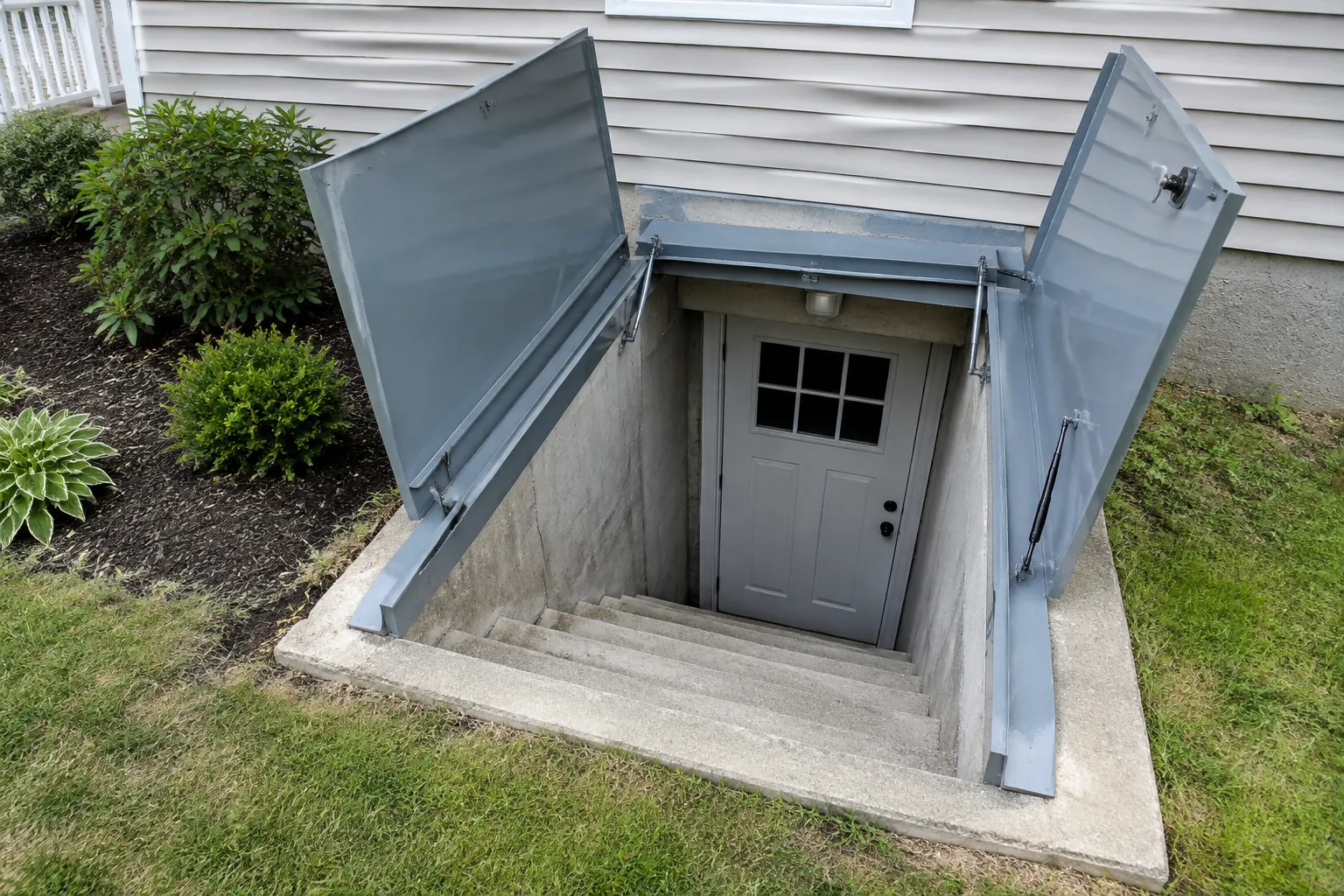
In New England, "bulkhead" means the angled outside door and the stairway down into the basement. Elsewhere you will hear cellar door, storm cellar door, basement hatch, hatchway or basement entry. Manufacturers often sell the door, the precast concrete stairwell and the stair parts together as a "basement entry system." They all describe the same kind of outside basement access.
One term causes confusion: a waterfront bulkhead is a seawall along a shoreline. That is a different structure and not the work this guide covers.
Types of bulkhead doors
Sloped steel doors
Painted steel is the standard. Two door leaves open outward from the center, and a lift assist (springs or torsion rods on older doors, gas springs on many newer ones) takes some of the weight so the leaves are easier to raise. Bilco's own parts catalog lists its steel doors by size and by lift-assist type. Steel is strong and secure from the outside. Its weakness is rust, so it needs to be kept painted, especially near the bottom edge where water and road salt sit.
Rust-free polyethylene doors
Some makers offer doors made of molded plastic that will not rust. Bilco's sizing guide lists its polyethylene Ultra Series in one size (Size C) only, so it fits some openings and not others. These doors never need repainting, which appeals to owners who are tired of scraping and painting steel.
Aluminum cellar doors
Aluminum doors are made by some manufacturers and turn up under searches for aluminum cellar doors. Aluminum does not rust the way steel does and is lighter to lift. It is also a softer metal, so ask how the door is reinforced, how it locks, and whether parts are easy to get before you choose it.
Old wooden doors
Many older homes around Woburn still have wooden cellar doors, sometimes called slapper doors, that lie flat on a wood or masonry frame. They rot, let water in, rarely seal, and are easy to pry open. Replacing one usually means building or repairing a masonry curb or sill so a modern steel unit can be fastened to it.
Steel, aluminum or polyethylene: how they compare
- Security: steel is the strongest from the outside. All three lock from the inside with a slide bolt or similar latch, so check how the lock works on any door you consider.
- Upkeep: steel needs paint. Aluminum and polyethylene do not rust.
- Weight: aluminum and polyethylene are lighter. Steel doors rely on the lift assist, which wears out over time and can be replaced.
- Fit: steel comes in the widest range of standard sizes. Rust-free models may only come in one or two sizes.
- Parts: doors from a large maker are easier to keep running because hinges, lift parts and weatherstripping are sold separately.
Standard bulkhead door sizes and how to find yours
Bulkhead doors are sold in a handful of standard sizes. Bilco names its sizes with letters (B, C, O and SL), and its basement door sizing guide explains how to measure the stairwell opening, both inside and outside the concrete, and pick the size that falls between those measurements. Extensions can lengthen a door to fit a deeper opening.
If your opening does not match any standard size, that usually means it was built for an older door or the walls have moved. The fix is then masonry: adjusting or rebuilding the curb so a standard door sits square and seals.
Bilco and other brands
Bilco is one of the partner brands shown on our site, along with Gordon, and we work with other suppliers too. The brand matters less than the installation. Any bulkhead door needs to be set on a sound, level sill, fastened to the foundation as the maker specifies, and sealed where the frame meets the concrete and where the header meets the house. Most bulkhead leaks start at those joints, not through the door itself. Our post on why bulkheads leak covers that in detail, and how a bulkhead is replaced walks through the installation.
Basement bulkhead door alternatives
People who search for alternatives to a bulkhead door usually want one of three things:
- A door that won't rust. That is a polyethylene or aluminum door, if one fits your opening.
- Easier access. A deeper or wider stairwell with a larger door, or a full rebuild of the entry, makes moving things in and out easier.
- No outside entry at all. Some owners close up a bulkhead they never use. That is a masonry job (filling the opening in the foundation and the stairwell), and if the basement has living space you should check the code rules on emergency exits first.
In practice, the real choice is usually between a new door on the existing stairwell and a whole new entry. The bulkhead replacement cost guide explains what decides the price of each.
A note on emergency exits
If a basement has a bedroom or other living space, the building code requires an emergency escape opening, and a bulkhead can be part of meeting that rule. Before you remove, close up or change a bulkhead in a finished basement, ask your town's building department what applies to your house.
When to call a mason
A new door is the easy part. Call a mason when:
- The concrete sill under the door frame crumbles when you scrape it.
- The side walls of the stairwell are cracked, leaning or missing mortar.
- Water pools at the bottom of the stairs after rain.
- The door frame has twisted out of square, so the leaves rub or won't latch.
Those are signs the stairwell needs work, and a new door alone won't solve them. Our foundation and bulkhead repair page explains how we handle door replacements, stair repairs and full rebuilds. If the door itself is sound and only a hinge, spring or seal has failed, see bulkhead door replacement parts or bulkhead repair first.
One customer described a typical job on our site: "Gerrior replaced our bulkhead and the surrounding blocks and refinished the steps. They started and finished in a very timely manner. Extremely pleased with the quality of their work, and they left our property in excellent shape." (Bulkhead replacement customer, review on gerriormasonry.com)
Common questions
What is the best material for a bulkhead door?
Painted steel is the most common and the most secure, and it lasts when it is kept painted. Polyethylene and aluminum avoid rust but come in fewer sizes. The right one is the one that fits your opening properly and is set on a sound sill.
Are bulkhead doors standard sizes?
Yes. Most are made in a few standard sizes, and extensions lengthen them for deeper openings. Measure the opening as the maker's sizing guide describes, or have the opening measured when you get an estimate.
Is a Bilco door the same as a bulkhead?
Bilco is a brand. Bulkhead is the general New England name for an outside basement entry. Many people use the two words for the same thing.
Can I replace a wooden cellar door with a steel bulkhead?
Usually, yes. The masonry curb or sill often has to be built up or repaired first so the steel door can be fastened and sealed to it.
Not sure whether you need a new door or more than that? Gerrior Masonry & Landscape Construction Corp. has been family-owned in Woburn for over 30 years, is fully insured, and guarantees its work. We will look at the door, the sill, the walls and the drainage on one visit. Call (781) 933-4157 or request a free estimate.

A family-owned masonry and hardscape company at 245 Salem St, Woburn, MA, in business for over 30 years. See our bulkhead work.