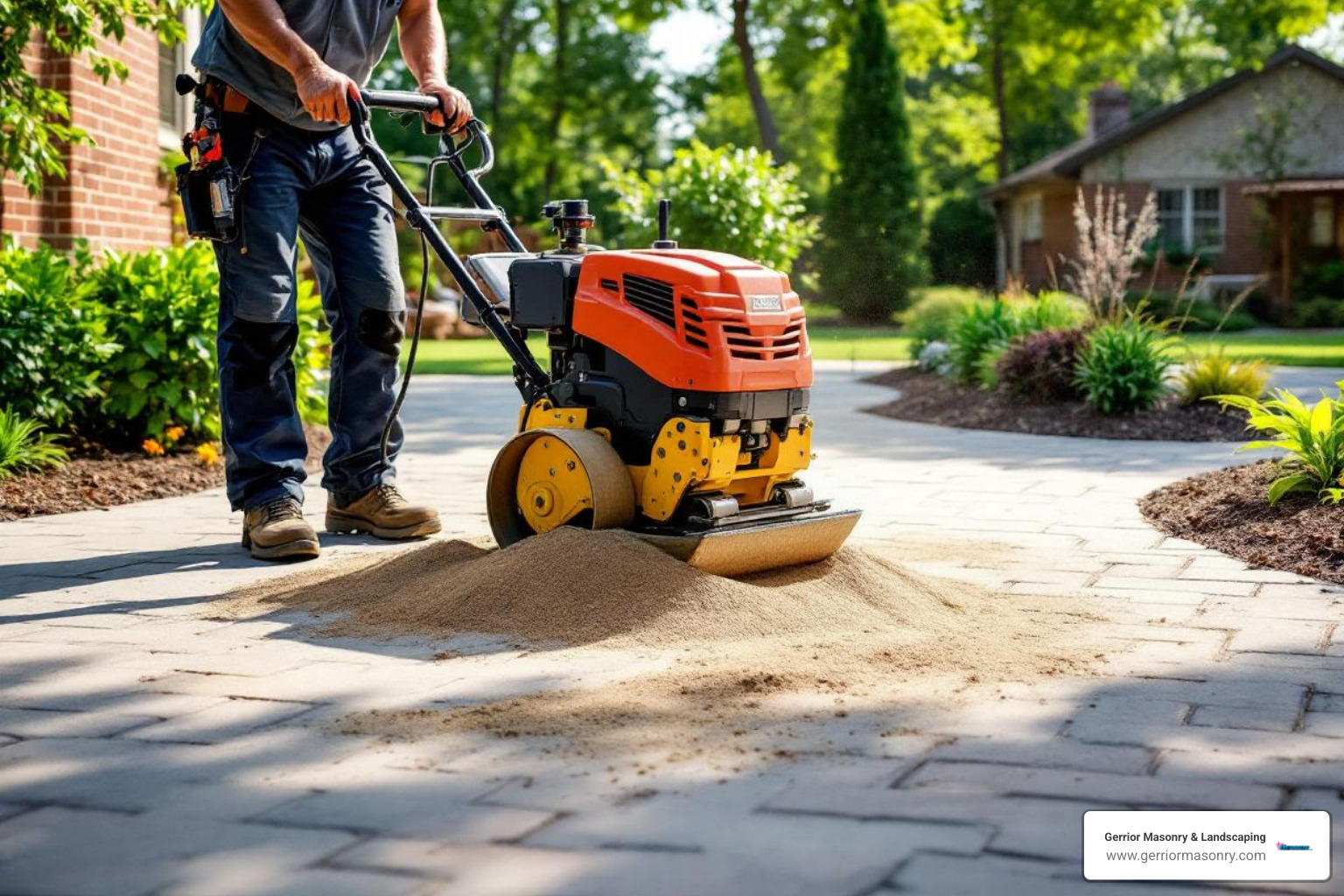
Why Outdoor Stone Pathways Transform Your Landscape
Outdoor stone pathway ideas offer a beautiful way to connect different areas of your property, adding timeless charm and value. A well-designed stone path can create a welcoming entrance, guide visitors through a garden, or reduce lawn wear, dramatically improving your outdoor space.
Quick Stone Pathway Options:
Flagstone Paths – Irregular, natural shapes for a rustic look
Bluestone Walkways – Smooth, neat surfaces in blue-gray tones
Slate Pathways – Thin, layered stones with smooth surfaces
Gravel & Stone Combinations – Cost-effective with excellent drainage
Sandstone Routes – Warm colors and slip-resistant texture
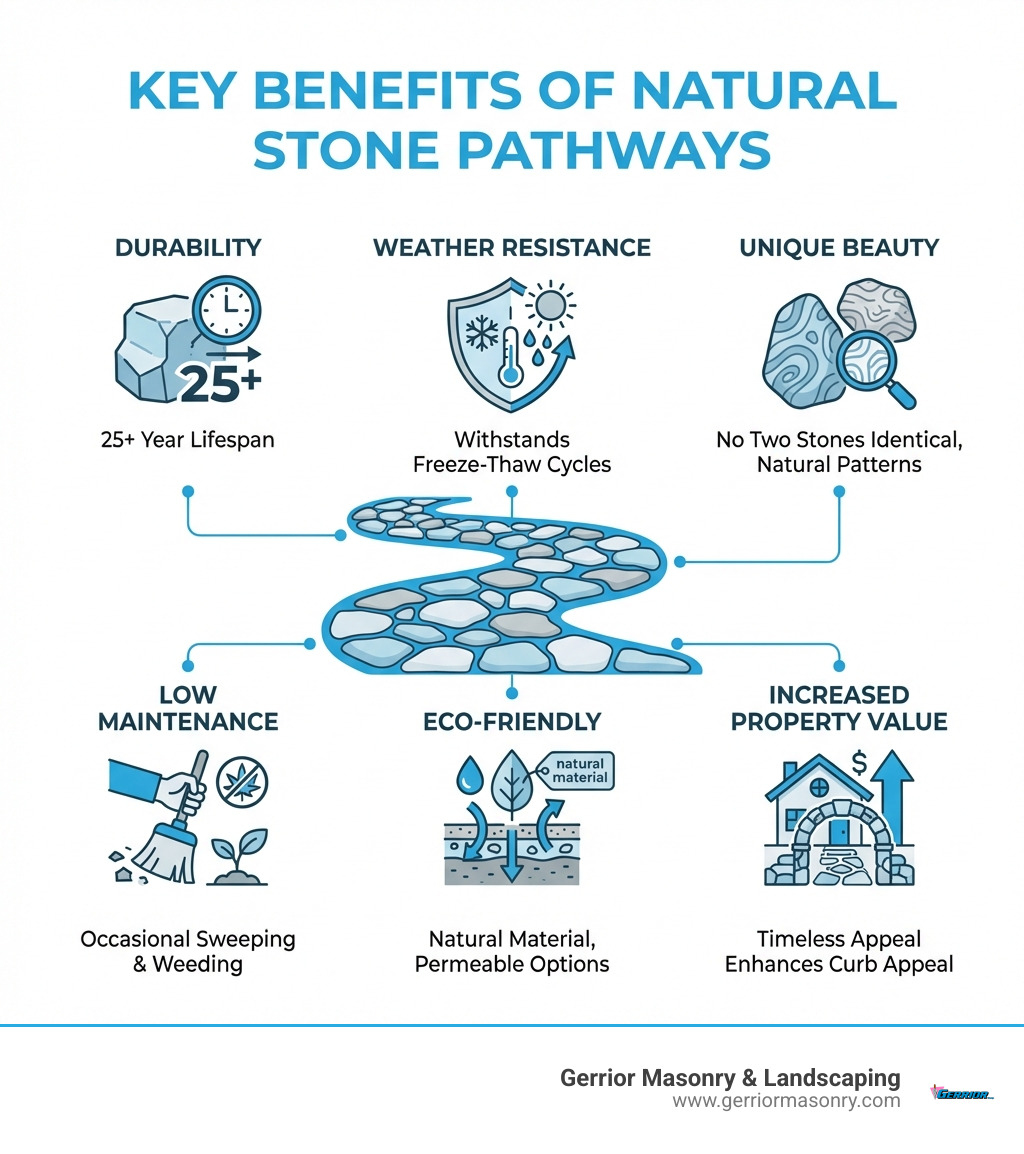
Beyond aesthetics, natural stone walkways have a lifespan of 25+ years, making them a smart long-term investment. They are also incredibly versatile and perform exceptionally well in harsh New England winters when properly installed.
For over 34 years, our team at Gerrior Masonry & Landscape Construction has helped Massachusetts homeowners with expertly designed outdoor stone pathways. We treat each project as both an artistic and functional endeavor, ensuring your walkway is beautiful, safe, and durable for decades to come.
A Curated List of Outdoor Stone Pathway Ideas
Creating the perfect outdoor stone pathway is about choosing the right materials and design to complement your home and landscape. Let’s explore some of the best outdoor stone pathway ideas our team has brought to life for homeowners across Middlesex and Essex County, Massachusetts.
Choosing Your Material: The Best Stones for Walkways
The foundation of any great pathway is the right natural stone. Each type offers unique characteristics in durability, color, and texture.
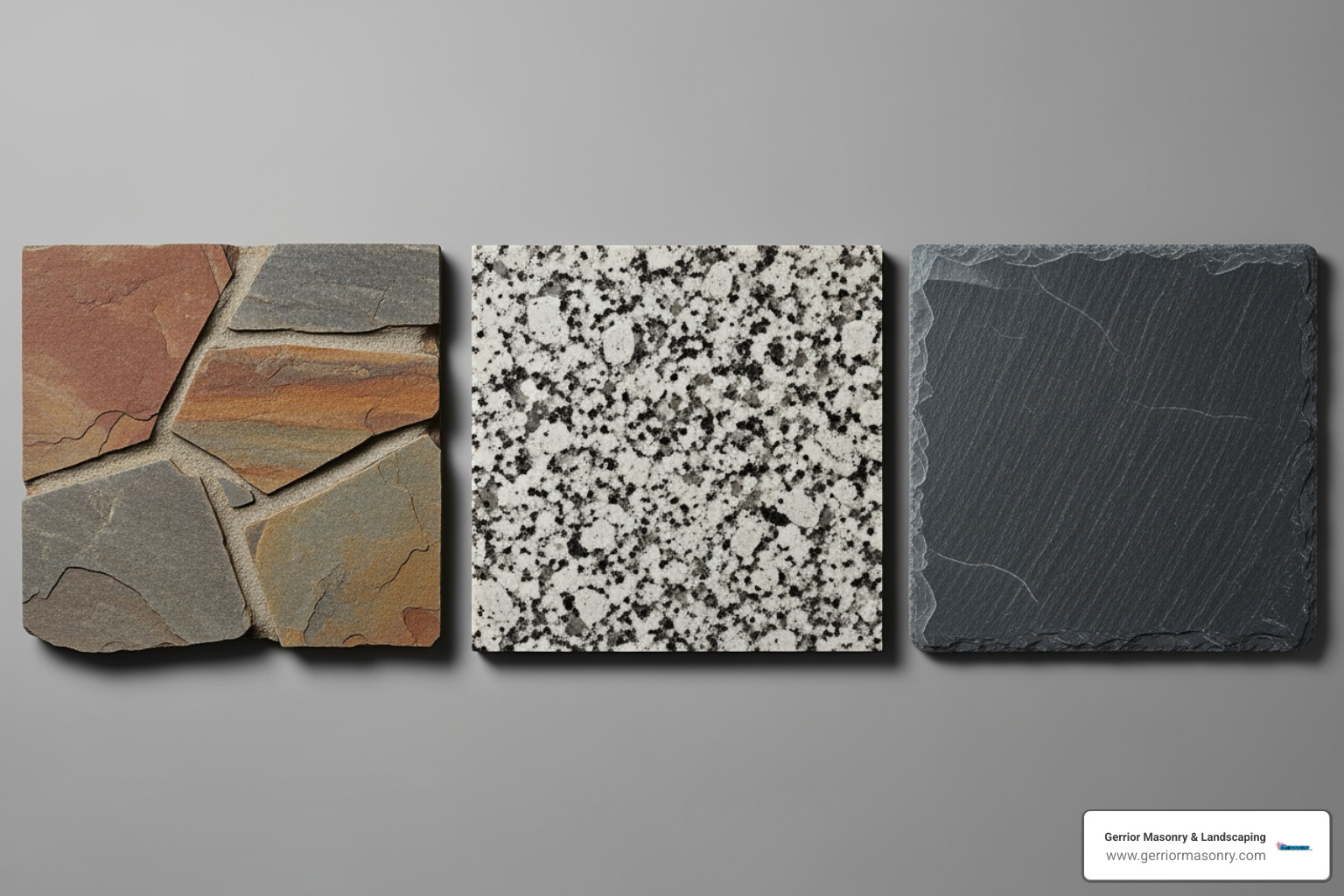
Flagstone: A perennial favorite, flagstone is known for its large, flat, and distinctly irregular shapes, which create a natural, rustic look that integrates beautifully into any landscape. It is available in a rich spectrum of earth-toned colors, including reds, blues, and browns, allowing for significant design flexibility. Its naturally textured, slip-resistant surface makes it an exceptionally safe and durable choice for walkways, especially in climates with frequent rain or frost.
Bluestone: A specific type of flagstone, bluestone is highly prized for its classic and elegant blue-gray hues that can develop a beautiful, weathered patina over time. Its exceptional strength and dense composition make it incredibly durable and long-lasting. While its surface can be smooth for a refined look, we often recommend a thermal or natural cleft finish to enhance slip resistance, making it a versatile option for both formal entryways and relaxed garden paths.
Granite: For ultimate ruggedness and longevity, granite is an unparalleled choice. As one of the hardest natural stones available, this dense igneous rock is exceptionally resistant to scratching, staining, and general wear, making it perfect for high-traffic areas. Its remarkable ability to withstand extreme weather, including the demanding freeze-thaw cycles of Massachusetts winters, ensures your pathway remains structurally sound and beautiful for decades with very little upkeep.
Slate: Slate provides a uniquely sophisticated and modern look with its thin, layered structure and characteristically smooth surface. It comes in a dramatic palette of dark colors, including deep grays, greens, and purples, which can make a bold design statement. For walkway applications where safety is paramount, it is essential to choose a natural cleft or honed finish to provide better traction and slip resistance, combining elegance with practicality.
Sandstone: This sedimentary rock offers a warm and inviting color palette of beige, yellow, red, and brown tones, making it ideal for creating a welcoming and comfortable atmosphere. Sandstone is remarkably long-lasting and features a naturally coarse, low-slip surface, which makes it an excellent choice for family-friendly pathways or pool surrounds where safety is a primary concern. Its texture provides reliable grip even when wet.
Limestone: A versatile and popular sedimentary stone, limestone is available in a wide range of colors, from light creamy whites and beiges to darker, earthy tones. While it is softer than granite, it is still very durable and perfectly suitable for most residential pathway applications. It can be cut into uniform shapes for a formal look or used in more irregular forms, offering a smooth, neat finish that complements many architectural styles.
Our team can help you choose the ideal material that balances aesthetics with practical needs. For more definition, explore our ideas for stone walkway edging.
Popular Design Styles for Natural Stone Paths
Once you’ve chosen your stone, envision the style of your pathway.
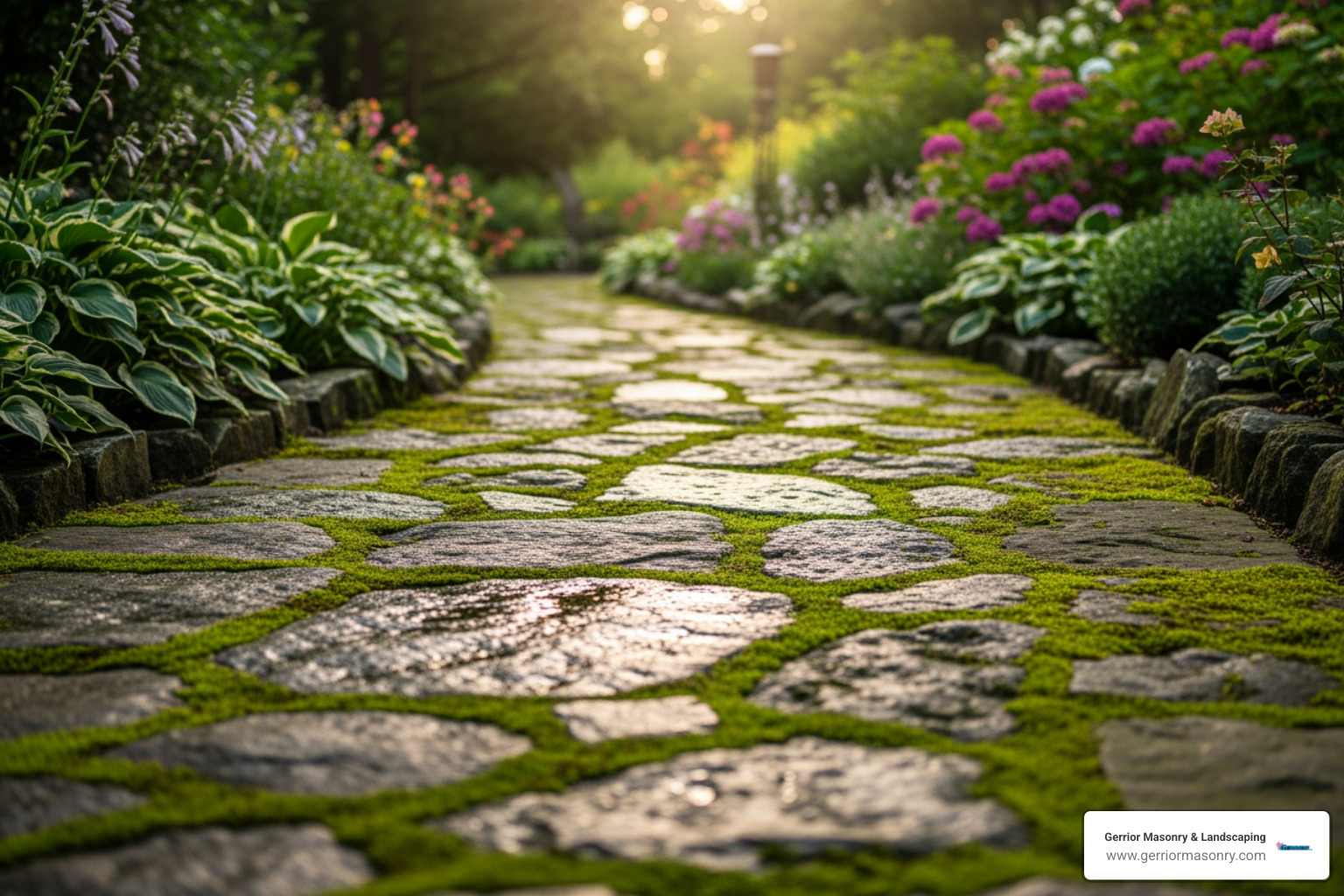
Rustic & Informal: This style uses irregular flagstones with grass or ground cover in the gaps for a soft, organic look. Meandering, curved paths are characteristic of this style, inviting a leisurely stroll.
Formal & Modern: For a structured landscape, this style uses cut stone in geometric patterns or straight lines. The precision creates a polished, neat look that can frame flower beds with sophistication.
Unique & Creative: Don’t be afraid to think outside the box. Consider mosaic patterns with smaller pebbles, mixing materials like stone and brick, or using reclaimed granite cobblestones for historical charm.
We take pride in crafting pathways that match your vision. To see some of our completed projects, we invite you to view our walkway projects.
Creative Layouts: Stepping Stones, Gravel, and Path Shapes
How you lay out your pathway materials can dramatically impact its feel and function.
Stepping Stone Paths: These are charming and naturalistic. Individual stones are placed to accommodate a natural stride, allowing grass or ground cover to grow between them. They can be sunken into the lawn for a subtle look or arranged in a grid to define a small sitting area.
Gravel and Stone Combinations: Combining gravel with larger stones is practical, attractive, and budget-friendly. Gravel provides excellent drainage and, with a landscape fabric underlayment, helps prevent weeds.
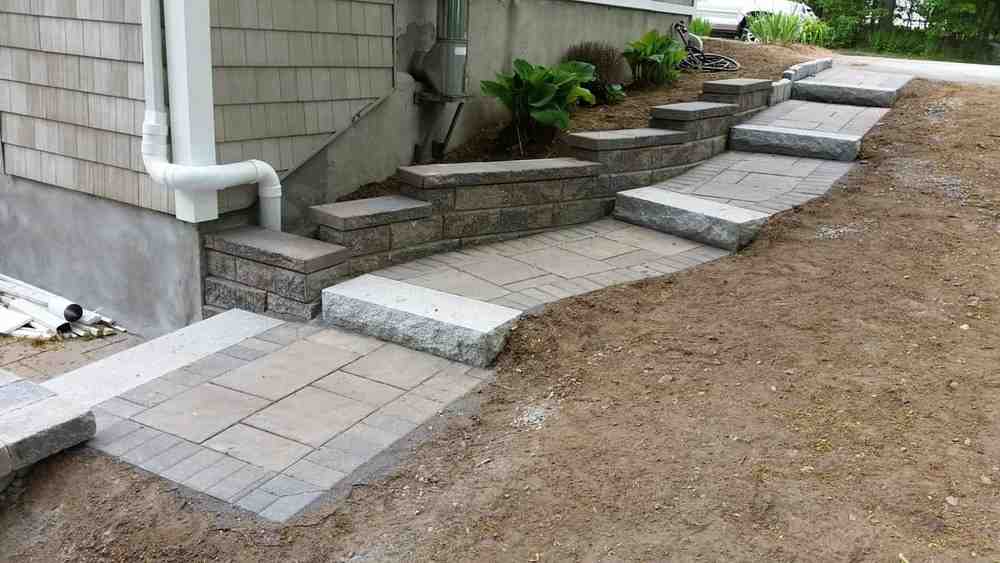
Curved vs. Straight Paths: The shape of your path dictates the journey. A gently winding path adds mystery and can make a small garden feel larger. A straight path offers a sense of order and leads the eye to a focal point, like a front door. Sometimes, a path needs to integrate with brick stairs to handle changes in elevation.
Finishing Touches: Lighting and Hardscape Integration
Thoughtful additions like lighting and integration with other hardscaping can lift your entire outdoor space.
Pathway Lighting: Lighting is crucial for safety and ambiance. Options include easy-to-install solar lights, customizable low-voltage fixtures, or sleek recessed LEDs integrated into the stone or edging. Proper lighting prevents trips and creates a warm, inviting atmosphere.
Cohesive Design: Your stone pathway should connect to other features. Using the same stone for your patio and pathway creates a seamless transition. Pathways can also interact beautifully with retaining walls on sloped properties. Our landscape design and installation services ensure all elements work together harmoniously.
Low-Growing Plants for Pathway Joints: To soften the edges, consider planting low-growing ground covers in the joints between stones.
Irish Moss creates a lush, green carpet-like effect.
Alyssum offers delicate white or purple flowers.
Dwarf Mondo Grass adds a fine, tough texture.
Installation, Care, and Budgeting for Your Outdoor Stone Pathway
Bringing your outdoor stone pathway ideas to life requires careful planning, proper installation, and a commitment to maintenance. At Gerrior Masonry & Landscape Construction, we ensure every project is built to last.
Essential Installation Tips for a Durable Outdoor Stone Pathway
The longevity of your stone pathway depends heavily on a proper base. While a simple stepping stone path can be a DIY project, professional installation is recommended for more complex or sloped designs to ensure durability.
Professional Installation Process: Our team follows a meticulous process for superior results.
Planning and Layout: We first outline the path’s route to ensure it meets your functional and aesthetic goals.
Base Preparation: This is the most critical step. We excavate the area (typically 9-10 inches deep), compact the soil, and lay a gravel base over filter fabric. This provides a stable foundation and crucial drainage to prevent frost heave.
Setting Bed and Stone Laying: A layer of sand is spread and leveled, creating a bed to set the stones. Each stone is carefully placed and tapped to ensure a level surface.
Joint Filling: The gaps between stones are filled with sand or polymeric sand. This locks the stones in place, improves stability, and helps prevent weed growth.
Edging: For some designs, edging is installed to maintain the path’s shape.
Maintenance, Durability, and Cost of Outdoor Stone Pathway Ideas
Investing in a natural stone pathway pays dividends in beauty and functionality for years.
Why Choose Natural Stone?
Longevity: Natural stone walkways can last 25+ years, far outliving materials like concrete or asphalt.
Timeless Beauty: Unlike manufactured pavers, each natural stone is unique, adding unparalleled character to your landscape.
Durability: Stones like granite and sandstone are extremely weather-resistant and ideal for Massachusetts’ freeze-thaw cycles.
Low Maintenance: With proper installation, stone paths require only occasional sweeping and weeding.
Eco-Friendly: Stone is a natural material, and permeable designs (using gravel or spaced stones) reduce water runoff.
Long-Term Maintenance: To keep your path looking its best, sweep it regularly to remove debris. Promptly remove any weeds that appear. Over time, if a stone settles, it can be easily re-leveled by adding more sand underneath.
Cost Factors: The cost of an outdoor stone pathway varies based on several factors, including the type of stone, the path’s size and complexity, and labor costs. Dry-laid paths are generally less expensive than mortared ones.
Based on average internet data, costs can range from $15 to over $60 per square foot. Please note that these are average costs and not actual quotes for Gerrior Masonry & Landscape Construction services. We provide personalized quotes based on your specific project.
If you’re ready to transform your outdoor space with a stunning stone pathway, our team at Gerrior Masonry & Landscape Construction is here to help. We proudly serve homeowners across Middlesex and Essex County, Massachusetts. Contact us for a custom walkway consultation today, and let’s pave the way to your dream landscape!
Gerrior Masonry & Landscape Construction is based in Woburn, MA, and proudly serves Middlesex and Essex County, Massachusetts.
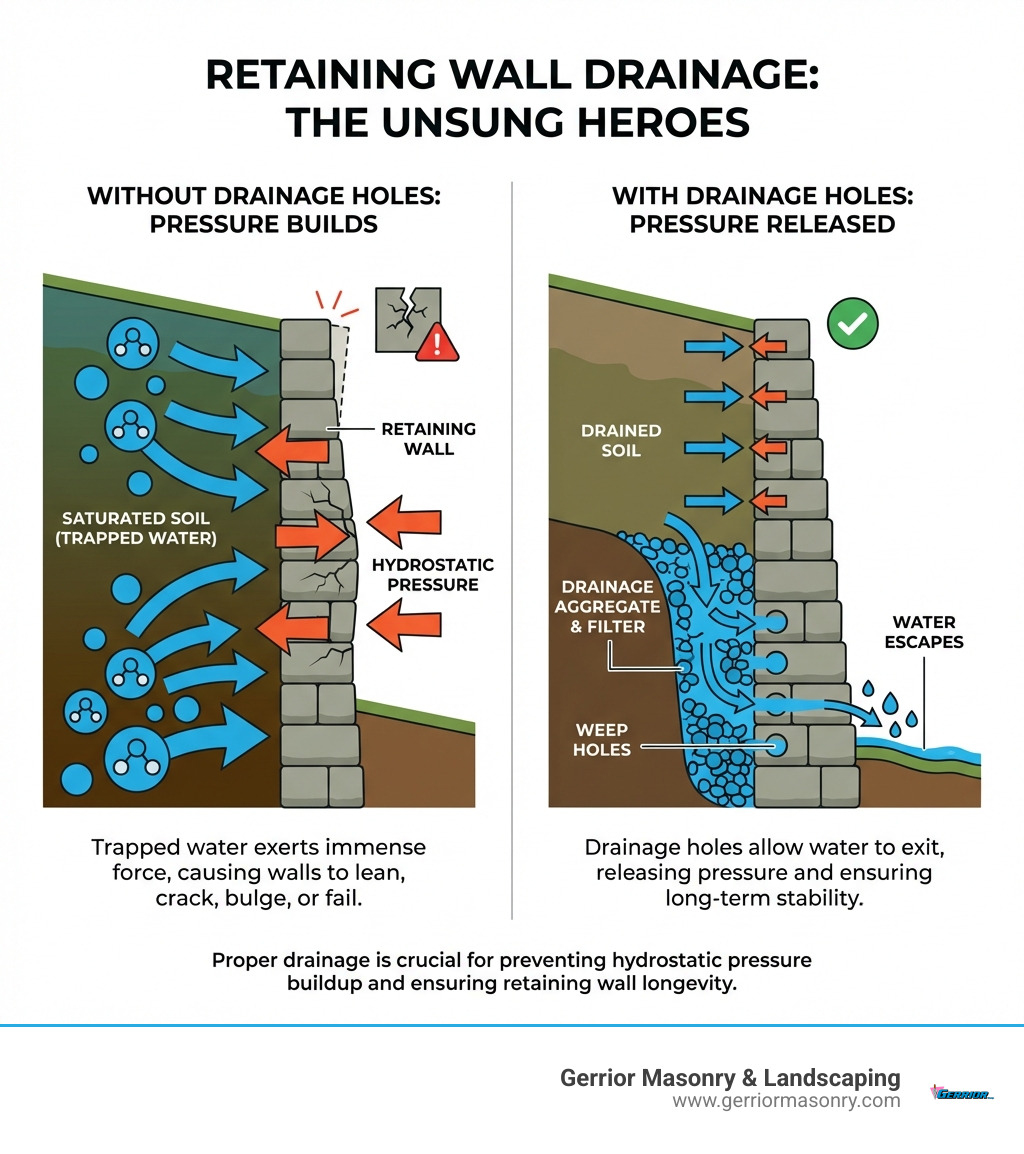
Drainage holes in retaining walls are small openings that allow water to escape from behind the wall, preventing dangerous pressure buildup that can cause structural failure. These outlets—also called weep holes—are critical for the longevity and stability of any retaining wall.
Quick Answer: What You Need to Know About Drainage Holes
Purpose: Release water trapped behind retaining walls to prevent hydrostatic pressure
Size: Typically 2-4 inches in diameter
Spacing: Usually placed every 3-7 feet horizontally along the wall
Location: Positioned near the bottom of the wall, sloped slightly downward
Function: Work together with drainage aggregate and perforated pipes to manage water
Why Critical: Without proper drainage, water pressure can cause walls to lean, crack, bulge, or completely fail
You’ve likely seen these small holes near the ground on concrete or masonry walls, sometimes with water trickling out. While most people don’t give them a second thought, these simple openings are doing the heavy lifting to keep the wall standing.
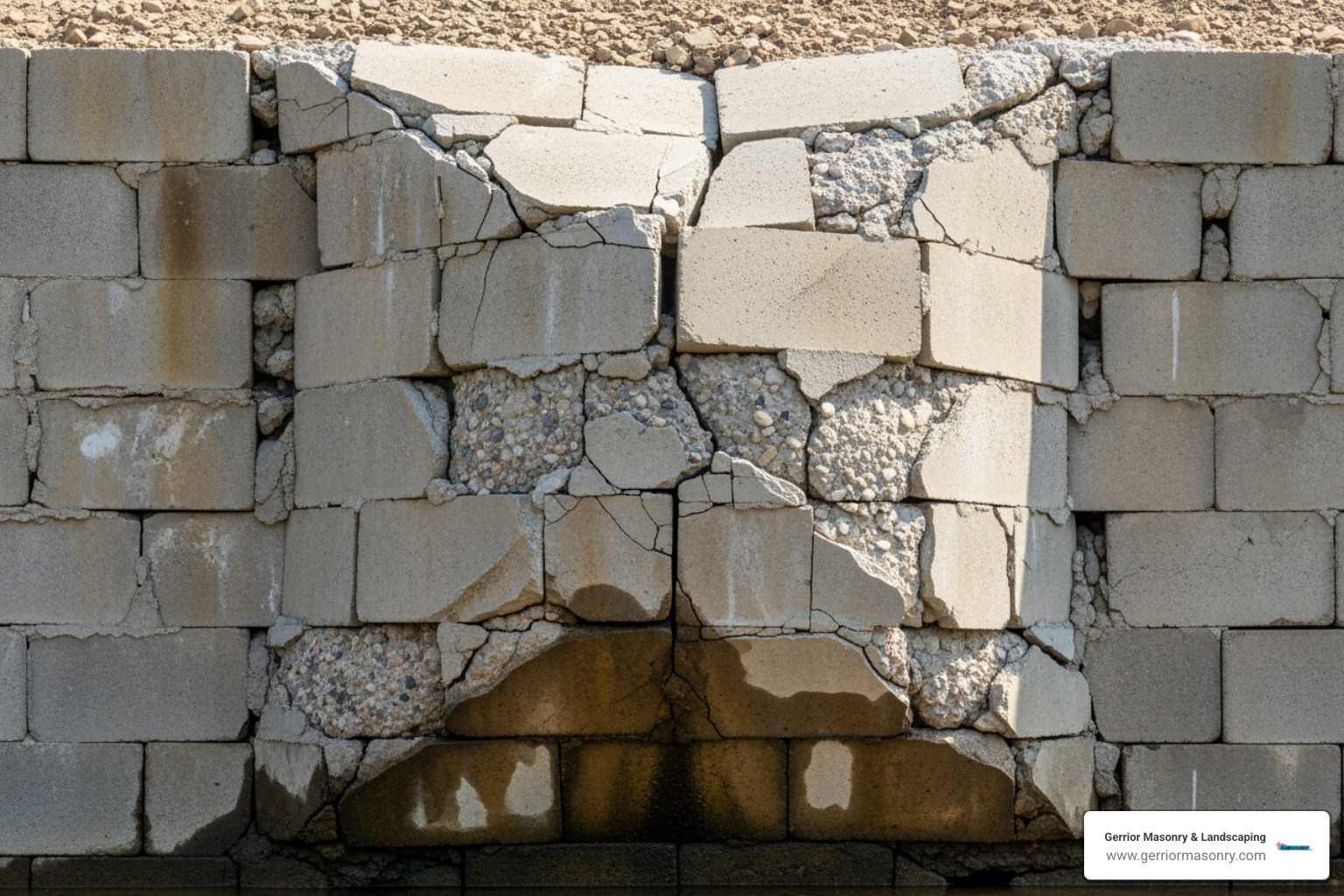
After heavy rain, soil absorbs water. With nowhere to go, this trapped water creates immense hydrostatic pressure, pushing against the wall. Over time, this force can cause a wall to lean, bulge, crack, or fail. In Massachusetts, this danger is amplified by freeze-thaw cycles, as freezing water expands and breaks down masonry.
I’m Joe Gerrior, owner of Gerrior Masonry & Landscape Construction Corp. With over 34 years of experience in Massachusetts, I’ve seen that proper drainage holes in retaining walls are the key to longevity. The importance of proper drainage in hardscaping and masonry projects cannot be overstated; it’s the foundation of a successful installation.
The Complete Guide to Drainage Holes in Retaining Walls
Why Water Is a Retaining Wall’s Worst Enemy
Water, while essential for life, can be a retaining wall’s most formidable foe. When not properly managed, water can exert immense pressure and cause significant damage, compromising the structural integrity and longevity of the wall. Understanding how water impacts retaining walls is the first step toward effective drainage solutions.
Hydrostatic Pressure: The Silent Destroyer
The main reason for drainage is to combat hydrostatic pressure. When soil behind a wall gets saturated, it becomes a heavy, fluid-like mass that exerts immense force. According to civil engineering principles, this pressure can cause a wall to lean, bulge, crack, or even collapse entirely. For a technical overview, you can read more about retaining wall drainage principles. Relieving this hidden force is key to a wall’s stability, which is why understanding more on pore water pressure and drainage is so important.
The Menace of Freeze-Thaw Cycles
In Massachusetts, freeze-thaw cycles pose an even greater threat. Trapped water expands when it freezes, creating incredible stress that can crack blocks, shift foundations, and weaken the entire wall over time. This damage often goes unnoticed until it’s severe. Proper drainage is the best defense, removing excess water before it can freeze.
Erosion and Soil Shifting: Weakening the Foundation
Poor drainage also causes soil erosion behind the wall. As water seeps through, it washes away fine soil particles, weakening the backfill. This can lead to soil washout, uneven settling, and a loss of the support the wall needs to stand. A complete drainage system, including drainage holes in retaining walls, prevents this by keeping the soil stable.
How Weep Holes and Drainage Systems Work Together
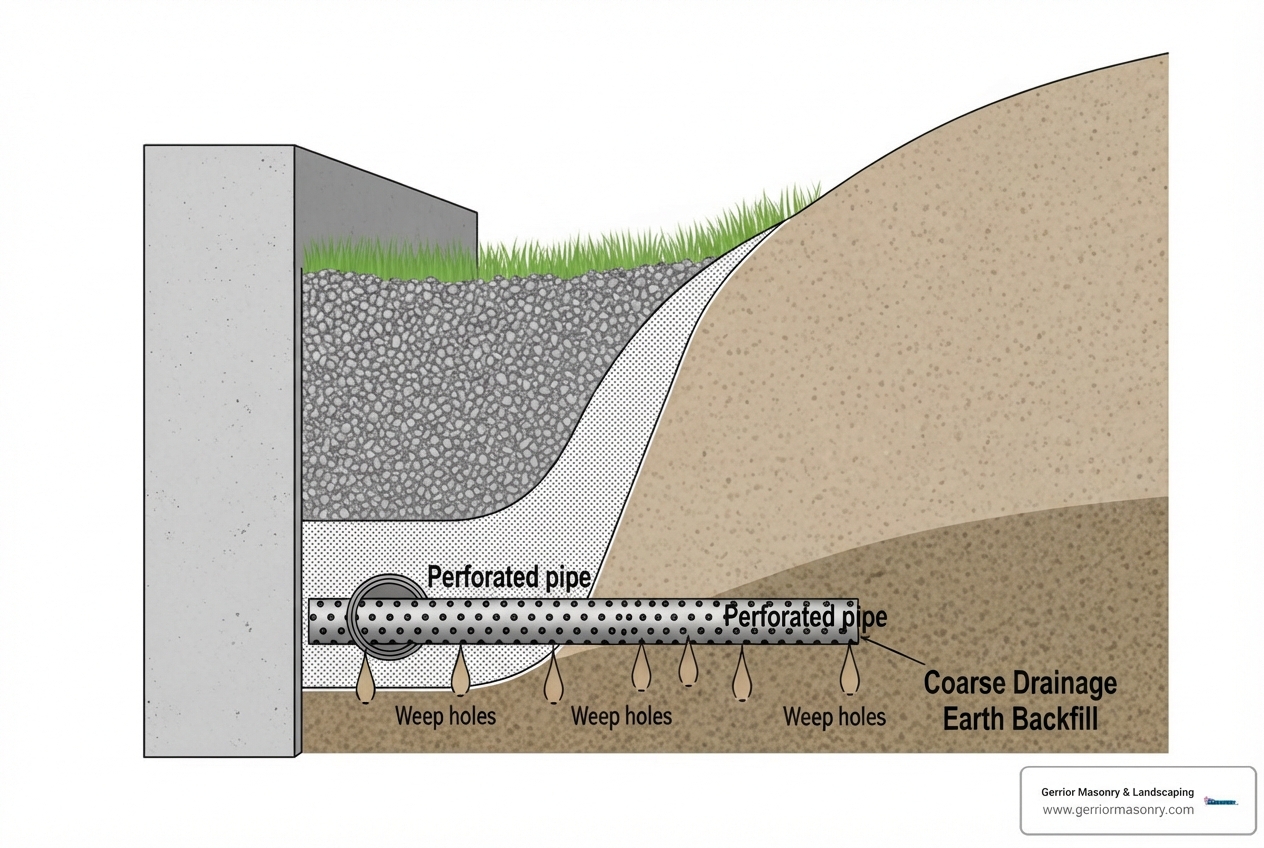
Weep holes are rarely a standalone solution. They are part of a larger, integrated drainage system designed to effectively manage water behind a retaining wall. Think of them as the final exit points for water that has been collected and channeled by other components.
The Components of an Effective Drainage System
An effective retaining wall drainage system typically includes several key elements working in harmony:
Weep Holes: These are the outlets that allow water to escape, acting as pressure relief valves.
Drainage Aggregate: A layer of clean gravel or crushed stone (at least one foot thick) is placed behind the wall. It creates a permeable zone for water to flow down freely.
Geotextile Fabric: This permeable fabric separates the aggregate from the soil, preventing fine particles from clogging the system.
Perforated Pipes (French Drains): A pipe at the base of the aggregate collects water and channels it away from the wall, typically with a 1-2% slope for positive flow.
Geocomposite Drainage Panels: These modern, prefabricated panels can be used instead of aggregate, combining a filter and drainage core into one product.
How They Work Together
In a complete system, water seeps into the soil behind the wall. The drainage aggregate collects this water, allowing it to flow down to the perforated pipe at the base. The pipe then carries the water horizontally, where it is safely discharged through the weep holes or into a larger storm drain system. This integrated approach is the most effective way to relieve hydrostatic pressure and protect the wall. Our Essential Guide: Installing Drain Pipes in Retaining Walls for Effective Water Management provides more detail on pipe installation.
Design and Installation of Drainage Holes in Retaining Walls
Proper design and meticulous installation are paramount for the effectiveness of drainage holes in retaining walls. The methods and specifications can vary depending on the wall material and site conditions.
Methods for Creating Weep Holes
Open Joint: Simply leaving a vertical gap between blocks or stones.
Tube Insert: Casting a short plastic pipe (2-4 inches) into a concrete or block wall during construction.
Drill Method: Drilling holes into an existing wall that lacks proper drainage, often as part of a repair.
Dimensions and Spacing Recommendations
Diameter: Typically 2-4 inches (50-100 mm).
Spacing: Horizontally spaced every 3-7 feet (1-2 meters). Higher walls or wetter soils may require additional rows.
Integrating with Other Drainage Components
A successful installation integrates all components. The drainage aggregate (min. 1-foot thick) must be protected by geotextile fabric. The perforated pipe at the base needs a 1-2% slope to drain properly to daylight or a storm sewer. Finally, managing surface water with swales at the top of the wall is crucial to prevent saturation from above. For any complex project, consulting with an experienced masonry contractor is the best course of action. Our team ensures these details are handled correctly from the retaining wall installation phase, right down to the base for retaining wall construction.
Recognizing Problems and Exploring Alternatives
Even with the best intentions, drainage systems can sometimes falter. Recognizing the signs of inadequate drainage is crucial for timely intervention and preventing major structural damage.
Signs of Inadequate Drainage
Keep an eye out for these tell-tale signs of poor drainage:
Water Staining (Efflorescence): White, powdery mineral deposits on the wall’s face.
Damp Spots: Areas of the wall that stay wet long after rain.
Soil Erosion: Soil washing away from the wall’s base.
Bulging or Leaning: Any visible deformation is a red flag for high pressure.
Cracks: Horizontal or vertical cracks indicate serious structural stress.
Algae or Moss Growth: Constant growth suggests persistent moisture.
Disadvantages of Traditional Weep Holes
While essential, traditional weep holes can have drawbacks. They can become clogged with debris, and some find their appearance (especially with water stains) unsightly. In heavy clay soils, they may be less effective without a robust drainage aggregate layer.
Alternative and Complementary Drainage Solutions
Besides weep holes, other solutions can supplement or replace them:
Pervious Backfill: Using highly permeable gravel for the entire backfill zone.
Blanket and Chimney Drains: Extensive vertical or horizontal drainage layers to intercept groundwater.
Geocomposite Drainage Systems: Efficient, prefabricated panels that channel water to a pipe.
Gabion Walls: These rock-filled wire cages are naturally free-draining, eliminating the need for weep holes.
Open-Jointed Wall Systems: Some modern block walls are designed to let water pass through the joints to an internal pipe system, offering a clean look.
Secure Your Landscape with Professional Drainage Solutions
The structural integrity and longevity of your retaining wall hinge on one critical factor: effective drainage. Drainage holes in retaining walls, often called weep holes, are not mere aesthetic features but crucial components in a comprehensive water management system. They work tirelessly, alongside drainage aggregate, geotextile fabric, and perforated pipes, to prevent the destructive forces of hydrostatic pressure, mitigate freeze-thaw damage, and reduce soil erosion.
Without proper drainage, even the most beautifully constructed retaining wall is vulnerable to leaning, bulging, cracking, and eventual failure. For property owners in Massachusetts, where seasonal weather can be particularly harsh, ignoring drainage is a recipe for expensive problems down the road.
At Gerrior Masonry & Landscaping, we understand that designing and installing a robust drainage system is as important as the wall itself. With over 30 years of experience in masonry and hardscaping, our skilled team, combined with direct owner oversight on every project, ensures that your retaining wall is not only aesthetically pleasing but also structurally sound and built to last. We specialize in creating durable and effective landscape solutions, from landscape retaining wall construction to complex drainage systems.
Don’t let water undermine your investment. Trust the experts to provide the right drainage solutions for your retaining wall needs. Gerrior Masonry & Landscape Construction is based in Woburn, MA, and services Middlesex and Essex County, Massachusetts. Contact us for your landscape retaining wall project and let us help you build a wall that stands the test of time, come rain or shine, or even snow!
Why Reading, MA Homeowners are Investing in Hardscaping
Hardscaping services Reading MA homeowners are searching for typically include:
Custom Patios – Outdoor entertaining and relaxation spaces
Paver Walkways – Defined pathways connecting outdoor areas
Retaining Walls – Slope management and erosion prevention
Fire Pits & Outdoor Kitchens – Improved outdoor living features
Paver Driveways – Durable, attractive entryways
Stone Steps & Stairways – Safe access and aesthetic appeal
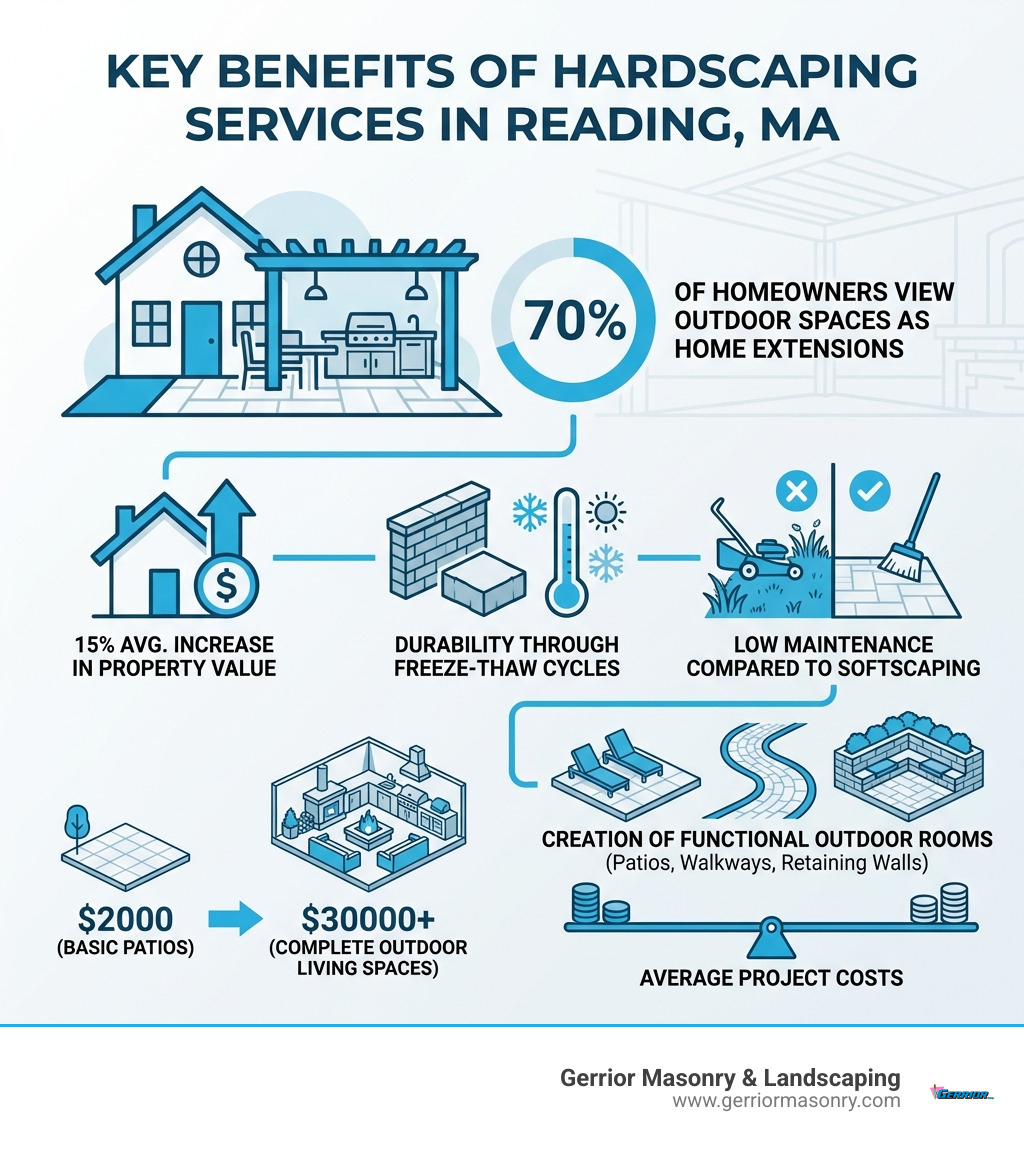
Homeowners in Reading, Massachusetts are changing their backyards. It’s part of a major trend—over 70% of homeowners now view their outdoor space as a functional extension of their home, according to recent studies. They’re adding patios for weekend barbecues, retaining walls to create usable yard space, and fire pits for cool New England evenings. These aren’t just luxury additions; they’re smart investments that can increase a home’s value by up to 15%.
The hardscaping market has grown substantially because homeowners in towns like Reading recognize that well-designed hardscaping delivers both beauty and function. It stands up to New England’s harsh winters and requires minimal maintenance compared to lawns and gardens, creating outdoor rooms that families actually use.
I’m Joe Gerrior, owner of Gerrior Masonry & Landscape Construction Corp. For over 34 years, my team and I have helped homeowners in Reading and throughout Massachusetts create stunning, functional outdoor spaces. We understand how to build hardscape features that withstand New England’s freeze-thaw cycles while enhancing your property’s value and usability.
The Ultimate Guide to Hardscaping Services in Reading, MA
What is Hardscaping? (And How is it Different from Landscaping?)
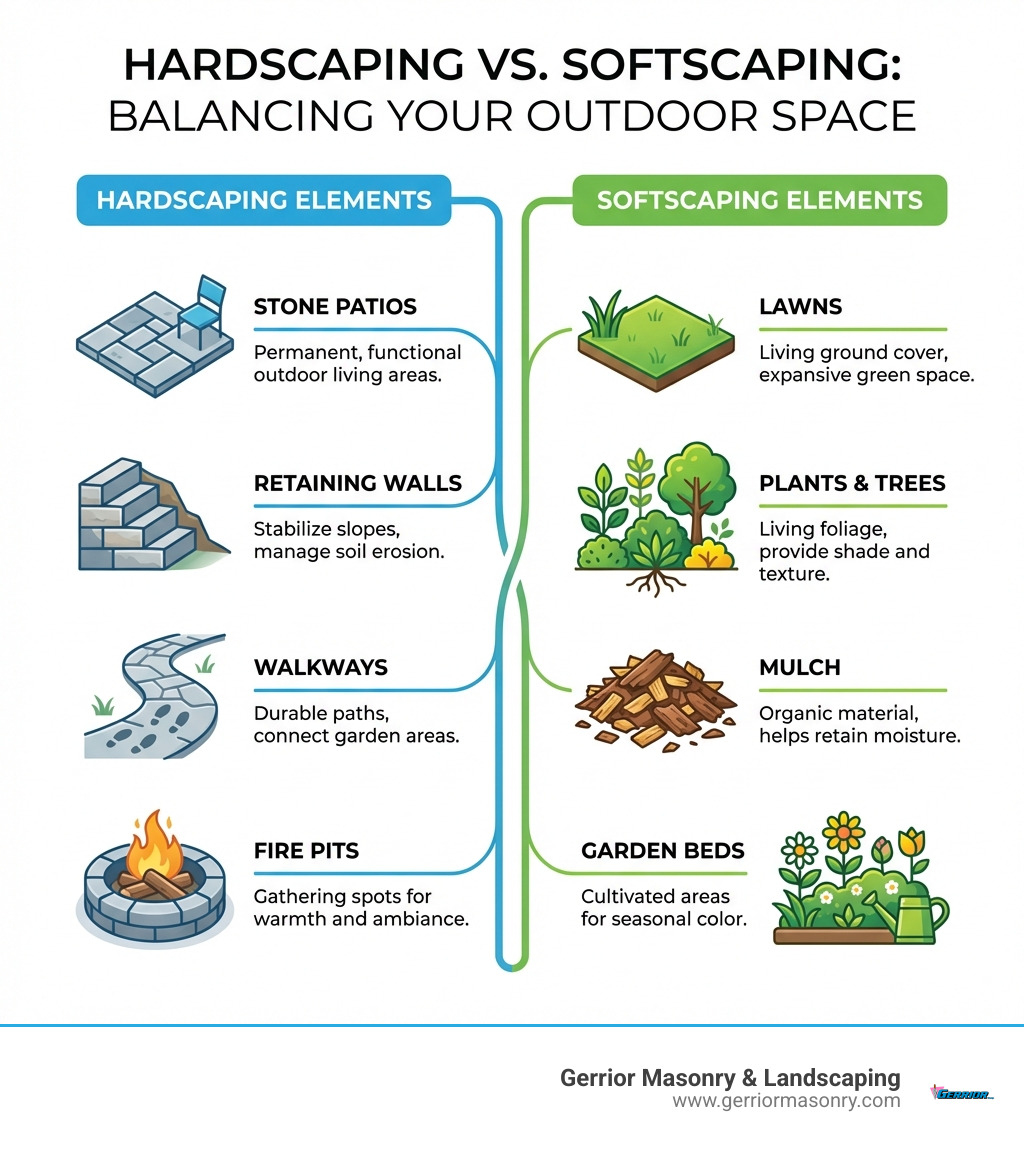
Hardscaping and landscaping are two sides of the same coin, working together to create a beautiful and functional outdoor space. The Hardscape vs Landscape distinction is simple: hardscaping refers to the non-living, structural elements, while landscaping (or softscaping) refers to the living, plant-based elements. Hardscaping provides the permanent backbone and foundation for your outdoor living area.
Here’s a quick breakdown:
Hardscaping (Man-Made, Structural Elements):
Patios and decks
Walkways and pathways
Retaining walls
Driveways
Outdoor kitchens and fire pits
Stone steps and stairways
Landscaping (Living, Soft Elements):
Lawns, trees, and shrubs
Flower beds and gardens
Mulch and soil
Our expertise lies in crafting robust, permanent hardscape features that improve your property’s aesthetic appeal, usability, and value. Learn more in our guide on What is Hardscaping? and our Hardscape and Landscape Design Guide.
Popular Hardscaping Services Reading MA Homeowners Love
Thoughtfully designed hardscape features can transform a simple backyard into a stunning extension of your home. Here are some of the most popular services we provide in Reading, MA:
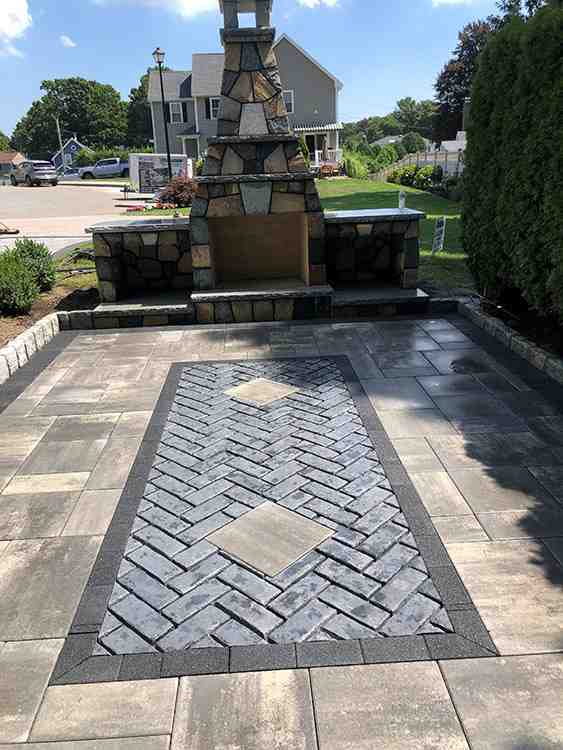
Custom Patios: Patios create inviting outdoor living areas for entertaining or relaxing. As a central hub for outdoor activity, they are one of the most sought-after hardscaping additions. See our Patio Design & Installation services.
Paver Walkways & Paths: Define the flow of your landscape and connect different outdoor features with stylish, durable walkways. They improve accessibility and add significant curb appeal. Explore the possibilities on our Paver Walkways Reading MA page.
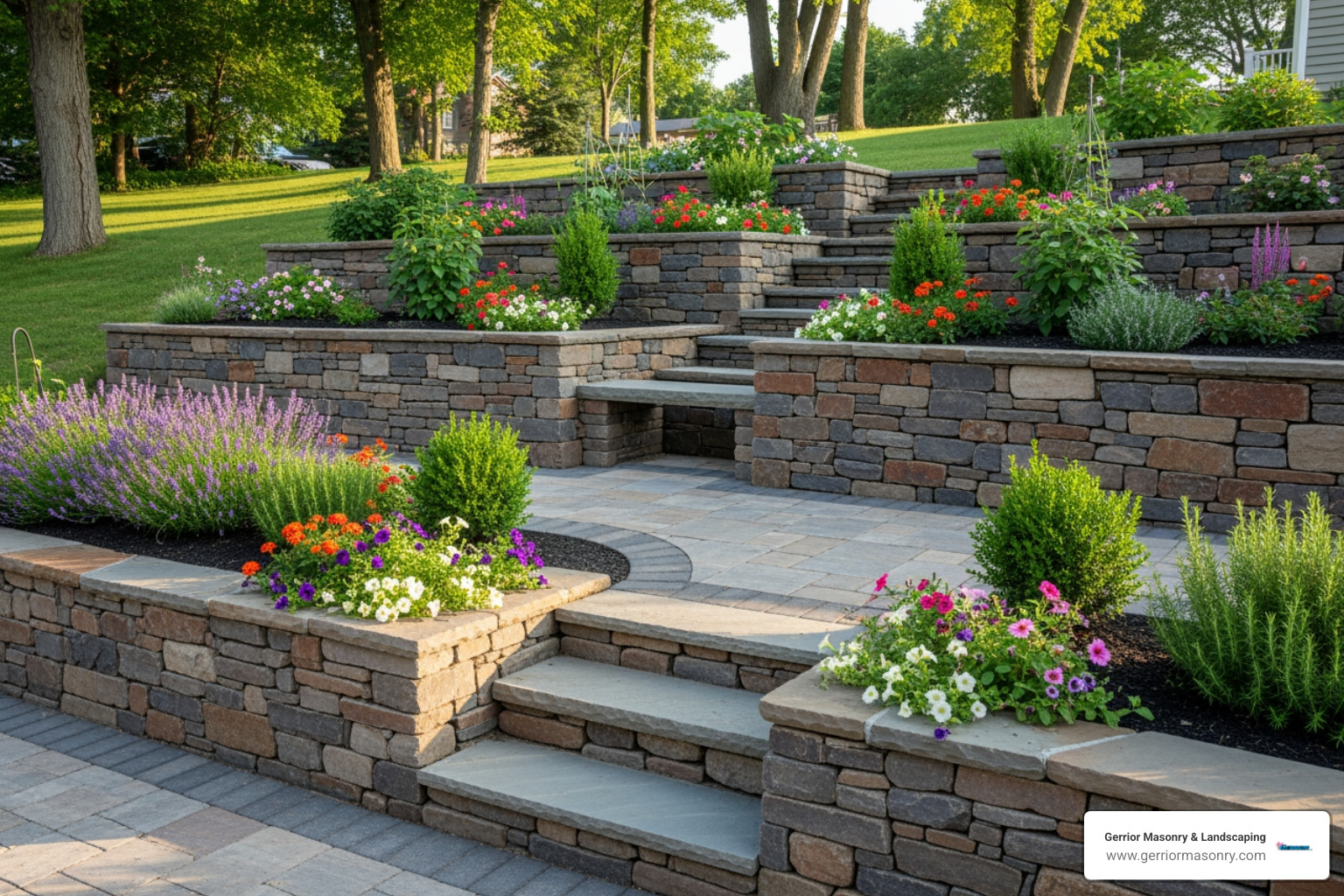
Retaining Walls: These essential structures manage slopes, prevent erosion, and create level, usable areas in your yard. They can also be beautiful design elements, adding definition and visual interest. Learn how we Build Retaining Walls that are both strong and stylish.
Outdoor Fire Pits: Add warmth, ambiance, and a natural gathering spot to your yard with a custom fire feature. A fire pit extends the usability of your outdoor space into the cooler months. Explore our Outdoor Fire Pits Reading MA options.
Outdoor Kitchens: For the culinary enthusiast, an outdoor kitchen is the ultimate hardscaping feature. We create fully customized installations for seamless outdoor cooking and entertaining. Check out our Outdoor Kitchen solutions.
Paver Driveways: Make a great first impression with a stone or paver driveway that is both durable and stylish. Paver driveways withstand New England weather and require less maintenance than asphalt. We specialize in Paver Driveway Installation.
Stone Steps & Stairways: Improve access and safety with neat, expertly installed stone steps. They provide a robust and attractive solution for sloped areas of your property. See our Walkways & Stairs services.
Built to Last: Hardscaping Materials for the Reading, MA Climate
In New England, durability is a necessity. The materials used for your hardscaping project must withstand our region’s freeze-thaw cycles. The key to longevity lies in quality materials and expert installation, especially regarding The Importance of Proper Drainage in Hardscaping and Masonry Projects.
Here are some of the resilient materials we use:
Pavers: Versatile and engineered to interlock, pavers are exceptionally durable against freeze-thaw cycles, making them ideal for Paver Patios and Paver Walkways.
Natural Stone: Offers timeless beauty and unique character.
Fieldstone: Provides a rustic, natural look for walls and garden borders.
Bluestone: A premium, dense choice for patios and walkways, known for its rich blue-gray hues.
Granite: One of the hardest natural stones, granite is ideal for high-traffic areas like steps and offers superior longevity.
Brick: A classic, durable, and non-slip choice that complements many New England homes, perfect for Brick Paver Installation.
Concrete Blocks: A robust and cost-effective solution for Retaining Walls, available in many styles that mimic natural stone.
The Hardscaping Process: From Consultation to Completion
We believe in a smooth, transparent process to bring your vision to life.
Initial Consultation: We visit your Reading property to discuss your ideas, assess the site, and understand your goals.
Hardscape Design: Our designers craft a custom plan that incorporates your preferences, our expertise, and the practicalities of your property.
Site Preparation: We mark out the project area and protect any existing landscaping you wish to keep.
Excavation: We carefully excavate the area to the correct depth, creating a solid foundation for the project. Learn more about our Excavation Services.
Base Installation: We install and compact a robust base layer of crushed stone to provide stability and proper drainage.
Laying Materials: Our skilled masons expertly lay the chosen materials with meticulous attention to detail.
Finishing Touches: We install edging, apply jointing sand, and clean the new surfaces to complete the look.
Final Walk-through: We conduct a thorough walk-through with you to ensure every detail meets your expectations and our high standards.
Understanding the Costs of Hardscaping Services in Reading, MA
A common question is, “How much will my project cost?” The cost of Hardscaping services Reading MA varies based on project size, materials, design complexity, and site conditions.
Disclaimer: Please note that the costs provided below are average estimates based on internet data and general industry trends. These are not actual costs for Gerrior Masonry & Landscape Construction services. For a precise quote custom to your specific project and property, we encourage you to contact us for a personalized estimate.
Hardscaping Feature
Average Cost Range (Internet Data)
Key Factors Influencing Cost
Patios
$2,000 to over $30,000
Size, material (pavers, stone, brick), design complexity.
While the initial investment can be significant, hardscaping is an investment in your home’s value and your family’s enjoyment. For more information, check out our insights into Landscaping Design.
How to Choose the Right Hardscaping Contractor
Choosing the right contractor is the most critical decision for your project. Here are key factors to consider:
Local Experience: Look for contractors with a proven track record in Reading, MA. They will understand our local climate, soil, and building codes.
Portfolio & References: Review their past projects to see if their work aligns with your vision. Ask for references from satisfied clients.
Insurance & Licensing: This is non-negotiable. Ensure any contractor is fully licensed and insured to protect you and your property.
Detailed Estimates: A reputable contractor provides a comprehensive, written estimate outlining all costs and the full scope of work.
Communication: Good communication is key. Choose a contractor who is responsive, answers your questions, and keeps you informed.
Understanding of Local Building Codes: An experienced local contractor will be knowledgeable about any permits required for your project.
Transform Your Reading, MA Property with Expert Hardscaping
We’ve explored how Hardscaping services Reading MA homeowners seek can dramatically improve their properties, adding significant value and year-round enjoyment. It’s about creating a beautiful, durable, and functional extension of your home that stands up to the New England climate.
Whether you dream of a custom patio, neat paver walkways, or a cozy outdoor fire pit, the right hardscaping can make it a reality. We blend creative vision with technical precision, using resilient materials built to last.
At Gerrior Masonry & Landscape Construction, we bring over 34 years of experience to every project. Our commitment to quality craftsmanship is backed by owner oversight on every job. We don’t just build hardscapes; we build lasting outdoor environments for our clients in Reading, MA, and beyond.
If you’re ready to open up your property’s full potential, we’re here to help. For a trusted masonry contractor in Reading MA who delivers exceptional results, contact us today to start the conversation.
Gerrior Masonry & Landscape Construction is based in Woburn, MA, and proudly serves communities throughout Middlesex and Essex County, Massachusetts.
Introduction: Open uping Your Newton Property’s Potential
Hardscaping services Newton MA transform ordinary yards into functional, beautiful outdoor living spaces that improve your property value and extend your usable square footage year-round.
What You Need to Know About Hardscaping Services in Newton:
Common Services: Patios, walkways, retaining walls, driveways, fire pits, and outdoor kitchens
Popular Materials: Natural stone, pavers, brick, and granite
Key Benefits: Increased property value, improved curb appeal, better drainage, and low-maintenance outdoor living
What to Look For: 30+ years experience, local knowledge, proper licensing, and strong portfolio
Professional hardscaping solves common Newton challenges like sloping terrain and harsh New England weather. It creates stunning backyard retreats, addresses drainage issues, and provides level areas for entertaining, making all the difference in how you enjoy your property.
I’m Joe Gerrior, owner of Gerrior Masonry & Landscape Construction Corp., and for over 34 years our family-owned business has been delivering exceptional Hardscaping services Newton MA homeowners trust for masonry, landscape construction, and custom outdoor living projects. Our skilled team brings both artistic vision and technical expertise to every project we build across Middlesex and Essex County.
Your Complete Guide to Hardscaping Services Newton MA
This section provides a comprehensive overview of changing your outdoor space, from understanding the basics to choosing the right professionals for the job.
What is Hardscaping and Why is it Essential for Newton Homes?
Hardscaping refers to the non-living, structural elements of your landscape, such as stone, pavers, and wood. Unlike softscaping (plants, grass), hardscaping provides the “bones” for your outdoor space, creating durable, functional features. For Newton properties, these elements are essential for solving common challenges while enhancing beauty and usability.
In Newton, hardscaping is a smart, long-term investment. Features are built to withstand New England weather, creating year-round enjoyment and extending your living space outdoors. It can transform an unusable area into a functional extension of your home, increasing property value and reducing maintenance. Thoughtfully integrated with softscaping, it creates a balanced outdoor environment. For a deeper dive, explore What is Hardscaping? and the synergy between Hardscaping and Landscaping.
Popular Hardscaping Services in Newton MA: Projects and Materials
In Newton, homeowners are maximizing their outdoor potential through various hardscaping projects. At Gerrior Masonry & Landscaping, we specialize in a wide array of Hardscaping services Newton MA residents love.
Here are some of the most requested services:
Patios: Patios are the centerpiece of outdoor living, perfect for dining or relaxing. We design custom Patio Contractor Newton MA using materials like natural stone (bluestone, granite) for a classic, elegant look or versatile pavers for personalized designs. Pavers offer endless patterns and color combinations, including permeable options that help manage stormwater runoff.
Walkways and Steps: Custom Steps and Walkways guide guests, connect yard areas, and improve safety on sloped properties. We use durable materials like natural stone, brick, and pavers, ensuring proper base preparation to prevent heaving and shifting during New England’s freeze-thaw cycles.
Retaining Walls: These vital structures manage slopes, prevent erosion, and create level, usable space. Depending on the site’s needs, we build various types, from dry-stacked fieldstone walls for a rustic look to engineered segmental block walls for significant grade changes. They can also be stunning features that define garden beds.
Outdoor Kitchens: An outdoor kitchen with a built-in grill, sink, and countertops makes entertaining a breeze. We can expand this concept to include refrigerators, pizza ovens, and dedicated storage, creating a complete culinary hub. We use quality materials like natural stone and granite for a stylish, long-lasting space.
Fire Pits and Outdoor Fireplaces: Outdoor Fire Pits Newton MA and fireplaces add warmth and ambiance, creating a natural focal point for gatherings. We build custom designs from various stones and bricks, ensuring they meet local safety codes while matching your home’s aesthetic.
Driveways: A well-designed paver Driveways significantly improves curb appeal. It’s a durable and attractive alternative to asphalt, offering superior resistance to cracking. A key benefit is the ease of repair—if a paver is damaged, it can be replaced individually. Permeable paver options are also available to improve drainage.
New England designs favor robust materials like bluestone, granite, and fieldstone for their timeless appeal and durability. The right material is key to your project’s look and longevity. Our team guides you through these choices, and you can learn more in our guide on How to Choose the Right Hardscaping Materials for Your Project.
Boosting Value and Solving Landscape Challenges with Hardscape Design
Hardscaping is a strategic investment that increases property value and solves common New England landscape challenges.
Increased Property Value and Curb Appeal:
A well-executed hardscape project boosts your home’s market value. Features like stone walkways, patios, and paver driveways are tangible assets that make your property stand out. Our Driveway Curb Appeal services are designed for this purpose.
Solving Drainage Issues:
Properly designed hardscaping is crucial for water management in Newton. Patios and walkways with the correct slope and permeable materials direct water away from your home’s foundation. We can integrate Drainage Systems like French drains to permanently solve issues like Fixing Pooling Water in Yard. This is a job for experts, not a DIY project.
Managing Sloped Terrain:
Sloped terrain is common in Newton. Retaining Wall Installation is the primary solution, changing unusable slopes into functional, terraced areas for gardens or patios while preventing erosion. For homeowners looking to Build a Retaining Wall on a Slope, our expert masons build structures that are both beautiful and sound. The technical skill involved is significant, as you can See how to build a paver walkway on a slope.
The Typical Hardscaping Project Process Explained
While each project is unique, our process ensures a smooth outcome for Hardscaping services Newton MA.
Initial Consultation and Site Analysis: We start with a consultation to understand your vision, needs, and budget. Our team then conducts a thorough site analysis, assessing soil, drainage, and topography to inform the design.
Custom Design Plan and Material Selection: Our designers create a custom Hardscaping Design with detailed drawings and material recommendations. We help you select the best options—natural stone, pavers, brick—for durability and aesthetics. Our Hardscape and Landscape Design Guide offers more insight.
Permitting Process: Larger projects, like retaining walls, may require permits from Newton authorities. Our team is knowledgeable about local regulations and can assist in navigating this process.
Site Preparation and Excavation: This phase involves clearing the site, grading for proper water runoff, and excavating for foundations. This step is fundamental to the project’s longevity.
Installation Phase: Our skilled craftsmen install each element according to the design, from laying foundations to constructing walls. Quality craftsmanship is paramount during our Hardscape Construction Service to ensure a flawless, durable finish.
Final Walkthrough and Cleanup: We conduct a final walkthrough with you to ensure every detail meets your expectations. Our team leaves your new space pristine and ready to enjoy.
Owner oversight on every project guarantees high standards and lasting results. To begin your journey, Request Estimate online.
How to Choose the Best Company for Hardscaping Services in Newton MA
Choosing the right company is the most critical decision for your project’s success. Here are key factors for Newton homeowners to consider when selecting a provider for Hardscaping services Newton MA:
Experience Matters: Choose a Hardscaping Contractor with a proven track record. Decades of experience, like our 34+ years, mean superior craftsmanship and a deep understanding of the New England climate.
Local Knowledge: A contractor familiar with Newton’s regulations, terrain, and weather is invaluable. Local knowledge ensures appropriate designs and efficient permitting.
Comprehensive Portfolio Review: Review the company’s portfolio for projects similar to your vision. This helps you assess their craftsmanship and design aesthetic.
Licensing and Insurance: Verify that the company is fully licensed and insured. This protects you from liability. A legitimate contractor will readily provide proof.
Read Testimonials and Reviews: Read client Testimonials to gauge professionalism, communication, and quality. Consistent positive feedback is a strong indicator of a reliable company.
Understanding Project Costs and Transparency: Request a detailed estimate. Be wary of low bids, which may indicate poor quality or hidden costs. The following table shows broad cost ranges based on general internet data to help you budget.
Hardscaping Element
Average Cost Range (Internet Data)
Patio Installation
$15 – $50+ per square foot
Walkway Installation
$10 – $40+ per square foot
Retaining Wall
$50 – $250+ per linear foot
Outdoor Kitchen
$5,000 – $30,000+
Fire Pit
$500 – $10,000+
Driveway Pavers
$15 – $45+ per square foot
Disclaimer: These are average costs based on internet data and not actual costs for Gerrior Masonry & Landscaping services. Actual costs will vary significantly based on specific project details, materials chosen, site conditions, and other factors. A personalized quote is essential for accurate pricing.
Communication and Collaboration: A good contractor communicates clearly and collaborates with you. Our owner oversight ensures a client-oriented approach. When you partner with our Masonry Contractor Newton MA, your input is valued from start to finish.
By carefully considering these factors, you can confidently select a hardscaping company that will deliver on your vision and improve your Newton property for years to come.
Partner with Newton’s Premier Hardscaping & Masonry Experts
Choosing the right contractor is the most critical step in achieving your dream outdoor space. For over 30 years, Gerrior Masonry & Landscaping has been the trusted name for high-quality hardscape and masonry projects, with a commitment to owner oversight on every job. Beyond creating stunning landscapes, we also provide reliable Commercial Snow Removal Newton MA to keep businesses safe and accessible all winter. Based in Woburn, MA, we proudly serve homeowners and businesses throughout Middlesex and Essex County. Ready to transform your property? Contact our expert team today for a consultation.
Why Building a Rock Wall Matters for Your Massachusetts Property
How to build a rock wall is a common question for homeowners looking to transform a sloped yard, prevent erosion, or add lasting beauty to their landscape. The process involves planning your layout, digging a deep trench for a compacted gravel foundation, and carefully stacking stones using the “one-over-two” rule. For retaining walls, proper drainage is key, and all walls should be finished with flat capstones for stability.
A well-built rock wall does more than hold back soil; it creates outdoor rooms, prevents damaging runoff, and can last for centuries. It turns a pile of rocks into a functional work of art that improves property value while solving landscape challenges.
I’m Joe Gerrior, owner of Gerrior Masonry & Landscape Construction Corp. With over 34 years of experience in Massachusetts, I know that understanding how to build a rock wall properly ensures your investment stands strong for generations, whether you DIY or hire a professional.
Introduction to Building a Rock Wall
Rock walls are a timeless addition to any landscape, offering both aesthetic appeal and critical functionality. Before starting, it’s important to understand the basic types and construction methods.
There are two main types of rock walls:
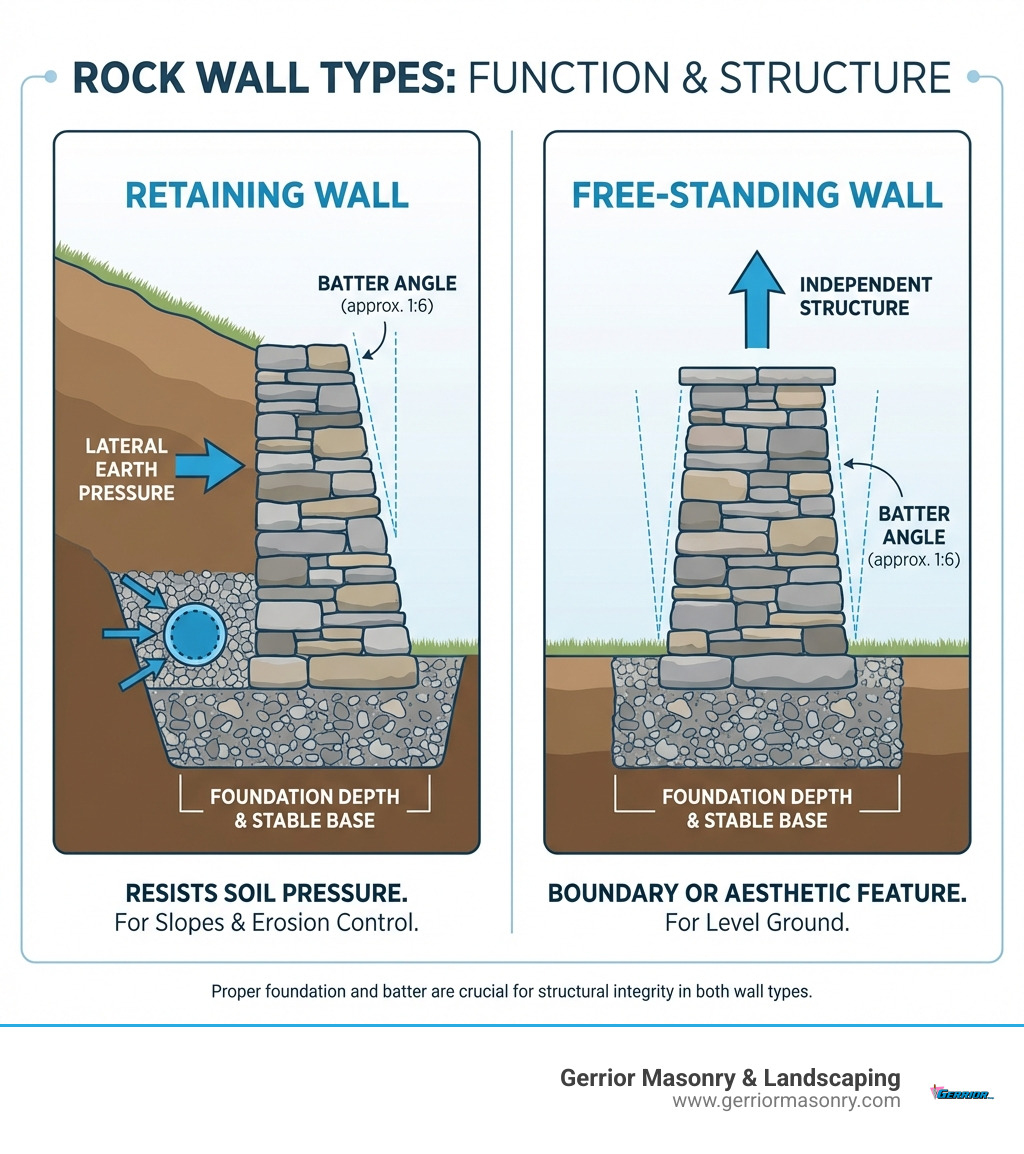
Retaining Walls: These are engineered to hold back soil on slopes and prevent erosion. They must withstand significant pressure, making proper construction vital in Massachusetts, with its freeze-thaw cycles.
Free-Standing Walls: These stand independently as decorative borders or property markers. While they don’t hold back soil, they still require a solid foundation for stability.
Both types can be built using two primary methods:
Mortared Walls: Stones are joined with mortar for a rigid, formal structure with superior strength.
Dry-Stack Walls: Stones are fitted without mortar, relying on gravity and friction. This creates a rustic look and allows for slight movement, which can be beneficial during freeze-thaw cycles.
A properly built rock wall is a beautiful and functional investment. If you’re looking to improve your outdoor space, exploring options for landscape walls is a great place to start.
How to Build a Rock Wall: A Step-by-Step Guide
Building a rock wall is a rewarding project that combines physical effort with artistic vision. Here are the essential steps.
Step 1: Planning, Site Prep, and Foundation
A rock wall’s longevity depends on a robust foundation, especially in Massachusetts. Don’t cut corners here.
Essential Tools and Materials:
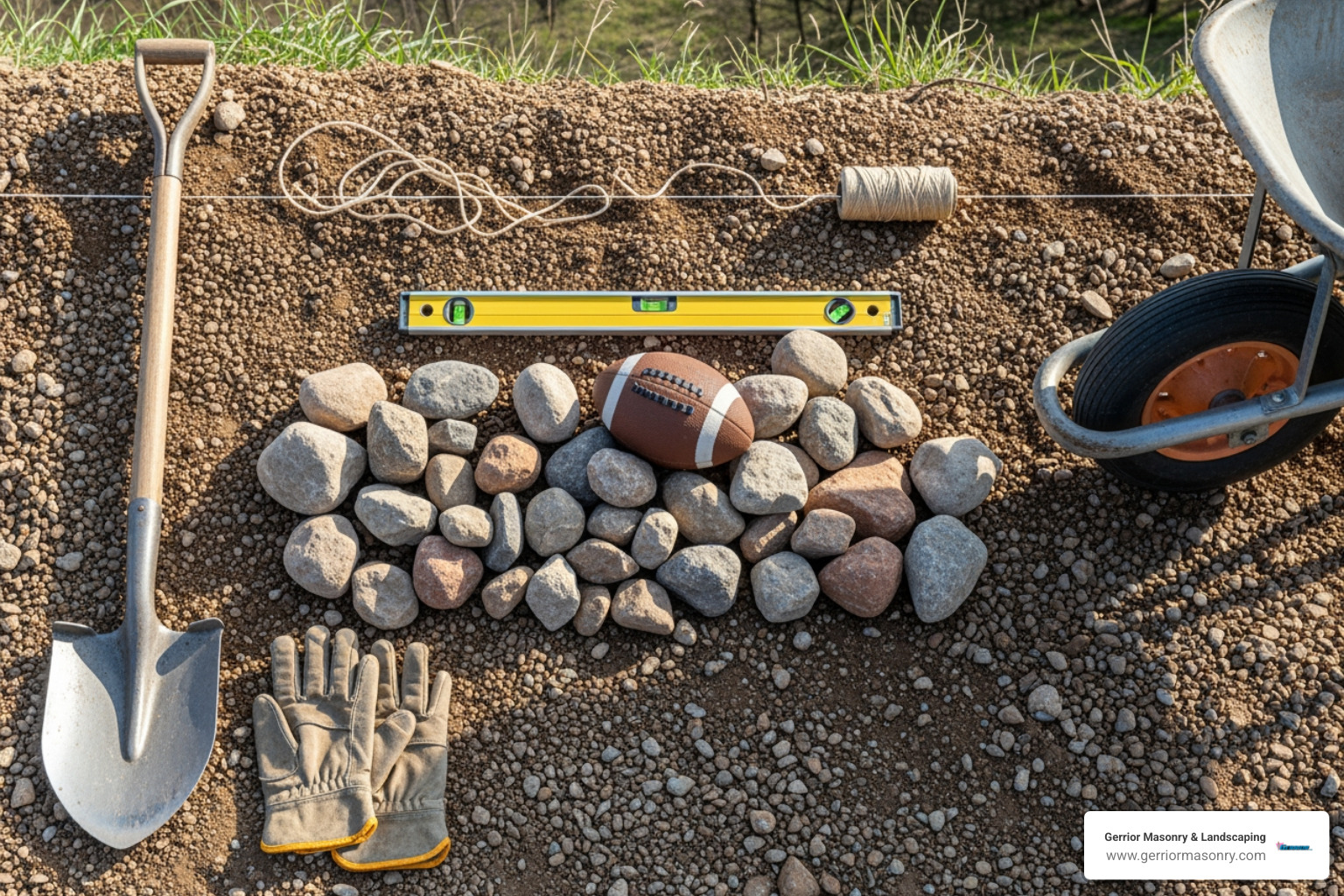
Tools: Shovel, wheelbarrow, tape measure, string line, stakes, levels, hand tamper or plate compactor, rubber mallet, and safety gear (heavy-duty gloves, safety glasses, steel-toed boots). For mortared walls, you’ll also need a trowel and jointer.
Materials: Rocks, crushed gravel for the base, perforated drain pipe and filter fabric (for retaining walls), and mortar mix or landscape adhesive.
Site Excavation and Trench Digging:
First, clear all vegetation and topsoil. Mark your wall’s layout with stakes and string or spray paint. Dig a trench at least 6 to 9 inches deep (deeper in frost-prone areas) and about 8 inches wider than your wall’s base. A good rule is to bury 1 inch of the wall for every 8 inches of height.
Creating a Stable Base:
Compact the soil at the bottom of the trench. Add a 4- to 6-inch layer of compactable crushed gravel (like 3/4-inch minus) and compact it until firm. This creates a solid footing that prevents settling. For mortared walls, a poured concrete footing is required over the gravel base. For more details, see our guide on the base-for-retaining-wall.
Step 2: Selecting and Stacking Stones
This is where the artistry of building a rock wall comes into play.
Stone Selection:
Choose stones that fit your desired look. Fieldstone offers a rustic, natural appearance, while quarried stone is more uniform and formal. Sort your stones by size, saving the largest and flattest for the base and thin, flat ones for the top capstones.
Stacking Principles for Stability:
A strong wall relies on gravity and proper stone placement. Even in mortared walls, stones should be stable on their own.
Start Strong: Use your largest, heaviest stones for the first course to anchor the wall.
Follow the “One-Over-Two” Rule: This is crucial. Each stone should bridge the joint between two stones below it, preventing weak vertical seams.
Incorporate a Batter (Lean): Lean the wall back into the slope it’s retaining, about 1 inch for every 6 inches of height (a 15-degree angle). This “batter” uses gravity to increase stability.
Use Tie Stones: Every few feet, place long stones that run from the front to the back of the wall. These tie the wall together and prevent bulging.
Fill Gaps (Chinking): Use smaller stones to fill any internal voids, which keeps the larger stones from shifting.
Mortar Application (If Used): Apply a 1-inch bed of mortar for each course, setting stones firmly. Once the mortar is firm to the touch, finish the joints with a concave jointer for a clean look.
Step 3: How to Build a Rock Wall with Proper Drainage
For any retaining wall, proper drainage is the single most critical factor for longevity, especially in a climate like Massachusetts with its intense freeze-thaw cycles. Water-saturated soil is incredibly heavy and exerts immense hydrostatic pressure. Without a clear path for this water to escape, it will push against the wall, causing it to bulge, crack, and eventually fail. Do not underestimate the power of water.
Key Drainage Components:
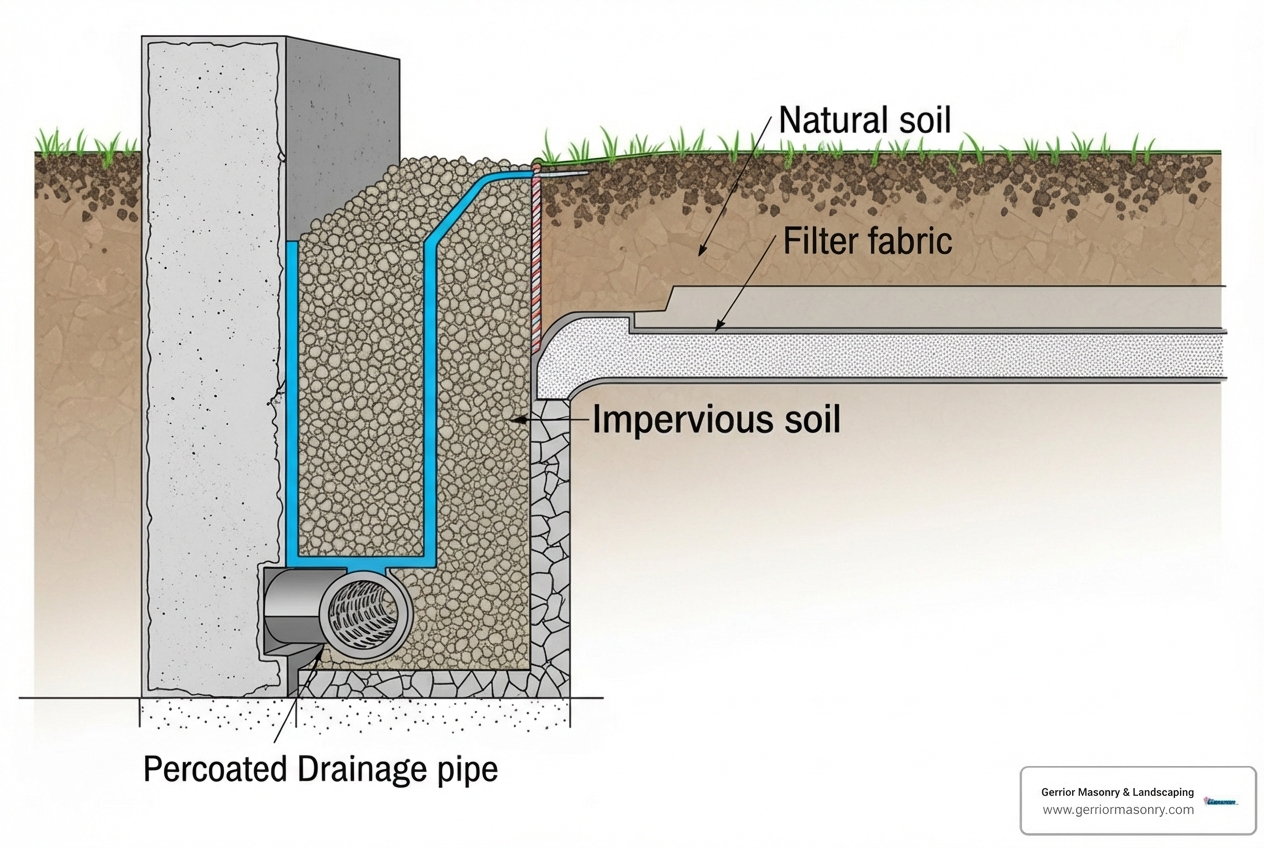
Gravel Backfill: As you build each course of your wall, backfill the space behind it with clean, 3/4-inch crushed gravel—never soil. This drainage zone should be at least 12 inches wide. The angular stones lock together for stability while creating voids that allow water to drain freely down to the pipe at the base. Compact the gravel in 3-4 inch layers to prevent future settling.
Filter Fabric: Before adding any gravel, line the entire excavated area behind the wall (the bottom and the back side) with a heavy-duty, non-woven geotextile filter fabric. This fabric is crucial because it allows water to pass through into the gravel zone but prevents fine soil and silt particles from clogging the system over time. A clogged drainage system is a failed drainage system.
Perforated Drain Pipe: At the base of the wall, directly behind the first course of stones, place a 4-inch perforated drain pipe (also known as weeping tile). Ensure the pipe is laid with the holes facing down. This allows water that collects at the bottom to enter the pipe and be carried away. The pipe must have a slight downward slope (about 1/8 inch per foot) to a suitable outlet, such as a dry well or a lower point on your property away from any structures. This is a vital part of any perforated-drain-pipe-retaining-wall system.
Impervious Top Layer: To finish the drainage system, create a cap of compacted, clay-rich soil about 8-12 inches deep on top of the gravel backfill, just below the final grade and topsoil. This dense layer acts as a barrier, directing surface water from rain or irrigation away from the drainage zone behind the wall, further reducing the load on the system.
A comprehensive drainage system is not optional; it is the life insurance for your retaining wall, ensuring it can withstand the immense pressures of soil and water and remain stable for decades to come.
Step 4: Capping and Finishing Your Wall
The top of your wall, or “cap,” is a crucial finishing touch. Capstones protect the wall’s core from water, add weight for stability, and provide a clean, finished look.
Installing Capstones:
Use your flattest, most uniform stones for the cap.
For Mortared Walls: Apply a 1-inch bed of mortar on the top course and set the capstones, ensuring they are level. Let them overhang the face by about an inch for a classic look.
For Dry-Stack Walls: Fit the capstones tightly on the top course. For added stability, secure them with a landscape block adhesive.
The style of capstone—whether uniform or irregular—can define the wall’s final character. For inspiration, explore our stone-wall-design-ideas. With the capstones in place, your wall is complete.
Maintenance, Safety, and Professional Help
Building a rock wall is a significant undertaking. It’s important to avoid common pitfalls and know when to call for professional help.
Common Mistakes to Avoid When Building a Rock Wall
Avoiding these errors will save you from costly repairs later:
Poor Foundation: A shallow or uncompacted base will cause the wall to fail.
No Batter (Lean): A vertical retaining wall will bulge and collapse without a slight inward lean.
Vertical Joints: Failing to overlap stones (“one-over-two”) creates weak points.
Improper Drainage: Forgetting a drain pipe and gravel backfill will lead to failure from water pressure.
Small Stones at the Base: Always use your largest, most stable stones for the first course.
If you see an existing wall leaning or bulging, it may need professional attention. For assistance, consider looking into retaining-wall-repair-near-me.
Lift with your legs, not your back. Use levers or a wheelbarrow for heavy stones.
Wall Maintenance:
A well-built wall needs little upkeep. Periodically check for shifting, ensure drains are clear, and remove any weeds from the joints.
When to Hire a Professional:
A DIY rock wall is great for small projects, but you should hire a professional when:
The wall will be taller than 4 feet.
It is a retaining wall holding back a significant slope or supporting a structure.
The project requires a building permit, which is common for walls over 3-4 feet in Massachusetts.
The project exceeds your time, physical ability, or experience.
At Gerrior Masonry & Landscaping, we have over 30 years of experience building rock walls and other hardscaping features. Our skilled team, with owner oversight on every project, ensures high-quality results that stand the test of time. Based in Woburn, MA, we proudly serve homeowners throughout Middlesex and Essex County, including towns like Lexington, Concord, and Andover.
For projects that demand precision and durability, Explore our hardscaping services to see how we can transform your outdoor space.
Why Patio Paver Installation Transforms Your Outdoor Space
Patio paver installation is the process of creating a durable, attractive outdoor surface using individual paving stones. The process involves excavating the area, preparing a multi-layer base of gravel and sand, laying the pavers in a chosen pattern, and filling the joints to lock them in place.
A well-executed paver patio offers significant benefits. Unlike concrete slabs that crack, pavers flex with ground movement and allow for easy individual replacement. They can last up to 50 years, add substantial value to your property, and create an inviting outdoor living space.
The success of any paver patio depends entirely on its foundation. Rushing base preparation will lead to uneven, sunken, or shifted pavers within just a few years.
While some homeowners consider a DIY approach, the physical labor is demanding and mistakes are costly. Professional installation ensures proper drainage, a solid base, and expert-level results—especially for larger or more complex projects.
I’m Joe Gerrior, owner of Gerrior Masonry & Landscape Construction Corp. in Woburn, Massachusetts. Over the past 34 years, I’ve overseen hundreds of patio paver installation projects, learning what separates patios that last generations from those that fail prematurely.
The Ultimate Guide to Patio Paver Installation
This section walks you through the entire process, from gathering your supplies to laying the final paver. A proper patio paver installation ensures your outdoor space will last for decades.
Essential Tools, Materials, and Pre-Installation Checks
Before starting, gather the right tools and materials. Meticulous planning is the first step to a successful patio paver installation.
Tools of the Trade
Shovel, Wheelbarrow, Tape Measure, and Level
Rubber Mallet, Hand Tamp, and Plate Compactor (essential for base)
Pavers: Choose from concrete, brick, or natural stone. Concrete pavers are versatile and cost-effective, while natural stone offers a unique, high-end finish. Purchase 5-10% extra for cuts.
Geotextile Fabric: This separates the subsoil from the gravel base, preventing the stone from sinking into the dirt over time and compromising the foundation’s stability.
Base Material: Crushed stone aggregate (e.g., “3/4 minus”) is the patio’s backbone. The mix of different-sized stones and dust locks together tightly when compacted.
Bedding Sand: A 1-1.5 inch layer of coarse concrete sand (like ASTM C33) is used for leveling. Avoid fine masonry or play sand, as it retains water and can cause pavers to shift.
Joint Sand: Regular or polymeric sand to fill gaps and lock pavers.
Edge Restraints: Plastic, metal, or concrete restraints are essential to prevent pavers from shifting and spreading apart over time.
Pre-Installation Checks
Local Permits: Check with your local municipal office for any required building permits.
Call 811: Before you dig, call 811 to have underground utility lines marked. This is a critical safety step.
Plan Your Design: Map out your patio’s shape, size, and pattern to calculate material needs accurately. For more on site preparation, visit our page on excavation services.
Step-by-Step: Preparing the Base and Laying Pavers
This is the most critical phase of patio paver installation. A solid base ensures a long-lasting patio.
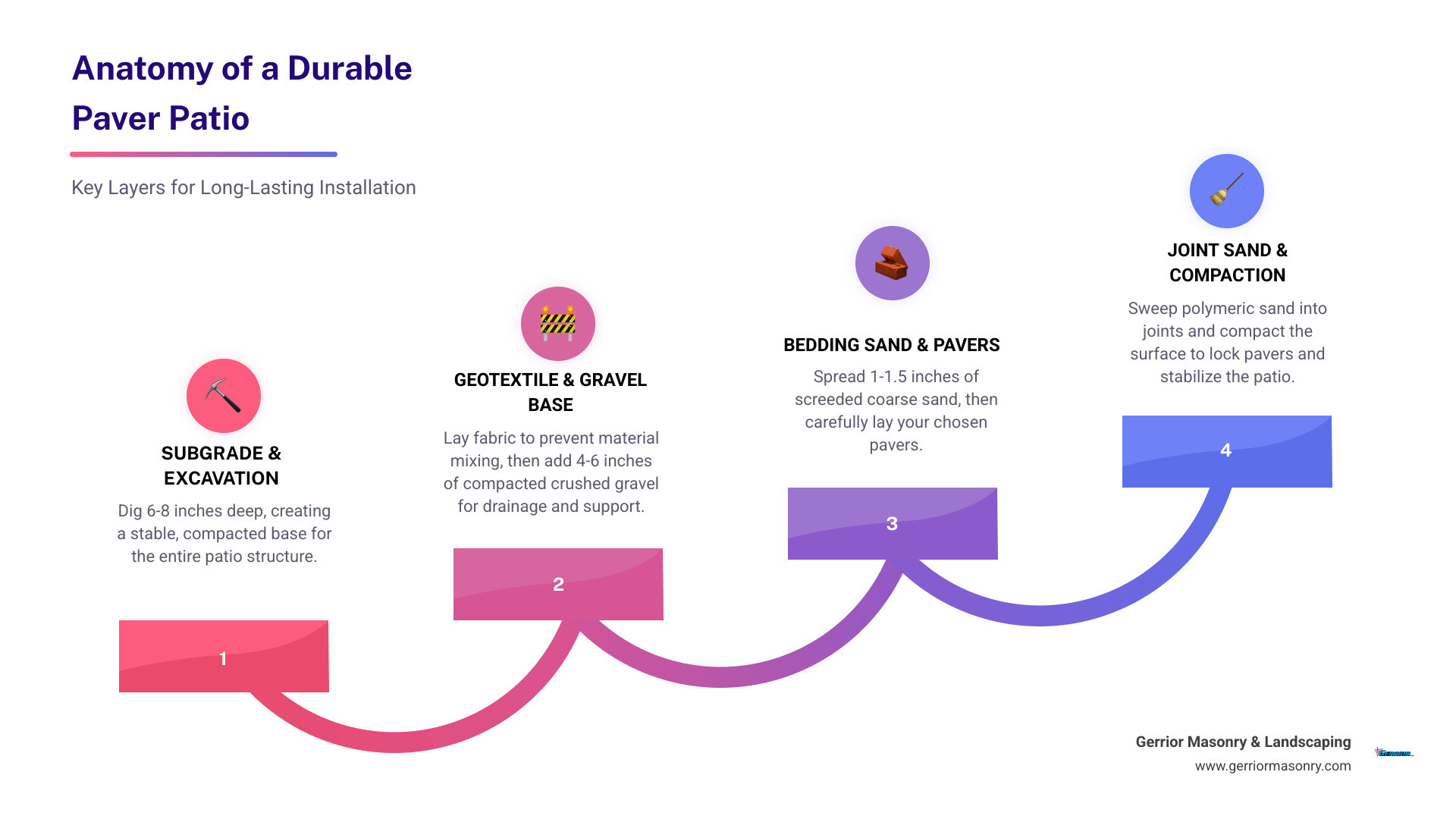
1. Excavation and Slope: Outline your patio area. Excavate 6-8 inches deep for walkways (10-12 inches for driveways). Ensure the area has a slope of 1-2% (about 1/4 inch per foot) directing water away from your home’s foundation to prevent water damage and ice buildup. Compact the exposed subsoil.
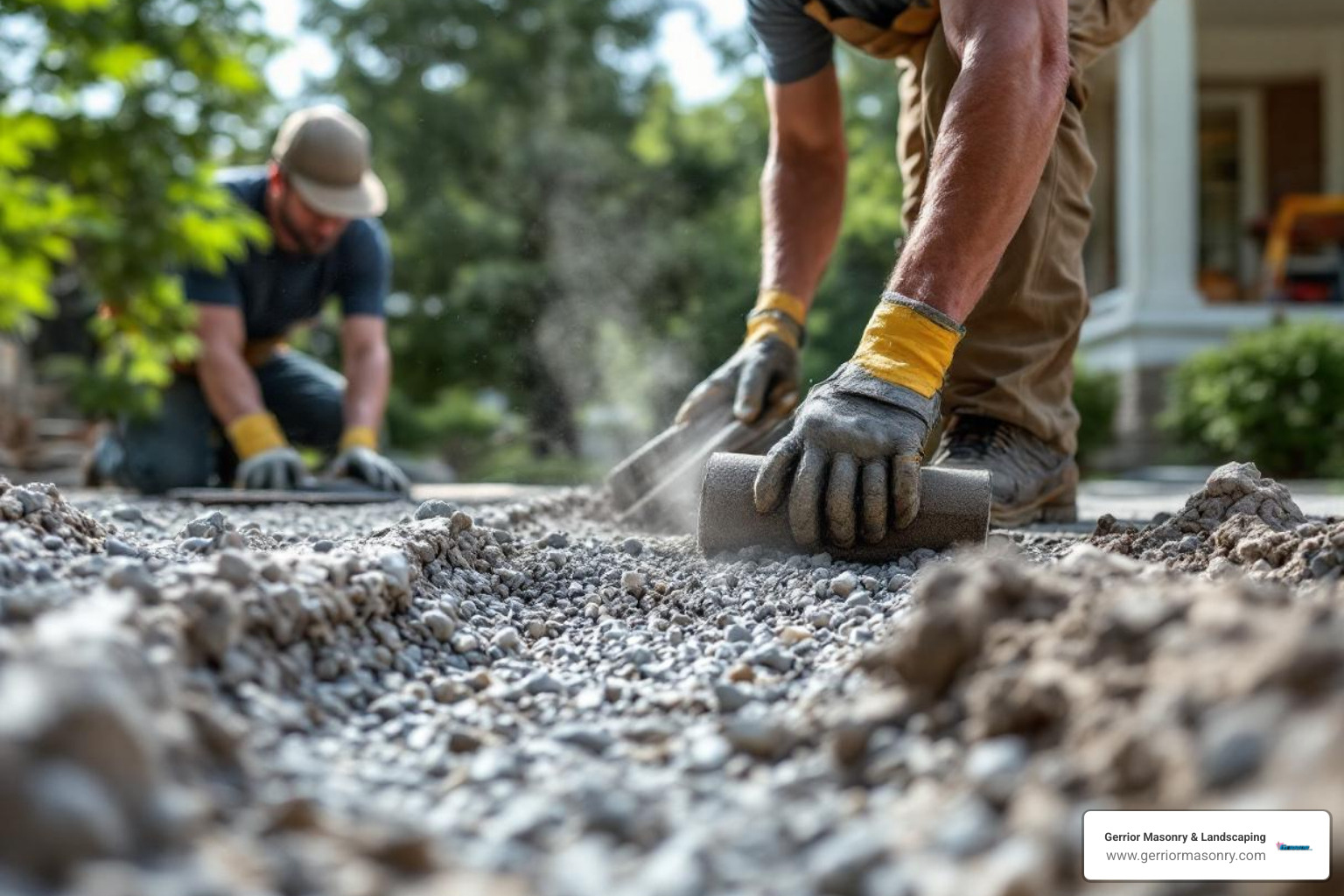
2. Geotextile Fabric and Base: Lay geotextile fabric over the compacted subsoil. Add a 4-6 inch layer of crushed gravel base. Compact the gravel in 2-3 inch lifts (layers) with a plate compactor. This method ensures uniform density throughout the base, which is the key to preventing future sinking.
3. Bedding Sand: Spread a 1-1.5 inch layer of coarse sand. Use screed pipes and a board to create a perfectly flat surface for setting the pavers. Do not compact this layer.
4. Edge Restraints: Install edge restraints around the perimeter, securing them into the gravel base with spikes.
5. Laying Pavers: Start from a straight edge (like your house) and place pavers directly onto the sand. Don’t drag them. Keep joints tight and consistent. Use a string line to keep rows straight and check for levelness periodically.
Finishing Touches for Your Patio Paver Installation
The final steps lock everything into place for a professional, stable finish.
1. Cutting Pavers: Use a masonry saw or paver breaker to cut pavers for edges and corners. Always wear safety glasses and gloves.
2. Compacting Pavers: Run a plate compactor (with a protective pad) over the entire patio. This settles the pavers into the sand bed and interlocks them.
3. Filling the Joints: Spread joint sand over the dry patio and sweep it into the gaps. Run the compactor over the patio again to settle the sand, then sweep more sand until the joints are full.
4. Regular vs. Polymeric Sand: Polymeric sand is a popular choice because it hardens when wet, which helps resist weeds, insects, and erosion.
Feature
Regular Sand
Polymeric Sand
Composition
Fine-grained, washed sand
Fine sand mixed with polymer additives
Function
Fills joints, provides flexibility
Fills joints, hardens to create a semi-rigid bond
Weed Growth
Prone to weed growth
Significantly inhibits weed growth
Erosion
Can wash out with heavy rain/power washing
Highly resistant to erosion
Cost
Less expensive
More expensive
If using polymeric sand, blow all excess dust off the paver surfaces before lightly misting with water to activate it. Any remaining dust can create a permanent haze on the pavers. Allow it to cure for 24-48 hours.
Common Mistakes to Avoid:
Improper base compaction.
Incorrect slope or no slope for drainage.
Forgetting edge restraints.
Using the wrong type of sand for the bedding layer.
Leaving polymeric sand residue on paver surfaces before watering.
Beyond the Build: Maintenance, Benefits, and Professional Help
With your patio installed, it’s crucial to understand how to care for it and why it was a great choice. We’ll also explore when a project is best left to the professionals.
Why Choose Pavers? Benefits and Longevity
Pavers are a superior choice for outdoor living spaces compared to materials like poured concrete.
Durability & Flexibility: Pavers are incredibly strong and can flex with ground movement, preventing the large cracks common in concrete slabs.
Easy Repairs: If a paver is damaged, it can be easily removed and replaced, unlike concrete which requires costly patching.
Aesthetic Variety: With countless shapes, colors, and patterns like herringbone, basketweave, or running bond, pavers offer unmatched design versatility to complement any home’s style.
Increased Home Value: A professional paver patio is a significant upgrade that boosts curb appeal and property value.
When installed correctly on a solid foundation, a paver patio can last up to 50 years. The initial cost is an investment in long-term beauty and function. Based on internet data, the average cost of a professional paver patio installation is around $3,400, but projects can range from $2,000 to over $10,000 depending on size, materials, and complexity. These are industry averages and not a quote for Gerrior Masonry services.
Maintaining Your Paver Patio for Lasting Beauty
Simple, consistent maintenance will keep your paver patio looking great for decades.
Routine Cleaning: Regularly sweep away debris. Periodically rinse with a garden hose to remove dust. Use caution with power washers, as they can dislodge joint sand.
Weed Prevention: Using polymeric sand is the best defense. If weeds appear, pull them by hand. Top up regular joint sand as needed.
Paver Sealing: Sealing your pavers every 3-5 years is optional but recommended. It improves color, protects against stains, and helps stabilize the joint sand.
Long-Term Repairs: One of the biggest advantages of pavers is their repairability. Individual pavers can be replaced, and sunken areas can be re-leveled by lifting the pavers and adjusting the base.
For more information on our hardscaping solutions, explore our hardscaping services.
DIY vs. Hiring a Pro for Your Project
While a DIY patio paver installation can seem appealing as a way to save money, it’s a challenging, physically demanding project where mistakes in the crucial base preparation stage can lead to premature failure and wasted investment.
The Challenges of a DIY Installation
A DIY project often involves hidden costs and difficulties. Consider the expense of renting a plate compactor and masonry saw, the logistics of having tons of gravel and sand delivered, and the sheer physical labor of excavation and material handling. A small mistake in calculating the slope for drainage or failing to compact the base properly can result in a patio that sinks, shifts, or holds water, requiring a complete and costly redo.
When to Hire a Professional
Hiring a professional is the wisest choice for most homeowners, especially for:
Large or complex designs with curves, multiple levels, or integrated features like fire pits.
Properties with steep slopes or poor drainage that require expert grading and water management.
Ensuring quality and longevity with a properly installed base that meets or exceeds industry standards, often backed by a workmanship warranty.
Saving time and avoiding strenuous physical labor; a professional crew can complete a project in days that might take a homeowner weeks or months.
At Gerrior Masonry & Landscaping, we bring over 30 years of experience to every patio paver installation. Our unique selling point is our skilled team, combined with owner oversight on every project. This ensures the highest standards of craftsmanship for our clients in Woburn, MA, and throughout Middlesex and Essex County.