
Decorative Stone Garden Edging: Top 10 Stunning 2025 Picks
Why Decorative Stone Garden Edging Transforms Your Landscape
Decorative stone garden edging creates clean borders between your lawn and garden beds while adding lasting beauty to your outdoor space. Here are the top options for Massachusetts homeowners:
Most Popular Stone Edging Types:
• Natural Granite – Gray, buff, or rose colors; 20+ year lifespan
• Limestone Strips – Tumbled finish; 3-5″ heights; classic appeal
• Cobblestone Kits – Traditional New England look; frost-resistant
• Manufactured Concrete – Budget-friendly; consistent sizing
• Faux Stone Composites – Lightweight; easy DIY installation
Key Benefits:
– Stops weeds from spreading into garden beds
– Prevents mulch from washing onto lawn
– Creates a mowing strip for easier maintenance
– Boosts curb appeal and property value
– Lasts 20+ years with minimal upkeep
Natural stone edging can last 20 years or more with minimal maintenance, making it one of the most durable landscape edging options available. A single ton typically covers 80-100 linear feet, depending on the stone type and size.
Stone edging helps reduce garden maintenance by minimizing the spread of mulch and creating a clear barrier against invasive grass and weeds. It’s available in colors including gray, tan, buff, blue-gray, mauve, red, purple, and white for extensive design customization.
I’m Joe Gerrior, owner of Gerrior Masonry & Landscape Construction Corp, and I’ve been helping Massachusetts homeowners install beautiful decorative stone garden edging for over 34 years. My team specializes in creating functional, stunning landscape borders that stand up to New England’s harsh weather while enhancing your property’s value.
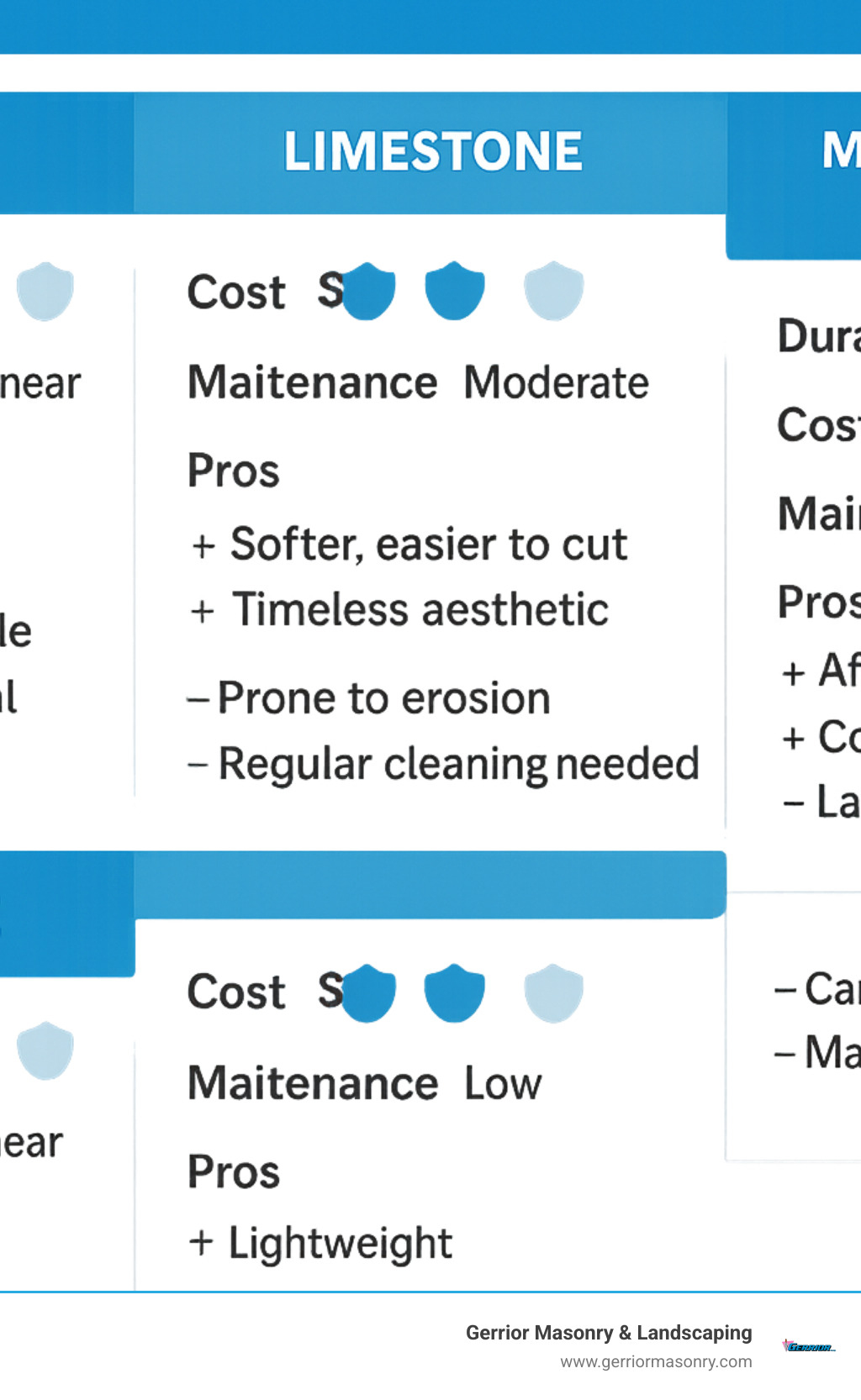
What Is Decorative Stone Garden Edging?
Think of decorative stone garden edging as the picture frame for your landscape. Just like a frame defines and improves a beautiful painting, stone edging creates clean boundaries between your lawn and garden beds while making everything look more polished and intentional.
At its core, stone edging is a border system that uses natural or manufactured stone to mark where one area of your yard ends and another begins. But it’s so much more than just a pretty line in the dirt. This hardworking landscape feature tackles several jobs at once – boundary control, mulch retention, and erosion prevention all rolled into one attractive package.
When those spring downpours hit (and we all know how intense they can be in Massachusetts), properly installed stone edging keeps your soil from washing away and prevents your expensive mulch from floating onto the driveway. It’s like having a gentle but firm bouncer that keeps everything in its proper place.
Here’s what really sets stone apart from other edging options: a well-installed stone border can last 20 years or more with virtually no maintenance. That’s two decades of not worrying about replacing cracked plastic strips or rotted wood borders. In New England’s harsh freeze-thaw cycles, that durability isn’t just nice to have – it’s essential.
The curb appeal boost is immediate and impressive. There’s something about clean, defined borders that makes your entire landscape look like it was designed by a professional. Your neighbors will definitely notice, and if you’re thinking about selling someday, potential buyers will too.
The Multi-Tasking Border Hero
Decorative stone garden edging is like that friend who’s good at everything – it handles multiple landscape challenges without breaking a sweat. The weed control benefits alone make it worth considering. That stone barrier stops aggressive grass from creeping into your flower beds and prevents garden weeds from spreading onto your pristine lawn.
No more Saturday mornings spent on your hands and knees, pulling crabgrass out of your hostas. The stone creates a physical barrier that weeds simply can’t cross, which means less time weeding and more time enjoying your garden.
The mowing strip function is pure genius for anyone who’s ever tried to get a clean edge with a string trimmer. You can run your mower wheel right along the stone edge for perfectly straight cuts every time. Your lawn will look like it was trimmed with a ruler, and you’ll save tons of time on detail work.
Stone edging also brings order to the chaos that gardens can sometimes become. When your beds have tidy borders, everything looks more intentional. Plants seem to pop more when they’re framed by clean stone lines, and planning new plantings becomes easier when you have defined spaces to work with.
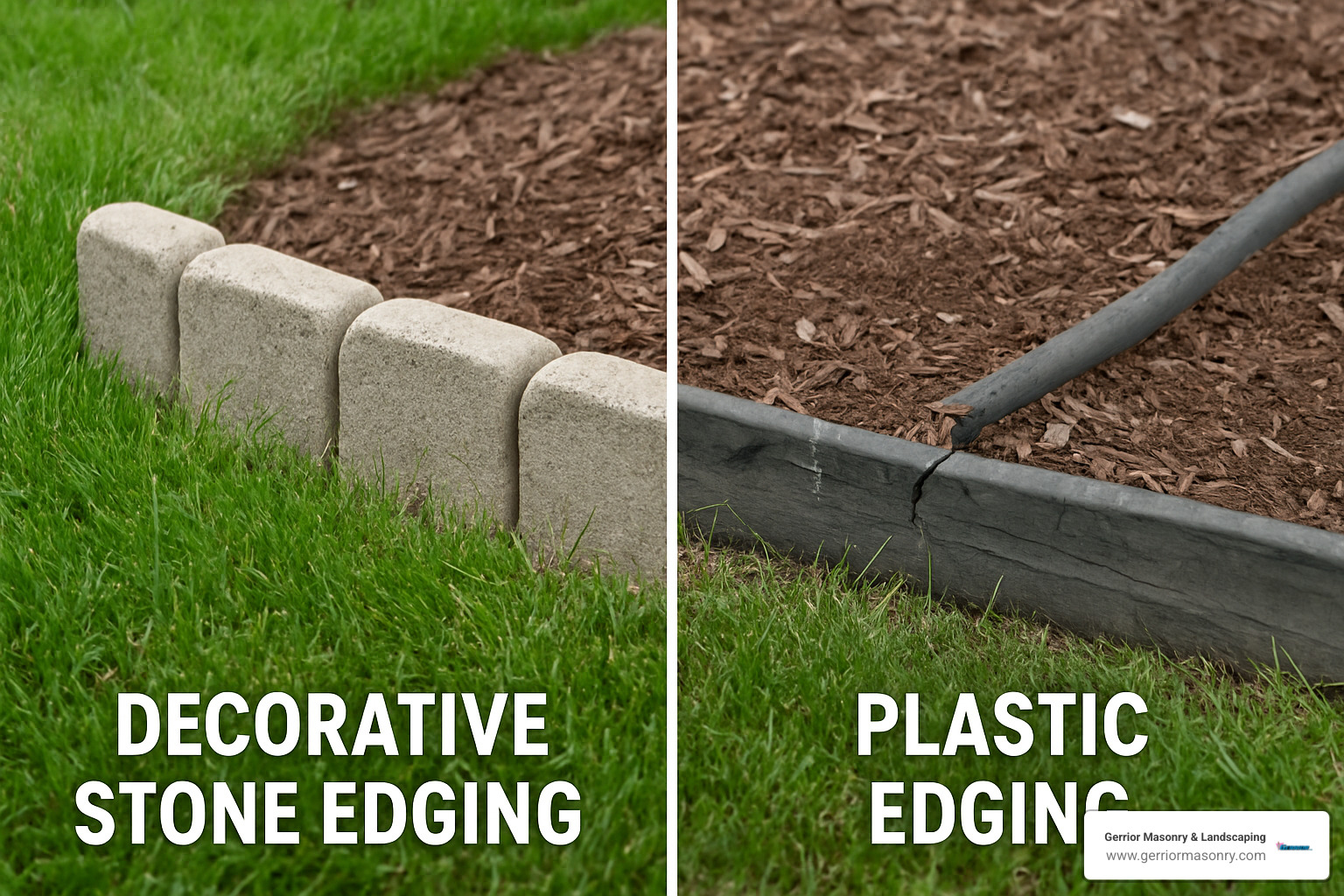
Why Choose Decorative Stone Garden Edging over Plastic or Wood?
Let’s be honest about plastic edging – it’s cheap upfront, but it’s also kind of cheap looking. More importantly, Massachusetts winters are brutal on plastic. Those freeze-thaw cycles turn flexible plastic brittle, leading to cracks and breaks that make your landscape look neglected rather than maintained.
Wood edging starts out looking great, but it’s basically signing up for a long-term relationship with maintenance. Wood rots, warps, and becomes a buffet for insects. Before you know it, you’re replacing sections every few years and wondering why you didn’t just invest in stone from the beginning.
Stone offers that premium look that works with any architectural style. Whether your home is a classic Colonial or a modern contemporary, natural materials like granite and limestone feel right at home. They complement rather than compete with your existing landscape.
From an eco-friendly perspective, stone is hard to beat. No chemical treatments needed, no harmful substances leaching into your soil, and if you ever redesign your landscape, the stone can be reused elsewhere. The return on investment is excellent because quality stone edging becomes a permanent asset that adds lasting value to your property.
| Material | Lifespan | Maintenance | Cost Range | Weather Resistance | Appearance |
|---|---|---|---|---|---|
| Natural Stone | 20+ years | Minimal | $8-$25/lf | Excellent | Premium |
| Plastic | 5-10 years | Low | $2-$6/lf | Poor | Basic |
| Metal | 10-15 years | Medium | $4-$12/lf | Good | Modern |
| Wood | 3-8 years | High | $3-$10/lf | Poor | Natural |
Types & Styles: From Cobblestone to Faux Panels
When it comes to decorative stone garden edging, you’ve got more choices than a kid in a candy store. The beauty lies in finding exactly the right style that makes your landscape sing – whether you’re going for that classic New England charm or something more modern and sleek.
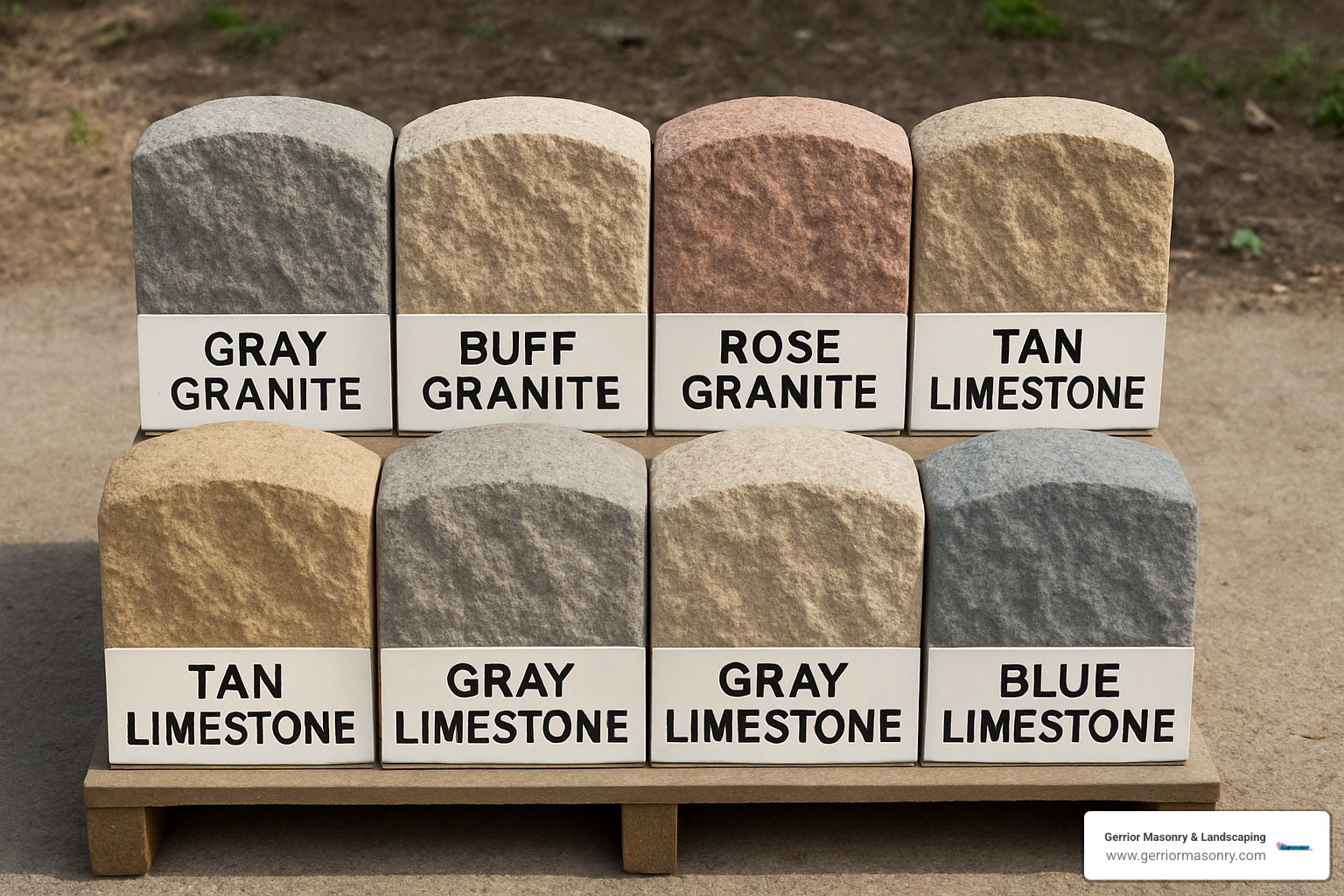
Natural stone options remain the most popular choice here in Massachusetts. Granite leads the pack with its incredible durability and gorgeous color range. You’ll find everything from classic gray granite that complements any home style to warm buff tones that add a welcoming feel. For something truly special, rose granite creates stunning contrast against green plantings.
Limestone offers a more refined look with naturally smooth surfaces, while sandstone brings those warm earth tones that make cottage gardens absolutely glow. These natural materials develop character over time, aging gracefully through our harsh New England winters.
If you’re working with a tighter budget, manufactured concrete edgers deliver consistent sizing and clean lines without breaking the bank. Today’s versions are light-years better than the basic concrete blocks of decades past – many feature realistic stone textures that fool even experienced landscapers.
Faux-stone composites have really come into their own recently. These lightweight alternatives make DIY installation much more manageable, especially for homeowners who want to tackle weekend projects without throwing out their backs. Some newer recycled rubber-stone blends offer surprising flexibility while maintaining that authentic stone appearance.
Classic Cobblestone & Granite Blocks
There’s something magical about cobblestone edging that instantly transports you to historic New England streets. These kits typically come with everything you need, covering anywhere from 41 to 66 linear feet per pallet depending on the stone size you choose.
The most popular dimensions include 8″ x 4″ x 4″ and 10″ x 7″ x 4″ blocks. These substantial pieces create borders that look like they’ve been there for generations, even when you install them next Tuesday.
Granite blocks are absolutely frost-proof – a crucial feature when you’re dealing with our brutal Massachusetts winters. The stone’s natural density means water can’t seep in and cause those heartbreaking cracks that destroy so many other edging materials. Most suppliers make ordering simple with clear coverage calculations, so you’ll know exactly how many pallets you need for your project.
More info about Stone Edging for Flower Beds
Sleek Limestone & Sandstone Strips
For homeowners who prefer clean, sophisticated lines, limestone strips deliver that refined elegance. The tumbled edges create a beautifully weathered appearance that works equally well in formal gardens and relaxed cottage settings.
These strips typically come in 3 to 5-inch heights, providing just enough definition without overwhelming your plantings. The random lengths add visual interest through varied joint patterns – think of it as nature’s way of keeping things from looking too perfect and sterile.
Sandstone strips bring those gorgeous warm earth tones that make every garden feel more inviting. The natural porosity provides excellent drainage while standing strong against our challenging New England weather patterns.
Lightweight Manufactured & Faux-Stone Kits
Manufactured edging systems have become incredibly DIY-friendly thanks to clever interlocking modules that snap together like expensive landscaping Legos. These systems take the guesswork out of installation and deliver consistently professional results.
The lightweight nature of these products makes them much easier to handle during installation. No more herniated discs from wrestling with massive stone blocks – these materials let you work at a comfortable pace without calling in reinforcements.
Modern faux-stone composites have reached impressive levels of realism. Some products are so convincing that even landscape professionals need a second look to tell the difference from natural stone.
Eco-Friendly & Recycled Options
Reclaimed flagstone offers environmentally conscious homeowners a chance to add instant character to their landscapes. These weathered materials come with unique patina and character marks that new stone simply can’t replicate.
Rubber-stone blend products might sound strange, but they’re actually quite brilliant. By incorporating recycled tire materials with stone particles, manufacturers create flexible edging that adapts to ground movement while maintaining durability. This flexibility proves especially valuable in areas with challenging soil conditions.
The carbon footprint of recycled materials runs significantly lower than newly quarried products, making them attractive for homeowners who want beautiful landscapes without the environmental guilt. Many recycled options also cost less than premium natural alternatives while delivering comparable performance.
Scientific research on recycled material longevity
Buying Guide: Sizing, Pricing & Planning
Planning your decorative stone garden edging project starts with understanding how much material you’ll actually need. Most natural stone is sold by the ton, and here’s where it gets interesting – one ton typically covers 80 to 100 linear feet, depending on what type of stone you choose. Granite, being denser, gives you less coverage per ton than lighter limestone.
The most common sizes you’ll encounter are 4″ x 4″ x 4″ blocks, 4″ x 6″ x random length strips, and 4″ x 8″ x random length pieces. Each size creates a different look and affects both your material costs and how complex the installation becomes.
Now, let’s talk money. Based on internet research, manufactured concrete edgers typically run $3-$15 per linear foot installed, while natural stone ranges from $8-$25 per linear foot for standard options, with premium materials reaching $75+ per linear foot for rare or specialty stones. These are average costs from various sources, not Gerrior Masonry pricing.
Don’t forget about freight costs – they can really add up, especially for heavy natural stone. If you can source materials locally, you’ll often save money and reduce environmental impact through shorter transportation distances.
Professional installation typically costs $5-$15 per linear foot depending on site conditions and project complexity. Always verify that contractors carry proper licensing and insurance before any work begins.
Measuring Like a Pro
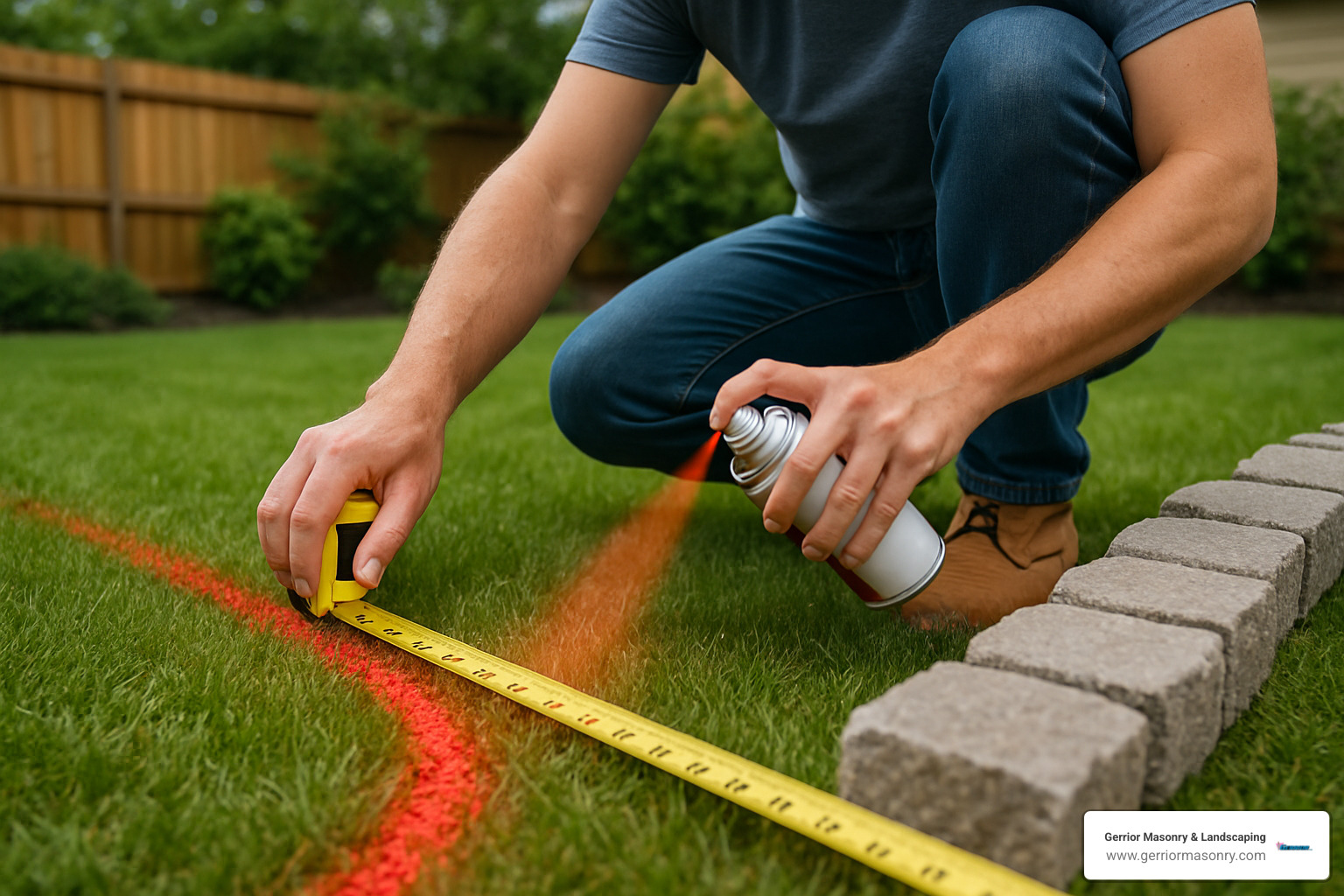
Getting accurate measurements is absolutely crucial – and it’s easier than you might think. Start by marking your desired border with landscape paint or even flour from your kitchen. Then measure the total linear footage, including all those curves and corners that make your design interesting.
Here’s a pro tip: add 10% extra material to account for cutting waste and future repairs. Trust me, running short on materials halfway through a project is no fun.
Curved sections need special attention. Use a flexible measuring tape or rope to follow the exact path you want. Curves require more precise fitting and often generate more waste than straight runs, so plan accordingly when ordering materials.
Overlap considerations matter too, especially with modular systems. Some products need overlapping joints for stability, while others fit together tightly. Understanding these requirements before ordering prevents those frustrating material shortages during installation.
Average Costs & Budget Calculator
Let’s break down what you can expect to spend based on internet research (remember, these aren’t Gerrior Masonry prices):
Manufactured Concrete typically runs $3-$15 per linear foot installed, making it the most budget-friendly option. Natural Limestone ranges from $8-$35 per linear foot installed, while Granite Cobblestone costs $12-$45 per linear foot installed. For Premium Natural Stone, expect $20-$75+ per linear foot installed.
Material costs typically represent 40-60% of your total project expense, with labor and preparation making up the rest. Site conditions can significantly impact labor costs – difficult access or poor drainage adds complexity and expense.
Don’t forget to budget for the supporting cast: landscape fabric, joint sand, and base gravel. These essential items typically add $2-$5 per linear foot to your total project costs, but they’re crucial for long-term performance.
Choosing the Right Look for Your Landscape
Your home’s architecture should guide your material selection. Traditional New England homes often look stunning with granite or limestone edging that complements existing stonework. Modern homes might benefit from clean-lined manufactured products with consistent geometry.
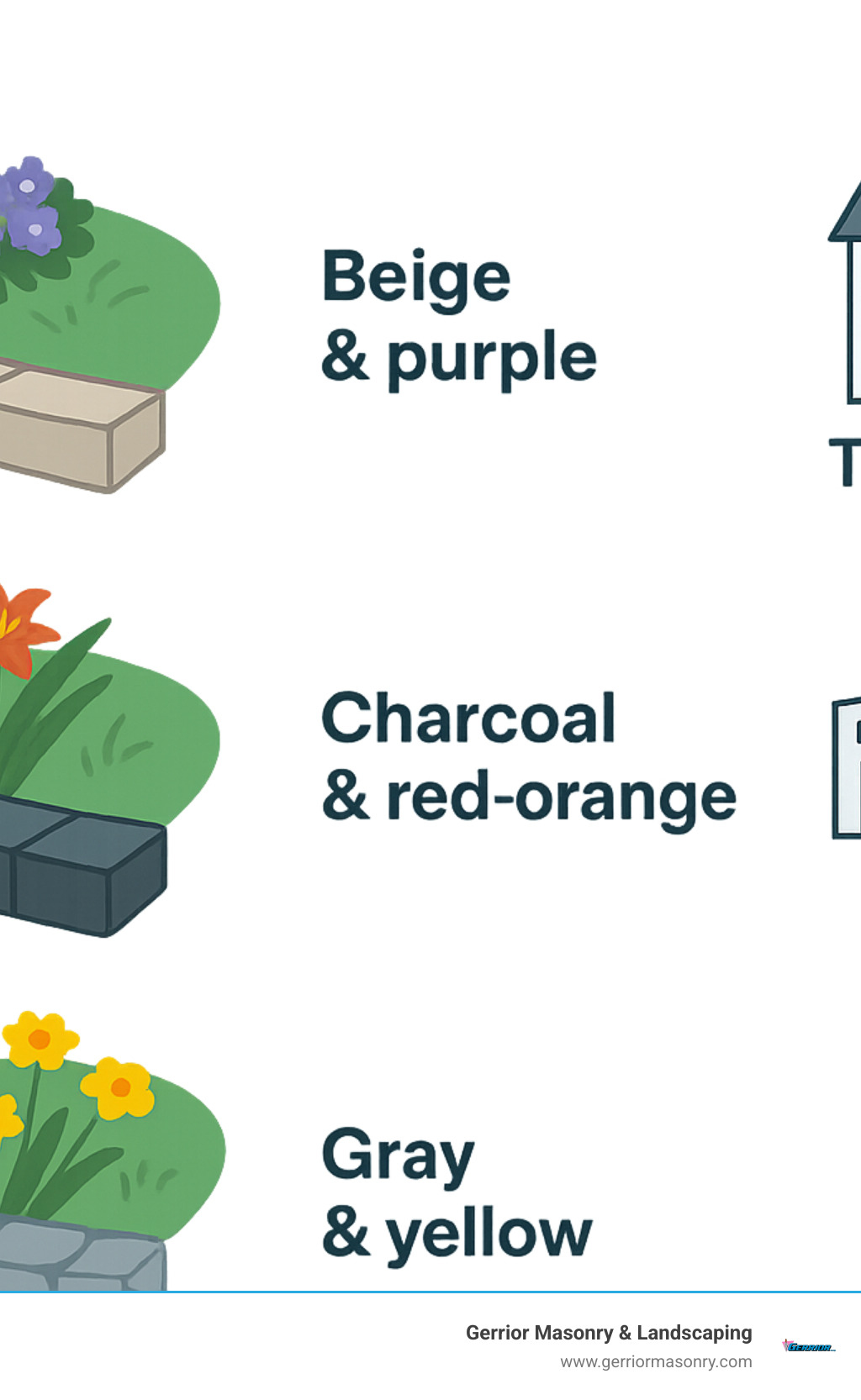
Color harmony with your existing landscape creates a cohesive design that feels intentional. Consider your current hardscaping, home exterior colors, and predominant plant colors when selecting stone hues. Neutral tones offer maximum flexibility if you decide to change your landscape later.
Here’s something many people overlook: mower clearance. Your edging should be low enough for mower wheels to ride alongside while high enough to contain mulch effectively. A height of 3-4 inches typically provides the perfect balance.
More info about Decorative Stone Garden Edging
Licensing & Quality Assurance
Always verify that contractors carry proper licensing for your area. In Massachusetts, landscape contractors should have appropriate business licenses and liability insurance. Request proof of insurance before work begins – it protects you from potential liability issues.
Drainage planning is absolutely crucial for long-term edging performance. Proper installation includes adequate base preparation and drainage considerations to prevent frost heaving and settling. Quality contractors will assess your site’s drainage and recommend appropriate preparation methods.
Quality assurance starts with material inspection upon delivery. Natural stone should be free from significant cracks or defects, while manufactured products should have consistent dimensions and coloring. Don’t be shy about inspecting materials before installation begins.
Installation & Maintenance Made Easy
Getting your decorative stone garden edging installed properly doesn’t have to be overwhelming. The key is taking your time with the foundation work—it’s what separates projects that last decades from ones that start sagging after the first winter.
Start by digging a base trench about 6 inches deep and roughly 2 inches wider than your stone pieces. This might seem like overkill, but trust me—skimping on excavation is the fastest way to end up with wobbly edging that drives you crazy every time you look at it.
Once your trench is ready, add a 2-3 inch gravel bed for drainage and stability. Skip the sand here—it looks tempting because it’s easier to level, but sand washes away during heavy rains. Crushed stone or gravel stays put and gives your edging the solid foundation it deserves.
The secret to professional-looking results is establishing a level line with string and stakes before you place a single stone. This step takes an extra 20 minutes but saves hours of frustration later when you’re trying to figure out why one section looks wonky.
Your tool kit should include a rubber mallet for gentle adjustments, landscape fabric to keep weeds at bay, and joint sand to lock everything together. Some homeowners add sealers for extra weather protection and color improvement, though quality natural stone often looks better with age.
New England’s freeze-thaw cycles can cause winter heave, even with perfect installation. Don’t panic if you need to reset a stone or two after a particularly brutal winter—it’s normal maintenance, not installation failure. The beauty of stone edging is how easy these touch-ups are.
When installed correctly, your stone edging will easily last 20 years or more with minimal fuss. Compare that to plastic edging that cracks after five years or wood that rots and warps, and you’ll see why stone is worth the initial investment.
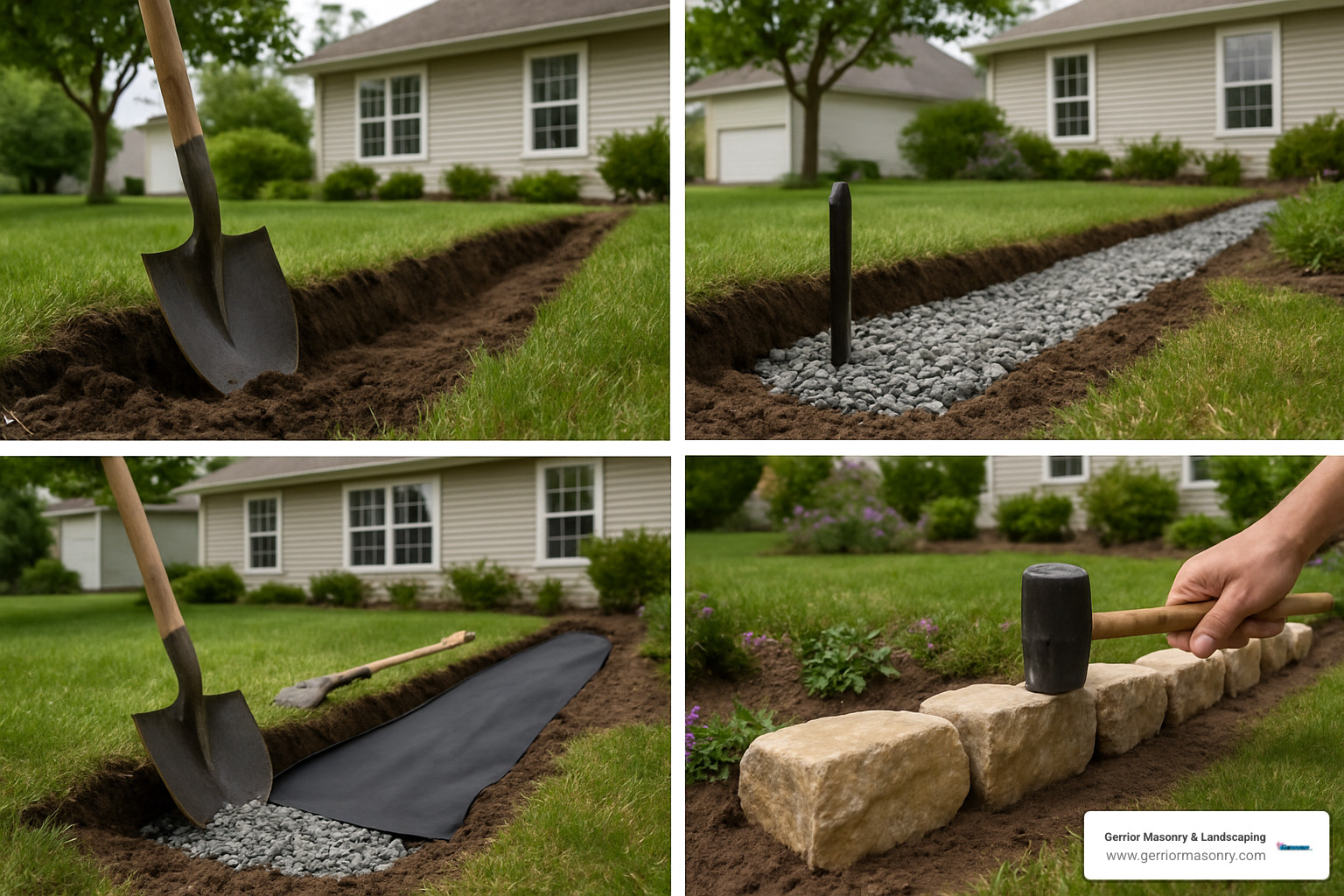
DIY Stone Garden Edging Installation
Taking on stone edging as a DIY project can save you serious money while giving you that satisfying “I built this” feeling every time you admire your handiwork. The process is straightforward, but attention to detail makes all the difference.
Excavation is everything. Remove all grass, roots, and organic material from your trench—anything that can decompose will eventually cause settling. If you hit clay soil, don’t despair, but do plan on extra base material to ensure proper drainage.
Compact your soil base using a hand tamper or rent a small plate compactor for larger projects. This step prevents the settling that creates those annoying dips and waves in otherwise perfect edging lines. Add your gravel base in thin layers, compacting each one before adding the next.
Setting stones requires patience. Start at one end and work methodically toward the other, checking level frequently and adjusting the base as needed. A rubber mallet becomes your best friend here—it lets you make fine adjustments without chipping or cracking your beautiful stones.
Backfill carefully around each stone with soil, compacting gently to provide support without creating pressure that could shift your perfectly placed edging. Add landscape fabric if you want extra weed protection, then finish with mulch or decorative gravel.
More info about Stone Garden Edging Installation
Curves, Corners & Creative Layouts
Creating smooth, natural-looking curves separates amateur installations from professional results. The trick is planning your curves before you start digging—random wiggles look accidental, while deliberate curves look intentional and neat.
Radius templates made from cardboard or thin plywood help maintain consistent curve geometry. It sounds fussy, but this simple tool prevents the “snake-like” appearance that happens when curves vary randomly throughout your project.
Saw-cutting becomes necessary for tight curves or custom corner pieces. A diamond blade wet saw produces clean cuts in natural stone, though proper safety gear is non-negotiable. If cutting feels intimidating, many stone suppliers offer custom cutting services for a reasonable fee.
Accent boulders strategically placed along longer runs create natural-looking breaks and focal points. These larger stones also help transition between different garden areas while maintaining the border’s functional benefits.
Corner treatments deserve special attention since they’re often the most visible parts of your edging. Overlapping joints or specially cut corner pieces provide both structural strength and the polished appearance that makes neighbors stop and ask who did your landscaping.
Long-Term Care & Quick Repairs
The beauty of decorative stone garden edging lies in its low-maintenance nature. A little attention once or twice a year keeps it looking fresh and functioning perfectly for decades.
Annual power washing removes accumulated dirt, algae, and organic stains that can dull natural stone’s appearance. Use moderate pressure to avoid damaging joint materials or loosening stones—you’re cleaning, not sandblasting.
Resetting loose stones is usually a 10-minute fix involving re-leveling the base and repositioning the affected piece. Address these issues promptly since one loose stone often leads to others shifting, and small problems are always easier to fix than big ones.
Spot sealing can refresh weathered natural stone and improve color depth, though many homeowners prefer the natural patina that develops over time. If you choose to seal, test products in inconspicuous areas first—some sealers can dramatically change stone appearance.
Regular inspection during spring cleanup helps catch potential issues before they become headaches. Look for settling, cracking, or movement that might indicate drainage problems or base issues that need attention.
The minimal maintenance requirements are one reason stone edging provides such excellent long-term value compared to alternatives that need frequent replacement or repair.
Design Inspiration & Current Trends
Today’s decorative stone garden edging goes far beyond simple border definition. Homeowners are finding creative ways to make their stone edging work harder while looking better than ever.
One of the hottest trends involves layered heights that create natural-looking terraces and planting zones. Instead of a single uniform border, these designs use varying stone heights to accommodate different plants and create visual depth. It’s like giving your garden a custom-custom outfit that fits perfectly.
Pollinator pathways are another exciting development that combines environmental responsibility with beautiful design. These gently curved stone borders guide beneficial insects through your garden while creating dedicated spaces for native wildflowers and herbs. Your local bees and butterflies will thank you, and your neighbors will wonder how you created such a naturally gorgeous landscape.
The outdoor living trend has sparked interest in fire pit rings defined by stone edging. These designs create safe, attractive boundaries around fire features while tying the entire outdoor space together. Picture cozy evenings with friends, all framed by beautiful stone borders that look intentional and inviting.
Raised vegetable beds with stone edging are having a major moment, especially as more families focus on growing their own food. The stone borders provide excellent drainage, help warm the soil earlier in spring, and make garden maintenance much easier. Plus, they look far more sophisticated than basic wooden boxes.
For the tech-savvy homeowner, LED inlay systems are revolutionizing nighttime landscape appeal. These integrated lighting solutions work particularly well with manufactured stone products designed to accommodate wiring. Imagine your garden borders glowing softly after dark, creating both beauty and safety.
Xeriscape borders represent another growing trend, especially as water conservation becomes more important. Stone edging perfectly defines drought-tolerant planting areas, creating landscapes that look lush while requiring minimal water and maintenance.
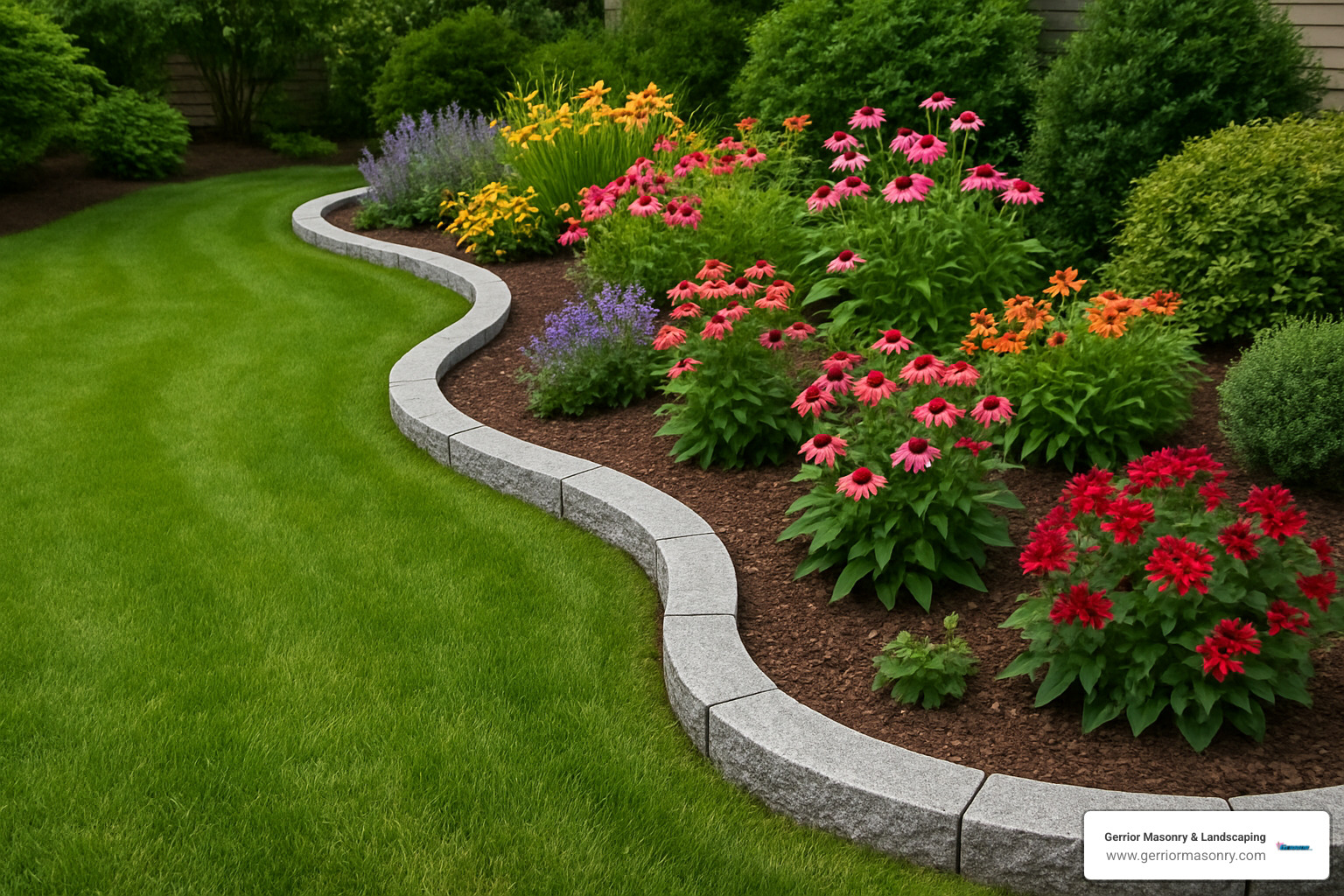
Statement Straight Lines
Sometimes the most powerful design statement is the simplest one. Modern minimal designs using perfectly straight stone edging create dramatic impact through clean geometry and architectural precision. This approach works especially well with contemporary homes where every line matters.
Charcoal granite has become the go-to choice for these sophisticated looks. The dark stone creates stunning contrast against bright green lawns while maintaining an upscale appearance that never goes out of style. It’s like adding a designer frame to your landscape painting.
The key to successful straight-line installations lies in perfect alignment and consistent height. These designs showcase craftsmanship quality and require meticulous attention during installation. When done right, they create an almost architectural element that lifts the entire property.
Straight designs also work beautifully with formal garden styles where symmetry and order create peaceful, contemplative spaces. The simplicity allows your plants and seasonal displays to take center stage while providing essential structure.
Whimsical Curves with Decorative Stone Garden Edging
For homeowners who prefer a softer, more natural approach, curved stone edging creates the perfect cottage garden atmosphere. These flowing borders follow natural contours and create the kind of informal, welcoming feeling that makes guests want to linger and explore.
Decorative stone garden edging with gentle curves works beautifully in cottage-style gardens where the goal is comfortable charm rather than formal precision. Think English countryside meets New England practicality – it’s a combination that never fails to delight.
Mossy gaps between stones add incredible character while providing tiny habitats for beneficial insects and small plants. This approach works particularly well in shaded areas where moss naturally establishes itself, creating an aged, established look even in new installations.
Curved designs offer wonderful flexibility for working around existing trees, slopes, and other landscape features. Instead of fighting your property’s natural characteristics, curved stone borders accept them and turn potential challenges into design opportunities.
Multi-Purpose Seating & Retaining Edges
Why have your stone edging do just one job when it can do several? Low seat walls that double as garden borders are perfect for homeowners who love outdoor entertaining but need extra seating around patios and gathering areas.
These multi-functional borders typically measure 18-24 inches high – perfect for perching while chatting with friends or taking a break from gardening. They provide all the benefits of traditional edging while adding valuable outdoor furniture functionality.
Slope stabilization using stone edging solves two problems at once, especially important in New England’s naturally hilly terrain. These installations prevent erosion while creating level planting areas on challenging slopes. It’s practical problem-solving that looks beautiful too.
Lighting niches integrated into stone borders create opportunities for accent lighting that improves both safety and visual appeal. These features work particularly well along pathways and around outdoor living areas where good lighting makes evening use more enjoyable and secure.
More info about Stone Wall Design Ideas
Frequently Asked Questions about Decorative Stone Garden Edging
How long will stone edging actually last in New England weather?
Here’s the honest truth about decorative stone garden edging durability in our Massachusetts climate: quality natural stone will outlast just about everything else in your landscape. We’re talking 20+ years of reliable performance, and I’ve seen granite edging that’s been in place for over 30 years still looking great.
The secret is choosing the right material and installing it properly. Granite performs like a champion because it’s incredibly dense with low porosity. Water can’t get inside to freeze and crack the stone during our brutal winter cycles. Limestone runs a close second for longevity when it’s installed with proper drainage.
Manufactured concrete products typically give you 10-15 years of good service, which isn’t bad for the price point. Composite materials are all over the map – some last decades, others start looking tired after just a few years.
The real key to maximizing lifespan? Proper installation with good drainage and adequate base preparation. Skip these steps, and even the best granite will shift and settle. Do it right, and your stone edging might outlast your house!
Can I install stone edging on a steep slope myself?
Absolutely! But let’s be realistic about what you’re getting into. Installing decorative stone garden edging on slopes requires some extra planning and definitely more sweat equity, but plenty of determined homeowners tackle these projects successfully.
The trick is working with the slope rather than fighting it. You’ll need to excavate level foundation areas for each stone, which means more digging but creates much more stable results. Think of it like creating tiny terraces for each piece.
Drainage becomes absolutely critical on slopes. Water wants to run downhill, and if it gets behind your edging, it’ll wash out your carefully prepared base faster than you can say “spring runoff.” Plan for this with proper gravel base and maybe some drainage behind the stones.
Here’s my rule of thumb: if you can comfortably walk on the slope without feeling like you need mountain climbing gear, you can probably handle the installation yourself. Slopes steeper than 15% start getting into territory where professional help makes sense, both for your safety and the project’s long-term success.
When in doubt, consider breaking steep areas into multiple terraced levels. It’s often easier to install and usually looks better than one long continuous run fighting gravity.
Will a stone border really stop aggressive lawn weeds?
The short answer is yes – decorative stone garden edging creates a surprisingly effective barrier against most lawn weeds trying to invade your flower beds. But let’s set realistic expectations here.
Think of stone edging as your landscape’s security guard – it stops most troublemakers but won’t catch every single one. Properly installed edging goes 4-6 inches deep, creating a physical barrier that stops grass rhizomes and most surface-spreading weeds dead in their tracks.
The effectiveness really comes down to installation quality. Tight stone joints and proper depth make all the difference. Add landscape fabric underneath for extra protection, and you’ve got a system that dramatically reduces your weeding time.
Now, if you’re dealing with particularly aggressive invaders like bamboo or some of those nasty invasive grasses, stone edging alone might not be enough. You might need to combine it with root barriers or stay on top of maintenance. But for typical lawn grass trying to creep into your garden beds? Stone edging wins that battle hands down.
The best part is that unlike chemical barriers that need reapplication, your stone border keeps working year after year. Set it once, and enjoy cleaner garden edges for decades.
Conclusion
Decorative stone garden edging transforms ordinary Massachusetts landscapes into stunning outdoor spaces that last for generations. Whether you choose the timeless appeal of granite cobblestones or the sleek elegance of limestone strips, you’re investing in a landscape feature that will continue looking beautiful long after other edging materials have failed.
The magic of stone edging goes far beyond creating pretty borders. It becomes your landscape’s hardworking helper, stopping aggressive weeds in their tracks, keeping mulch where it belongs, and making lawn mowing a breeze. Your Saturday mornings become more enjoyable when you’re not constantly battling grass creeping into flower beds or chasing scattered mulch across your driveway.
Think of stone edging as the foundation of great landscape design. Just like a beautiful picture needs the right frame, your garden beds need clean, defined borders to truly shine. The 20+ year lifespan means you’ll install it once and enjoy the benefits for decades – now that’s what we call a smart investment.
The key to success lies in matching your edging choice to your home’s personality and your lifestyle needs. Traditional New England homes sing with classic granite, while modern designs might call for sleek manufactured options. Whatever you choose, proper installation makes all the difference between a project that thrills you for years versus one that becomes a maintenance headache.
After more than 30 years of creating beautiful landscapes throughout Massachusetts, we’ve seen how the right stone edging can completely transform a property’s appearance and value. There’s something deeply satisfying about crisp, clean garden borders that frame your plantings perfectly and make your entire landscape look intentional and well-cared-for.
Ready to give your landscape the upgrade it deserves? We’d love to chat about your vision and help you choose the perfect stone edging solution for your property. Every yard is unique, and we enjoy the challenge of creating borders that complement your home’s character while standing up to New England’s weather extremes.
More info about stone garden edging services
Gerrior Masonry & Landscape Construction is based in Woburn, MA, and proudly serves homeowners throughout Middlesex and Essex County, Massachusetts. Contact us today to find how professional decorative stone garden edging can improve your property’s beauty and value for years to come.
