On this page
Installing pavers next to a driveway usually means one of three jobs: a paver walkway that runs alongside the drive, a paver or brick border along its edge, or a paver apron where the driveway meets the street. All three follow the same rule. The pavers need their own dug-out, compacted stone base and a solid edge where they meet the asphalt or concrete. The laying is the easy part.
In Massachusetts the trouble spot is the seam. Water runs off the driveway, soaks into the joint between old pavement and new pavers, freezes, and lifts the edge. A border or walkway that looks fine in October can be rocking by March if the base was thin or the seam was left open.
This guide covers the non-parking work beside an existing drive. If you want more room to park, that is a vehicle-rated extension, covered in how to widen a driveway with pavers. For a full new paver driveway, see our guide to driveway paver installation.
Three ways to add pavers beside a driveway
A paver walkway next to the driveway
The most common request is a walk from the driveway to the front door or side door, so people stop cutting across the lawn. A paver walkway next to the driveway is built to walkway standards, not driveway standards, as long as cars will not drive on it. The one exception is the strip right at the driveway edge. Car tires and plows will catch it, so that first row needs a deeper base or should be treated as part of the driveway.

A border along the driveway edge
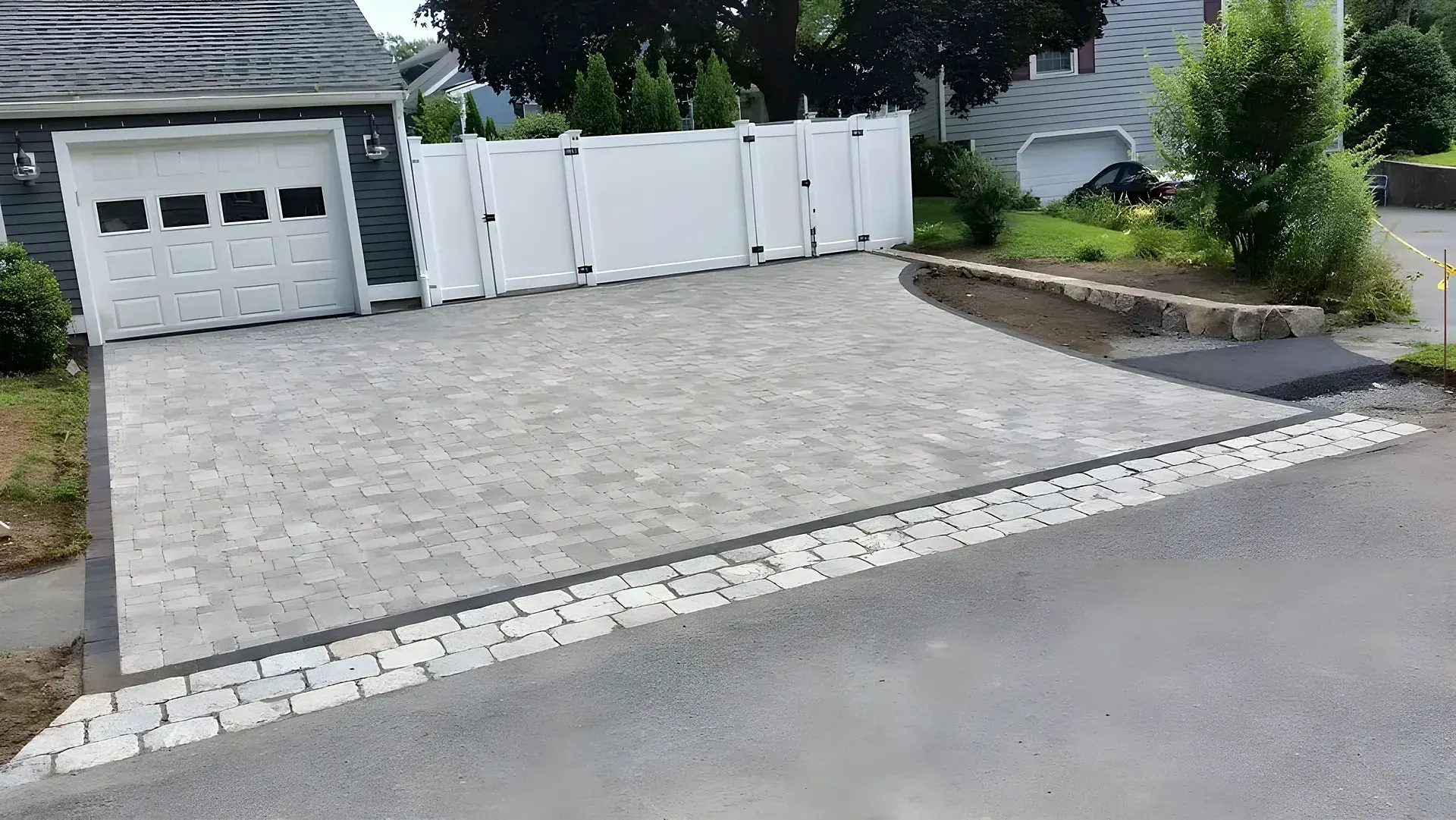
Driveway paver edging is a single or double row of pavers or brick along one or both sides of the drive. It frames the driveway, hides a ragged asphalt edge and gives the lawn a clean line to mow against. Pavers laid lengthwise along the edge are called a soldier course. A soldier course is the usual brick driveway border on older New England homes, and it is also the usual way to finish the edge of a paver walk.
A paver apron at the street
The apron is the short section where the driveway meets the road. It takes the most abuse: plows, delivery trucks and water running off the street. A paver apron is built like a driveway, with a full vehicle base, and part of it often sits on land the town controls. More on that below.
A paver or cobble border for a gravel driveway
On a gravel drive, a border of pavers, granite cobbles or curbing does a practical job: it keeps stone from migrating into the lawn and gives the plow a line to follow. Set the border on a compacted base, with its top roughly level with the finished gravel, so the plow blade rides over it instead of catching it.
What happens at the seam
Most problems with this kind of work come down to how the new pavers meet the old surface.
- Asphalt edges crumble. The edge of an old asphalt driveway is often thin and broken. Pavers pushed against it have nothing solid to bear on. Saw-cut the asphalt back to a clean, solid edge before you start.
- Pavers need restraint. Pavers stay tight because the edges are locked in. Where they meet a clean, solid driveway edge, that edge can do the job. On the open side, use a spiked edge restraint, a concrete haunch or a curb.
- Water has to go somewhere. Pitch the new pavers away from the house and garage, and do not create a dam that holds driveway runoff against the seam. If the driveway already sheds water toward that side, plan for where it will go before you pave.
- Match the height. Set the pavers flush with the driveway or a hair below it. A raised paver edge catches plows and shovels.
Step by step: installing pavers along an existing driveway
- Call Dig Safe. Massachusetts law requires notice before you dig. Dig Safe asks for at least 72 hours' notice, not counting weekends and holidays, so marked lines are in place first. See digsafe.com.
- Lay out the work. Mark the walk or border with paint or string. Check the finished height against the driveway, door sills and lawn, and plan the pitch so water runs away from the house.
- Saw-cut and excavate. Cut back any broken driveway edge. Dig deep enough for the crushed stone base, the bedding layer and the paver. A walkway needs less depth than anything cars will cross, and soft or clay soil needs more. Follow the paver maker's install guide or the Interlocking Concrete Pavement Institute guidance for the use you have in mind.
- Prepare the subgrade. Compact the soil at the bottom. On wet or clay soil, a woven geotextile fabric keeps the base stone from sinking into the mud over time.
- Build the base in layers. Spread crushed stone in thin layers and compact each one with a plate compactor. One thick layer compacted once will settle later.
- Screed the bedding sand. Spread a thin, even layer of concrete sand and screed it flat. Do not compact or walk on the screeded sand before the pavers go down.
- Lay and cut the pavers. Start from the straight, solid edge (often the driveway) and work outward. Cut pieces at the far edge, not in the middle of the field.
- Install edge restraint. Secure the open side before compacting.
- Compact and joint. Run the plate compactor over the pavers (with a pad on textured or colored units), sweep jointing sand or polymeric sand into the joints, and compact again until the joints are full.
Brick driveway borders and edging
A brick edged driveway can mean a few different builds, and the choice matters in our climate.
- Sand-set paver border. Concrete or clay pavers laid on the same base as a walkway. It flexes a little with frost and can be reset if a section moves. This is the most forgiving option next to asphalt.
- Mortared brick border on a concrete footing. Neat and traditional, but rigid. Plow strikes and frost movement crack the mortar joints, and repairs are more involved.
- Clay brick vs concrete paver. Use a brick made for paving. Ordinary wall brick soaks up water and flakes apart in freeze-thaw. Concrete pavers in a brick color are another option and come in a wider range of sizes.
For a border that cars and plows will cross, use a paver thick enough for vehicles and a base built to driveway depth. A soldier course in a contrasting color, set flush with the asphalt, is a clean look that holds up to plowing.
Driveway aprons: check with the town first
The apron of a driveway often crosses the sidewalk or the grass strip by the road, and that land usually belongs to the town. Changing it can require a curb cut or street opening permit from the local DPW or engineering office, and some towns set rules for the apron material or the sidewalk crossing. Call your town before you design it. There is no single standard apron depth; it depends on how far your driveway runs to the street and what the town allows.
Build the apron as driveway, not walkway: full-depth compacted base, vehicle-rated pavers and a firm edge against the street, since the road edge is where plows and trucks hit hardest.
Snow, plows and ice melt
Anything next to a driveway gets plowed and shoveled. Set pavers flush or slightly below the driveway, ask your plow contractor to use a shoe or rubber edge near the pavers, and use a plastic shovel on textured surfaces. For deicers, follow the paver maker's winter guidance; our ice melt on pavers guide explains how to choose and apply them.
What drives the cost
We do not publish prices because every driveway edge is different. The cost of pavers next to a driveway depends on how much has to be removed (asphalt, lawn, old curbing), whether any part will carry cars, the soil and how much base it needs, the paver or brick you choose, how many cuts the layout needs and whether the apron needs town approval. For full paver driveways, see what goes into a paver driveway estimate.
When to call a mason
A short walk or border on good soil is a reasonable DIY project if you rent a plate compactor and take your time with the base. Call a contractor when the pavers will carry cars, when the work touches the street or sidewalk, when the driveway sheds water toward the house, or when you want the new work to match a driveway or walkway that is already there.
Gerrior Masonry is a family-owned, fully insured hardscape and masonry company in Woburn, MA, with over 30 years in the trade. We install paver walkways, borders and driveways across the area. You can see finished work on our driveway projects and walkway projects pages, and read more about our driveway paver installation.
"We would like to thank you for a great job at our house demolishing, replacing and sealing a new full new driveway and front sidewalk and walkways." Mark and Wellner, Winchester, MA

Common questions
Can I lay pavers right up against my asphalt driveway?
Yes, if the asphalt edge is solid. Saw-cut a crumbling edge back to firm pavement first, set the pavers flush, and restrain the open side. Pavers pushed against a broken edge will drift and sink.
How deep should the base be for a border I will drive on?
Treat it as driveway, not walkway. That means a deeper compacted stone base and a paver rated for vehicles. The right depth depends on your soil; the paver maker's install guide lists it for each use.
Do I need a permit for a driveway apron?
Often, yes. Work in the town's right of way, such as a curb cut or sidewalk crossing, usually needs approval from the DPW or engineering office. Check before you design.
Should I use polymeric sand next to a driveway?
Polymeric sand resists washout and weeds, which helps along a driveway edge that gets runoff. It must be installed dry and to the maker's instructions, or it can haze the pavers or fail early. Regular jointing sand works too but needs topping up.
Planning a walkway, border or apron beside your driveway? Call Gerrior Masonry at (781) 933-4157 or request a free estimate. We will look at the driveway edge, the drainage and the soil, and tell you plainly what it needs.

A family-owned masonry and hardscape company at 245 Salem St, Woburn, MA, in business for over 30 years. See our hardscaping work.