
Is a Backyard Stone Retaining Wall Worth It? Here’s What You Need to Know
Quick Answer: What a backyard stone retaining wall does:
- Stops soil erosion on sloped yards
- Creates flat, usable space for patios, gardens, and play areas
- Boosts property value by up to 15% when professionally installed
- Lasts 50–100+ years with proper drainage and base preparation
- Enhances curb appeal with a timeless, natural look
A backyard stone retaining wall is one of the most impactful investments a Massachusetts homeowner can make. If your yard slopes, erodes after heavy rain, or just feels like wasted space, a well-built stone wall can change all of that — turning a problem hillside into level terraces, raised garden beds, or a flat area for outdoor living.
Stone retaining walls do two things at once: they solve a real structural problem and they look beautiful doing it. That’s a rare combination in home improvement.
But they’re not a simple weekend project. The difference between a wall that lasts a century and one that leans or collapses after a few Massachusetts winters often comes down to drainage, base preparation, and proper construction technique.
I’m Joe Gerrior, owner of Gerrior Masonry & Landscaping, and over 34 years of building backyard stone retaining walls across Massachusetts — from Woburn and Burlington to Lexington and Winchester — I’ve seen exactly what makes these structures succeed or fail. In this guide, I’ll walk you through everything you need to know before starting your project.
Terms related to backyard stone retaining wall:
Designing and Planning Your Backyard Stone Retaining Wall
Before a single shovel touches the dirt, a successful backyard stone retaining wall requires careful planning. Designing a wall isn’t just about choosing a pretty stone; it’s about understanding gravity, soil pressure, and water flow.
When we plan a project in towns like Winchester or Lexington, we start by evaluating the slope and the height requirements of the wall. If your yard has a steep grade, you may need to Build a Retaining Wall on a Slope using a tiered design rather than one single, massive wall. Tiered walls distribute the heavy weight of the soil more safely and prevent the structure from bowing under pressure.
To ensure your wall stands strong against the elements, you must design it with a slight backward lean, known as “batter.” For a dry-stacked stone wall, a standard batter is about 1 inch of backward lean for every 12 inches of wall height. This simple angle uses gravity to push the stones back into the hillside, dramatically increasing stability. To dive deeper into these engineering principles, you can read our guide on How to Master Retaining Wall Design and Stability.
Benefits of a Backyard Stone Retaining Wall
A natural stone wall is more than just a barrier against dirt. Its benefits stretch across both the functional and aesthetic value of your property:
- Erosion Control: Heavy Massachusetts rains can slowly wash away your nutrient-rich topsoil. A stone wall acts as a permanent shield, keeping your soil exactly where it belongs.
- Creating Usable Space: By carving flat terraces into a steep slope, you can reclaim lost yard space to install a new paver patio, a lush lawn, or an outdoor kitchen.
- Boosting Property Value: High-quality hardscaping can increase your home’s resale value by up to 15%. Prospective buyers love the look of permanent, low-maintenance natural stone.
- Unmatched Durability: Unlike wood timbers that rot within 10 to 15 years, a professionally constructed stone wall can easily last 50 to 100+ years.
Whether you are looking to define a garden or stabilize a massive hillside, choosing The Essential Guide to Custom Retaining Walls will help you understand the structural options available for your unique landscape.
Selecting the Right Materials for Your Backyard Stone Retaining Wall
The material you choose will dictate the construction method, the overall cost, and the final look of your backyard. In Massachusetts, we typically work with three main categories of materials:
- Natural Stone (Fieldstone, Granite, Sandstone): This is the gold standard for Massachusetts landscapes. Natural stone offers an organic, rustic beauty that ages gracefully. Because the stones are irregular, they require a highly skilled mason to fit them together like a puzzle.
- Interlocking Concrete Blocks: These manufactured blocks feature a built-in lip or pin system that automatically creates the proper setback as you stack them. They are highly functional and offer a clean, modern look.
- Gabion Walls: These are wire mesh baskets filled with clean, angular stones. They are incredibly durable, drain water naturally, and are highly cost-effective, often costing 30% to 50% less than traditional mortared stone.
To help you decide, here is a quick comparison of the most common options, highlighting insights from Natural Stone Retaining Wall: Costs, Design and Tips:
| Material Type | Lifespan | Aesthetic Style | Drainage Efficiency | Installation Difficulty |
|---|---|---|---|---|
| Natural Stone | 100+ Years | Rustic, Timeless, High-End | Excellent (Dry-Stacked) | Very High (Requires Masonry Skill) |
| Interlocking Blocks | 50–75 Years | Clean, Modern, Uniform | Good (Requires Backfill) | Medium (DIY-Friendly) |
| Gabion Baskets | 50+ Years | Industrial, Modern, Rugged | Maximum (Self-Draining) | Low to Medium |
Drainage and Base Preparation Best Practices
If there is one thing I want you to remember from this guide, it is this: water is the number one enemy of any retaining wall.
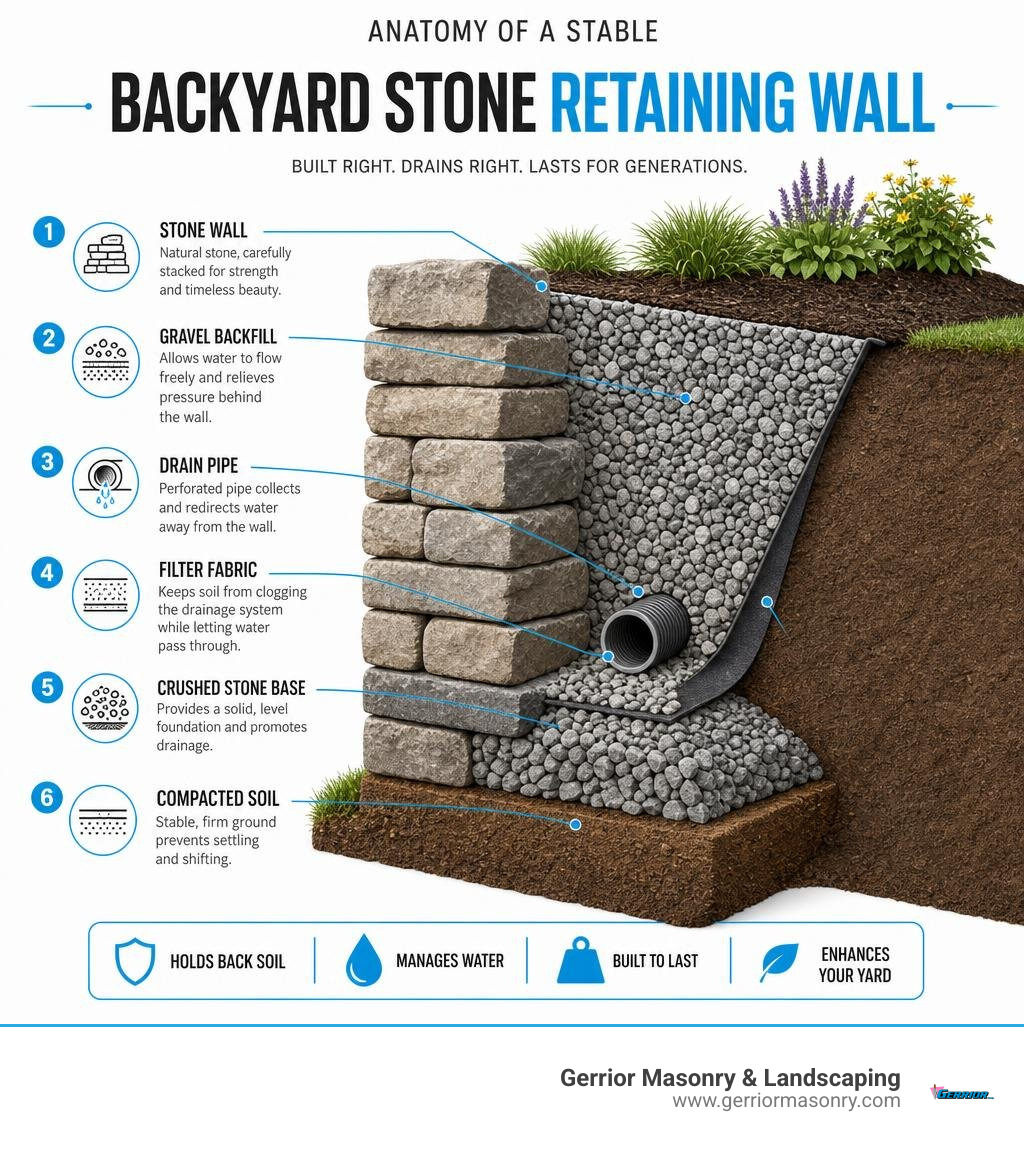
When water pools in the soil behind your wall, it creates immense hydrostatic pressure. During our freezing winters in Lexington and Burlington, that trapped water freezes, expands, and pushes against the back of the wall. Without proper drainage, even the heaviest stone wall will eventually bow, crack, and fail.
To prevent this, we follow strict drainage and base guidelines:
- The Footing: We excavate a trench 6 to 8 inches deep and fill it with compacted, angular crushed stone. Never use rounded pea gravel or soil for the foundation; you need sharp, interlocking gravel that won’t shift.
- The Drain Tile: We install a 4-inch perforated drain pipe behind the base of the wall, sloped to direct water safely away to an open outlet.
- Gravel Backfill: We place at least 12 inches of clean, free-draining gravel directly behind the stone wall. This acts as a chimney, allowing water to fall straight down to the drain pipe instead of pressing against the stone.
- Filter Fabric: We lay heavy-duty landscape fabric between the gravel backfill and the native soil behind it. This stops fine dirt particles from clogging your drainage system over time.
For a detailed breakdown of these critical steps, check out How to Build a Retaining Wall: Step-by-Step Guide (2026).
Professional Installation vs. DIY: Building a Dry-Stacked Wall

When it comes to building a backyard stone retaining wall, you have two main construction methods: dry-stacked and mortared.
Dry-stacked walls are held together entirely by gravity, friction, and the interlocking shapes of the stones. They are highly flexible, which is a massive advantage in Massachusetts because the wall can slightly shift and settle during winter freeze-thaw cycles without cracking. Mortared walls, on the other hand, are rigid and require a concrete foundation poured below the local frost line (which can be up to 30 inches deep in our area) to prevent cracking.
While a small garden border under 2 feet tall is a reasonable DIY project, building a structural wall over 3 feet tall is incredibly labor-intensive and structurally complex. If you want to understand the sheer scale of the work involved, you can read more about the process in From Foundation to Finish: Building Your Own Backyard Retaining Wall.
Essential Steps for Dry-Stacked Construction
If you are planning to tackle a small, low-profile dry-stacked wall, here is the high-level sequence of steps required to build it safely:
- Excavation: Dig a trench that is at least twice as wide as the width of your stones and roughly 6 to 8 inches deep.
- Lay the Base: Pour 4 inches of angular crushed stone into the trench and compact it thoroughly with a heavy hand tamper or rented plate compactor.
- Set the Base Course: Lay your largest, flattest stones first. These stones should sit slightly below the ground level to anchor the entire wall.
- Stack and Stagger: Lay subsequent rows of stone, making sure to stagger the vertical joints (just like bricks in a house). Avoid long vertical joints running through multiple rows, as this creates a weak point.
- Incorporate Batter: Lean each row back slightly (about 1/4 inch per row) to ensure the wall leans into the slope.
- Backfill as You Go: Add your drainage gravel and filter fabric behind the wall after completing each row, compacting it gently.
- Cap the Wall: Finish the top row with flat, heavy capstones. For safety, we recommend securing these top stones with high-quality landscape construction adhesive.
For a visual guide on handling blocks and setting courses, you can refer to How to Build a Block Retaining Wall.
Common Mistakes to Avoid in Wall Construction
Over the years, we have been called to rebuild dozens of failing walls in Woburn and Winchester. Almost all of these failures were caused by the same handful of avoidable mistakes:
- Ignoring Local Permits: Most municipalities require a building permit and structural engineering plans for any retaining wall over 4 feet tall.
- Using the Wrong Backfill: Backfilling with native clay-heavy soil instead of clean, angular gravel traps water and leads to rapid failure.
- Shallow Footings: Failing to bury the first course of stone means the wall has no lateral support at the base and will easily slide forward.
- Stacking Without Setback: Building a dry-stacked wall perfectly vertical will cause it to tip forward under the weight of the wet earth behind it.
Why Hire a Professional Mason in Massachusetts?
A backyard stone retaining wall is a heavy, permanent structure. When you hire a professional team like Gerrior Masonry & Landscaping, you are paying for peace of mind, structural safety, and a wall that will outlive your mortgage.
Our team brings over three decades of local experience, specialized heavy equipment, and direct owner oversight to every project. We understand the unique clay-heavy soils and harsh winter climates of Woburn, Burlington, Winchester, and Lexington. We design custom drainage solutions tailored specifically to your yard’s water flow, ensuring your wall remains perfectly level and stable for generations.
Understanding the Investment
To help you budget, we have compiled average pricing ranges for retaining wall installations in the Massachusetts area.
Please note that all prices mentioned below are average costs sourced from publicly available online landscaping data and industry averages. They are not the actual prices of Gerrior Corp, nor do they reflect our specific rates, quotes, or guarantees.
Based on general online data, here is what you can expect for professional vs. DIY retaining wall costs in our region:
- Professional Natural Stone Installation: Average industry prices typically range from $80 to over $250 per square face foot, depending on site accessibility, stone type (like premium Massachusetts granite), and excavation complexity.
- DIY Material-Only Costs: If you choose to purchase materials yourself, online data indicates costs of $12 to over $40 per square face foot for basic blocks or fieldstone, not including the rental of heavy compactors, trench diggers, and safety equipment.
When you invest in a professional installation, you are investing in a permanent structural asset. If you are ready to transform your sloped backyard into a stunning, functional oasis, we invite you to view our Retaining Wall Installation services or contact us directly to discuss your project.
Ready to Build Your Dream Backyard?
Let’s make your landscape beautiful, stable, and uniquely yours.
Call Gerrior Masonry & Landscaping today at +781-713-1225 or click below to request your custom project estimate.
