
Why a New Paver Patio Is One of the Best Investments for Your Massachusetts Home
Quick answer: How to build a new paver patio
- Plan your layout — choose your patio size, shape, and paver material
- Prepare the base — excavate 8–10 inches, add a compacted gravel base and 1-inch sand bedding layer
- Lay the pavers — start from a straight edge and work outward in your chosen pattern
- Install edge restraints — lock the perimeter to prevent shifting
- Fill joints with polymeric sand — sweep in, mist with water, and allow to cure
- Seal (optional) — apply sealer every 3–5 years to protect appearance and resist stains
A new paver patio can completely transform the way you use your outdoor space — turning an underused backyard into a comfortable, beautiful extension of your home. Whether you’re in Woburn, Winchester, or anywhere across Massachusetts, a well-built paver patio adds lasting value, handles harsh New England weather, and requires far less upkeep than poured concrete or wood decking.
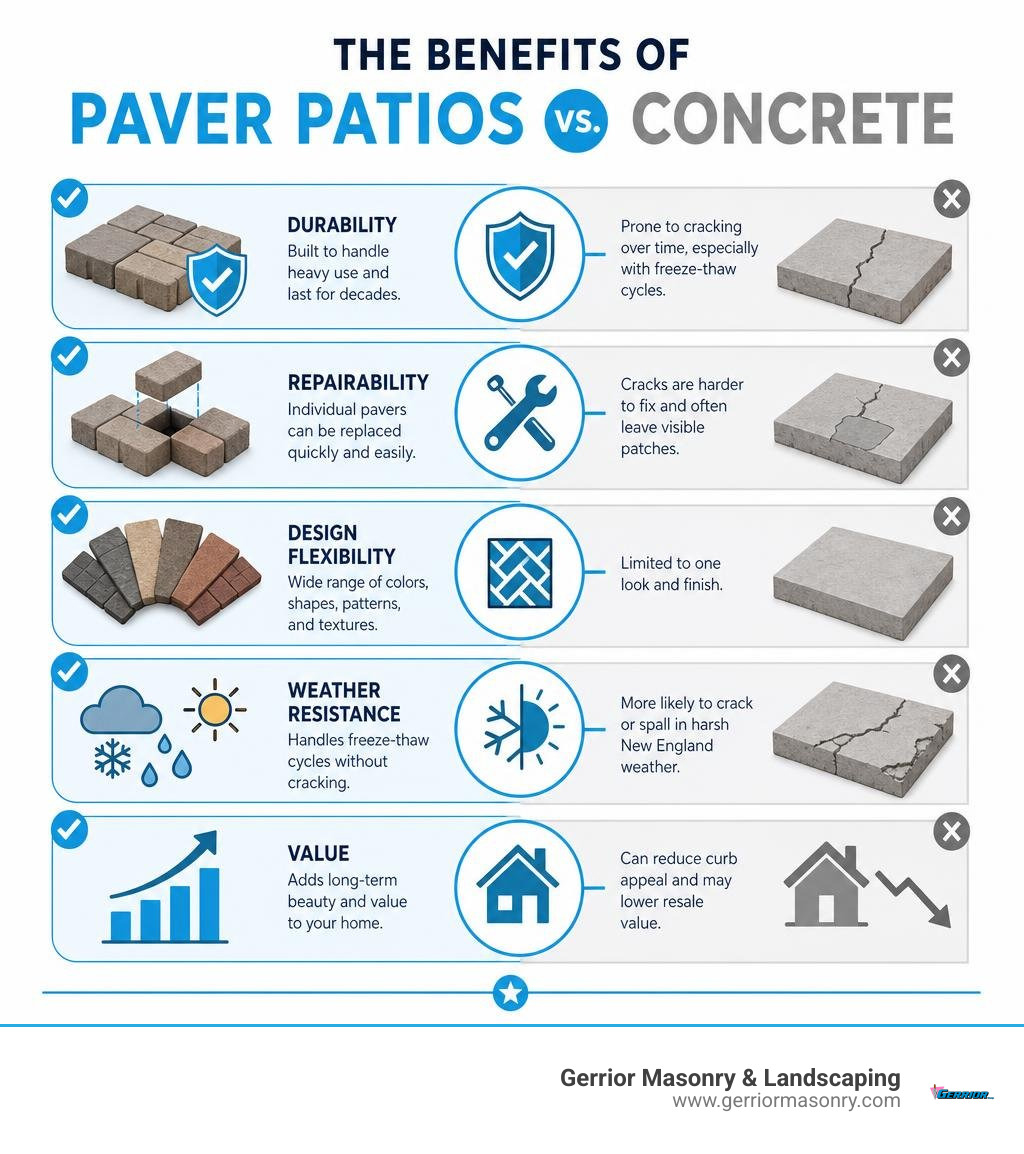
Pavers are durable, versatile, and repairable — qualities that matter a lot when you’re dealing with Massachusetts freeze-thaw cycles. And unlike poured concrete, a damaged paver can be replaced individually without tearing up the entire surface.
This guide walks you through everything: design choices, foundation prep, installation steps, maintenance, and what it realistically costs to have a patio built in Massachusetts.
I’m Joe Gerrior, owner of Gerrior Masonry & Landscape Construction Corp., a family-based business serving Massachusetts homeowners for over 34 years — and new paver patio installation is one of our most requested services. I’ll share what we’ve learned from decades of hardscaping projects so you can make smart decisions for your property.
Handy new paver patio terms:
Planning and Designing Your New Paver Patio
Before we move a single shovelful of dirt in towns like Burlington or Lexington, a successful project starts with a detailed plan. Designing a new paver patio is about balancing how you want to use the space with the natural layout of your property.

First, consider the function. Are you looking to build a quiet dining nook, a large area for hosting weekend barbecues, or a safe spot to gather around a custom fire pit? The way you plan to use the patio determines its overall size, shape, and placement. For instance, a dining area needs to be close to the house for easy kitchen access, while a fire pit feature might sit further back in the yard as a cozy destination.
Next, think about the architectural style of your home. If you live in a historic home in Winchester or a modern build in Woburn, your patio design should complement your existing structures. You can choose from structured, geometric layouts with clean straight lines, or organic, free-flowing curves that blend naturally into your lawn.
To help you visualize your options and map out a realistic project timeline, we recommend exploring our patio design near me services and checking out The Complete Guide to Patio Design and Installation.
Choosing the Right Materials for a New Paver Patio
The materials you select will define your patio’s look, lifespan, and maintenance needs. Homeowners generally choose between three primary options: concrete pavers, natural stone, and traditional clay brick.
- Concrete Pavers: These are highly popular for modern patios because they are manufactured to strict standards, ensuring uniform thickness and strength. They come in an extensive array of colors, textures, and interlocking shapes, making them incredibly versatile.
- Natural Stone: Materials like flagstone, bluestone, and granite offer unmatched, rustic beauty. Each piece is completely unique, though they require a skilled hand to install due to variations in thickness.
- Brick Pavers: Made from natural clay, brick pavers provide a classic, timeless warmth. They are highly durable and hold their color exceptionally well over decades of exposure to the elements. For more details on this classic look, read about our brick paver patio installations.
| Material Type | Durability | Maintenance Level | Appearance |
|---|---|---|---|
| Concrete Pavers | High (resistant to heavy traffic & weather) | Low (easy to clean, sweep, and spot-repair) | Modern, highly customizable shapes & colors |
| Natural Stone | Very High (can last a lifetime) | Low to Medium (may require occasional weed control) | Timeless, rustic, and completely unique |
| Brick Pavers | High (classic clay strength) | Low (naturally fade-resistant) | Traditional, warm, and elegant |
Essential Steps for a Long-Lasting Foundation
If there is one golden rule in hardscaping, it is this: your patio is only as good as its foundation. In Massachusetts, where winter temperatures drop well below freezing, a poorly prepared base will quickly lead to shifting, sinking, and unsightly warping. The freeze-thaw cycle in New England causes the ground to expand and contract. Without a proper gravel base, this movement forces pavers upward—a phenomenon known as frost heaving. When the ground thaws in the spring, the pavers settle unevenly, leaving you with a bumpy, hazardous surface. This is why we place such a heavy emphasis on deep excavation and thorough compaction.
To prevent base failure, we follow a strict multi-layer preparation process:
- Excavation: We dig down 8 to 10 inches to allow enough room for the base materials and the pavers themselves.
- Subgrade Compaction: The soil at the bottom of the trench must be thoroughly compacted using a heavy plate compactor.
- Landscape Fabric: Laying high-quality geotextile fabric keeps the soil from mixing with your clean gravel base, preventing weeds while allowing water to drain.
- Gravel Base: We add 4 to 6 inches of angular crushed stone (not rounded river rock), compacting it in tight 2-inch layers. Angular stone locks together under pressure to form a rock-solid, stable foundation.
- Bedding Sand: A perfectly level, 1-inch layer of concrete sand is screeded across the gravel to act as the final cushion for your pavers.
For a detailed look at this technical process, you can read the How to Lay Pavers: Complete DIY Installation Guide (2026) — Yardcast Blog or learn about our professional approach to build a paver patio.
Professional Installation vs. DIY: What to Expect
Many homeowners wonder if they can tackle a new paver patio as a weekend DIY project. While laying a small, simple path might be manageable, building a full-sized patio is an incredibly labor-intensive and physically demanding task.

A typical 200-square-foot patio requires excavating and hauling away over 5 tons of dirt, followed by wheeling in and compacting another 5 tons of gravel and sand. Without heavy commercial equipment like skid steers and industrial plate compactors, this process can take weeks of grueling manual labor. You must also consider the physical toll of lifting heavy stone pavers and operating heavy machinery. If the base is not perfectly level, or if the slope is slightly off, you will end up with pooling water, shifting stones, and a project that needs to be completely redone in a few years.
Furthermore, minor mistakes in calculating the slope (which must be a minimum of 1/8 inch to 1/4 inch per foot away from your home’s foundation) can lead to water pooling against your basement walls. While guides like How to Install a DIY Paver Patio the Easy Way! – Angela Marie Made offer creative workarounds, hiring a professional ensures the job is done right the first time without risking structural damage to your home.
Maintenance, Sealing, and Long-Term Care
Once your patio is installed, keeping it beautiful requires very little effort. The secret to its stability lies in the joint sand. We use polymeric sand—a specialized sand mixed with water-activated binders that hardens to lock the pavers in place, resist erosion, and prevent weeds and ants from moving in.
Should you seal your pavers? While high-quality concrete pavers are designed to last without sealer, applying a coat of sealer every 3 to 5 years offers several key benefits:
- It protects against oil, grease, and food stains.
- It enhances the natural color and vibrancy of the stone.
- It protects the surface from freeze-thaw cycles and winter salt damage.
As a general rule, a single gallon of water-based sealer covers between 100 to 150 square feet, while solvent-based options cover about 80 to 120 square feet. To learn more about protecting your investment, check out our patio paver installation maintenance services.
Cost Factors for a New Paver Patio in Massachusetts
When budgeting for your hardscaping project, keep in mind that costs can vary significantly based on material selection, site accessibility, and the complexity of the design.
Based on online hardscaping data, the typical cost of a professionally installed paver patio ranges from $15 to $30 per square foot. However, because Massachusetts projects often require deep excavation to get below the frost line, actual project costs vary widely.
Please note that the following ranges represent general industry averages sourced from publicly available internet data and do not reflect the actual rates of Gerrior Masonry & Landscaping:
- Low-End Project Range (Simple designs, highly accessible yards): $30 to $60 per square foot.
- High-End Project Range (Premium natural stone, complex sloped yards, integrated retaining walls): $75 to $150+ per square foot.
Factors like grading, adding steps, or matching existing walkways in towns like Arlington or Lexington will also influence your final estimate.
Why Hire a Professional Hardscaping Contractor?
At Gerrior Masonry & Landscaping, we have spent over 30 years perfecting the art of stone craftwork throughout the Woburn and Winchester areas. Hardscaping is a long-term investment, and our experienced team—guided by direct owner oversight on every single project—ensures your patio is built to look stunning and stay level for decades.
We handle everything from initial design and permitting to heavy excavation, drainage management, and flawless stone laying. We work with premium materials to guarantee your outdoor living space stands up to the toughest New England winters.
Are you ready to stop dreaming about your perfect backyard and start building it? Get a free estimate for your patio project or Contact Gerrior Masonry & Landscaping today to discuss your vision. Let’s build something beautiful together!
